German Pinscher: temperament, energy, barking and training for the quick German farm dog
The German Pinscher is a medium, smooth-coated farm dog from Germany, kept for generations to hunt rats in barns and stables and to warn of strangers. It is the older breed behind both the Dobermann and the Miniature Pinscher. Living with one means a fast, clever and bold dog that notices everything, tests rules and gets bored quickly. What works is clear and fair house rules from the first day, real jobs for its brain and nose, a calm plan for barking at the window and the door, and early, steady practice with other dogs and small animals.
Job: A medium German farm ratter; AKC Working group, FCI Group 2.
Energy: Alert, bold and quick to learn, with a strong will of its own.
Home: Suits an active owner who enjoys training and sets clear rules.
A German Pinscher is a busy farm dog, not a small Dobermann
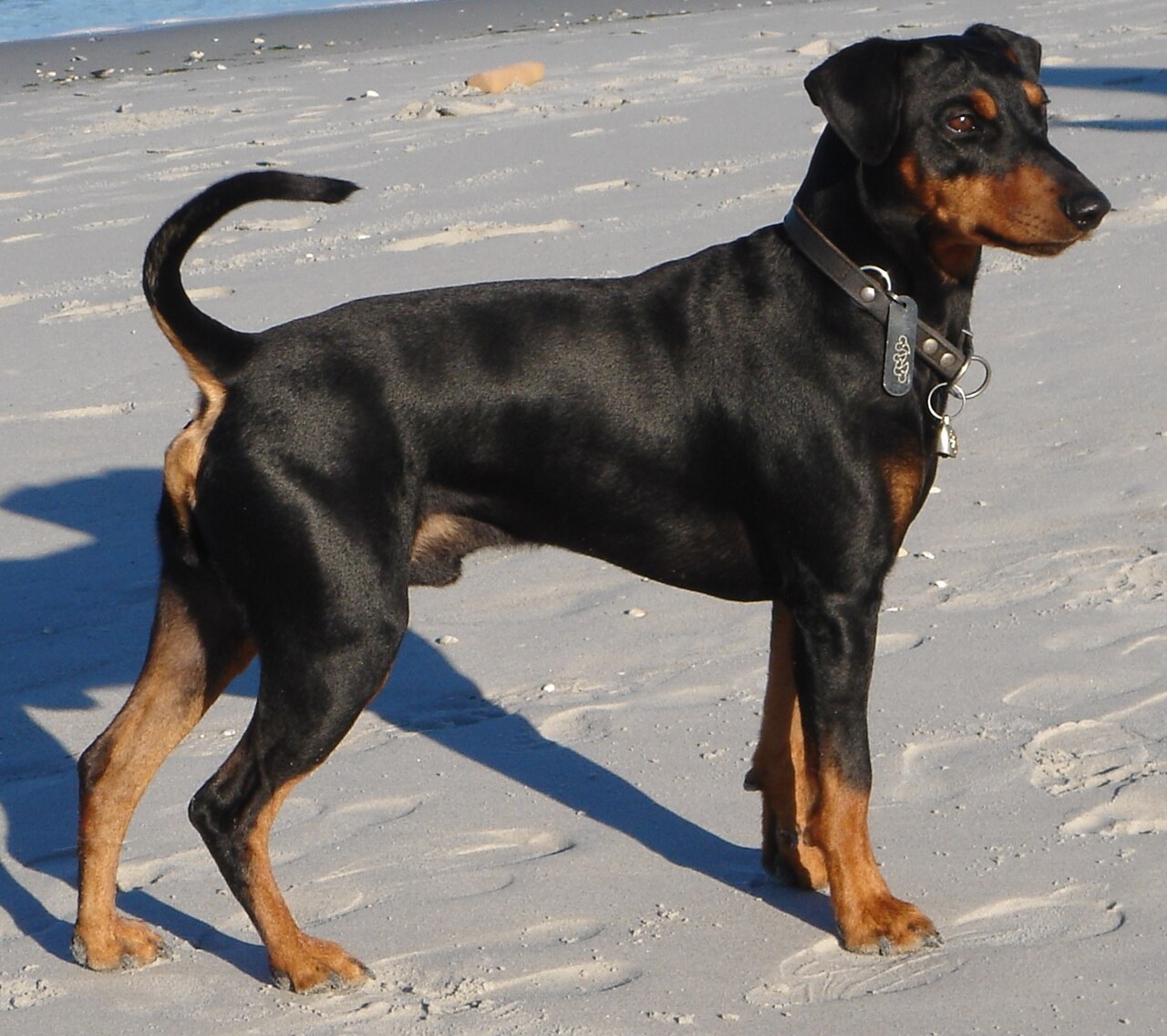
People often meet the breed through its look: sleek, black and tan or red, with a neat head and a springy walk. It is easy to think of it as a smaller Dobermann for a flat. The real dog is a farm ratter with a fast brain and a lot of opinions.
The problems I meet at home are about energy and confidence together: a young dog that barks at every sound outside, rushes the door, chases the cat, pulls toward every movement on a walk and keeps trying to push the rules to see what happens.
My approach is to give the dog clear and fair limits, then a lot to do inside those limits. Short, varied training every day, sniffing and searching games, a quiet place to rest, and calm work on the door and the window. A Pinscher that has had a good day of thinking is far easier to live with than one that has only been walked.
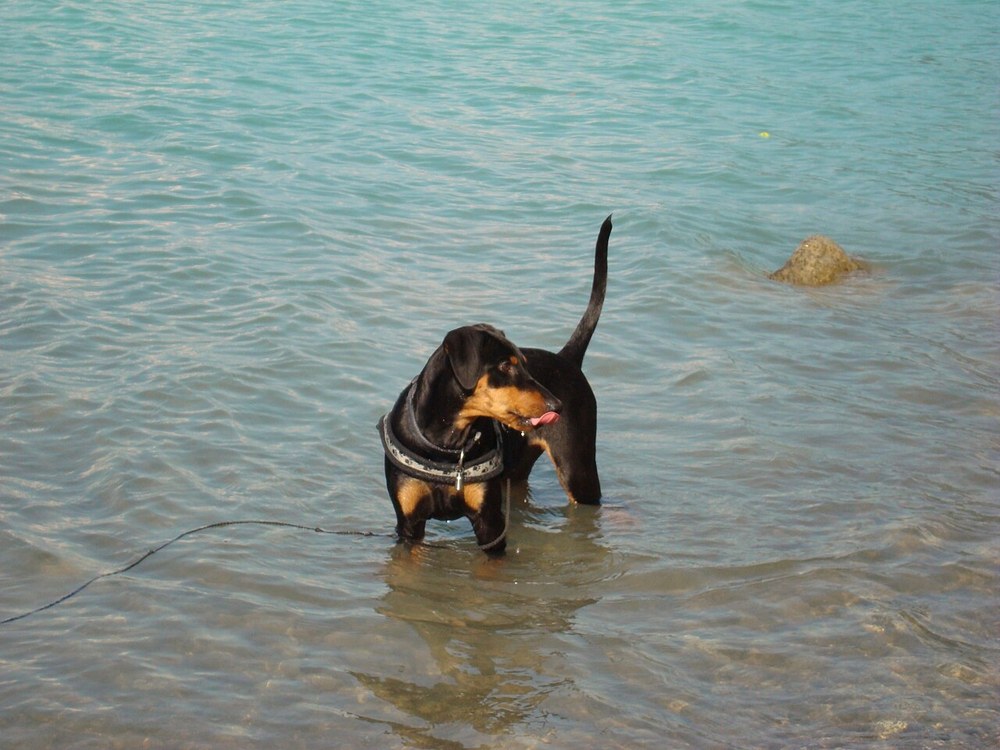
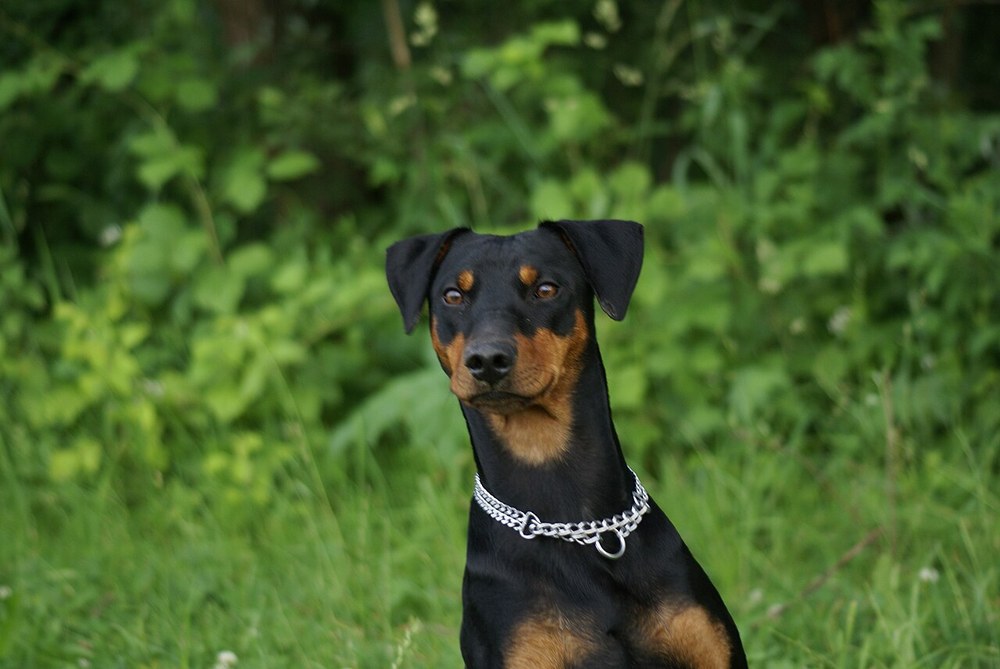
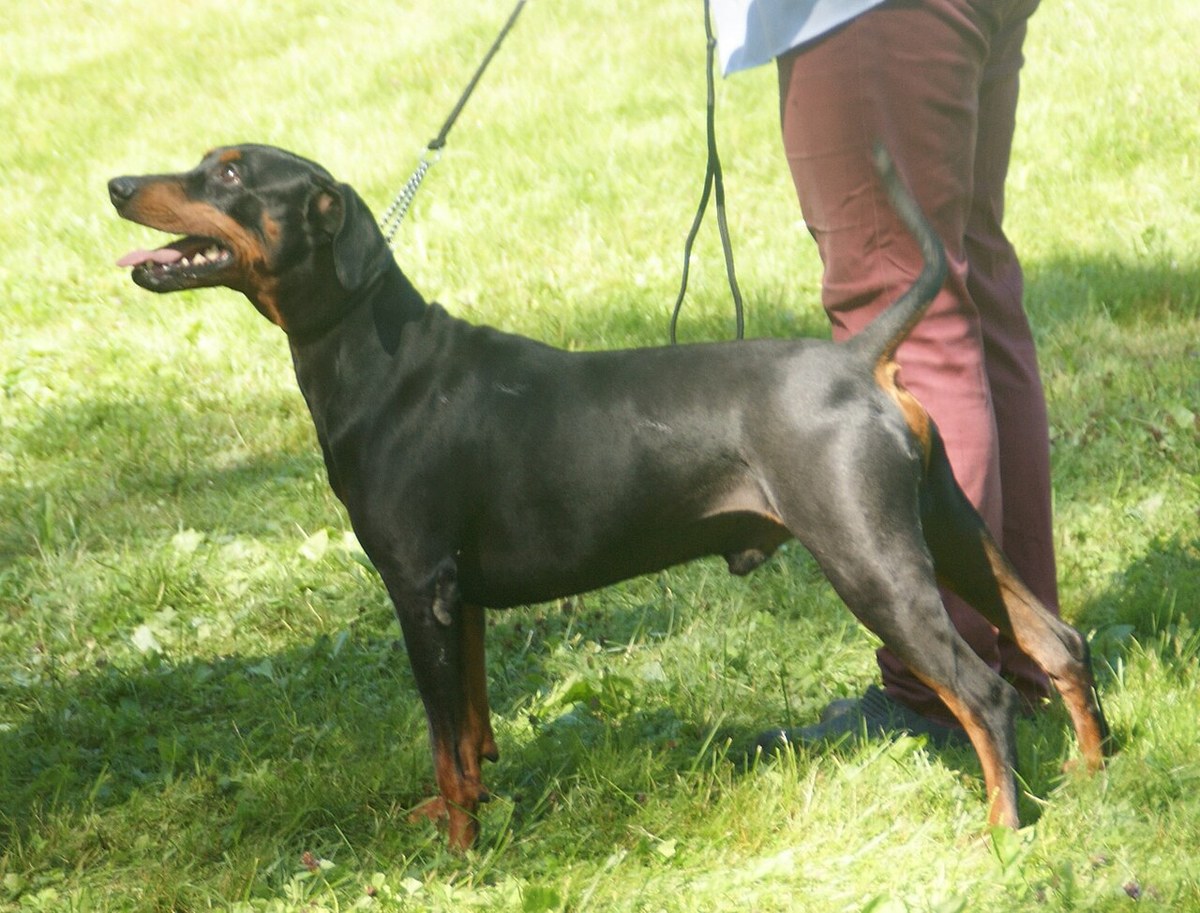
Short, dense, glossy coat in red or fawn shades, or black or blue with red-tan markings
Job
German farm ratter and watchdog (FCI Group 2, Pinscher and Schnauzer section)
Temperament in one minute
German Pinscher temperament: what they are like at home
Short answer: German Pinschers are lively, clever, bold and affectionate dogs that stay close to their family and notice everything around them. They bark at sounds and strangers, chase small animals and test rules that are not kept the same every time. They need clear, fair limits from the first day, daily walks with sniffing, short training sessions and brain games, a plan for the window and the door, and an owner who enjoys training.
Are German Pinschers affectionate?
Yes, with their own people, and they like to be part of family life. Build short absences early.
Are German Pinschers easy to train?
They learn fast but get bored and test rules. Keep it short and fair; start with a hand target and a name check-in.
Are German Pinschers friendly with strangers?
Alert and watchful at first, often friendly once introduced. Guests should sit first; see guest entry steps.
Are German Pinschers good with kids and other dogs?
Often good with children they live with if play stays calm; some are bossy with strange dogs. See children and guests.
German Pinscher behavior problems to expect
The usual four are barking at the window and door, pulling on the lead, chasing small animals and pushing the house rules. The list further down links a guide for each.
Living with a German Pinscher in an apartment
Possible with daily exercise, brain work and a barking plan. A quiet street and thick walls help a lot.
Breed history
How the German farm ratter became the root of the Dobermann
The history will not train your dog, but it explains the speed, the alert barking and the chase instinct.
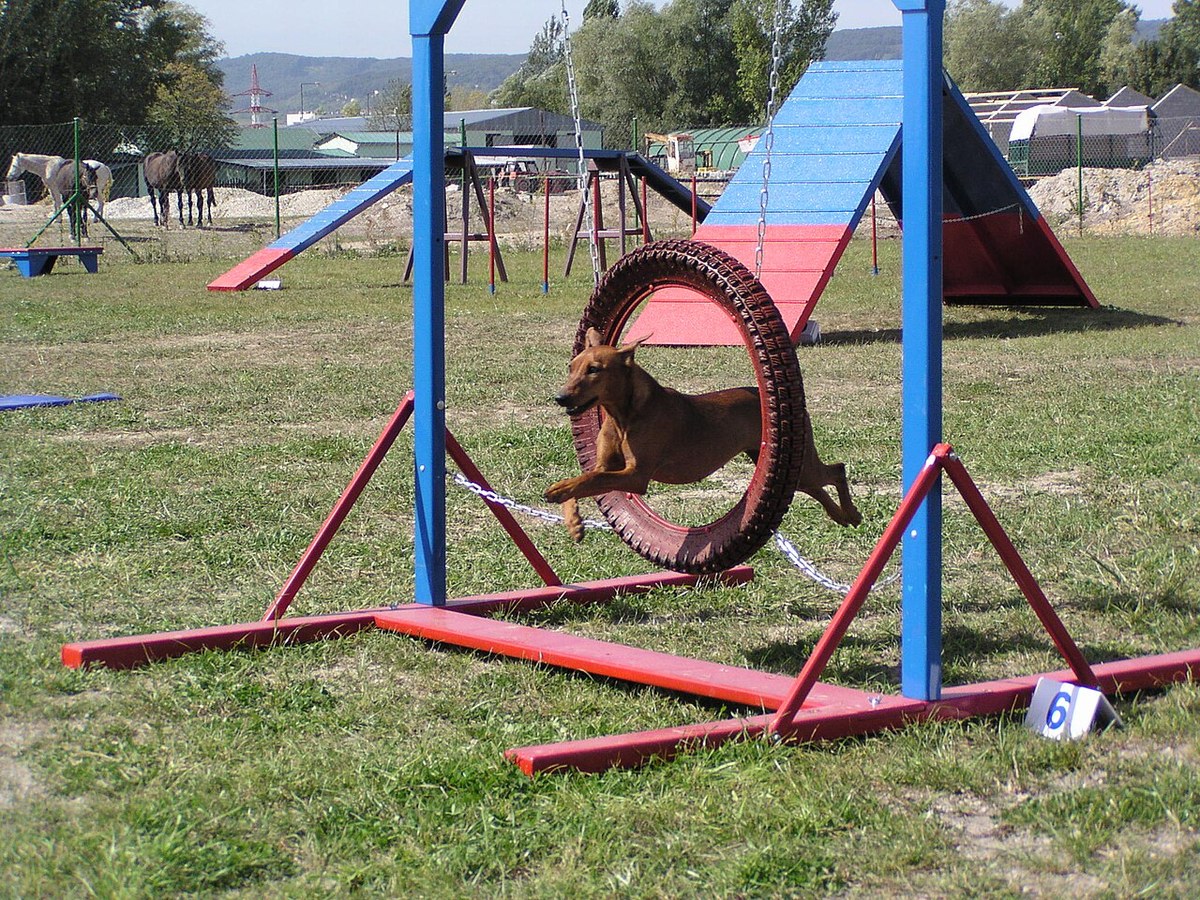
A German Pinscher in agility: the breed is quick and athletic, and dog sports are a good outlet for its speed and its brain.
Germany · farms and stables
Ratters in barns and stables
For a long time German farmers kept medium, short-coated dogs to kill rats and mice in barns, stables and grain stores, and to bark when someone came onto the yard.
Smooth and wire-coated puppies were once born in the same litters. In time the wire-coated dogs became the Standard Schnauzer and the smooth ones the Pinscher. In the late 1800s breeders also used Pinscher-type dogs in creating the Dobermann, and the small ones became the Miniature Pinscher.
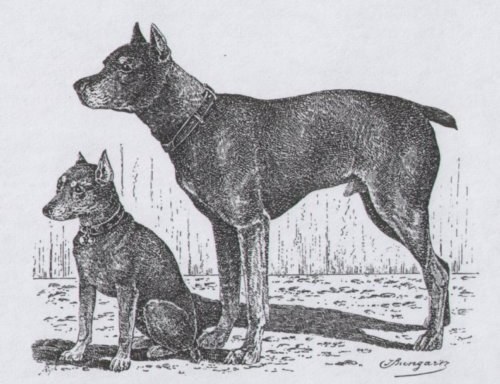
An old book drawing of a Pinscher with a Miniature Pinscher, from the early days of the breed clubs in Germany.
After 1945
Almost lost, then rebuilt
After the two world wars very few German Pinschers were left. In the 1950s the breeder Werner Jung gathered the last dogs he could find and rebuilt the breed, with some help from larger Miniature Pinschers.
The breed is still uncommon. The FCI lists it in Group 2 with the pinschers and schnauzers, and the AKC recognised it in the Working group in 2003.
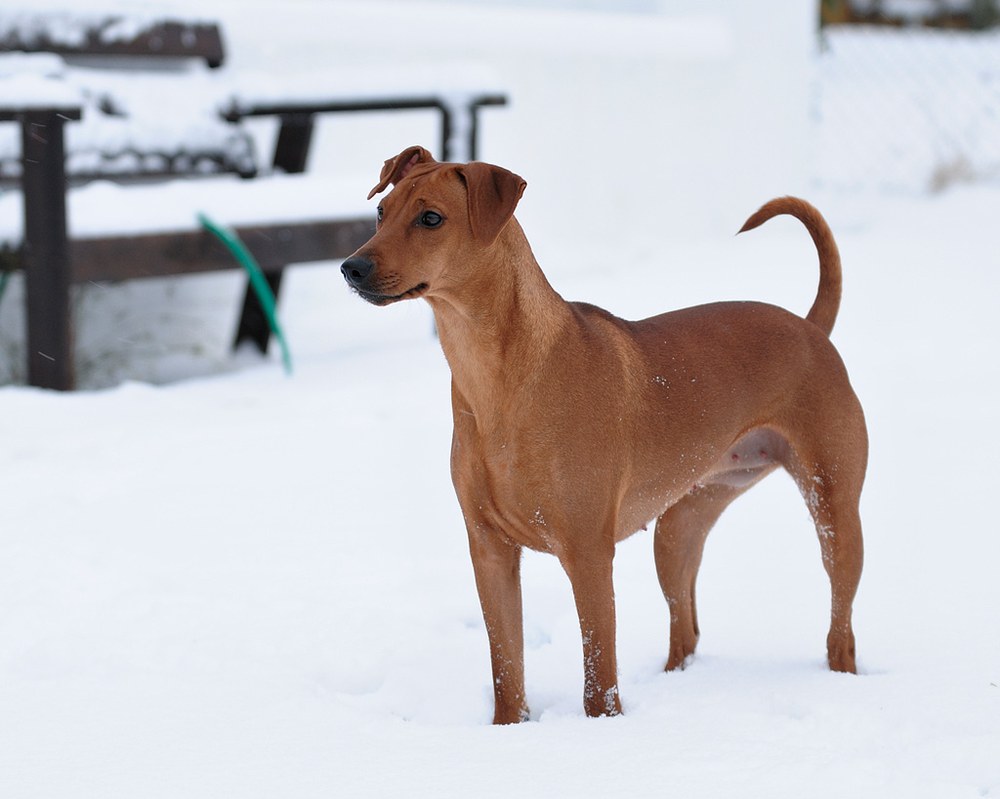
A red German Pinscher female in winter: the breed comes in red and fawn shades as well as black or blue with tan markings.
What the breed was bred for
Sharp eyes and a strong opinion
At home a well-raised German Pinscher is lively, affectionate and close to its people, and it likes to be part of whatever is going on.
It notices strangers, sounds and small animals at once. It is quick to bark and quick to chase, so early work on calm at the window and the door, and on other dogs and cats, pays off for years.
A good day has a real walk, a brain game and a quiet evening
An adult German Pinscher usually does well with one or two proper walks with time to sniff, a short training session and a searching game, then rest in a calm room. Trouble usually comes from a bored dog with free access to the window, no clear rules and too few things to think about.
Morning · exercise
Exercise with a purpose
A walk with sniffing, a few short recall games on a long line and a little swimming or running in a safe place does far more than a fast march round the block. The goal is a dog that comes home tired in body and brain.
Pinschers learn fast and get bored fast. Three or four minutes of training with food, then a break, works better than twenty minutes of the same thing. Mix in new tricks so the dog has to think.
A Pinscher that can watch the street all day will bark all day. Cover the lower part of the window or close the room, give it a chew in a quiet spot, and reward it for looking at a sound and then back at you.
Decide early whether the dog may use the sofa and stick to it. Teach an off cue and a wait at doors with food. A bright dog with fair, steady rules has much less reason to keep testing them.
Many Pinschers need help to calm down. A bed or crate in a quiet place, a chew and a set routine at the end of the day teach the dog that evenings are for rest, not for patrolling the house.
General awareness only. I am not a veterinarian. With a German Pinscher, owners often notice trouble first as limping after hard play, a change in energy, thin skin scraped in rough games or a dog that suddenly gets grumpy when touched. For red flags, leave this page and open
when to call the vet.
Short coat
Brush weekly with a rubber mitt; a coat helps in cold, wet weather.
Active joints
Hard jumping and turning on slippery floors add up; build fitness slowly. See limping stop list.
Teach calm handling of paws, ears and mouth with food while the puppy is small.
Nails and teeth
Trim nails and brush teeth on a regular routine.
Ask the breeder
Ask which screenings the national breed club recommends for the parents and see the results. Do not invent disease claims from a blog.
Lines and types
Choose a steady, healthy dog, not the boldest puppy
No bloodline selling. The breed is rare, so you may wait or travel for a puppy. Meet the mother and, if you can, the father, watch how they react to a stranger, a noise and another dog, and ask what health checks the parents have had.
Family and active homes
Daily walks with time to sniff.
Short training sessions most days.
Window and door routines.
Careful plans with cats and small pets.
Suits an active family or single owner that enjoys training and keeps clear house rules.
Dog sport homes
Agility, scent work or obedience.
A long line for safe free running.
Rest days between hard sessions.
A calm place to switch off.
Suits owners who want a quick, keen partner for a dog sport and also want a dog that can relax at home.
Socialization windows
What to introduce — and what not to overload — by age
AVSAB-aligned in spirit: short, clean exposures at a distance the puppy can still eat,
with hygiene while vaccines finish. See the
puppy socialization schedule.
2–4 months
Settling in and meeting the world
Introduce: calm visitors, gentle handling, the toilet spot, short car rides, short spells alone, quiet meetings with friendly adult dogs.
Do not overload: free access to the window, chase games with the cat, rough play with hands.
~6 months
Testing the rules
Introduce: loose lead walking, wait at doors, off cue, a bed cue, name check-in, searching games.
Do not overload: letting it rush the door, long repetitive drills, letting it bark at the window for fun.
~9–18 months
Teenage energy
Introduce: long line recall, calm dog meetings on walks, short dog sport classes, quiet time after exercise.
Do not overload: off-lead running near roads or wildlife, endless ball throwing.
~2 years
Settling down
Introduce: a steady routine, harder searching games, more time in busy places.
Do not overload: stopping training because the dog seems grown up.
~3 years+
Maintenance
Introduce: daily walks and brain work, weight checks, yearly vet visits.
Do not overload: leaving a bright dog with nothing to do.
Before you buy
Who a German Pinscher usually fits
Fit comes down to time, energy, how much you enjoy training, whether you have cats or small pets, and how you feel about a dog that barks at what it sees.
Good match
More likely a good fit if you…
You want an active, clever dog and enjoy training
You can give daily walks plus brain work
You like clear, fair house rules
You would enjoy a dog sport such as agility or scent work
You want a short-coated dog that is easy to groom
Mismatch risk
A German Pinscher may be a poor choice if…
You want a calm lap dog
You are out all day and the dog would be alone
You have pet rabbits, rats or a cat that runs
You live in a thin-walled flat and barking is a problem
You prefer correction-based or force training
If you are torn between breeds
German Pinscher vs Dobermann and Miniature Pinscher
All three come from the same German pinscher family. The Dobermann is much bigger and was bred as a guard and companion, the Miniature Pinscher is a small, bold toy, and the German Pinscher sits in the middle: a medium farm ratter with a lot of energy.
Size
German Pinscher
Medium, about 17–20 in.
Dobermann
Large, about 24–28 in.
Origin
German Pinscher
Farm ratter and watchdog.
Dobermann
Bred in the 1800s as a guard and companion.
Small pets
German Pinscher
Strong chase instinct.
Miniature Pinscher
Also quick to chase, in a tiny body.
Barking
German Pinscher
Alert, barks at what it sees.
Both compares
All three need door and window routines.
Ownership without surprises
Where a German Pinscher owner’s budget goes
Costs depend on country, city and your choices. These are themes to plan for, not quotes.
Veterinary
Annual vet visits, the vaccines your vet recommends and the health tests the breed club recommends.
Food
A medium, active dog; good food and plenty of treats for training.
Training
Puppy class, then a dog sport or scent work class for a bright adult.
Gear
A long line, a good harness, a crate, puzzle toys and a coat for cold weather.
Finding a puppy
The breed is rare, so plan for waiting lists and possibly travel.
Money spent on early training and brain games saves far more than fixing a bored dog's habits later.
Before day one at home
What to prepare for a German Pinscher puppy
A German Pinscher puppy is curious, fast and bold, and it learns house rules quickly, both good ones and bad ones. Have gates, a crate, chews, a covered window and a plan for the first weeks ready before it comes home.
Training a German Pinscher means clear rules and plenty to think about
Five skills cover most of daily life: a name check-in, walking on a loose lead, waiting at doors, going to a bed and staying there, and a quiet cue for barking at the window.
Pinschers learn with food, play and short sessions. They are quick and clever, and they soon spot when a rule is not enforced the same way every time. Be consistent and fair. Harsh handling tends to make this breed argue or shut down, not obey.
Give the brain a job every day. Searching for food, learning tricks and a dog sport turn the same energy that goes into barking and chasing into something you enjoy.
Load balance
Brain work counts as exercise
Go easy with growing puppies and keep hard jumping for adult dogs. A limp, a change in mood or a dog that suddenly hates being touched means a vet visit before more training.
Sniffing walkFind it gameThree-minute lessonChew on the bedQuiet nap
For this breed, fifteen minutes of searching and learning often tires the dog more than an extra half hour of walking.
A German Pinscher with a job is a joy; one with nothing to do will find its own.
Quiet at the window
How to teach a German Pinscher to stay quiet at the window
Limit the view first, reward the dog for noticing a sound and looking back at you, add a quiet cue once that is easy, send it to its bed with a chew, and practise when you are home and calm.
01
Limit the view
Cover the lower window or close the room.
02
Reward looking back
When the dog hears a sound and looks at you, reward it.
03
Add a quiet cue
Say the cue as the dog turns to you, then reward.
04
Send to the bed
Give a chew on its bed after a sound.
05
Practise when calm
Short sessions when you are home and relaxed.
One scene close-up
Why barking at the window grows if you leave it
A Pinscher that barks at a passer-by and then sees the person walk away learns that barking works. Each day of free window watching makes the habit stronger.
Start by blocking the lower part of the window or keeping the dog out of that room. Then reward the dog for hearing something and looking at you before it barks. Add a quiet cue once the dog is getting it right most of the time.
A dog that barks without pause, cannot calm down or seems afraid needs a qualified professional; a vet check helps rule out pain.
“With a German Pinscher, I begin with clear house rules, a plan for the window and the door, and daily brain work. Give this quick dog fair limits and real jobs, and you get a keen, affectionate partner.”
We work on what your days look like: walks, visitors, the window, other dogs and small pets. I am a trainer, not a veterinarian.
Andrew DarovProfessional dog trainer and instructor
Write down the dog's age, how much it walks and trains each day, what it does at the window and the door, and the first thing that goes wrong: barking, pulling, chasing or other dogs. Opens WhatsApp to Andrew.
For an active family that enjoys training, often yes. It is affectionate and lively with its people. It needs clear rules, daily brain work and supervision with small children.
Is a German Pinscher a good first dog?+
It can be for a keen first-time owner who is ready to train every day and get help early. It is a lot of dog for someone who wants an easy companion.
Do German Pinschers bark a lot?+
They are alert and bark at what they see and hear. Window and door routines from puppyhood make a big difference.
How big does a German Pinscher get?+
Most stand about 17–20 in (45–50 cm) at the shoulder and weigh about 25–45 lb (14–20 kg).
German Pinscher vs Dobermann: what is the difference?+
The Dobermann is much larger and was bred as a guard and companion. The German Pinscher is a medium farm ratter and one of the breeds used to create the Dobermann.
German Pinscher vs Miniature Pinscher: what is the difference?+
The Miniature Pinscher is a small toy dog of about 10–12.5 in. The German Pinscher is twice that height and built as a working farm dog.
How much exercise does a German Pinscher need?+
An adult usually needs one or two good walks with time to sniff, plus training or searching games every day.
Are German Pinschers good with cats?+
Some live well with a cat they grew up with. Many chase cats and small animals outside, so introductions must be slow and supervised.
Are German Pinschers good with other dogs?+
Many are fine with dogs they know. Some are bossy with strange dogs, especially of the same sex, so plan calm meetings.
Can a German Pinscher live in an apartment?+
It can with enough exercise, brain work and a plan for barking. Thin walls and a lot of noise outside make it harder.
What health themes should I ask about?+
Ask the breeder which screenings the national breed club recommends for the parents and see the results. Tell your vet the breed. This is general awareness, not a diagnosis.
How long do German Pinschers live?+
Public breed references usually give about 12–14 years. Individual dogs vary.
If a German Pinscher seems like more energy than your home can match
Many people fall for the sleek look and the size. The energy, the barking and the chase instinct are what to be sure about first.
A loyal, watchful German farm dog: affectionate at home, reserved with strangers. Needs calm, consistent training, real work, managed visitors and patience while it matures.
A medium brindle hunting dog from the mountains of Japan. Loyal, clean and quiet at home; reserved with strangers, a keen climber and a serious chaser.
Training problems German Pinscher owners ask about
Step-by-step guides for the issues that come up most with this kind of dog.
Teach your dog to sit to greet people instead of jumping: practise with family, reward the sit, and ask guests to step back if the dog jumps. Step by step.
A calm guest arrival plan: dog behind a gate, in a crate or on leash before the door opens, a quick guest briefing, and release once calm.
Need a read on your exact situation?
Send me a few lines about your German Pinscher: its age, its daily routine, what it does at the window and the door, and what goes wrong first. We rule out health issues first, then pick one skill to start with.