
Byline
Andrew Darov — professional dog trainer
Andrew Darov is a professional dog trainer from Russia. He takes dogs for month-plus residential correction and publishes the method. Not a veterinarian.
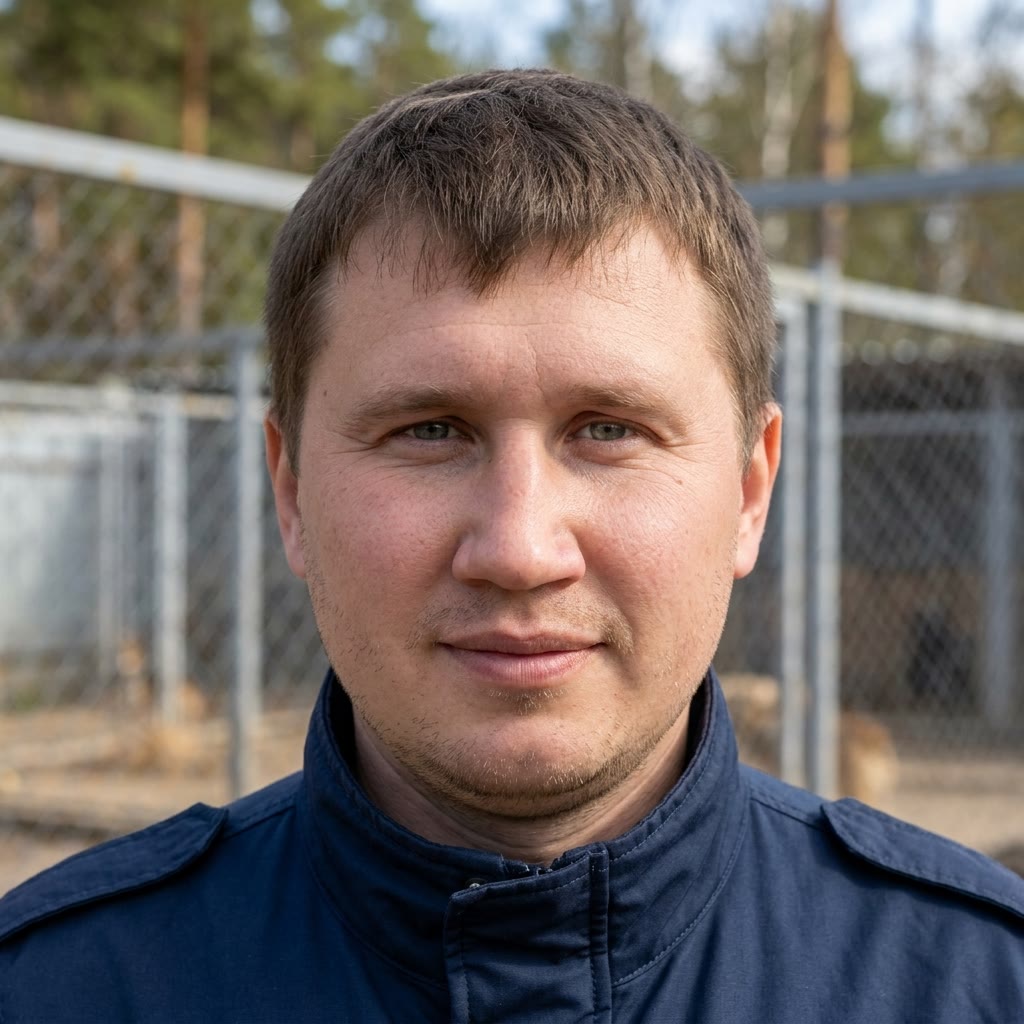
Andrew Darov is a professional dog trainer from Russia. He runs a boarding and holding business and takes dogs in for a month-plus residential correction, then publishes that method in these articles. He leads seminars and teaches other trainers and veterinarians. He writes this English site for owners in the US, the UK, and the EU. He is not a veterinarian. There are no invented reviews on this site.
The offer that is actually his: he is a professional dog trainer from Russia. He takes dogs into his care for a month-plus residential correction — real dogs in a boarding and holding business, not a comment-section story. The method is the one written in the articles on this site. There are no fake reviews here and no invented five-star files.
He graduated from a military academy. After that he worked dogs in detection: practical preparation of dogs to search for narcotics and for ammunition. That is field work, not a rank on this page and not a claim of current military service.
Seminar rooms and classrooms are part of the same job: he teaches other dog trainers and veterinarians how to run criteria, read a dog, and keep a household safe. This English site is the written version of that work, for owners in the US, the UK, and the EU.
A suburban US kitchen and a UK third-floor flat need different toilet furniture and the same schedule. That is why potty training is one URL with two labelled setups, not two national brands.
Paid work — a $150 consultation or $500 monthly curatorship — is on Work with me, or WhatsApp.
What he is not
He is not a veterinarian and does not play one in schema.org markup. Teaching veterinarians at a seminar is not a veterinary licence and not a diagnosis. He does not claim awards, television credits, or US residency on this site. If a protocol needs a qualified professional in the room — true aggression, a child who has been bitten, a medical red flag — the page will say so.
How he writes
Answer first. Headings as questions. A visible FAQ that only repeats questions the article actually asked. Failure modes on the same page as the ladder. When the subject leaves the training floor, he cites public standards rather than pretending a trainer essay is a veterinary paper. The full rules live in the editorial policy.
Every article on Dogmindlab carries this byline and links here. For paid work use Work with me.