Expert Advice · Skills · 14 min read
Loose Leash Walking: Stop Pulling Step by Step
Slack lead is the criterion. The harness page stays the tool. Threshold stays a distance problem.
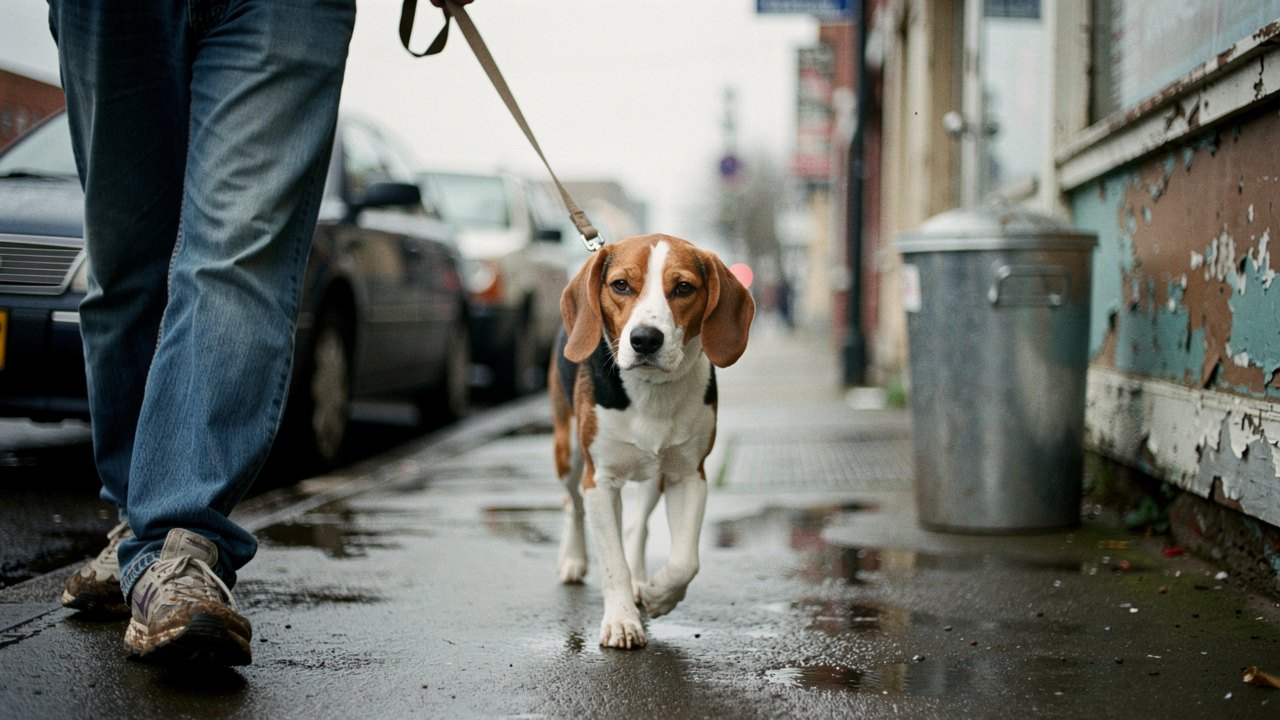
A loose leash is slack you can see while the dog walks with you. The criterion is a soft line, not a competition heel and not a moral victory. You pay at your seam. When the lead goes tight, the walk stops. A harness and a lead let you steer and feed. They do not teach the walk by hanging on a hook.
This is a skills page. The tool page stays the tool. If the dog cannot eat because a trigger is too close, you are on on-leash threshold, not in a longer argument about manners. I do not run prongs or shock as a shortcut. The American Veterinary Society of Animal Behavior recommends reward-based methods for training. Read their position statements as a public standard. This page is the pavement version: pay slack, stop on tight.
What is a loose leash, as a skill?
Name the picture or you are wishing.
- The lead has a visible J or a soft drape.
- The dog can walk, sniff on a cue you chose, and come back to the seam.
- You can gather the line in one hand without a science project.
- A jump or a lunge cannot land on a stranger.
A tight lead with a dog who is “technically next to you” is not the skill. It is a bowstring. You are already late.
Food is pay, measured from the day’s ration. See food as a reinforcer. Deliver at your hip or thigh so the dog orients to the seam, not to a hand in the air. A sit is optional. Slack is the criterion. If you want a formal heel later, train it as a raise after slack is cheap.
The tool prevents a rehearsal. The food buys the slack. A yank buys a new fight.
How do you start loose-leash walking?
You start where you can still win.
Fit a harness that does not twist. Pick a fixed lead you can gather. That shopping list is on harness and lead. No affiliate URL here. No checkout. A retractable tape in a doorway is a variable you do not control. A collar can hold an ID tag. In the UK that is a legal habit as well as a safety habit. The harness holds the walk.
Then:
- Stand still in a quiet room or a dead-end drive. Lead on. Hands boring.
- The instant the lead is slack, mark and feed at your seam.
- Take one step. If slack holds, mark and feed. If the line tightens, you stop. You become furniture.
- When the dog comes back or the line softens, mark, pay, step again.
- Quit while the picture is still cheap. Ten paid steps beat a mile of pulling.
Do not start on a Saturday high street. That is a test, not a first lesson. A US cul-de-sac with a wide verge is an easier classroom than a UK pavement the width of one body. The learning is the same. The architecture is not. On a narrow path you shorten the line so you do not trip a stranger and then call the dog reactive when they startle.
If the dog cannot take food in the quiet place, you do not have a walking problem yet. You have a handling problem, a ration problem, or a body that does not want to eat. Change the picture. Do not invent a lazy dog.
What do you do when the lead goes tight?
Stop. The walk is the pay-off. Tight lead ends the pay-off.
You do not pop the collar. You do not drag. You do not narrate. You wait. When slack returns, you mark and you step. If the dog hits the end and bounces, you pivot away from what they wanted, then pay the first slack toward you.
Two other pictures get a different door:
- The dog is over threshold: tight face, screaming, food refused, weight forward. You leave. You put a car or a hedge between you and the trigger. That protocol is on-leash threshold. Cues shouted into a scream are rehearsal.
- The dog is greeting, jumping, or dragging to a person. Manage the distance. Four paws is jumping up. A slack lead in a crowd is also manners toward people.
Sniffing is not the enemy. Unpaid, endless sniffing at the end of a tight line is how the walk becomes a hunt. You can mark a sniff on a slack lead, then call back to the seam and pay there. A recall on a long line in a quiet field is a different session. Do not mix a first loose-leash lesson with an off-lead wish.
How do you take it to a real pavement?
Raise one variable at a time, and only when the current picture is cheap.
A working order:
- Quiet room or yard, a few steps.
- The same place, more steps, one easy change of direction.
- A new surface: gravel, a drive, a landing.
- A quiet street at a quiet hour.
- A street with one mild distraction you can leave.
If you add a new street and a new dog and a bicycle in one outing, you are hoping. Failures tell you to drop criteria, not to repeat louder.
US pavements with a strip of grass give you a wall and a place to stop. UK pavements often do not. Plan the exit before you need it: a doorway, a side road, a parked car as a screen. Shorten in crowds. A two-metre chaos rope at a kerb is how you meet a bicycle with the dog’s face.
Markers and rate of reinforcement still apply. The rules live on markers and criteria. Here we stay the walk: slack paid, tight unpaid, distance honest.
When is this not a walking problem?
Use a fence you can see.
This ladder: the dog can eat, can turn with you, goes tight for a smell or a forward wish, and softens when the walk dies.
Not this ladder: food refused, a scream that does not stop, a dog who injures people or dogs, a sudden limp or a cough when the collar sits on the neck, a dog who was easy last month and is frantic now. Pain is a veterinary question first. See when to call the vet.
A prong or a shock can suppress a pull and teach that the street is dangerous. This publication does not run those as tools. If the dog is injuring people or the handler is frightened, change the route and see a qualified professional.
What are the usual failure modes?
- You started on the busiest street you have. The first classroom was a test. Drop to a quiet drive and pay slack.
- You kept walking on a tight lead. Tight was paid with forward motion. Stop. Slack is the only ticket.
- You bought a new tool and skipped the skill. The harness page is fit and length. This page is the walk. Both are required. Neither is a checkout.
- You popped the lead and called it communication. You taught that walking with you predicts a neck hit. Rebuild with food and stops.
- The dog was over threshold and you cued sit. A sit in a scream is not calm. Leave. Add meters.
- You used a retractable in a crowd. Variable length is how rehearsals land on people. Fixed lead. Gather it.
Sources
AVSAB position statements on humane dog training. ASPCA overview of common dog behavior issues. Paraphrased as public standards, not quoted as a substitute for reading the originals. avsab.org/resources/position-statements/ · aspca.org — common dog behavior issues
Questions on this page
What is a loose leash, as a skill?
A lead that stays slack while the dog walks with you. The criterion is visible slack, not a pretty heel. You pay at your seam. When the lead goes tight, the walk stops. Gear does not teach this by sitting in a drawer.
How do you start loose-leash walking?
In a quiet place, on a harness you can steer, with food from the day’s ration. Mark and feed at your seam for slack. Take one step. Pay again. Do not start on a busy pavement and hope.
What do you do when the lead goes tight?
Stop. Become boring. When slack returns, mark and step. If the dog cannot think, you are too close to a trigger. Add distance. That is threshold work, not a longer conversation on a tight line.
How do you take it to a real pavement?
Raise one variable at a time: a few more steps, then a new surface, then a quiet street. A US verge is not a UK pavement the width of a lead. Shorten the line where people and bikes share the path.
When is this not a walking problem?
When the dog is over threshold, in pain, or injuring people or dogs. Manage, change the route, see a qualified professional. A prong or a shock is not this protocol.
Work with me
A $150 consultation or $500 monthly curatorship. Opens WhatsApp to Andrew.