
Expert Advice · Skills · 13 min read
Teach a sit for greeting instead of jumping
Four paws first. Sit is the paid greeting picture when the jump is already rare. Not mandatory for every dog.
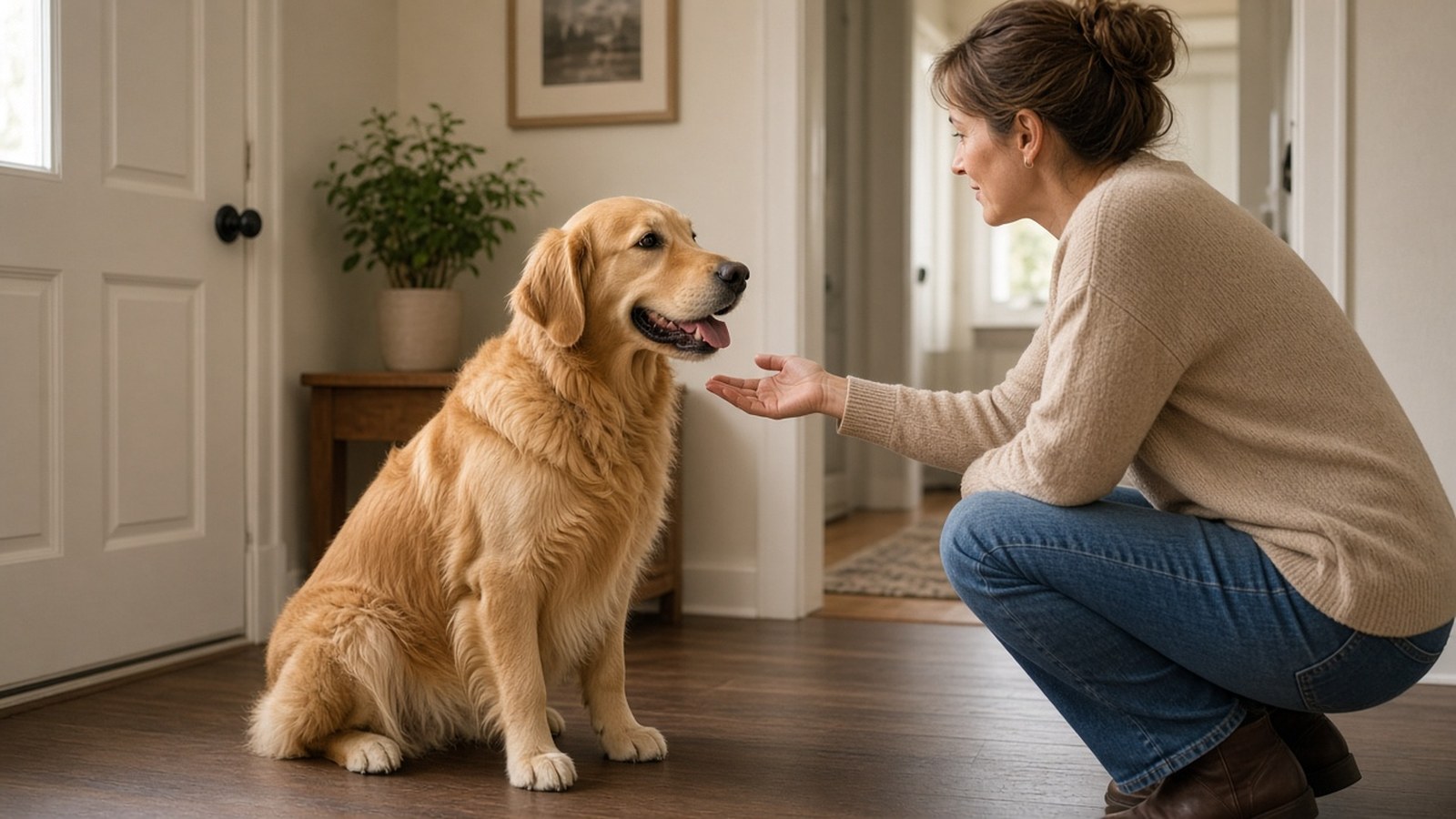
A sit for greeting is a planted hip on the floor while a person says hello. It is optional polish. Many dogs only need four paws on the floor. Jumping up owns that criterion and the door management plan. Read it first if front feet still pay. This page assumes four paws is already cheap and teaches a sit as the picture you choose to pay during greetings.
This is a skills ladder. I work dogs in residential boarding for a month and longer. I am a professional trainer from Russia, not a veterinarian. I do not run kneeing, paw grabs, or shock as a greeting fix. The AVSAB position statements recommend reward-based methods. Read them as a public standard.
Should every dog sit to greet?
No. Four paws is manners. Sit is a style choice.
Households with elderly guests, muddy paws, or a tall dog who still leans hard often like a sit. Households with a short dog who already greets with four paws on the floor may never need it. Do not turn an optional sit into a moral rule for every breed.
If the dog still jumps when the latch turns, you are early. Manage the door. Pay the floor. See jumping up and children and guests. Stacking “sit” on a dog who has never been paid for four paws at arousal is how sits explode into jumps the moment a hand appears.
If you still pay the jump on Tuesdays, the sit is a wish, not a criterion.
How is this different from the jumping-up page?
Different job. Shared doorway.
Jumping-up answers: stop paying the jump, pay four paws, leash or gate before guests, no knee or shock. Stay there until that picture is boring.
Sit for greeting answers: once the feet stay down, teach a sit and pay that sit during the hello. The door still needs management while you raise criteria. You borrow the gate and the briefing from jumping-up. You do not paste that whole protocol into this file.
Wait at the door is a different skill again: feet behind the sill until release. Place parks the dog on a mat away from the latch. Use those when the household plan needs distance. Use this page when you want a sit in the greeting spot.
How do you teach a sit for greeting?
Quiet room first. Real guests last.
Teach a sit the boring way. Lure or capture a hip on the floor. Mark. Feed at chest height or on the floor between the front paws so the dog stays down. Build one second, then two, in an empty kitchen. No doorbell yet.
Then add a still person the dog already likes. Cue the sit or wait for it. Pay. Hands stay off.
Then add a slow approach. Person takes one step. Sit holds. Pay. If the dog pops or jumps, the person becomes furniture. Reset. Pay the next sit.
Then add a brief hello at chest height for a count of two. If the feet leave the floor, the hello ends. No scolding drama. The sit earned contact. The jump earned nothing.
Raise in this order only when the current step is cheap:
- Sit in a quiet room with you.
- Sit with a known person standing still.
- Sit during a slow approach.
- Sit during a two-second chest hello.
- Sit at a staged knock with the dog already managed on a lead or behind a gate.
If you open the door on a Friday party as step one, you are hoping.
Food on the floor between the paws helps when hands are still exciting. Measure treats from the day’s ration. See food as a reinforcer.
What if the dog pops when someone reaches in?
The hello was too long, too high, or too early.
Hands over the head pull many dogs up. Greet at the chest. Shorten the contact. Feed earlier in the sit. Or drop back to four paws only until arousal is lower. Guests who say “it’s fine” mid-jump are unpaid trainers. Brief them or keep the dog behind a gate. That rule lives on jumping up; it still applies while you proof a sit.
US front halls and UK narrow landings both raise arousal. A landing one body wide is a reason to crate or gate first, not a reason to demand a show sit from a vibrating dog.
When is a greeting sit not the right ladder?
Use a fence you can see.
This ladder: jump already rare with management, loose body, takes food in a sit, pops are resets not slams.
Not this ladder: unpaid jumping still the default, stiff body, slam into guests, a child used as a toy, or sudden aggression overnight. Pain is veterinary first. True aggression is not a sit cue. Gate the dog. See a qualified professional. Dogmindlab will not invent testimonials or a triage inbox for that.
Markers matter. Use the same mark-and-feed habit you use for other skills so the sit is a clear picture, not a mumbled “sss-sit-sit.” See markers and criteria if the household mark is still fuzzy. A clean marker makes it obvious which second of the sit earned the food when a guest’s hand appears.
What usually fails?
- You taught sit before four paws was cheap. Run jumping-up. Pay the floor first.
- You opened the door cold and cued sit. Arousal was never paid. Stage knocks. Manage the latch.
- Guests reached over the head. Chest hello. Shorter contact.
- You kneed the chest when the sit failed. Wrong method. Reset with food and management.
- You treated sit as mandatory for every dog. Optional polish. Four paws can be enough.
- You used a child as the first greeter. Children squeal and run. Last rung, not first.
Sources
AVSAB position statements on humane dog training. ASPCA overview of common dog behavior issues. Paraphrased as public standards for an optional greeting sit after four paws is established, not quoted as a substitute for reading the originals. avsab.org/resources/position-statements/ · aspca.org — common dog behavior issues
Questions on this page
Should every dog sit to greet people?
No. Four paws on the floor is enough manners for many households. A sit for greeting is optional polish once the jump is already rare. If the dog still rehearses jumping at the door, run the jumping-up protocol first. Do not stack a sit on an unpaid jump.
How is sit for greeting different from stopping jumping up?
Jumping-up owns management at the latch and the four-paws criterion. This page teaches a planted sit as the picture you pay when a person approaches. Cross-link jumping-up heavily. Do not clone that door ladder here.
How do you teach a sit for greeting?
Teach a sit in a quiet room until it is cheap. Add a person standing still, then a slow approach, then a brief hello at chest height while the sit holds. Mark and feed the sit. If the feet leave the floor, the greeting dies and you reset.
What if the dog pops out of the sit when a guest reaches in?
The criterion was too high. Shorten the hello, feed earlier, or return to four paws only. Hands over the head are a common pop cue. Greet at the chest. Manage the door until the sit is paid at that arousal.
When is a greeting sit not the right ladder?
When jumping is still the unpaid default, when the body is stiff or slamming, when a child is being hunted, or when pain showed up overnight. Manage, fix four paws first, or get professional help. This page is not a clinic.
Work with me
A $150 consultation or $500 monthly curatorship. Opens WhatsApp to Andrew.