
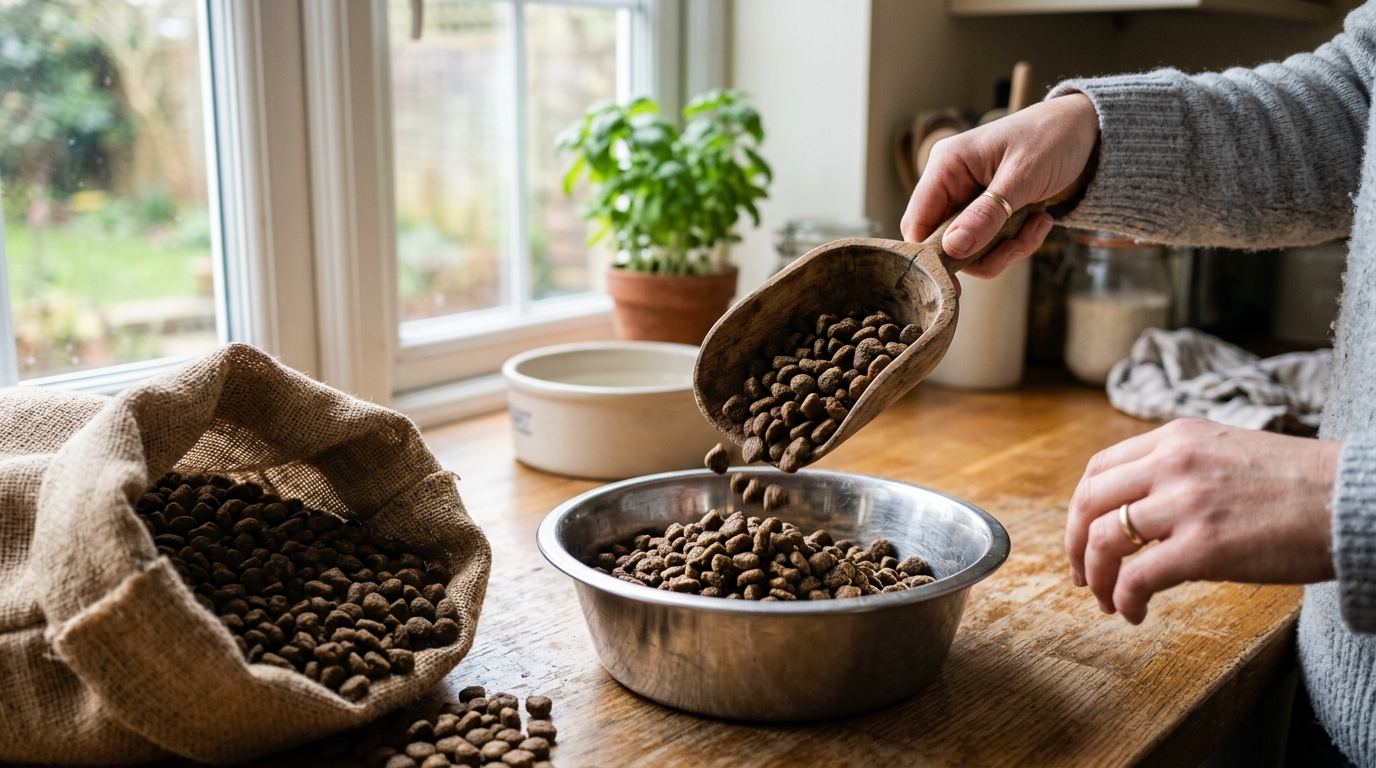
Ration and pay
Dog nutrition and rations
Measure the ration, spend part of it on work, and notice the body getting heavy. This hub is owner logistics. Medical feeding belongs to a veterinarian.
Nutrition on this lab is owner logistics and training pay — how you measure a ration, how you spend part of it on work, and how you notice a body that is getting heavy. It is not a renal diet, not an allergy protocol, and not a grain-free DCM argument. Ask your veterinarian what “complete and balanced” means for this dog.
I am a trainer. I watch whether the dog can still eat in a session, whether the waist is disappearing, and whether the treat pouch is a second uncounted meal. Those are training-floor facts. They are not a prescription.
What does a trainer actually do with food?
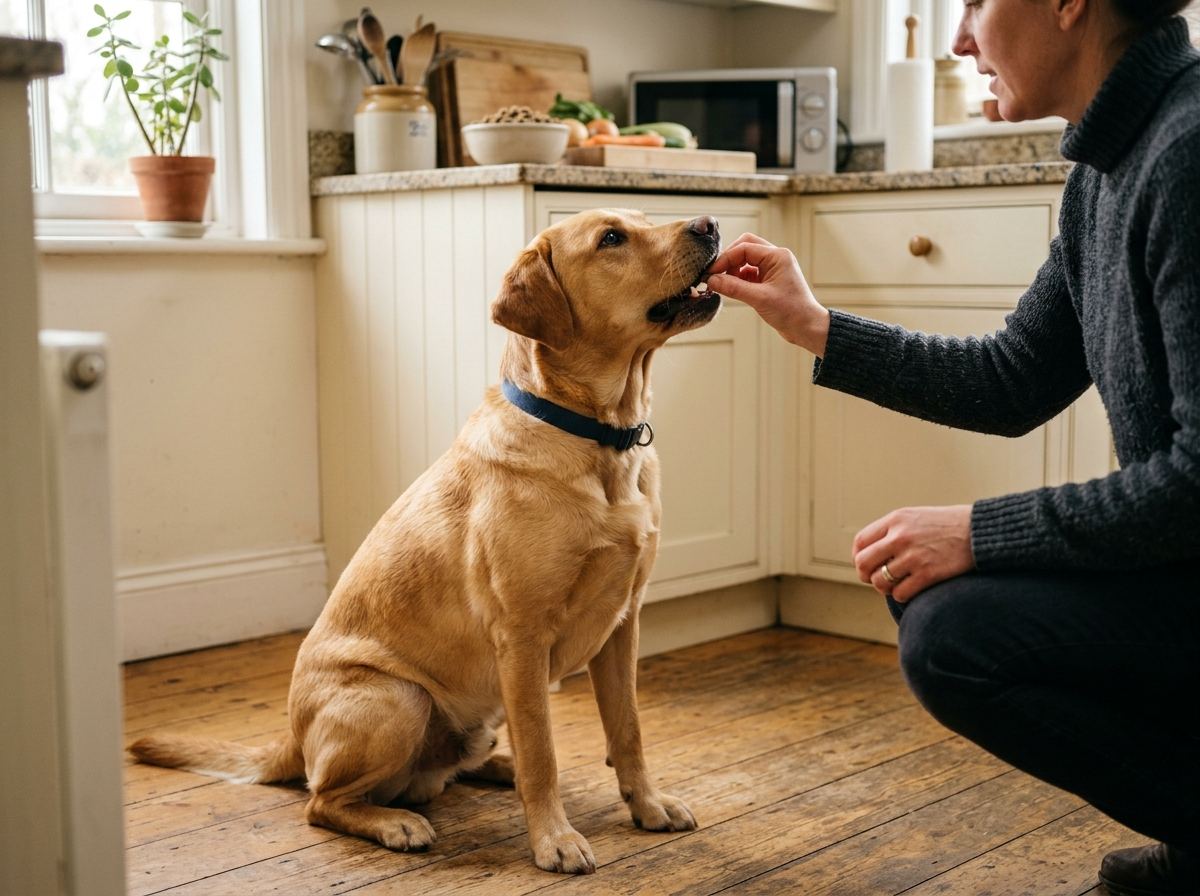
Food is the cleanest reinforcer most pet homes have. It is already in the house. You can deliver it fast. You can make it smaller without inventing a new toy. The food as a reinforcer page is the working rule: the day’s calories are one pie. Training pay is a slice of that pie, not a second bakery. For treat kcal as line items — label math, cheese subtraction, pouch leaks — see treat calories in the ration. For mid-session refusal (picture, pay grade, fullness, body, competing reinforcers), see when food stops working.
If the dog will not eat in the room you are training, you do not have a “food-isn’t-motivating” personality. You have a picture that is too hard, a pay that is too dull for that room, or a body that does not feel like eating. The first two are training. The third is health.
How do you keep training pay inside the ration?
Weigh or measure the daily food once. Split it: a bowl for meals, a pouch or a box for work. If you use something higher-value than kibble — cheese, meat, a commercial training treat — subtract, do not add. A Labrador who “just gets a few extras” is how lean dogs become round dogs while everyone swears they barely feed.
I will not invent calorie-per-kilogram numbers on this site. Energy needs move with age, neuter status, weather, and whether the dog actually works or only looks busy. The public standard I point owners at is simple: feed a food a veterinarian would call complete and balanced, then watch the body. The WSAVA Global Nutrition Guidelines are the owner-facing overview I send people to before they buy a story on the bag.
What is body condition from the training floor?
A trainer sees gait, a disappearing waist, and a dog who is heavier at the end of a month than at the start. Body condition score is a hands-on scale, not a vibe and not a breed-standard photo. The body condition and rations page is how I use BCS without pretending I am a nutritionist. The weekly home checklist — photo angles, rib/waist/tuck, when to call the vet — lives on BCS check at home. Lean working Labs stay lean on purpose. A soft Lab is not “well loved.” It is a dog carrying extra load on joints that already work hard.
What will this hub never prescribe?
No brand. No homemade recipe. No renal, pancreatic, or elimination diet. No grain-free-versus-DCM debate run from a blog. Those belong to a clinician who can see the animal and read a label. AAFCO “complete and balanced” language, or the equivalent statement in your country, is a starting question for your vet — not a badge I stamp on a product.
If the dog vomits, has blood in stool, collapses, or cannot keep food down, leave this hub. Training pay is not a treatment. See not veterinary advice.
In this section
Expert advice
Food as a reinforcer Meal versus training pay, when food stops working, and how to measure the ration so the kitchen does not become a second dinner.
Expert advice
Body condition and rations BCS as a trainer sees it, lean Labs, and why this page will not prescribe a brand.
Expert advice
BCS check at home Weekly rib, waist, tuck checklist with photo angles — not a clone of the theory page.
Expert advice
Treat calories in the ration Label kcal as line items inside the day’s pie. Subtract extras; catch pouch leaks.
Expert advice
When food stops working Mid-session refusal diagnosis: picture, pay, fullness, body, competitors. No lazy-dog story.Work with me
A $150 consultation or $500 monthly curatorship. Opens WhatsApp to Andrew.