
Expert Advice · Skills · 8 min read
How to teach a dog the quiet command, step by step
A quiet cue starts with a thank-you for the alert, so the dog knows you heard it. Then you reward the first moment of silence and slowly ask for longer pauses. Shouting quiet over the noise is the part to drop.

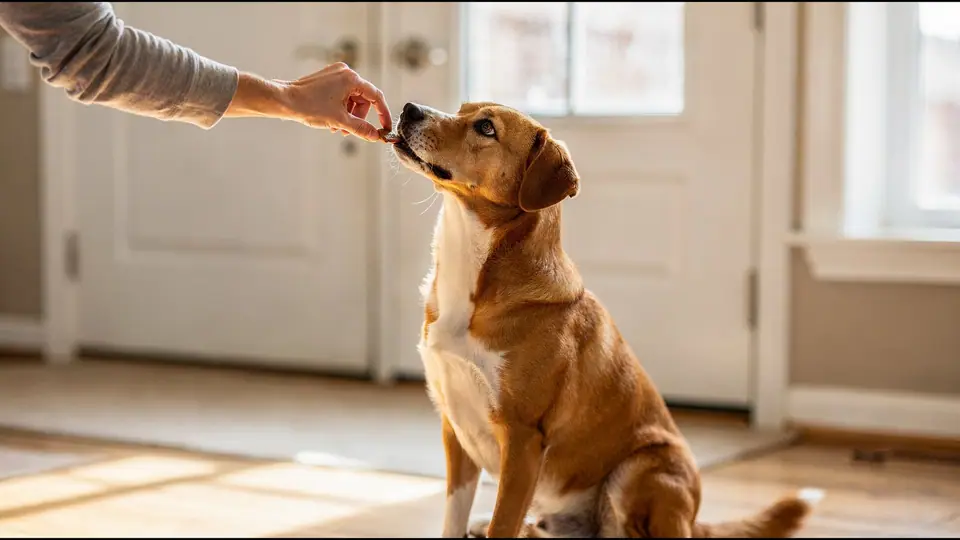
To teach a dog the quiet command, let the dog bark two or three times at a small sound you have planned, say “thank you” and look toward the noise, then reward the very first second of silence. Once the dog goes quiet quickly after the thank-you, add the word “quiet” just before you wait, and build the silence from one second to ten. This page owns the cue itself. If the barking happens mainly when people knock or arrive, the full setup for the front door is on how to stop a dog barking at the door.
I am Andrew Darov, a dog trainer. I am not a veterinarian. This is a skills page about a calm, reward-based quiet cue.
What does a quiet cue mean?
Quiet means: thanks, I heard it, you can stop now. You teach it by thanking the dog for the alert and then rewarding the silence that follows.
Barking at a knock, a passing dog or a strange noise is a dog doing what dogs do: telling the household that something is happening. Trying to stop the first bark completely is a hard fight. A quiet cue accepts a short alert and teaches the dog what to do next.
Think of it in two parts:
- The alert. Two or three barks. You answer with a calm “thank you” and a look, so the dog knows the message landed.
- The silence. The dog stops, and silence is what earns the reward.
Why does shouting quiet often fail?
When you shout “quiet!” over a barking dog, the dog often hears you joining in. Your voice is loud and excited, so the barking gets louder too. The word also gets said while the dog is barking, so it ends up meaning nothing in particular. A quiet cue works when the word comes just before the silence and the reward comes after it.
How do you teach quiet step by step?
Start with a small sound you control, not a real courier. Short sessions of five to eight tries, once or twice a day, work best. Use small, tasty treats.
- Set up a small, planned sound. A helper knocks once softly on an inside door, or you play a doorbell sound at low volume. The sound should be enough for one or two barks, not a full burst.
- Thank the dog for the alert. After two or three barks, say “thank you” in a calm, normal voice and glance toward the sound for a moment. Some dogs stop right there.
- Reward the first second of silence. Stand still and wait. The moment the dog is silent for one second, say “yes” and give a treat low and close to you, away from the door. If the dog barks again, wait for the next pause.
- Add the word quiet. When the dog goes silent within a couple of seconds after the thank-you, say “quiet” once, then wait for the silence and reward it. Over a few sessions the word starts to predict the pause.
- Build longer pauses, then real life. Stretch the silence to two, three, five and then ten seconds before the reward. Then follow the quiet with a job, such as going to a mat. Move to real doorbells and passers-by only when the planned version is easy.
If the dog cannot stop at all, the sound is too strong. Make it softer, move further from it, or try again when the dog is calmer.
What should the dog do after it is quiet?
Silence is hard to hold with nothing to do. Give the dog a next step:
- Go to a mat. Teach place separately, then link them: “quiet”, a short pause, “place”.
- Come to you. A hand target moves the dog away from the window or door.
- A sniffing game. Scatter a few treats on the floor away from the door. Sniffing and barking are hard to do at the same time.
How do you use quiet at the door and window?
A quiet cue is one tool. It works much better when the dog is not practising barking all day while you are out of the room. Block the view of the street at dog height, keep the dog away from the front window when you cannot train, and use gates when guests arrive. The full door and window setup sits on how to stop a dog barking at the door.
Expect a short spike before things improve. When barking stops working, many dogs try harder for a few days. That is explained on why behaviour gets worse before it gets better. Stay calm and keep rewarding the quiet.
Should you use quiet for attention barking?
Usually not. When a dog barks at you to get you off the phone, onto the floor or to share dinner, rewarding the pause right after the bark can teach a loop: bark, stop, get a treat. For barking aimed at you, give the dog a quiet way to ask and plan attention before the bark starts. That plan is on dog barking for attention.
When is barking a sign of something else?
Some barking is not a manners question. Ask your vet if barking or whining starts suddenly in a dog who used to be quiet, if an older dog barks at night and seems confused or restless, or if barking comes with limping, panting or signs of pain. Our page on when to call the vet lists signs that should pause training. If your dog barks mostly at night, see dog barking at night.
If the barking comes with lunging, snapping or real panic, get help from a qualified trainer or behaviour professional.
What are the usual mistakes?
- Saying quiet over and over. Say it once, then wait. Repeating the word teaches the dog to ignore the first one.
- Rewarding while the dog is still barking. The treat comes after the silence, never in the middle of the noise.
- Starting with the real doorbell. Begin with a soft, planned sound you can repeat.
- Asking for long silence too soon. One second first. Build up a little at a time.
- Leaving the window open all day. Hours of barking at the street undo minutes of practice. Block the view.
- Punishing the alert. Sprays, shock collars or shouting can make a dog more worried about the sounds it barks at.
Use the quiet cue with how to stop a dog barking at the door for arrivals, dog barking for attention for barking aimed at you, and place for a calm job afterwards. More on the skills hub.
Questions on this page
How do I teach my dog the quiet command?
Let the dog bark two or three times at a small, planned sound, say "thank you" and look toward the noise, then wait. The moment the dog is silent for a second, mark it and give a treat. Once the dog goes quiet fast after the thank-you, say "quiet" just before you wait, and build the silence from one second to ten.
Why say thank you when my dog barks?
Many dogs bark to alert you. A calm thank-you and a quick look tell the dog the message has arrived, which often makes the next part, being quiet, much easier. It also keeps your voice calm, so you do not end up barking along.
How long does it take to teach quiet?
Most dogs grasp the idea in a few short sessions with a planned sound. Using it with real doorbells and passers-by usually takes two to four weeks of practice, with management in place so the dog is not barking for hours when you are out of the room.
Should I use quiet when my dog barks at me for attention?
Usually not. If you reward the pause after a demand bark, some dogs learn to bark, stop, then collect a treat. For barking aimed at you, give the dog a quiet way to ask instead and plan attention before the bark starts.
When is barking a reason to see the vet?
Ask your vet if barking or whining starts suddenly in a dog who used to be quiet, happens at night in an older dog who seems confused or restless, or comes with signs of pain. Training is the second step after a check in those cases.
Work with me
A $150 consultation or $500 monthly curatorship. Opens WhatsApp to Andrew.