
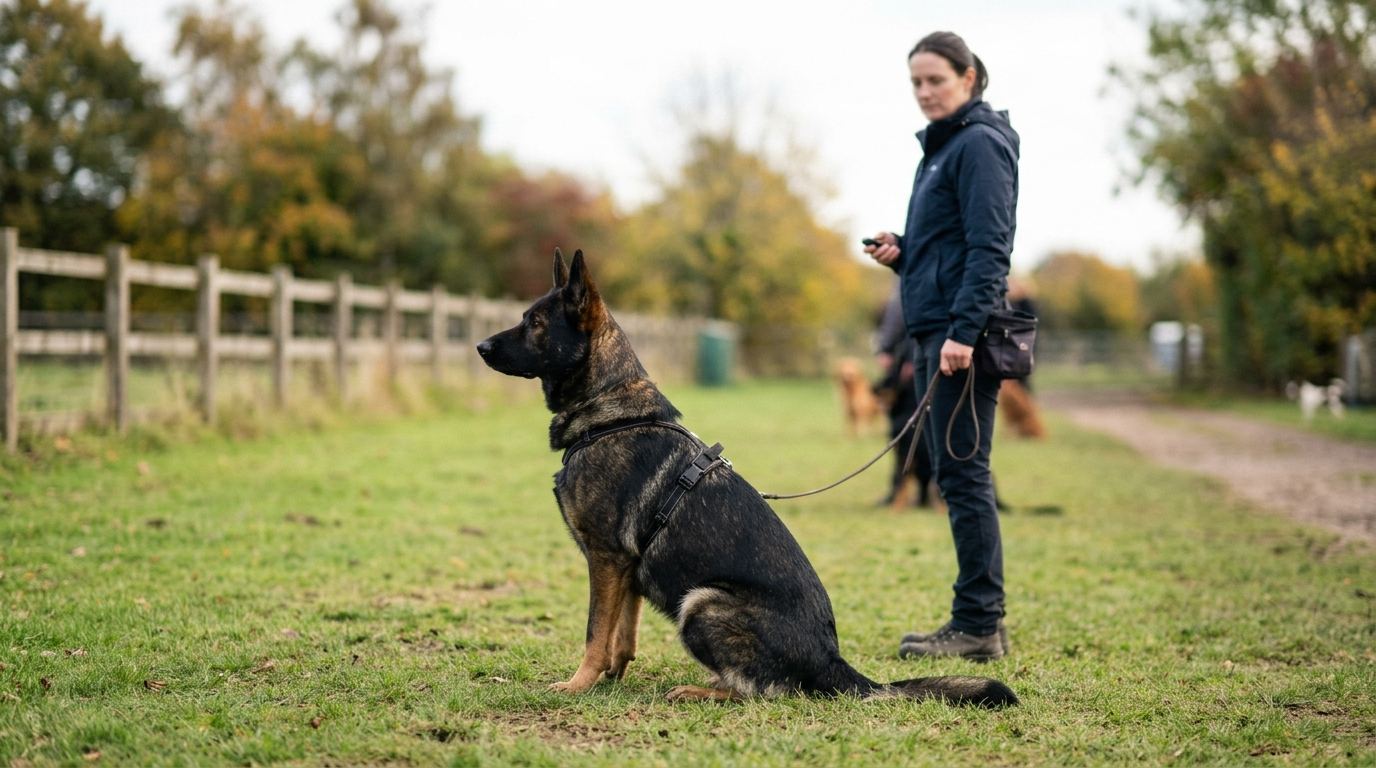
How learning works
Dog training theory
Name a criterion, pay the behavior that meets it, and change the setup when the dog cannot win. Theory spokes plus applied marker and rate pages. Skill ladders stay on Skills.
Training on this lab is a learning problem you can run in a kitchen, not a personality contest and not a dominance lecture. You name a criterion, you pay the behavior that meets it, and you change the setup when the dog cannot win. Classical conditioning pairs events. Operant conditioning changes what the dog does next. Start with classical vs operant and markers and criteria, then the applied spokes: calm reinforcer, clicker vs verbal marker, kitchen rate of reinforcement, and criteria stacking mistakes.
This hub is the theory desk. The skill ladders — sit, recall, leash, station — stay where they are. Puppy protocols stay under puppy. If a pattern is already paying the dog, go to behavior. If you cannot name the process you are using, you are wishing.
What is dog training on this lab?
A session is three named pieces:
- A criterion you can see (four paws on the floor; a hip on the mat; a closed mouth while you clip the lead).
- A pay the dog actually wants in that room (food from the ration, a tug, release to sniff).
- A setup that makes the right behavior cheaper than the wrong one (distance, leash length, who is moving).
If you cannot point at all three, you do not have a protocol. You have a hope and a raised voice. I write as a trainer who has run detection dogs and household dogs in the same week. The learning rules do not change because the uniform did. The criteria do.
Public overviews of operant conditioning — including Britannica’s entry — describe the same skeleton trainers use on a kitchen floor: a stimulus sets the occasion, a response happens, a consequence makes that response more or less likely next time. Read the original. Do not treat this page as a textbook reprint.
How do classical and operant conditioning differ in a kitchen?
Classical (Pavlovian) is about prediction. A sound, a smell, a person at the door becomes a signal for something that already matters. The click of a bowl, the jingle of a lead, the kettle — those can become conditioned stimuli. The dog does not “decide” to salivate or to light up. The pairing did that.
Operant is about what the dog does next. Sit when you pick up the bowl and the bowl is placed. Four paws on the floor when you walk in and you greet. Jump and the greeting dies. The cue (Sd), the behavior (R), and the pay (Sr) are the loop. The classical vs operant page runs both in everyday examples, including the extinction burst that people mistake for spite.
“Balanced training” is a shopping list of tools. It is not a third learning process. If you add an aversive, you are still inside operant punishment or negative reinforcement. Naming the brand of collar does not invent a new law of learning.
What is a marker, and when do you raise criteria?
A marker — a click, a quiet “yes,” a tongue click — is a conditioned stimulus that pins the exact behavior you are about to pay. It is not magic. It is the cleanest way to tell a dog that sit, not the one two seconds later. Rate of reinforcement is how often the dog wins. If the dog is guessing, the rate is too low or the picture is too hard.
You raise criteria when the current picture is cheap: most reps look the same, the dog offers the behavior without a lure, and you could bet on the next five. You do not raise because a video said “week two.” The markers and criteria page is the working rule. Tool choice between clicker and verbal lives on clicker vs verbal marker. Kitchen rate is a deep-dive on rate of reinforcement in the kitchen. Stacked raises are the crash report on criteria stacking mistakes. When food is a poor fit, see calm reinforcer.
When is training the wrong tool?
When the dog is in pain, in panic, or in a medical emergency. When a child is being treated as prey. When you are arguing a dog out of a bite that already has a job. In those rooms the protocol is management and a qualified professional in your country. Food as pay crosses into nutrition. Sudden refusal to eat, or a session drowned by pain signs, belongs on health. Training pages here are not veterinary advice.
In this section
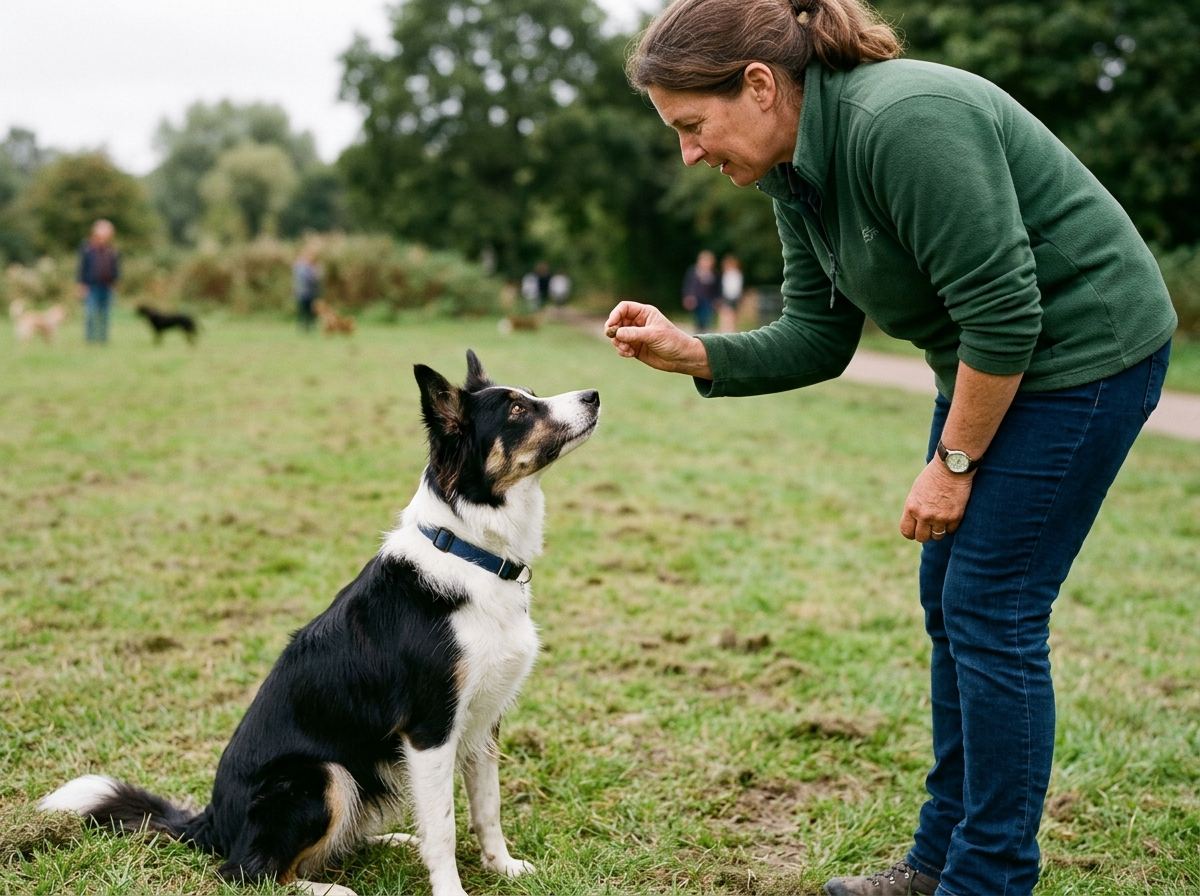
Expert advice
Classical vs operant conditioning CS/US/CR against Sd/R/Sr, kitchen loops, the extinction burst, and why “balanced” is not a learning theory.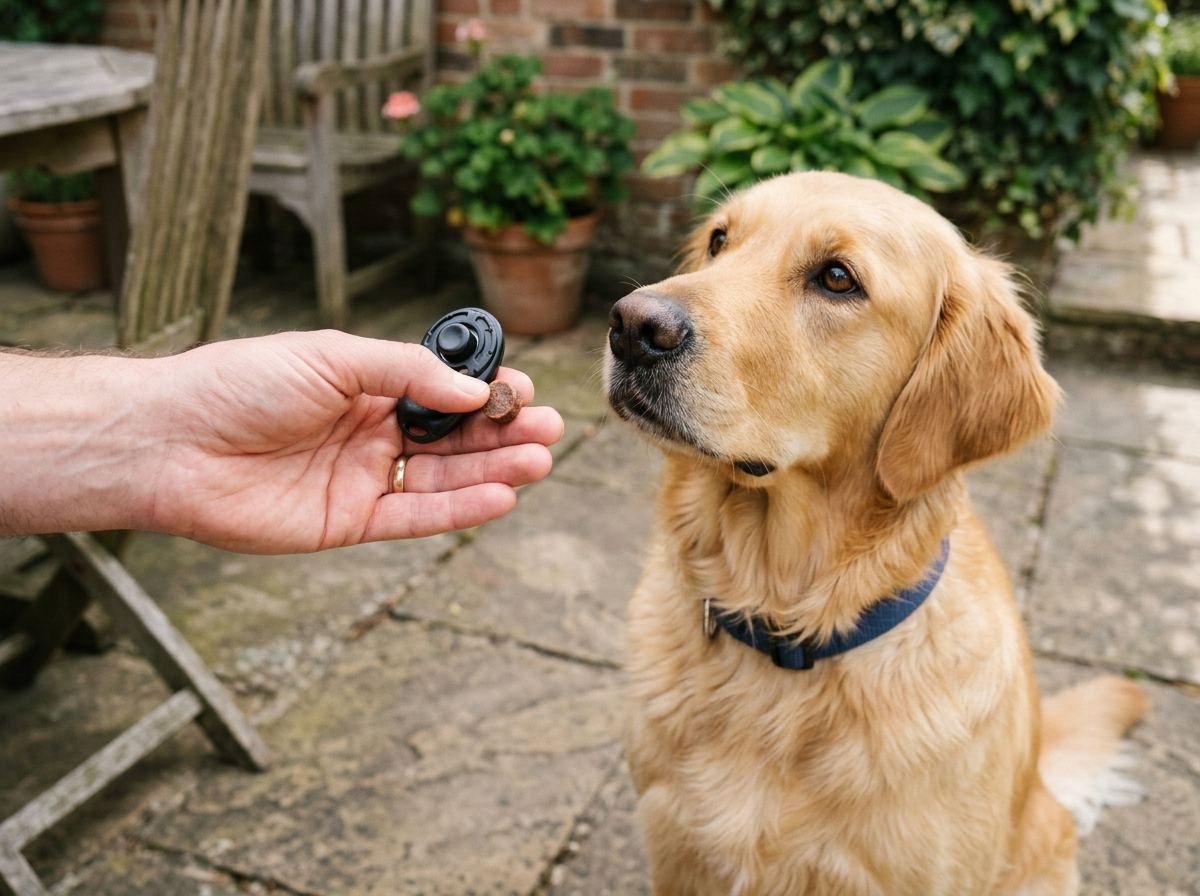
Expert advice
Markers and criteria Click, “yes,” rate of reinforcement, and when to raise the bar without losing the dog.
Expert advice
Calm reinforcer Toys, petting, access when food fails — pay soft behavior, not fireworks.
Expert advice
Clicker vs verbal marker Tool choice: mechanical click or short “yes.” Markers overview stays separate.
Expert advice
Rate of reinforcement in the kitchen Keep the dog winning while you cook. Deep-dive beyond the markers tease.
Expert advice
Criteria stacking mistakes One variable at a time. Stacking distance, duration, and distraction is a different exam.Work with me
A $150 consultation or $500 monthly curatorship. Opens WhatsApp to Andrew.