Expert Advice · Skills · 13 min read
Leave-it on walks: pavement prizes under management
Pavement prizes are a management problem before they are a cue. Kitchen leave-it stays the fist and floor ladder.

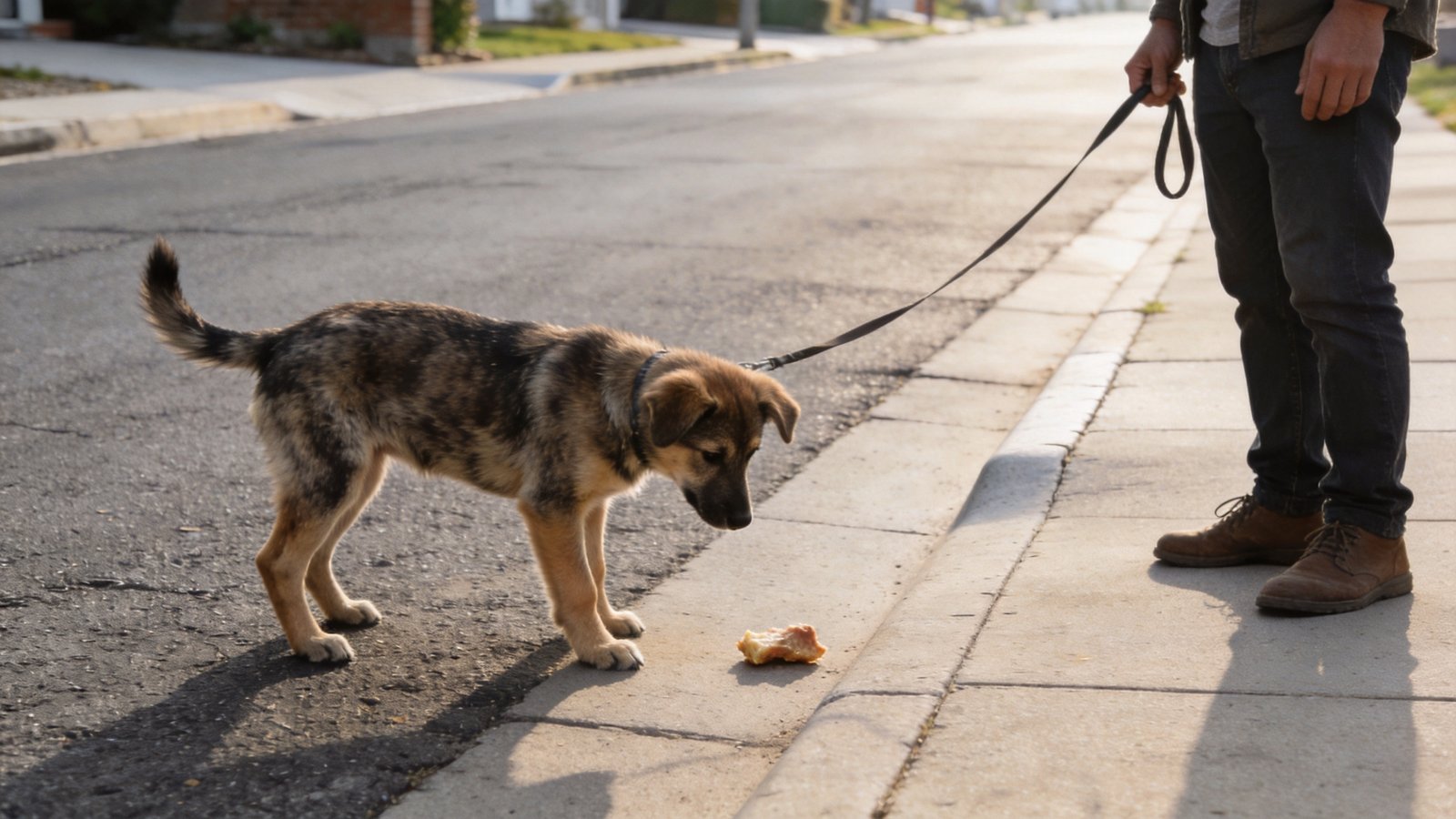
Pavement prizes are not a louder kitchen leave-it. Leave-it teaches orienting off a closed hand, then the floor, then a guest indoors. This page is the walk: wrappers, bones, fox leftovers, and takeaway bags on a US sidewalk or UK pavement, under short-lead or long-line management, with one honest cue and a clear rule for when you pick the thing up instead.
I train on month-plus residential stays from Russia. I am not a veterinarian. No affiliate leads, no fake reviews.
This is a skills protocol. Cross-link drop it with real trash when the prize is already in the mouth, loose-leash walking for slack as the walk criterion, emergency U-turn when you need to leave the whole scene, and management before manners for the house bins that leak onto the street.
Why manage before you cue?
Because the pavement pays faster than your voice.
A dog who reaches first learns that leave-it is background noise. Your first move is geometry: shorten the lead, step between dog and prize, or plant a foot on a long line. Only then do you ask for an orient if the dog can still win. If the nose is already committed, you pick up or you leave. That is not giving up. That is refusing to rehearse a fail.
A cue on a lost picture is spam, not training.
How do you run a pavement leave-it?
Scan. Shorten. One cue or pick up.
- Walk with enough lead in hand that you can stop a dive in one step. Busy high streets and restaurant strips stay on a short lead.
- When you spot a prize, arc or halt before the dog’s head drops. Distance is the first raise you own.
- If the dog can still look off, say leave-it once. Mark the head turn or the freeze. Pay from the pouch, not from the pavement.
- If the dog is already chewing, switch to the trash drop protocol or recover the item yourself if safe.
- Leave toxic or unknown messes alone. Move the dog. Call a vet if anything was swallowed. No blog doses.
Planted easy finds on a quiet path rebuild the cue. Real density comes after easy wins, not before. Criteria stacking mistakes is the crash report if you usually add distance, a worse prize, and a bike in one breath.
When do you pick up instead of cue?
When the picture is already lost, the street is tight, or the item may be dangerous.
Picking up is management. It protects the cue. A handler who shouts leave-it five times while the dog swallows teaches the opposite of the kitchen ladder. Toxic or unknown substances are veterinary territory: when to call the vet, not veterinary advice.
US sidewalk versus UK pavement?
Same strip of hard ground beside the road.
US (typical): wider sidewalks, parking strips, faster curb cuts. Use the width to arc early. Long line only in parks and quiet paths where you can still prevent a grab.
UK (typical): narrow pavements, bins on the strip, fox finds near terraces. Short lead on the high street. Save proofing for a quiet green, not a bus queue.
The noun changes in copy. The criterion does not: orient off, or you change the geometry.
What about long lines outdoors?
A long line is management hardware, not a magic leave-it.
Use it where you can still step on the line before the mouth commits. Near roads, cyclists, and dense foot traffic, switch to a short lead. Kit and early outdoor line work live on long line recall; park density for recall stays on long-line park recall. This page only borrows the line as a brake for pavement prizes.
What are the usual failure modes?
- You cloned kitchen leave-it on a busy strip. Fist ladder first; walks need management geometry.
- You cued after the grab. Pick up or leave; rebuild later.
- You stacked distance, prize quality, and traffic. One dial at a time.
- Long line beside a road. Short lead near traffic.
- You paid from the pavement prize. Pay from the pouch.
- Suspected toxin DIY. Vet or hotline.
Sources
AVSAB position statements on humane dog training. Management, single clear cues, and high-value reinforcement for orienting away from prizes are standard reward-based practice. Paraphrased as public training standards. avsab.org/resources/position-statements/
Questions on this page
How is leave-it on walks different from kitchen leave-it?
Kitchen leave-it builds from a closed fist to the floor and a guest. This page is outdoor prizes already on the pavement or sidewalk: wrappers, bones, vomit, and takeaway bags under leash or long-line management, with one cue and honest distance.
Why manage before you cue on a walk?
Because an unpaid sniff-and-grab rehearses the opposite of leave-it. Shorten the lead, arc away, or step on a long line before the nose commits. Then cue once if the picture is still winnable.
When should you pick up the prize instead of cueing?
When the dog is already committed, the lead is loose, traffic is tight, or the item may be toxic. You pick it up or you leave the spot. A failed cue on a busy pavement teaches the dog that leave-it is optional noise.
US sidewalk versus UK pavement wording?
Same skill. US writing says sidewalk; UK writing says pavement. Both mean the hard strip beside the road. Protocol does not change with the noun.
How do you raise leave-it outdoors without stacking?
Lock lead length and handler stillness. Change one variable: distance to the prize, or a milder prize type. See criteria stacking mistakes if you usually raise three dials at once.
Work with me
A $150 consultation or $500 monthly curatorship. Opens WhatsApp to Andrew.