
Expert Advice · Behavior · 13 min read
How to stop a dog from jumping up on people
Four paws on the floor is the criterion. The door is a management problem before it is a manners speech.
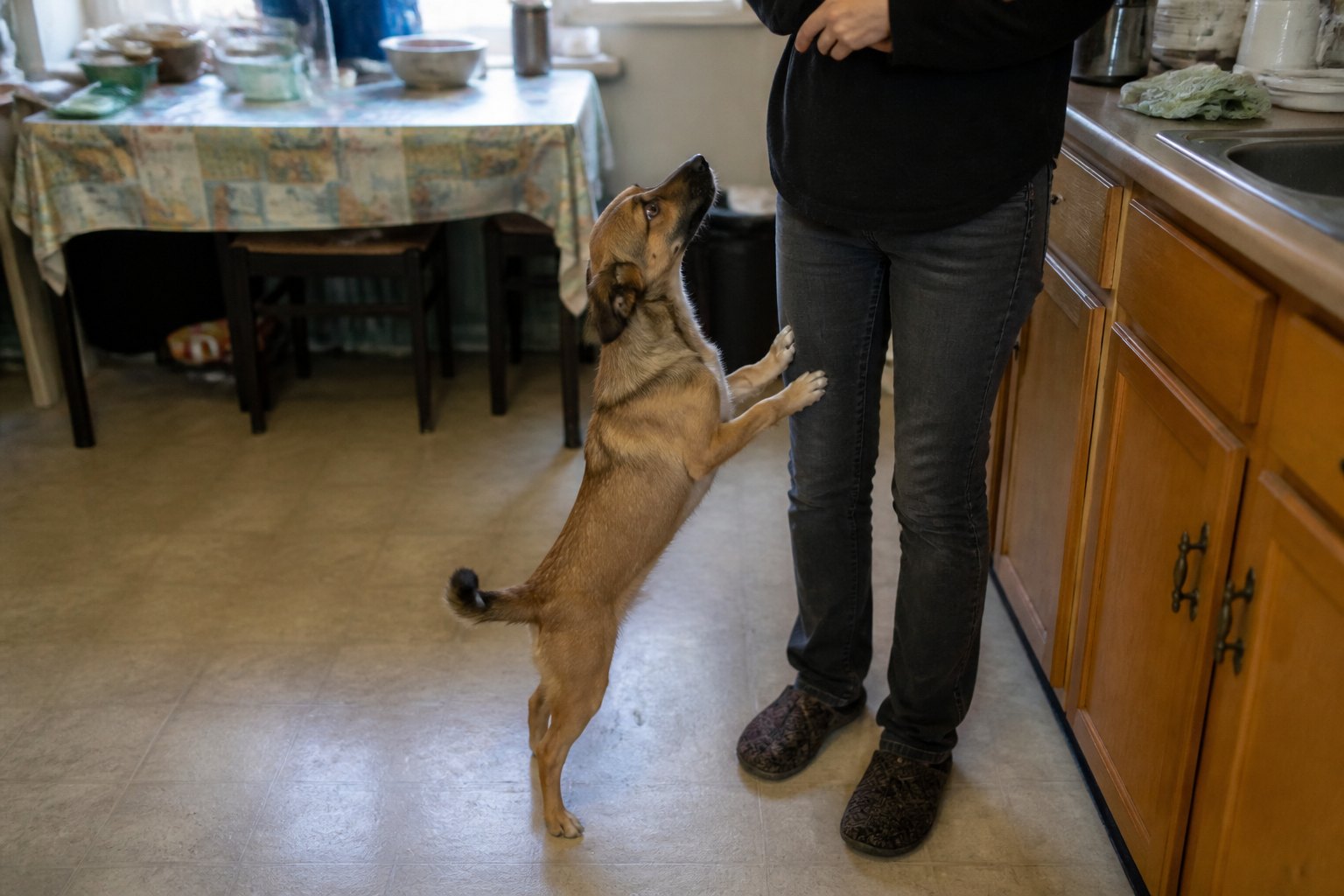
Jumping is a greeting that has been paid. Hands, a voice, a shove, even “down, down, down” can keep the front feet coming up. The working criterion is four paws on the floor. You stop paying the jump, you pay the floor, and you manage the door so the dog cannot rehearse the old picture while you are still teaching the new one.
This is a behavior protocol, not a dominance lecture. A dog who jumps on guests is usually collecting contact. A puppy who jumps and nips is often the same mouth problem as biting, plus a missed nap. If the body is stiff, the jump is a slam, or a child is being treated as prey, you are not on this page’s ladder. Manage the room and see a qualified professional.
Why do dogs jump on people?
Because it works. A standing human is a vertical slot machine. Front feet on a thigh produce faces, hands, movement, and noise. That is enough. You do not need a story about the dog “dominating the household.” You need to name the pay-off and remove it.
Common pay-offs:
- petting the jumper “just this once”
- pushing the dog off (movement is a game)
- a scolding that still looks like a conversation
- children who squeal and run
- a guest who says they do not mind
The dog is not reading your values. The dog is reading what happened last time the latch turned.
A second loop sits under the first: arousal. A closed door, footsteps, a knock. The dog is already up before the person exists. If you only train “sit” in a quiet kitchen and then open the door on a Friday night, you asked for a sit at the wrong criterion. Door work is a setup problem first. See children and guests for the house plan. This page stays the jump.
If you pet the jumper, you bought the jump.
What do you do when someone arrives at the door?
Manage before you teach. A real arrival is a test, not a first lesson.
- Before the knock, the dog is on a leash, in a pen, or in a crate you have already introduced. See crate training if that crate is still a fight.
- You open the door. The guest comes in. The dog does not get a free run at knees.
- If you are using a leash, you stand on it or hold it short enough that a jump cannot land on a person. You are not yanking. You are removing the rehearsal.
- The guest is briefed: no hands, no “it’s fine,” no baby voice until four paws are down.
- When four paws are down, you mark and feed. The guest may then say hello at the dog’s chest, not over the head.
If you cannot brief the guest, the dog stays behind a gate. That is not unkind. That is how you stop paying a pattern you intend to change.
US houses with a front hall and UK flats with a narrow landing use the same rule. The furniture changes. The criterion does not. A landing that is one body wide is a reason to crate first, not a reason to hope.
How do you teach four paws on the floor?
You teach it when you can still win, then you bring it toward the door.
Start in a quiet room. You stand still. The dog approaches. If four paws stay down, mark and feed at the dog’s chest or drop food on the floor. If the dog jumps, you become boring: hands fold, you turn a quarter, you step out of reach. No knee. No grab of the paws. The jump earned nothing.
Reset. You do not narrate. You wait for the next four-paw picture and pay that.
Then you add a small greeting: one hand, two seconds, then food on the floor. If the feet come up, the hand dies. The dog learns that contact is available on the floor and disappears in the air.
Raise criteria in this order, and only when the current picture is cheap:
- You, standing still, quiet room.
- You, taking one step in.
- A known person the dog already likes.
- A knock you staged, dog already on a leash.
- A real guest, dog behind a gate or on a leash.
If you skip to step five, you are not training. You are hoping.
Food in the bowl on the floor is useful when hands are still too exciting. You are paying orientation down, not luring a sit you will then forget to pay. A sit is optional. Four paws is the criterion. If you want a sit as well, train it as a skill when the jump is already rare.
Evening jumps on children are often a missed nap plus a hallway chase. Put the puppy down. Read nipping if teeth are part of the picture.
Should you knee, grab paws, or use a shock?
No. This publication does not run aversives as a shortcut.
Kneeing the chest, squeezing paws, shouting, leash pops, and a collar that hurts are all ways to make arriving people predict discomfort. Some dogs stop jumping and start barking, snapping, or avoiding hands. That is not manners. That is a new problem.
The American Veterinary Society of Animal Behavior recommends reward-based methods for training and for behavior work, and does not support aversive tools. Read their position statements as a public standard. This page is not a copy of them. It is the kitchen version: pay the floor, manage the door.
If a device advert promises to “stop jumping in one session,” treat that as a product, not a protocol. There is no affiliate URL on this page.
When is jumping not a manners problem?
Use a fence you can see.
This ladder: bouncy, loose, often with a wagging body, looking for a face, stopping when you become boring, able to take food on the floor.
Not this ladder: a stiff body, a hard stare, a jump that slams a person into a wall, a dog who mounts and holds, a child being chased and mouthed as prey, or a dog who cannot come down even in an empty room. Pain (a sudden jump-and-snap when the chest is touched, or a dog who was calm last week and is frantic now) is a veterinary question first. See not veterinary advice.
True aggression and a child who has been knocked or bitten are not a weekend DIY project. Gate the dog. End unsupervised greetings. See a qualified trainer or a veterinary behavior professional in your country. Dogmindlab will not invent a triage inbox to stand in for that.
What are the usual failure modes?
- You pet the jumper on Tuesdays. Intermittent pay is how you keep a slot machine running. Everyone in the house runs the same rule, or the dog will wait for the weak adult.
- You trained a sit and then opened the door. The sit was never paid at that arousal. Drop to four paws and a leash.
- Guests were unpaid trainers. Brief them or keep the dog behind a gate. “He is just friendly” is how faces get scratched.
- You kneed the chest and called it training. You taught that people arriving are rough. Rebuild with food and management.
- The puppy was late for a nap. Evening jumps are often sleep debt. Crate or pen, then try again after rest.
- You used a child as the first criterion. Children run and squeal. That is the last rung, not the first.
Sources
AVSAB position statements on humane dog training. ASPCA overview of common dog behavior issues. Paraphrased as public standards, not quoted as a substitute for reading the originals. avsab.org/resources/position-statements/ · aspca.org — common dog behavior issues
Questions on this page
Why do dogs jump on people?
Because jumping has been paid. Hands, voice, movement, even a scolding. It is a greeting and a bid for contact, not a rank contest. Stop the pay-off and pay four paws on the floor instead. The dog is reading what happened last time the latch turned, not your values.
What do you do when someone arrives at the door?
Manage first. Leash, crate, or pen before the latch turns. Guests do not become unpaid trainers. Greet the dog only when four paws are on the floor. If you cannot brief the guest, the dog stays behind a gate. That is how you stop paying a pattern you intend to change.
How do you teach four paws on the floor?
Mark and feed the floor. If the dog jumps, become boring furniture. Reset, then pay the next four-paw picture. Raise criteria from a quiet kitchen to the real door. A sit is optional. Four paws is the criterion. Food on the floor helps when hands are still too exciting.
Should you knee, grab paws, or use a shock?
No. Those are aversives. They can suppress a jump and also teach the dog that people arriving are dangerous. Some dogs stop jumping and start barking or snapping. Reward-based work is the method on this site. AVSAB’s public training position is the standard behind that sentence.
When is jumping not a manners problem?
When the body is stiff, the jump is a slam, a child is being used as a toy, or pain showed up overnight. Manage, and see a qualified professional. This page is not a clinic. True aggression and a child who has been knocked or bitten are not a weekend DIY project.
Work with me
A $150 consultation or $500 monthly curatorship. Opens WhatsApp to Andrew.