
Expert Advice · Skills · 14 min read
How to Teach Your Dog to Wait at the Door
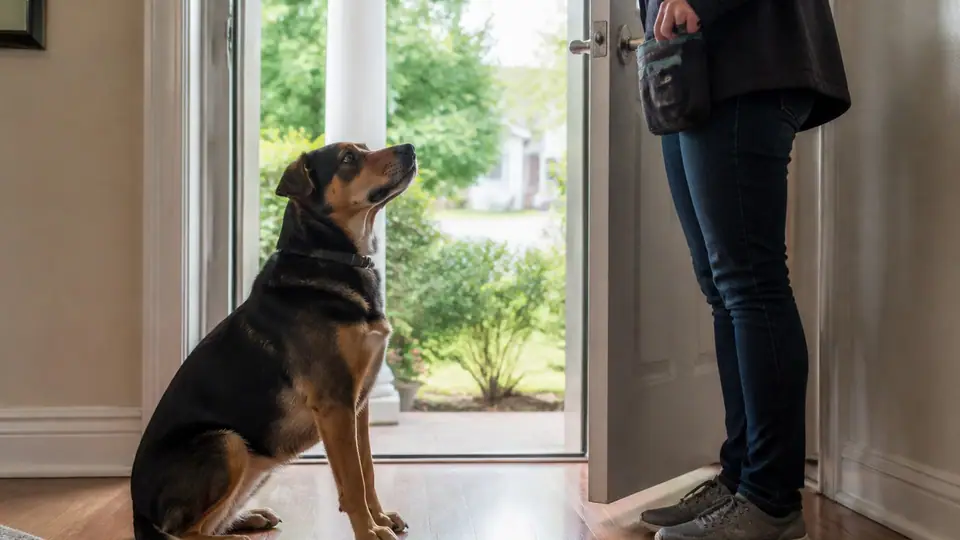
The criterion is still feet behind the sill when the latch turns. The open door is a raise, not the first lesson.

Short answer
To teach a dog to wait at the door, ask for a sit, reach for the handle, and reward if the dog stays. Open the door a little at a time, closing it gently if the dog moves. Release with a word like “OK” before you go through. Practise a few reps before every walk, and most dogs learn it in one to two weeks.
Door manners are a wait at the threshold. The dog’s feet stay behind the sill until you release. An open latch is a raise you add after that picture is cheap. A speech after the dog has already hit the pavement is not a protocol. It is a wish.
This is a skills page. Jumping up owns four paws on people. Barking at the door owns the sound at a barrier. Children and guests owns the household plan. I run month-plus residential work as a dog trainer. I am not a veterinarian, and this page will not invent a US address or a fake family diary. If the body is stiff, the stare is hard, or a child is being dragged toward a road, stop. Manage, and get qualified help.
What are door manners for a dog?
A named wait. One line. One release.
- The dog arrives at the door with you (or is already near it).
- Feet stay behind the sill, mat edge, or tape mark you chose.
- You may open the door.
- The dog still waits.
- You release on one cue. Then you leave together, or you invite the dog through.
That chain is the skill. “Be polite” is not a criterion. “Sit somehow while I shout” is not a criterion. Feet behind the line until the release is.
US houses with a front hall and UK flats with a narrow landing use the same rule. The furniture changes. The criterion does not. A landing one body wide is a reason to start on a short lead, not a reason to skip the wait.
If the feet cross the sill before the release, you did not have a wait. You had hope.
How do you teach a dog to wait at the door?
You teach it when you can still win, then you bring the open door toward that picture.
Start with the door shut. Put a mat or a piece of tape if the sill is hard to see. Dog on a loose short lead if they crash thresholds. You stand at the line. When four feet are behind it and still, mark and feed at the chest or drop food behind the line so the dog resets back, not forward.
Release into the room first: a step away from the door, pay again. You are teaching that waiting pays. You are not yet teaching the street.
Then one raise at a time:
- Hand on the latch. Door still shut. Pay still feet.
- Crack the door. Light and air. If feet cross the line, close. Reset. Pay the next still picture.
- Open wide enough to see the porch or the stairwell. Same rule.
- Step through yourself while the dog waits. Return. Pay. Then release.
- Release on one word or kiss sound you will actually use on a Tuesday. Walk out together on a short lead.
If you skip to a real exit with Amazon, a scooter, and a neighbour’s dog on day one, you are not training. You are auditioning. Drop criteria. That is the same rule as the leave-it ladder and the recall ladder.
Food comes from the day’s ration. See food as a reinforcer. A harness and lead that you can feed on help the mechanics. They do not replace the wait.
Sit or stand at the door?
Pick one picture and pay it.
A sit is easy to see and easy to brief to a guest. A stand-stay suits tall dogs, sore hips, and landings where a sit blocks the whole width. A down at the front door is optional later. It is a poor first ask when the dog is already vibrating at the latch.
Do not stack new cues at the open door. If sit is already cheap in the kitchen, you may ask for sit at the line. If sit is still a fight, pay four still feet. Duration comes next: one second, then three, then your hand on the latch. Markers pin the moment the feet stay. See markers and criteria.
Everyone in the house uses the same release word. If one adult says “ok,” another says “free,” and a child says “go,” the dog will shop for the softest exit.
What if the dog bolts when guests arrive?
Arrivals are a harder picture than your own quiet exit. Manage them until the wait is real.
Before the knock, the dog is on a lead, behind a gate, or in a crate you have already introduced. You open. The guest comes in. The dog does not get a free run at knees or the street. Brief the guest: no baby voice, no “it’s fine,” no hands until you release. If you cannot brief them, the dog stays behind the gate. That is how you stop rehearsing the bolt.
Jumping on the guest is jumping up. Barking at the barrier is barking at the door. This page stays the wait at your own exits and at guest entries once management is in place. You can run all three with the same gate. You should not pretend they are one cue.
A US storm door that slams and a UK communal stairwell that smells of every neighbour’s dog are both distractions. Treat them as raises. Pay the still picture at a quieter door first.
When is door manners not a DIY skill?
Use a fence you can see.
This ladder: loose body, can take food at the line, resets when you close the door, softens when you become boring, no hard stare at people in the frame.
Not this ladder: stiff body, hard stare, growl or snap at the doorway, a dog who body-blocks and will not yield, a child holding the lead into traffic, or a dog who cannot come down even with the door shut and the house quiet. Pain that showed up overnight (a dog who was ordinary last week and frantic at thresholds now) is a veterinary question first. See not veterinary advice.
True aggression at a doorway and a child pulled toward a road are not a weekend DIY project. Gate the dog. End unsupervised exits. See a qualified trainer or a veterinary behaviour professional in your country. Dogmindlab will not invent a triage inbox to stand in for that.
How do I stop my dog bolting out the front door?
Start with management, so bolting stops happening while you train:
- a lead on before anyone opens the door
- a baby gate in the hallway, or the dog in another room when guests come
- everyone in the house knows the rule: no one opens the door while the dog is loose in the hall
Then train the wait above in short sessions with no guests. When the dog can hold a sit while the door opens fully, add a family member knocking or coming in. If your dog has already run into the road, keep the gate up for good. See barking at the door if the rush comes with barking.
How long should a dog wait at the door?
A few seconds is enough for daily life: long enough for you to open the door, check the street and step out first or release the dog. You can build to 30 seconds or more for extra calm, but a short, reliable wait is more useful than a long one that breaks. Always end with a release word so the dog knows when the wait is over.
What are the usual failure modes?
- You opened the door as the first lesson. The street paid the bolt. Close the door. Pay a shut-door wait, then raise one crack at a time.
- Everyone uses a different release. The dog shops for the soft adult. One word. Same word on Tuesdays.
- You paid the dog after they crossed the sill. You bought the rush. Pay behind the line. Reset forward mistakes without a lecture.
- Guests were unpaid trainers. Brief them or keep the dog behind a gate. “He is just excited” is how faces get scratched and leads get yanked into traffic.
- You stacked sit, down, and wait at the same open latch. One picture. Raise duration or the open door, not both plus three new cues.
- You treated a stiff doorway guard as stubborn manners. That is a stop list. Manage and get help. Do not flood the dog with strangers at the sill.
Sources
AVSAB position statements on humane dog training. ASPCA overview of common dog behavior issues. Paraphrased as public standards, not quoted as a substitute for reading the originals. avsab.org/resources/position-statements/ · aspca.org — common dog behavior issues
To teach your dog to step back and make room at the door first, see how to teach a dog to back up.
Questions on this page
What are door manners for a dog?
A clear wait at the threshold. Feet stay behind the sill until you release. The open door is a raise, not a free sprint into the street. Jumping and barking are separate criteria. This page owns the wait.
How do you teach a dog to wait at the door?
Start with a closed door. Mark and feed for still feet at the line. Add your hand on the latch, then a crack, then a wider open. Release on a cue you choose. If the dog bolts, close the door and drop criteria. One variable at a time.
Sit or stand at the door?
Either. Sit is easy to see. A stand-stay works for tall dogs and narrow landings. Name one picture and pay that. Do not stack sit, down, and stay as three new words at the same open door.
What if the dog bolts when guests arrive?
Manage first. Leash, gate, or crate before the latch. Guests do not become unpaid trainers. Teach the wait on quiet exits, then bring arrivals in as a harder picture. See jumping up if the problem is front feet on people.
When is door manners not a DIY skill?
When the dog stiffens, hard-stares, or guards the doorway; when a child is holding the lead into traffic; when the dog cannot come down even with the door shut. Manage and see a qualified professional. This page is not a clinic.
Work with me
A $150 consultation or $500 monthly curatorship. Opens WhatsApp to Andrew.