Greater Swiss Mountain Dog: temperament, training & draft/farm Sennenhund
The Greater Swiss Mountain Dog is a large, short-coated Swiss farm dog bred to pull carts, drive cattle and watch the farm. Most are confident, affectionate and family-focused, with a loud bark and a strong pull. Life goes well with early lead manners, food rules and joint-friendly exercise.
Job: Swiss farm and draft dog — pulled carts and guarded farms.
Energy: Moderate to high; daily walks and activity.
Home: Family dog that needs leash manners and room for a big dog.
Why the Greater Swiss was built to pull carts and work the farm
History does not decide what one puppy becomes, but it explains a lot: most Swissies are strong, confident and people-oriented farm dogs — with a loud alert bark and a tendency to pull that owners need to plan for.
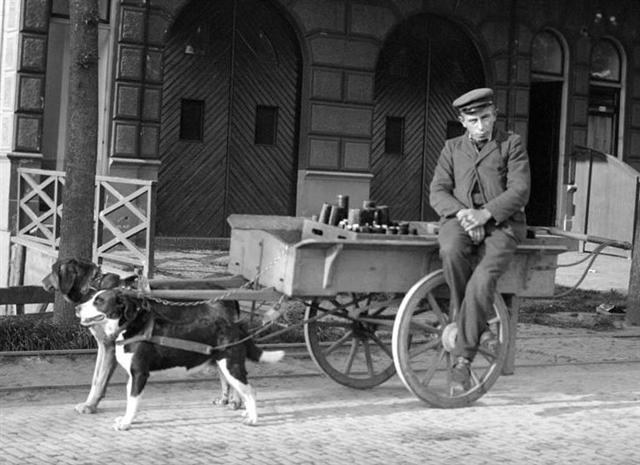
A dog cart with a Swiss mountain-type dog in Diemen, the Netherlands, 1904 (public domain). Draft work was common for large farm dogs in Europe.
Swiss farms → draft and drover dog
The “butcher’s dog” of the Swiss countryside
Public breed histories describe large, short-coated tricolour dogs on Swiss farms that pulled carts of milk and goods to market, drove cattle and watched the farmyard. They were sometimes called butcher’s or draft dogs.
Draft and farm work needed strength, steadiness and a dog that stayed close to its people. That shows up today as pulling power on lead, confidence and a deep, alert bark at the gate.
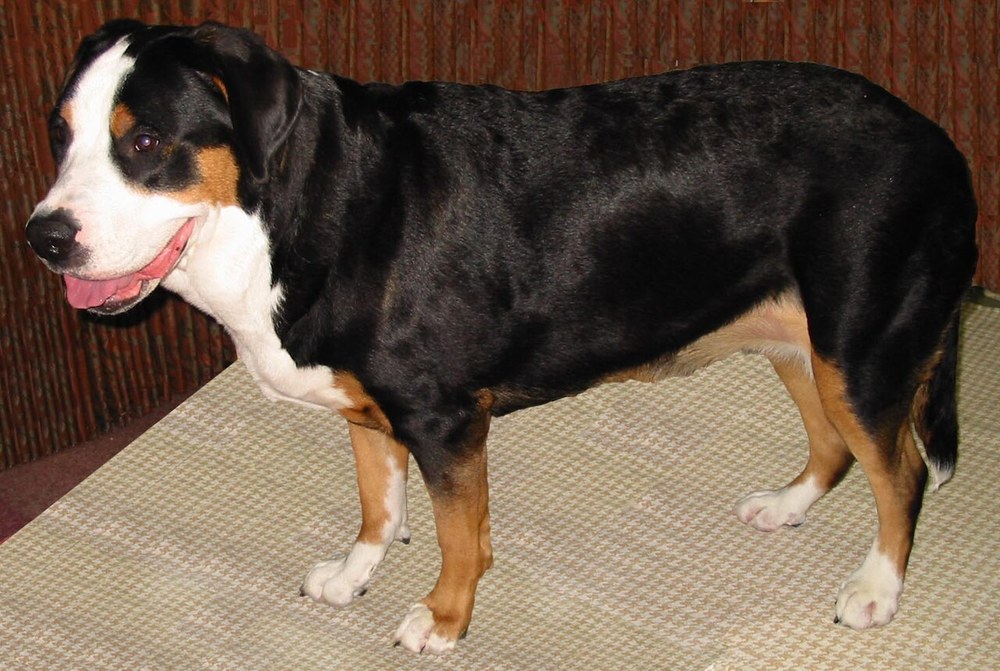
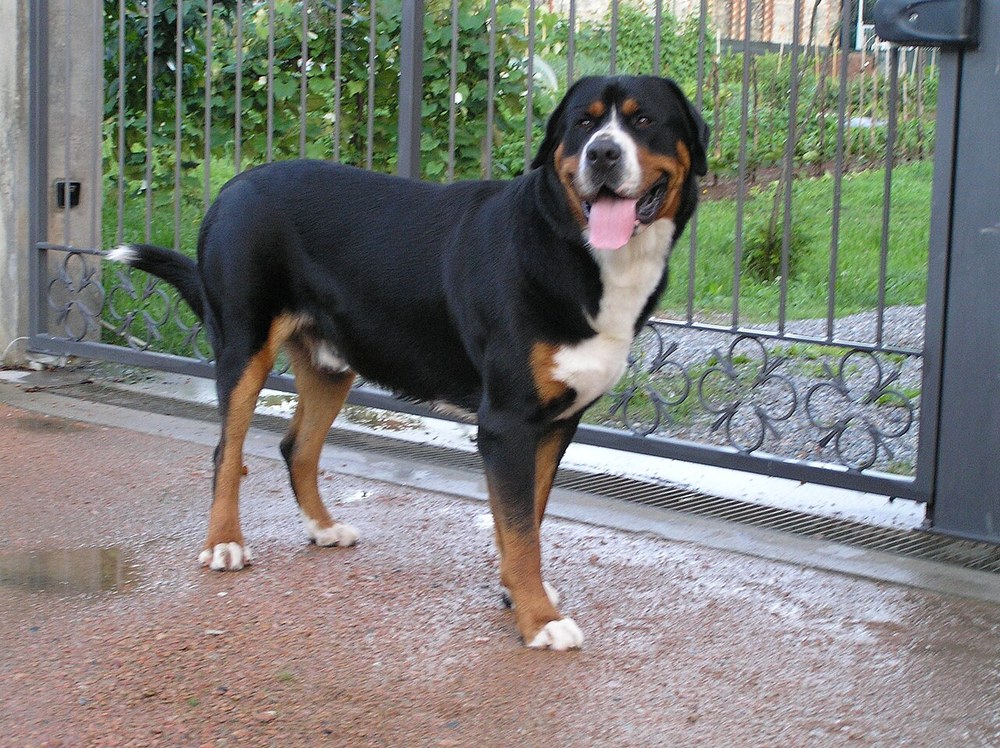
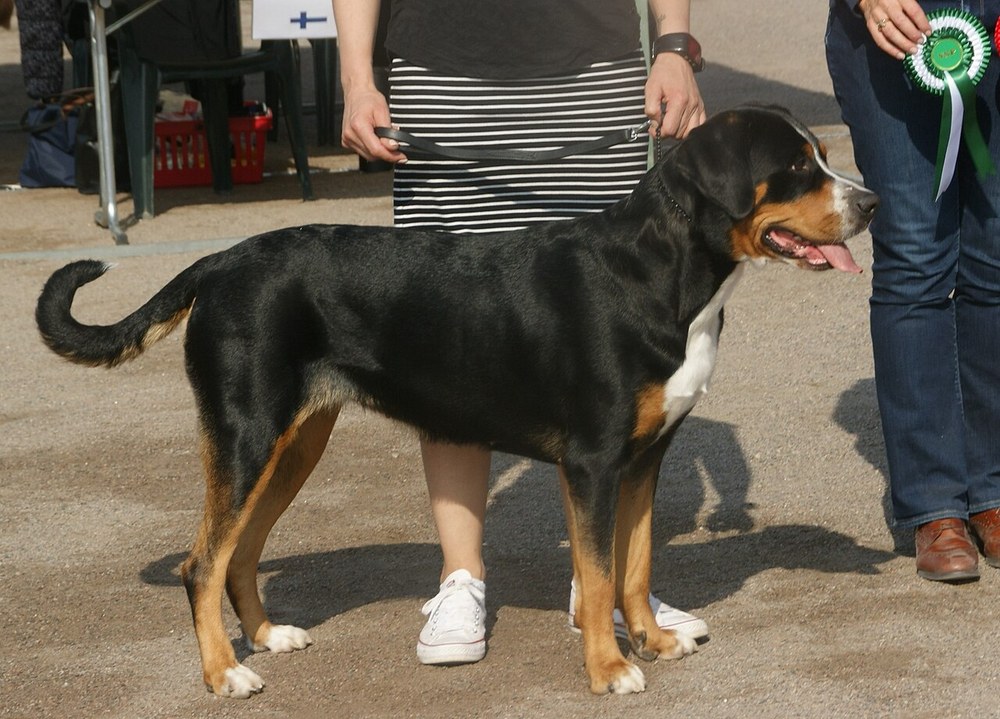
Schubert, a three-year-old Greater Swiss Mountain Dog female (modern photograph).
1908 show → separate breed
Rediscovered at a dog show
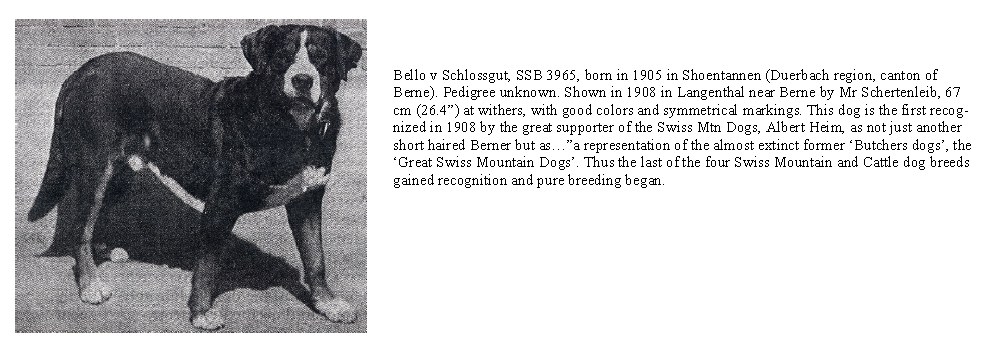
By the late 19th century, the type was rare as machines replaced draft dogs. At a Swiss show in 1908, a large short-haired dog entered as a Bernese caught the attention of the geologist and dog expert Albert Heim, who argued it was a separate type. The breed was then developed as the Grosser Schweizer Sennenhund.
AKC recognised the breed in 1995. It is one of four Swiss Sennenhund breeds, with the Bernese, the Appenzeller and the Entlebucher.
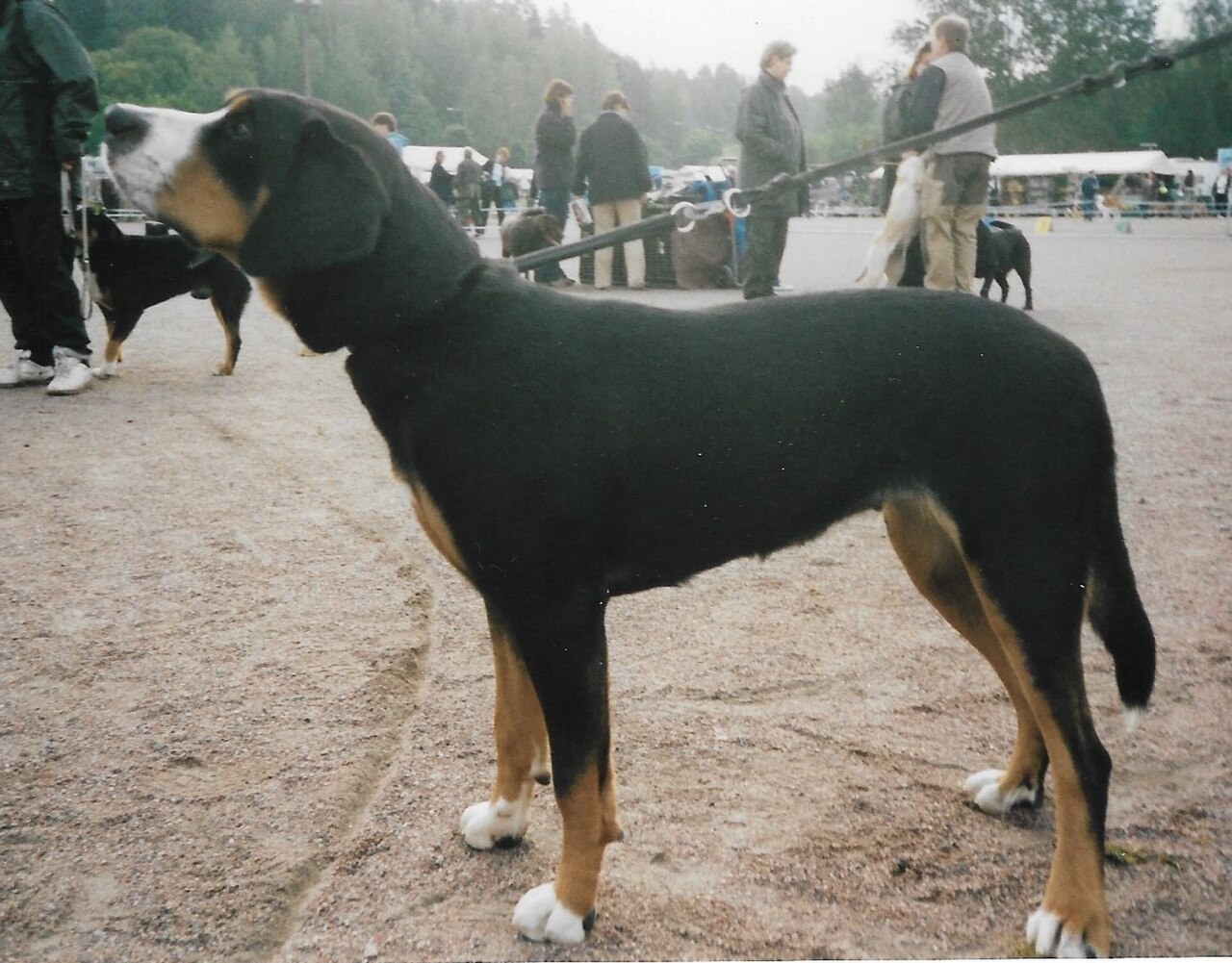
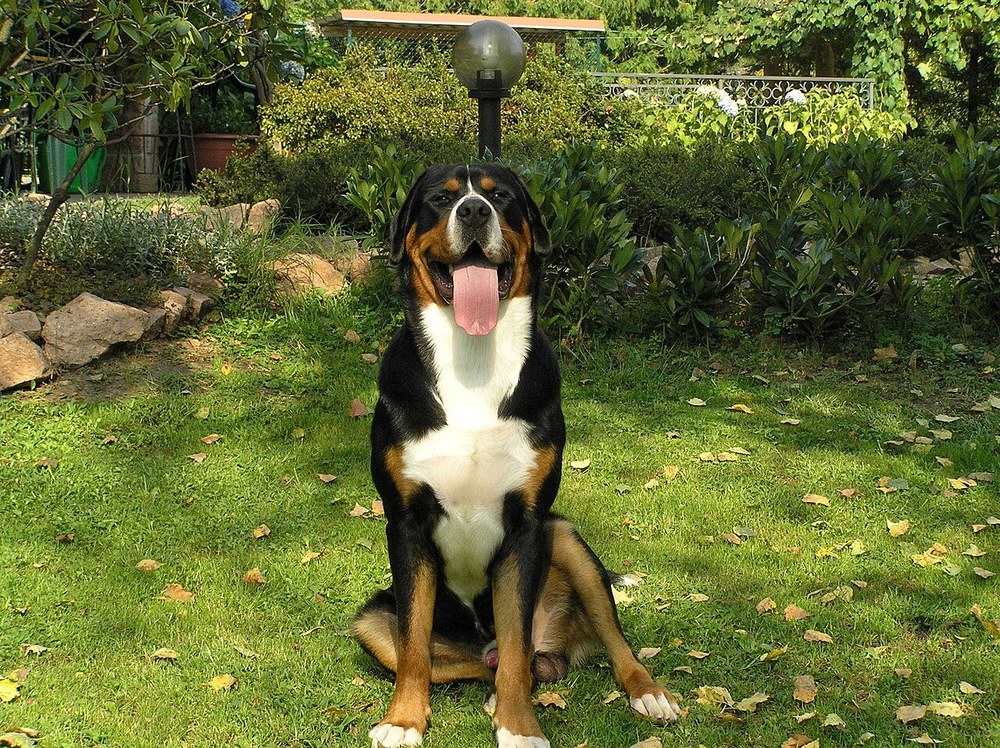
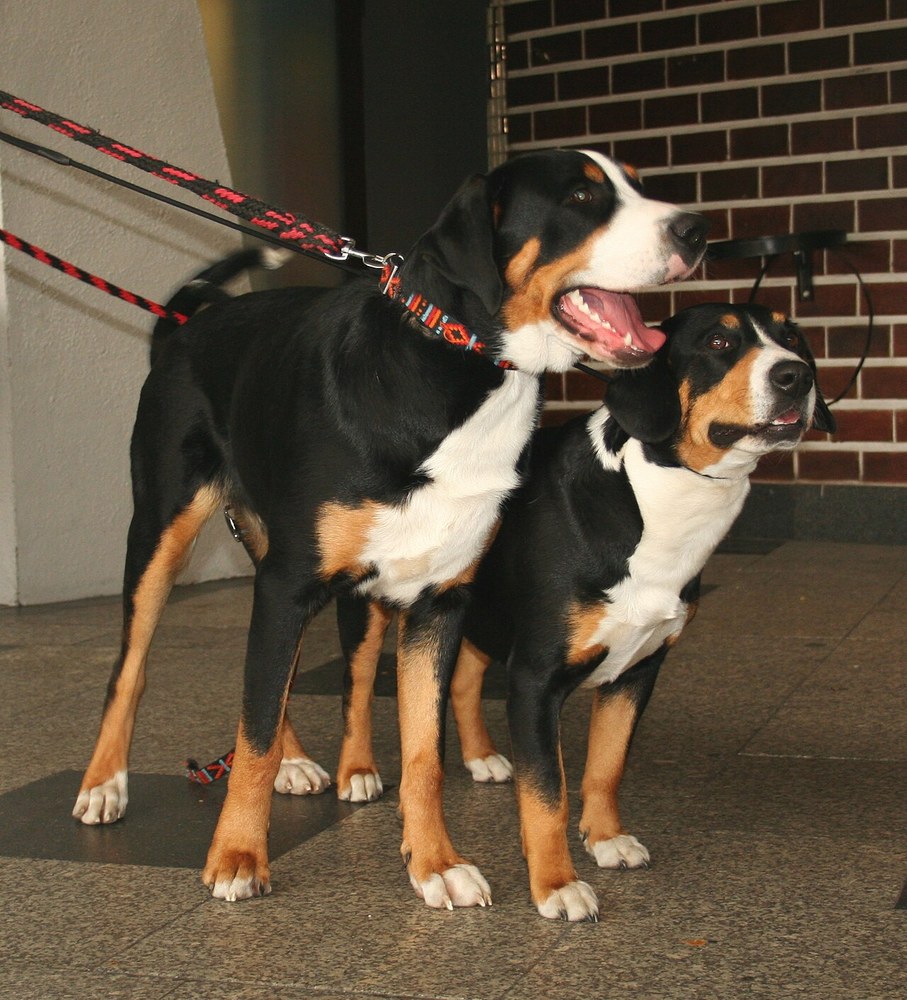
Balu, a Greater Swiss Mountain Dog (modern photograph).
What the breed was bred for
Strength, confidence and loyalty to the family
In plain trainer language: Swissies were selected to work alongside people, pull heavy loads and watch the farm. They are usually affectionate and steady at home, alert and sometimes suspicious with strangers.
Their slow maturity, strength and enthusiasm for food mean that lead manners, counter manners and greetings need patient work from day one.
A day is a steady walk, a job and calm time with the family
Swissies like to be with their people and to have something to do. In town their farm-dog side shows up as pulling, barking at the gate and scavenging food.
Morning · walk
A steady walk with good lead manners
Swissies are strong pullers. Teach a loose lead early and use a well-fitted harness.
What to watch monthly: weight, joints, mealtimes and heat
General awareness only — I am a trainer, not a veterinarian. In large breeds, small changes in movement or appetite matter. For urgent signs, see
when to call the vet.
Avoid stairs and long runs during growth. Watch for stiffness after rest.
Health screening (not a diagnosis)
Ask the breeder which screenings the national breed club recommends and see results for both parents.
After meals
Plan quiet time after meals. A swollen belly with restlessness is an emergency.
Coat
Short double coat that sheds seasonally. Brush weekly, more during the shed.
Heat
Exercise in cool hours and provide shade.
Lines and types
Working and family lines share the same farm-dog roots
Some breeders focus on carting, drafting and working ability, others on calm family companions.
Working-focused lines
Often more drive and energy.
Enjoy carting and drafting.
Need regular structured activity.
Ask what the parents do.
Suits active owners interested in draft work.
Family-focused lines
Usually calmer at home.
Still strong and alert.
Need lead and food manners.
Meet the parents at home.
Suits families wanting a loyal, steady companion.
Socialization windows
What to introduce — and what not to overload — by age
AVSAB-aligned in spirit: short, clean exposures at a distance the puppy can still eat,
with hygiene while vaccines finish. See the
puppy socialization schedule.
2–4 months
Home and handling
Introduce: family, handling, crate, car rides, calm visitors.
Do not overload: stairs, rough play, free food access.
~6 months
Manners before strength
Introduce: loose-lead practice, place cue, kitchen rules.
Do not overload: pulling to greet people or dogs.
~12 months
Adolescent strength
Introduce: consistent rules, visitor routine, calm passes past dogs.
Do not overload: long runs, forced greetings.
~18 months
Adult activities
Introduce: carting introduction with your vet’s approval, longer walks.
Do not overload: heavy pulling before maturity.
~24 months
Maintain routines
Introduce: refreshed lead, visitor and kitchen rules.
Do not overload: overweight, dropping management.
Before you buy
Who a Greater Swiss Mountain Dog usually fits
A Swissy fits active families who want a strong, loyal farm dog and will teach lead and kitchen manners early.
Good match
More likely a good fit if you…
Want a confident, affectionate family dog
Can handle a strong dog on lead
Enjoy activities like carting or hiking
Will manage food and counters
Have space and budget for a large breed
Mismatch risk
A Greater Swiss Mountain Dog may be a poor choice if…
Barking would cause problems
You want a low-energy dog
Food left on counters is normal in your home
You live in a small flat with stairs
You need a running partner
If you are torn between breeds
Greater Swiss Mountain Dog vs Bernese Mountain Dog and Rottweiler
Swissies are compared with their Swiss cousin and with other strong working dogs.
Coat
Greater Swiss Mountain Dog
Short double coat.
Bernese Mountain Dog
Long, thick coat.
Energy
Greater Swiss Mountain Dog
Moderate, with strong work drive.
Bernese Mountain Dog
Usually calmer.
Guarding
Greater Swiss Mountain Dog
Alert and watchful.
Rottweiler
Stronger protective instinct.
Pulling
Greater Swiss Mountain Dog
Very strong pullers.
Rottweiler
Also strong, often more handler-focused.
Training
Greater Swiss Mountain Dog
Willing but slow to mature.
Both compares
Berners are softer; Rottweilers more serious.
Ownership without surprises
Where a Greater Swiss owner’s budget goes
Costs depend on your area and breeder. These are the areas to plan for — not quotes.
Food
Large portions; keep the dog lean.
Veterinary care
Ask which screenings the national breed club recommends.
Training
Classes for lead manners and visitors.
Gear
Harness, carting equipment if desired.
Home
Large bed, non-slip floors.
Transport
A large car or crate.
With a Swissy, vet care and training are the main costs.
Before day one at home
What to prepare for a Greater Swiss Mountain Dog puppy
A Swissy puppy grows strong quickly and loves food. Start lead and kitchen manners early.
“With a Greater Swiss, I train for the adult strength from the first month. We build a loose lead, kitchen and counter rules, a quiet ending to the alert bark and a proper outlet for pulling — because a confident farm dog with a big appetite needs clear house rules.”
Sessions cover real scenes: pulling on lead, food and counters, barking at the gate, greetings, and carting basics. I am a trainer, not a veterinarian. No invented reviews.
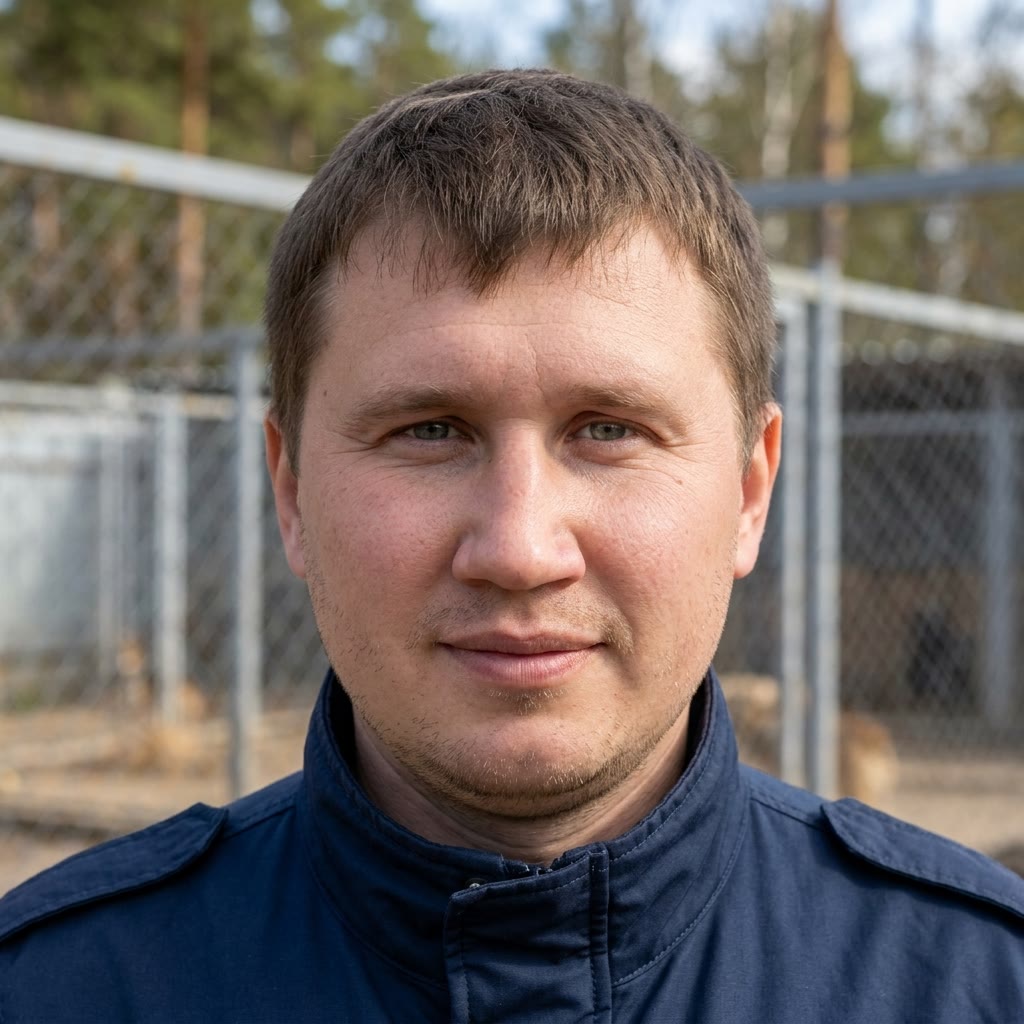
Andrew DarovProfessional dog trainer and instructor
Describe age, living setup, and where the dog breaks first — pulling on lead, barking at the door, food stealing, or greetings. Opens WhatsApp to Andrew.
The original German schnauzer — alert, clever and medium-sized — that needs training, exercise and regular grooming.
Need a read on your exact situation?
Describe your Greater Swiss Mountain Dog’s age and the scene that repeats most: pulling on lead, barking at the door, food stealing, or greetings. We check safety first, then pick the first skill.
Written by Andrew Darov, professional dog trainer. Not veterinary advice and not a diagnosis.
Not a kennel club. No invented reviews. No vaccine schedules or toxin doses. Photo credits in
/images/breeds/greater-swiss-mountain-dog-guide/credits.md.