Doberman Pinscher: temperament, training & door work
A Doberman is a sleek, athletic German breed developed for personal protection. Most are intelligent, sensitive, very attached to their people, and full of energy. City life works with daily exercise and training, careful socialisation with strangers, and alone time built up slowly.
Job: German guardian — alert, athletic and people-focused.
Energy: High; daily exercise and training.
Home: Needs company, visitor routines and a calm settle.
A Dobermann is a smart, devoted working dog that needs clear rules and daily training
Public breed histories credit Louis Dobermann of Apolda, Germany, with developing an alert, loyal protection dog in the late nineteenth century. The modern pet kept the intelligence, the athleticism, and the close attachment to its handler.
Training usually goes very well; Dobermans learn fast. The common problems are worry about strangers, alert barking, mouthiness in adolescence, and distress when left alone.
From the first month, build two habits. First: a new person appears at a distance, the puppy looks at you and gets a reward. Second: short absences are practised so the dog learns to relax alone.
Why the Doberman was built as a personal protection dog — and why it sticks to you
A puppy’s future is not written in its pedigree, but the pedigree explains the Doberman: alert, athletic, sensitive, strongly attached to its people, and happiest with a job and a lot of contact.
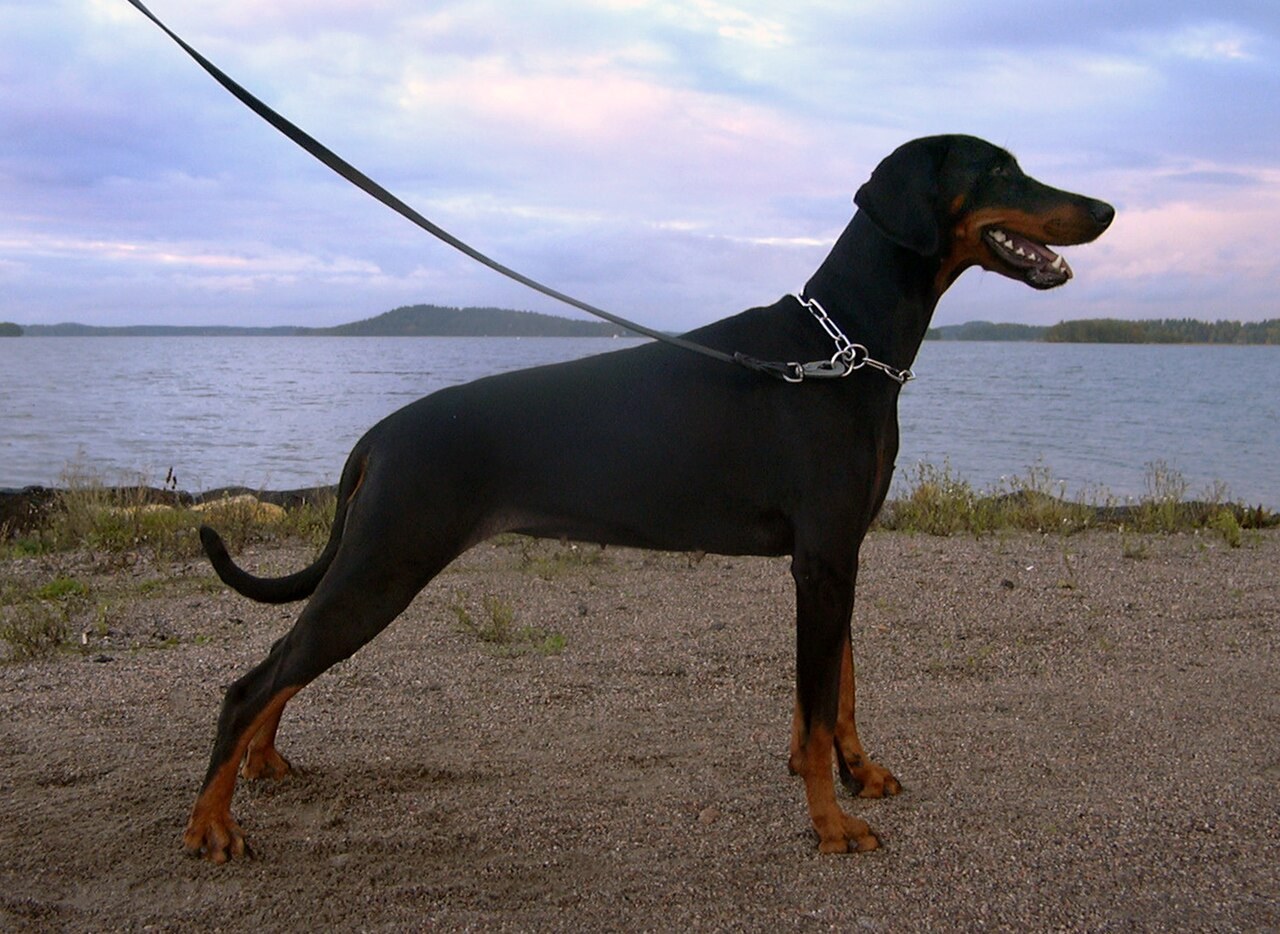
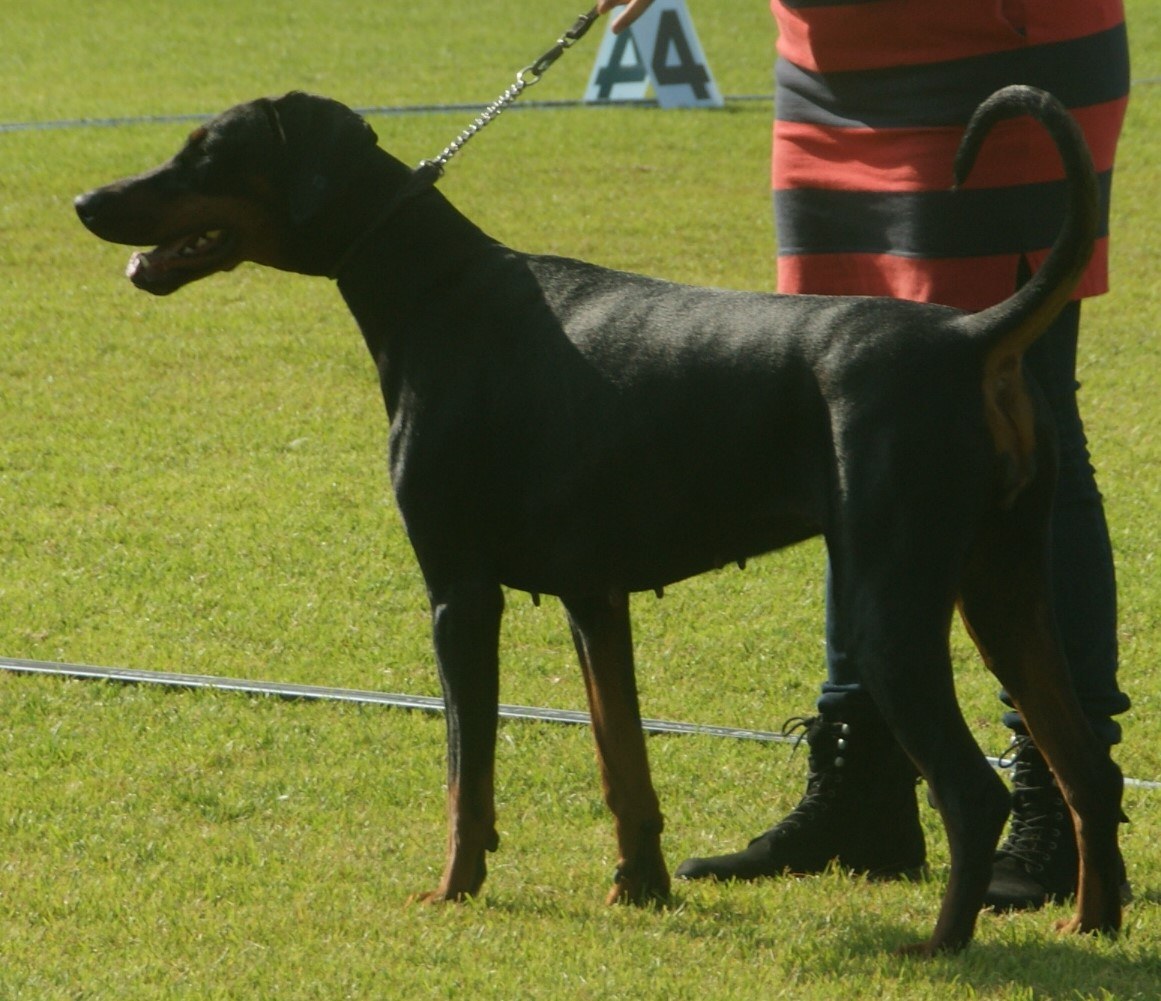
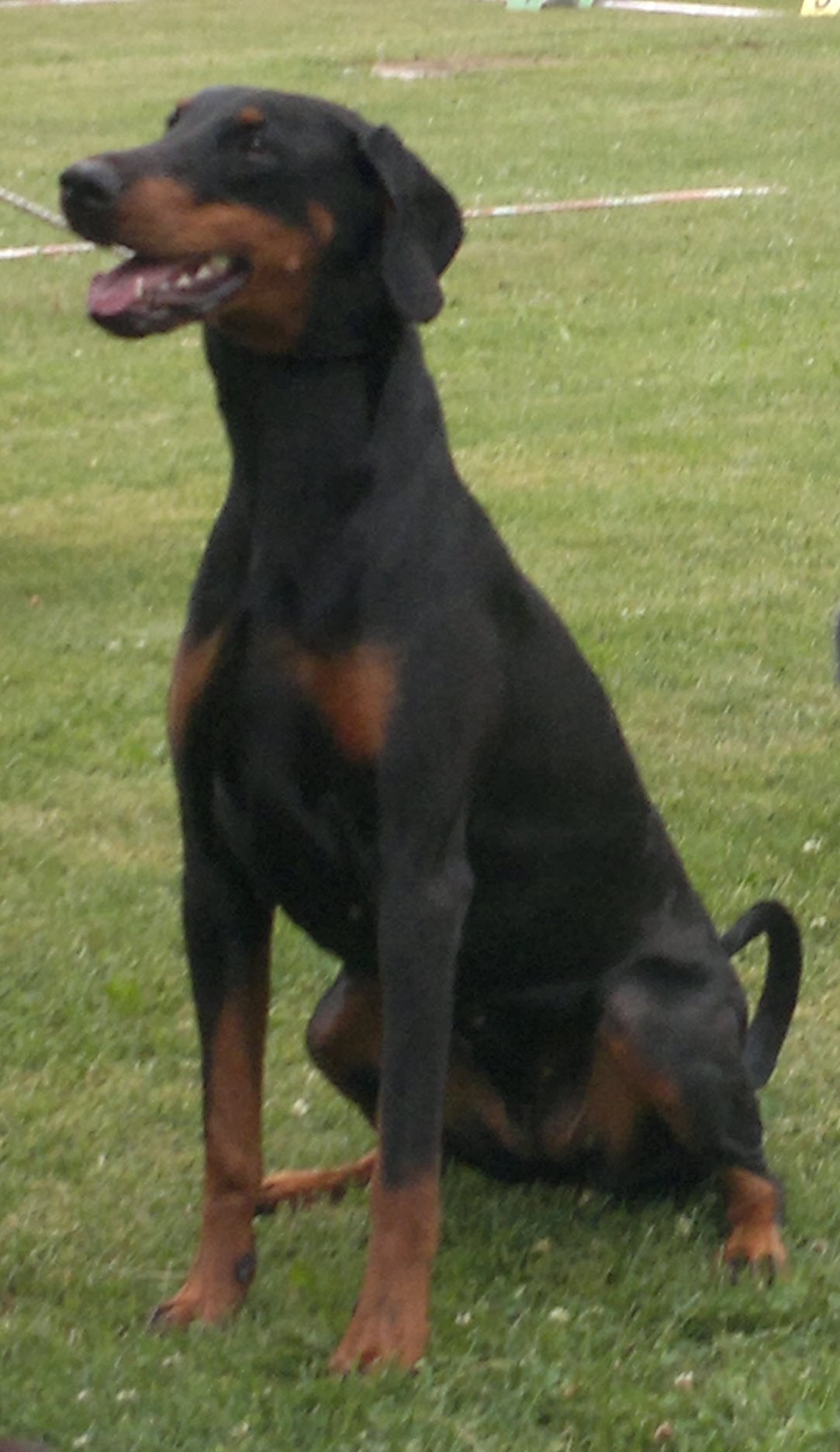
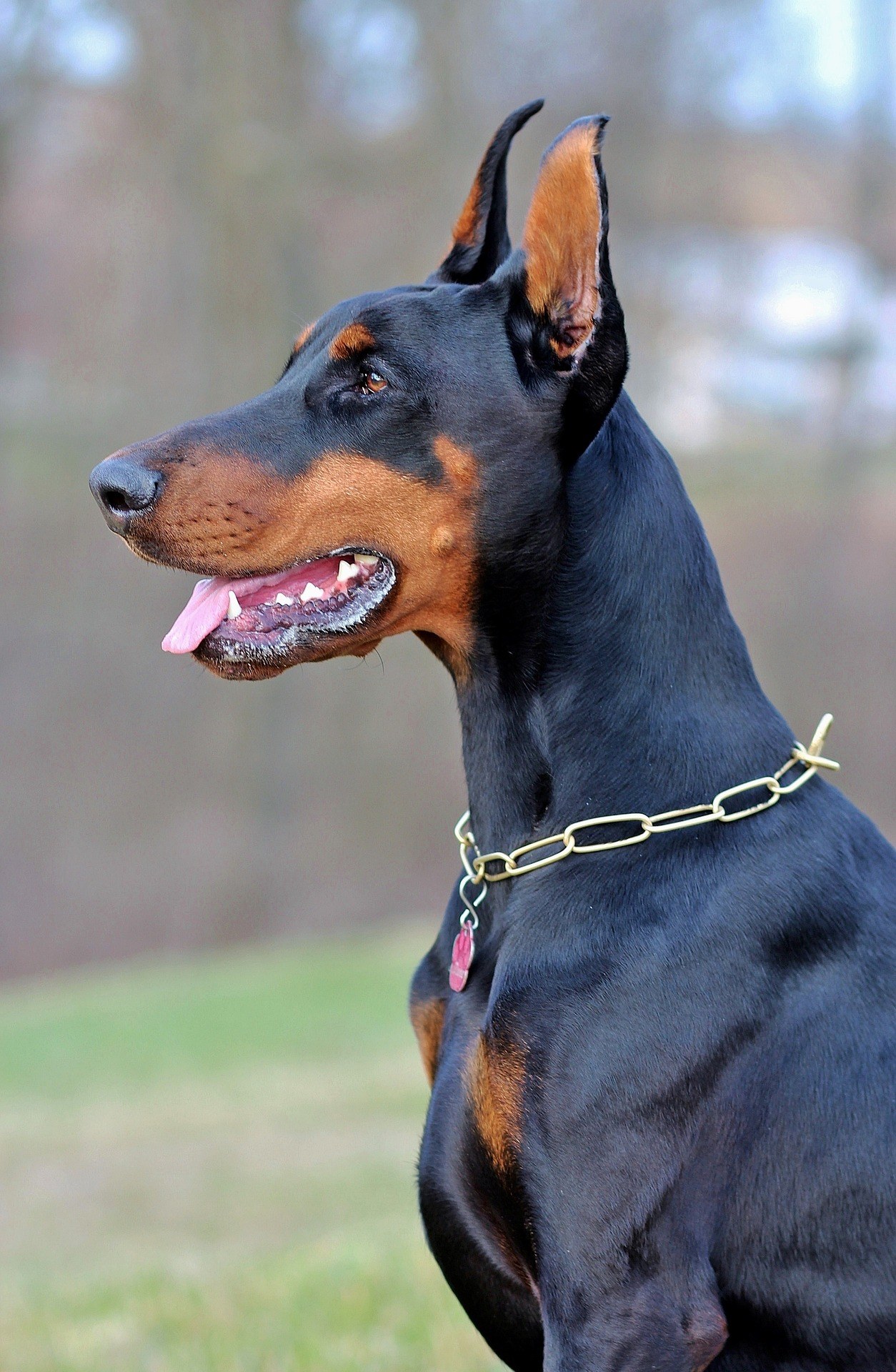
Adult Doberman (modern photograph). Athletic, alert, and usually watching its handler.
Apolda, Germany → a protection dog
Bred by a tax collector for his own safety
Public breed histories credit Karl Friedrich Louis Dobermann of Apolda, in Thuringia, Germany, with developing the breed in the late nineteenth century. As a tax collector who handled money, he wanted an alert, loyal dog that could protect him.
A dog bred to stay close to one handler and watch for trouble still tends to shadow its person. Many owners call them “velcro dogs”. That closeness makes them very trainable and less suited to long hours alone.
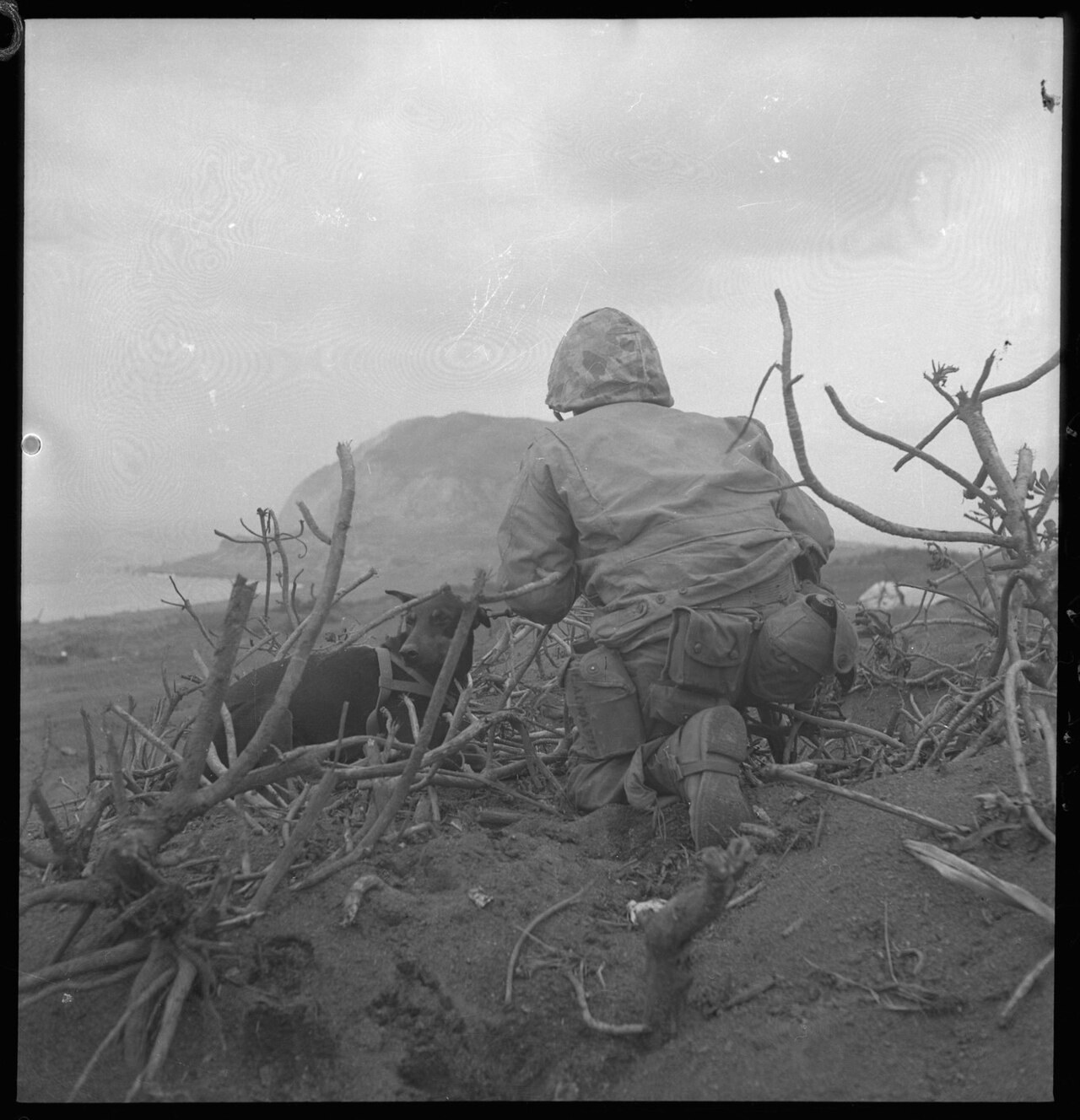
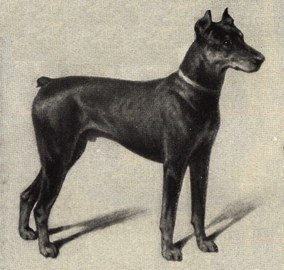
Photograph from the Louis R. Lowery Collection, US Marine Corps History Division (Second World War). Dobermans served as Marine Corps war dogs in the Pacific campaign.
Police and military work → family companion
Service dogs, war dogs, and modern companions
Public breed lore records Dobermans working as police and military dogs in the early twentieth century, including as US Marine Corps war dogs during the Second World War. Breeders later softened the type for family life while keeping its intelligence and athleticism.
Today most Dobermans are companions and sport dogs. The guard-dog image is still attached to the breed, but most need training for calm confidence much more than for protection.
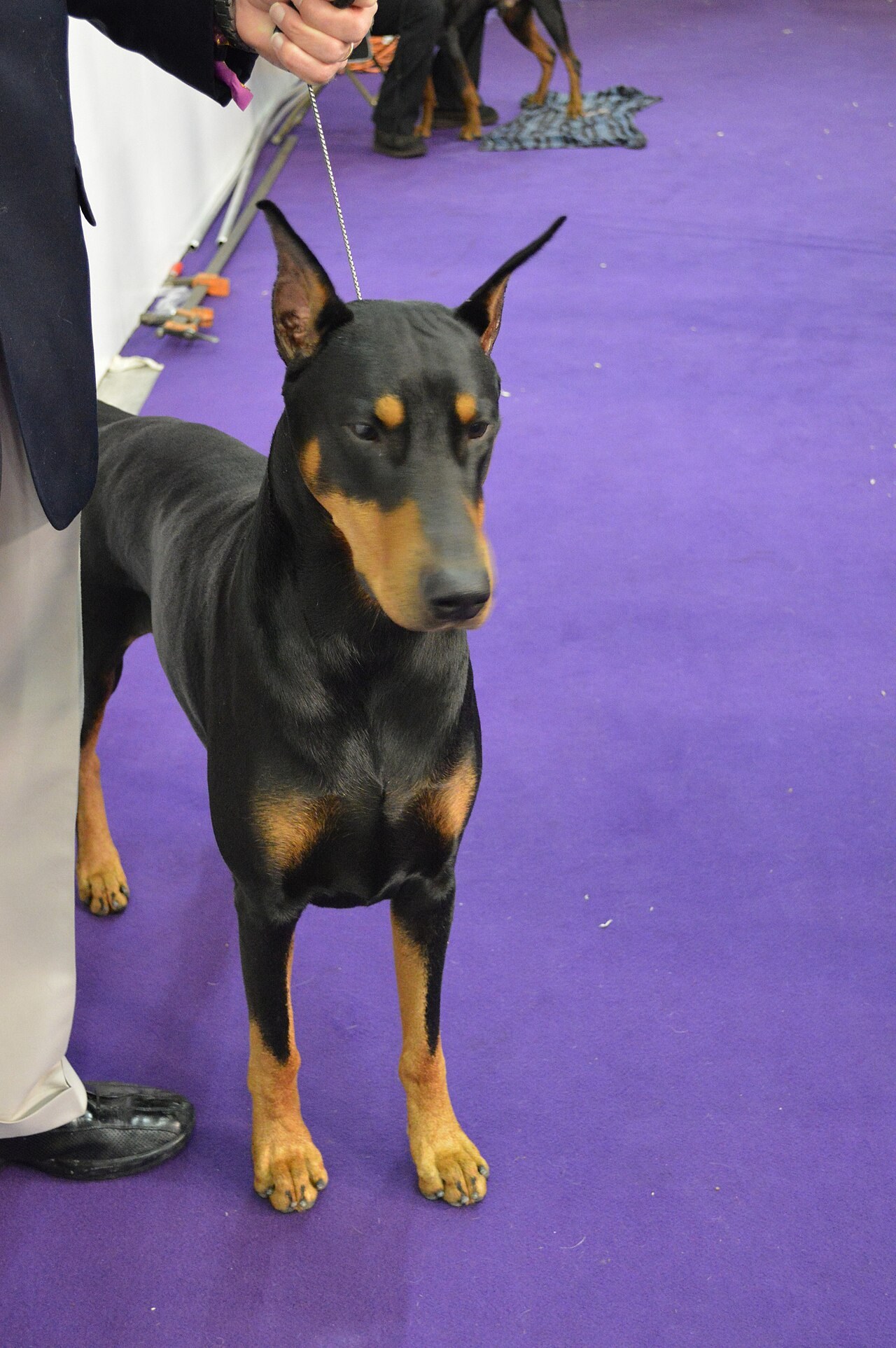
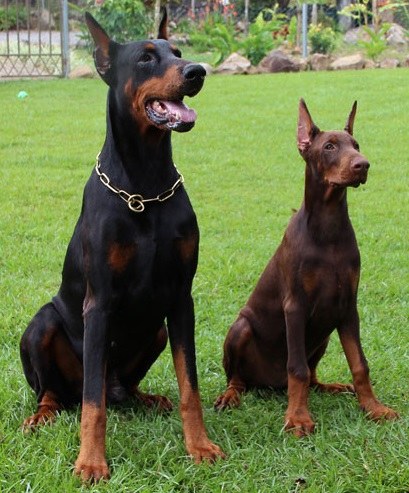
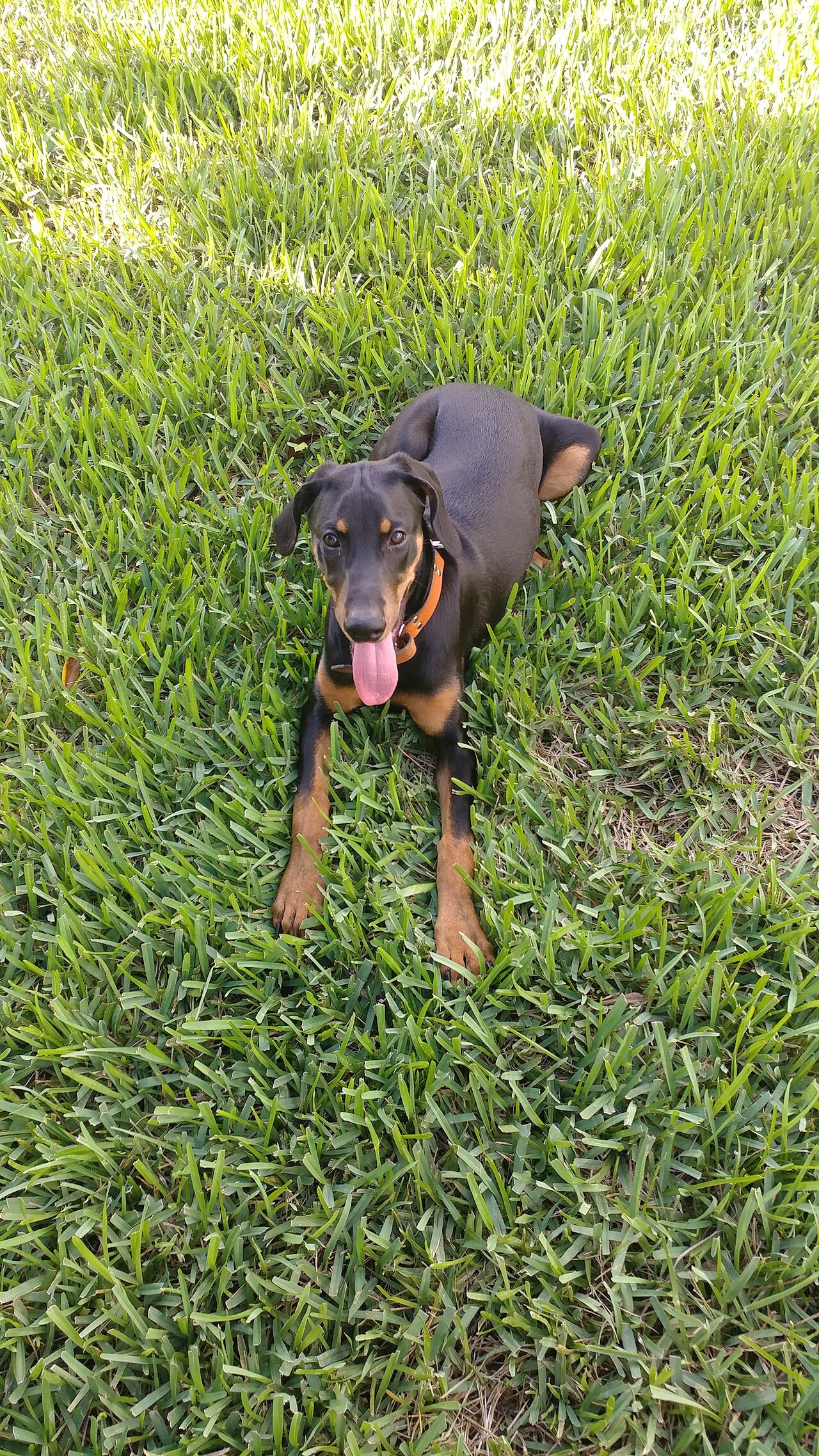
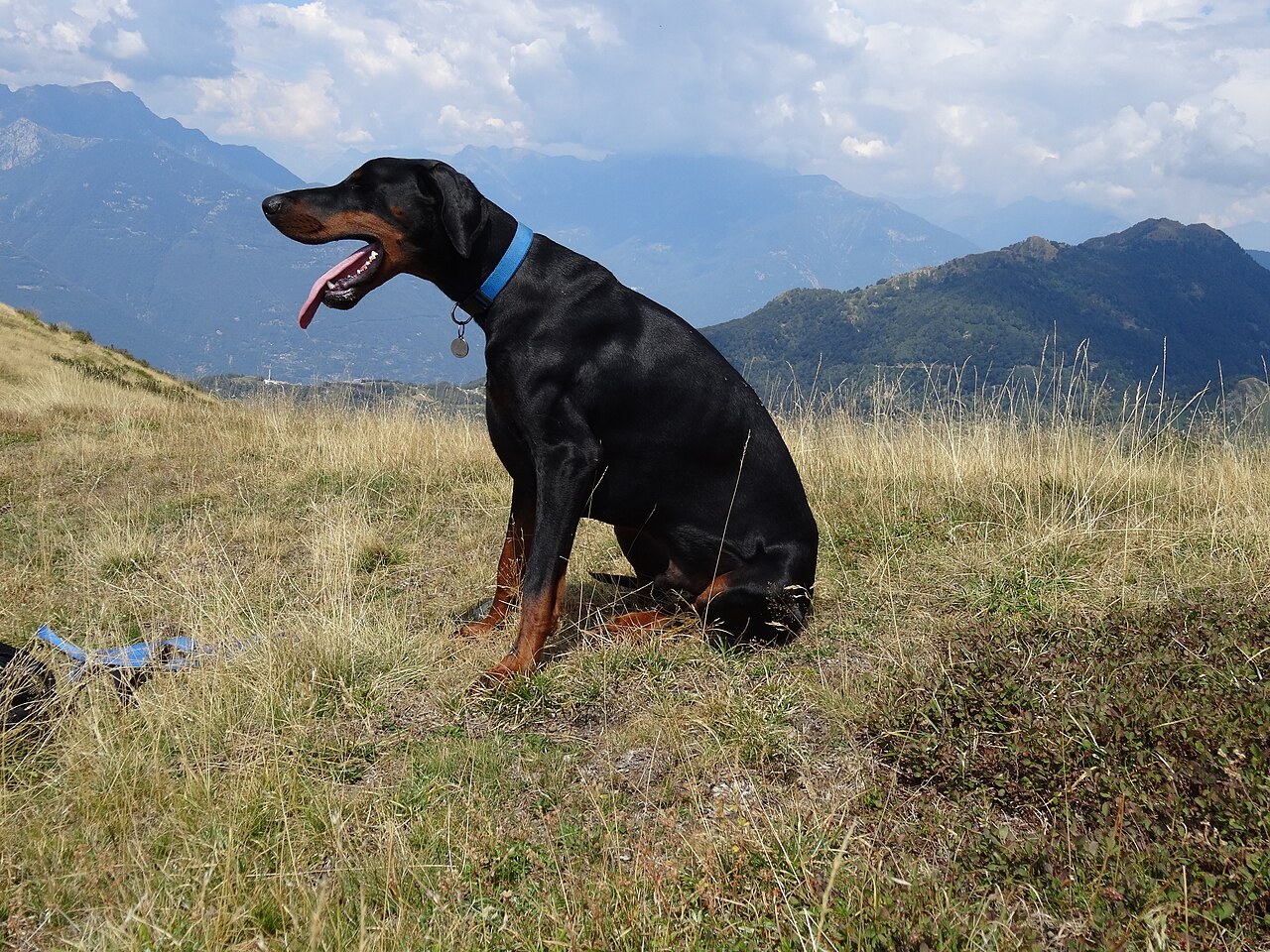
Doberman (modern photograph). Natural and cropped ears are both seen; rules on cropping vary by country.
What the breed was bred for
Intelligence, sensitivity, and strong attachment
In plain trainer language: the type was selected for alertness, trainability, and loyalty. That is why a Doberman with daily exercise and training is a responsive partner — and why a bored or isolated one becomes anxious, mouthy, and noisy.
Many Dobermans are sensitive. Harsh corrections can create worry rather than obedience. Clear rules, food rewards, and a predictable routine get the best from them.
Daily exercise plus mental work
Alone time built slowly; this breed bonds hard
Calm confidence around strangers is trained, not assumed
A day is real exercise, short training sessions, and a lot of time with you
In a city the Doberman’s protection past shows up as alertness at the door, suspicion of unusual people, and distress when left alone. Most are affectionate and playful with family. The work is exercise, training, and building confidence and independence.
Morning · first outing
Move, then think
Dobermans usually need more than a stroll: a brisk walk, a run, or a game of fetch with rules. Add a few minutes of training to tire the brain too.
What to watch monthly: short coat, cold, weight, and energy
General awareness only. I am not a veterinarian. Early signals are changes in appetite, breathing, energy, movement, or coat. For red flags, leave this page and open
when to call the vet.
Short coat and cold weather
The single short coat is easy to groom but gives little protection in cold, wet weather. Many Dobermans need a coat in winter and a warm, padded bed.
Ask the breeder which health screenings the national breed club recommends and read both parents’ results. A breed page cannot diagnose your dog; your veterinarian can.
Changes in stamina
Sudden tiredness, coughing, fainting, or breathing changes are a same-day vet call, not a fitness problem.
Growth and exercise
Avoid forced long runs and repeated jumping while the puppy is growing. Ask your vet when your dog is ready for sport training.
Toxins
I do not publish toxin amounts. If the dog ate something dangerous, call a veterinarian or a poison-control line; the footer lists public numbers.
Lines and types
European and American Dobermans differ in look and drive
Breed discussions often separate European (FCI) lines, frequently bred for working ability, from American (AKC) show and companion lines. Build, head shape, and drive vary. Sensitivity, attachment, and energy are shared.
European / working lines
Often heavier bone and higher working drive.
Need structured sport or training work.
Can be intense for a first-time owner.
Ask about the parents’ titles and home behaviour.
Fits an experienced, active owner interested in sport or working training.
American / show and companion lines
Often lighter, more elegant build.
Still energetic and very people-focused.
Need training and exercise every day.
Meet the parents at home, not only in show photos.
Fits an active household that wants a close companion and can give daily training.
Socialization windows
What to introduce — and what not to overload — by age
AVSAB-aligned in spirit: short, clean exposures at a distance the puppy can still eat,
with hygiene while vaccines finish. See the
puppy socialization schedule.
2–4 months
Confidence and attachment
Introduce: many calm people, sounds, and surfaces; gentle handling; a crate or pen; short alone-time practice.
Do not overload: long absences, scary forced greetings, rough play with hands.
~6 months
Neutral in public
Introduce: people, bikes, and dogs at a comfortable distance, loose-lead practice, a place cue.
Do not overload: crowded events, letting strangers rush up, punishing alert barking.
~12 months
Adolescent energy and mouthiness
Introduce: structured exercise, sport foundations, tug with rules, door routines.
Do not overload: forced long runs before maturity, endless ball throwing, harsh corrections.
~18 months
Adult work
Introduce: obedience, scent work, or other sports with your vet’s approval, longer alone times.
Do not overload: days without exercise or training, cold, wet walks without a coat.
~24 months
Keep the routine
Introduce: refreshed visitor, alone-time, and recall routines.
Do not overload: assuming confidence is permanent, skipping socialisation with new people.
Before you buy
Who a Doberman Pinscher usually fits
A Doberman suits active, engaged owners who want a sharp, loyal and sensitive companion and will give it daily training, exercise and company.
Good match
More likely a good fit if you…
Want a dog that bonds closely and likes to be near you most of the time
Enjoy training — obedience, tracking, nose work or dog sports
Can give daily exercise and mental work
Will socialise the puppy carefully and practise calm behaviour in public
Prefer fair, consistent rules over harsh corrections
Mismatch risk
A Doberman Pinscher may be a poor choice if…
The dog would be alone for long hours most days
You want a dog only for guarding without training
You live somewhere very cold and the short coat would need constant protection
You prefer a low-energy, independent dog
Your housing or insurance restricts the breed
If you are torn between breeds
Doberman Pinscher vs German Shepherd Dog and Rottweiler
Dobermans are often compared with German Shepherds and Rottweilers. All three are working breeds, but their temperament and care needs differ.
Origins
Doberman Pinscher
Developed in Germany in the late 19th century by Louis Dobermann as a guard and companion.
German Shepherd Dog
Developed as a herding dog, later used in police and service work.
Coat
Doberman Pinscher
Short, sleek and easy to groom; feels the cold.
German Shepherd Dog
Double coat that sheds heavily.
Build
Doberman Pinscher
Lean, athletic and fast.
Rottweiler
Heavier and more muscular.
Sensitivity
Doberman Pinscher
Very sensitive to tone and atmosphere at home.
Rottweiler
Often calmer and more laid-back indoors.
Training
Doberman Pinscher
Learns very quickly; needs fair, consistent handling.
Both compares
Shepherds are similarly quick learners; Rottweilers are a bit slower but steady.
Ownership without surprises
Where a Doberman owner’s budget goes
Costs depend on where you live and your choices. Plan for these areas before getting a Doberman — not exact prices.
Training
Puppy classes and ongoing training. Dobermans thrive with structure and work.
Exercise time
Daily walks, runs and mental work; a bored Doberman can become anxious or destructive.
Veterinary care
Routine care plus regular checks. Ask the breeder which screenings the national breed club recommends and see results for both parents.
Clothing and bedding
A warm coat for cold weather and soft, warm bedding.
Food
Active, athletic dog; measure meals and adjust for activity.
Insurance and legal
Check insurance and housing rules for the breed.
With a Doberman, training, exercise and regular vet checks are the main costs.
Before day one at home
What to prepare for a Doberman Pinscher puppy
A Doberman puppy is clever, energetic and very attached to its people. Careful socialisation and alone-time practice prevent many adult problems.
Touch ears, paws and mouth with rewards. See puppy handling.
06
Protect sleep
Use a crate or pen and enforced naps; overtired puppies get nippy.
If the dog is already yours
Training is engagement, calm behaviour and a reliable settle
Dobermans are among the quickest learners. They thrive on training with food and play rewards and become frustrated or anxious without it.
They are sensitive to tone and atmosphere. Harsh corrections can make them nervous; calm, clear and fair rules work best.
Teach a settle and calm behaviour around strangers. A Doberman that can relax in public is easier and safer to take everywhere.
Load balance
Active work balanced with real rest
Dobermans need daily physical and mental exercise. They also need to learn to switch off. Avoid hard exercise during growth and protect the dog from cold weather.
Walk or runTraining sessionNose workChewSettle
Walks, runs, obedience, tracking, nose work and dog sports are great. Endless ball-chasing and rough play are not needed.
A Doberman that works and rests well is a calm, affectionate companion.
Switching off after work
How to teach a Doberman to settle on cue
Start at home after exercise, when the dog is already a bit tired.
01
Choose a mat
Use a comfortable mat or bed in a quiet part of the room.
02
Reward going to the mat
Reward the dog for stepping onto the mat, then for lying down.
03
Reward relaxation
Reward calm signs: lying on one hip, resting the head, slow breathing.
04
Add duration and movement
Gradually increase time and move around the room while the dog stays settled.
05
Release clearly
Use a release word so the dog knows when the settle is over.
One scene close-up
Why your Doberman follows you from room to room
Dobermans are often called ‘velcro dogs’ because they like to be close to their people. Following you is normal, but a dog that cannot relax without you may struggle when left alone.
Teach a settle on a mat, reward the dog for staying there while you move around, and build short absences slowly.
If the dog panics when alone or cannot settle at all, ask a qualified behaviour professional for help.
“With a Doberman, I do not waste a sharp, people-focused mind. We build engagement, a reliable settle, neutral behaviour around strangers and clear handling routines — because a fast, sensitive guardian needs structure more than intensity.”
Sessions cover real scenes: door and guest manners, leash reactivity prevention, handling and vet visits, obedience and nose work, and switching off after work. I am a trainer, not a veterinarian. No invented reviews.
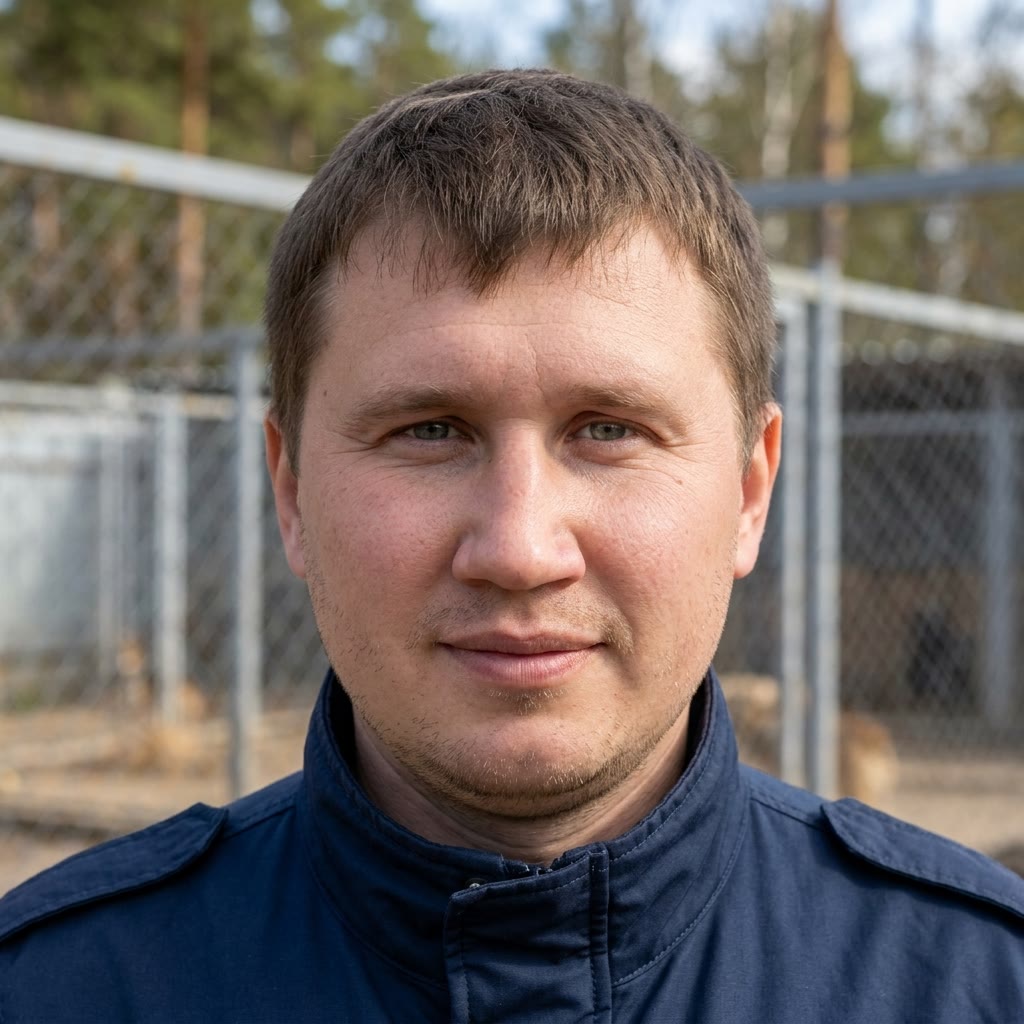
Andrew DarovProfessional dog trainer and instructor
Describe age, living setup, and where the dog breaks first — reactions at the door, following you everywhere, adolescent strength, or settling after exercise. Opens WhatsApp to Andrew.
A strong Swiss farm and draft dog that is usually family-friendly and needs leash manners, exercise and steady training.
Need a read on your exact situation?
Describe your Doberman Pinscher’s age and the scene that repeats most: reactions at the door, following you everywhere, adolescent strength, or settling after exercise. We check safety first, then pick the first skill.
Written by Andrew Darov, professional dog trainer. Not veterinary advice and not a diagnosis.
Not a kennel club. No invented reviews. No vaccine schedules or toxin doses. Photo credits in
/images/breeds/doberman-pinscher-guide/credits.md.