Expert Advice · Skills · 13 min read
Long line recall setup for outdoor dog training
The line is equipment and outdoor setup. The recall ladder is a different page — link there for the rungs.
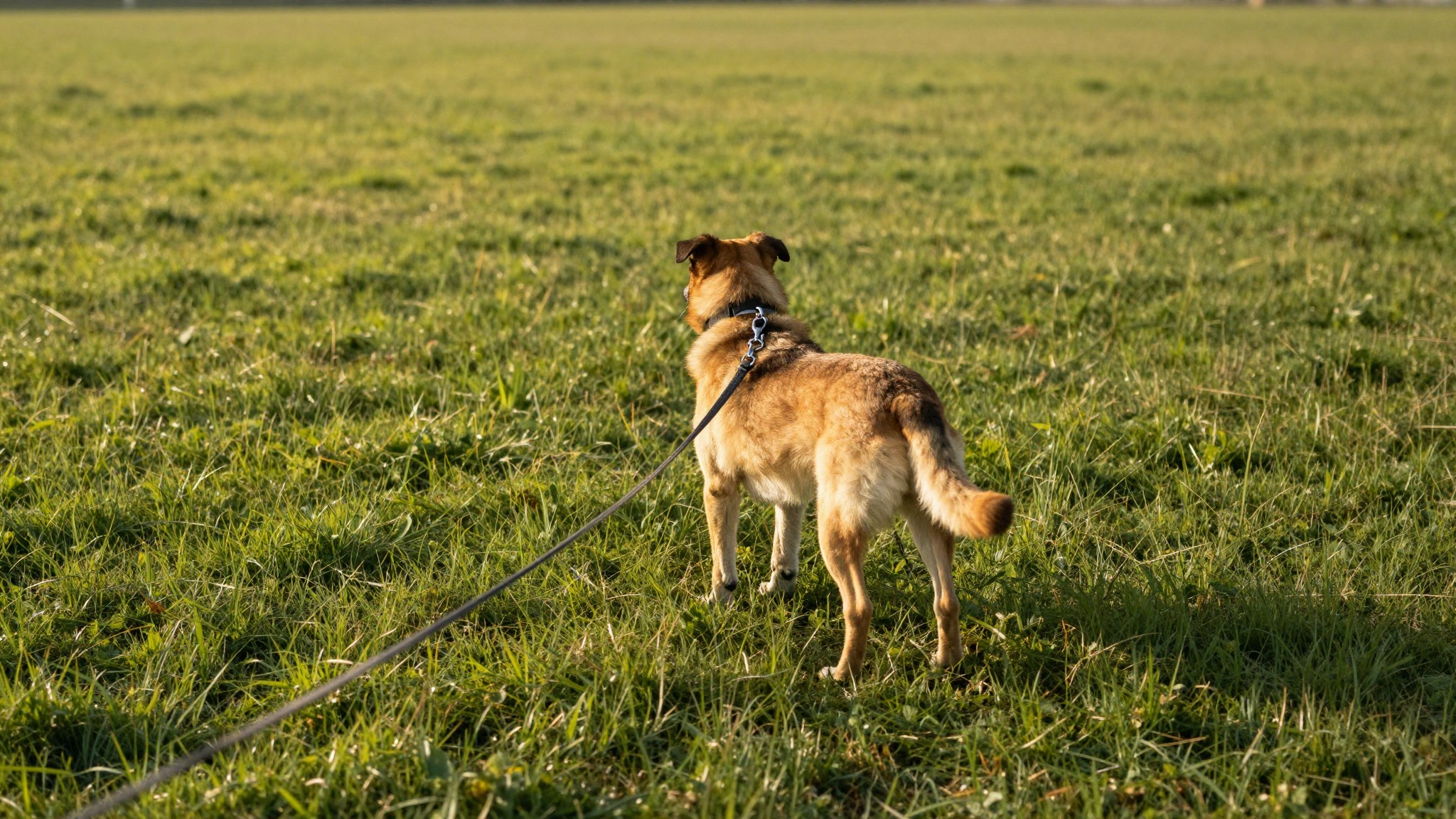
A long line is how you stop the dog rehearsing “I heard you and I left” while outdoor recall is still weak. This page owns the kit, the safety setup, and the first outdoor reps. The skill ladder itself — kitchen to hallway to garden to harder distraction — lives on recall ladder. Do not treat this page as a second copy of that ladder.
This is a skills page. Harness fit and lead basics live on harness and lead. Name recognition before you spend a recall cue lives on name game. If the dog cannot eat because another dog is too close, you are on on-leash threshold, not here. I work dogs in residential boarding for a month and longer. I am a professional trainer from Russia, not a veterinarian. See not veterinary advice.
What long line do you need?
Enough length to let the dog be wrong without being gone, light enough to move, clipped to a harness.
Practical starting picture for most pet homes:
- Length: often 5–10 m for early outdoor work; longer only when you can handle the coils
- Material: biothane or similar that sheds water and mud; heavy waterlogged cotton becomes a trip hazard
- Clip: reliable snap to the harness ring you intend to load
- Not a retractable: retractables teach different mechanics and fail as training lines
US parks and UK recreation grounds differ in off-lead culture and bylaws. The equipment rule does not: if you cannot prevent an ignore rehearsal, you do not have a session. You have a hope. Local leash law still wins over your training plan.
The line stops a rehearsal of ignore. It is not optional for a first outdoor exam.
How do you set up safely?
Harness on. Line clipped. Coils under control. Environment chosen so a mistake is not a road.
- Fit the harness. You should fit two fingers at the straps; the dog should not slip out when they reverse. See harness and lead.
- Clip the long line to the harness ring meant for walks or training, not to a dangling ID ring that will tear out.
- Practice handling in a quiet garden or empty car park: let line out, gather without knots, drop if you must. Gloves help if the line burns.
- Scan the space for bikes, roads, other dogs, and holes that eat coils. A US open field and a UK fenced park both need that scan.
- Never invent a waist-tie stunt you have not drilled. If the dog hits the end, you need a plan that does not yank a neck. Harness plus skilled hands, or do not run the rep.
No prong, no shock, no “stim to come” as a shortcut. The American Veterinary Society of Animal Behavior reward-based standard is the public fence behind that sentence.
How do you run first outdoor reps?
Quiet outdoor room. One cue. Pay at your legs. Line as a safety net, not a fishing rod you reel on every step.
- Let the dog move out on a slack line to a boring distance.
- Say the recall cue once (the one from recall ladder).
- Mark the turn. Feed at your legs. Often release back out so coming does not end the world.
- If they ignore, close the distance with the line — guide in without a violent pop — pay a smaller arrive if they get there, then next rep is closer and easier.
- Stop while you are still winning. A long line session that turns into a fight taught the wrong picture.
The AKC reliable recalls overview walks kitchen-to-line ideas in public language. This page is not a clone of that article or of our own recall-ladder page. Kit and first outdoor reps only. Raise distance and distraction on the ladder page when the current outdoor picture is cheap.
Collar or harness?
Harness for running loads and sudden stops. A flat collar alone is a neck risk when a dog hits the end of 10 m at speed. ID can stay on a collar; the line loads the harness.
If your only tool is a collar and you cannot borrow or buy a harness yet, keep distance short and speeds low — or wait. Do not invent aversive collars as “more control.” That is not this site’s method.
When is long-line work not DIY?
Use a fence you can see.
This protocol: dog can eat in the space, line is manageable, you can prevent road access, ignores are rare enough that you can drop criteria.
Not this protocol: dog over threshold at every other dog and cannot eat, line work near traffic you cannot control, entanglement with a bicycle, fear or aggression when you approach to pay, or a handler who cannot safely gather line. Reactivity distance work belongs on on-leash threshold. True aggression needs a qualified professional in your country.
Dogmindlab will not invent a triage inbox. For paid residential work, use work with me.
What usually fails?
- First outdoor exam off-lead. You paid ignore. Put the line on.
- Retractable as a long line. Wrong tool. Use a real training line.
- Clipping only to a flat collar for full-speed hits. Neck risk. Harness.
- Reeling the dog in on every cue. You taught fishing, not a recall. Mark the turn; pay the arrive; use the line to prevent escape, not to replace the cue.
- Cloning the whole recall ladder onto this page. Wrong. Use recall ladder for rungs.
- Training in a dog festival on day one. Quiet field first. One variable at a time.
Set the kit up so the dog can win. Then leave the ladder work on the ladder page.
Sources
AKC reliable recalls overview. AVSAB position statements on humane training. Humane World public resources index. Paraphrased as public standards for kit and first outdoor reps, not as a second recall encyclopedia. akc.org — reliable recalls · avsab.org/resources/position-statements/ · humaneworld.org/en/resources
Questions on this page
What long line do I need for recall training?
A light training line long enough for real distance in your space — often 5–15 metres for early outdoor work — clipped to a harness, not a neck-only collar for running pulls. No retractable lead as a substitute. Biothane or similar that sheds mud beats cotton that soaks and thickens.
How do I set up a long line safely?
Harness on, line clipped, excess managed so neither of you trips. Gloves if the line burns. Practice gathering and dropping coils in a quiet place before a field. Never tie a moving long line to your waist without knowing how to drop it. Watch other dogs and roads.
How do I run first outdoor recall reps on a line?
Quiet field or empty park corner. Let the dog move out. Cue once. Mark the turn. Pay at your legs. Use the line only to prevent a full ignore rehearsal — guide in if needed, then make the next rep easier. Full ladder rungs live on the recall-ladder page.
Should I clip a long line to a collar or a harness?
Prefer a well-fitted harness for running and sudden stops. A flat collar alone risks neck injury if the dog hits the end at speed. Gear details also live on the harness-and-lead page. No prong or shock as a recall shortcut on this site.
When is long-line work not DIY?
When the dog is reactive over threshold and cannot eat, when a line tangle could hit traffic, when fear or aggression appears on approach, or when you cannot safely handle the line. Drop criteria, manage distance, get qualified help. This page is kit and first reps, not a reactivity clinic.
Work with me
A $150 consultation or $500 monthly curatorship. Opens WhatsApp to Andrew.