
Expert Advice · Behavior · 13 min read
Dog barking at night: why and what to do
Night noise from an adult dog: name the job (alert, need, boredom), manage the trigger, reward quiet — and fence medical flags.

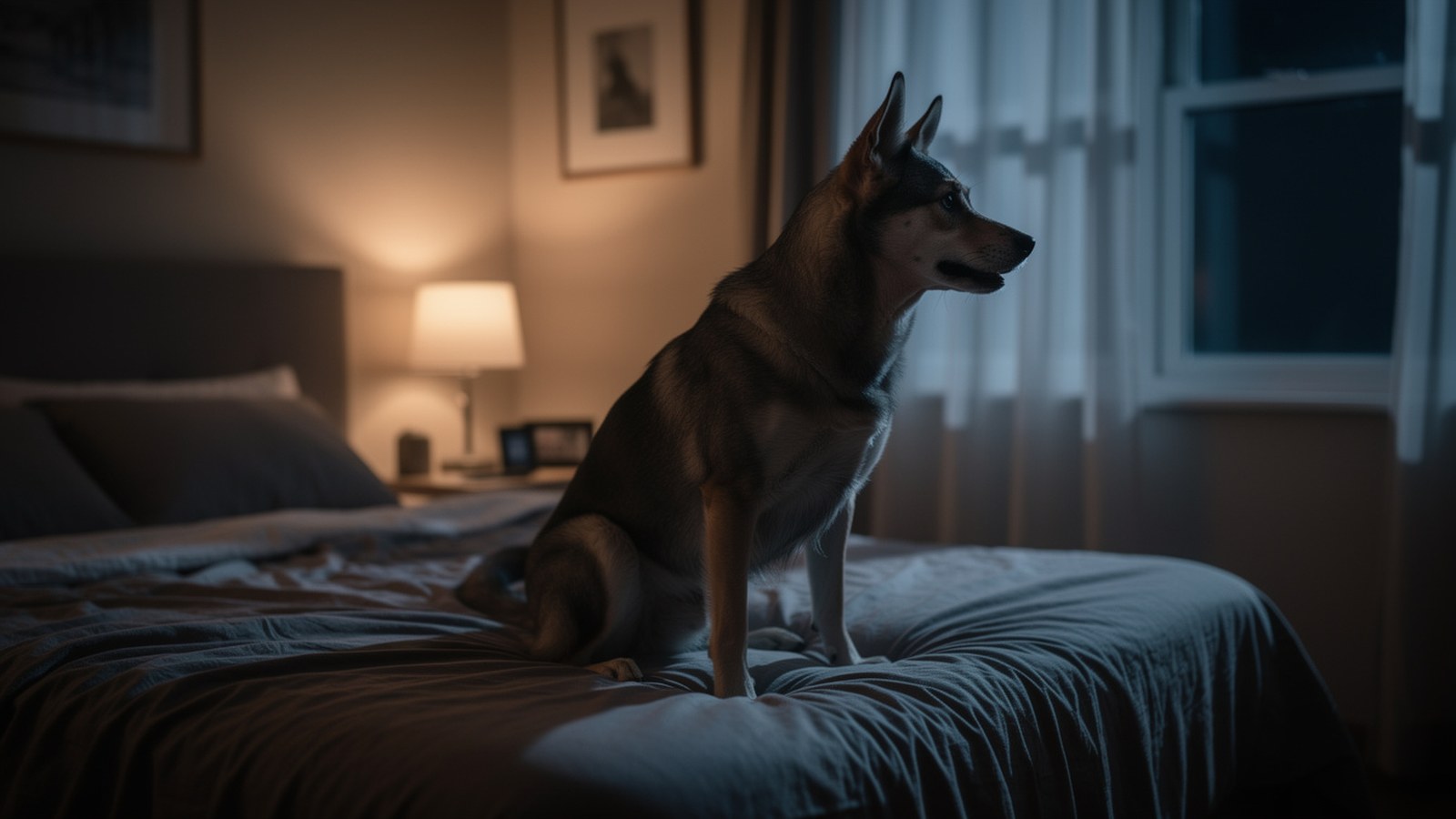
Dog barking at night wakes the house for different jobs: an alert to the street, a toilet or discomfort need, boredom after a flat day, or a check on whether noise brings company. This page is the adult household version. Street surveillance at glass stays on window barking. Puppy crate sounds at night stay on the crate night classifier. Knock and latch stay on barking at the door.
I am Andrew Darov, a trainer from Russia. I am not a veterinarian. Night work is management plus a clear reward for quiet — not a dominance speech at 2 a.m.
Why does an adult dog bark at night?
Name the job before you add a cue. Alert, need, and boredom check-ins need different fixes.
Alert. Footsteps, a car, a neighbour’s door, wildlife at the fence. The bark “works” when the sound passes. Close the view and soften the soundscape before you train a look-away. Need. Toilet clock, empty water, heat or cold, a sore body. Trips stay boring; repeated straining or new restlessness means ask your vet. Boredom / check-in. Under-walked or under-sniffed days often explode after lights out. A short evening settle on a mat and a chew before bed beat a hallway lecture. Door chaos that used to “work” and then got worse when you stopped answering sits near extinction bursts at the door — same idea, different clock.
US suburban yards and UK street-level flats change the soundtrack, not the tree. UK flats with thin hallway doors and US houses with open stairs both create “free” night sound. Closing a door is not unkind; it is how you stop six hours of sentry practice while you sleep. If the dog faces a busy pavement window, you are running a free night cinema.
How do you change the night loop?
- Film or note three nights: time, trigger, what you did, what the dog did next.
- Block free street views and harsh hallway noise before you cue “quiet.”
- If a toilet is plausible, one boring lead trip — then back to bed. No kitchen party.
- Reward quiet on a mat away from the glass while the house is still soft. Raise difficulty later.
- If barking is new in an older dog, or the body looks wrong, stop DIY and use when to call the vet.
The plan fails when every bark earns a full conversation, or when you try to out-train six hours of sentry duty with a five-minute session.
How is night different from day window or door barking?
Daytime window barking is often hours of free street cinema. Night barking is usually shorter bursts against a quiet house: one van, one neighbour door, one bladder clock, or one “is anyone still awake?” check. The management tools overlap (curtains, closed room, mat away from glass), but the training window is different. You are not running a five-minute look-away drill at 2 a.m. You are protecting sleep with setup first, then rewarding the quiet stretches you can already win in the evening before lights out.
Door knock and latch patterns belong on barking at the door. If the night bark is really a doorbell spiral, stage soft rings earlier in the day on the doorbell practice page — keep nights for management. Puppy crate thrashing or toilet cries belong on the crate night classifier, not on this adult page.
Evening setup that helps. Last toilet late enough for the bladder. A chew or food puzzle finished before bed. Lights and TV down so the dog is not still on sentry. A mat or bed that is not glued to a street-facing sill. If the dog sleeps in your room, you hear nuance; if the dog is alone in a front room facing the pavement, you built a night cinema.
What “reward quiet” looks like. In the hour before bed, mark soft settling on the mat and drop food there. Do not wait for a bark and then scramble. If a bark already started, become boring furniture: no shout, no long chat. Reset the room (curtain, closed door) and try again tomorrow evening at an easier volume of street noise.
What are the usual failure modes?
- Cloning window barking. Glass and street day-loops live there; night household jobs live here.
- Treating every bark as a toilet. Parties at 3 a.m. build more nights.
- Shouting quiet. Noise is still attention.
- Skipping daytime needs. Flat days make loud nights.
- Ignoring a sudden senior change. Wrong desk — veterinary first.
- Using a bark collar as the plan. This site runs management and reward-based work, not pain tools.
Keep this card beside window barking and the crate night classifier if a puppy is still in the mix. One owns the glass, one owns puppy crate sounds, one owns the adult night house — that is how the bark cluster stays usable.
Questions on this page
Why does my dog bark at night?
Common jobs: alerting to sounds outside, needing a toilet or water, boredom after a dull day, or checking whether barking brings you. Street surveillance at glass stays on window barking. Puppy crate night sounds stay on the crate night classifier. This page owns the adult household at night.
How do you tell alert barking from a real need?
Alert often tracks a noise then softens when the trigger passes. A need climbs or returns on a clock (toilet, thirst, discomfort). Film one night if you can. Sudden new night barking in a previously quiet older dog is a veterinary question first.
Should you shout quiet or go in every time?
Shouting is still a conversation at 2 a.m. Going in with a party rewards the bark. Manage the view and sounds, keep toilet trips boring if needed, and reward quiet stretches you can already win. Door knock work stays on barking at the door.
What setup helps before you train?
Close curtains or move the bed off the street window, white noise or a fan for hallway sounds, a chew or food toy before lights out, last toilet late enough for the bladder. Management is not failure — it stops all-night practice of the wrong job.
When is night barking not a manners problem?
Stiff body, frantic pacing, new restlessness with other signs, or a senior dog who suddenly cannot settle. Manage the room and ask your vet. This page is behaviour and management, not a clinic.
Work with me
A $150 consultation or $500 monthly curatorship. Opens WhatsApp to Andrew.