Miniature Pinscher: temperament, door manners and leash training for a compact German ratter
The Miniature Pinscher, or Zwergpinscher in Germany, is a small, sleek dog with a high-stepping walk and a big opinion of itself. It was kept as a stable and farm ratter long before anyone bred a Dobermann, and it still moves fast, notices everything and finds every gap in a fence. Life goes well when you treat it as a quick, bold working dog in a small body: doors under a rule, a leash routine it understands, confidence built step by step, and real exercise.
Job: German ratter and watchdog; bold, quick and curious.
Energy: High for its size; needs daily walks, chase games and brain work.
Home: Fine in flats with door rules, alert training and secure fencing; feels the cold.
A Min Pin is small, fast and confident. It needs the same rules as a big dog
Public histories place the Miniature Pinscher in Germany several centuries back as a small pinscher type that kept stables and farmyards clear of rats. It is related to the German Pinscher and is older than the Dobermann, so calling it a mini Dobermann gets the story backwards. Breed clubs organised it in the late nineteenth century, and it later became popular in the United States, where it is shown in the Toy group.
The ratter background shows up quickly in the dogs I meet: fast reactions, interest in anything small and moving, a confident bark at the door, a talent for escaping and a strong streak of independence. Min Pins are also playful, affectionate with their people and quick to learn when training is fun. Because they are light and easy to lift, they are often carried and excused, which tends to make them bossy and anxious at once.
My first priorities are a reliable wait at every door and gate, a loose-lead routine that turns walks into teamwork, confidence built through small successes with new people and dogs, and a place to rest. Add enough running and brain work, and the Min Pin becomes great company.
German stable and farm ratter, watchdog (FCI Group 2; AKC and RKC Toy)
Breed history
How a small German ratter became the “King of Toys”
Breed history will not tell you how your dog behaves at the door, but it explains why so many Min Pins are fast, alert, brave with bigger dogs and brilliant at escaping.
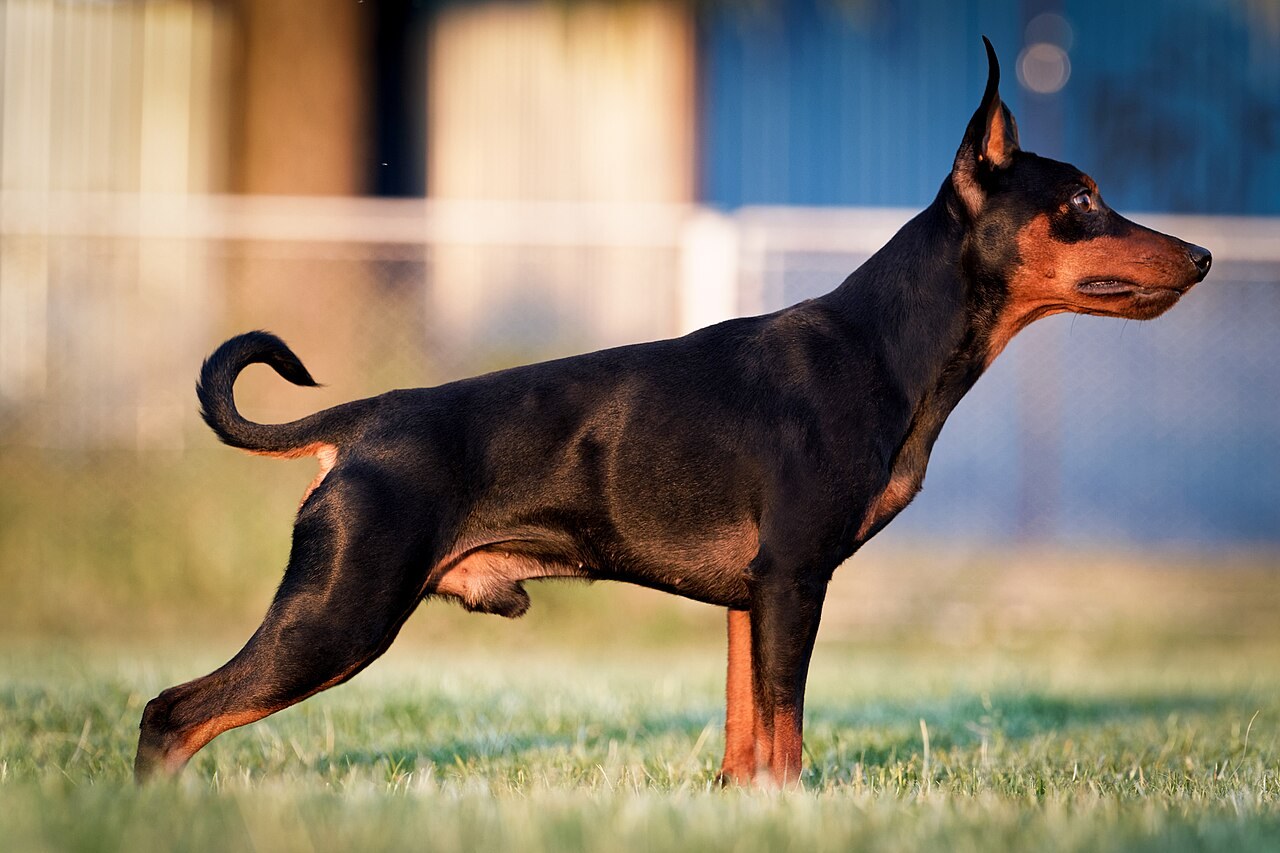
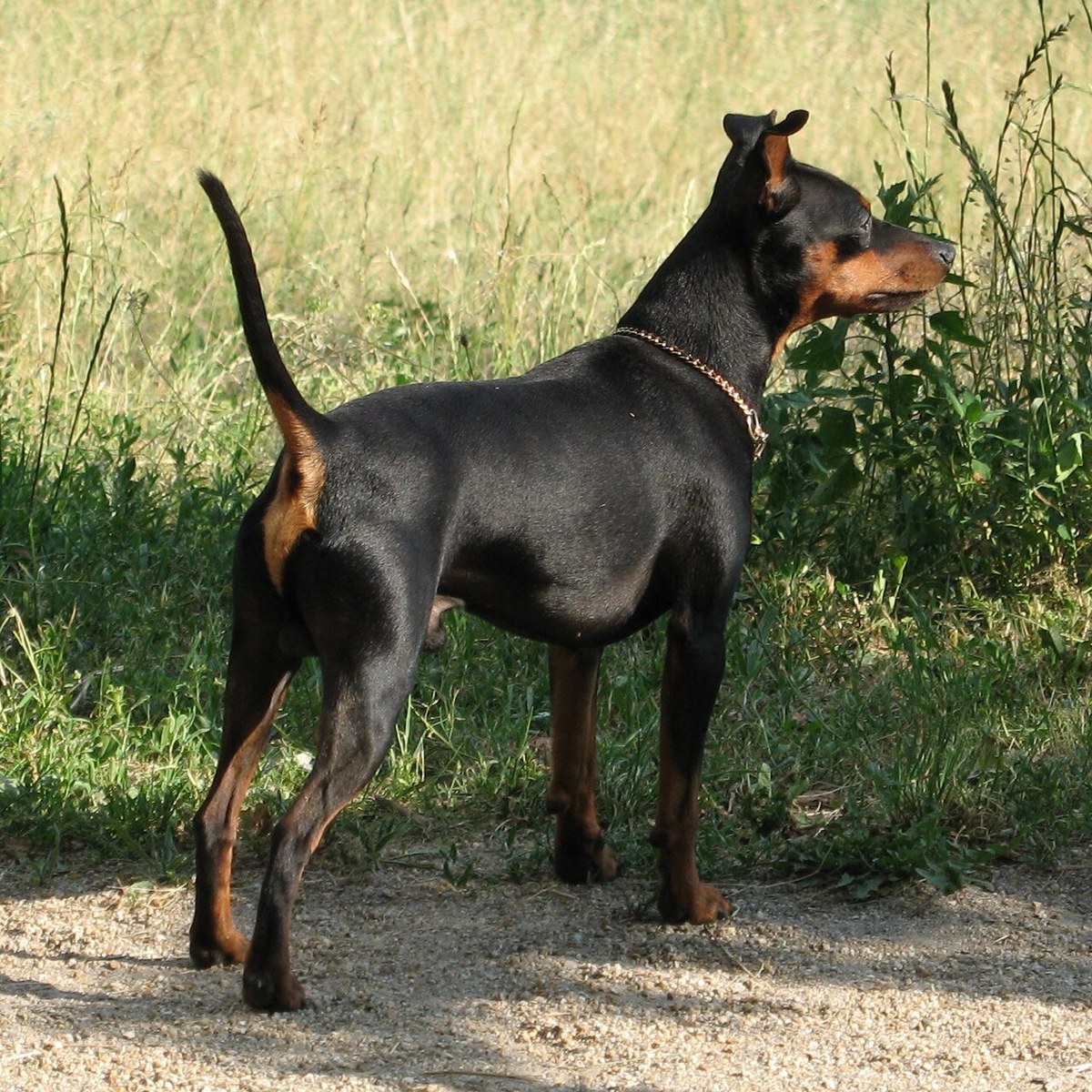
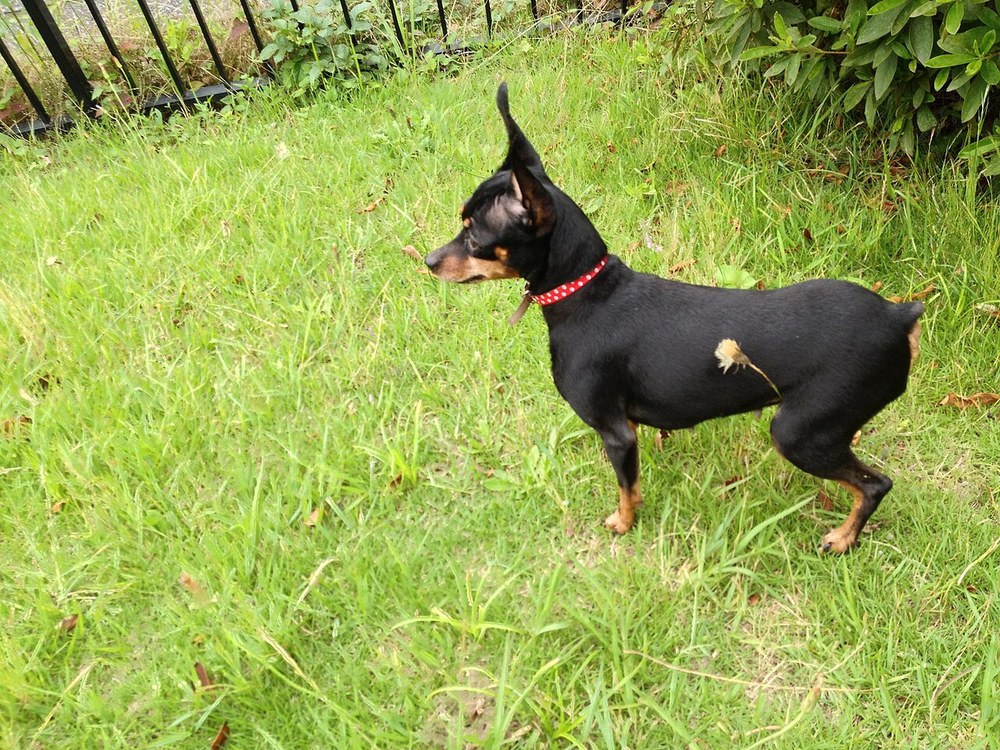
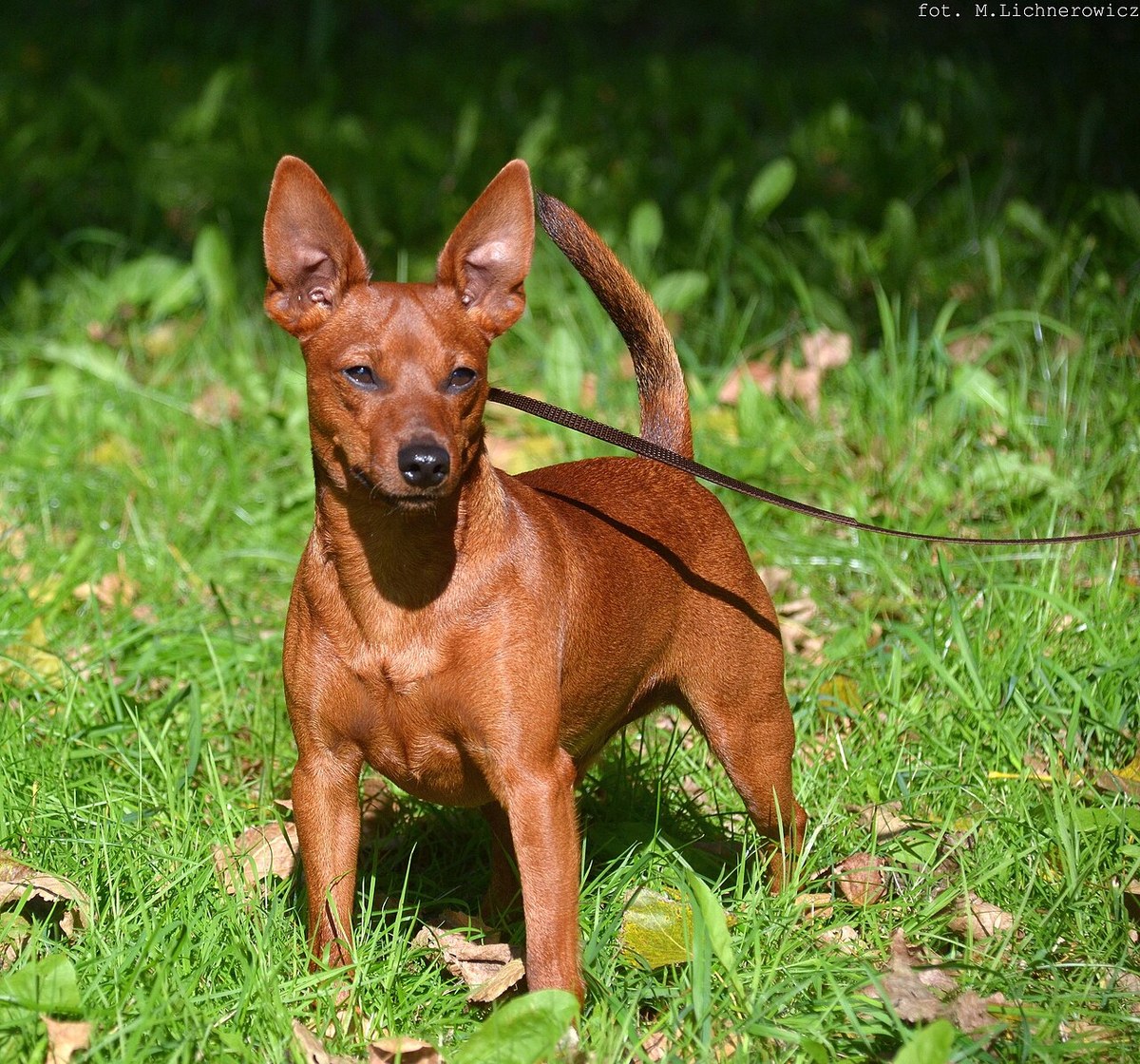
A Zwergpinscher in long grass (CC BY-SA). Rats in stables and barns were the original job.
German farms and stables → small pinschers
A ratter that could live in the house
Pinscher types were common in German farmyards and stables, where they kept rats down and warned of strangers. The small version was useful because it could get into tight spots and still live indoors. Public accounts of its early history are patchy, so I keep to what is widely agreed.
That job selected for speed, alertness, courage and independence. A household gets a dog that reacts quickly, chases small animals, barks at the door and does not wait for permission. Those are good traits for a ratter and need structure in a flat.
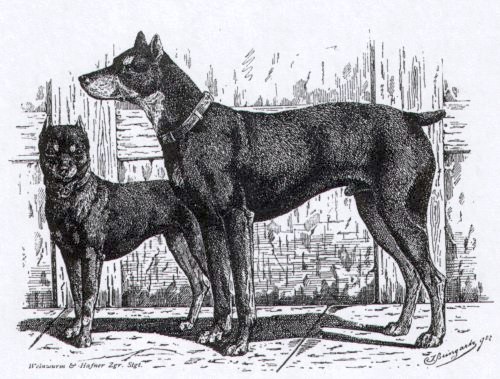
Jean Bungartz, German Pinscher and Zwergpinscher, from Kynos, 1884 (public domain). The small and medium pinschers were described side by side.
German breed club → American show ring
From the Pinscher-Schnauzer club to the US Toy group
German breeders organised the pinschers and schnauzers into a club in the 1890s, and the Miniature Pinscher began to be shown. Dogs reached the United States in the early twentieth century, and the breed gained a reputation for its high-stepping gait and bold presence.
Today you meet Min Pins in flats, agility rings and family homes. The ratter brain arrives with every one of them, whether or not there is a barn.
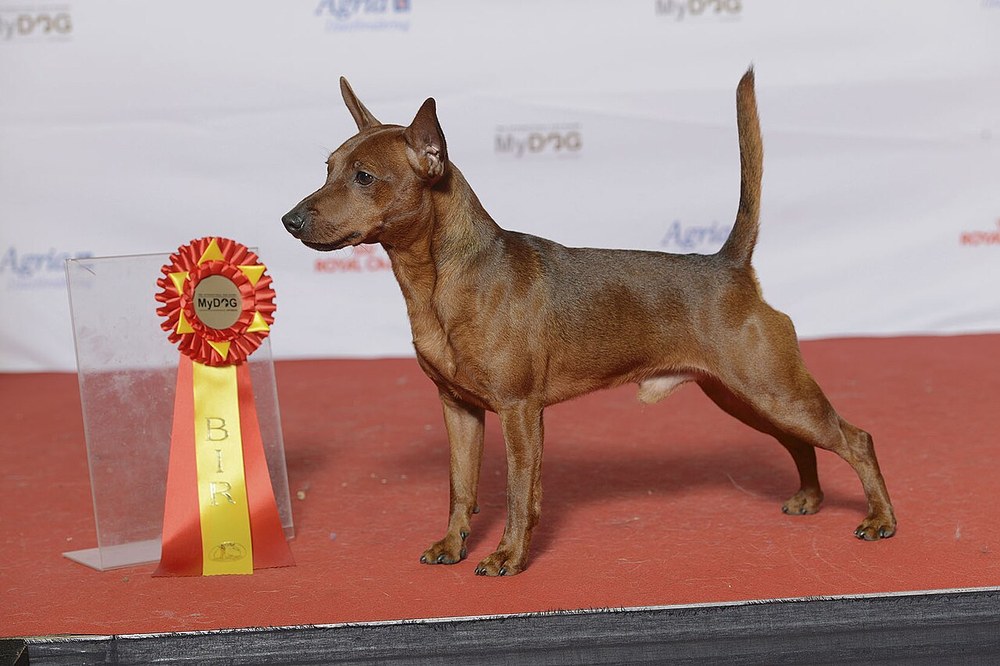
A red Miniature Pinscher at a Swedish show (CC BY 2.0). The show ring prizes the proud, high-stepping movement.
What the breed was bred for
Speed, courage and independence in ten pounds
In trainer terms, breeders favoured a dog that notices small movement, reacts fast and acts without waiting. At home that means escapes through open doors, chasing cats and birds, and telling off much bigger dogs.
Min Pins learn quickly and get bored easily. Short sessions, food, games and a sense of humour work far better than repetition or harsh handling.
A good day has a brisk walk, a chase game, door manners and a warm bed
At home the ratter shows up as door dashing, window barking, chasing anything small and loud reactions to bigger dogs. Most Min Pins are also playful and loving with their family. Gates, closed doors and a lead near roads keep the dog safe while the new habits are built.
Morning · brisk walk
A real walk on a loose lead
Thirty to sixty minutes of brisk walking with sniffing time meets a lot of a Min Pin’s needs. Many pull and zigzag at first. Use a harness, stop when the lead goes tight and reward the dog for walking near you. Keep it on lead near roads; it is fast and does not look back.
Flirt-pole games with rules, short agility-style obstacles, fetch that ends and simple tricks use up energy and give the ratter something legal to chase. A Min Pin without enough to do usually invents its own job.
A Min Pin on the back of the sofa will report every passer-by. Block the lower window, give the dog a bed elsewhere, and teach a short alert routine: bark once or twice, turn to you, get a reward for quiet.
Min Pins are famous for slipping out. A rewarded wait at every door, a baby gate inside the front entrance and a family rule about closing gates prevent most escapes. Let guests ignore the dog until it is calm.
Short coats mean Min Pins feel the cold and love to burrow. Give it a bed with a blanket in a quiet spot, teach it to go there and stay, and invite it onto the sofa on your terms. Rest is a skill and keeps sofa guarding away.
General awareness only. I am not a veterinarian. With Min Pins, owners often notice trouble first as skipping on a back leg, limping, shivering in cold weather, weight gain, eye changes or cuts from escapes and jumps. For red flags, leave this page and open
when to call the vet.
Knees and hips
Kneecap problems and a hip condition seen in young small dogs (Legg-Calvé-Perthes) are discussed in the breed. Skipping or limping needs a vet. See limping stop list.
Eyes
Some inherited eye conditions are mentioned in breed health discussions. Ask breeders about eye exams. Cloudiness or bumping into things is a vet visit.
An inherited metabolic theme (MPS VI)
The breed is discussed with an inherited condition, MPS VI, for which DNA testing exists. Ask breeders about it.
Cold and short coat
A thin coat and low body fat make many Min Pins cold in winter. Use a coat in cold, wet weather and keep walks brisk.
Injury from jumps and escapes
Fast, fearless dogs jump off furniture and through gaps. Secure fencing and ramps reduce accidents. Sudden pain needs a vet.
Weight and teeth
Small mouths need regular brushing, and a few extra treats are a lot for a ten-pound dog. See treat calories in the ration.
Lines and types
Sport-minded and companion Min Pins share the same ratter brain
No bloodline sales. The differences you will notice are in energy, sharpness at the door and how easily the dog settles. Every Min Pin needs door rules, leash work and real outlets.
Active and sport-minded lines
Often high drive for chasing and moving fast.
Parents may do agility or barn hunt; ask how they settle at home.
Needs daily games and training, not just a walk to the corner.
Door manners and recall need early attention.
Fits an active owner who would enjoy small-dog sports and has a secure garden.
Companion and show lines
Often a slightly calmer tempo indoors.
Still a strong watchdog bark and a fast door dash.
Meet the parents and notice how they greet you at the door.
Knee checks, eye exams and MPS VI testing matter in every line.
Fits a home ready for daily walks, alert training and firm door rules.
Socialization windows
What to introduce — and what not to overload — by age
AVSAB-aligned in spirit: short, clean exposures at a distance the puppy can still eat,
with hygiene while vaccines finish. See the
puppy socialization schedule.
2–4 months
Home, doors and handling
Introduce: a rewarded wait at every door, a gate inside the entrance, handling of paws and ears, harness wearing, doorbell sounds at low volume, first chase games with a toy.
Do not overload: open doors and gates, being carried everywhere, free access to every sofa, attention for every bark.
~6 months
The world at a working distance
Introduce: other dogs, bikes, cats and birds at a distance where the puppy can still eat, first loose-lead skills, a short alert routine at the window.
Do not overload: charging at big dogs, chasing cats, crowded dog parks, off-lead walks near roads.
~12 months
Adolescent testing
Introduce: longer walks, guests by script, calm meetings with known dogs, recall on a long line, café settles.
Do not overload: trusting recall in open areas, letting it win standoffs with big dogs, sofa guarding without a plan.
~18 months
Adult routines
Introduce: new routes and places, car and building thresholds, small-dog sport classes.
Do not overload: skipping winter coats, letting weight creep up, relaxing door rules.
~24 months
Keep the rules
Introduce: refresh door, leash and alert routines, keep daily games, yearly health checks.
Do not overload: treating the adult as a toy, ignoring a skipping back leg.
Before you buy
Who a Miniature Pinscher usually fits
Fit depends on daily habits: brisk walks, chase games, door discipline, alert training and a willingness to give a small dog real manners.
Good match
More likely a good fit if you…
You want a small, lively, confident dog with plenty of character
You enjoy daily walks and short training games
Everyone at home can keep doors and gates closed
You can keep the dog warm in winter and on a lead near roads
You like a funny, independent dog and are patient with it
Mismatch risk
A Miniature Pinscher may be a poor choice if…
You want a quiet lapdog that rarely barks
Doors and gates in your home are often left open
You keep pet rodents or birds that cannot be separated
Young children would often pick the dog up
You prefer to carry a dog rather than train it
If you are torn between breeds
Miniature Pinscher vs Chihuahua and Jack Russell Terrier
Chihuahuas are even smaller and usually more lap-oriented; Jack Russells are heavier-built working terriers with a stronger dig and hunt drive. The Min Pin sits between them: toy-sized, very quick and bold, with a ratter’s chase.
Origin
Miniature Pinscher
German stable and farm ratter.
Chihuahua
Mexican companion breed.
Size
Miniature Pinscher
About 10–12.5 in and 8–10 lb.
Jack Russell Terrier
Sturdier, often 13–17 lb.
Energy
Miniature Pinscher
High; fast bursts and lots of curiosity.
Chihuahua
Usually lower; happy with shorter walks.
Chase and dig
Miniature Pinscher
Strong chase, less digging.
Jack Russell Terrier
Strong chase and dig; real earthdog drive.
Door and barking
Miniature Pinscher
Fast door dash, confident watchdog bark.
Both compares
All three need door rules and alert training.
Ownership without surprises
Where a Miniature Pinscher owner’s budget goes
Costs depend on country, city and your choices. These are themes to plan for, not quotes.
Escape-proofing
Gates, secure fencing with no gaps, and door habits for the whole family. This is the most important spend.
Time and training
Daily walks and games, plus training sessions. A bored Min Pin costs you in barking and chewed things.
Clothing and bedding
A warm coat for winter, a bed with a blanket and a well-fitted harness.
Food
Small portions, but treats add up quickly. Measure and use part of the ration as reward.
Veterinary
Routine care, knee and eye checks, dental care and DNA-tested parents. Know your emergency number.
Classes
Puppy class, agility or barn hunt classes, and private help for reactivity or barking. Prices vary by city.
A small, short-coated dog looks cheap to keep. Escape-proofing, training time and vet care are the real cost drivers.
Before day one at home
What to prepare for a Miniature Pinscher puppy
A Min Pin puppy is fast, fearless and curious. A few decisions before arrival save you a lot of chasing later, especially about doors, barking and furniture.
01
Gate the front door
An indoor gate before the front door stops the first and most dangerous escapes. See baby gates.
02
Teach the door wait from week one
Ask for a pause, open the door a little, reward the dog for staying, and close it if it moves. See wait at the door.
03
Agree on alert rules
Decide which sounds earn a bark, what phrase you use to take over, and what the puppy earns for going quiet.
04
Toilet plan for cold and rain
Short-coated puppies hate bad weather. Go out with the puppy, keep trips short and reward well. See potty training.
05
Four paws on the floor
Carry the puppy only when needed. Walking and exploring build confidence. See puppy leash training.
06
Protect sleep
Overtired puppies nip and zoom. Use a crate or pen and enforced naps.
If the dog is already yours
Training a Min Pin means doors, leash and confidence, built in short pieces
Keep the rules visible: a pause at the open door until you release it, a loose lead for the next few steps, one or two barks at the window then a turn to you, four paws on the floor for guests. Reward each one.
Min Pins are quick and easily bored. Three to five minutes of training with food and play, several times a day, works much better than long drills. Harsh corrections tend to make them defensive and snappy.
Management keeps the dog safe while it learns: gates, closed doors, a harness, blocked window views, its own bed and a lead near roads.
Load balance
Plenty of movement and brain work, with knees and cold in mind
Age, knee health, weight and weather all change what is right. Skipping on a back leg, shivering, or a dog that cannot calm down even after a good day mean stop and get a vet or behaviour check.
Brisk walkChase gameDoor practiceAlert routineRest in a warm bed
Walks with sniffing, agility-style games, barn hunt, tricks and short structured play all count. Being carried, endless lap time and barking at the window all day do not meet the need.
A Min Pin that has run, sniffed and practised its door wait can hear the postman and stay in its bed.
Door, pause, release
How to teach a Miniature Pinscher to wait at the door
Start at an inside door with the dog on a lead and treats ready. Move to the front door only when the dog can pause easily.
01
Start at an inside door
With the dog on a lead, put your hand on the handle. If the dog pauses, mark and reward. If it pushes forward, stay still until it backs off.
02
Open a crack, reward the pause
Open the door a few centimetres. If the dog holds its position, reward. If it moves toward the gap, close the door gently and try again.
03
Open wider, add duration
Gradually open wider and wait longer before rewarding. Keep sessions short and fun.
04
Release with a clear word
Use one release word, then walk through together. The dog learns that the release, not the open door, means go.
05
Move to the front door
Practise with a gate behind you for safety, then with real outings, deliveries and guests.
One scene close-up
Why a Min Pin charges at big dogs on lead
A small, fast, confident dog on a tight lead meets a big dog head on. It feels trapped and makes itself large and loud. The big dog reacts, the owner lifts the small dog, and next time the barking starts earlier.
Increase distance until your dog can still eat, reward it for looking at the other dog and back at you, and walk away in an arc. Keep the lead loose. If food fails, you are too close.
If reactions include biting, or your dog is frightened most of the walk, work with a qualified professional and check for pain with your vet.
“With a Min Pin, I treat a small dog as a capable one. We put every door under a rule, make walks a simple game of loose lead and check-ins, give the ratter safe chase, and build calm distance from bigger dogs. A fast little dog with clear rules is a joy to live with.”
Sessions cover real scenes: door escapes, barking, reactions to other dogs, pulling on lead, chasing and settling. I am a trainer, not a veterinarian. No invented reviews.
Andrew DarovProfessional dog trainer and instructor
No. The Min Pin is an older German pinscher breed and is not a scaled-down Dobermann. They look a little alike, but the history and temperament are different.
Is a Miniature Pinscher a good first dog?+
It can be for an active, patient first-time owner who will train door manners and barking. It is a hard choice for someone who wants a calm lapdog.
Do Min Pins bark a lot?+
Many do, especially at the door and window. Training a short alert routine and blocking window views helps a lot.
Are Min Pins good apartment dogs?+
They can be, thanks to their size, if they get daily exercise and solid door and barking rules.
How much exercise does a Miniature Pinscher need?+
Most adults need 30–60 minutes of walking plus games and training every day.
Can Min Pins be off lead?+
Only in secure areas after good recall training. They are fast, curious and easily distracted by small animals.
Miniature Pinscher vs Chihuahua: which fits better?+
Chihuahuas are smaller and usually calmer. Min Pins are more energetic, more athletic and more likely to escape.
Miniature Pinscher vs Jack Russell: what is the difference?+
Both are bold and busy. Jack Russells are sturdier terriers with more dig and hunt drive; Min Pins are lighter, toy-sized and very quick.
Are Min Pins good with children?+
Often good with respectful older children. They can snap if grabbed or squeezed. Supervise and teach children to let the dog come to them.
Are Min Pins good with cats and small pets?+
Some live well with a cat raised alongside them. Rodents and birds are a real risk because of the ratter drive.
What health themes should I ask about?+
Ask about knee and hip checks, eye exams and DNA testing for MPS VI. This is general awareness for a vet conversation, not a diagnosis.
How long do Min Pins live?+
Public breed references often mention about 12–16 years. Individual dogs vary.
If a Min Pin seems too fast or too bold for your home
It is a fun, confident small dog, but the energy and escape talent do not suit every household.
A tiny, bold terrier from northern England with a silky coat that needs calm door routines, grooming and house training.
Need a read on your exact situation?
Tell me your Min Pin’s age and the scene that keeps repeating: door escapes, barking, reactions to bigger dogs, pulling or chasing. We check safety and health first, then pick the first skill.
Written by Andrew Darov, professional dog trainer. Not veterinary advice and not a diagnosis.
Not a kennel club. No invented reviews. No vaccine schedules or toxin doses. Photo credits in
/images/breeds/miniature-pinscher-guide/credits.md.