The Great Dane is a tall, elegant German giant — originally a boar-hunting dog, now usually a gentle, affectionate companion. Most Danes are calm indoors and sensitive to their people. Life goes well when you plan for size, teach manners early and protect growing joints.
Job: Former boarhound, now a giant companion.
Energy: Moderate; walks and play, then long rests.
Home: Needs room, a big bed and leash manners taught early.
Why the Great Dane was built for boar hunting and then for the estate house
History does not decide what one puppy becomes, but it explains a lot: most Danes are gentle, people-oriented giants — and their size, growth and sensitivity shape daily life more than any guarding instinct.
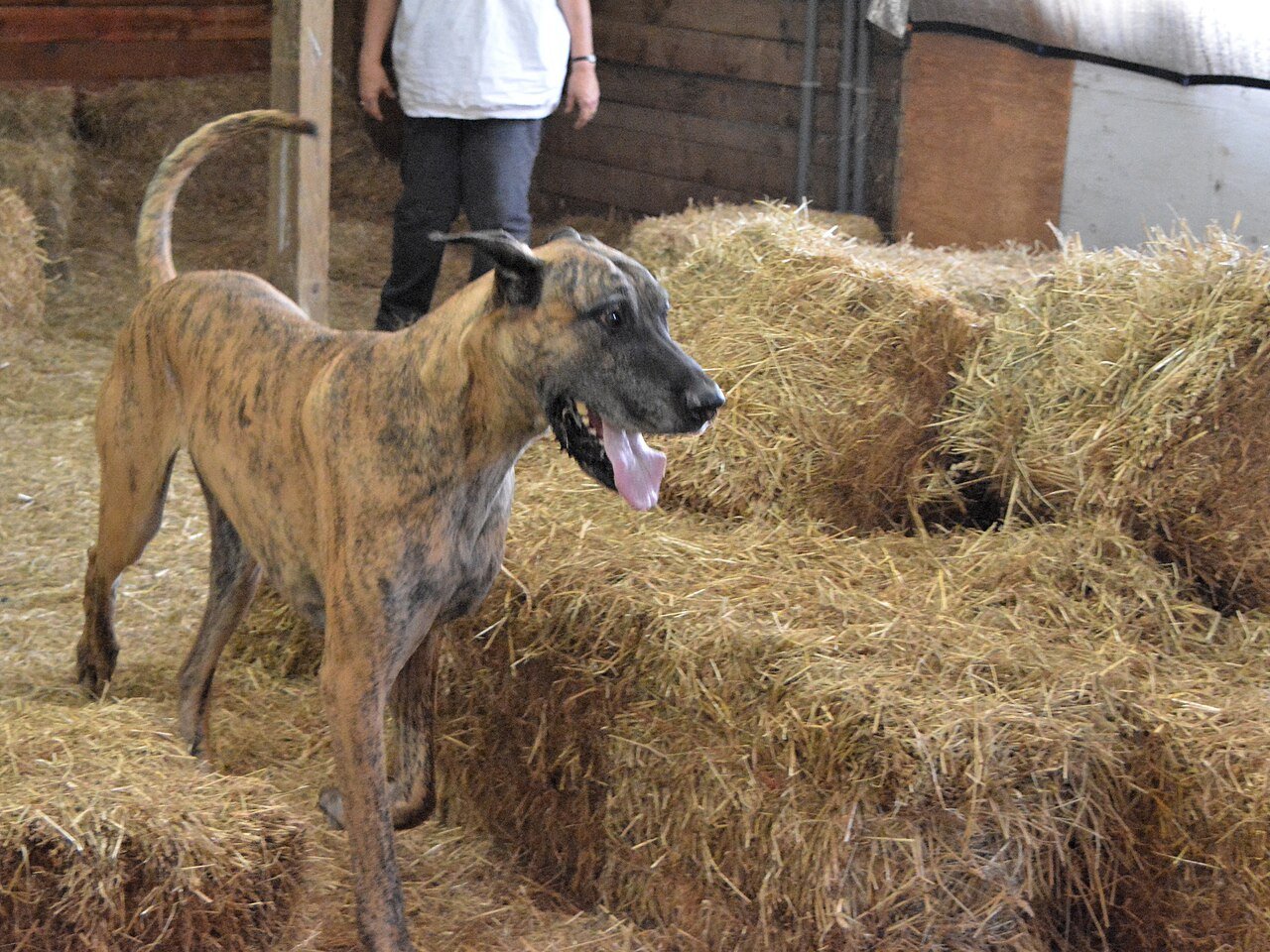
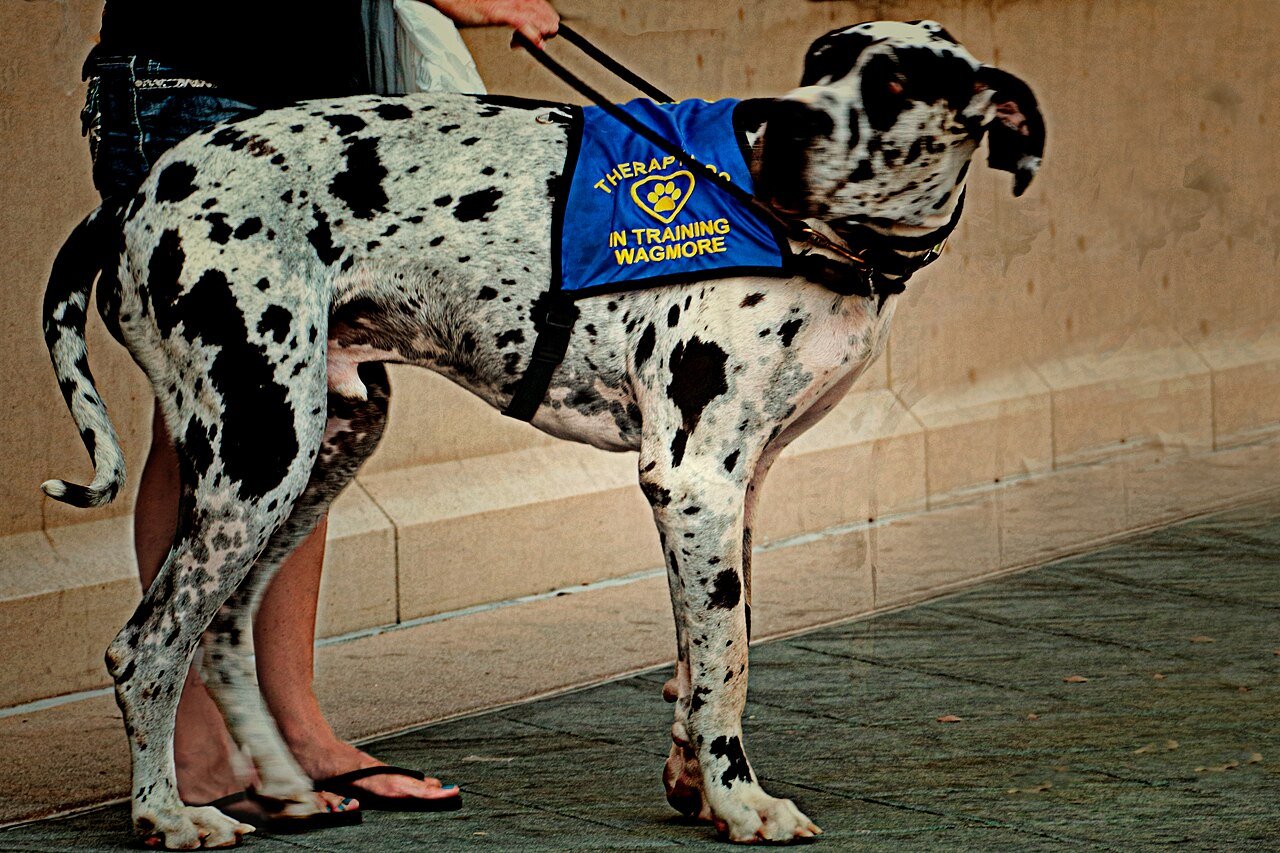
A Great Dane competing in Barn Hunt, a modern dog sport built around searching (modern photograph).
Germany → boar hound and estate dog
Fast, tall and brave enough for big game
Public breed histories describe large hounds and mastiff-type dogs in German-speaking lands used to hunt wild boar. Over time, the type was refined into a tall, elegant dog kept by nobility as both hunter and estate guardian.
Despite the English name, the breed is German; in Germany it is called the Deutsche Dogge. The hunting past explains the speed and the courage; the estate role explains the attachment to people.
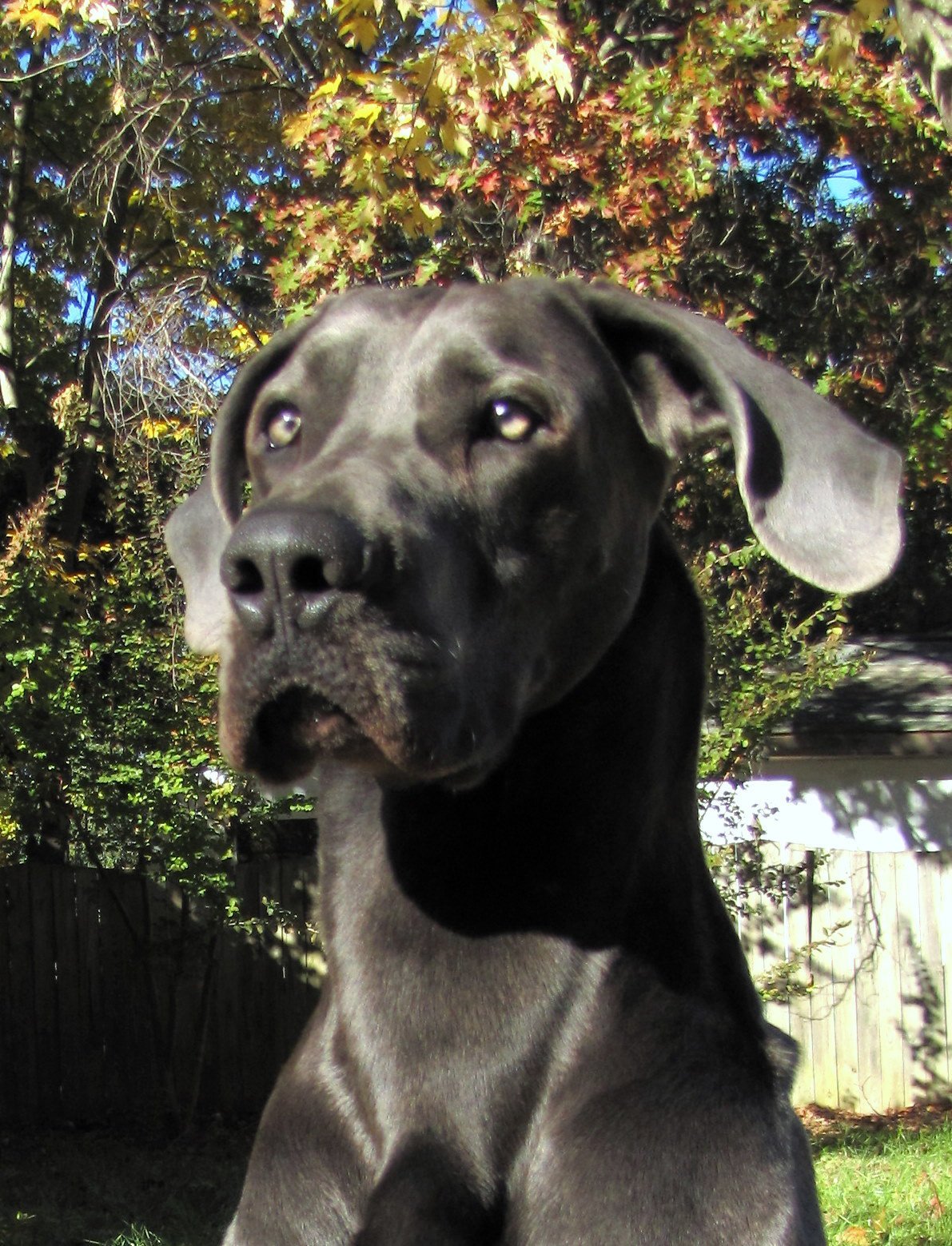
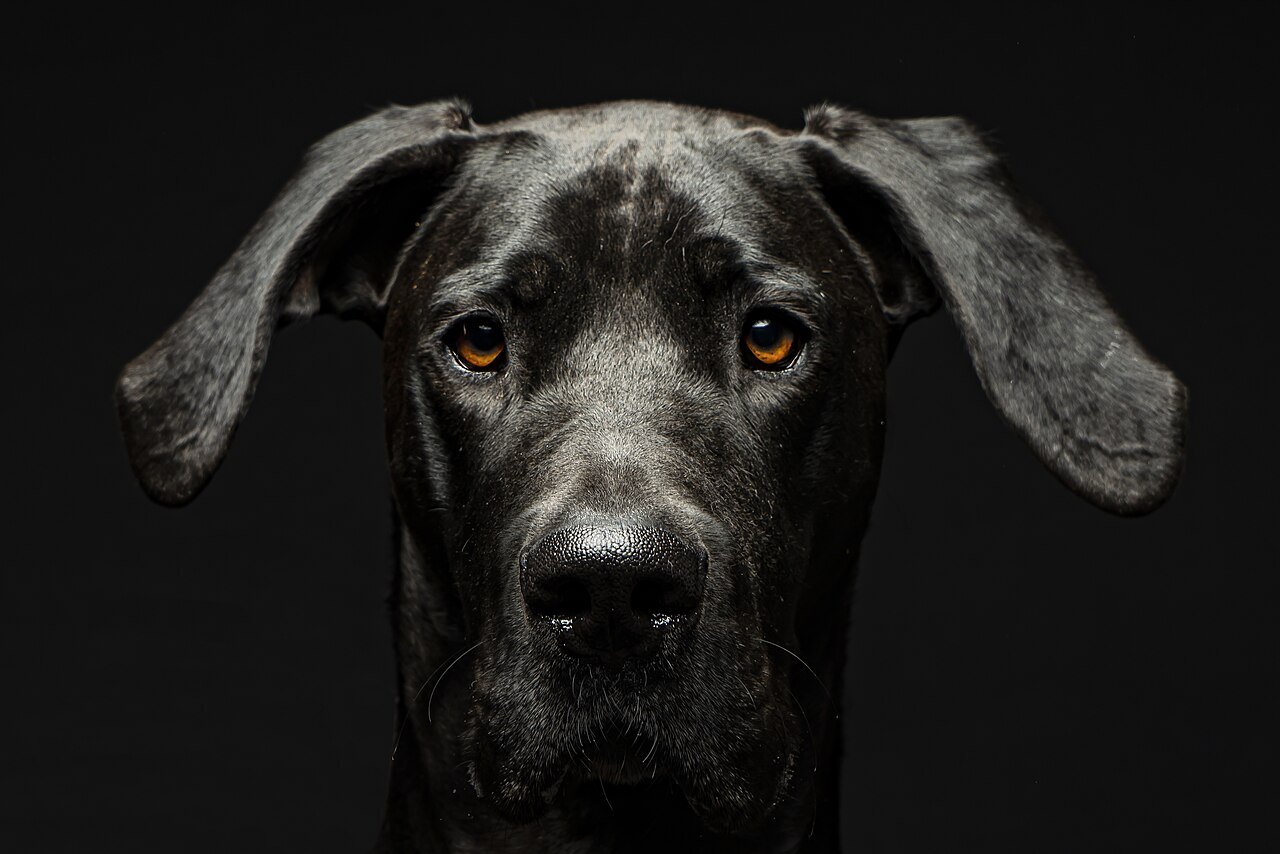
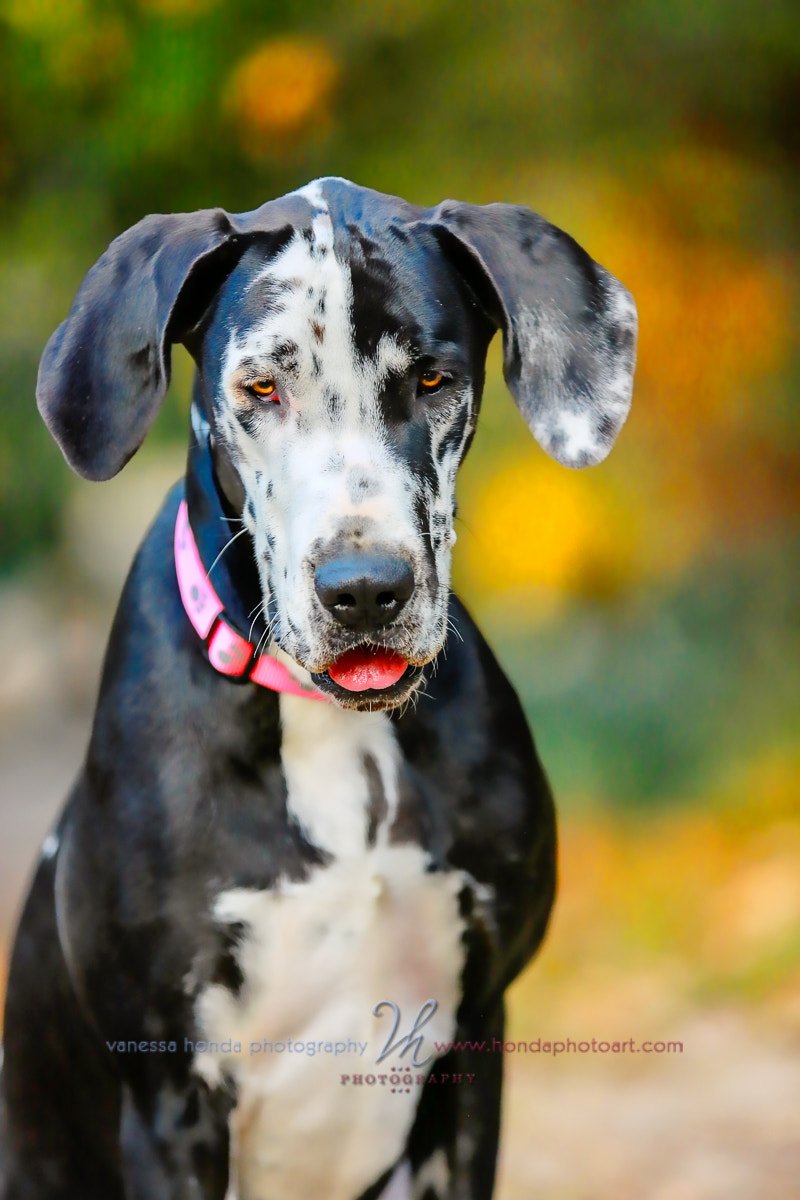
An adolescent blue Great Dane with natural, uncropped ears (modern photograph).
Breed standard → worldwide companion
From hunting dog to “gentle giant”
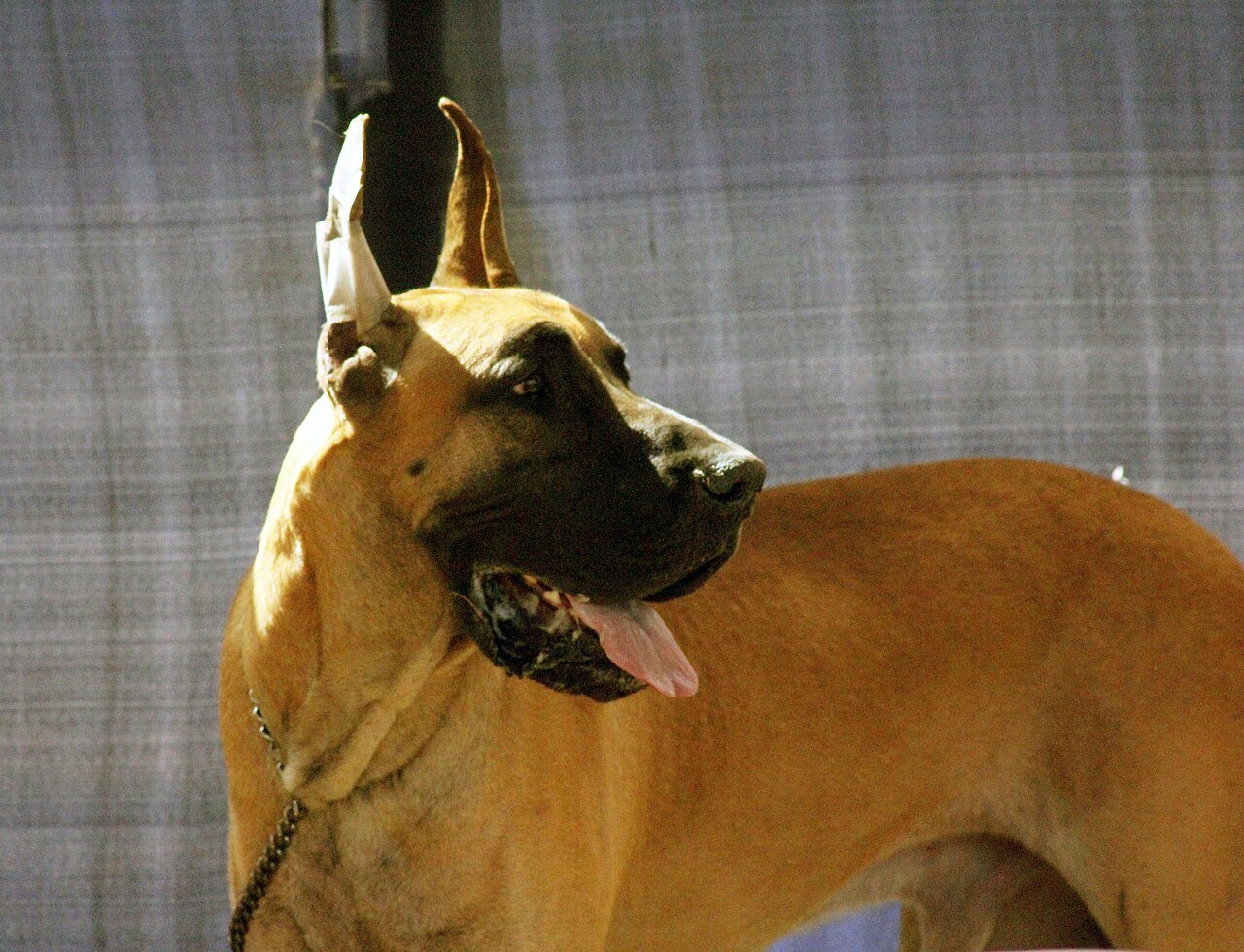
German breeders organised a standard in the late 19th century, and the breed spread internationally as a companion. Ear cropping is banned in many countries today, so natural ears are increasingly common.
The modern Dane is mostly a family dog. Lines and type differ between Europe and North America, so meet the parents and watch them move and greet strangers.
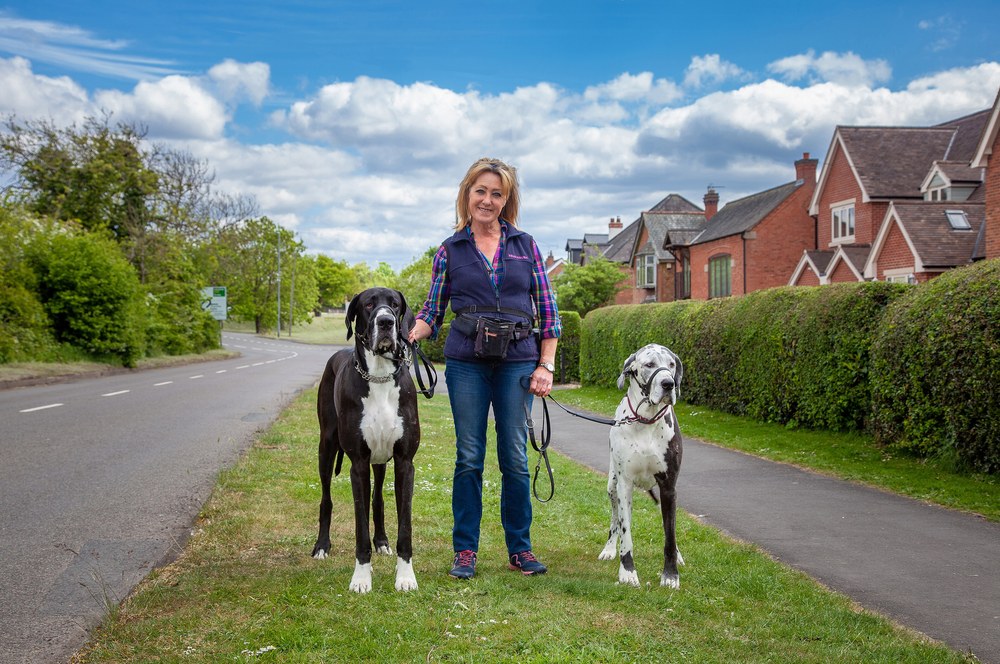
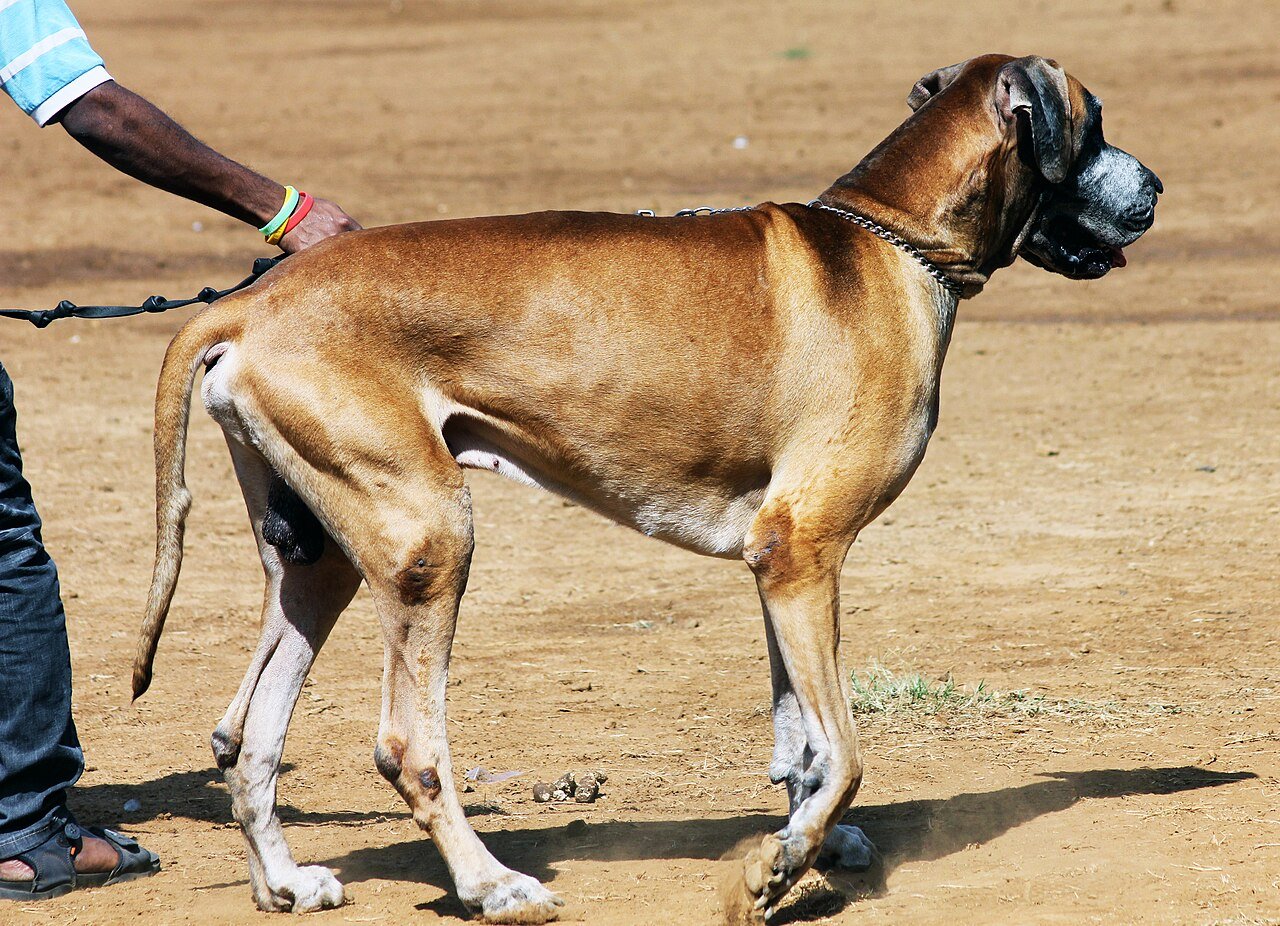
A dog walker with two Great Danes (modern photograph). Calm leash manners matter more with every kilo a dog gains — teach them while the puppy is still small.
What the breed was bred for
Gentleness, sensitivity and enormous size
In plain trainer language: modern Danes are usually affectionate, sensitive and eager to be close to people. Many are surprisingly soft and easily worried by harsh handling.
The challenge is size. A friendly lean, a jump or a startle on lead has real consequences. Teach manners early with food and patience, and protect the growing body.
A day is calm walks, short play and a lot of couch time
Adult Danes are often calm indoors and need moderate exercise. The planning is about space, growth, greetings and helping a sensitive giant feel safe in busy places.
Morning · walk
A steady walk with time to sniff
Most adults enjoy moderate walks. Puppies need short outings to protect growing joints.
What to watch monthly: growth, weight, joints and mealtimes
General awareness only — I am a trainer, not a veterinarian. In giant breeds, small changes in movement, appetite or energy deserve attention. For urgent signs, see
when to call the vet.
Growth
Feed for slow, steady growth and ask your vet about large-breed puppy nutrition.
Ask the breeder which screenings the national breed club recommends and see results for both parents.
After meals
Plan quiet time after meals and ask your vet about feeding routines for deep-chested giants. A swollen belly with restlessness is an emergency.
Short coat and nails
A weekly brush and regular nail trims are usually enough.
Handling
Practise handling while the puppy is small. See puppy handling.
Lines and types
European and American Danes can look and feel different
The breed is the same, but breeders in different regions select for slightly different heads, size and movement. Colour groups such as fawn, brindle, harlequin, mantle, black and blue are often bred separately.
European (FCI) type
Often heavier head and more substance.
Natural ears are the norm in many countries.
Colour groups bred separately.
Meet the parents at home.
Suits families who want a calm, imposing companion.
American (AKC) type
Often lighter and more elegant.
Ears may be cropped where legal.
Wide range of colours.
Ask about temperament with strangers.
Suits families who want an elegant, people-focused giant.
Socialization windows
What to introduce — and what not to overload — by age
AVSAB-aligned in spirit: short, clean exposures at a distance the puppy can still eat,
with hygiene while vaccines finish. See the
puppy socialization schedule.
2–4 months
Gentle confidence
Introduce: family, handling, crate, car rides, calm visitors, new sounds at a distance.
Do not overload: stairs, jumping, rough play with big dogs.
~6 months
Manners before height
Introduce: loose-lead practice, sit for greetings, place cue.
Do not overload: long walks, jumping up, dog parks.
~12 months
Adolescent growth
Introduce: calm greetings, confidence in new places, short training sessions.
Do not overload: hard exercise, forced greetings.
~18 months
Adult calm
Introduce: longer walks, new environments, chosen dog friends.
Do not overload: jumping sports before your vet clears it.
~24 months
Maintain habits
Introduce: refreshed manners and handling routines.
Do not overload: overweight, dropping manners.
Before you buy
Who a Great Dane usually fits
A Great Dane fits calm households with room and budget for a giant, and owners who will teach manners gently and early.
Good match
More likely a good fit if you…
Want an affectionate, people-oriented companion
Have space at home and in the car
Will train greetings and lead manners early
Can budget for giant-breed food and vet care
Prefer calm walks to intense sports
Mismatch risk
A Great Dane may be a poor choice if…
You live in a small flat with stairs and no lift
You want a running partner
Long hours alone are normal in your routine
You cannot budget for giant-breed care
Kitchen counters must stay untouched without management
If you are torn between breeds
Great Dane vs English Mastiff and Irish Wolfhound
Danes are compared with other giants. Build and temperament differ.
Build
Great Dane
Tall, elegant and athletic.
English Mastiff
Heavier and more massive.
Origin
Great Dane
German boar-hunting and estate dog.
Irish Wolfhound
Irish sighthound for wolves and large game.
Temperament
Great Dane
Affectionate and sensitive.
English Mastiff
Calm and more guarding.
Chase drive
Great Dane
Moderate.
Irish Wolfhound
Strong sighthound chase instinct.
Training
Great Dane
Willing with food and patience.
Both compares
Mastiffs are slower; Wolfhounds more independent.
Ownership without surprises
Where a Great Dane owner’s budget goes
Costs depend on your area and breeder. Plan for these — not quotes.
Food
Giant-breed puppy food and large adult portions.
Veterinary care
Giant doses cost more. Ask which screenings the national breed club recommends.
Transport
A big car, ramp and large crate.
Home
Large beds, non-slip floors.
Training
Early classes for manners.
Insurance
Giant breeds often cost more to insure.
With a Dane, food, vet care and space are the big costs.
Before day one at home
What to prepare for a Great Dane puppy
A Dane puppy grows very fast. Build confidence and manners now, and protect the joints.
“With a Great Dane, I teach manners and confidence together. We reward four paws on the floor, build a loose lead while the puppy is small, practise calm in busy places and protect the growing body — because a worried or bouncy giant is hard for anyone to handle.”
Sessions cover real scenes: greetings and leaning, lead walking, noise and busy streets, counter manners, and time alone. I am a trainer, not a veterinarian. No invented reviews.
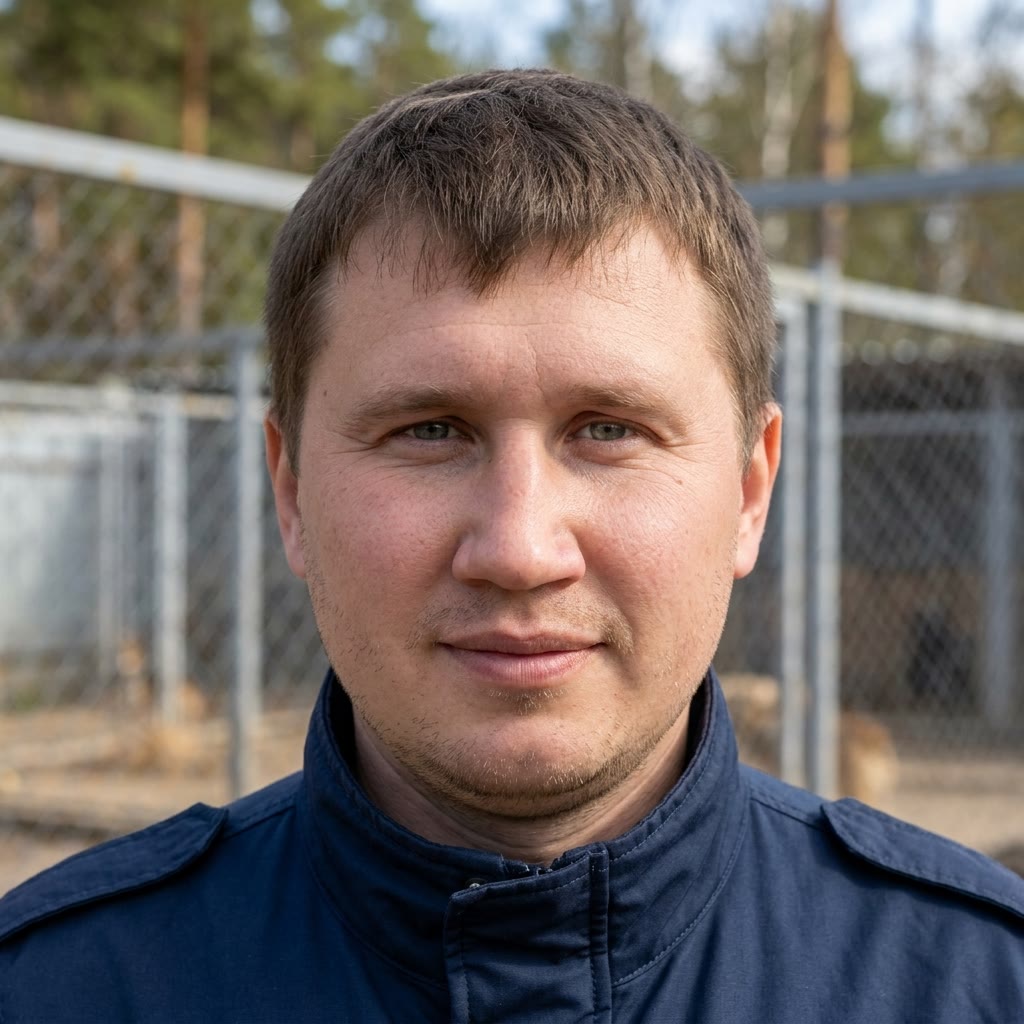
Andrew DarovProfessional dog trainer and instructor
Describe age, living setup, and where the dog breaks first — jumping and leaning, pulling on lead, worry in busy places, or time alone. Opens WhatsApp to Andrew.
A gentle Alpine giant famous for hospice rescue work that needs leash manners taught early, heat care and room for a big dog.
Need a read on your exact situation?
Describe your Great Dane’s age and the scene that repeats most: jumping and leaning, pulling on lead, worry in busy places, or time alone. We check safety first, then pick the first skill.
Written by Andrew Darov, professional dog trainer. Not veterinary advice and not a diagnosis.
Not a kennel club. No invented reviews. No vaccine schedules or toxin doses. Photo credits in
/images/breeds/great-dane-guide/credits.md.