Giant Schnauzer: temperament, training & working schnauzer foundations
The Giant Schnauzer is a powerful German working dog — energetic, intelligent and protective, with a wiry coat and a big beard. Most are loyal and affectionate with family and suspicious of strangers. Life goes well with daily exercise, real training and clear visitor routines.
Job: German working dog — drover, guardian and sport partner.
Energy: High; needs exercise and mental work every day.
Home: Best with active owners, training time and regular grooming.
A Giant Schnauzer is a powerful working dog that needs real jobs with a clear end and a calm place
Public breed histories describe a drover and yard guard from southern Germany, later a police dog. The modern Giant kept the energy, intelligence and protectiveness.
Most Giants learn quickly. The challenges are energy, guarding at the door, dog-selectivity and coat care.
From the first weeks, build daily training, a place routine for visitors and an off-switch at home.
Wiry double coat — sheds; brush and trim regularly
Job
German drover and working dog
Breed history
Why the Giant Schnauzer was built to drive cattle and guard the yard
History does not decide what one puppy becomes, but it explains a lot: most Giants are energetic, clever and protective — and they need work and structure far more than their teddy-bear beard suggests.
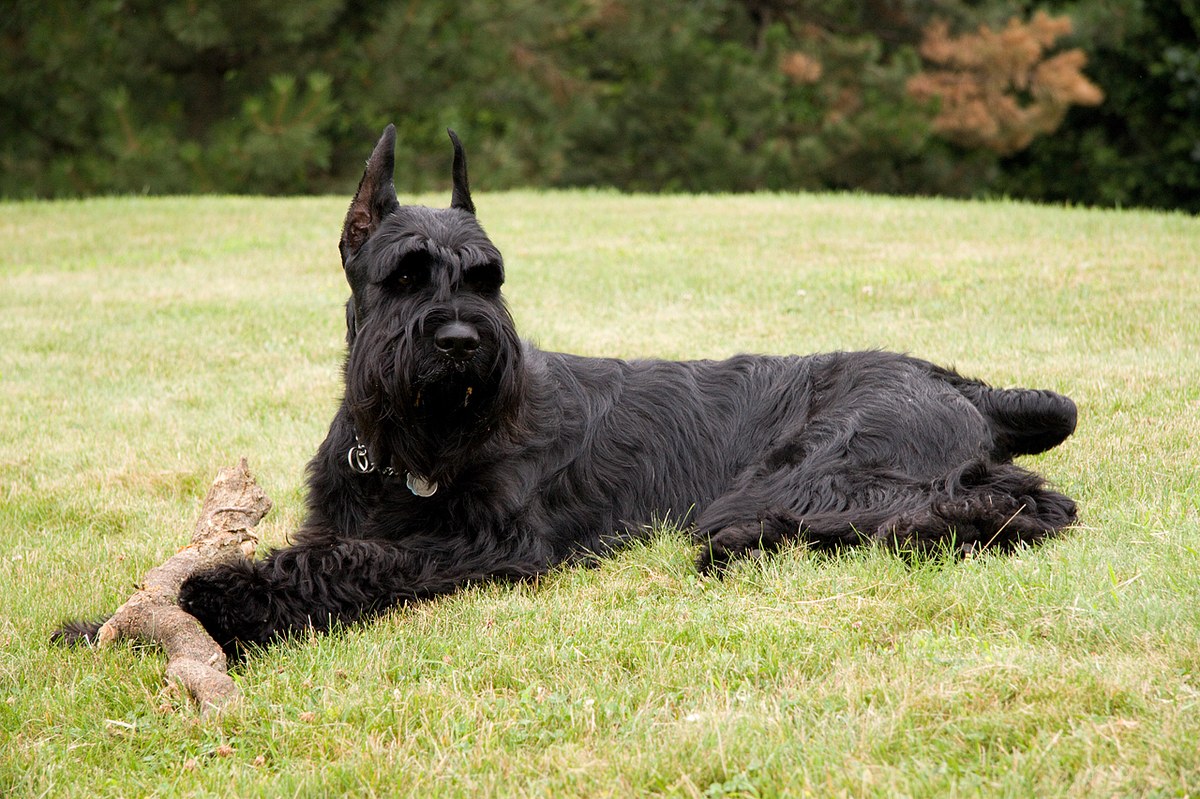
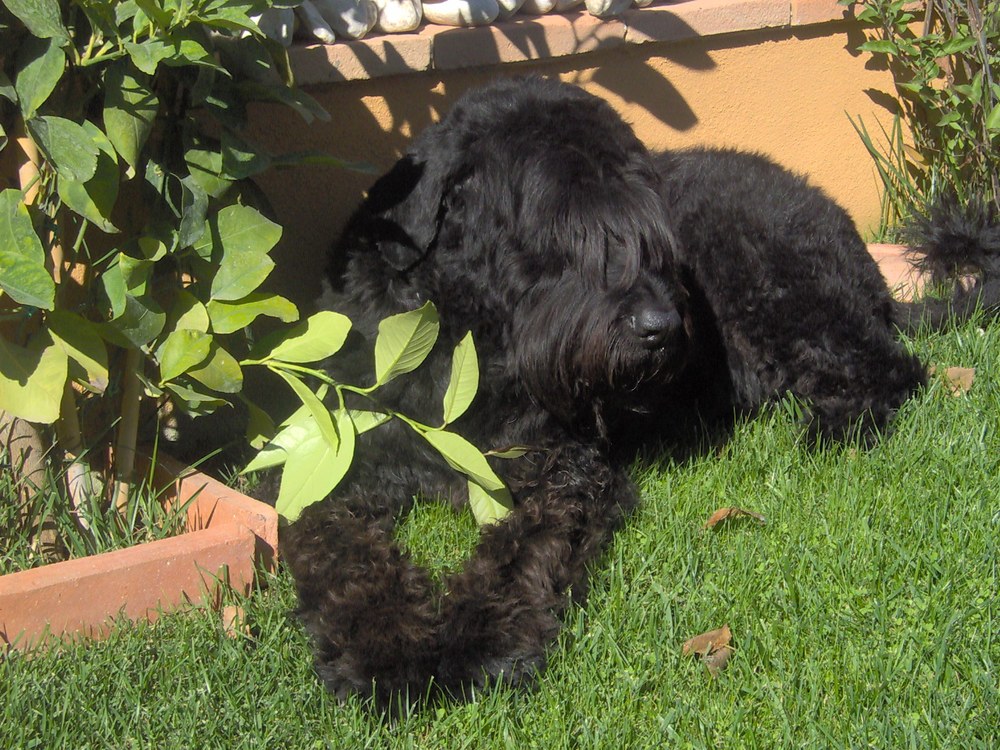
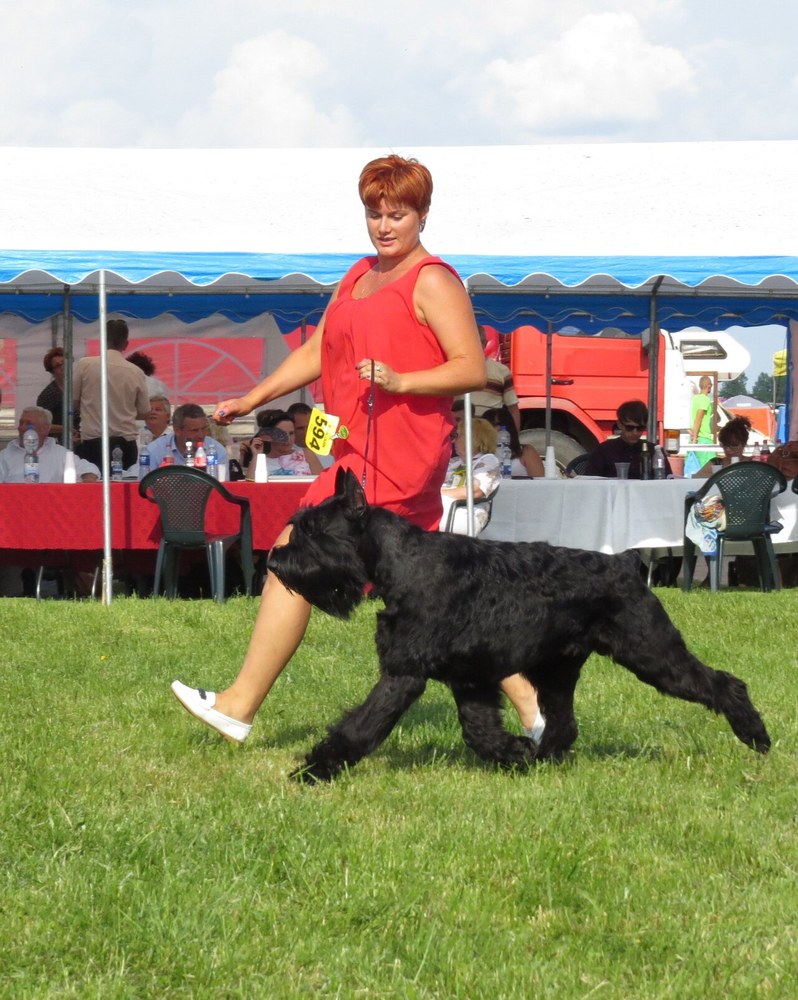
A male Giant Schnauzer resting on grass (modern photograph). Calm moments like this have to be taught to a busy working breed.
Southern Germany → drover and yard guard
A larger Schnauzer for cattle and property
Public breed histories place the Giant Schnauzer in Bavaria and Württemberg in southern Germany. Farmers and drovers wanted a bigger, stronger version of the Standard Schnauzer to move cattle and guard farms, breweries and butcher shops.
Driving cattle and guarding property needed stamina, courage and a dog that would act on its own judgement. That combination still shows up as energy, alertness and a strong reaction to strangers at the door.
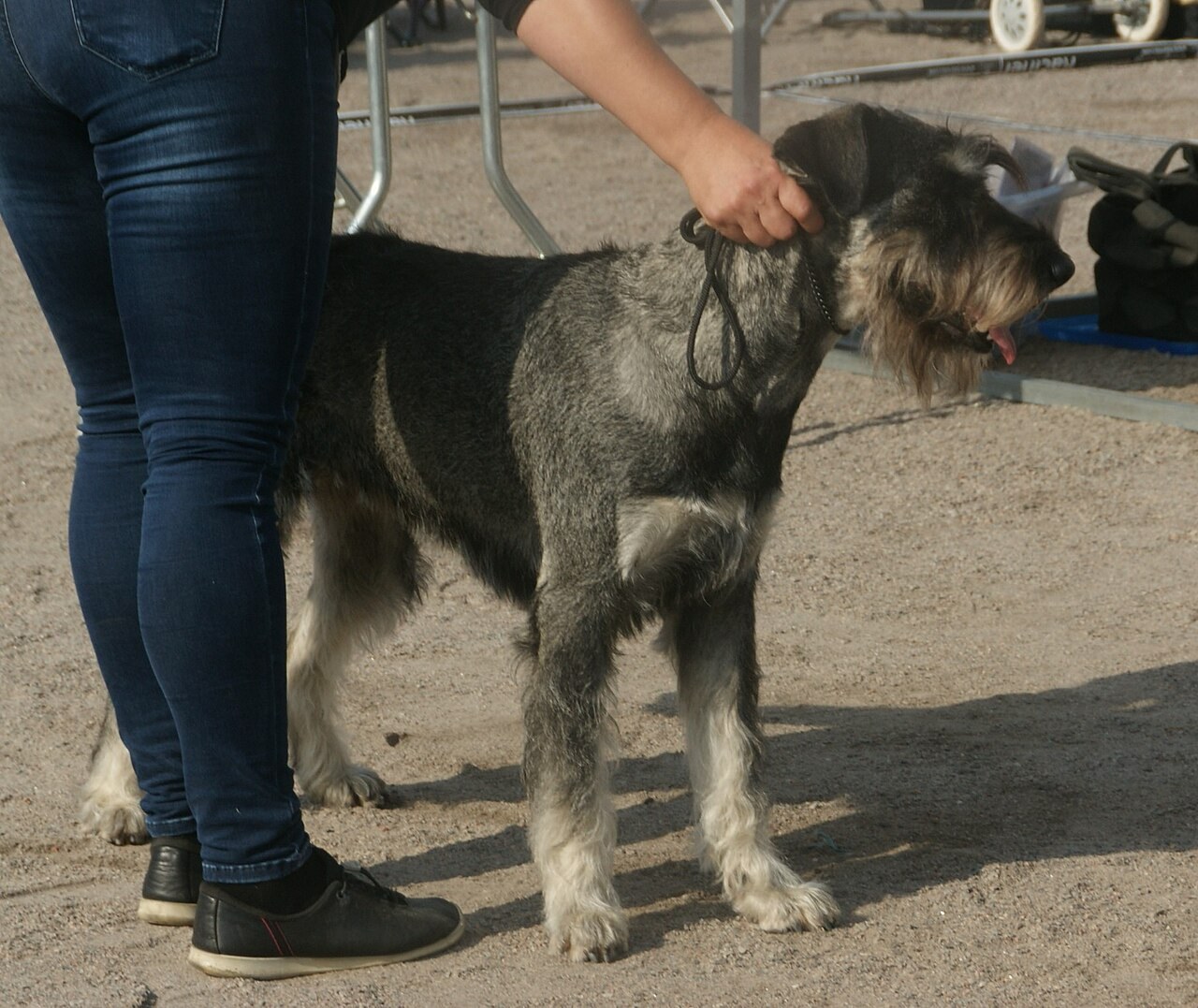
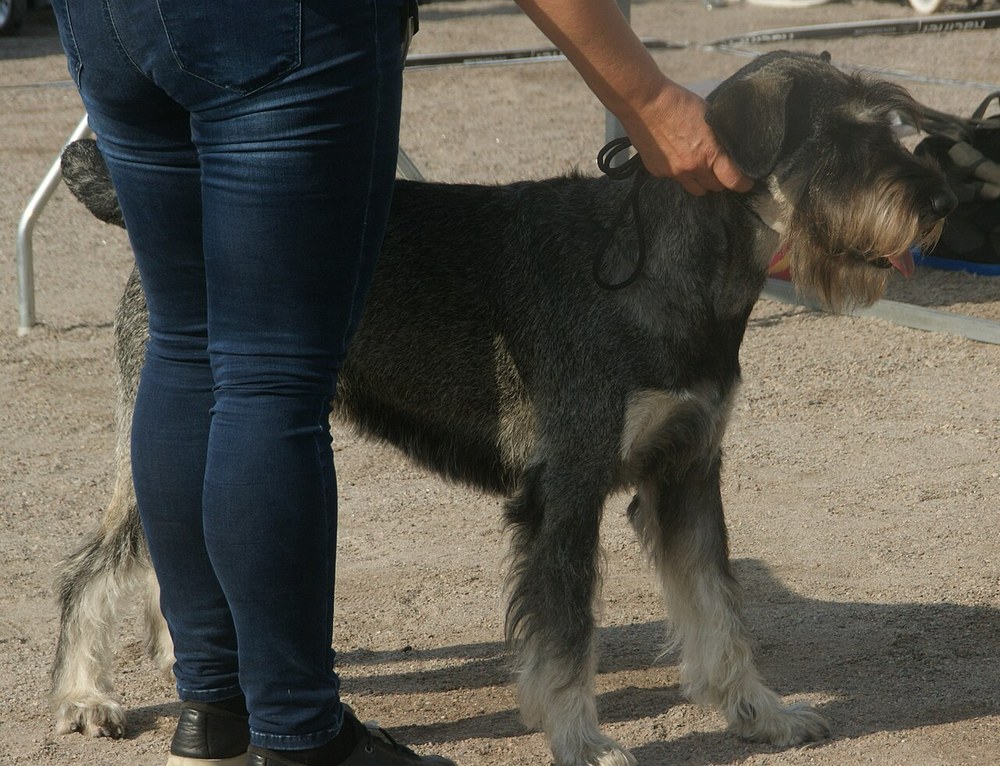
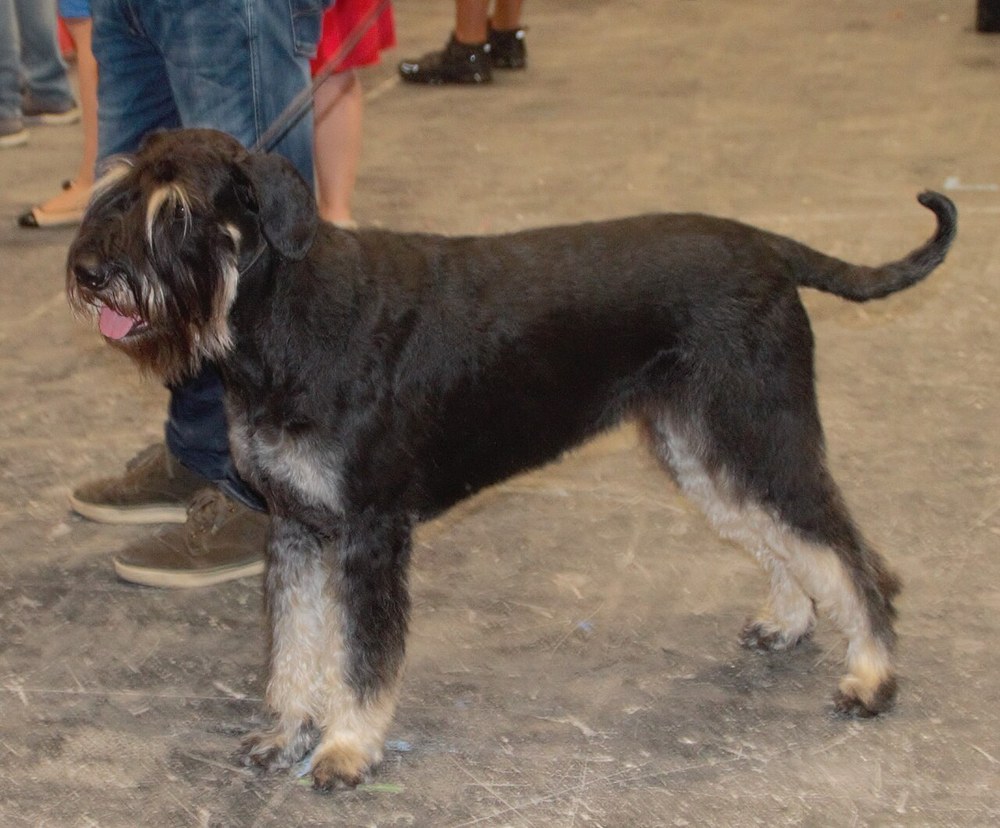
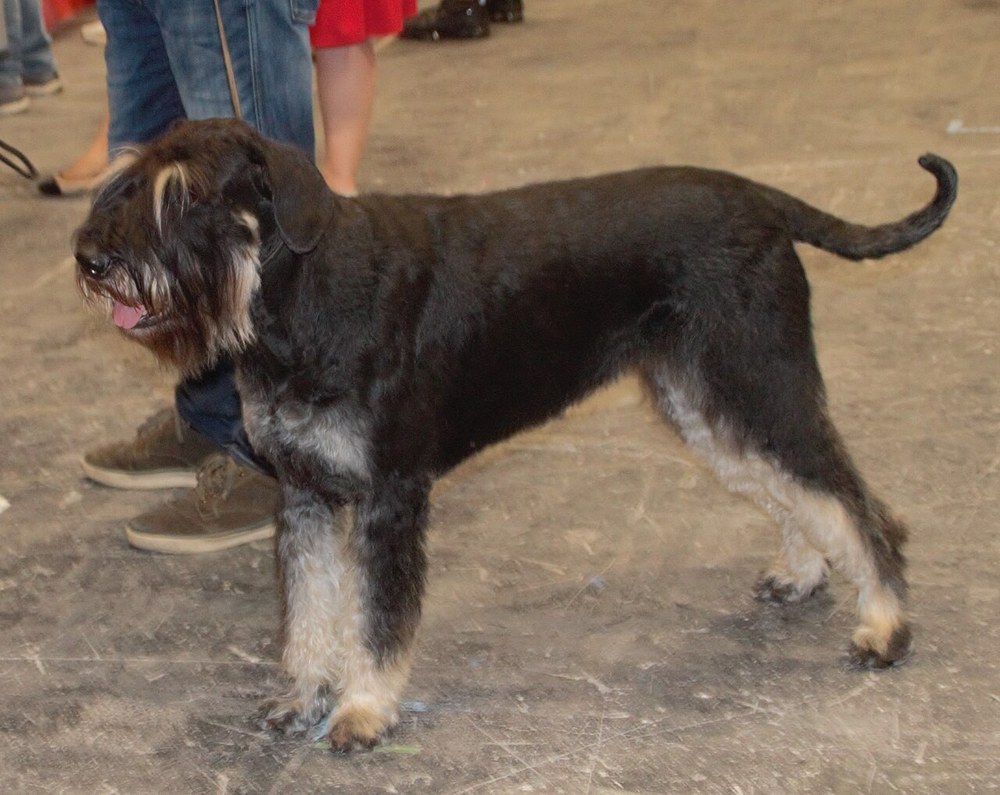
Lea vom Fresenberg, a 14-year-old Giant Schnauzer from Hesse, Germany (modern photograph).
Police and service work → companion
From working dog to demanding family companion
In the early 20th century the breed was used as a police and service dog in Germany, and it is still seen in protection sports today. Its name in German is Riesenschnauzer.
Today most Giants live in families. They are loyal and affectionate, but they stay working dogs: without daily exercise and training they invent jobs — usually guarding windows and doors.
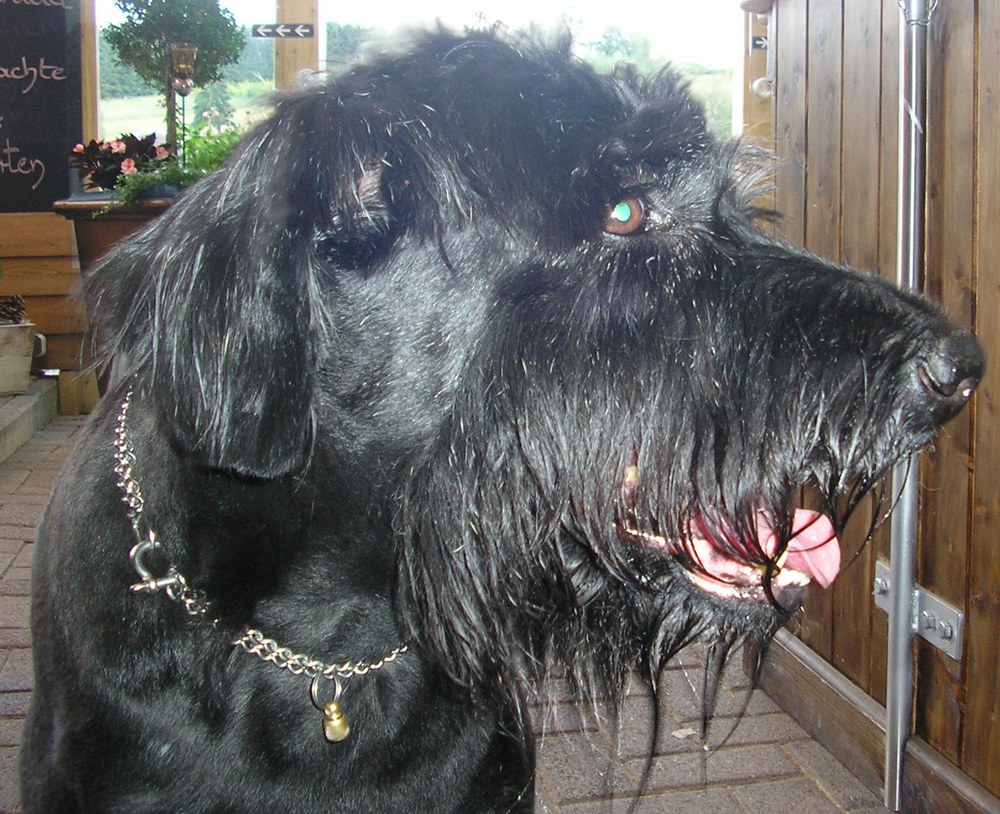
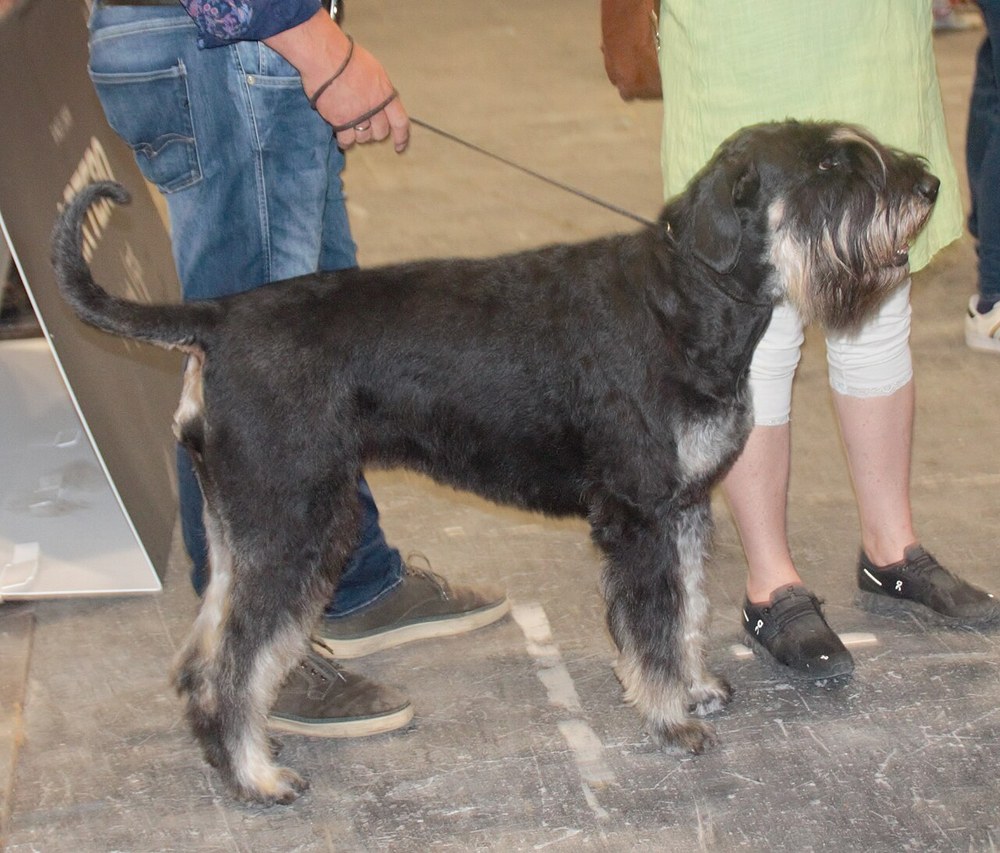
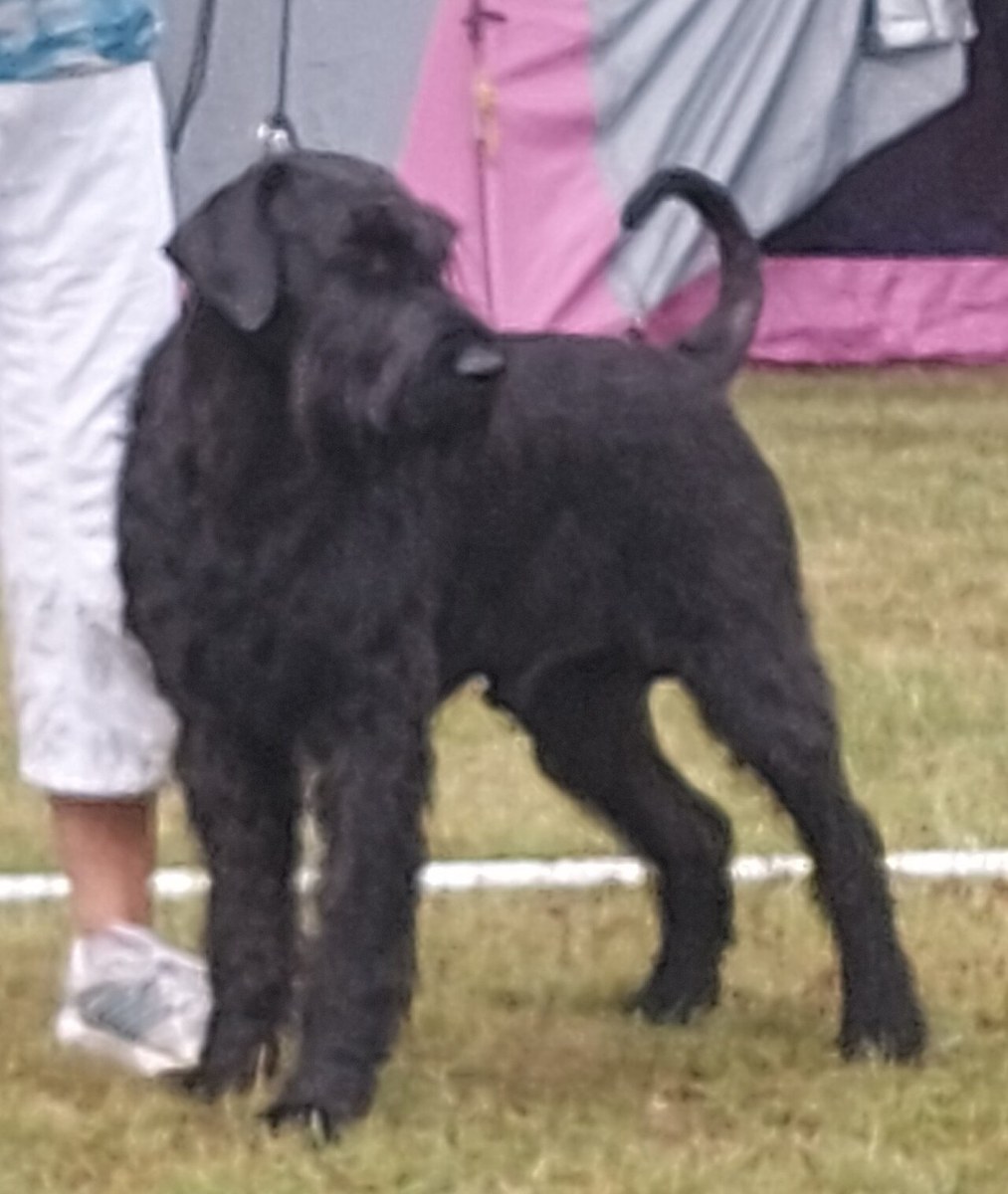
A Giant Schnauzer photographed in Italy (modern photograph).
What the breed was bred for
Energy, intelligence and a protective streak
In plain trainer language: the Giant was selected to work hard, think quickly and protect. It is a fast learner that tests rules and thrives on structured training.
The risk is boredom and over-guarding. Daily exercise, mental work and clear visitor routines turn that energy into a reliable partner.
A day is real exercise, brain work and a guardian that learns to switch off
Giants are busy, clever and alert. In town their guarding shows up at the window, the door and with unfamiliar dogs. A good day combines physical exercise, training and planned rest.
Morning · exercise
A proper workout, not a stroll
Many Giants enjoy running, cycling alongside or long, brisk walks. Start hard exercise only when the dog is fully grown.
What to watch monthly: coat, beard, weight and movement
General awareness only — I am a trainer, not a veterinarian. Changes in energy, appetite or movement can be early signs of a problem. For urgent signs, see
when to call the vet.
Wiry coat
The coat needs regular brushing and either hand-stripping or clipping every few weeks.
Beard and face
Clean the beard after meals and check for food or debris.
Ask the breeder which screenings the national breed club recommends and see results for both parents.
Handling
Practise grooming-table handling and muzzle comfort early. See puppy handling.
Toxins
I do not publish toxin amounts. If the dog eats something dangerous, call a vet or poison-control line.
Lines and types
Working-bred and companion-bred Giants differ in drive
Some breeders select for protection sports and working drive, others for a calmer family dog. Both need exercise and training.
Working lines
Higher drive and intensity.
Often used in protection or police sports.
Need daily structured work.
Ask about the parents’ titles.
Suits experienced handlers active in dog sports.
Companion lines
Calmer temperament at home.
Still energetic and protective.
Need daily exercise and training.
Meet the parents at home.
Suits active families ready for training and grooming.
Socialization windows
What to introduce — and what not to overload — by age
AVSAB-aligned in spirit: short, clean exposures at a distance the puppy can still eat,
with hygiene while vaccines finish. See the
puppy socialization schedule.
2–4 months
Handling and routine
Introduce: family, grooming handling, crate, short car trips, calm visitors.
Do not overload: rough play, free access to the front door.
~6 months
Focus and calm
Introduce: training games, place cue, people and dogs at a distance.
Do not overload: dog parks, on-lead greetings with unknown dogs.
~12 months
Adolescent testing
Introduce: consistent rules, visitor routine, more structured exercise.
Do not overload: long runs before growth ends, unsupervised garden patrol.
~18 months
Adult work
Introduce: dog sports, longer exercise, chosen dog friends.
Do not overload: relaxing management, rough play groups.
~24 months
Maintain structure
Introduce: refreshed visitor, recall and settle routines.
Do not overload: boredom and lack of work.
Before you buy
Who a Giant Schnauzer usually fits
A Giant Schnauzer fits active, experienced owners who want a loyal working partner and will train and groom it regularly.
Good match
More likely a good fit if you…
Enjoy daily training and dog sports
Can provide real exercise every day
Will manage visitors and guarding
Are ready for regular grooming or professional trimming
Want a loyal, protective companion
Mismatch risk
A Giant Schnauzer may be a poor choice if…
You want a calm, low-energy dog
Long hours alone are routine
Grooming feels like a chore
Visitors arrive often without structure
You want a dog that loves everyone
If you are torn between breeds
Giant Schnauzer vs Standard Schnauzer and Doberman Pinscher
Giants are compared with their smaller cousin and with other German working dogs.
Size
Giant Schnauzer
Large and powerful.
Standard Schnauzer
Medium-sized and easier to manage.
Coat
Giant Schnauzer
Wiry coat needing trimming.
Doberman Pinscher
Short, sleek coat.
Energy
Giant Schnauzer
High; needs daily work.
Standard Schnauzer
Energetic but smaller.
Guarding
Giant Schnauzer
Strong protective instinct.
Doberman Pinscher
Also protective and alert.
Training
Giant Schnauzer
Clever and tests rules.
Both compares
Standards are similar; Dobermans more handler-sensitive.
Ownership without surprises
Where a Giant Schnauzer owner’s budget goes
Costs depend on your area and breeder. Plan for these — not quotes.
Grooming
Professional trimming or stripping every few weeks, or the tools to do it yourself.
Training
Classes and possibly dog sports.
Food
Large, active dog.
Veterinary care
Ask which screenings the national breed club recommends.
Fencing
Secure fencing and gates.
Gear
Harness, long line, crate, chew toys.
With a Giant, grooming and training are the ongoing costs.
Before day one at home
What to prepare for a Giant Schnauzer puppy
A Giant puppy is clever, bold and energetic. Start grooming handling, training games and visitor routines early.
“With a Giant Schnauzer, I look at the day before I look at the problem. We give the dog real work, a doorbell routine, calm passes past other dogs and an off-switch at home — because a clever working guardian without a job will find one at the window.”
Sessions cover real scenes: the doorbell and visitors, other dogs on lead, energy and pulling, grooming handling, and settling after work. I am a trainer, not a veterinarian. No invented reviews.
Andrew DarovProfessional dog trainer and instructor
Describe age, living setup, and where the dog breaks first — guarding the door, tension with other dogs, too much energy, or grooming and handling. Opens WhatsApp to Andrew.
An athletic, curly-coated fisherman’s dog from Portugal that needs daily exercise, training and regular grooming.
Need a read on your exact situation?
Describe your Giant Schnauzer’s age and the scene that repeats most: guarding the door, tension with other dogs, too much energy, or grooming and handling. We check safety first, then pick the first skill.
Written by Andrew Darov, professional dog trainer. Not veterinary advice and not a diagnosis.
Not a kennel club. No invented reviews. No vaccine schedules or toxin doses. Photo credits in
/images/breeds/giant-schnauzer-guide/credits.md.