
Expert Advice · Expert Advice · 13 min read
Guest entry protocol: manage the latch, then greet
Contain first. Brief the human. Greet only when the dog is soft. The latch is not lesson one.

Guest entry protocol is the full arrival sequence. The dog is already behind a gate, in a crate, or on a leash before the latch turns. You brief the guest in one line. You open. You release and greet only when the dog is soft. A speech after the dog has already hit someone’s thighs is not a protocol.
I board dogs for a month and longer as a trainer from Russia. I am not a veterinarian. No fake client reviews. AVSAB’s public training position supports reward-based behavior work. Guests are not unpaid trainers on this page.
This is a life sequence page. Children and guests owns the wider house plan with kids and watching adults. Doorbell rehearsal owns staged rings. Jumping up owns four paws. Sit for greeting owns an optional planted sit. Cross-link those skills; this page runs the latch-to-hello order of operations.
What does a broken guest arrival look like?
- Dog free-runs the hall the moment the latch turns
- Guest says “it’s fine” and pets the jumper
- Handler narrates while the rehearsal pays
- Children squeal and become the first criterion
- Door opens on a courier who never asked to meet the dog
The dog is reading what happened last time feet hit the mat. Intermittent pay (“only when Grandma visits”) keeps the slot machine alive. Everyone who opens that door runs the same sequence, or the dog waits for the weak adult.
If the dog is free at the latch, you already skipped the protocol.
How do you run the full guest entry sequence?
Contain first. Brief second. Open third. Greet last.
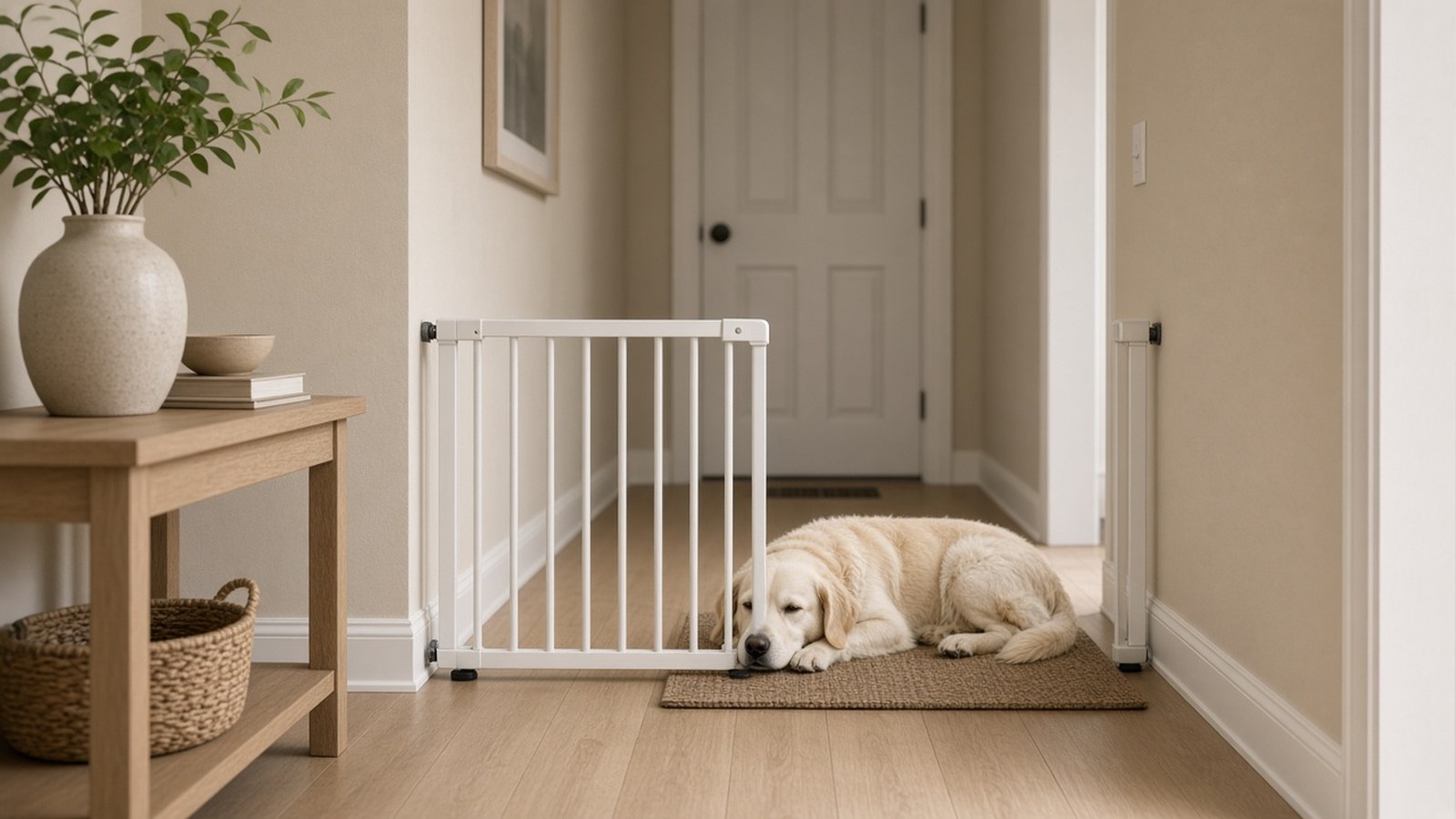
- Park the dog before the latch. Gate across the hall, crate you have already introduced, or leash on with enough length that a jump cannot land on a person. See crate training if the crate is still a fight.
- Brief the human. One sentence at the door: no hands in the air, no “he is just friendly,” hello only when you say. If you cannot brief them, the dog stays behind the gate for the whole visit.
- Open on a managed picture. Guest steps in. Dog stays contained. You watch the dog’s body and the guest’s hands. Deliveries and parcel couriers do not need a greeting. Keep them outside the plan.
- Wait for calm, then release. Soft mouth, four paws down, able to take a treat or hold a quiet look at you. Open the gate or lengthen the lead. Mark and feed calm. Guest may then say hello at chest height, not over the head.
- End the hello while winning. Two to five seconds of contact, then food on the floor or a reset to place. Feet up, stiff face, or a slam: hello dies, dog returns behind the barrier. That is a win, not a failure.
If the dog is screaming at the gate, you do not release “to get it over with.” You wait, you feed quiet through the bars if the dog can take food, or you keep the visit fully managed. Arousal drops on your clock, not on the guest’s impatience.
How is this different from the sibling pages?
Children and guests is furniture and policy: rest places, baby gates, an adult who is actually watching, never leaving a young child alone with a dog. Borrow that plan. This page is the arrival choreography for a guest at the latch.
Doorbell rehearsal stages soft rings so a quiet job gets paid before a bark spiral. Use it between real visits. A real guest is still an exam: containment on, brief on, release only on calm.
Jumping up owns the four-paws criterion and how to stop paying the jump. Sit for greeting is optional polish once four paws is cheap. Plug those skills into step four of this sequence. Do not skip containment because you taught a kitchen sit last Tuesday.
Wait at the door is still useful for quiet exits you control. Guest arrivals are higher arousal. Manage first; raise the wait later if you want it in this picture.
How do US houses and UK flats change the furniture?
Same sequence. Different space. A US front hall may give you room for a baby gate and a place bed. A UK flat landing may be one body wide: crate or short leash inside the flat before you open onto the shared corridor, then guest steps in past the barrier. Narrow landings are a reason to contain earlier, not a reason to hope.
In both countries, food delivery and parcel couriers are not social visits. Dog stays parked. You take the bag. No hallway meet-and-greet for a two-minute handoff.
What quiet jobs can you pay during the wait?
Pick one picture and stick to it for the visit: look at you through the gate, four paws on a mat, or a down the dog already owns. Mark and feed that picture while the guest hangs a coat. Do not invent a new cue mid-spiral. If you want a planted sit as the paid hello later, build it on the sit-for-greeting page after jumping is rare.
Evening arrivals on an overtired puppy are often sleep debt plus a hallway chase. Put the puppy down first. See biting and nipping if teeth are part of the greeting.
When is guest entry not a DIY protocol?
Hard stare through the gap, bite or near-bite at an arrival, a jump that slams a person into a wall, a child knocked or mouthed, or a dog who cannot take food or come down even behind a solid barrier. Keep guests and dog fully split. End unsupervised greetings. See a qualified trainer or veterinary behavior professional in your country. See not veterinary advice.
True aggression and a child in the middle of a bad greeting are not a weekend DIY project. Dogmindlab will not invent a triage inbox to stand in for that.
What does a clean arrival look like end to end?
Knock or buzz. Dog already gated. You open. Guest hears the brief and follows it. Dog softens; you mark and feed. Gate opens. Short hello at the chest. Food on the floor. Guest sits. Dog goes to a rest place you already pay. Visit continues without a second free rehearsal at every coat movement.
Two clean managed arrivals beat one chaotic “friendly” greeting that pays the old pattern. If the guest cannot follow the brief, the dog stays behind the gate. That is how you protect the protocol.
What are the usual failure modes?
- You opened before the dog was parked. The rehearsal started at the latch. Contain first every time.
- Guests were unpaid trainers. “It’s fine” pets the jumper. Brief them or keep the gate shut.
- You released into a scream. Arousal was still high. Wait for soft, or keep the visit managed.
- You stacked skills and skipped the sequence. A kitchen sit does not replace containment at a real arrival.
- A child was the first criterion. Kids run and squeal. Adult-managed entries first; children last, and only with eyes on both bodies.
- Couriers became greeters. Deliveries stay outside the social plan. Dog stays parked.
Sources
AVSAB position statements on humane dog training. ASPCA public overviews of common dog behavior issues and bite-prevention notes. Paraphrased as public standards, not quoted as a substitute for reading the originals. avsab.org/resources/position-statements/ · aspca.org - common dog behavior issues
Questions on this page
What is a guest entry protocol?
A fixed arrival sequence: dog already behind a gate, in a crate, or on a leash before the latch turns; guest briefed; release and hello only when the dog is calm. It is the full run of the entry, not a single skill drill.
How is this different from children-and-guests and the skill pages?
Children-and-guests is the broader house plan (gates, watching adults, kids). Doorbell rehearsal, jumping-up, and sit-for-greeting are skill pieces. This page owns the step-by-step arrival from knock to calm hello.
What do you do before you open the door?
Park the dog first. Gate, crate, or leash already on. Food ready if you will pay calm. Guest gets a one-line brief: no hands in the air, no “it’s fine,” hello only when you say. Delivery people are not guests.
When do you release the dog to greet?
When the body is soft, four paws are down, and the dog can take food or hold a quiet job. If the dog is screaming at the gate, you do not open the gate to “get it over with.” Wait, reset, or keep the visit managed.
When is guest entry not a DIY protocol?
Hard stares through the gap, bites or near-bites at arrivals, a child being knocked, or a dog who cannot come down even behind a gate. Keep guests and dog split. See a qualified professional. This page is not a clinic.
Work with me
A $150 consultation or $500 monthly curatorship. Opens WhatsApp to Andrew.