
Expert Advice · Expert Advice · 13 min read
How to practice first absences with a puppy
Short exits you can return from. Not a clinic label. Crate as rest only if the crate already pays.
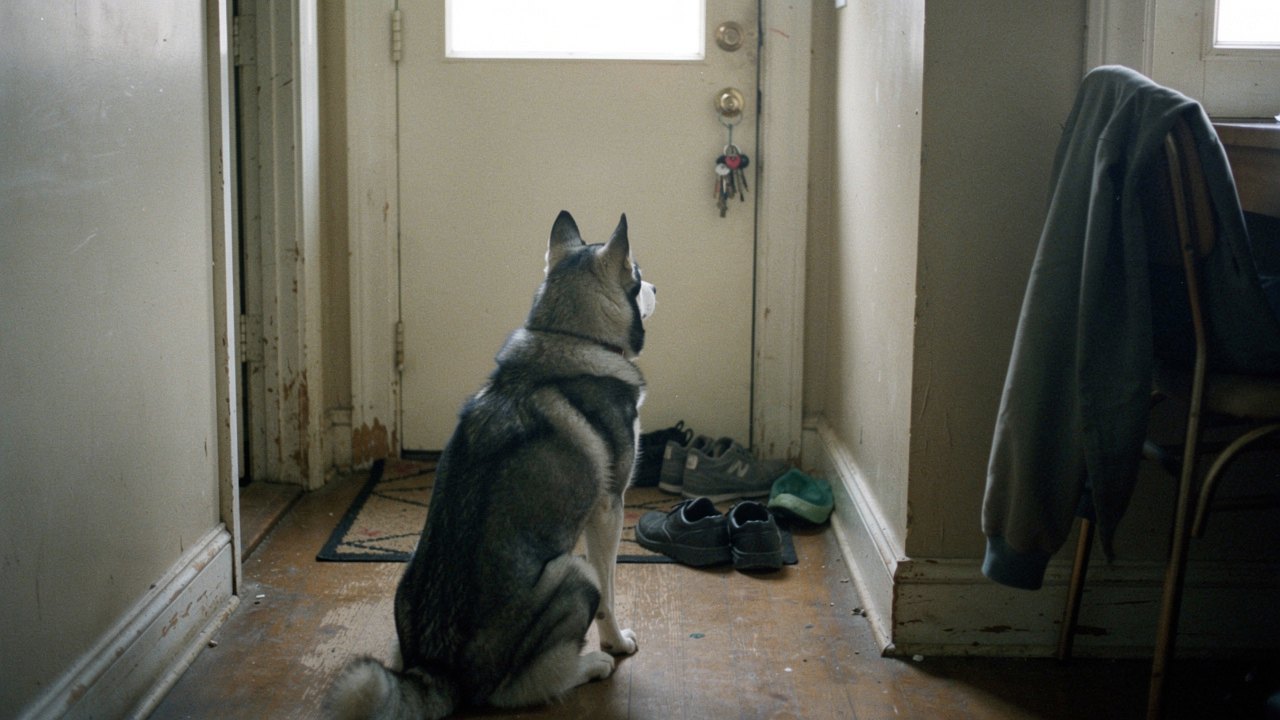
First absences are short, rehearsed exits after the puppy can already rest in the room with you. You step out for seconds. You come back before fuss becomes panic. A crate is a rest place if you have already introduced it. It is not a locker you invent on the morning you need milk.
This is a life protocol. It is not a separation-anxiety diagnosis and it is not a home course in treating one. I am a professional dog trainer. I publish a method. I take dogs for month-plus residential correction. I do not label a household I have not seen from a webpage. If the body is the loud fact, see a veterinarian. If the panic is the loud fact and it does not come down, see a qualified professional in your country.
How do you leave a puppy alone for the first times?
You leave a picture the puppy can already do.
The puppy can rest in a pen, a gated kitchen, or a crate while you sit nearby. Then you stand. Then you walk to the door. Then you step through it and come back. Each raise is a few seconds until that picture is cheap.
Do not stack firsts. A first closed door, a first hour, and a first shop run on the same Tuesday is how people decide the puppy “has separation anxiety” before they have trained an absence.
If you cannot rest in the room, you cannot leave the room. Absence is a raise, not a hope.
How short should the first absences be?
Shorter than your pride wants.
Seconds. Then a minute. Then three. Then five. The working test is the body you return to, not the clock you wanted. If the puppy is still on the chew or just lifting a head, you left at the right time. If you return to climbing volume, torn claws, or a soaked bed, you stayed out too long. Drop to the last cheap exit and rebuild.
The crate duration page is the ceiling by age and bladder. This page is the leaving. An eight-week-old who can nap forty minutes with you in the kitchen is not licensed for forty minutes alone on day two. Alone is a different criterion. Build it.
US houses with a garage and a long driveway make a “quick errand” longer than you think. UK flats with a lift and a street door do the same. Time the real loop once without the puppy: stairs, lock, pavement, shop queue, return. That number is the test you must train up to. Until then, the puppy does not come on that errand in your head. A sitter, a neighbour, or you staying home is management.
Toilet before you leave if the interval will touch the tank. See potty training. A wet pen after a ten-minute exit is often a full bladder, not a protest vote.
When is a crate the rest place, and when is it not?
Use a crate if the crate already pays.
Door open for meals. Closed-door rest with you present. Protest versus panic already named. That work is crate training. Then a first absence can be: puppy already inside with a chew, door closed, you step out, you return before the chew is gone.
Do not:
- herd a stranger into a box and leave
- crate as a telling-off and then vanish
- leave water in a tiny crate in heat
- use the crate for an eight-hour shift because this page mentioned a crate
If the crate is still a fight, first absences happen in a pen or a puppy-proofed room, still in short doses. A UK landing with a stair gate and a US eat-in kitchen with a baby gate are the same job: a space the puppy already knows, with nothing dangerous to swallow. I will not publish a toxin list or a dose. If you suspect a swallow, leave this page. US owners can call ASPCA Animal Poison Control, (888) 426-4435. UK owners call their practice or a 24-hour service such as Vets Now.
Night is not a first absence. Night is crate training at night and, for arrival, the first night home. Do not borrow those pages to justify a daytime shop.
How do you come back without making a party?
You come back like furniture.
Open the door. Quiet voice, if any. If the puppy needs a toilet, lead on, named spot, pay the toilet, back to ordinary. If they are wild, wait for four paws or a pause, then a brief hello. A reunion that sounds like a prize fight teaches that your face is a jackpot and your back is a cliff.
The same rule in reverse: do not make leaving a funeral. Long speeches at the crate door are arousal. Put the chew down. Leave. The food as reinforcer page is how that chew stays inside the day’s ration.
When is this not a first-absence problem?
Use a fence you can see.
This ladder: the puppy settles with you, fuss on a closed door fades if you stay boring nearby, short exits come down when you return, food is still possible, the box or pen is intact.
Not this ladder: the puppy injures itself on the door or crate, destruction is aimed at exits, toileting happens only when alone after the tank was honestly empty, panic does not drop when you come in, or an adult dog who was previously easy is suddenly frantic. Pain, a sudden change, or a dog who cannot eat in a room they used to eat in is a veterinary first question. See when to call the vet.
True separation-related distress is a professional case. Stop the long days alone. Get help you can see. I will not invent a clinic, an academy rank, or a fake review. Paid work on this site is a $150 consultation or $500 monthly curatorship, apply first. It is not an emergency desk and it is not a diagnosis.
What are the usual failure modes?
- You started with the real errand. The supermarket is a test. Seconds at the door are the first lesson.
- You stacked a first crate and a first absence. One variable. Introduce rest. Then leave.
- You threw a party at the latch. Return became the jackpot. Leaving became the cliff. Be boring both ways.
- You used the crate as a cell for a workday. Duration has a ceiling. See crate duration. A shift is not a protocol.
- You diagnosed from a video. This page does not name a disorder. Manage the rehearsal and get eyes on the dog if the fence is crossed.
- Thin walls made you rush. A UK flat and a US apartment share neighbours. Shorten the exit. Do not punish the noise. Rebuild quieter rest first.
- Confirm the puppy can rest with you present, in the place you will leave them.
- Put down a legal chew. Step out for a count you can beat. Return while it is still cheap.
- Keep the reunion dull. Toilet if needed. No corridor game.
- Raise minutes only after two or three cheap exits in a row.
- If panic or injury shows, stop this ladder. Manage the day so the long absence cannot happen, and get qualified help.
If the alone mess is already furniture, exits, or injury risk, sort boredom versus panic on destruction when left alone before you lengthen the leave.
Sources
AKC guidance on how long a puppy can be left alone. Humane World crate-training overview. Paraphrased as public standards for time alone and rest, not as a diagnosis. akc.org — how long to leave a puppy alone · humaneworld.org — crate training 101
Questions on this page
How do you leave a puppy alone for the first times?
Build short exits after the puppy can rest with you in the room. Step out for seconds. Return before fuss becomes panic. Do not start with a shop run or a workday. This page is not a diagnosis of separation anxiety.
How short should the first absences be?
Seconds, then a minute, then a few minutes. The puppy should still be on the chew or still settling when you return. If you come back to climbing panic, you stayed out too long. Drop criteria.
Can you use a crate for first absences?
Yes, if the crate already predicts food and rest. Close the door on a puppy who is already inside. Do not invent a first lock-in and a first absence on the same afternoon. See crate training and crate duration.
How should you come back in?
Boring. Lead or eyes, toilet if needed, then ordinary life. A reunion party teaches that your return is a jackpot and your leaving is a cliff. Save the voice for a paid rest, not the latch.
When is this not a first-absence problem?
Destruction aimed at exits, house-soiling only when alone, self-injury, or panic that does not come down when you return. Manage, see a qualified professional. Do not label it from a webpage. I am not a veterinarian.
Work with me
A $150 consultation or $500 monthly curatorship. Opens WhatsApp to Andrew.