Peruvian Inca Orchid: temperament, skin care, strangers and training a hairless sighthound
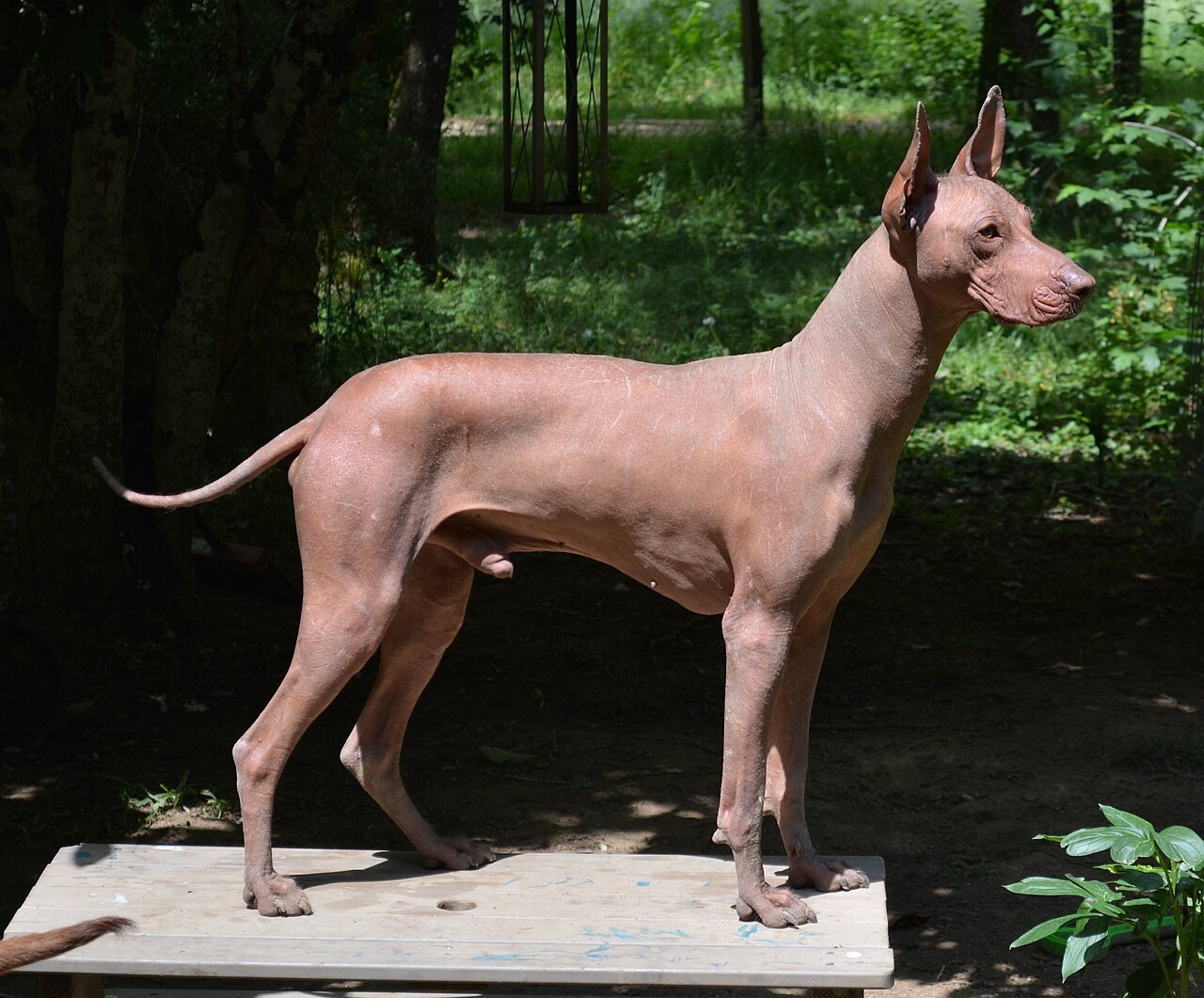
The Peruvian Inca Orchid, called the Peruvian Hairless Dog by the FCI, is an ancient, lightly built dog from Peru that comes in small, medium and large sizes. Most are hairless, with smooth skin in grey, black, copper or pink, sometimes with a tuft on the head; coated puppies turn up in the same litters. Dogs like it appear on Peruvian pottery made long before the Incas. At home it is affectionate, warm to the touch and close to its people. With strangers it is watchful and often aloof, and outside it runs and chases like a sighthound. Its skin needs daily thought.
Job: An ancient Peruvian sighthound-type dog in three sizes, hairless or coated; FCI Group 5 (FCI 310, Peruvian Hairless Dog), AKC Foundation Stock Service.
Energy: Affectionate and loyal at home, watchful and aloof with strangers, quick to chase.
Home: Suits an owner who will manage sun, cold and skin care every day and give the dog safe places to sprint.
Owners of this breed usually talk first about the skin. It feels warm, it changes colour a little in the sun, and it needs care that a coated dog never does. Then they mention the speed: a dog that lies on the sofa under a blanket all morning and flies across the field after a hare in the afternoon.
The questions I get are about people and chasing. A dog that barks at every visitor and hides behind its owner, one that will not let a stranger touch it, a young dog that bolts after cats, and a sensitive dog that falls apart in busy streets.
What works is a gentle, planned life. Slow introductions to new people, visitors who let the dog come to them, sprints in a fenced space instead of free running in the open, a sweater in the cold and shade in the sun, and short, kind training. Given that, a Peruvian is a loving, quiet and very loyal companion.
FCI: small about 25–40 cm, medium about 40–50 cm, large about 50–65 cm at the shoulder
Weight
About 4–25 kg (9–55 lb), depending on size
Energy
Moderate; bursts of speed, calm indoors
Coat / shed
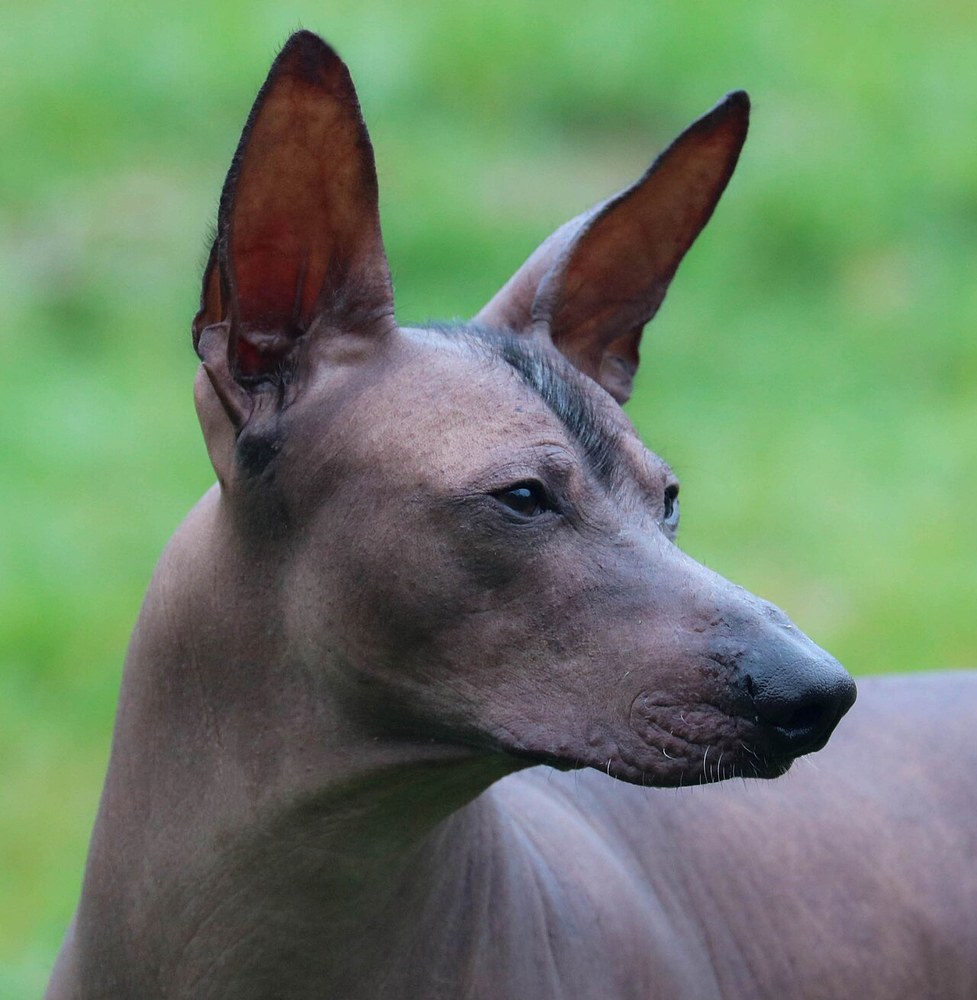
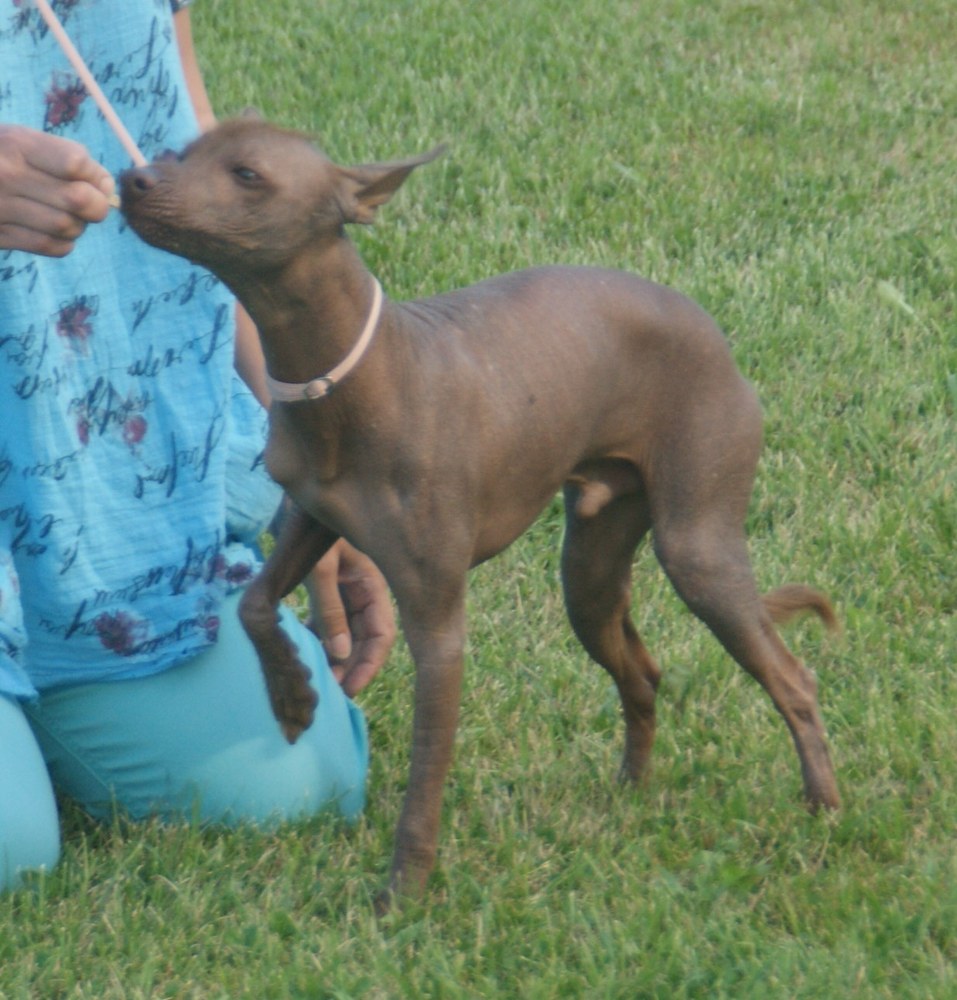
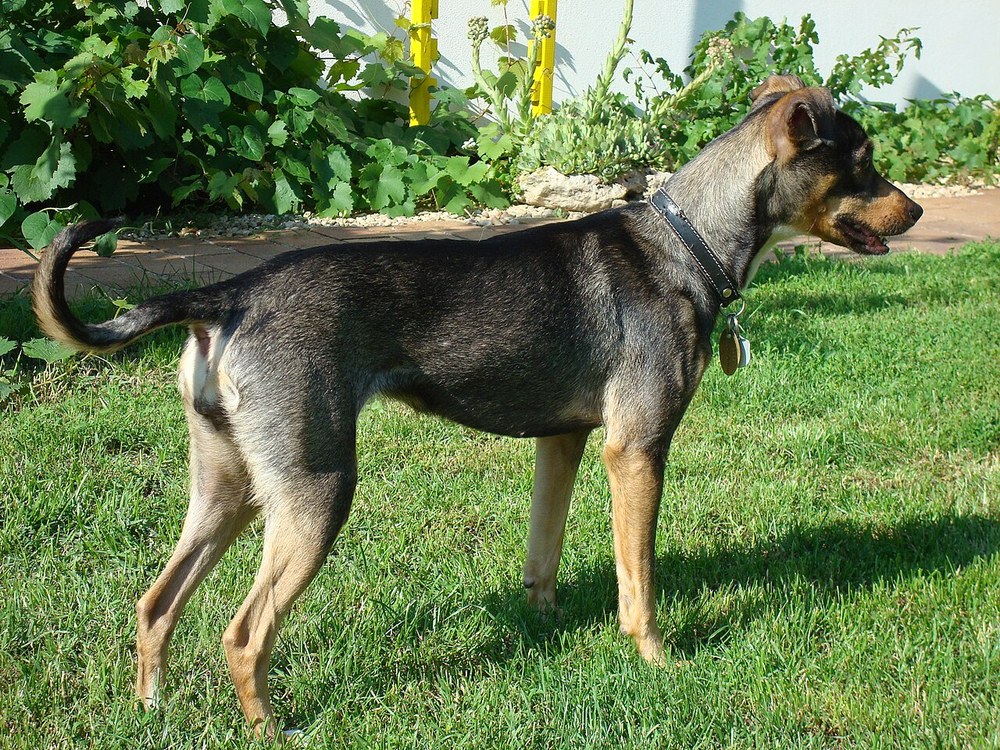
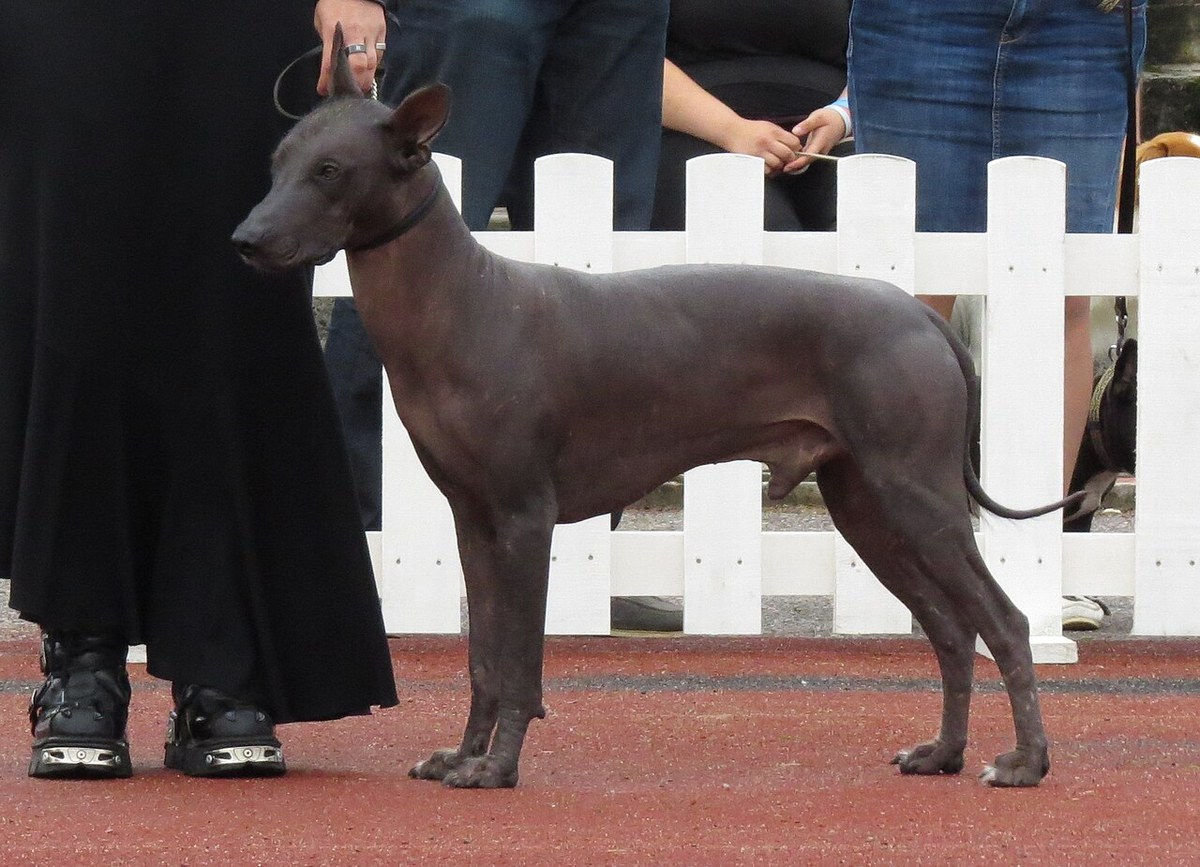
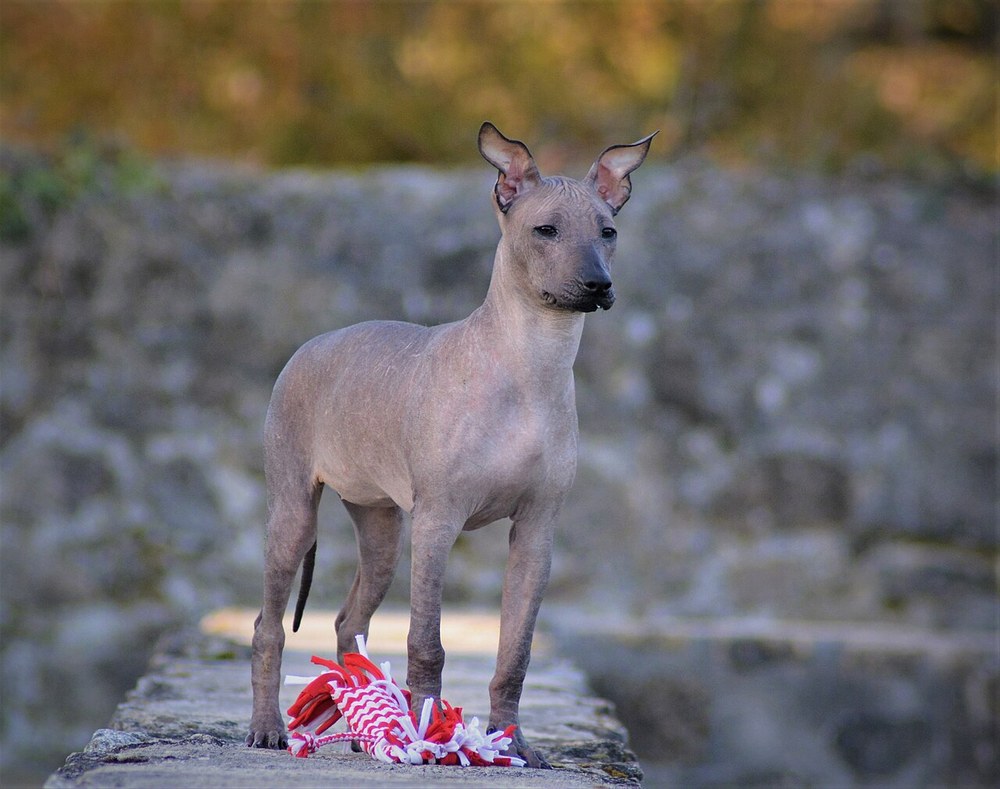
Hairless variety: bare skin, often with a little hair on the head, feet or tail tip; skin may be black, grey, copper or brown, often with pink patches. Coated variety: short, smooth coat. Both can be born in the same litter
Job
Ancient companion and village dog of coastal Peru, shown on pottery of the Moche, Chimú and other cultures, also used to hunt small game
Temperament in one minute
Peruvian Inca Orchid temperament: what they are like at home
Short answer: Peruvian Inca Orchids are ancient Peruvian sighthound-type dogs in three sizes, mostly hairless. They are affectionate, quiet and loyal at home, wary of strangers and quick to chase. They need about an hour of activity a day with safe sprints, a long line in open spaces, daily protection from sun and cold, and gentle, reward-based training.
Are Peruvian Inca Orchids affectionate?
Yes, very, with their own family. Build short absences early.
Are Peruvian Inca Orchids good with kids and other dogs?
Best with calm, older kids; skin scrapes easily. Introduce dogs slowly; see introducing a new dog.
Peruvian Inca Orchid behavior problems to expect
The usual four are barking at strangers, chasing, fussing at handling and noise worries. The list below links a guide for each.
Living with a Peruvian Inca Orchid in an apartment
Often fine: quiet and clean indoors, with daily walks and safe sprints.
Breed history
From pre-Inca Peru to a national heritage breed
A long life beside people in Peru explains the close bond, the watchfulness and the quick, light build.
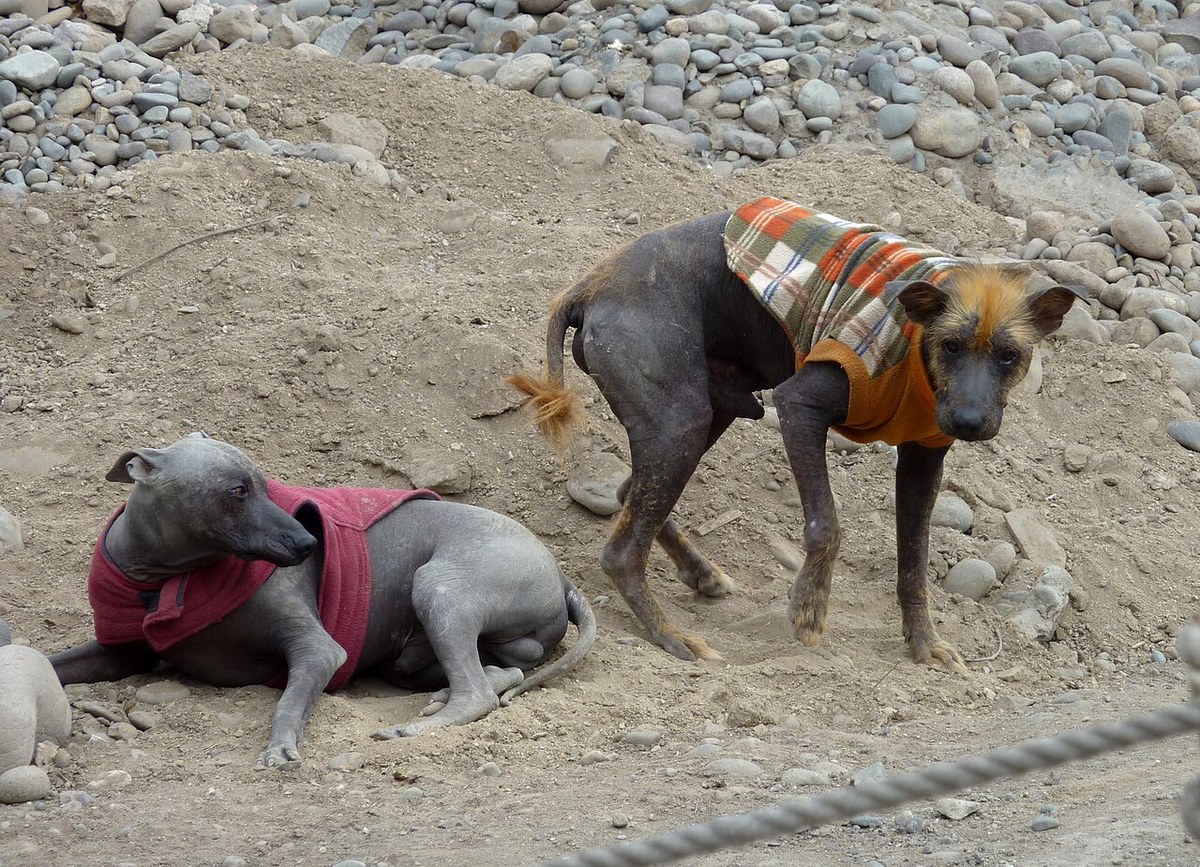
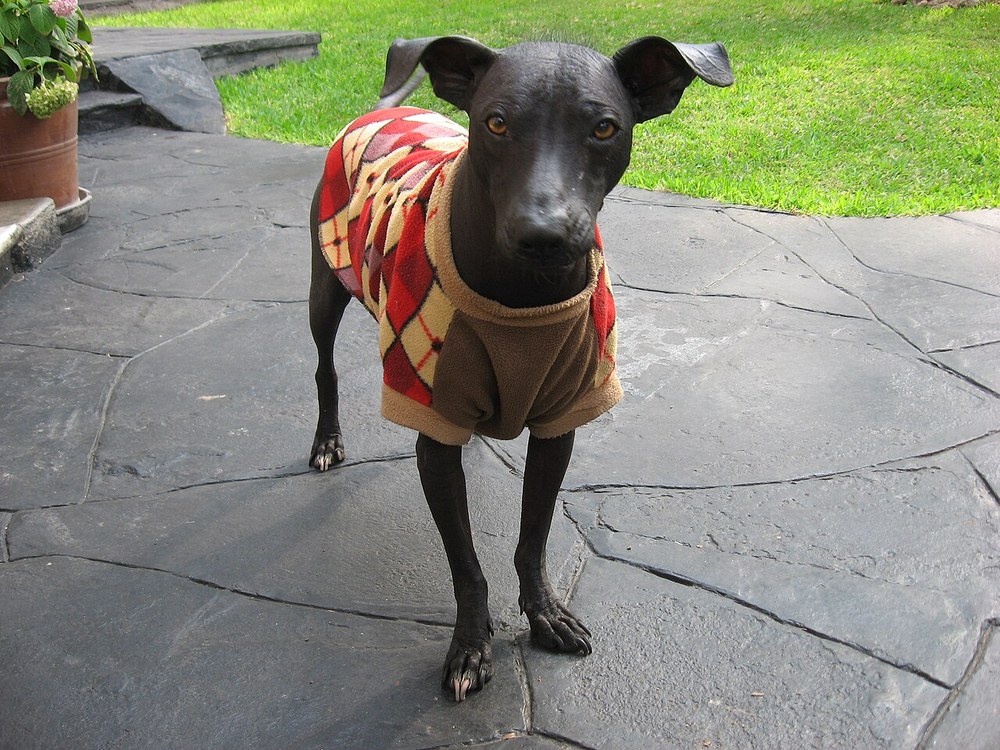
Peruvian hairless dogs in coats at the Huaca Pucllana ruins in Lima, where the site keeps a few of the breed.
Coastal Peru · from about 750 AD
Dogs on ancient pottery
Hairless dogs appear on clay figures and painted pots made by the Moche, Chimú, Chancay and other cultures of the Peruvian coast, many of them centuries older than the Inca empire. They seem to have been family and village dogs, kept close to people and valued for their warm skin.
After the Spanish arrived, the dogs survived mostly in villages along the coast and in the countryside, often as street and farm dogs. Breed fans later began to register and breed them in a planned way.
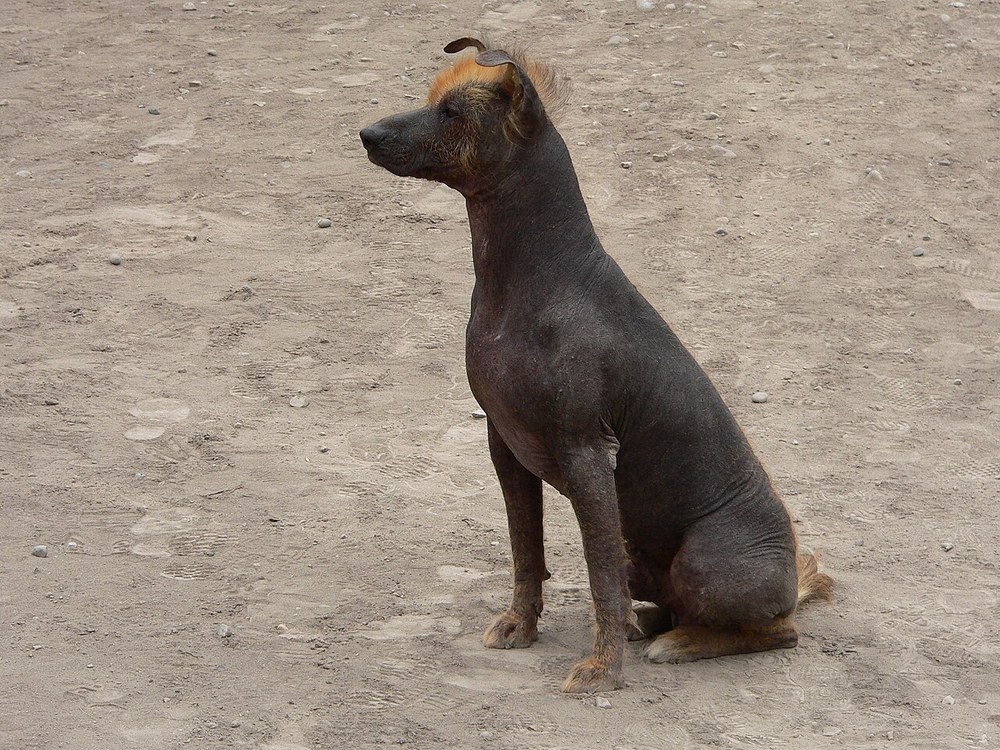
A Peruvian hairless dog at the Huaca Pucllana site in Lima, with the typical small tuft on its head.
From 1985
Recognised abroad and at home
The FCI accepted the breed as the Peruvian Hairless Dog in 1985, in its spitz and primitive group. In 2001 Peru declared it part of the nation's heritage, and many archaeological sites in the country now keep a few dogs.
In the United States it is known as the Peruvian Inca Orchid and is recorded in the AKC Foundation Stock Service. The name is said to come from early owners who kept the dogs among orchids.
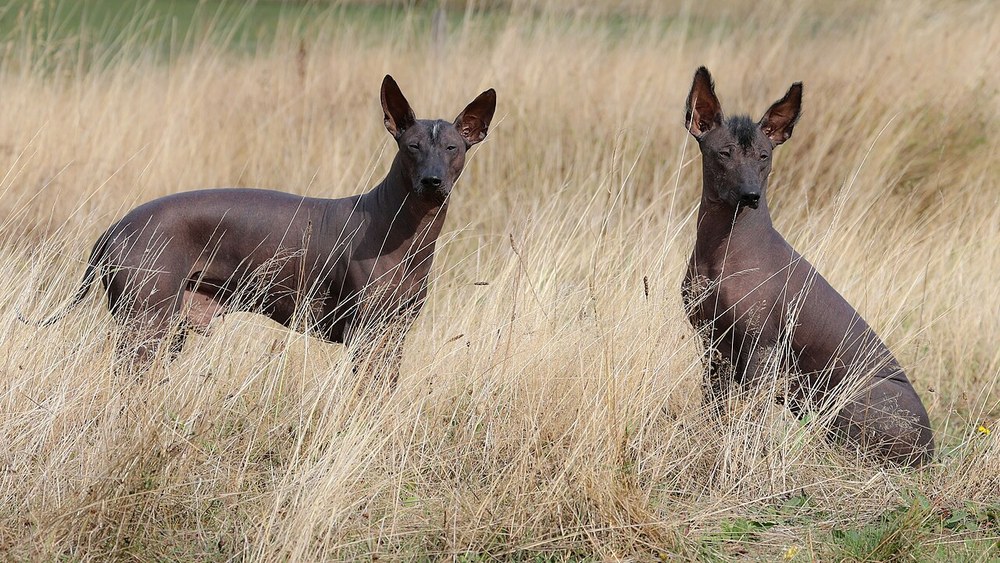
A father and son of the large size in a dry meadow: long legs, light frame and a sighthound outline.
What the breed was bred for
Gentle with family, alert with others
A well-raised Peruvian is affectionate, quiet indoors and very attached to its family. Many like to sleep under blankets or in the sun, and they tend to follow their person around the house.
It is also alert and often wary of strangers, and some bark or keep away from visitors. It has a real chase drive, especially in the larger sizes, and a sensitive nature that does not cope well with rough handling.
A good Peruvian day has a sprint, a sniff and a warm place to rest
Most adult Peruvians need about an hour a day of activity, a little less for the small size. The best mix is a walk with time to sniff, a few short sprints in a fenced space and some quiet games. Weather decides a lot: shade and skin protection in sun, a coat in the cold.
Morning · weather check
Dress for the day
Before the walk, look at the weather. On cold or wet mornings a hairless dog needs a well-fitted coat; on bright days, walk early and use shade.
A few full-speed runs in a fenced field or a rented dog field do more for this dog than a long plod. Call it back before it gets bored and wanders off after a scent.
Give the dog a soft bed with a blanket it can burrow into. Many Peruvians rest more deeply when they can hide, and a rested dog is less jumpy with noises.
Coated or hairless, this dog often needs time with strangers. Ask guests to sit, ignore it and let it come to them. A treat tossed on the floor helps more than a hand held out.
General awareness only. I am not a veterinarian. With a Peruvian, owners most often notice skin that reddens or dries after sun or wind, small scrapes from bushes, shivering in cold weather, blackheads or spots on the skin, missing or uneven teeth, which are common in hairless dogs, and a dog that dislikes having its skin rubbed. For red flags, leave this page and open
when to call the vet.
Sun
Bare skin can burn. Walk early or late, use shade and ask your vet which sun protection is safe for dogs.
Cold and wet
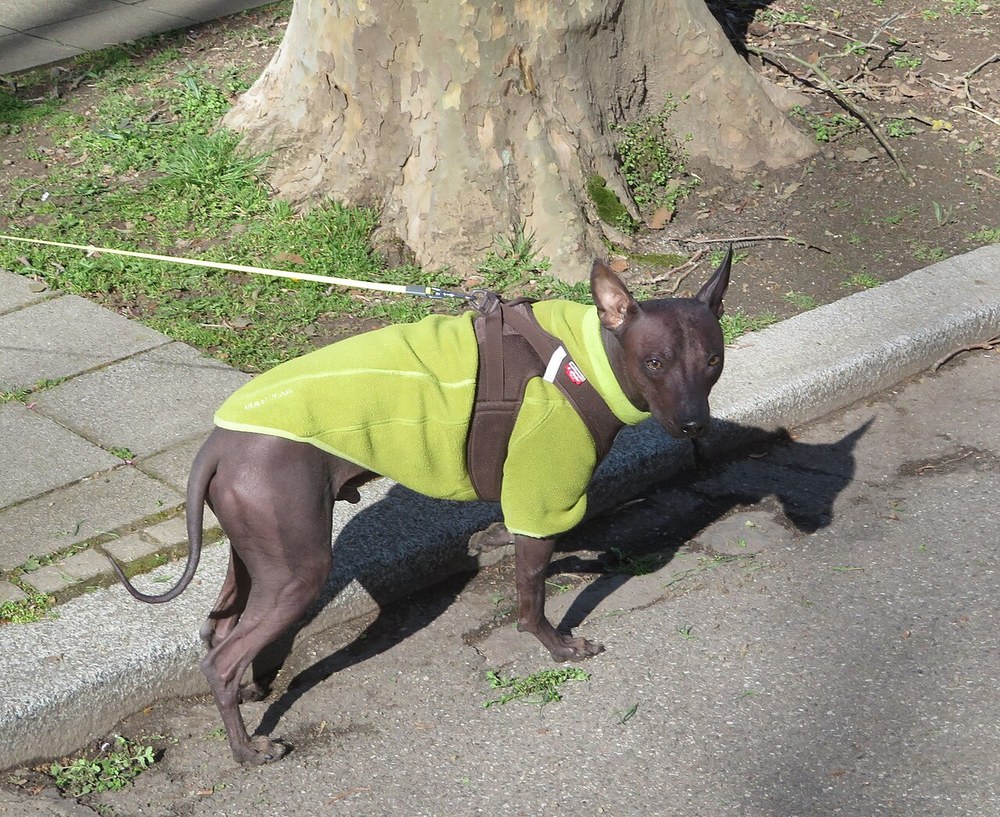
A fitted coat or sweater for cold, wet or windy walks; dry the dog after rain.
Skin routine
Gentle washing and a mild moisturiser your vet approves; avoid human products with perfume.
Teeth
Hairless dogs often have fewer teeth. Brush gently and ask your vet about chews and dental checks.
Parent checks
Ask which checks the national breed club recommends for both parents, and look at the results.
Handling
Practise touching skin, paws and mouth with treats; see chin rest.
Lines and types
Choose a confident puppy from a breeder who raises them among people
No bloodline selling. Ask which sizes and varieties the breeder has, how both parents behave with visitors, which checks the breed club recommends, how the puppies' skin is cared for and how much handling and household life they have seen.
Hairless variety
Bare skin, sometimes a head tuft.
Needs sun and cold protection.
Often fewer teeth.
No coat to brush.
Suits owners who will handle skin care as a daily habit.
Coated variety
Short, smooth coat.
Same temperament and speed.
Easier in sun and cold.
Full set of teeth.
Suits people who love the breed but want simpler daily care.
Socialization windows
What to introduce — and what not to overload — by age
AVSAB-aligned in spirit: short, clean exposures at a distance the puppy can still eat,
with hygiene while vaccines finish. See the
puppy socialization schedule.
2–4 months
Soft start
Introduce: gentle handling of skin, paws and mouth, quiet visitors, a warm bed, short absences, a toilet routine with a coat in bad weather.
Do not overload: long sun exposure or being passed around by strangers.
~6 months
Finding its feet
Introduce: name check-in, recall on a long line, calm passes of other dogs, short sprints in fenced places.
Do not overload: off-lead walks near roads or wildlife.
~8–18 months
Teen worries
Introduce: more practice with visitors, busier places in small steps, longer alone time, skin care as routine.
Do not overload: forcing it to greet people.
~2 years
Adult
Introduce: longer walks, lure coursing or other sprint sports, travel with its own bed.
Do not overload: trusting recall when a cat runs.
~3 years+
Routine
Introduce: daily skin and teeth care, weather-aware walks, regular vet visits, weight checks.
Do not overload: skipping sun and cold protection.
Before you buy
Who a Peruvian Inca Orchid usually fits
Fit comes down to daily skin care, a gentle home and a safe place to run.
Good match
More likely a good fit if you…
You want a close, affectionate dog that likes to be near you
You will manage sun, cold and skin care every day
You can offer fenced space for sprints
You prefer a quiet, clean dog indoors
You are patient with a dog that is wary of strangers
Mismatch risk
A Peruvian Inca Orchid may be a poor choice if…
You want a dog that loves every visitor
You live somewhere very hot or very cold and cannot adjust walks
You want off-lead walks in open country
You have a loud, busy household with young children
You do not want to buy coats or think about the weather
If you are torn between breeds
Peruvian Inca Orchid vs Xoloitzcuintli and Chinese Crested
All three are hairless breeds with coated relatives in the same litters. The Xoloitzcuintli from Mexico is the closest match: also ancient, also in three sizes, but usually stockier and calmer. The Chinese Crested is a toy breed with long hair on its head, tail and feet, made for life as a companion. The Peruvian is the most sighthound-like of the three, lean and leggy, with the strongest chase drive.
Sizes
Peruvian Inca Orchid
Small, medium, large; about 25–65 cm.
Xoloitzcuintli
Toy, miniature, standard; about 25–60 cm.
Build
Peruvian Inca Orchid
Lean and leggy, sighthound-like.
Xoloitzcuintli
Sturdier, with more bone.
Hair
Peruvian Inca Orchid
Bare, maybe a small tuft.
Chinese Crested
Long silky hair on head, tail and feet.
Role
Peruvian Inca Orchid
Companion and village dog with chase drive.
Chinese Crested
Toy companion, little chase.
Ownership without surprises
Where a Peruvian Inca Orchid owner’s budget goes
Prices vary widely by country and size, so use these as headings for your budget.
Veterinary
A yearly check-up, the vaccines your vet recommends, dental checks and any breed club checks.
Skin care
Mild dog shampoo, a moisturiser your vet approves and sun protection suitable for dogs.
Clothing
A rain coat, a warm sweater and maybe a sun shirt, sized as the dog grows.
Gear
A soft harness, a long line, a covered bed and blankets.
Finding a puppy
A rare breed outside Peru: expect waiting lists and possibly travel or import costs.
A sweater and a little sun care cost far less than sore, damaged skin.
Before day one at home
What to prepare for a Peruvian Inca Orchid puppy
A Peruvian puppy is clever, bonded and often a little shy with strangers. Plan gentle handling of skin, paws and mouth, quiet visitors who let the puppy come first, a warm bed, short absences, and protection from sun and cold from the very first walks.
Training a Peruvian Inca Orchid means a soft voice, space from strangers and safe sprints
Most daily trouble with this breed eases once five things are in place: gentle handling, visitors who let the dog decide, a long line in open places, sprints in a fenced space and a calm, warm place to rest.
Peruvians are sensitive and quick to lose trust. Shouting, jerking the lead or forcing a greeting make them more nervous and more barky. Food, calm praise, short sessions and a predictable day work much better.
Be realistic about the chase. A Peruvian that sees a cat or hare can be gone in seconds and may not hear you, so recall is a long project and open spaces need a line.
Load balance
Light frame, steady build-up
Young dogs should not do long runs on hard ground, jump from heights or race on slippery floors while they grow. Add distance slowly, and see a vet about any limp before doing more.
For this breed, three short sprints in a safe place often settle the dog better than an extra half hour of walking.
A Peruvian that can run safely, rest warmly and meet people at its own pace is usually a gentle, easy house dog.
Strangers and chase drive
How to help a Peruvian Inca Orchid feel safe with people and on walks
Let the dog approach guests in its own time, keep a long line on in open spaces, reward every check-in, give it fenced sprints and protect its skin on every walk.
01
Guests ignore
The dog chooses when to say hello.
02
Long line
On every open walk.
03
Check-in reward
A treat each time it looks back.
04
Fenced sprint
Safe running a few times a week.
05
Skin check
Sun, cold and scrapes before and after walks.
One scene close-up
Why a Peruvian barks at strangers and bolts after cats
This is an old village dog that stayed close to its family and kept an eye on everyone else. Strangers walking straight up, reaching over it or staring can feel like a threat, so it barks or backs off.
It also has the eyes and legs of a sighthound. Movement switches on the chase in a second. Manage first with a long line and fenced runs, then build recall in small steps and give the dog safe chances to sprint.
A dog that bites, panics when alone or fights other dogs should be seen by a qualified behaviour professional, after a vet checks for pain or skin problems.
“With a Peruvian Inca Orchid, I start with trust: no hands from strangers, gentle handling, safe sprints and a warm bed. Protect the skin and the nerves, and you get a devoted, quiet companion.”
We look at your real days: walks, weather, visitors, handling, skin care routines, other dogs and time alone. Medical and skin questions go to your vet; I work on behaviour.
Andrew DarovProfessional dog trainer and instructor
Before we talk, note the dog's age and size, where you walk, how it reacts to visitors, handling and other dogs, and what goes wrong first. Opens WhatsApp to Andrew.
For a calm family, often yes. It is affectionate and loyal with its own people. It is wary of strangers and its skin is easy to scrape, so calm, older children suit it best.
Is a Peruvian Inca Orchid a good first dog?+
It can be, for a patient first-time owner ready for daily skin care and a sensitive, sometimes shy dog. Help from a trainer early on is a good idea.
Are Peruvian Inca Orchids aggressive?+
Most are wary rather than aggressive, but a frightened dog may bark, back away or snap if cornered. A dog that bites needs a qualified professional.
How big does a Peruvian Inca Orchid get?+
There are three sizes. FCI: small about 25–40 cm, medium about 40–50 cm and large about 50–65 cm at the shoulder; roughly 4–25 kg (9–55 lb) depending on size.
Are all Peruvian Inca Orchids hairless?+
No. Hairless and coated puppies can be born in the same litter. The coated ones have a short, smooth coat.
Do Peruvian Inca Orchids need sunscreen?+
Hairless dogs can burn. Use shade, walk at cooler times and ask your vet which sun protection is safe for dogs.
Do they get cold?+
Yes. A hairless Peruvian usually needs a coat or sweater in cold, wet or windy weather, and a warm bed at night.
Peruvian Inca Orchid vs Xoloitzcuintli: what is the difference?+
Both are ancient hairless breeds in three sizes. The Xolo is from Mexico and sturdier; the Peruvian is leaner, more sighthound-like and usually keener to chase.
Peruvian Inca Orchid vs Chinese Crested: what is the difference?+
The Crested is a small toy dog with silky hair on its head, tail and feet. The Peruvian is larger in most sizes, leaner and much more athletic.
How much exercise does a Peruvian Inca Orchid need?+
About an hour a day for most adults, with sniff walks and a few sprints in a fenced space.
What health themes should I ask about?+
Ask the breeder which checks the national breed club recommends for both parents, and how they care for skin and teeth. This is general awareness, not a diagnosis.
How long do Peruvian Inca Orchids live?+
Breed clubs usually quote about 11–13 years, though each dog is different.
If a Peruvian Inca Orchid seems too delicate for your life
The elegant outline and warm bare skin attract many people. The daily skin care, the shyness with strangers and the chase drive are what to weigh before you choose.
A lean Maltese sighthound-type rabbit hunter. Needs safe running, high fences, a long line in open spaces and gentle training — not a free off-lead park dog.
Dog begging at the table? Stop all food from plates, give your dog a mat and a long chew during meals, brief kids and guests, and expect a short spike.
Need a read on your exact situation?
Tell me about your Peruvian in a short message: its age and size, where you walk, how it reacts to visitors, handling and other dogs, and what goes wrong first. We rule out health and skin issues first, then pick one skill to start with.