Saluki: temperament, training & recall for a desert sighthound
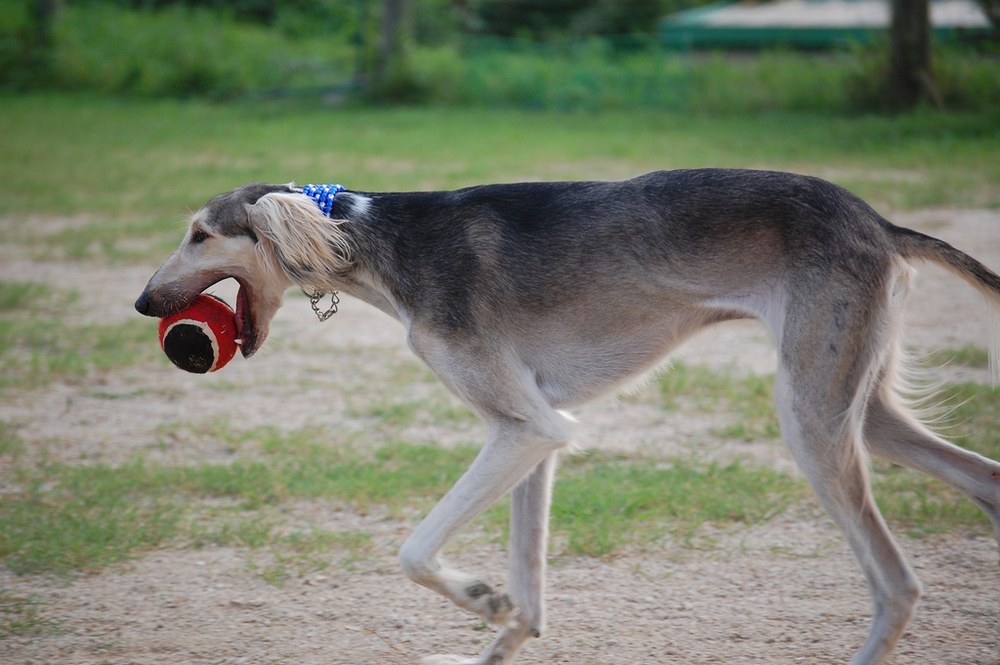
A Saluki was shaped to see a hare or gazelle at distance and run it down across open ground — by sight, at speed, without asking the handler first. That is not stubbornness; it is the design. City life works when you stop pretending a shouted “come” beats a running cat, build a check-in that rewards, give safe sprint outlets in secure ground or lure coursing, and teach a soft, quiet house dog to rest on a padded bed.
Job: Desert sighthound — sight, chase, and long-distance gallop; recall is a managed skill, not a promise.
Energy: Bursts of full speed, then long sleep; the walk alone rarely closes the running need.
Home: Not an open-park, off-leash-near-roads dog. Secure fences, long lines, and padded rest places.
A Saluki stays a sight-chaser — the job is to make the chase legal and the rest real
Public histories place Saluki-type hounds across the Middle East and Central Asia for a very long time: running hare and gazelle by sight, often alongside mounted hunters and falconers. Breeders selected for eyes, stamina, heat tolerance, and independent decisions at speed — not for waiting on a human cue.
In practice, that means a Saluki can be gentle, quiet, and almost cat-like indoors, and then gone in two seconds when something small moves at 200 metres. Many owners do not lose their dog because training was “bad”; they lose them because the plan relied on a recall that sight-chase genetics were never asked to support.
From the first month I build two chains. First: notice movement, glance back to the human, get a reward — at a distance where the dog can still eat. Second: after a sprint or a sniff walk, soften and lie down on a soft bed while the house carries on. Everything else on this page hangs off those two.
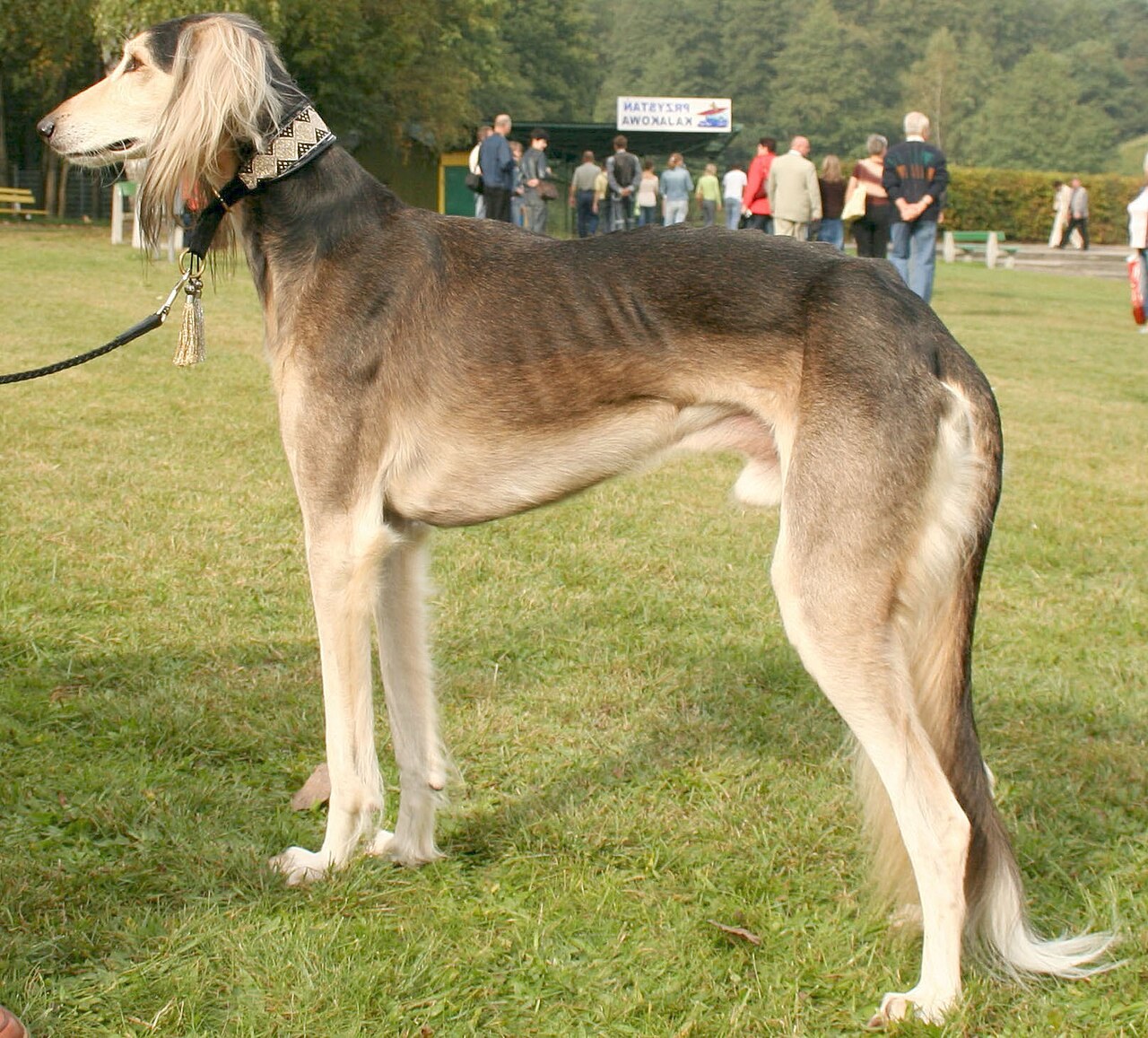
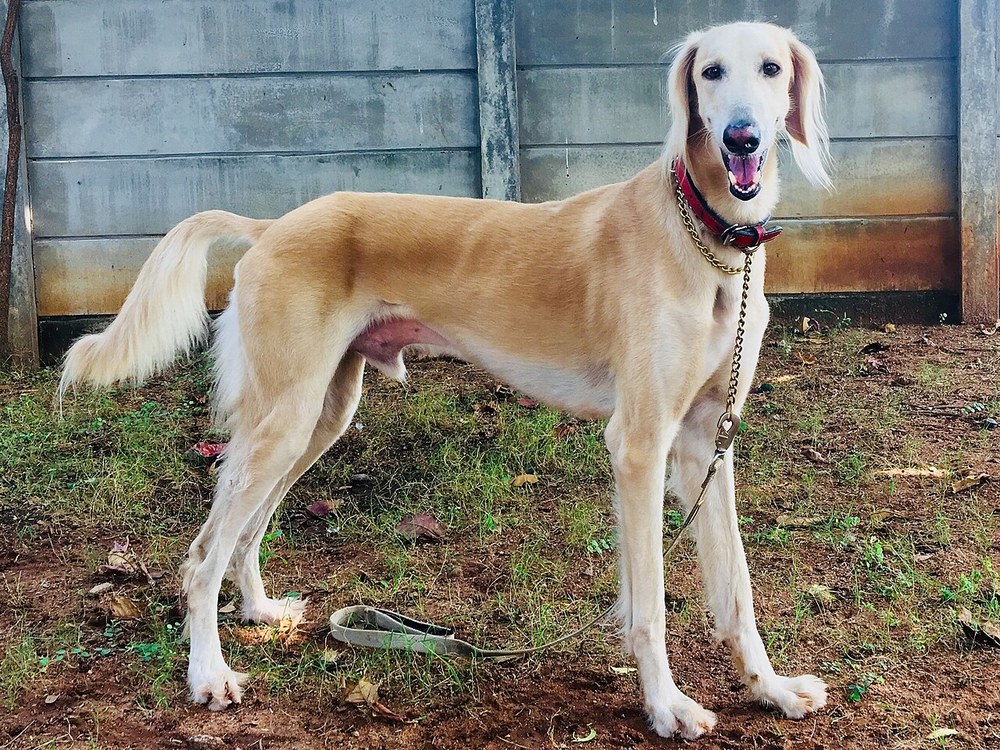
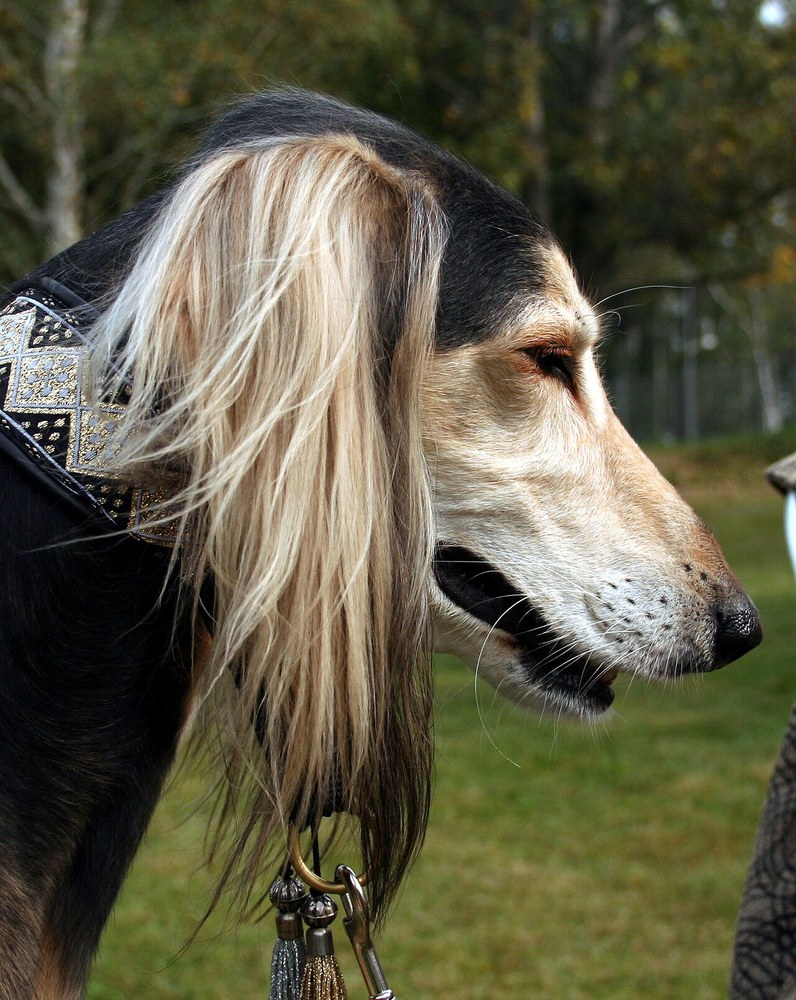
Smooth or feathered (ears, tail, legs) — light shedding; thin skin and low body fat matter more than brushing
Job
Sighthound / coursing hare and gazelle by sight
Breed history
Why one desert hound was built around sight, stamina, and independent speed
Origin does not set every puppy’s personality. It explains why many Salukis go quiet and fixed at a moving shape — and why a household that budgets no sprinting, no fence plan, and no soft bed meets restlessness, thin-skinned injuries, and escapes.
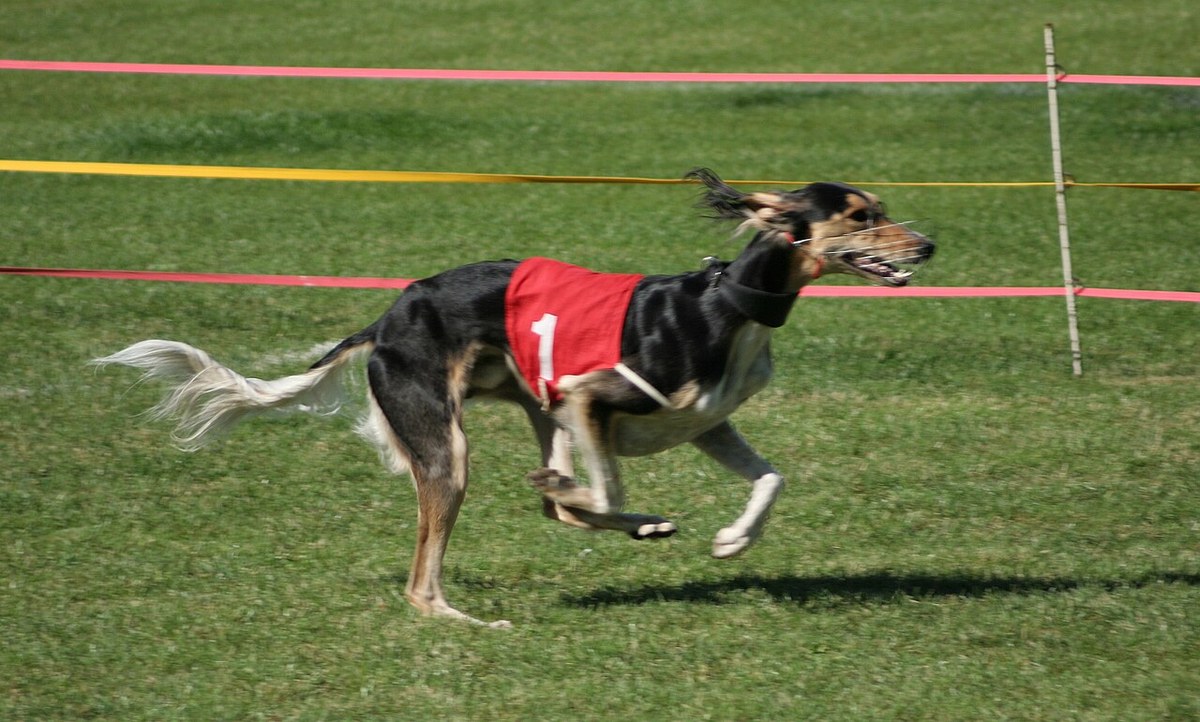
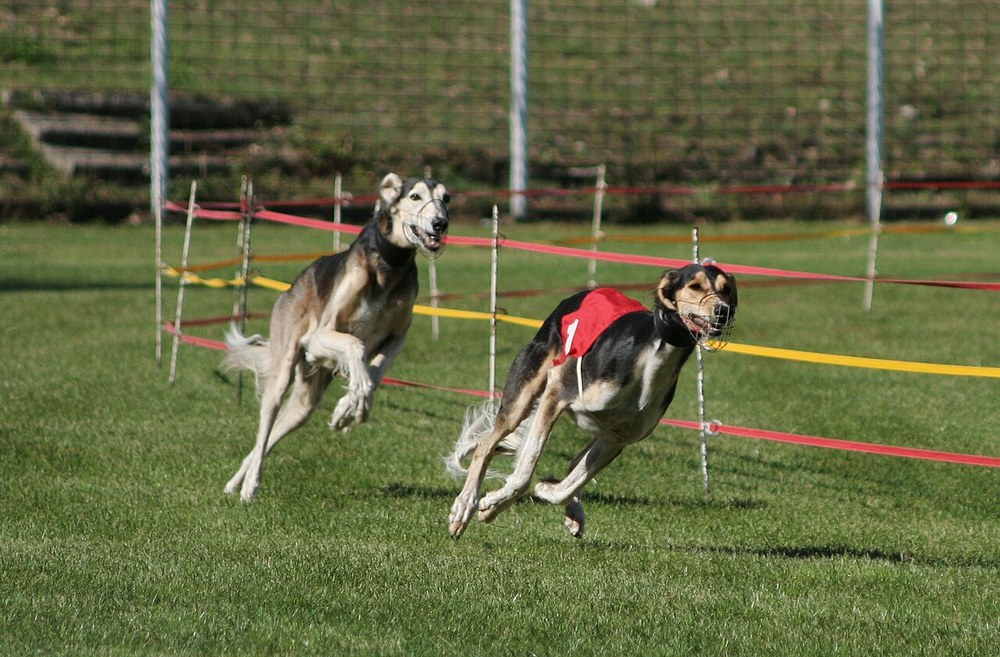
Modern sighthound race (Bytom, Poland). Licensed racing and lure coursing are the sanctioned way to let the gallop out — not an open field next to a road.
Middle East → hunting by sight
Eyes first, legs second, the human third
The working outline is a lean hound that scans open country, locks onto movement, and runs it down over long distances — often in heat, often out of the hunter’s reach. Public breed histories describe Salukis valued by Bedouin and other desert peoples as hunting partners rather than guard or herding dogs.
That independent decision is the part pet homes underestimate. A dog selected to commit to a chase without consulting anyone will not be “fixed” by a nicer collar or a firmer voice. You manage the space and reward the check-in.
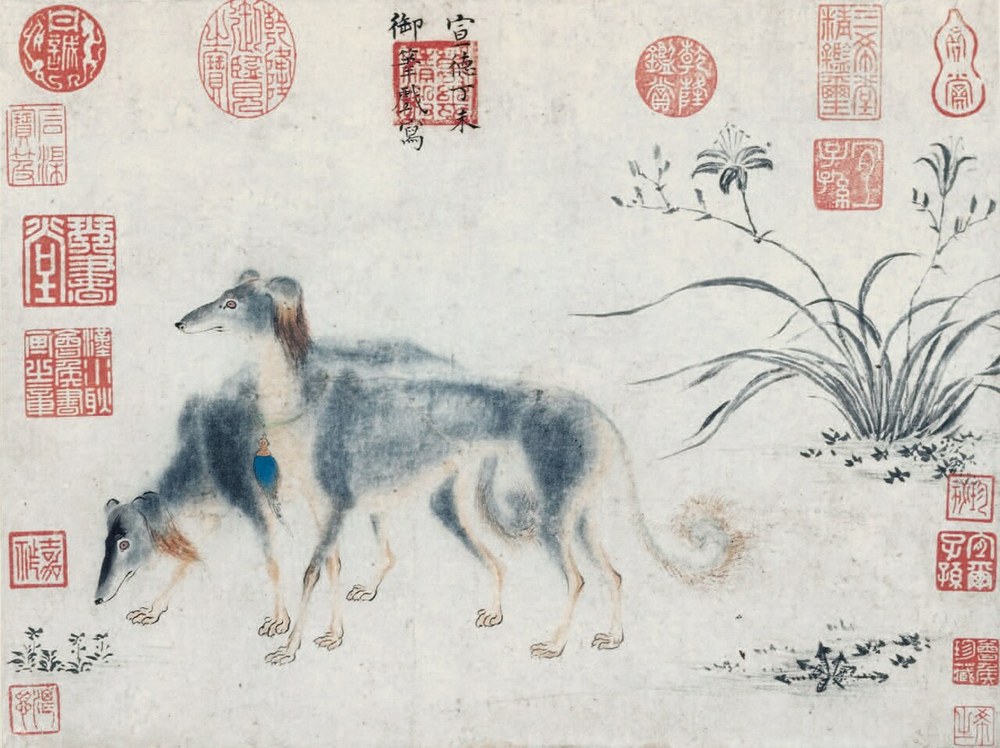
“Saluki hounds” attributed to Zhu Zhanji, the Xuande Emperor (public domain, Harvard Art Museums / Sackler). Long-distance trade carried slim sighthounds far from the desert — a reminder of how old the type is, not a pedigree claim.
Desert hunting → show ring and coursing field
Elegant photographs, the same eyes
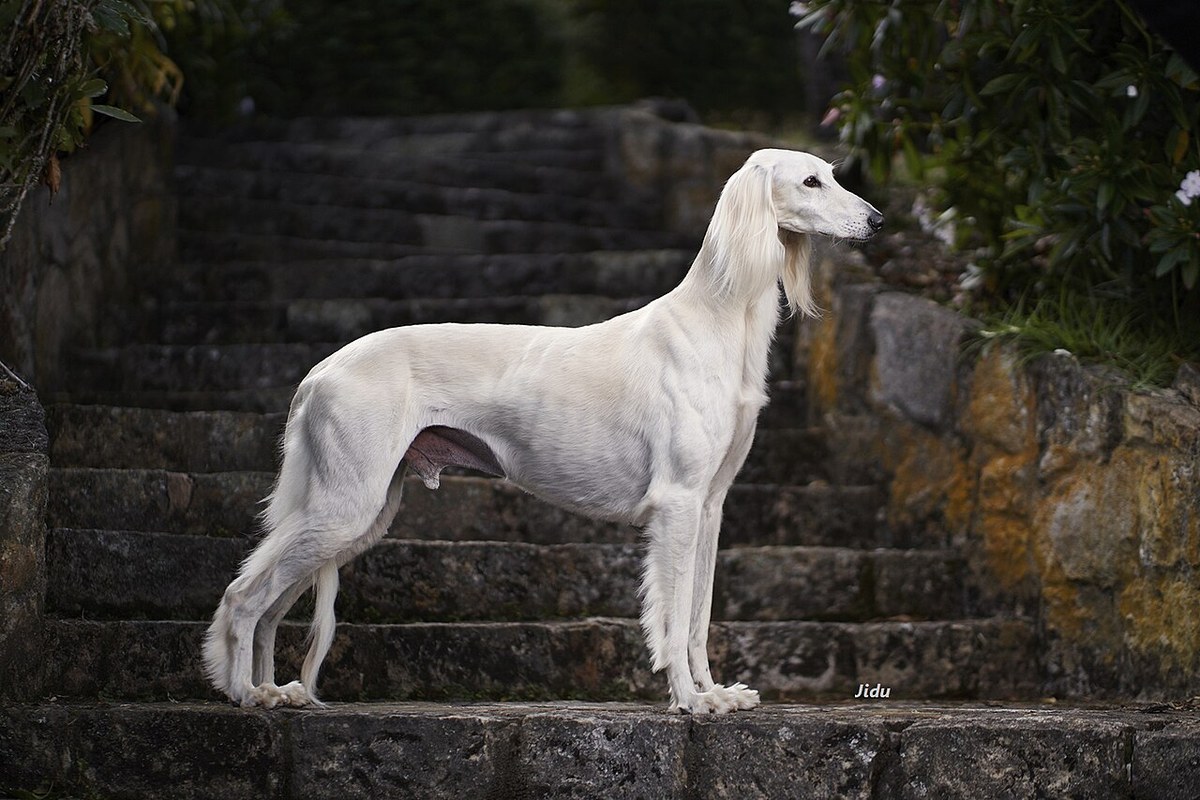
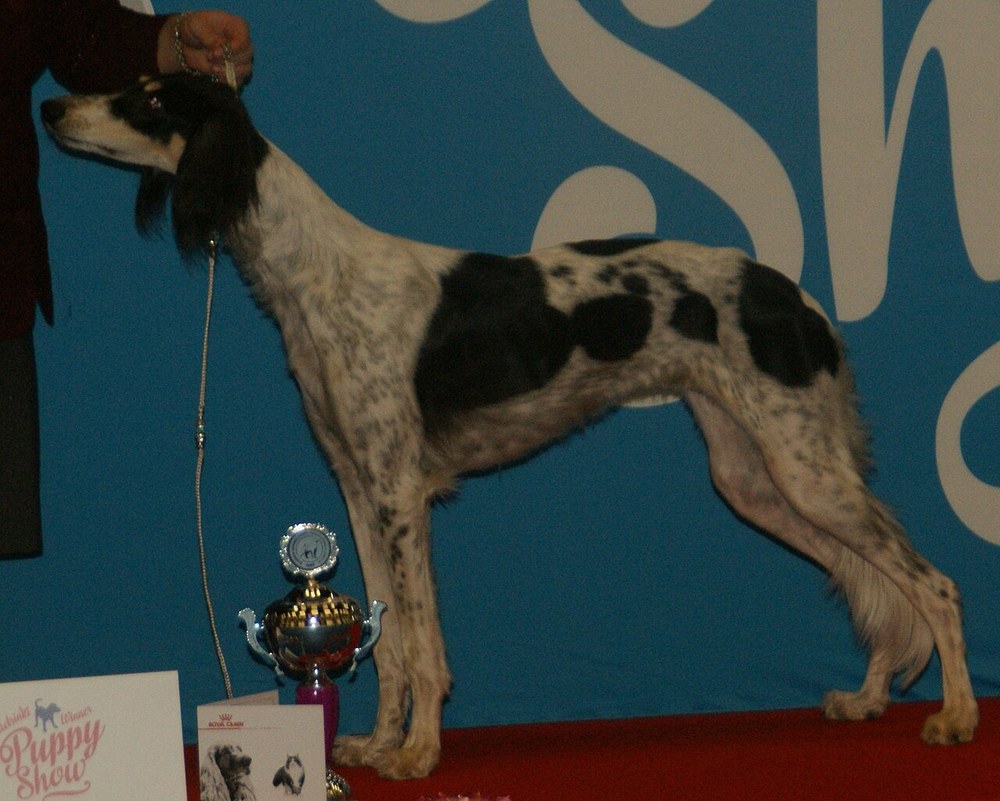
Salukis reached Western kennel clubs in the late nineteenth and early twentieth century. Show rings rewarded the outline and the feathering; coursing and lure clubs kept the running alive. Public breed lore still separates feathered and smooth varieties — same hound underneath.
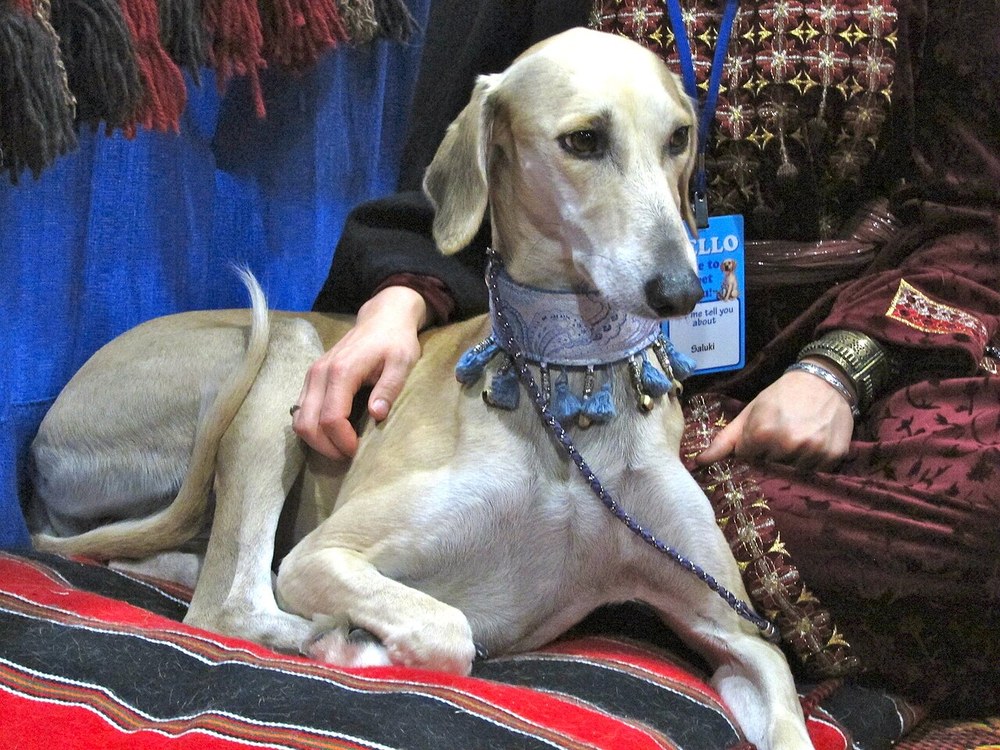
You will meet Salukis in apartments, on sofas, and at lure-coursing trials. The sofa does not cancel the sight-chase. Train the dog in front of you and budget the fence anyway.
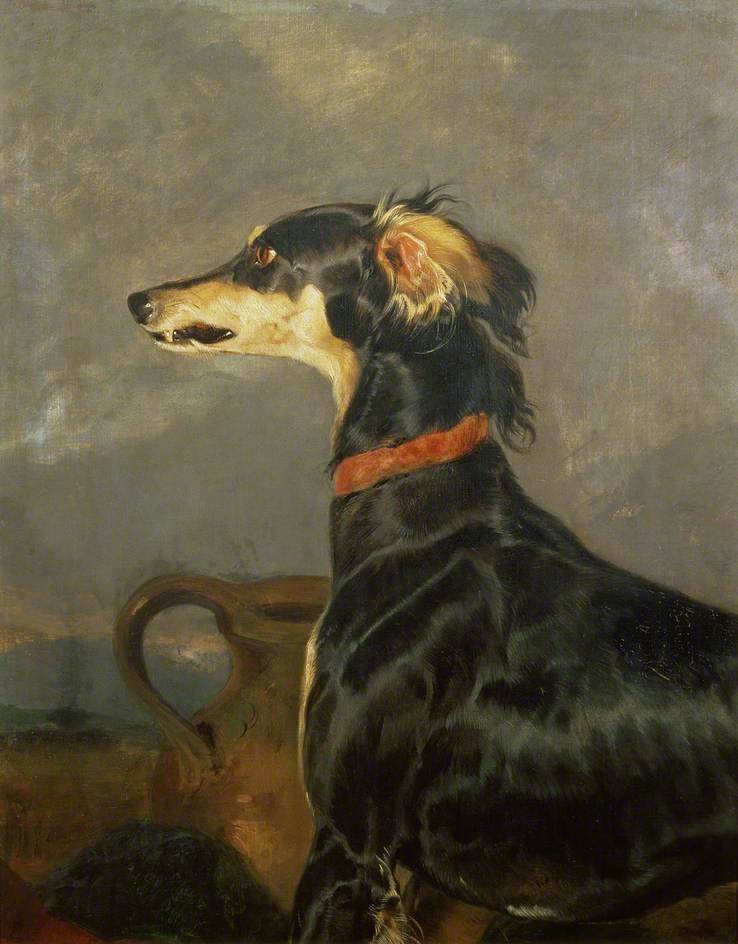
Edwin Henry Landseer — A Saluki Dog (public domain, Towneley Hall). Victorian painters loved the outline; that is culture, not a buying guide.
What the breed was bred for
Sight lock, endurance, and a quiet house temperament
In plain trainer language: the type was selected to see first, decide alone, and keep running. That is why a clear look-back-and-reward routine produces a partner — and why a vague household produces a dog that only “listens” when nothing interesting is in view.
Many Salukis are sensitive to pressure and handling. Harsh corrections or long drilling sessions tend to produce a shut-down hound, not a reliable one. Short sessions, generous food, and environment control are the plan.
Movement at distance beats almost any cue — plan for it
Secure fence or long line is essential, not optional gear
Sprinting is fuel — dose it in legal, safe ground
Soft beds and warm coats are welfare, not spoiling
A day is sprint budget, check-ins on a long line, and a soft place to switch off
In a city the Saluki’s job shows up as scanning: the frozen stare at a cat under a car, the sudden lunge at a pigeon, the wind-up before a bolt through an open gate. Many are quiet and gentle indoors. Management is not weakness — it is how you keep a sight-chaser alive near traffic while the training catches up.
Morning · secure field
Sprint where the fence is real, not where the view is pretty
A rented secure field, a fully fenced run, or a coursing club session gives the gallop a legal home. Two or three flat-out bursts often settle a Saluki more than an hour of pavement. Check the fence line and gate before you unclip — sighthounds find gaps at speed.
Warm up on lead first, unclip only inside a perimeter you have walked, and practise a rewarded recall before the dog is tired. See long-line park recall.
City route · long line
Reward the check-in before the stare turns into a lunge
The moment a Saluki locks onto movement, words stop landing. Mark and reward the glance back before that point, at a distance where the dog can still take food. A long line on a back-clip harness protects neck and spine if a chase starts anyway.
Sighthound play is fast — choose partners and ground carefully
Two Salukis running together can collide at speeds most pet dogs never reach, and thin skin tears easily. Play with known, similar-sized dogs in clean ground beats a crowded dog park. Small fluffy dogs that squeal and run can trigger chase rather than play — supervise.
Reserved with strangers, soft with family — and honest about small pets
Many Salukis are aloof with visitors and hate being grabbed. Let guests ignore the dog and allow approach by choice. Some live peacefully with a cat raised alongside them; others never do. Indoor peace with the family cat does not guarantee anything about a cat running in the garden.
Bony sighthounds need soft, warm resting places — hard floors cause sores and restless nights. A Saluki that has a known bed, a predictable routine, and enough running often sleeps much of the day. One that has none paces the windows.
General awareness only. I am not a veterinarian. In Salukis, problems often show first as a skin tear after play, a change in stamina, weight dropping below lean, shivering, or a limp after a sprint. For red flags, leave this page and open
when to call the vet.
Thin skin and play injuries
Low body fat and thin skin mean nicks and tears happen fast during rough play or brush running. Check after sprints. Deep cuts, swelling, or heat in a wound are a veterinary visit — not a home-glue project.
Lean is normal — too thin is not
A healthy Saluki often shows hip bones and a hint of ribs, which surprises new owners. Ask your veterinarian to show you that dog’s ideal condition. See body condition at home.
Heart and general health themes
Salukis as a type are discussed with cardiac conditions, some cancers, and thyroid questions in breed-club and veterinary conversations. That is awareness — not a label. Tiredness, coughing, collapse, or breathing change is call-the-clinic territory.
Anaesthesia and sighthound physiology
Sighthounds are often discussed as having different blood values and anaesthesia considerations from other breeds. Mention the breed to any new clinic. Let the vet decide; do not self-manage it.
Cold, heat, and coats
Desert does not mean cold-proof. Many Salukis need a coat in wet northern winters and a soft bed in a draught-free spot. In heat they still need shade, water, and no sprinting at midday. See water after exercise.
Feathering, nails, and paws
Feathered ears and tails tangle and collect burrs; brush weekly. Keep nails short — long nails change how a fast dog lands. Limps after running are a vet question. See limping stop list.
Lines and types
Show, coursing, and desert-bred Salukis share the same eyes
Honest split, no bloodline sales. Differences show in body type, coat, and how intensely an adult switches on at movement. Every line still needs secure running, realistic recall, and soft rest.
Coursing / performance / desert-bred influence
Often a harder switch-on for movement and a longer chase.
Parents may run lure coursing, racing, or field — ask what they do and how they rest.
Needs regular legal sprinting and a very secure perimeter.
Puppies benefit from early check-ins and handling before speed arrives.
Fits an owner who wants a sighthound sport (lure coursing, licensed racing) and will drive to secure ground — not a “quiet apartment dog” promise with hunting genetics.
Show / companion-influenced
Often more feathering and a calmer house tempo — the sight-chase is still there.
Meet parents at rest at home, not only stacked in the ring.
Escapes through gates and car doors happen in every line.
Heart and general health conversations deserve the same seriousness.
Fits a household ready for long-line walks, fenced sprints, and the fact that “show lines” still chase.
Socialization windows
What to introduce — and what not to overload — by age
AVSAB-aligned in spirit: short, clean exposures at a distance the puppy can still eat,
with hygiene while vaccines finish. See the
puppy socialization schedule.
2–4 months
Home and near yard
Introduce: family members, soft beds, short car trips, gentle handling of feet and ears, harness wearing, a name response for food, calm guests who ignore the puppy.
Do not overload: free running in unfenced spaces, rough play with large adult dogs, slippery floors without rugs, being grabbed by strangers.
~6 months
City movement at a working distance
Introduce: pigeons, cats, and bikes at a distance the puppy can still eat; name check-ins on a long line; first short runs in a secure, small paddock.
Do not overload: chasing anything “for fun,” open parks, long forced runs on pavement while growth plates are still developing.
~12 months
Adolescent speed
Introduce: longer sprints in secure ground, an introduction to lure coursing fun-runs if a club allows it, longer settles after exercise, guests by script.
Do not overload: trusting a recall that has never been tested near movement, loose gates, ignoring a first escape as a fluke.
~18 months
Adult scenes under control
Introduce: new secure fields with a warm-up; car and door thresholds; calm public places like cafés on a mat.
Do not overload: unclipping near roads, rough multi-dog chase games in stony ground, letting weight drift below lean without a vet check.
~24 months
Maintain the brakes
Introduce: refresh door waits, car exits, and long-line check-ins as confidence grows; keep sprint days regular.
Do not overload: treating one good off-lead day as permanent proof, skipping coats in winter, letting the bed go hard.
Before you buy
Who a Saluki usually fits
Fit is daily decisions: secure ground for running, a long line and harness habit, soft resting places, and the humility to manage a dog that will out-decide you when something runs.
Good match
More likely a good fit if you…
You have reliable access to a fully fenced area or a coursing/racing club for regular sprints
You accept that off-lead near roads is not part of the plan, ever
You like a quiet, reserved house dog who does not need constant interaction
You will handle gently and train with food in short sessions — no harsh corrections
Your household can keep gates, car doors, and front doors under a rule
Mismatch risk
A Saluki may be a poor choice if…
You want a dog that runs loose with you in open country or beside the road
You keep small pets that move fast and cannot be separated reliably
You expect cuddly greetings with every visitor
You plan long pavement jogs with a young dog as the main exercise
Escapes through gates or car doors would be “a learning moment” rather than an emergency
If you are torn between breeds
Saluki vs Afghan Hound and Whippet
Afghans bring heavy coat care and an even more independent attitude; Whippets bring a smaller, often more people-focused sprinter. Salukis bring endurance, reserve with strangers, and long-distance sight-chase. Pick the failure mode you can live with — then train.
Contact style
Saluki
Reserved, often aloof with strangers; soft and loyal with family.
Afghan Hound
Dignified and independent; affection on its own terms.
Running need
Saluki
Endurance runner — long gallops, then long sleep.
Whippet
Explosive short sprinter; often content with shorter bursts.
Recall reality
Saluki
Sight-chase at distance; secure fence or long line is the plan.
Both compares
Same sighthound rule: no off-lead near roads, whatever the breed.
Coat and care
Saluki
Light feathering; thin skin and warmth matter more than grooming.
Afghan Hound
Long silky coat — weekly grooming hours and serious bathing.
Apartment reality
Saluki
Possible with sprint access and soft beds — quiet indoors, not low-need.
Whippet
Often easier in small spaces thanks to size; still needs fenced running.
Ownership without surprises
Where a Saluki owner’s budget goes
Figures depend on country, city, and how far the nearest secure field is. Below are cost themes to budget before a puppy — not prices and not quotes from this site.
Secure running access
Rented secure fields, club memberships, or fencing your own garden properly. For many Saluki homes this is the single biggest recurring cost after food.
Fencing and gates
Height, gaps, and self-closing gates. Salukis jump and squeeze better than their elegant outline suggests. Check before the puppy arrives.
Veterinary
Routine care, wound care after play, heart and general health conversations, and a clinic that is comfortable with sighthounds. Know your emergency number.
Gear and comfort
Well-fitted harness, long line, martingale or wide sighthound collar, coats for winter, padded beds, muzzles for coursing or multi-dog runs.
Training and sport
Puppy class, private help for recall and handling, lure-coursing or racing club fees. City ranges vary — treat online “averages” as rough, not a quote.
Travel time
Driving to secure ground several times a week is time and fuel. Budget the calendar before the purchase price.
A beautiful photograph does not cancel daily decisions: secure running, a long-line habit, warm soft rest, and gentle handling remain the main cost drivers.
Before day one at home
What to prepare for a Saluki puppy
A Saluki puppy is often gentle and sleepy, then suddenly fast. A few decisions before arrival beat a hundred chases after the fact — including check-ins before speed arrives and a home that keeps gates closed.
01
Check every gate and fence first
Walk the fence line, fix gaps, and add a rule for the front door and the car boot. Sighthound escapes are fast and frequently near roads. Management starts before the first night.
02
Start name check-ins indoors
Short, rewarded name responses and hand targets indoors, then in the garden, then on a long line. Do not wait until a cat already owns the walk. See the name game.
03
Plan the toilet clock
Out after sleep, food, and play. Many Saluki puppies dislike rain and cold — a coat and patience beat punishment. Follow potty training.
04
Protect sleep on a soft bed
Young sighthounds need a lot of rest. Overtired puppies get mouthy and frantic. Use a padded crate or pen and enforced naps.
05
Gentle handling every day
Feet, ears, mouth, and a harness on and off — in seconds, with food. Many Salukis are touch-sensitive; early handling makes vet visits possible. See puppy handling.
06
Start alone time in minutes
Leave briefly while the puppy is calm and return before panic. The first absence should not be a full workday. See first absences.
If the dog is already yours
Training is clear rules plus honest limits on the chase
The rule must be visible: a glance back while something moves in the distance; a loose line past a cat under a car; a quiet stand at an open door; the settle you mark is the settle you want.
Short sessions with generous food fit this breed. Long repetitive drills and pressure tend to produce avoidance. A Saluki that has run safely earlier in the day will usually learn far better than one that has been kept on short pavement walks all week.
Environment management supports learning: secure gates, a back-clip harness on a long line, a padded bed, and running in safe ground cut practice of escape and frantic scanning.
Load balance
Keep the gallop — age, heat, ground, and skin set the limit
Age, temperature, ground quality, and recent injuries change what is allowed. A limp, a fresh skin tear, panting that will not settle, or a dog that cannot stop scanning means stop and get a veterinary or behaviour assessment.
Secure sprintLong-line walkShort trainingSniff timeSleep on a soft bed
Secure-field sprints, lure-coursing fun runs, long-line sniff walks, and short food-based sessions are available. Long pavement jogs for a young dog, unfenced “freedom,” and sprinting right after a big meal are not required to close the running need.
Quality running leaves a Saluki able to lie down on its bed and stop scanning the window.
Sight lock, check-ins, and the end of the chase
How to teach a Saluki to check in before the chase starts
Start where movement is far away and food still works. Build distance and difficulty slowly — and keep the long line on while you do.
01
Spot movement before the dog locks on
Learn the earliest signs — ears up, head high, body stillness. Mark the first glance at movement quietly while the dog can still take food.
02
Reward the glance back to you
Cue the name or a hand target and reward generously when the dog turns its head toward you. If the dog cannot eat, you are too close — add distance on the long line.
03
Move away together
Turn and jog a few steps away from the movement; reward when the dog follows on a loose line. This is a lifeline, not a punishment.
04
Give a safe outlet later
Sprinting in secure ground or lure coursing at a planned time keeps the drive met without practising street chases.
05
End with rest on a soft bed
After the walk or run, guide the dog to its bed and reward a calm down. A quiet house after exercise is the finish line.
One scene close-up
Why “she always comes back” ends at the first running cat
For a sight-chaser, a recall that worked in an empty field is information about the empty field. The first time a hare breaks cover, a different system takes over. The dog did not forget you; the chase simply outranked you.
Mark cleanly. Reward heavily for check-ins near movement. End the session before the dog frays. If food fails at any distance from a moving target, add distance or end the session — do not shout the dog into a fake heel.
Shouting rarely stops a chase and can teach the dog that coming back is unpleasant. If a chase is heading toward a road or livestock, safety and fencing belong with a qualified professional plan, not a louder voice.
“With a Saluki, I do not promise you an off-lead dog near roads. We build check-ins that reward, give the gallop a legal place behind a real fence, handle gently, and protect a soft bed — because a desert sighthound without a safe outlet still runs, just somewhere you did not choose.”
Sessions cover real scenes: recall around movement, long-line handling, door and car thresholds, small-animal safety, handling for grooming and vet visits, and rest after running. I am a trainer, not a veterinarian. No invented reviews.
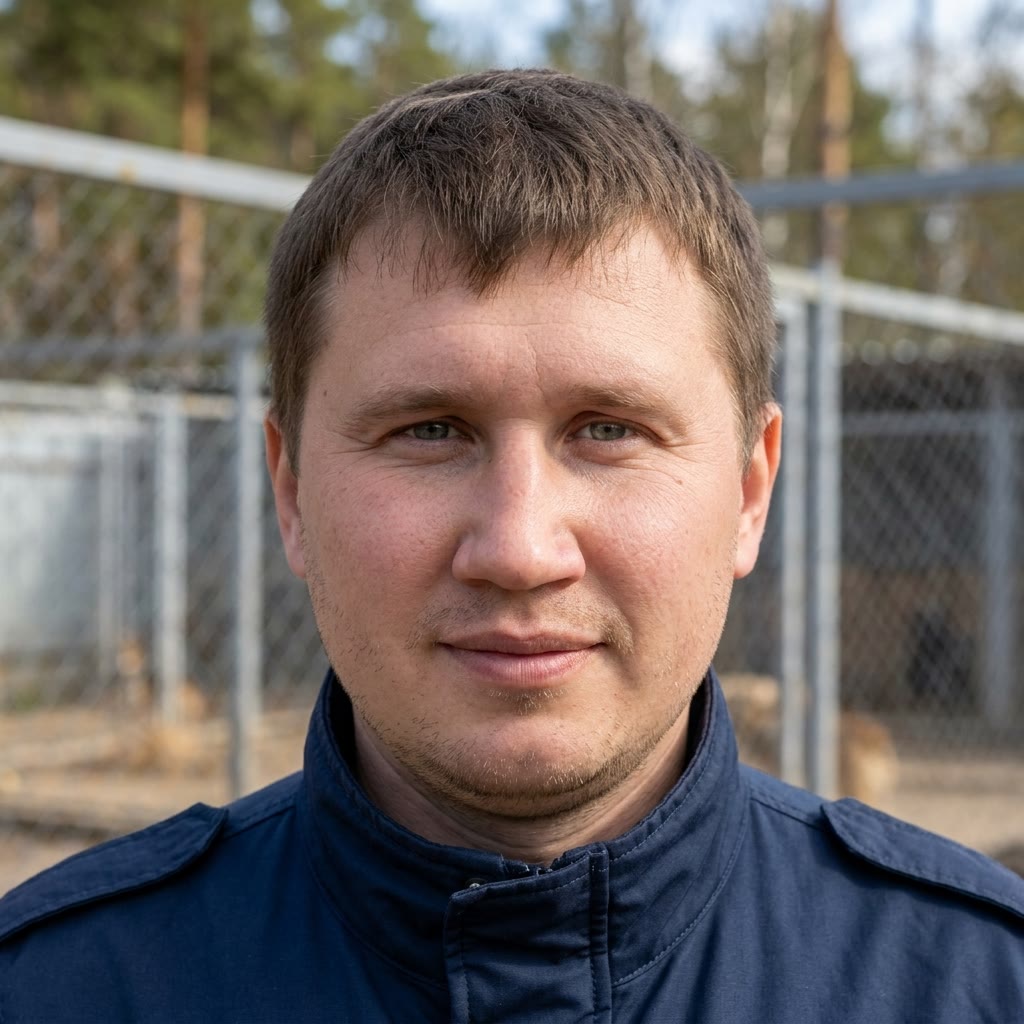
Andrew DarovProfessional dog trainer and instructor
It can be for a calm, patient first-time owner who has secure running access and accepts recall limits. It is a poor first dog for someone who expects off-lead freedom or a dog that greets every guest warmly.
Can a Saluki ever be trusted off lead?+
Inside a secure, fully fenced area — yes, with training. In open country or near roads, I do not promise it for any Saluki. Sight-chase at distance can override even a well-trained recall in a second.
How much exercise does an adult Saluki need?+
Most adults do well with daily long-line walks plus several sessions a week of free running in secure ground — then a lot of sleep. Puppies need short, varied activity, not long runs.
Are Salukis good apartment dogs?+
Many are quiet indoors and can live in apartments if they get regular safe sprinting and soft beds. Stairs, slippery floors, and lack of fenced space nearby are the real problems.
Saluki vs Afghan Hound — which fits better?+
Both are independent sighthounds with chase drive. Afghans add a heavy grooming commitment; Salukis add endurance and often more reserve with strangers. Neither is an off-lead dog near roads.
Saluki vs Whippet — which fits better?+
Whippets are smaller, often more cuddly, and usually satisfied with short sprints. Salukis are larger endurance runners and more aloof. Both need secure running and realistic recall.
Are Salukis good with cats and small pets?+
Some live calmly with a cat raised alongside them. Many will chase unfamiliar cats or small animals outdoors. Never assume indoor peace transfers to the garden. Supervise and separate when unsure.
Are they good with kids?+
Many are gentle with calm, respectful children, but most dislike rough handling and chaotic noise. Teach children to let the dog approach and to leave a resting dog alone. Supervise. No breed is a nanny.
What about heart or other health themes?+
Salukis as a type are discussed with cardiac conditions, some cancers, and thyroid questions, plus sighthound-specific anaesthesia considerations. Awareness for a vet conversation — not a diagnosis.
What is the typical lifespan of a Saluki?+
Public breed references often cite roughly 12–14 years, and some publish a wider range. That is general knowledge, not a promise for any individual dog.
Do Salukis need coats?+
In cold or wet climates many do. Low body fat and thin coats mean they chill easily. A coat and a warm, padded bed are welfare, not fashion.
Is lure coursing a good outlet?+
For many Salukis, yes — it lets the dog chase legally on a set course. Look for a club with safe ground and age rules for young dogs, and check with your vet about fitness first.
If a Saluki feels like too much chase — or the wrong tempo
The breed is beautiful, but not for every home. Sometimes another sighthound size or a different drive fits better.
A giant Russian coursing hound — calm and quiet indoors, fast and independent outdoors. Space, secure running, and gentle handling come first.
Need a read on your exact situation?
Describe your Saluki’s age and the scene that repeats most: chase on walks, door or car escapes, shyness with guests, or restlessness at home. We check safety first, then pick the first skill.
Written by Andrew Darov, professional dog trainer. Not veterinary advice and not a diagnosis.
Not a kennel club. No invented reviews. No vaccine schedules or toxin doses. Photo credits in
/images/breeds/saluki-guide/credits.md.