Scottish Deerhound: temperament, training & joint-aware life with a giant coursing hound
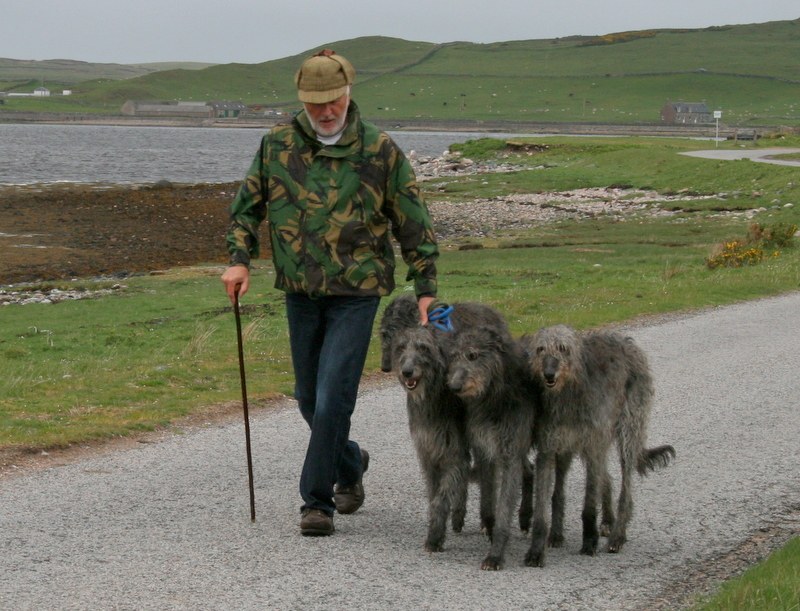
A Scottish Deerhound is one of the gentlest giants you can meet — polite with guests, soft with family, content to sleep through most of the afternoon. It was also bred to run down red deer across Highland hillsides, and that sight-chase still lives under the shaggy grey coat. City life works when you give a soft temperament clear structure, protect growing and ageing joints, budget space and secure running, and stop expecting a recall to beat a deer.
Job: Giant Highland coursing hound — sight, speed, and a gentle, low-pressure temperament.
Energy: Calm indoors with bursts of speed outdoors; joints and heart set the limits, not enthusiasm.
Home: Needs space, soft surfaces, a secure perimeter, and gentle structure — not off-lead near roads.
A Deerhound stays a coursing hound — gentle manners do not delete the chase
Public histories link the Deerhound to the Scottish Highlands, where large rough-coated hounds coursed red deer by sight over open, steep ground. The dogs needed speed, stamina, courage, and a calm, steady nature when the hunt was over.
That calm is what most owners fall in love with. Many Deerhounds are quiet, affectionate, and almost apologetic in the house — poor guard dogs, excellent sofa companions. The same dog can be gone across a field in seconds when a deer, hare, or cat runs, and at full size and speed that is a safety issue first.
I build two chains early. First: see movement, glance back, get a reward — on a long line, at a distance where food still works. Second: after a walk or a run, lie down on a big soft bed and let the joints rest. Gentle structure, not pressure, is what this temperament needs.
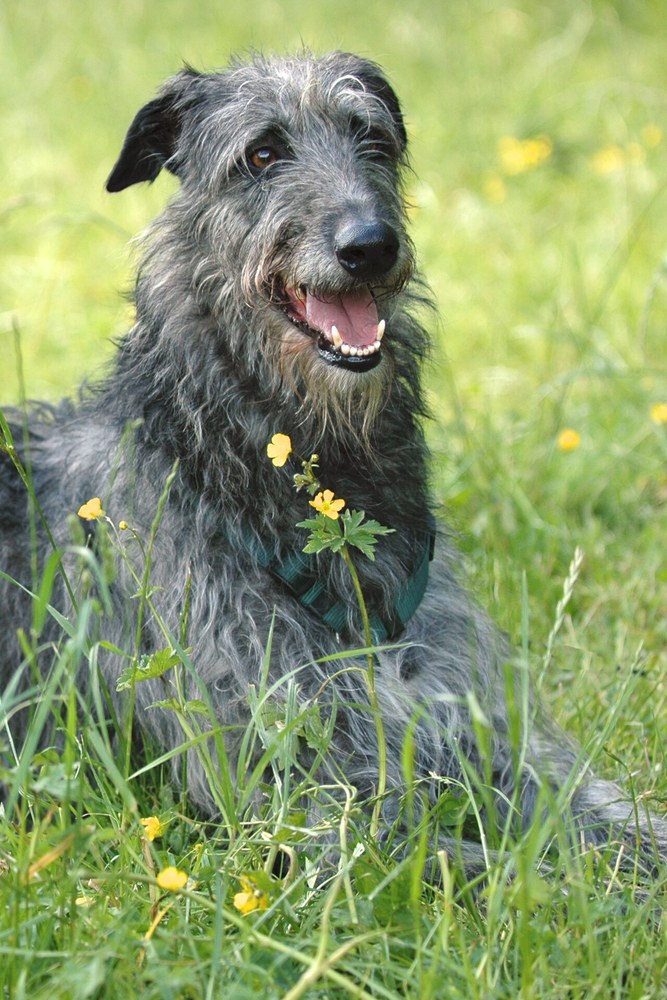
Harsh, crisp, ragged coat about 3–4 in — moderate shedding; modest grooming, weekly comb-through
Job
Sighthound / Highland red-deer coursing
Breed history
Why one Highland hound was built around speed, courage, and a soft nature
Origin does not set every puppy’s personality. It explains why many Deerhounds switch from sleepy to gone when a deer appears — and why a household without space, secure running, and joint-aware routines meets escapes, injuries, and a frustrated gentle giant.
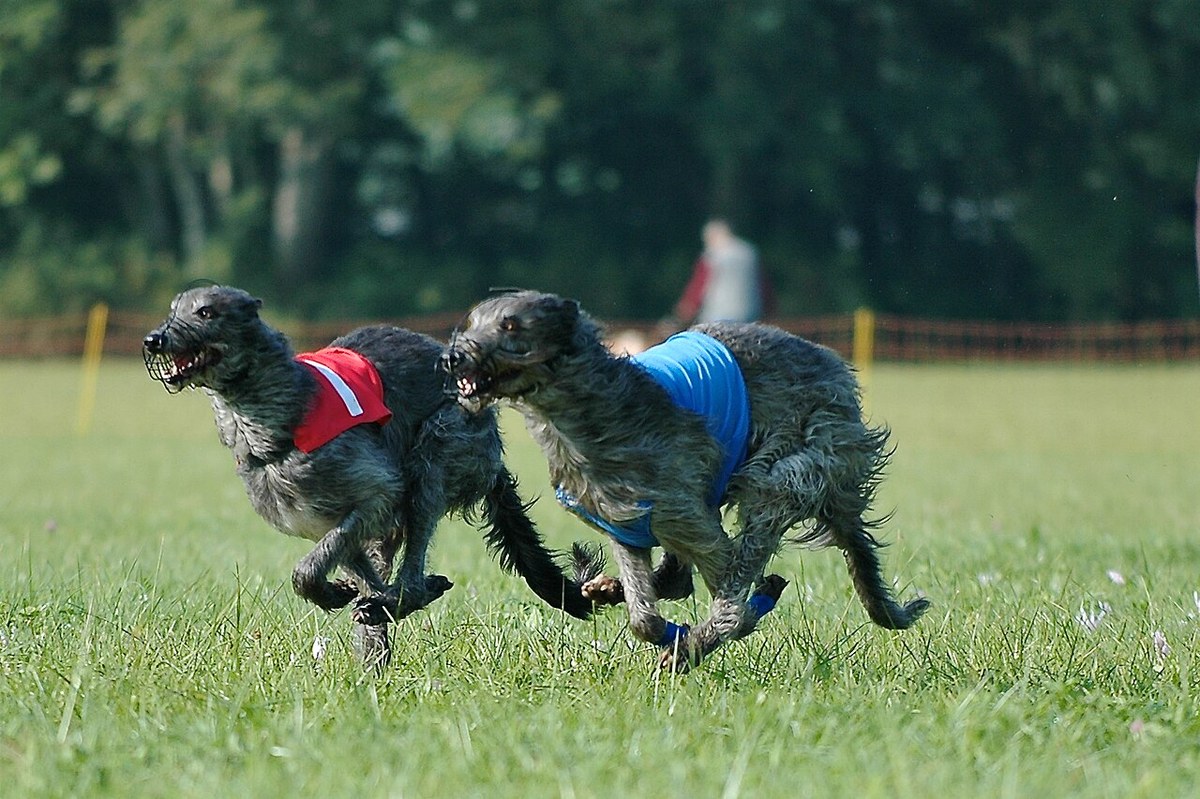
International coursing trial at Laferté-sur-Amance, France. Lure coursing lets a Deerhound run at full speed on a planned course — not across a road after a real deer.
Scottish Highlands → coursing red deer
Long legs for hills, a rough coat for weather
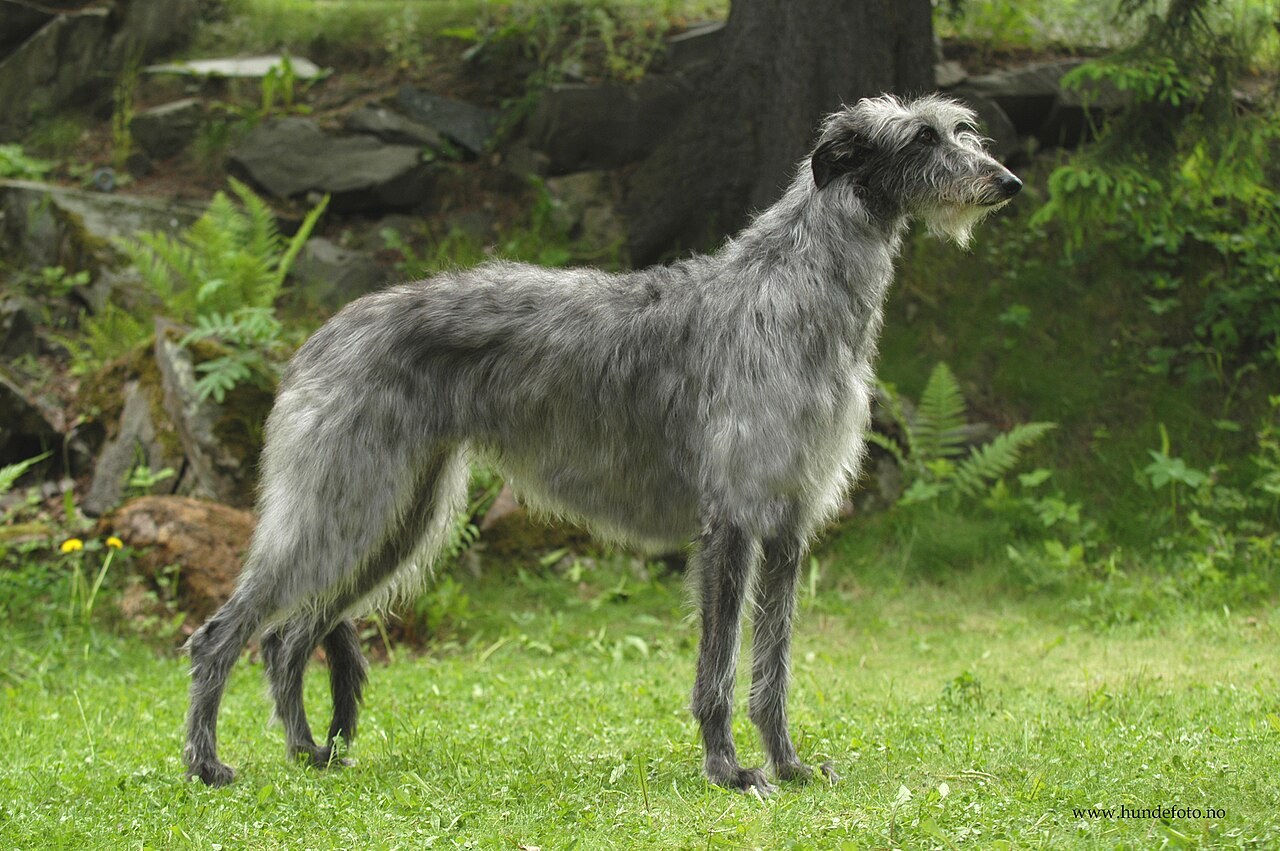
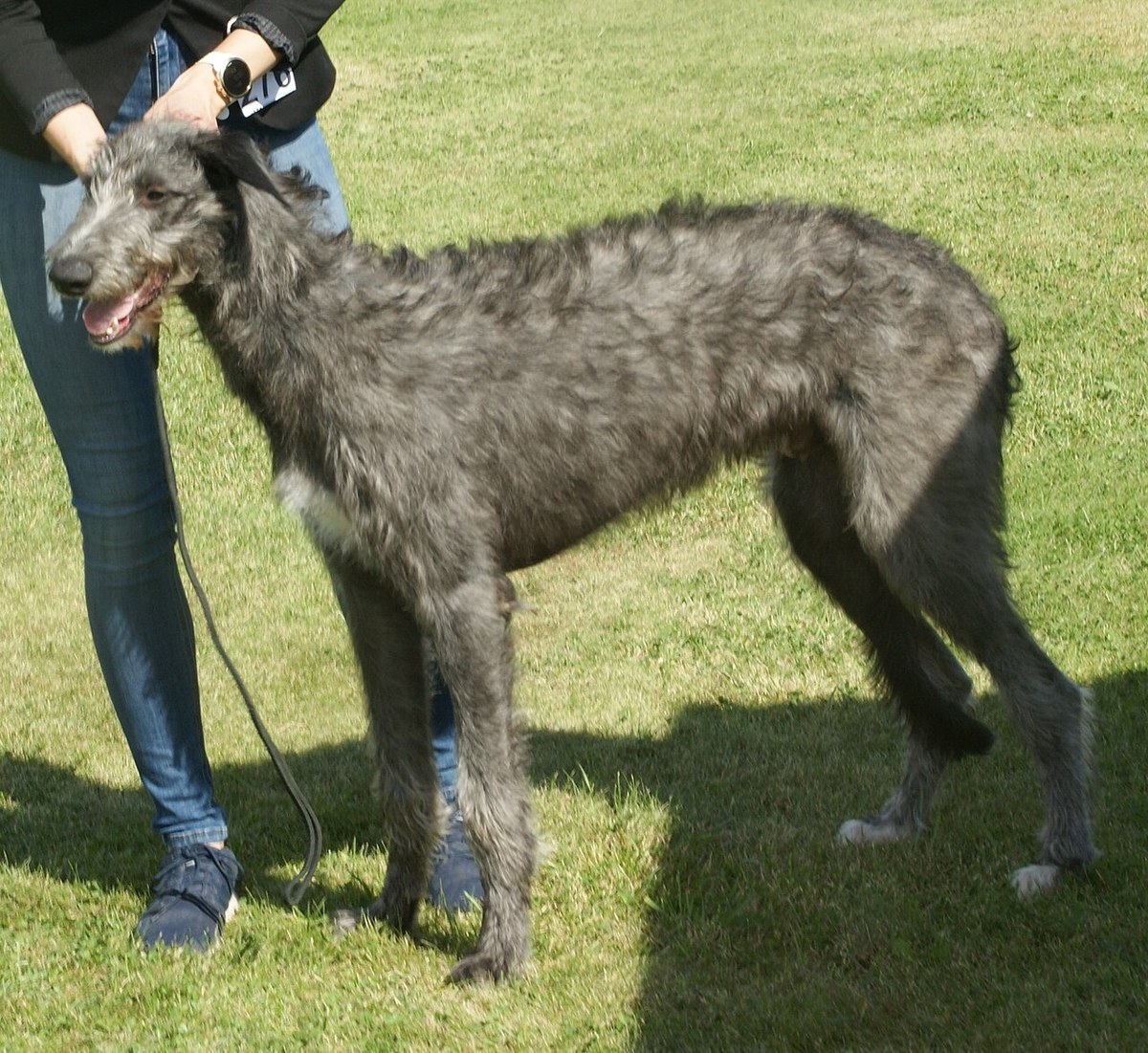
The working outline is a very tall, deep-chested hound with a harsh coat that sheds rain and wind. Public breed histories describe Deerhounds kept by Highland chiefs and estates to course deer, often in pairs, on terrain where horses struggled.
That sight-chase at distance is the part pet homes forget. A Deerhound may never chase the family cat indoors and still take off after a deer on a walk. You manage the ground and reward the check-in; you do not argue with the eyes.
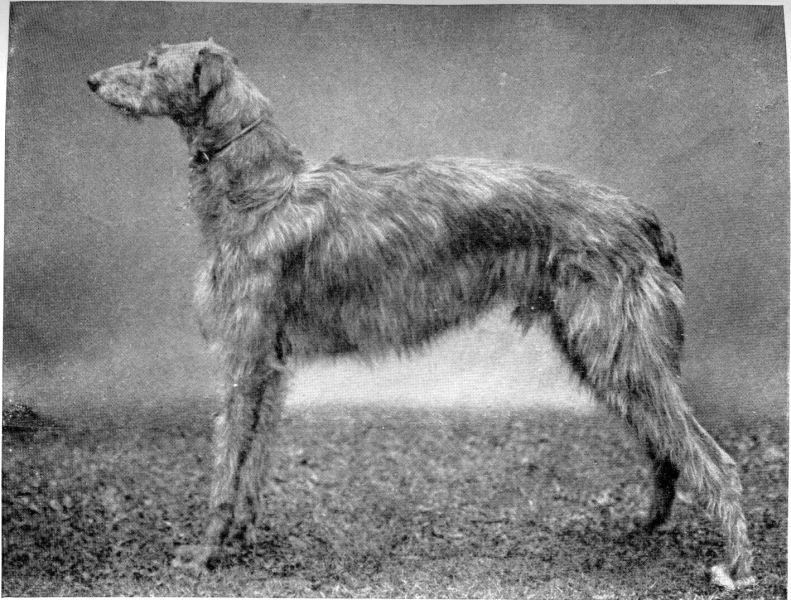
Historical Scottish Deerhound photograph (public domain). The type nearly disappeared in the nineteenth century as hunting changed; enthusiasts rebuilt it from surviving lines — outline and temperament both kept.
Decline and revival → show rings and sofas
Saved by enthusiasts, kept gentle
Public breed lore describes a sharp decline as Highland society and hunting practices changed, followed by a nineteenth-century revival by dedicated breeders. Writers and painters of the period — Sir Walter Scott’s dogs are often mentioned — helped make the breed famous.
Today you will meet Deerhounds on coursing fields, in show rings, and stretched across living-room floors. None of that cancels the chase. Train the dog in front of you and budget the fence anyway.
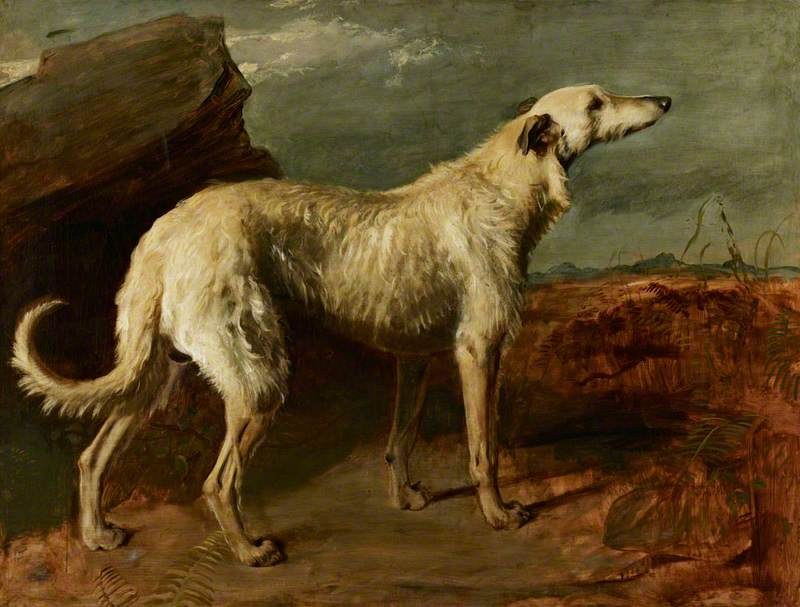
Thomas Duncan — Braan, a Celebrated Scottish Deerhound (public domain, National Galleries of Scotland). Victorian culture loved the noble outline; it is not a buying guide.
What the breed was bred for
Sight lock, a giant frame, and a soft temperament
In plain trainer language: the type was selected to see, run, and catch — and to be easy, gentle company afterwards. That is why calm routines and a rewarded check-in produce a lovely companion — and why harsh handling or chaotic homes produce a withdrawn, worried giant.
Size raises the stakes for every body decision. Growth, slippery floors, car jumps, and sudden sprints when cold all load the joints. Training here is low-pressure, food-based, and built around protecting the body.
Sight-chase at distance — plan recall around it
Gentle structure beats firmness with a soft temperament
A day is space, gentle structure, safe running, and joint-friendly rest
In a city the Deerhound’s job shows up as quiet watching: the head lifting at a cat across the road, the sudden surge on lead, the long gaze across an open park. Many are relaxed, polite, and easy indoors. Management is not weakness — with a giant sight-chaser, it is how everyone stays safe while the training grows.
Morning · on lead
The walk is calm, long, and on a lead near roads
A steady walk on soft ground suits most adult Deerhounds better than fast pavement miles. Near roads, the lead stays on — always. A well-fitted harness spreads the load if a surge happens, and keeps a long neck safe.
Puppy growth and senior years both need a softer plan
Giant puppies grow very fast; seniors stiffen. Both need short, varied activity on good ground, warm-ups before running, rugs on slippery floors, and help in and out of cars. A Deerhound that limps after exercise needs a vet, not more fitness.
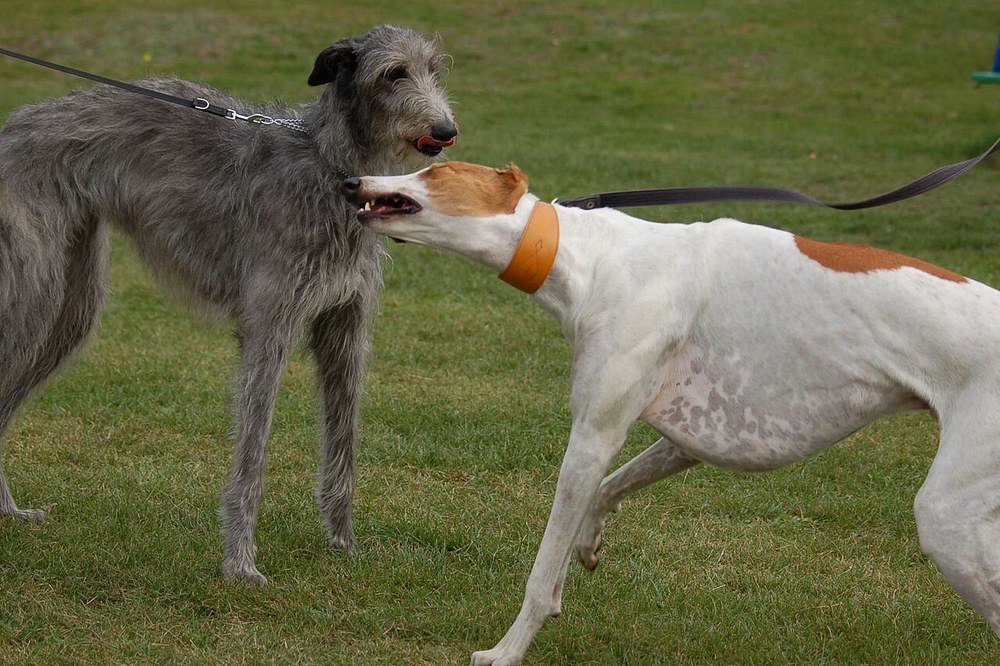
Many Deerhounds enjoy other sighthounds or calm, known dogs. At full speed, collisions are serious, and a small squealing dog can trigger chase instead of play. Short, supervised play in clean ground beats crowded dog parks.
Most Deerhounds are friendly and polite with visitors and make poor guard dogs. A giant tail at coffee-table height and a lean against a toddler are still real risks. Calm greetings and a place to retreat to make guests easy.
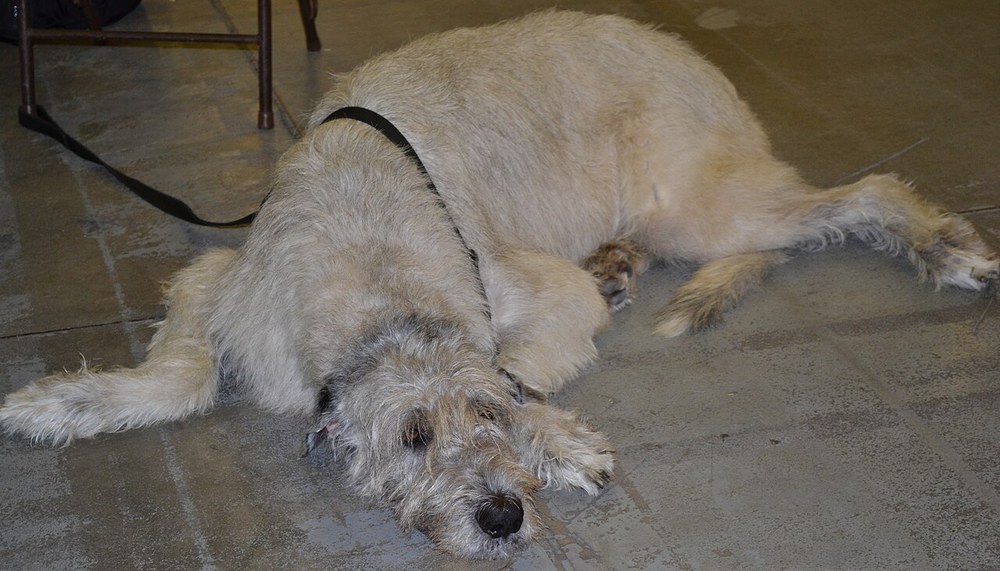
A Deerhound needs a bed it can lie flat out on, away from draughts. Hard floors mean sore elbows and callouses. A dog that has a real bed and enough running usually sleeps a large part of the day — calmly.
General awareness only. I am not a veterinarian. In Deerhounds, problems often show first as a limp or swelling on a leg, a drop in stamina, restlessness after a meal, a change in urination, or stiffness after rest. For red flags — especially a swollen belly with retching, or a persistent limp — leave this page and open
when to call the vet.
Bones and persistent limps
Giant sighthounds are discussed with bone cancer risk in breed-club and veterinary conversations. A limp or leg swelling that does not resolve quickly is a vet visit — not something to “walk off.” See limping stop list.
Bloat awareness (not a diagnosis)
Deep-chested giants are discussed with gastric dilatation-volvulus. A hard swollen belly, retching without result, or sudden distress is an emergency. Ask your vet about feeding routine and rest around meals.
Heart and other screening themes
Deerhounds as a type are discussed with heart conditions and, in some lines, inherited urinary or metabolic conditions where tests exist. Screening choices belong to your vet and breeder.
Anaesthesia and sighthound physiology
Sighthounds are often discussed as having different anaesthesia considerations and blood values. Tell any new clinic the breed and let the vet decide.
Growth, weight, and ground
Keep growing puppies lean and let them self-pace. Avoid forced running, endless stairs, and jumping from cars. Lean adults carry less load on every joint. See body condition and rations.
Coat, nails, and calluses
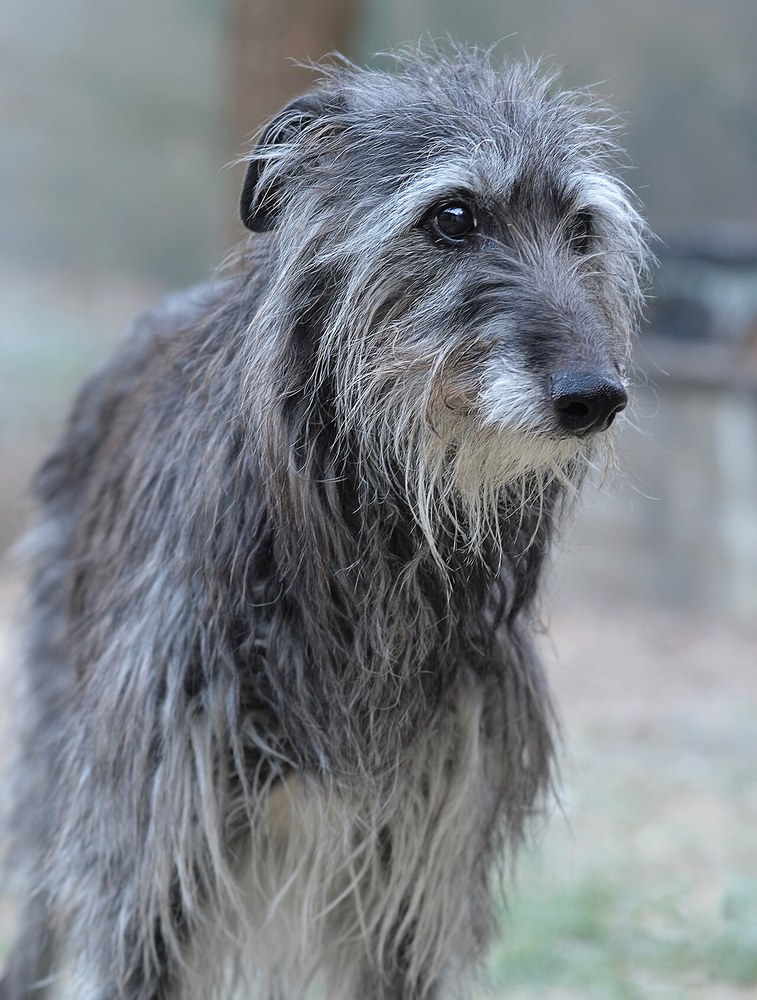
The harsh coat needs a weekly comb-through and occasional tidying, not heavy grooming. Short nails help grip; soft bedding prevents elbow and hip calluses.
Lines and types
Show and coursing Deerhounds share the same eyes and the same size
Honest split, no bloodline sales. Differences show in size, coat, and how intensely an adult switches on at movement. All still need secure running, realistic recall, joint care, and gentle structure.
Coursing / performance-influenced
Often a lighter frame and a sharper switch-on for movement.
Parents may course or race — ask how they rest and recover.
Needs regular legal sprinting, warm-ups, and a very secure perimeter.
Puppies benefit from early check-ins and gentle handling.
Fits an owner who wants a sighthound sport and can drive to secure ground — not a “giant sofa ornament” promise.
Show / companion-influenced
Often a heavier coat and a very relaxed house tempo — the chase still appears.
Meet parents at home, not only in the ring.
Escapes through gates and car doors happen in every line.
Heart, bone, bloat, and screening conversations deserve the same seriousness.
Fits a household with space, soft floors, time for long calm walks, and the fact that a gentle dog still has a chase instinct.
Socialization windows
What to introduce — and what not to overload — by age
AVSAB-aligned in spirit: short, clean exposures at a distance the puppy can still eat,
with hygiene while vaccines finish. See the
puppy socialization schedule.
2–4 months
Home and near yard
Introduce: family members, rugs on slippery floors, short car trips with lift or ramp, gentle handling of feet and ears, harness wearing, a rewarded name response.
Do not overload: free running in unfenced spaces, jumping in and out of cars, long walks, rough play with heavy adult dogs, stairs as a gym.
~6 months
City movement at a working distance
Introduce: cats, birds, bikes, and joggers at a distance the puppy can still eat; check-ins on a long line; calm cafés on a mat.
Do not overload: forced jogging during fast growth, chasing anything “for fun,” crowded dog parks.
~12 months
Adolescent size, puppy brain
Introduce: short sprints in small secure areas on good ground, longer settles at home, guests by script, car and door thresholds.
Do not overload: treating a giant adolescent as a finished athlete, loose gates, ignoring a limp after play.
~18 months
Adult scenes under control
Introduce: larger secure fields with a warm-up; lure-coursing fun runs if your vet and the club agree; quiet public places on a mat.
Do not overload: unclipping near roads or deer country, sprinting right after big meals, cold-start sprints.
~24 months+
Maintain the brakes — and the body
Introduce: refresh door waits and check-ins; keep regular gentle exercise; review joints and weight with your vet as the dog ages.
Do not overload: one good off-lead day as permanent proof, thin beds, ignoring early stiffness in a young senior.
Before you buy
Who a Scottish Deerhound usually fits
Fit is daily decisions: space for a giant, soft floors, secure running, gentle handling, and honest planning for a shorter lifespan and bigger vet bills.
Good match
More likely a good fit if you…
You have room for a very large dog to stretch out and a vehicle it can enter safely
You want a gentle, quiet companion rather than a guard dog
You can reach fully fenced ground for regular sprints and accept on-lead walks near roads
You will train gently with food and protect growing and ageing joints
You can budget giant-breed food, vet care, and the emotional reality of a shorter life
Mismatch risk
A Scottish Deerhound may be a poor choice if…
You want an off-lead hiking partner in open country with deer or livestock
You live up stairs without a lift, with slippery floors throughout
You need a protective dog that alerts or guards
You plan long jogs with a growing puppy
Small fast pets share the home and cannot be separated reliably
If you are torn between breeds
Scottish Deerhound vs Irish Wolfhound and Greyhound
Irish Wolfhounds bring even more mass and a similar gentle nature; Greyhounds bring a smaller, smooth-coated sprinter often easier to house. Deerhounds bring height, a rough coat, and a very soft temperament. Pick the failure mode you can live with — then train.
Contact style
Scottish Deerhound
Gentle, polite, affectionate; a poor guard dog.
Irish Wolfhound
Similarly gentle; heavier and more massive.
Size and body load
Scottish Deerhound
Very tall, leaner build — joints and heart still set limits.
Irish Wolfhound
Heavier giant — every cost and joint load scales up.
Recall reality
Scottish Deerhound
Sight-chase at distance; secure perimeter and long line.
Both compares
Same sighthound rule: no off-lead near roads.
Greyhound
Short smooth coat; minimal grooming, needs coats in cold.
Apartment reality
Scottish Deerhound
Hard without space, a lift, and soft floors.
Greyhound
Often easier to house thanks to size; still needs fenced running.
Ownership without surprises
Where a Scottish Deerhound owner’s budget goes
Figures depend on country, city, and access to secure ground. Below are cost themes to budget before a puppy — not prices and not quotes from this site.
Space and vehicle
A giant hound needs a car it can enter safely — often with a ramp — and room at home for a bed it can stretch out on.
Food
Measure; use part of the ration as training rewards. Giant-breed portions add up, and lean condition protects joints.
Veterinary
Routine care at giant-breed doses, possible screening, and a clinic you trust for emergencies like bloat. Budget for investigations if a limp persists.
Secure running access
Rented secure fields, club memberships, or proper fencing at home. Regular safe sprints are part of welfare.
Gear and comfort
Well-fitted harness, long line, sighthound collar, car ramp, rugs for slippery floors, and large orthopaedic-style beds.
Training and sport
Puppy class, private help for recall and handling, lure-coursing fees. City ranges vary — treat online “averages” as rough, not a quote.
A noble photograph does not cancel daily decisions: space, joint care, secure running, gentle structure, and a shorter giant-breed lifespan remain the main cost drivers.
Before day one at home
What to prepare for a Scottish Deerhound puppy
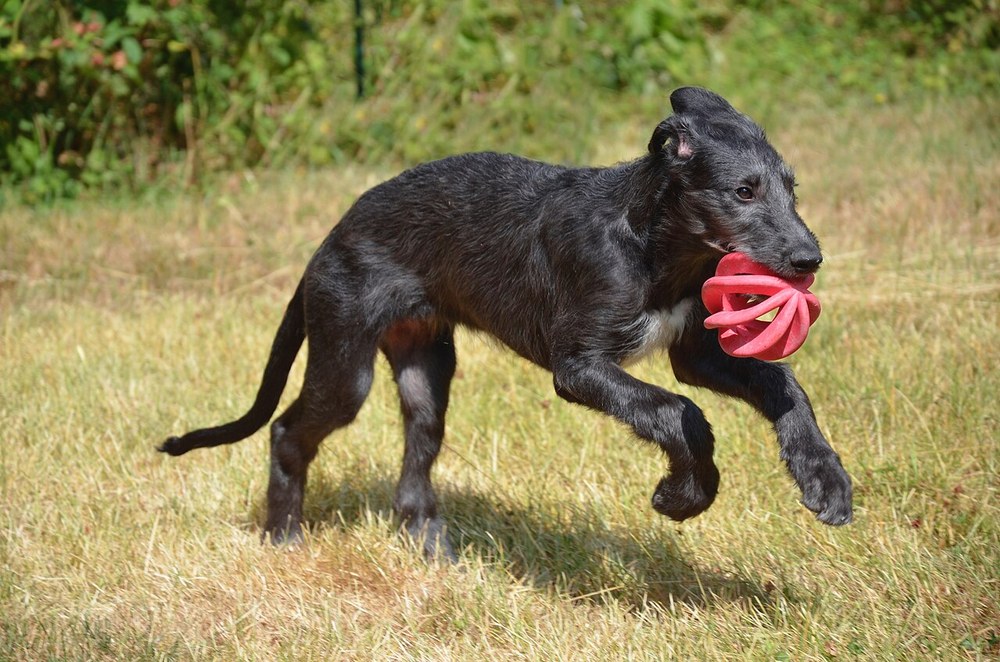
A Deerhound puppy is soft, clumsy, and growing at a remarkable pace. A few decisions before arrival protect the joints, the temperament, and the garden gate.
01
Make the home giant-safe
Rugs on slippery floors, gates on stairs, a car ramp plan, and no jumping off high furniture while bones grow. Check fences and gates before the first unsupervised minute.
02
Start name check-ins indoors
Short, rewarded name responses and hand targets indoors, then in the garden, then on a long line — before a cat or deer owns the walk. See the name game.
03
Let the puppy self-pace
Short, varied outings on soft ground; lots of sniffing; no forced jogging. See walk length by age.
04
Protect sleep
Growing giants need a lot of rest. Overtired puppies get mouthy and frantic. Use a large crate or pen with a soft bed and enforced naps.
05
Gentle handling every day
Feet, ears, mouth, a comb, and a harness on and off — a few seconds at a time with food. A soft temperament needs calm handling now. See puppy handling.
06
Start alone time in minutes
Leave briefly while the puppy is calm and return before panic. Build slowly. See first absences.
If the dog is already yours
Training is gentle structure plus honest limits on the chase
The rule must be visible: a glance back when something moves at distance; a loose line past a cat; a calm stand at the car boot; the settle you mark is the settle you want.
Deerhounds usually learn well with short, generous, quiet sessions. They tend to switch off under pressure, repetition, or harsh corrections. Structure here means predictable routines and clear rules — not force.
Environment management supports learning: secure gates, a harness and long line, rugs on floors, a big soft bed, and running only in safe ground cut practice of escape and protect the body.
Load balance
Keep the gallop — growth, age, meals, and joints set the limit
Age, growth stage, temperature, ground, and meal timing change what is allowed. A limp, stiffness after rest, a swollen belly, or reluctance to exercise means stop and get a veterinary assessment.
Calm on-lead walkWarm-up, then sprintShort trainingGentle handlingLong sleep on a soft bed
Calm walks on soft ground, secure-field sprints after a warm-up, lure-coursing fun runs for mature dogs, and short food-based sessions are available. Long jogs for a growing giant, unfenced “freedom,” and sprinting right after a meal are not required.
Quality exercise leaves a Deerhound stretched out asleep — not limping, not pacing.
Sight lock, check-ins, and a soft finish
How to teach a Scottish Deerhound to check in before the chase starts
Start where movement is far away and food still works. Build slowly, keep the long line on, and stop well before the dog tires.
01
Spot movement before the dog locks on
Learn the earliest signs — head up, ears lifting, body going still. Mark the first glance at movement quietly while food still works.
02
Reward the glance back to you
Cue the name or a hand target and reward generously when the dog turns its head to you. If it cannot eat, add distance on the long line.
03
Turn away together on a loose line
Move a few steps away and reward when the dog follows. Let distance and the harness do the work — never haul a giant by the neck.
04
Give a safe outlet later
A warmed-up sprint in secure ground or a lure-coursing session at a planned time meets the drive without practising street chases.
05
End with a long down on a soft bed
After the walk or run, guide the dog to its bed and reward a calm down. Rest protects the joints and closes the session.
One scene close-up
Why “she’s so gentle, she’d never run off” ends at the first deer
A gentle temperament and a strong sight-chase live in the same dog. The recall that worked beside the house says little about a hillside with a deer on it. The dog did not stop loving you; the chase simply outranked you.
Mark cleanly. Reward heavily for check-ins near movement. Keep sessions short. If food fails at any distance from a moving target, add distance or end the session — never haul a giant by the neck.
Raised voices and corrections usually make a soft Deerhound avoid you, not come back faster. If chases are heading toward roads or livestock, the solution is fencing, a long line, and a professional plan.
“With a Deerhound, I do not use pressure on a soft temperament. We reward check-ins long before the chase, give speed a legal home behind a real fence, protect growing and ageing joints, and build calm routines — because a gentle giant without a safe outlet still runs, just somewhere you did not choose.”
Sessions cover real scenes: recall around movement, lead and harness handling, car and door thresholds, guest manners for a giant, handling for grooming and vet visits, and rest. I am a trainer, not a veterinarian. No invented reviews.
Andrew DarovProfessional dog trainer and instructor
It can be for a calm first-time owner with space, soft floors, secure running access, and a realistic view of giant-breed health and lifespan. It is a poor choice for someone who wants off-lead hiking or a guard dog.
Can a Deerhound be trusted off lead?+
Inside a secure, fully fenced area — yes, with training and a warm-up. In open country, deer country, or near roads, I do not promise it. Sight-chase can override a good recall in a second.
How much exercise does an adult Deerhound need?+
Most adults enjoy daily calm walks plus regular sprints in secure ground — then long rest. Puppies should self-pace on soft ground; seniors need gentler, shorter sessions.
Are Deerhounds good apartment dogs?+
Usually difficult. Size, stairs, slippery floors, and the need for secure running nearby make apartments hard. A ground-floor home with space and soft floors is far easier.
Deerhound vs Irish Wolfhound — which fits better?+
Both are gentle giant sighthounds. Irish Wolfhounds are heavier and more massive; Deerhounds are leaner and often a little more athletic. Both need space, joint care, and realistic recall.
Deerhound vs Greyhound — which fits better?+
Greyhounds are smaller, smooth-coated, and often easier to house. Deerhounds are much taller with a rough coat. Both need secure running and gentle handling.
Are Deerhounds good with cats and small pets?+
Some live calmly with cats raised alongside them. Many will chase unfamiliar cats or small animals outdoors. Indoor peace does not guarantee garden peace. Supervise and separate when unsure.
Are they good with kids?+
Many are very gentle with children, but their size can knock a toddler over and a tail can clear a table. Teach children to leave a resting dog alone. Supervise. No breed is a nanny.
What about bone, heart, or other health themes?+
Deerhounds as a type are discussed with bone cancer, heart conditions, bloat, and some inherited conditions where tests exist, plus sighthound anaesthesia considerations. Awareness for a vet conversation — not a diagnosis.
What is the typical lifespan of a Scottish Deerhound?+
Public breed references often cite roughly 8–11 years. That is general knowledge, not a promise for any individual dog.
How much grooming does a Deerhound need?+
A weekly comb-through of the harsh coat, occasional tidying of the face and feet, short nails, and soft bedding to prevent calluses. Less than the outline suggests.
Is crate training okay?+
Yes as a rest skill, with a crate big enough for a giant to stand, turn, and lie flat. Many owners move to a pen or a gated room as the puppy grows.
If a Scottish Deerhound feels like too much dog — or the wrong tempo
The breed is gentle and striking, but not for every home. Sometimes a smaller sighthound or a different size fits better.
A giant Russian coursing hound — calm and quiet indoors, fast and independent outdoors. Space, secure running, and gentle handling come first.
Need a read on your exact situation?
Describe your Deerhound’s age and the scene that repeats most: chase on walks, escapes, lead surges, guest manners, or restlessness at home. We check safety first, then pick the first skill.
Written by Andrew Darov, professional dog trainer. Not veterinary advice and not a diagnosis.
Not a kennel club. No invented reviews. No vaccine schedules or toxin doses. Photo credits in
/images/breeds/scottish-deerhound-guide/credits.md.