
Expert Advice · Reactivity · 9 min read
Dog scared of visitors: how to help a fearful dog
A dog that hides, barks and backs away from guests is scared, not rude. Give it a safe room, ask visitors to ignore it, toss treats away from people so the dog can retreat, and let it choose to come closer. Growling, snapping or bites mean get qualified help.

If your dog is scared of visitors, let it keep its distance. Give it a safe room, ask guests to ignore it, toss treats on the floor away from people so the dog can eat and step back, and let it choose whether to come closer. The door itself, the doorbell and calm arrivals are covered by the guest entry plan; this page is about dogs that are afraid of the people once they are inside.
I am Andrew Darov, a dog trainer. I am not a veterinarian. This is a reactivity page for fearful dogs, not for dogs that are just excited to say hello.
Is my dog scared or just excited?
A scared dog wants more distance from the visitor. An excited dog wants less. The plan is very different, so check which one you have first.
Signs of fear around guests:
- hiding behind you, under a table or in another room,
- tail low or tucked, ears back, body low,
- lip licking, yawning, turning the head away,
- barking and backing away at the same time,
- creeping forward to sniff, then jumping back or barking,
- refusing food it would eat when the house is quiet.
An excited dog rushes to the door, jumps, wiggles and wants to reach everyone. If that sounds like your dog, the guest entry plan is the right page.
If the fear started suddenly in a dog that used to be fine with people, ask your vet to check for pain or other health changes.
Why is my dog afraid of guests?
Some dogs met few calm new people as puppies. Some had a bad experience. Some are just more careful by nature. Many dogs cope with strangers in the street but find it hard when a stranger walks into their home, sits on their sofa and stays for hours. Guests often make it worse without meaning to: they look straight at the dog, bend over it, reach out a hand or follow it to “make friends.”
How do you help a dog that is scared of visitors?
- Set up a safe room. Before anyone arrives, put the dog in a quiet room or behind a baby gate with its bed, water and a long-lasting chew. It should be away from the front door and the room where guests sit. A dog that can hide and feel safe does not need to bark to keep people away.
- Brief your guests. Tell visitors before they come in: do not look at the dog, talk to it, reach for it or follow it. Many people think the dog needs to be won over. A scared dog needs the opposite. Being ignored is the kindest greeting.
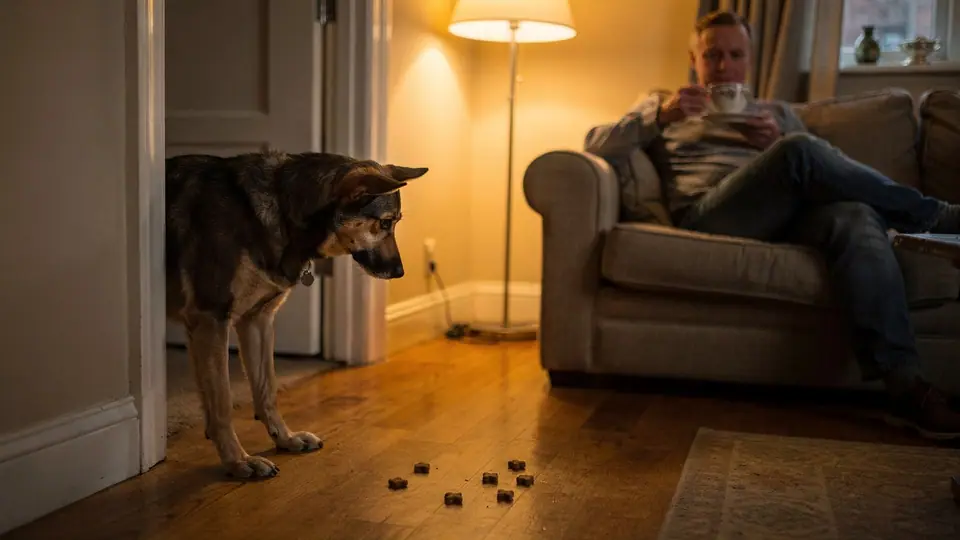
- Toss treats away from people. Once the guest is seated and calm, you can let the dog watch from behind the gate or from a distance on a lead. Each time the dog looks at the guest, an adult tosses a tasty treat on the floor behind the dog. The dog learns that visitors mean good things, and it can eat while moving away, not towards the stranger.
- Let the dog choose. If the dog relaxes and comes closer to sniff, the guest stays still and quiet, hands in lap, and does not try to stroke it. After a short sniff, call the dog back to you and reward it. Short visits to the guest are better than one long one that ends in a bark.
- Keep visits short and calm. Start with one quiet adult for a short time. Put the dog back in its safe room with a chew before it gets tired or worried. Build up slowly to longer visits and more people over many weeks.
Should guests give my dog treats?
Not from the hand at first. When a guest holds out a treat, the dog has to come close to get it. It may grab the food and then panic once it notices how near it is, and that is when some dogs bark or snap. Floor treats tossed away from the guest are safer. Later, a calm guest can toss treats closer to themselves, and much later offer one from a flat open hand, if the dog is clearly relaxed.
What about children and parties?
Children move fast, shout and reach for dogs, which is hard for a fearful dog. Keep the dog in its safe room when children visit, and for parties, busy holidays and noisy evenings. That is not giving up. It keeps the dog from practising fear while you work on calm visits with one adult at a time. Rules for children and dogs in the same home are on children and guests.
What happens after the guests leave?
Many fearful dogs stay on edge for a while after visitors go. Give the dog a quiet hour, a chew, a short sniffing walk and an early night. If it keeps pacing or barking, see how to help a dog settle after guests leave.
When is fear of visitors a safety problem?
Get qualified help early if your dog:
- growls, snaps or lunges at visitors,
- has bitten anyone, even once,
- cannot settle in its safe room while guests are in the house,
- stays scared for hours or days after a visit.
Never punish a growl. It is the dog telling you it needs more space. Take the dog out of the room, keep visits apart from the dog for now, and ask a qualified trainer or behaviour professional to help. Ask your vet to rule out pain as well.
What are the usual mistakes?
- Making the dog say hello. Holding, pulling or pushing it towards a guest makes the fear stronger.
- Guests offering treats from the hand. It pulls the dog in closer than it wants to be.
- Letting guests follow or reach for the dog. Being ignored is what helps.
- Big parties as practice. Start with one calm adult and short visits.
- Telling the dog off for barking or growling. It hides the warning, not the fear.
A dog that is scared of visitors gets better with space, choice and good things that come from a distance. Use the guest entry plan for the door, settle after guests for the hour after, and children and guests for family rules. More on the reactivity hub.
Questions on this page
Why is my dog scared of visitors?
Common reasons are too little calm contact with new people as a puppy, a bad experience, a nervous nature or a home where visitors are rare. Some dogs cope with people outside but feel trapped when strangers come into their space. Sudden fear in a dog that used to be fine is worth a check with your vet.
How can I tell if my dog is scared or just excited?
An excited dog rushes forward, wiggles, jumps and wants to reach the guest. A scared dog keeps its distance, backs away, hides, tucks its tail, pins its ears, licks its lips, yawns or barks and then retreats. Some scared dogs creep forward to sniff and then bark or jump back.
Should visitors give my scared dog treats?
Not from the hand at first. A treat held out pulls the dog closer than it wants to be, and it can panic once the food is gone. Ask the guest to toss treats on the floor away from them, so the dog can eat and step back.
Should I make my dog say hello to guests?
No. Forcing a scared dog to greet, holding it in your arms or pulling it on a lead towards the guest often makes the fear worse. Let the dog choose. Many fearful dogs feel better when nobody looks at them.
When should I get professional help?
If your dog growls, snaps, lunges, has bitten, or stays scared for hours after guests leave, get help from a qualified trainer or behaviour professional, and ask your vet to rule out pain. Until then, keep the dog in its safe room during visits.
Work with me
A $150 consultation or $500 monthly curatorship. Opens WhatsApp to Andrew.