
Expert Advice · Behavior · 10 min read
Dog scared of fireworks: a calm night plan
Before Bonfire Night or New Year, build a quiet den, cover sound and light, walk early, and keep toilet trips on lead. Medicine is a vet conversation, early.
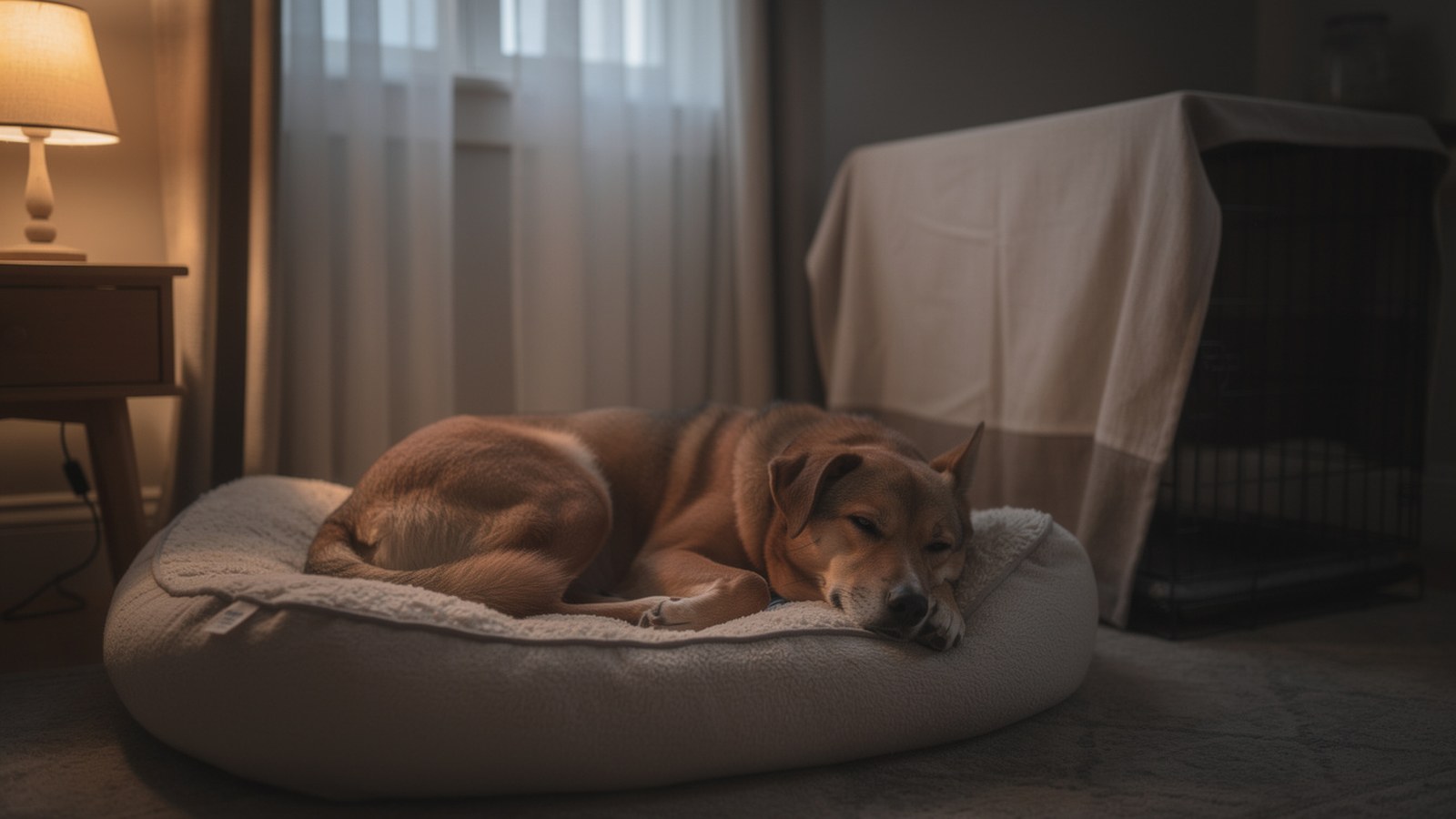
A dog scared of fireworks needs a plan before the night, not a scramble when the first bang hits. Set up a quiet den, cover sound and light, walk earlier than the displays, and keep toilet trips short on a lead. Window noise and street silhouettes on normal days live on window barking. This page owns fireworks and other loud night displays (Bonfire Night, New Year, local shows).
I am Andrew Darov, a dog trainer. I am not a veterinarian. This is a behavior page about management. Medicine questions go to your vet.
What does a before-the-night fireworks plan look like?
Build the quiet room on a calm evening. On the loud night you only run the plan you already tested.
Work these pieces in advance:
- A den. A room the dog already uses, away from the street if the layout allows. Soft bed, water, a familiar blanket. Curtains or blinds closed.
- Sound cover. TV, radio, white-noise app or a fan at a steady level. Loud enough to soften bangs, quiet enough that the dog can still rest.
- Light cover. Flashes through glass upset many dogs as much as sound. Close curtains early.
- Optional covered crate. Only if the dog already settles there. See crate cover for how to introduce fabric without trapping a panicked dog.
- Walk timing. Main walk before the usual display window. Evening toilet on lead, close to the house.
Practice the den on a quiet night so the room already means rest, not a sudden lockdown.
How do you handle the loud hours?
Stay home if the dog is scared and you can. Company beats an empty flat when bangs are rolling.
- Move into the den before the first expected bangs. Chew or stuffed food toy ready. Phone on silent if the buzz upsets the dog.
- Keep your own body calm. Soft voice, normal movement. Panic in the human often adds fuel.
- Let the dog choose contact or space. Some dogs lean in. Others hide under a table. Forced hugs can make fear worse.
- Toilet trips on lead only. Secure collar or harness, short route, straight back in. A loose dog who bolts at a bang is a real risk.
- Skip the long evening stroll. Sniff time can wait for a quieter morning.
US suburbs with driveway toilets and UK flats with a courtyard use the same rules: short, on lead, close to home.
Should you leave a scared dog alone during fireworks?
If the dog already panics at bangs, plan to be present for the loud window when you can. Alone panic can mean dug doors, chewed frames or injury. Building calm alone time on ordinary days is a separate skill on first absences. Fireworks night is a poor first test of that skill.
If you must be out, arrange a person the dog knows, or a quiet indoor setup with a sitter. Do not invent a “just ignore it” night for a dog who has historically destroyed rooms when scared.
When should you talk to your vet?
Early. Days or weeks before Bonfire Night (5 November in the UK) or New Year, not after the display has started.
Strong trembling, hiding that does not ease, toilet accidents from fear, refusal to eat, or a dog who cannot settle even in a prepared room are reasons to book a chat. Your vet may discuss behaviour support, referral, or medicine. This page does not name products or doses. Follow what your vet prescribes for that dog. General timing guidance sits on when to call the vet.
Sudden new fear in a dog who was fine last year can also be pain or hearing change. That is a vet question first.
What about training on quieter days?
Fireworks night is for management. Quieter weeks are for skills at a distance the dog can still eat: hearing a recorded boom very quietly while chewing on a mat, then stopping while the dog is still okay. Keep sessions short. If the dog freezes, leaves the food or hides, the sound was too hard. Turn it down or end the session.
Do not run those sound games during a real display. Real bangs are unpredictable and often too close. The night plan above is the safety net. Distance work belongs on calm afternoons with a volume you control.
Children in the house need a briefing too: no forcing the dog out of the den for photos, no costumes pushed into the dog’s face, sweets and wrappers off the floor. Costume evenings overlap with Halloween door traffic; keep the dog behind a gate if the latch will keep opening.
What if neighbours set fireworks off with no warning?
Keep the den ready through the whole season in places where pop displays are common. Close curtains at dusk on known firework weekends. Have the lead by the door for a quick toilet. If a bang hits while you are mid-walk, shorten the route and go home. A flat with thin windows may need heavier curtains or a room on the courtyard side.
You cannot control the street. You can control the room, the lead and whether the dog faces the glass.
What are the usual mistakes?
- Waiting until the first bang to set up the room. Build the den on a quiet evening.
- Shutting a crate the dog already hates. A trap raises fear. Use only a known rest spot.
- A long park walk during the display. Early walk, short lead toilet later.
- Leaving a known panic dog alone “to get used to it.” That often makes next year worse.
- Looking up medicine doses online. Ask your vet. Timing matters; guessing does not.
- Punishing the tremble or bark. Fear is not rudeness. Manage the night; train distance work on quieter days.
Keep this page next to window barking for everyday street noise, crate cover for den setup, and first absences for alone-time skills on ordinary days. More household problems sit on the behavior hub.
Questions on this page
What should I do if my dog is scared of fireworks?
Before the night, set up a quiet den away from street-facing windows, add sound cover (TV, radio or a fan), draw curtains, walk earlier than the bangs, and take toilet trips on a lead close to the house. Stay calm and present. If fear is strong, talk to your vet days or weeks ahead about options. This page names no products and no doses.
Should I leave my dog alone during fireworks?
If the dog is already scared, plan to be home for the loud window when you can. A panicked alone dog may dig, chew doors or hurt itself. Short absences for calm dogs are a different skill; see first absences. For fireworks night, company and a prepared room beat an empty house.
Does a covered crate help with fireworks?
Often yes, if the dog already likes the crate. A cover dulls flashes and some sound. Never shut a dog in a crate it fights on a scary night. Introduce the cover on quiet days first. Crate cover details live on the crate cover page.
When should I talk to my vet about fireworks fear?
Early, not at 8 pm on the night. Strong trembling, hiding, toilet accidents from fear, or a dog who cannot settle even in a quiet room deserve a vet conversation days or weeks before Bonfire Night or New Year. Your vet decides if medicine or other help fits that dog. Ask for a plan; do not invent doses from the internet.
Can I walk my dog during fireworks?
Prefer a walk before the loud window. If the dog must go out during bangs, use a lead or leash, a secure collar or harness, stay close to the house, and keep the trip short. A long park stroll in the middle of displays is a poor idea for a scared dog.
Work with me
A $150 consultation or $500 monthly curatorship. Opens WhatsApp to Andrew.