
Expert Advice · Puppy · 11 min read
Dog crate cover: when fabric helps or harms
Cover is a tool, not a rule. Airflow and a dog who can settle come before style.

A crate cover is fabric over a crate. It is not a personality upgrade and not a requirement for every household. Some dogs settle better when hallway traffic disappears. Some dogs need to see you. Some overheat. The working question is not “yes forever” or “never.” It is whether this dog, in this room, with this airflow, settles better with less visual input — after the crate is already a rest place.
This is a puppy management page. Sizing lives on crate size. Introduction and open-door work live on crate training. Nights live on crate training at night. Duration ceilings live on crate duration. This page owns the cover decision only. I work dogs in residential boarding for a month and longer. I am a professional trainer from Russia, not a veterinarian. See not veterinary advice.
Should you cover the crate?
Only after the crate already works without fabric.
If the puppy will not enter, eats nowhere near the crate, or screams the moment the door closes, a blanket will not teach rest. It will hide a problem. Run the open-door ladder on the main crate page first. The AKC crate-training overview walks a similar introduction-before-duration idea. This page is not a copy. It is the cover fork.
Yes, consider a cover when:
- entries are cheap and the dog rests with the door open
- visual traffic (kids, guests, street window) keeps waking a dog who can otherwise settle
- you want a den cue for nap time, not a fashion statement
No, skip or remove a cover when:
- the dog is still in protest or panic about confinement
- the room is warm and the dog pants
- fabric is chewed and swallowed
- the dog goes flat and silent in a way that looks like shut-down, not sleep
Fabric is a dimmer switch, not a trainer.
When does a cover help?
When the problem is eyes, not lungs or fear of the box.
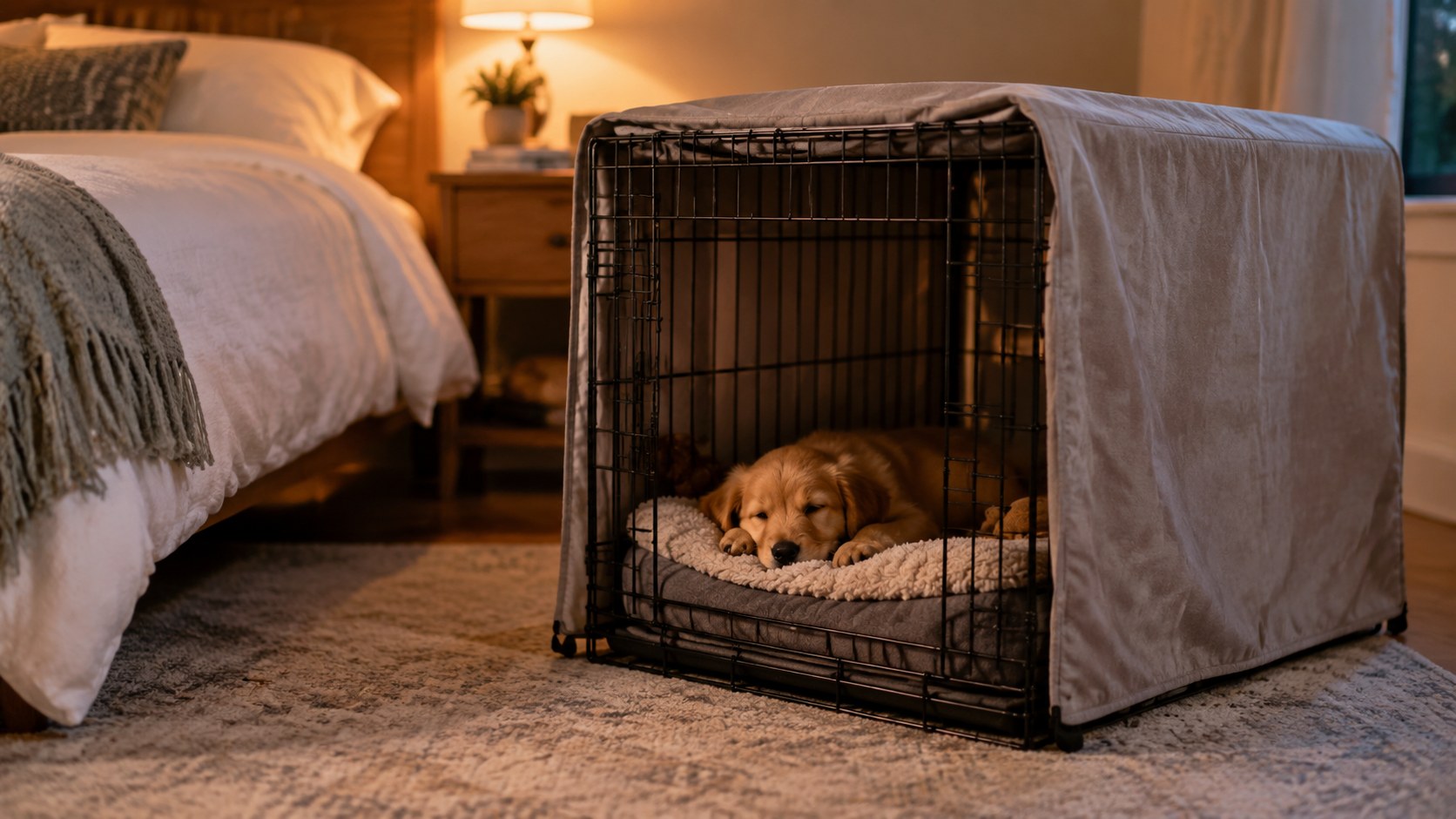
A dog who already naps in an open crate but barks every time someone walks past may need less visual rehearsal. A partial drape on the sides or top, front open, can cut that loop. You are managing input the way a gate manages guests.
US wire crates and UK flat corners use the same rule. A cover that turns the crate into a sealed hot tent in July is not help. A thin breathable panel in a busy hallway can be.
Do not cover to “make them sleep through the night” if the night protocol is wrong. Hunger, a full bladder, and a crate in a freezing hall are not fabric problems. See sleep through the night for the dry-morning criterion.
When should you avoid a cover?
Panic, heat, and chewing.
A frantic digger who only digs harder in the dark is telling you the cover raised fear, not calm. Remove it. Rebuild open-door rest. A panting dog under heavy fabric in a warm US sunroom or a stuffy UK flat needs air more than aesthetics. A puppy who eats the cover needs the fabric gone and a legal chew elsewhere — see puppy chewing furniture if the house is next.
Never use a cover to hide a puppy from guests so you can pretend the crate is fine. Guests and children belong on children and guests. The crate door policy belongs on the crate pages.
How do you introduce a cover?
Slowly, with food, on a dog who already likes the box.
- Door open. Dog enters for food or a chew without fabric.
- Drape one panel on the top or a side for thirty to sixty seconds. Feed. Remove the fabric.
- Repeat until the drape is boring. Then leave it longer while you stay in the room.
- Keep the door end open if your night or nap plan uses sight of you. Full blackout is a later raise, not a first night trick.
- Only then close the door for a nap you already know the dog can win on duration. Cover does not extend crate duration ceilings.
If the dog refuses to enter once fabric appears, you went too fast. Fabric off. Rebuild.
Is a cover a substitute for training?
No. A blanket on a wire crate is not crate training.
The American Veterinary Society of Animal Behavior positions on humane training still apply: you do not scare a dog into silence and call it rest. Reward-based introduction, management of rehearsal, and honest duration limits are the method on this site. Humane World’s public resources index is another place to read owner-facing welfare framing. Neither organisation asked for a fashion cover.
If you need paid residential work on a dog who panics in confinement, use work with me. Do not buy a darker blanket and hope.
What usually fails?
- Cover before introduction. You hid a fight. Teach open-door rest first.
- Full blackout on night one. Too many variables. Partial, then longer.
- Sealed fabric in a hot room. Airflow first. Heat is a welfare problem.
- Using cover to skip the night protocol. Wrong ladder. Use the night page.
- Ignoring chewing of the cover. Remove fabric. Prevent a foreign body.
- Calling shut-down “good quiet.” Flat and frozen is not settled. Rebuild without the drape.
Decide from the dog’s body in this room, not from a social-media crate aesthetic.
Sources
AKC crate-training overview (introduction before duration). AVSAB position statements on humane training. Humane World public resources index. Paraphrased as public standards, not quoted as a substitute for the originals. akc.org — crate training steps · avsab.org/resources/position-statements/ · humaneworld.org/en/resources
Questions on this page
Should I cover my dog’s crate?
Sometimes. A partial cover can reduce hallway traffic noise for a dog who already settles. A full blackout on a panicked puppy can make things worse. Introduce the crate first. Then add fabric slowly if visuals are the problem. Style is not a protocol.
When does a crate cover help?
When the dog eats in the crate, rests with the door open, and still wakes or barks at every passer-by. A side or top drape that leaves the front open can cut visual arousal. You are managing input, not forcing sleep with darkness alone.
When should I avoid covering the crate?
When the dog is still fighting the crate, chewing frantically, overheating, or going quiet in a shut-down way. Skip heavy covers in hot rooms. Never block airflow. Never use a cover to hide a puppy who cannot settle with the door open first.
How do I introduce a cover safely?
Door open, dog already comfortable. Drape one panel for a minute, feed, remove. Then longer. Leave the door end open so the dog can see you if that is part of your night plan. Watch panting, pawing, and refusal to enter.
Is a cover a substitute for crate training?
No. Sizing, open-door introduction, and duration live on the crate pages. A blanket on a wire box does not teach rest. If nights are the question, use the night protocol. If the body does not fit, fix size first.
Work with me
A $150 consultation or $500 monthly curatorship. Opens WhatsApp to Andrew.