
Expert Advice · Puppy · 8 min read
Potty training a puppy in winter: cold, snow and dark
Cold, snow and dark mornings make puppies rush back inside before they go. Pick a sheltered spot close to the door, clear a patch, keep trips short and calm, light the way and help small or thin-coated puppies stay warm.
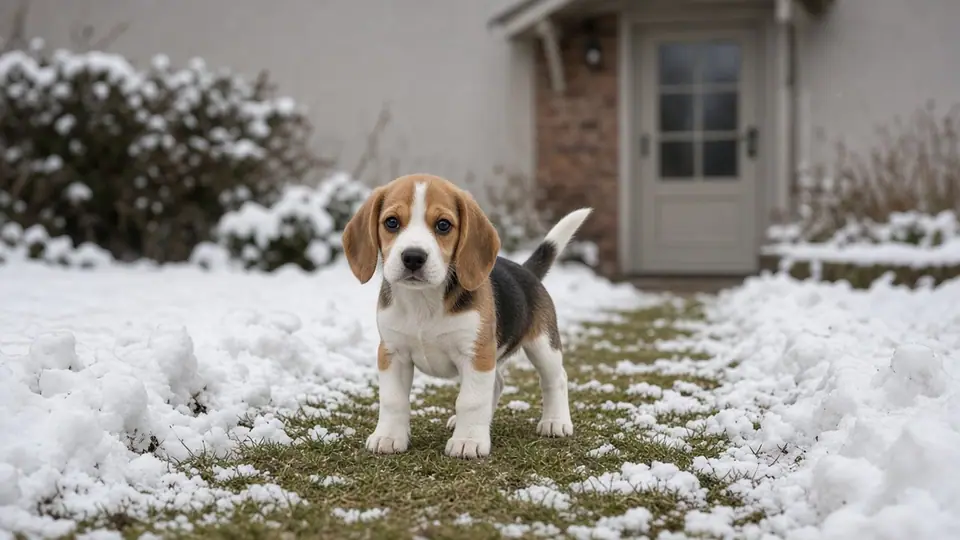
Potty training a puppy in winter works with the same plan as in summer, but the cold, snow and dark make puppies hurry back inside before they finish. Choose a sheltered spot close to the door, clear a patch in the snow, keep trips short and calm, light the way on dark mornings, and help small puppies stay warm. Wet weather in a flat has its own page, rain potty for flats; this page covers cold, snow and dark.
I am Andrew Darov, a dog trainer. I am not a veterinarian. This is a puppy page about toilet training in cold weather.
Why is potty training harder in winter?
A cold puppy wants to get back inside. It often pees a little, turns for the door and finishes on your kitchen floor.
In summer a puppy wanders, sniffs and settles into the job. In winter the ground is cold or wet, snow covers the smells it uses to choose a spot, the wind is loud, and early mornings are dark. Small and young puppies lose heat fast. So the trip gets shorter and the puppy comes in half empty.
The basics do not change: the puppy still needs regular trips after sleep, food and play, as on how often do puppies need to pee. What changes is how easy you make each trip.
How do you set up a winter toilet spot?
Pick a spot a few steps from the door, not at the far end of the garden or yard. Look for shelter: under an overhang, beside a wall, behind a hedge or a fence that blocks the wind. In a flat without a garden, choose the nearest patch of grass or ground outside the building and use the same one every time.
Clear a small patch down to grass or ground after each snowfall. Keep it the same patch. The smell of the last trip tells the puppy this is the place. Some owners lay a little straw or bark at the spot; grass or ground is enough for most puppies.
How do you run a winter toilet trip?
- Pick a sheltered spot. A few steps from the door, out of the wind, on the same patch each time.
- Clear a patch. Shovel or sweep a small area down to grass or ground and keep it open all winter.
- Keep trips short and quiet. Carry a young puppy or lead it straight to the patch. Stand still, wait three to five minutes and say nothing. Talking and walking about turn the trip into a game.
- Reward at once. Have a treat in your pocket and reward the moment the puppy finishes. Then go back in quickly. A warm return is part of the reward.
- Light and warm the trip. Turn on a porch light or wear a head torch on dark mornings. Small, short-coated or very young puppies may need a well-fitted coat.
If nothing happens after five minutes, go back inside, keep the puppy close or in its crate for ten to fifteen minutes, then try again. Do not leave a puppy that just came in from a failed trip free in the house.
What about dark mornings and evenings?
In late autumn and winter, the first trip of the day and the last trip at night are both in the dark. A puppy that cannot see the patch may stand at the door or rush. Keep the route the same, light it, and lead the puppy on a short lead so it goes straight to the spot. If the clocks have just changed, move the puppy’s toilet times in small steps, as on the daylight saving time puppy schedule.
Should you use a coat or boots?
A coat helps some puppies: small breeds, short or thin coats, very young puppies and lean dogs. Look for a coat that covers the back and chest, does not rub under the front legs and leaves the belly area clear for toileting. Let the puppy wear it for a minute indoors with treats before the first trip. Boots are harder for puppies to accept and are rarely needed for a short toilet trip. Wipe paws when you come back in if the path has been gritted or salted.
If your puppy shivers hard, lifts its paws, limps or seems unwell after short trips in the cold, ask your vet. See when to call the vet.
Is it time to go back to puppy pads?
Usually not. A few weeks of pads in winter teach the puppy that indoors is fine, and then you start again in spring. If you used indoor pads before, the move outside is on indoor toilet to outdoor. Keep pads only as a planned indoor spot, not as a quick fix for cold weeks.
What are the usual mistakes?
- A toilet spot at the far end of the garden. The puppy is cold before it gets there.
- Deep fresh snow on the spot. Many puppies will not squat on it at first.
- Letting the puppy run straight back in. It comes in half empty and finishes indoors.
- Long chats and games on the patch. Play comes after the pee, not before.
- Punishing an indoor accident. It teaches the puppy to hide, not to wait. Clean it with an enzyme cleaner and plan the next trip better.
Winter toilet training is the normal plan with a closer, sheltered, cleared spot and quicker trips. Start with the potty training basics, check how often puppies need to pee for your puppy’s age, and use rain potty for flats for wet weeks. More on the puppy hub.
Questions on this page
How do I potty train a puppy in winter?
Use the same plan as in summer, with fewer barriers: a toilet spot close to the door and out of the wind, a cleared patch of grass or ground, short trips on lead, a quiet wait, and a reward the moment the puppy finishes.
How long should a puppy stay outside in the cold to pee?
Give it three to five minutes in a sheltered spot. If nothing happens, go back in, keep the puppy close or in its crate for ten to fifteen minutes, then try again.
My puppy refuses to pee on snow. What should I do?
Clear a small patch down to grass or ground and keep it cleared. Many puppies will not squat on deep or fresh snow at first, but they will use a familiar patch that smells like the last trip.
Does my puppy need a coat for toilet trips?
Small, short-coated, thin or very young puppies often get cold fast and rush the trip. A well-fitted coat can help. If your puppy shivers a lot, lifts its paws or seems unwell in the cold, ask your vet.
Should I switch to puppy pads for the winter?
Usually not. Moving the toilet indoors for a few months and then back outside sets training back. Make the outdoor trip easier instead, and use pads only if you already planned an indoor spot.
Work with me
A $150 consultation or $500 monthly curatorship. Opens WhatsApp to Andrew.