Pharaoh Hound: temperament, lure coursing and realistic recall for the Maltese sighthound
The Pharaoh Hound is a lean, red, large-eared Mediterranean hunting dog and the national dog of Malta, where it is called Kelb tal-Fenek, the rabbit dog. It hunts by sight and scent, uses its big ears when working close and chases at real speed, and once it locks on to something running it can be gone in seconds. At home you usually get a playful, gentle, clownish dog that loves soft beds and its own people. The fair plan is safe places to run, lure coursing or other chase games with clear rules, realistic recall expectations and a warm coat for cold days.
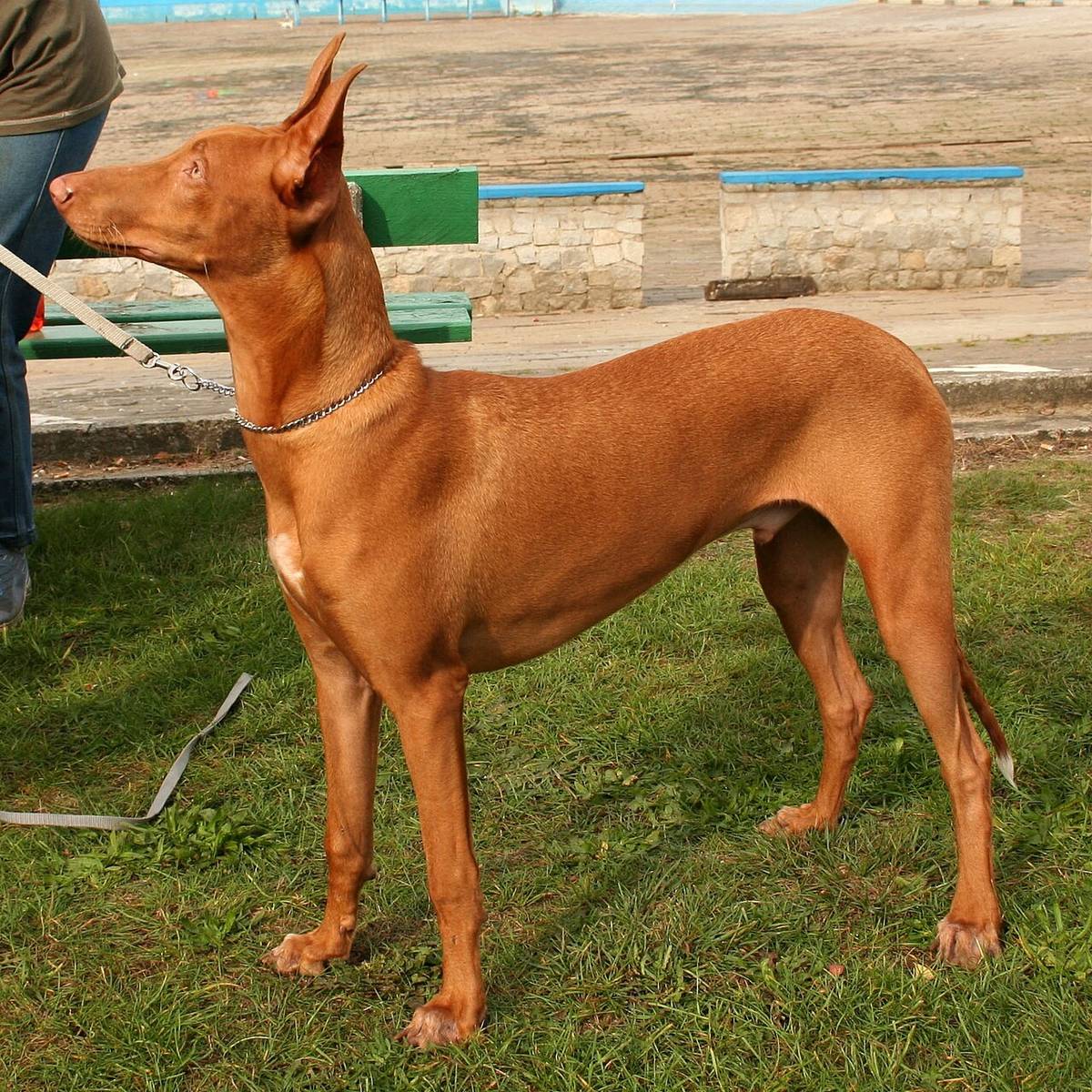
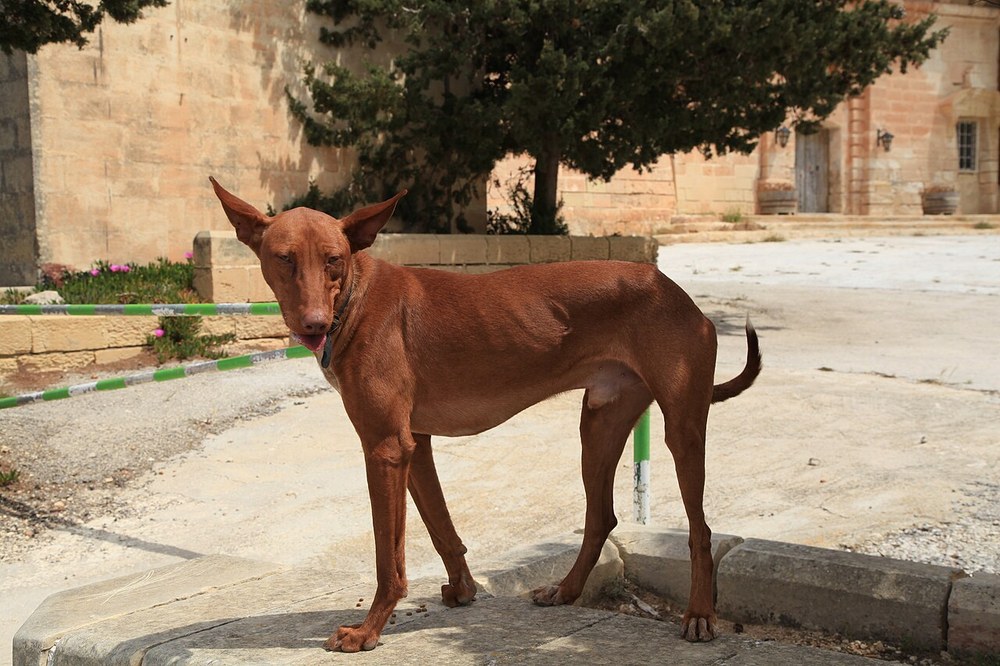
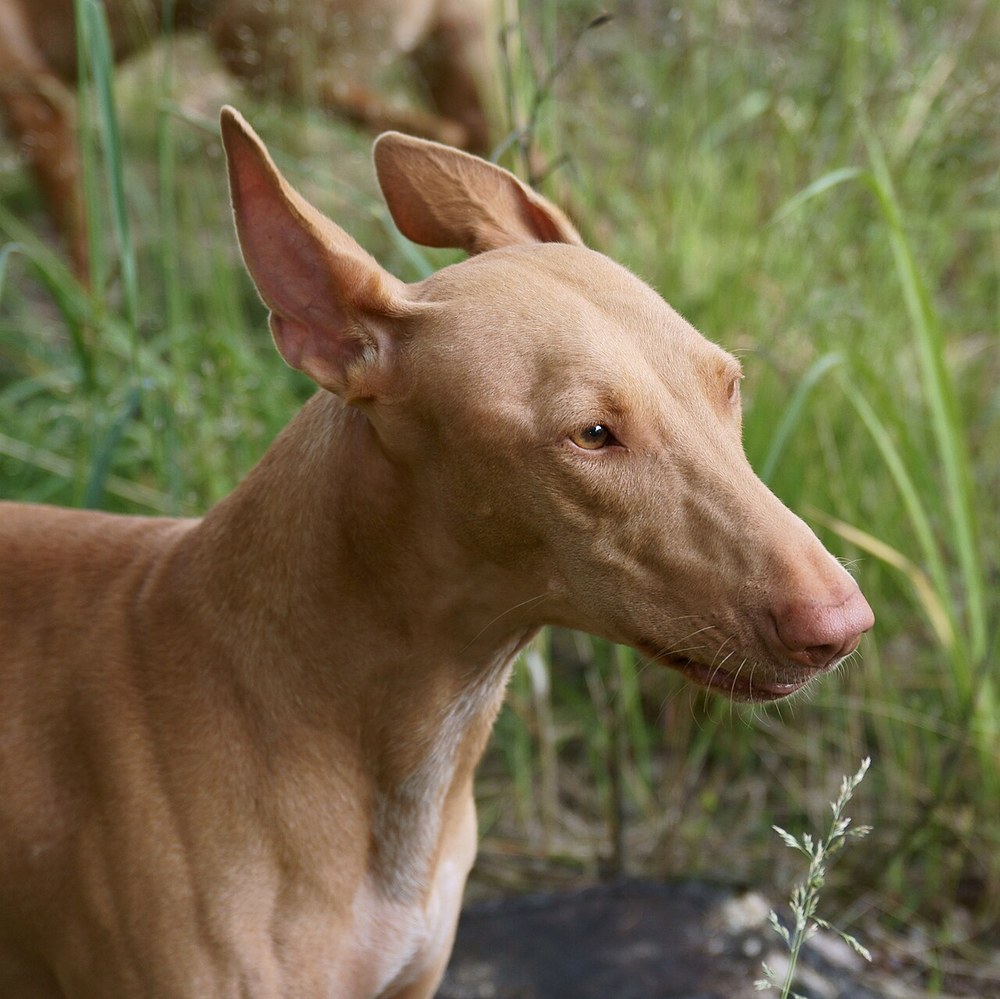
Job: Lean Maltese sighthound-type hunter; short red coat; famous for blushing ears and nose when excited.
Energy: Fast and keen to chase; recall around running animals is never a sure thing.
Home: Fits an active household with secure fences, safe running spots and patience for gentle training.
A Pharaoh Hound looks like an Egyptian statue. It lives like a Maltese rabbit hunter
The name suggests ancient Egypt, and that legend is part of the breed’s charm. Modern breed histories tie the dog to Malta and Gozo, where farmers kept it to hunt rabbits over rocky ground, often at night and often with ferrets. It is a working hunter that uses eyes, nose and ears together, and it runs and jumps with real power.
What I meet in family homes is usually a friendly, funny, sensitive dog that is calm indoors once it has run. The sharp edges are a chase reflex that switches off hearing, a dog that can clear a low fence, cats and small pets seen as moving targets, and a thin coat that hates cold rain. None of that is a “bad dog”. All of it is predictable when a Pharaoh Hound is sold as an easy, decorative couch dog.
My structure is simple. Safe running several times a week. A recall plan that respects the chase reflex. And settle skills so the dog can rest calmly at home.
Short, fine and glossy; tan to rich red, small white marks allowed
Job
Maltese rabbit hunter / sighthound-type (FCI Group 5, Spitz and primitive types; AKC Hound; RKC Hound)
Breed history
How a Maltese rabbit dog became a modern sport and family hound
History will not tire your dog for you, but it helps explain why Pharaoh Hounds are fast, keen on movement and rarely reliable off lead near wildlife.
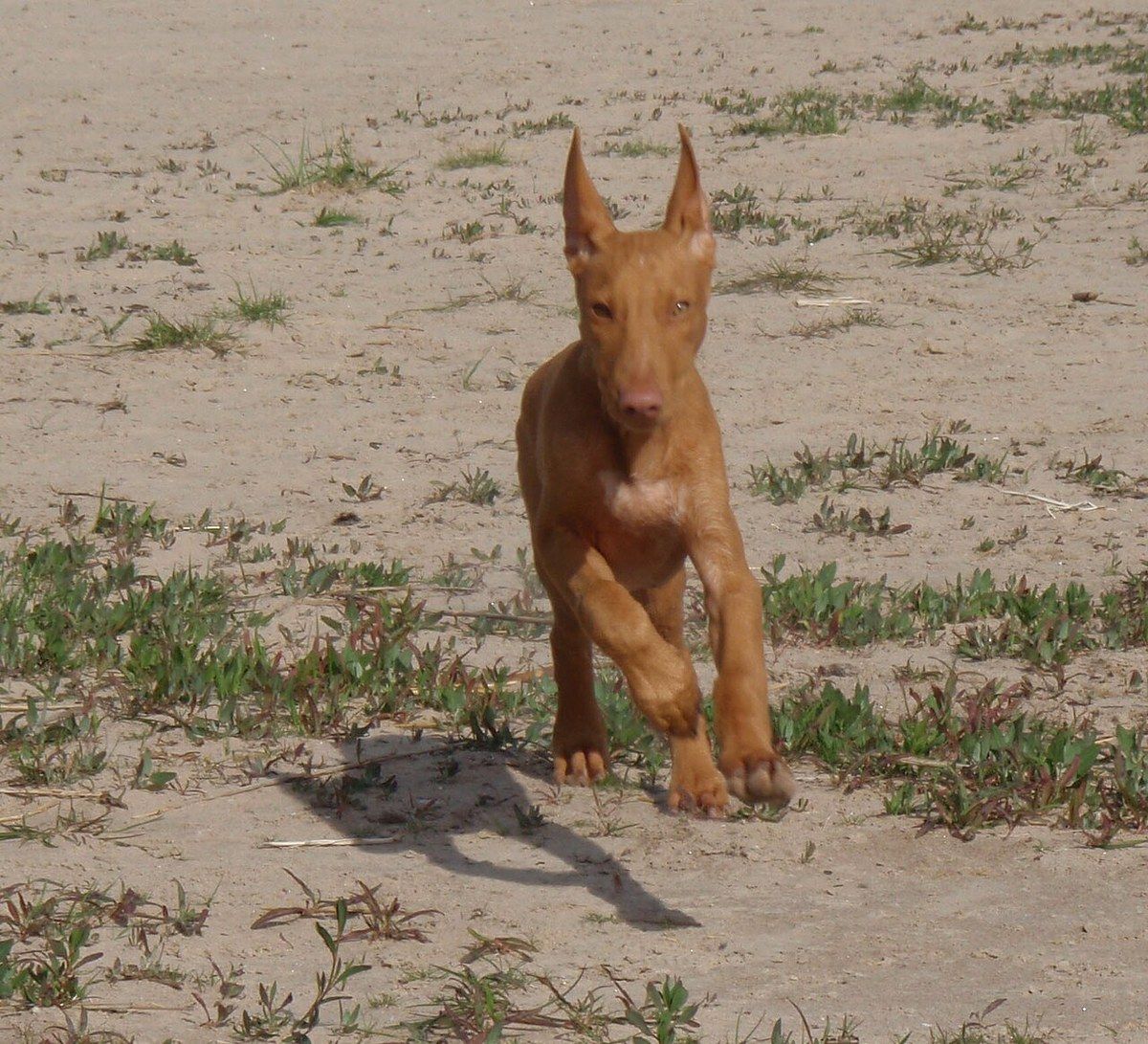
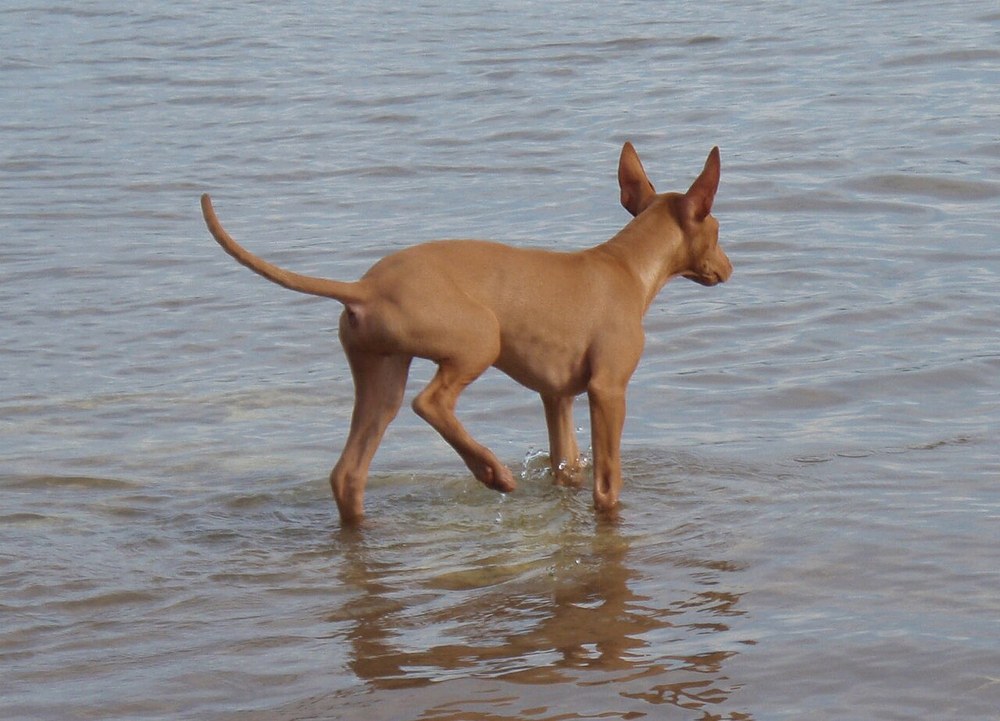
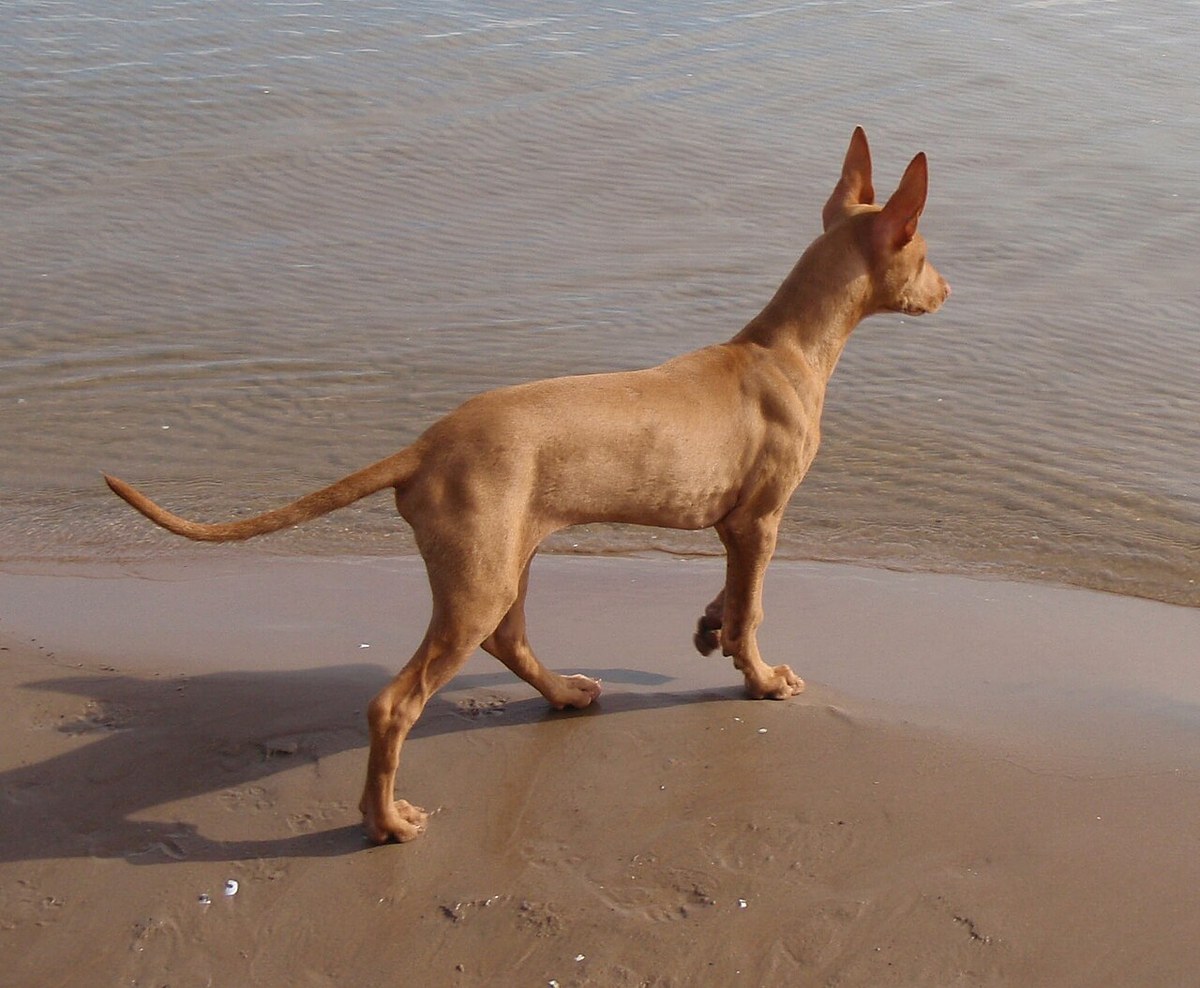
A Pharaoh Hound on the move across sand. Safe, fenced running and lure coursing suit the chase brain.
Malta and Gozo → island rabbit hunters
Bred to hunt rabbits on rocky ground
Public accounts describe Maltese hunters using these dogs to find and catch rabbits among stone walls and rough fields. The dog had to spot movement, hear small sounds and react in a split second. That is why speed, agility and a strong chase reflex were kept.
What matters for an owner is that the Pharaoh Hound is still a hunter. Training should respect that drive — or the dog will find its own running game at the worst moment.
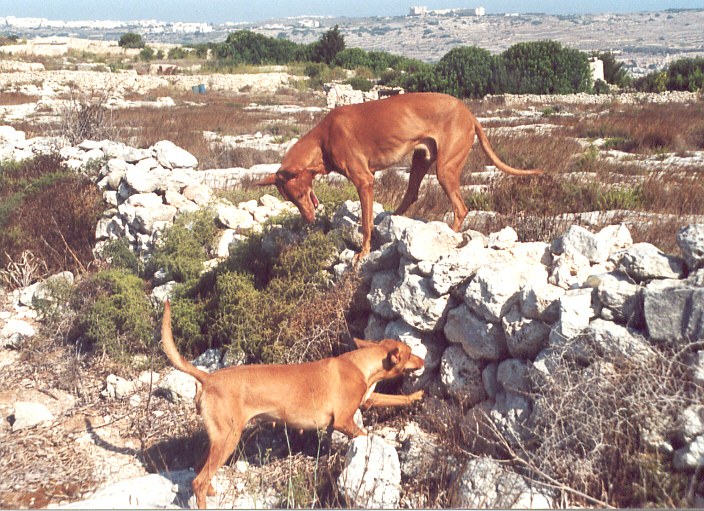
Pharaoh Hounds (Kelb tal-Fenek) working rocky ground in Malta, the kind of country the breed was kept for.
The national dog of Malta
From island fields to show rings and lure coursing
Malta treats the Kelb tal-Fenek as its national dog. Outside the islands the breed became known as the Pharaoh Hound and is now kept by small numbers of dedicated owners in Europe and North America.
Most Pharaoh Hounds now live as family dogs with lure coursing, racing or training hobbies. They still carry a strong chase reflex, a light frame and a short coat that needs care in cold weather.
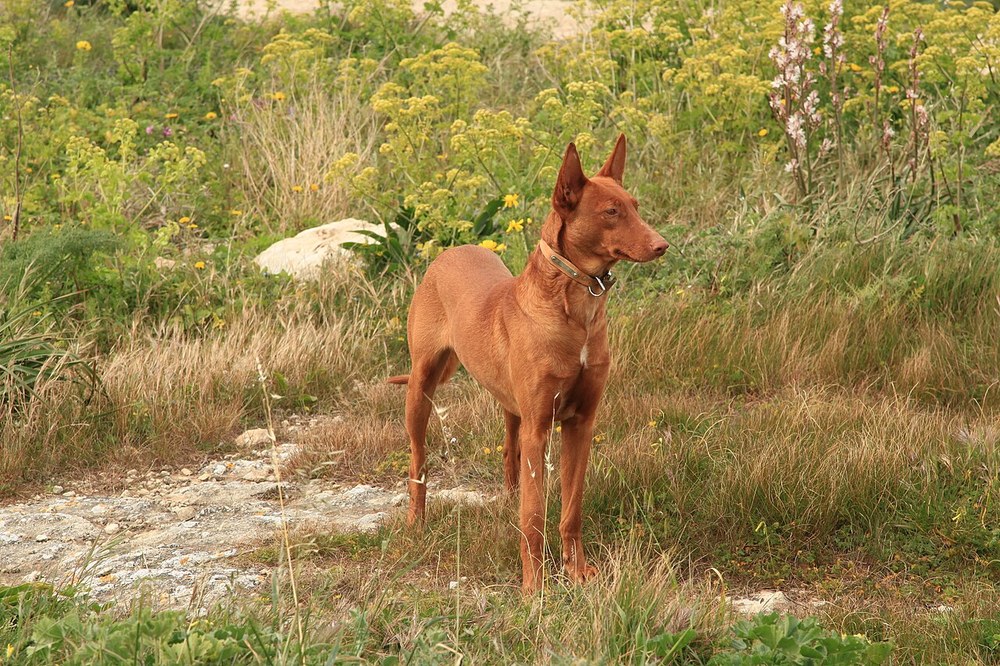
A Pharaoh Hound in an open Maltese field. Wide spaces look inviting, but recall near rabbits needs a long line.
What the breed was bred for
Gentle, playful and quick to react
In trainer terms you get a dog with a strong reaction to movement, a soft and sensitive nature and a sense of humour. It learns well with food, play and short sessions, and it shuts down with harsh handling.
Because the dog is calm and elegant indoors, many owners trust the recall too early. That is how you get a dog running across a road after a cat.
A good day is a safe run, a short training game, a warm bed and a lead near wildlife
Most Pharaoh Hounds are happiest with a real chance to run and a calm home. The friction points are usually a chase that starts before you see the rabbit, low fences and cold weather. Routines done the same way every day help the dog feel safe and cooperate more.
Morning · walk
Lead or long line on open ground
Walk on a well-fitted harness and lead in town, and use a long line in open fields. A sighthound can spot a cat far ahead before you do. Free running belongs in fenced areas.
Plan safe sprints in a fenced field, lure coursing or a secure beach. A short walk on lead does not replace a real run. After running, most Pharaohs are happy to rest.
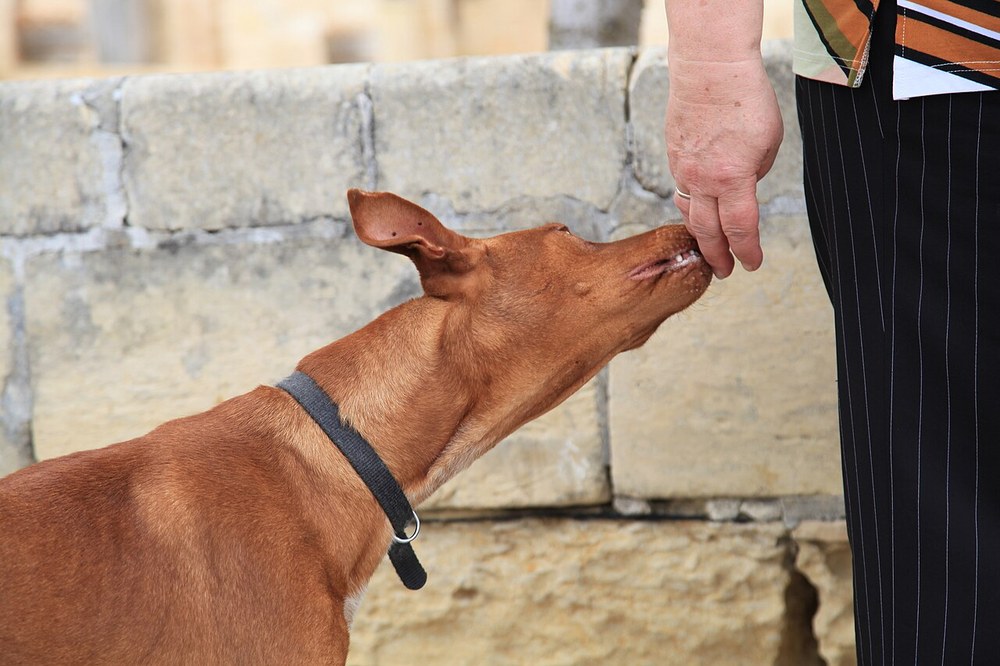
Many Pharaohs are warm with their family and a little reserved with strangers. Let them approach, ask guests to offer a treat rather than grab, and teach sit for greeting.
The short coat needs little brushing, but the skin is thin and nicks show. Check after runs through scrub. Reward calm standing for feet and nails, and use a coat in cold, wet weather.
General awareness only. I am not a veterinarian. With Pharaoh Hounds, owners often notice trouble first as cuts or limping after running, shivering in cold weather, weight loss or gain, ear smell or eye changes. For red flags, leave this page and open
when to call the vet.
Running and joints
Warm up before sprints and keep surfaces safe. Limping needs a vet. See limping stop list.
Skin and coat
Thin skin cuts easily on scrub and fences. Deep cuts or swelling need a vet.
Cold weather
Short coat, little body fat. Use a dog coat in cold rain and keep a warm bed.
Weight
A lean sighthound outline is normal, but ribs should not stick out. See BCS check at home.
Vet visits
Tell your vet the breed at every visit so care can be planned with a lean sighthound type in mind.
Ask the breeder
Ask which screenings the national breed club recommends for the parents. Do not invent disease claims from a blog.
Lines and types
Family and coursing Pharaoh Hounds share the same need for safe running and a gentle hand
No bloodline selling. Differences show in how intense the chase reflex is, how reserved the dog is with strangers and how much running it needs. Every Pharaoh Hound needs safe runs, a long line in open spaces and kind training. Do not confuse this Maltese hunter with a Basenji or Ibizan copy-paste — size, voice and jumping power differ.
Family companion homes
Calm and playful indoors after real exercise.
Still a hunter: cats and small pets need careful planning.
Fences must be high and solid; many can jump.
Ask how the parents behave with strangers and in new places.
Fits an active family with a secure garden that will give safe running every week.
Lure coursing and sport homes
Many love lure coursing and straight racing.
Fast and agile; warm up and cool down.
Need rest days and sensible volume.
Harsh corrections usually damage trust fast.
Fits an owner who wants to run the dog safely and train with patience, not only photos.
Socialization windows
What to introduce — and what not to overload — by age
AVSAB-aligned in spirit: short, clean exposures at a distance the puppy can still eat,
with hygiene while vaccines finish. See the
puppy socialization schedule.
2–4 months
Home, soft mouth and rules
Introduce: name game, early recall on a line, sit for greeting, toilet plan, short outings.
Do not overload: letting the puppy chase cats, skipping alone-time steps, free running in open fields.
~6 months
The world at a distance
Introduce: moving things at a distance where the puppy can still think, harness practice, guest manners.
Do not overload: forcing greetings, long boring drills, trusting recall without a line.
~12 months
Teenage speed
Introduce: long line work, recall away from mild movement, settle after running, alone-time ladder.
Do not overload: dropping the line because the dog seems good, low fences, harsh corrections.
~18–24 months
Social maturity
Introduce: steady settle after runs, calm greetings, lure coursing basics if you want sport.
Do not overload: assuming recall works near wildlife, adding a cat without a plan.
~3 years+
Keep the structure
Introduce: refresh recall on a line, keep safe runs, yearly health checks.
Do not overload: dropping management because the dog has been good for a while.
Before you buy
Who a Pharaoh Hound usually fits
Fit comes down to chase drive, fences, cold weather and a clear look at whether you accept a dog that may not come back near running animals.
Good match
More likely a good fit if you…
You want a lean, elegant and playful hunting dog
You have secure, high fences and a safe place to run
You accept a long line in open spaces for life if needed
You enjoy gentle, reward-based training
You will use a coat and a warm bed in cold weather
Mismatch risk
A Pharaoh Hound may be a poor choice if…
You want a dog that runs free off lead anywhere
You have a low fence or an open garden
You keep small pets the dog cannot be kept apart from
You prefer firm, correction-based training
You want a tough dog for cold, wet outdoor living
If you are torn between breeds
Pharaoh Hound vs Ibizan Hound and Basenji
All three are lean Mediterranean or African hunting dogs with large upright ears and a strong chase reflex. The Pharaoh Hound is a medium-large red Maltese rabbit hunter. The Ibizan Hound is taller, often red and white, from the Balearic Islands, and comes in smooth and wire coats. The Basenji is much smaller, yodels instead of barking and often has a more independent, cat-like style.
Size
Pharaoh Hound
Medium-large; often about 21–25 in.
Ibizan Hound
Taller and longer-legged; often 22–28 in.
Coat
Pharaoh Hound
Short red coat; small white marks.
Ibizan Hound
Smooth or wire; red, white or red and white.
Origin
Pharaoh Hound
Malta and Gozo rabbit hunting.
Both compares
Balearic Islands (Ibizan) and Central Africa (Basenji).
Voice
Pharaoh Hound
Can bark and be vocal when excited.
Basenji
Does not bark the usual way; yodels and howls.
Home fit
Pharaoh Hound
Active home with high fences and safe runs.
Both compares
Also strong chasers; the Basenji is smaller, the Ibizan jumps even higher.
Ownership without surprises
Where a Pharaoh Hound owner’s budget goes
Costs depend on country, city and your choices. These are themes to plan for, not quotes.
Veterinary
Routine care and a vet who knows sighthound types. Know your emergency clinic.
Fencing
High, solid fences are often the biggest one-off cost.
Training
Puppy class and private help with recall or alone time if needed.
Gear
Harness, long line, soft bed and a coat for cold, wet weather.
Sport
Lure coursing club fees or rented fenced fields for safe runs.
Time
Safe runs and recall practice are the real recurring cost.
The biggest hidden cost is time and fencing: a safe place to run beats a frustrated hound looking for its own.
Before day one at home
What to prepare for a Pharaoh Hound puppy
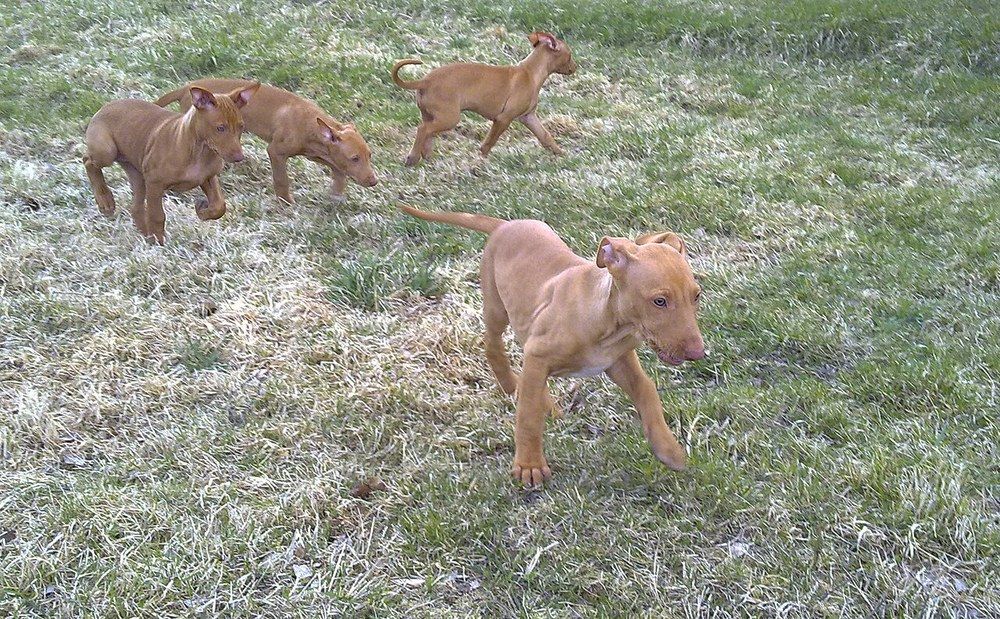
A Pharaoh Hound puppy is curious, playful and already watching anything that moves. Prepare a long line, a safe garden and gentle training before day one so the chase reflex grows into safe games rather than a lost dog.
01
Set house rules
Decide where the puppy sleeps, how greetings work and where it can run safely.
02
Soft mouth early
Reward gentle play and pause games when teeth touch skin. See biting and nipping.
03
Recall on a line
Start the recall game at home and on a long line. See recall ladder.
04
Leave it
Teach leave-it with food first, then with toys that move. See leave it.
Out after sleep, meals and play. Many dislike rain, so go out with them. See potty training.
If the dog is already yours
Training a Pharaoh Hound means safe running, a realistic recall and a gentle hand
Pharaohs do best with clear, kind rules: leave-it with moving toys, recall on a long line, sit for greeting, place on its own bed and settle after running. Every family member uses the same cues and rewards the same behaviours.
They are food-keen and play-keen when sessions are short and fun. Harsh corrections shut a sensitive hound down fast. Five minutes of a good game works better than half an hour of drills.
Management is part of training: a long line in open spaces, high fences, a gate between the dog and the cat, and running in fenced areas. Recall near running animals may never be fully reliable, and that is normal for the type.
Load balance
Run first — then ask for calm
Age, joints and weather all matter. Limping, shivering that does not stop, or sudden irritability need a vet check before more training.
Lead walk with sniffingFenced run or lure gameRecall on a long linePlace with a chewQuiet rest on a soft bed
Fenced sprints, lure coursing and short recall games all count. A walk on lead alone rarely meets the need of a dog built to run.
A Pharaoh Hound that has had a safe run, a recall game on a line and a soft bed can rest calmly instead of looking for its own chase.
A recall that respects the chase
How to build a Pharaoh Hound recall on a long line
Start at home, move to a long line, reward every return with a big reward, add mild movement step by step and keep the line on where wildlife lives.
01
Start at home
Call the name once, reward a return with something the dog loves. Keep it a game.
02
Add a long line
Clip on a long line outdoors and repeat the game in quiet places.
03
Reward big
Every return gets a big reward or a short chase game with a toy.
04
Add mild movement
Practise while a toy rolls or a person walks past at a distance. Step back if the dog cannot respond.
05
Keep the line where wildlife lives
Use free running only in fenced areas; keep the line on where rabbits, cats or deer may appear.
One scene close-up
Why a Pharaoh Hound does not come back when it sees movement
Many Pharaohs learned that the chase is the best reward in the world: a cat ran, the dog ran, nobody could stop it. That is the hunting instinct working as it was bred to.
Manage first: long line in open spaces, fenced areas for free running, and a safe chase game such as a flirt pole or lure coursing so the need has a place. Then rebuild recall with small steps and big rewards.
If your dog gets loose often or seems stressed, get help from a qualified professional.
“With a Pharaoh Hound, I start by giving the dog a safe place to run and a realistic picture of what recall can do. Once the hound has real running, a long line plan and a soft bed, the Pharaoh becomes a gentle, funny companion — not a dog that is always looking for the next chase.”
Sessions cover real scenes: recall near movement, cats at home, alone time, settle and greetings. I am a trainer, not a veterinarian.
Andrew DarovProfessional dog trainer and instructor
It can suit a calm, active first-time owner who has high fences and accepts a long line. It is not a dog for free off-lead walks.
Is the Pharaoh Hound a sighthound?+
It hunts by sight and scent and uses its ears a lot when working close. It runs in lure coursing, and in practice owners should plan for a sighthound-style chase reflex.
Pharaoh Hound vs Ibizan Hound: what is the difference?+
The Ibizan is taller, often red and white, comes in smooth and wire coats and is famous for jumping. The Pharaoh is red, a little smaller and from Malta.
Pharaoh Hound vs Basenji: which fits better?+
The Basenji is smaller, yodels instead of barking and is often more independent. The Pharaoh is bigger, playful and needs more running space.
Can a Pharaoh Hound be off lead?+
Only in safe, fenced areas for most dogs. Recall near running animals is rarely reliable in this type.
How much exercise does a Pharaoh Hound need?+
Daily walks plus real running in a safe area several times a week. Many are calm indoors once they have run.
Are Pharaoh Hounds good with cats?+
Some live with a cat they grew up with, but outdoor cats and small pets are often seen as prey. Plan with gates and supervision.
Why do Pharaoh Hounds blush?+
Their nose and ear edges can turn a deeper pink when they are excited. It is a well-known breed trait.
Do Pharaoh Hounds feel the cold?+
Yes. The coat is short and thin. Use a coat in cold, wet weather and give a warm bed.
What health themes should I ask about?+
Ask breeders which screenings the national breed club recommends, and tell your vet the breed. This is general awareness, not a diagnosis.
How long do Pharaoh Hounds live?+
Public breed references often mention about 12–14 years. Individual dogs vary.
What fence does a Pharaoh Hound need?+
A high, solid fence with no gaps. Many can jump a low fence from a standstill.
If a Pharaoh Hound seems too fast or too chase-driven for your home
It is gentle indoors, but the chase reflex, jumping and cold sensitivity do not fit every household.
A tall Balearic rabbit hunter and a famous jumper. Needs safe running, tall fences, a long line in open spaces and gentle training — not a free off-lead park dog.
A sleek, short-coated hunting dog from Thailand with a ridge along its back. Loyal, clean and quiet at home; independent, wary of strangers and quick to chase.
Training problems Pharaoh Hound owners ask about
Step-by-step guides for the issues that come up most with this kind of dog.
Dog begging at the table? Stop all food from plates, give your dog a mat and a long chew during meals, brief kids and guests, and expect a short spike.
Why an adult dog barks at night: alerting, a toilet need or boredom, and what to do for each. A sudden change in an older dog calls for a vet visit.
Need a read on your exact situation?
Tell me your Pharaoh Hound’s age and the scene that keeps repeating: recall, cats, alone time or settle trouble. We check safety and health first, then pick the first skill.