Expert Advice · Behavior · 9 min read
Dog begging at the table: calm mealtime manners
Begging lasts because food sometimes falls. Close the table, give the dog a mat and a chew, and get every person at the table on the same rule.

Dog begging at the table keeps going because it works now and then: a crust from a child, a chip from a guest, a hand that drifts down under the table. The fix is to close the table completely and give the dog something better to do during meals: a mat a few steps away and a long chew. Cooking is a different job, with the stove, smells and a moving cook; that lives on place during cooking. This page owns the meal itself, when people are sitting down to eat.
I am Andrew Darov, a dog trainer. I am not a veterinarian. This is a behavior page about manners and house rules.
Why do dogs beg at the table?
One dropped crust a week is enough to keep a dog staring at every meal. Close the table, then give the dog a better seat.
A dog does not need food every time to keep trying. It needs food sometimes. That is the same reason people keep checking a phone or pulling a slot machine lever: a reward that comes now and then, without warning, keeps the behaviour going longer than one that comes every time.
Common ways the table keeps giving:
- a child who slips food under the table
- a guest who “just this once” hands over a bit of meat
- plates on a low coffee table while people watch TV
- food that falls and nobody picks it up quickly
- an owner who feeds the dog at the end of the meal, straight from the plate
So begging is not greed or bad character. It is a habit that has been rewarded. Staring, a paw on a knee, a chin on the lap, a soft whine and pacing around chairs are all versions of the same thing.
How do you stop a dog begging at the table?
Two jobs at once: make the table give nothing, and make the mat give something.
- Agree the rule before the next meal. Nobody feeds the dog from the table, plates, forks or hands. Not at breakfast, not at a party, not on holidays.
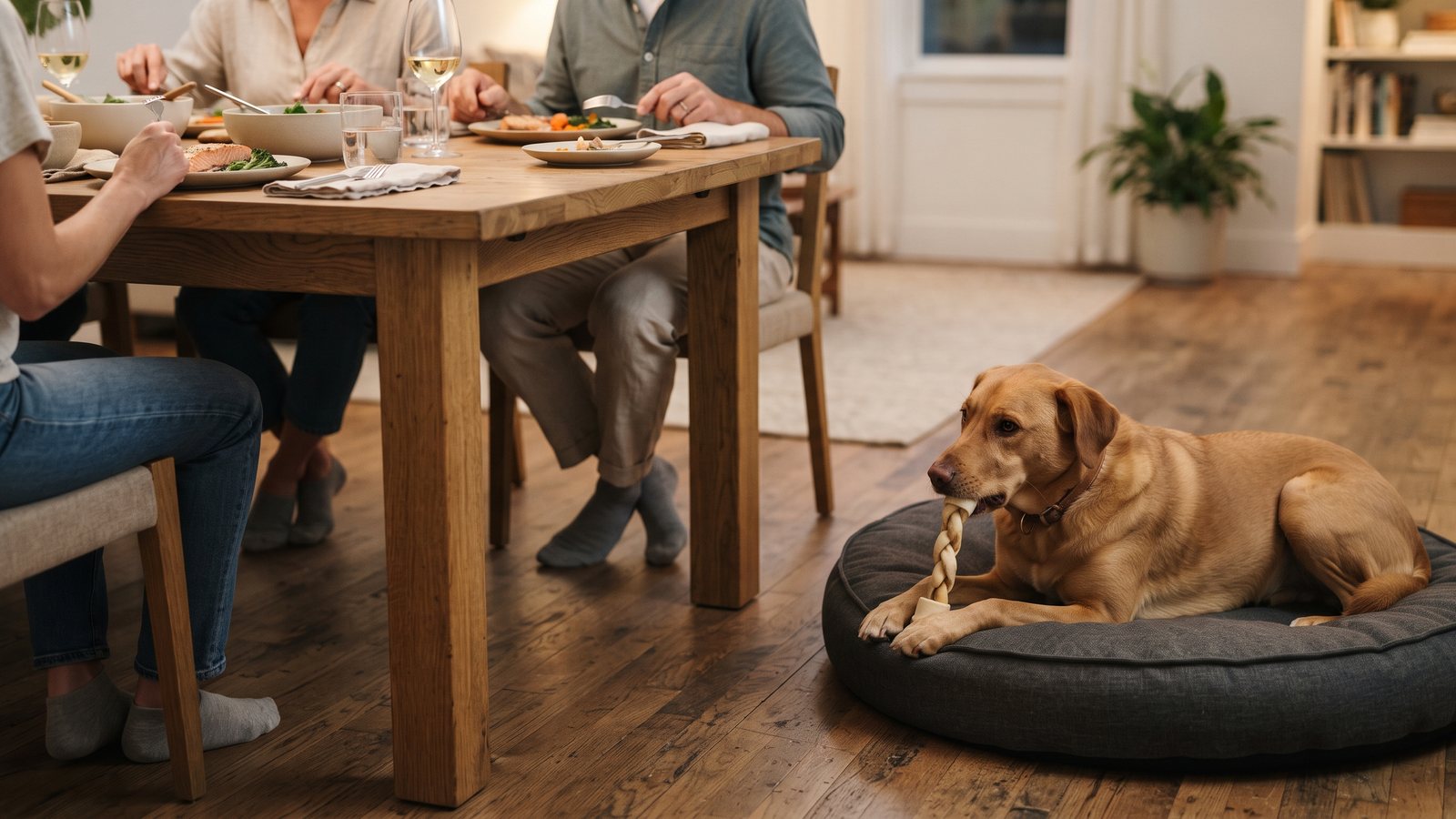
- Set up the mat. A bed or mat a few steps from the table, where the dog can still see you. Many dogs settle better near the family than shut away.
- Give a long chew or food toy before you sit down. A safe chew or a stuffed food toy gives the dog something to do for the length of the meal. Use part of the dog’s daily food if weight is a concern.
- Reward the mat in the first week. Every minute or two, while the dog stays there, one adult quietly gets up and drops a piece of the dog’s own food on the mat. Over the weeks, stretch the gaps until the chew alone does the job.
- Calm reset if the dog leaves the mat. No telling off and no food. Stand up, lead the dog back, wait a moment, then sit down again. If it happens again, use the gate or lead from the next section.
If your dog does not know how to stay on a mat yet, teach place first in a quiet room, then bring it to the table. A dog that already goes to a mat for cooking will usually find this easier.
What if the dog cannot stay on the mat yet?
Use management so begging cannot be practised while the new habit is weak.
- Baby gate. The dog is in the next room or behind a gate in the doorway with its chew.
- Lead or leash. Clip the dog to something heavy and safe near the mat, long enough to lie down comfortably, short enough that it cannot reach the chairs. Stay in the room.
- Crate or pen. Only if the dog already likes it. A meal is not the time to start crate training.
Management is not a punishment. It simply stops the dog getting practice at begging while you teach the mat.
Why does begging get worse before it gets better?
When a behaviour that used to work stops working, many dogs try harder for a while. More staring, a louder whine, a paw on a knee, a quick bark. This short spike is common and expected. You can read more about it in extinction bursts at the door, which shows the same pattern with door noise.
The danger is giving in at the peak. If a guest hands over food after the third whine, the dog learns that whining three times works. Hold the line for a week or two and the spike fades.
How do you handle guests and children?
Guests. Brief them before you sit down, in one line: “He doesn’t get food from the table, so please ignore the staring.” Most people are happy to help when they know the rule. If you cannot trust a guest, the dog has its chew behind a gate for that meal. That is kinder than a dog who learns to work the room.
Children. Children drop food and love to share. Give them simple rules: food stays on the plate, hands stay above the table, and the dog is never fed from a chair. An adult watches the dog, not just the child. For mealtime setups with kids, gates and separate eating spots, see kids and food zones.
Bowls. If the dog eats its own meal at the same time as the family, a calm bowl routine helps. Food bowl manners covers putting the bowl down and picking it up without a scramble.
What about leftovers and dropped food?
Some human foods are unsafe for dogs. This page does not list foods or amounts. If you want to share safe scraps, put them in the dog’s own bowl later, in the dog’s eating spot, never from the table or your plate. Food that falls is picked up by a person, quickly.
If your dog grabs something from a plate and you are worried about what it ate, call your vet straight away. Do not wait to see. When to call the vet has the general guidance.
What are the usual mistakes?
- “Just this once.” One handout keeps the habit alive for weeks.
- One person in the house still feeds. The dog will sit next to that person every meal.
- No mat and no chew. Taking away the table without giving anything back leaves a bored dog.
- Telling off at the table. Shouting is still attention, and it makes meals tense.
- Giving in at the loudest moment. That teaches the dog to be louder.
- Plates on a low coffee table. Sofa meals need the same rule, or a gate.
Keep this page next to place during cooking for the kitchen while food is being made, place for the mat skill itself, and kids and food zones for family setups. More household problems are on the behavior hub.
Questions on this page
Why does my dog beg at the table?
Because it has worked, even rarely. One crust from a child, one chip from a guest, one plate left on a low coffee table is enough. Food that arrives now and then keeps a dog trying harder than food that arrives every time. Begging is a learned habit, not greed or bad character.
How do I stop my dog begging at the table?
Close the table completely: nobody feeds from a plate or fork, ever. At the same time give the dog a better option, a mat a few steps away with a long-lasting safe chew or a stuffed food toy, and reward the dog for staying there. Use a baby gate or a lead while the new habit is weak.
Will it get worse before it gets better?
Often, yes. When begging stops working, many dogs try harder for a few days: more staring, a paw on a knee, a whine. That spike is normal. If nobody gives in, it fades. If someone gives in at the loudest moment, you have taught the dog to be louder.
What do I do about guests and children who feed the dog?
Brief them before the meal, in one sentence: the dog does not get food from the table, please ignore staring. If you cannot trust the table, the dog eats its own chew behind a gate in another room. Children need simple rules and an adult who watches. The kids and food zones page has the house setup.
Is it safe to give my dog leftovers?
Some human foods are unsafe for dogs, and this page does not list amounts. If you want to share safe scraps, put them in the dog’s own bowl later, away from the table. If your dog grabs something from a plate and you are worried, call your vet straight away.
Work with me
A $150 consultation or $500 monthly curatorship. Opens WhatsApp to Andrew.