
Expert Advice · Behavior · 8 min read
Dog snaps when touched while sleeping: what to do
Many dogs startle and snap when they are touched in deep sleep. It is a fast, scared reaction, and it can hurt a child. Make sleep safe first with bed spots, a wake-up routine and clear house rules, then ask your vet about pain, hearing and sight, and get qualified help if it keeps happening.

If your dog snaps when touched while sleeping, stop waking it by touch: move its bed out of walkways, wake it by name from a few steps away, and keep children from touching a resting dog. Many dogs react before they are fully awake, so the fix starts with where and how the dog sleeps, not with telling it off. Ask your vet about pain, hearing and sight if the snapping is new. If children live in or visit your home, the wider house plan is on managing dogs around children and guests.
I am Andrew Darov, a dog trainer. I am not a veterinarian. This is a behavior page about safety at home. It does not replace a vet check or in-person help.
Why does a dog snap when touched while sleeping?
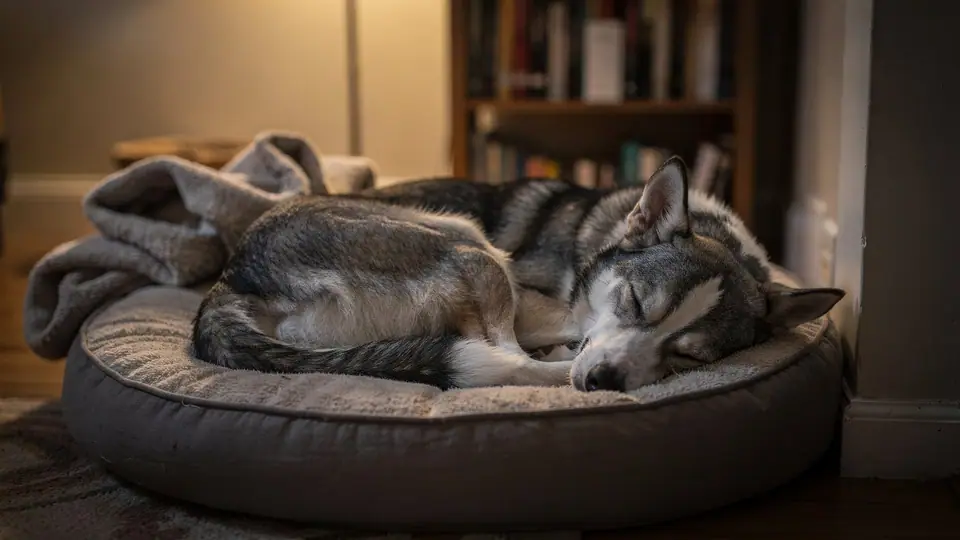
A sleeping dog that is touched may react before it knows where it is. The snap is fast and scared, not planned.
There are a few common reasons, and they can mix:
- Startle from deep sleep. Dogs spend a lot of time asleep, and some sleep very deeply. A hand on the back can wake them in a fright, and the mouth moves before the brain catches up.
- Guarding a spot. Some dogs growl or snap when someone sits down next to them on the sofa, bed or their own bed, even when they were only half asleep.
- Pain. A dog with sore joints, a sore back or another health problem may expect touch to hurt, especially if it is lying in a stiff position.
- Not hearing or seeing you coming. Older dogs with poor hearing or sight are easier to surprise.
You do not need to know the exact reason to start. All of them get safer when the dog is not touched while it sleeps.
Is it safe to let sleeping dogs lie?
Yes. It is the most useful rule here. Waking a dog by touch is not needed for any part of normal life. You can get its attention by name, by a sound, or by walking past at a distance.
A growl before a snap is a warning. Thank it, in your head, and step away. Punishing a growl can teach a dog to skip the warning next time and go straight to the snap. Our page on a dog growling at a child covers that warning in more detail.
How do you make sleep safe at home, step by step?
- Move beds out of walkways. Put the dog’s bed in a quiet corner, away from doors, hallways, the kitchen route and the end of the sofa where people sit down. A crate with the door open or a bed behind a gate works well. Give the dog more than one quiet spot if it likes to follow you from room to room.
- Wake the dog by name from a distance. Stand a few steps away and say its name in a normal voice. Wait until it lifts its head and looks at you. Then call it to you, or toss a treat a little way from the bed. If the dog sleeps on the sofa or your bed and you need it off, call it off from a distance rather than pushing it.
- Set rules for children and guests. No touching, hugging, kissing or lying next to a dog that is sleeping or resting. No climbing into the dog’s bed or crate. Young children need an adult watching every moment they are near the dog, and a gate that keeps them out of the sleep area. Brief visiting children and adults the same way.
- Ask your vet about pain, hearing and sight. Book a check if the snapping is new, if your dog is older, or if it seems stiff, sore, slow to get up or slow to notice you. See when reactivity is pain for the signs owners often notice first, and when to call the vet.
- Get help if it keeps happening. If your dog has bitten, snaps at children, or the reaction is getting stronger, work with a qualified trainer or behaviour professional in person, after your vet has checked your dog.
Where should a dog that startles sleep?
Somewhere quiet, a little out of the way, where nobody needs to step over it or squeeze past. Good spots:
- a corner of the living room away from the door and the sofa
- a crate or pen with a soft bed, door open, behind a gate in busy homes
- a bed in your bedroom on the floor, not in your bed, if the dog has snapped there
Think about where the dog naps in the day too. Many startle snaps happen on the sofa, in a doorway or under a table, where people walk or reach without looking. If your dog likes the sofa, a bed beside it with a chew is often a good swap.
How do you teach children to leave a sleeping dog alone?
Make the rules simple and the same every day:
- “If the dog is lying down, we leave it alone.”
- “We call the dog to us. We do not go to the dog.”
- “The dog’s bed is the dog’s room.”
Children forget, so the gate and the adult watching do most of the work. For toddlers, keep them in a different room or behind a gate when the dog sleeps. Older children can help by calling the dog for a treat and letting it choose to come. The children and guests page has more on supervision and gates.
Can you help a dog get used to being touched?
You can, but only when the dog is awake, relaxed and chooses to come to you. Short, gentle touches on the chest or shoulder, a treat, and a pause to let the dog move away if it wants. Watch for a stiff body, a hard stare or a lip lick, and stop before those appear. The puppy handling page shows the same idea in small steps, and it works for adults too.
Do not practise this with a sleeping dog, and do not let children practise it. Touch while sleeping stays off the list.
What are the usual mistakes?
- Telling the dog off for growling. You lose the warning. Change the setup instead.
- Leaving the bed in the hallway. People step over it all day and sooner or later someone touches the dog.
- Pushing the dog off the sofa. Call it off from a distance and reward it for coming.
- ”He’s fine, he loves kids.” A sleeping dog can still snap. Keep the rule for every child.
- Skipping the vet check. New snapping, especially in an older dog, is a health question first.
A dog that snaps when touched in its sleep is usually scared or sore, not bad. Give it quiet places to sleep, wake it by name, keep children away from it when it rests, and ask your vet to check for pain. Next steps: managing dogs around children and guests, when reactivity is pain, and puppy handling for gentle touch practice when the dog is awake. More on the behavior hub.
Questions on this page
Why does my dog snap when touched while sleeping?
A dog woken suddenly by a touch can react before it is fully awake, the way a person might jump or lash out from a bad dream. Some dogs also guard a comfy spot, or hurt somewhere and expect the touch to hurt. The plan is the same to start with: stop waking the dog by touch.
Is it normal for a dog to growl when woken up?
It is common, and the growl is useful. It tells you the dog was startled or uncomfortable. Do not punish the growl, because that can teach the dog to skip the warning and snap. Change how and where the dog sleeps instead.
How should I wake a sleeping dog?
From a distance, by name, in a normal voice. Wait for the dog to lift its head and look at you, then call it to you. If you need it to move, toss a treat away from the bed or call it out, rather than reaching in.
Should I worry if my older dog has started snapping in its sleep?
A new reaction in an older dog is a reason to ask your vet. Pain, stiff joints, poor hearing or poor sight can make a dog easier to startle. Your vet can check these; this page cannot.
When should I get professional help?
If your dog has bitten, if it snaps at children, if the reaction is getting stronger, or if it also snaps when awake on the sofa or bed. Book your vet first, then a qualified trainer or behaviour professional, and keep children away from the dog when it rests until then.
Work with me
A $150 consultation or $500 monthly curatorship. Opens WhatsApp to Andrew.