Appenzeller Sennenhund: temperament, energy, herding nips and training for the Swiss cattle dog
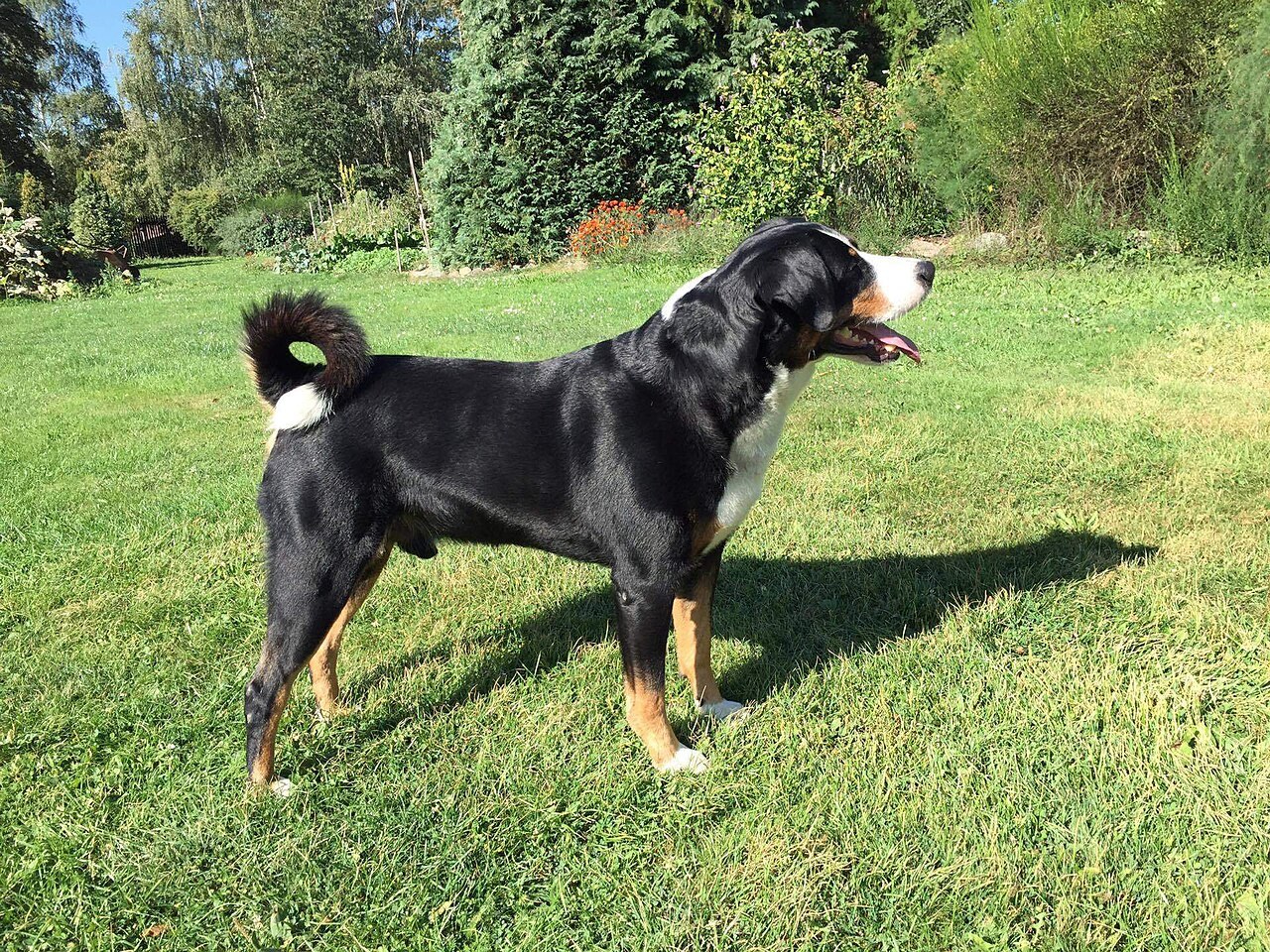
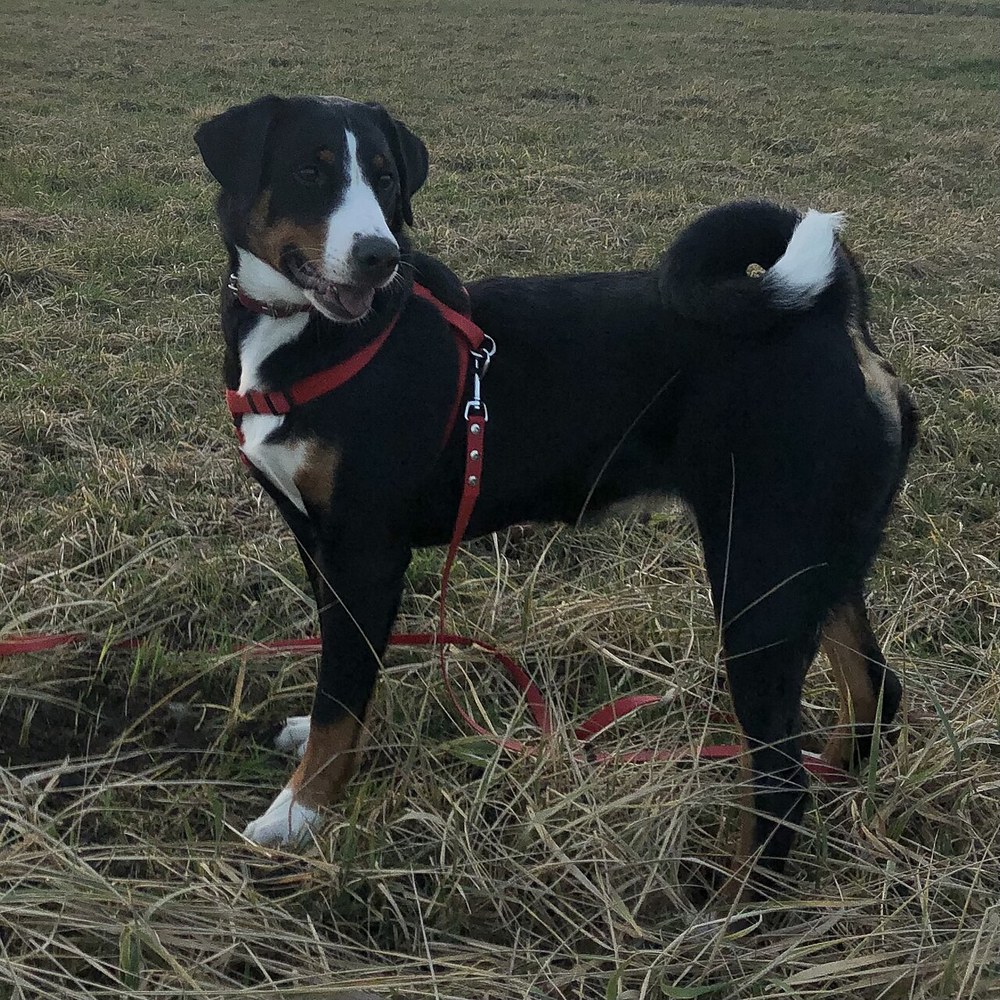
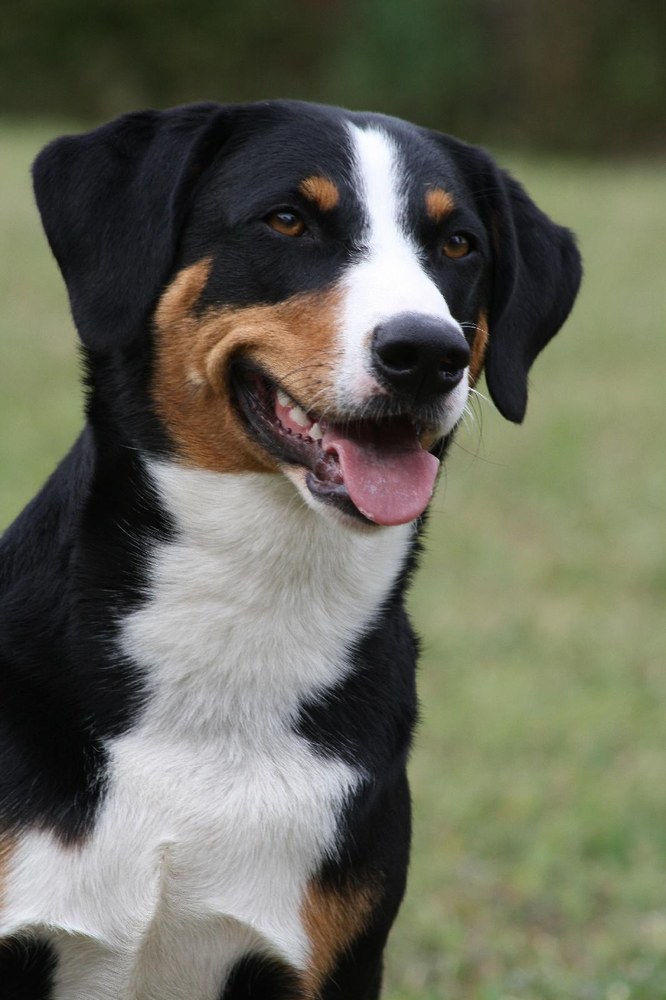
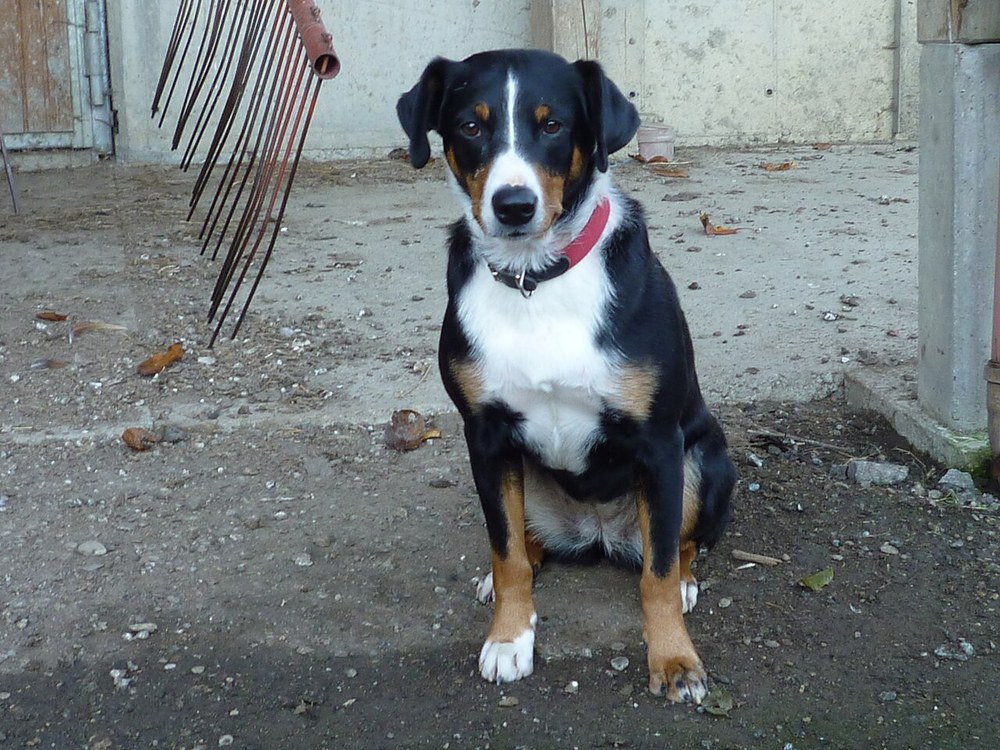
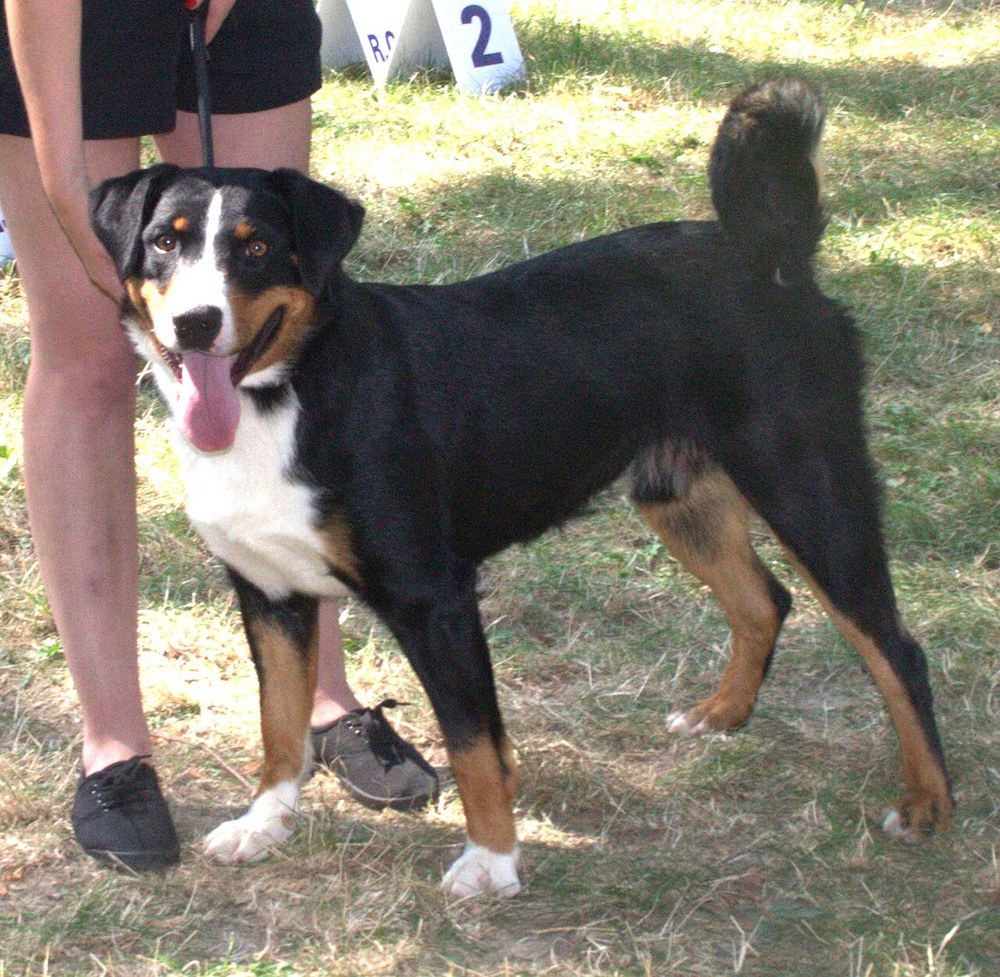
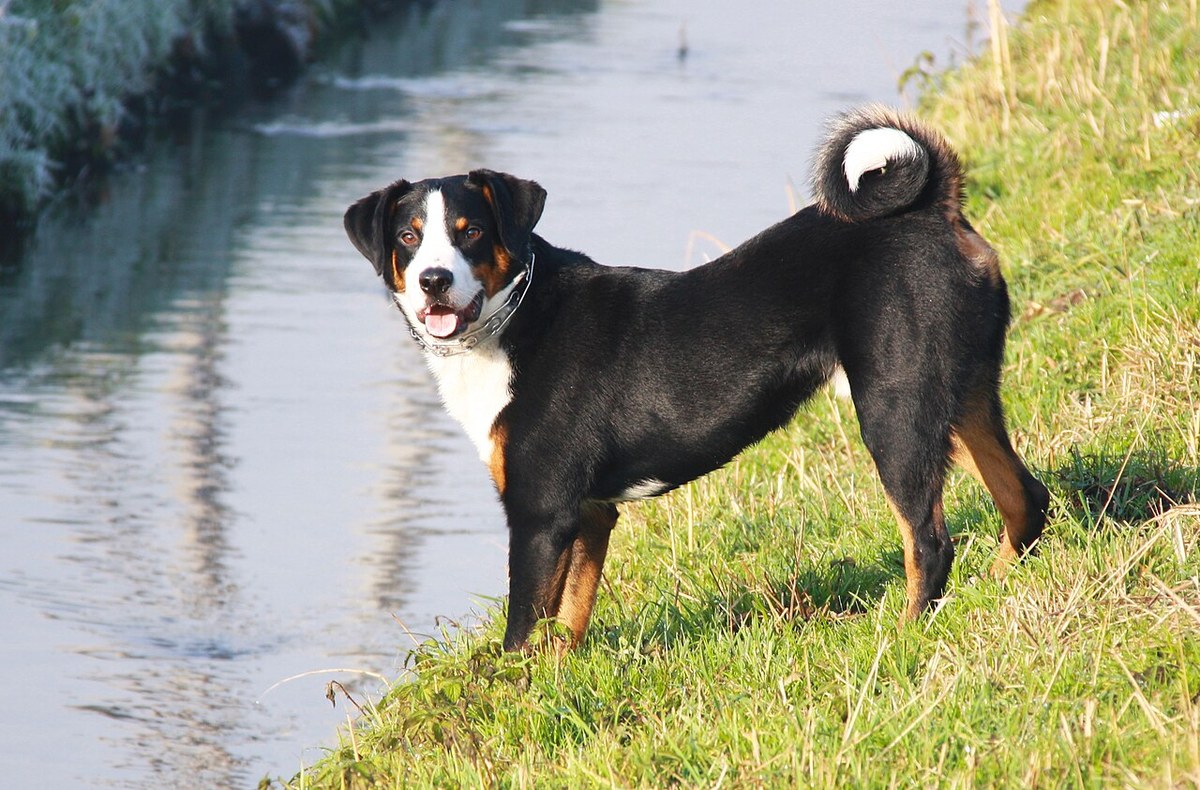
The Appenzeller Sennenhund is a medium-sized, tricolour Swiss farm dog with a short, dense coat and a tail curled tightly over its back. In the hills of north-eastern Switzerland it drove cattle to the high pastures, guarded the yard and pulled small milk carts. At home that means a quick, loud, very loyal dog with far more energy than its bigger Bernese cousin, a deep suspicion of strangers and a habit of nipping at moving heels. What works is real daily work for body and brain, early calm meetings with visitors, a clear off-switch at home and firm but friendly rules about mouths and chasing.
Job: A Swiss cattle and farm dog; FCI Group 2, section 3 (Swiss Mountain and Cattle Dogs).
Energy: Lively, loud, devoted and watchful with strangers.
Home: Suits an active owner who wants a working partner, not a calm giant.
An Appenzeller is a farm dog that never clocked off
People see the black, tan and white colours of a Bernese in a smaller, neater body and expect a gentle family bear. The Appenzeller looks related because it is, but it was the drover of the family: the dog that ran beside the herd all day and shouted at anything that came onto the farm.
Most calls I get start with that mismatch. A young dog that barks at every sound, circles and nips the children when they run, pulls hard on the lead, will not settle in the evening and treats the delivery driver as a threat.
My plan gives the drive somewhere to go. Proper daily exercise with a task in it, short training sessions that make the dog think, calm and planned meetings with guests, and a settle routine taught as carefully as any trick. With that, an Appenzeller is a bright, funny and deeply loyal partner.
FCI: males 52–56 cm (about 20.5–22 in), females 50–54 cm (about 19.5–21 in)
Weight
About 22–32 kg (about 48–70 lb)
Energy
High; needs daily exercise with a task
Coat / shed
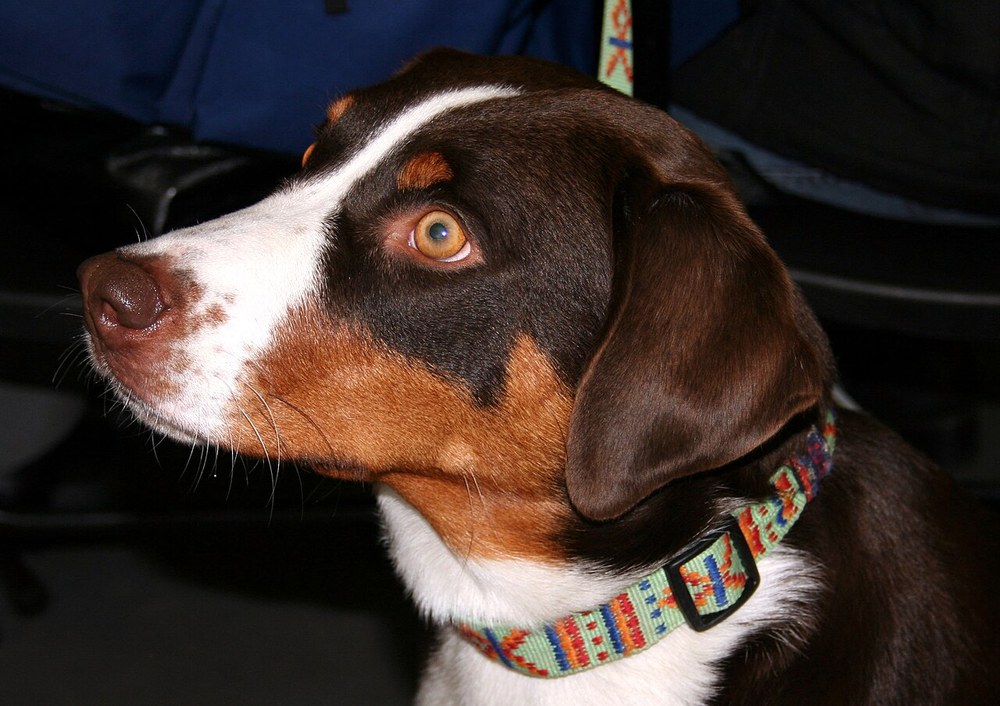
Short, dense, shiny double coat; black or havana-brown base with symmetrical rust and white markings
Job
Cattle drover, yard guard and small draught dog on Swiss alpine farms (FCI Group 2, Swiss Mountain and Cattle Dogs)
Temperament in one minute
Appenzeller Sennenhund temperament: what they are like at home
Short answer: Appenzellers are lively, loud, loyal Swiss cattle dogs with much more energy than their Bernese cousins. They were bred to drive cattle and guard farms, so they bark at visitors, chase and nip moving things, bond closely with their family and stay wary of strangers. They need well over an hour of activity a day with a real task in it, short and varied training, calm early meetings with people and a taught off-switch at home.
Are Appenzellers affectionate?
Yes, with their own family, and they like to be in the middle of things. Build short absences early.
The usual four are barking, nipping, chasing bikes and joggers, and not settling. The list below links a guide for each.
Living with an Appenzeller in an apartment
Possible only with hours of outdoor activity and serious barking work. A house with a garden is easier.
Breed history
From the hills of Appenzell to the show ring
The past will not train your dog, but it explains the energy, the voice and the nipping.
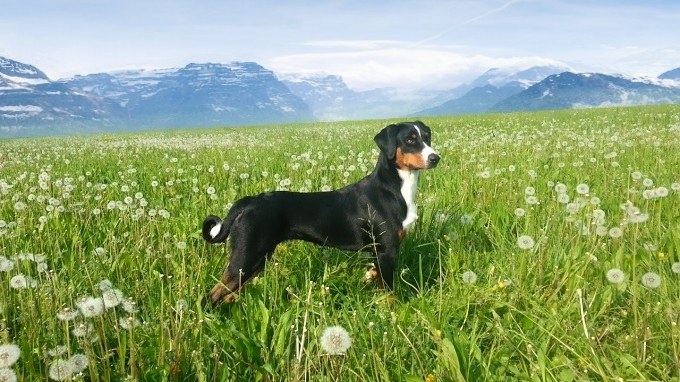
An Appenzeller in an alpine meadow: the breed comes from hill farms like these, where it moved cattle and watched the yard.
North-eastern Switzerland · farm dogs
The drover of the four Swiss mountain dogs
Switzerland has four Sennenhund breeds: the large Greater Swiss and Bernese, the small Entlebucher and the mid-sized Appenzeller. All were farm dogs, but the Appenzeller was the one bred to move cattle up and down steep pastures, to keep strangers off the farm and to pull light carts of milk or cheese.
That work wanted a fast, tireless dog with a loud bark and a quick mouth for a slow cow's heels. Those are still the traits that show up in a modern family home.
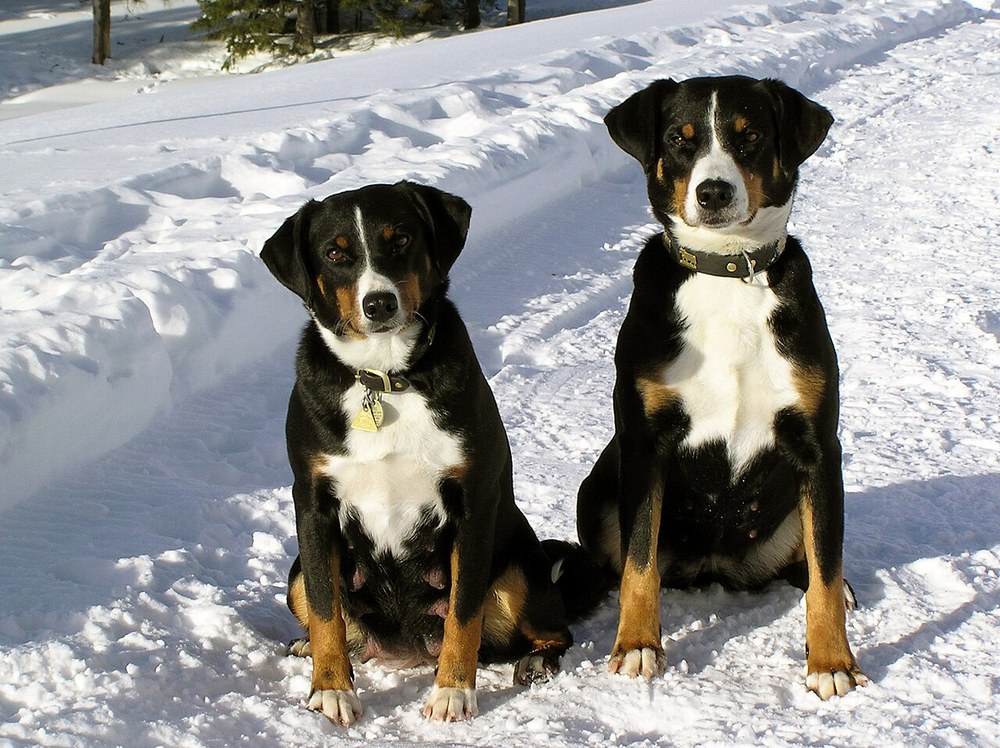
Two Appenzellers in the snow: the short, dense coat and sturdy build come from a life outdoors on mountain farms.
From the 1890s
A local farm dog becomes a breed
In the 1890s the Swiss forester Max Siber described the Appenzell cattle dog, and the Swiss kennel club began to take an interest. A breed club followed in 1906, and the scientist Albert Heim helped set down the type of the Swiss mountain dogs.
The FCI lists the breed in Group 2 among the Swiss Mountain and Cattle Dogs. Outside Europe it is still uncommon; in the US the AKC records it in its Foundation Stock Service, so many owners wait for a puppy or import one.
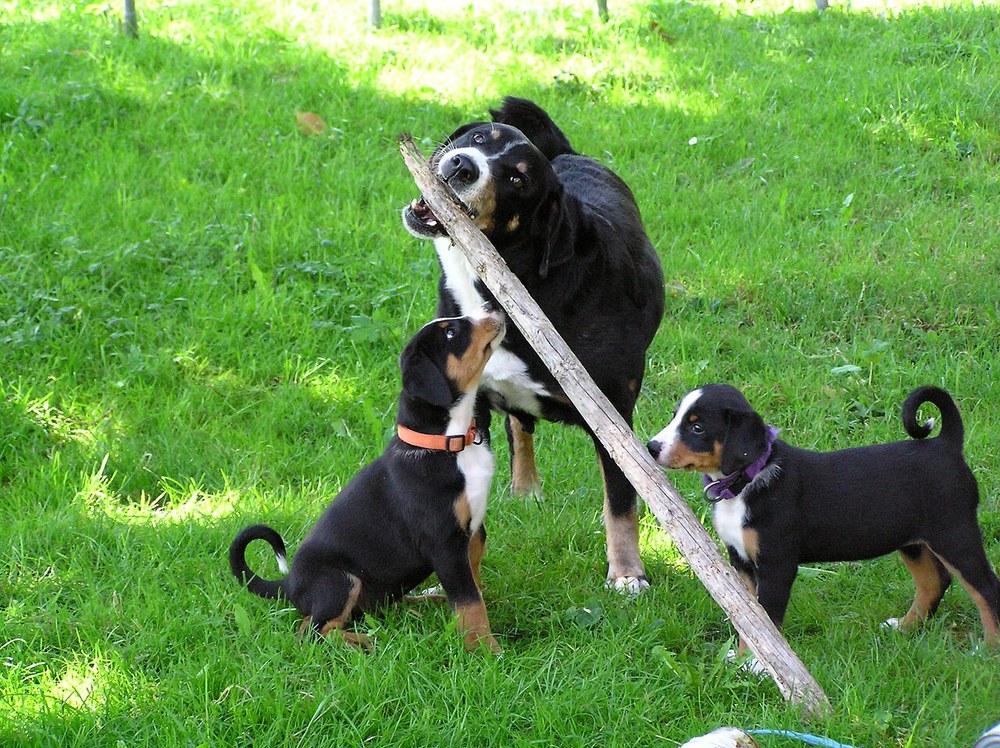
An Appenzeller mother with her pups: breeders watch the temperament of the parents as closely as the markings.
What the breed was bred for
Busy, loud and loyal at home
With its own people a well-raised Appenzeller is cheerful, affectionate and keen to join in everything. It learns quickly, loves a game and stays playful well into adult life.
It is also suspicious of strangers, quick to bark and very aware of movement. Bored or under-exercised, many dogs invent their own work: chasing bikes, nipping heels or guarding the window. Early, calm socialising and a daily task make the difference.
A good day has a real outing, a thinking game, a short lesson and a planned rest
An adult Appenzeller usually needs well over an hour of activity a day, and the walk matters less than what happens on it: hills, a job, a game with rules, time to sniff. Problems start when a drover with nothing to drive spends the day watching the street.
Morning · outing
Hills, pace and a job
Hike, jog on soft ground or let the dog carry a light pack once it is fully grown. A tired Appenzeller is one that has worked, not one that has only been walked round the block.
This breed learns fast and gets pushy when it is bored. Teach a new trick, a target or a find it game in a short session, then end while the dog still wants more.
Fast-moving children trigger the urge to round them up. When the kids play chase, the dog goes behind a gate with a chew, or you give it its own game with a toy that it is allowed to chase.
An Appenzeller will announce every visitor. Let it bark a couple of times, call it to its bed, reward, and ask guests to come in and ignore the dog until it has calmed down.
Many Appenzellers would keep going all evening. A chew on a bed, a calm cue and the same bedtime routine teach the dog that night is for rest, not patrol.
General awareness only. I am not a veterinarian. With an Appenzeller, owners often notice trouble first as a dog that suddenly stops wanting to jump or run, sore pads after rocky hikes, heavy shedding in the spring and autumn moult or a young dog that gets stiff after too much hard exercise. For red flags, leave this page and open
when to call the vet.
Short double coat
Brush once a week, and more often in the spring and autumn moult when the undercoat comes out.
Young joints
Keep hard running, jumping and long jogs for when the dog is fully grown; ask your vet when that is for your dog.
Paws and nails
Check pads after rough walks and trim nails regularly.
Handling for the vet
A wary breed with strangers: practise vet-style handling with food and get the dog used to a muzzle while it is young. See introducing a muzzle.
Weight
A lean working dog moves better; feel for the ribs and look for a waist once a month. See body condition check.
Ask the breeder
Find out which hip, elbow and eye tests the Swiss breed club and your national club expect for the parents, and look at the paperwork yourself. Do not take health claims from a blog.
Lines and types
Choose a steady, healthy dog, not only the markings
No bloodline selling. Appenzellers come from a small number of breeders, mostly in Europe. Meet the mother, see how quickly she settles after barking at you, how she handles a sudden noise and how she behaves with the breeder's family, and ask about health checks on both parents.
Working and sport homes
Herding, agility, obedience or tracking.
Long hikes and real tasks.
Short, varied training.
Planned rest days.
Suits owners who want a keen, fast partner for an active hobby.
Active family homes
Well over an hour of activity a day.
Rules for running children.
A plan for visitors.
A settle routine.
Suits a lively family that enjoys being outdoors with a loyal, loud dog.
Socialization windows
What to introduce — and what not to overload — by age
AVSAB-aligned in spirit: short, clean exposures at a distance the puppy can still eat,
with hygiene while vaccines finish. See the
puppy socialization schedule.
2–4 months
Meeting the world
Introduce: calm meetings with people, children, traffic, farm animals if you can, surfaces and sounds; gentle handling; a toilet routine; short times alone.
Do not overload: letting the puppy chase and nip feet or trouser legs as a game.
~6 months
Busy puppy
Introduce: name check-in, a hand target, recall on a long line, a bed cue, a quiet cue, chew and toy rules.
Do not overload: long runs or jogging on hard ground.
~8–18 months
Teenage phase
Introduce: more practice with visitors, calm walks past bikes and joggers, tug with rules, a sport or herding class.
Do not overload: leaving the dog to guard the garden or window all day.
~2 years
Settling down
Introduce: longer hikes, harder tasks, more freedom where it is safe, travel and holiday practice.
Do not overload: stopping daily training because the dog seems grown up.
~3 years+
Maintenance
Introduce: daily exercise with a task, brain games, coat care in the moult, weight checks, yearly vet visits.
Do not overload: letting the evening settle routine slip.
Before you buy
Who a Appenzeller Sennenhund usually fits
Fit comes down to time, noise and how you feel about a dog that wants a job every single day.
Good match
More likely a good fit if you…
You want a medium-sized, very active dog
You can give well over an hour of activity a day
You enjoy training and dog sports
You do not mind a loud watchdog
You like an easy, short coat
Mismatch risk
A Appenzeller Sennenhund may be a poor choice if…
You want a calm, slow family giant
You live with thin walls and close neighbours
You have very young children and no time to manage them
You are out at work all day
You like to train with jerks on the lead and telling-offs
If you are torn between breeds
Appenzeller Sennenhund vs Bernese Mountain Dog and Australian Cattle Dog
The Bernese is the big, gentle and much calmer cousin from the same Swiss family. The Australian Cattle Dog is another tireless cattle worker, from the other side of the world, with an even harder edge. The Appenzeller sits between them: Swiss in looks, a cattle drover in energy and voice.
Size
Appenzeller Sennenhund
Medium, about 22–32 kg.
Bernese Mountain Dog
Much larger and heavier.
Energy
Appenzeller Sennenhund
High; needs a task.
Bernese Mountain Dog
Moderate; happy with walks.
Herding nips
Appenzeller Sennenhund
Common in young dogs.
Australian Cattle Dog
Common too; a firm heeler.
Coat
Appenzeller Sennenhund
Short, dense double coat.
Both compares
Bernese long; Cattle Dog short.
Ownership without surprises
Where a Appenzeller Sennenhund owner’s budget goes
Prices differ a lot between countries and cities, so treat these as budget headings rather than numbers.
Veterinary
A yearly check-up, whatever vaccines your own vet recommends and any parent screening the club asks for.
Grooming
A brush and an undercoat rake; little else.
Training
A puppy class, then a sport, herding or obedience club.
Gear
A long line, a well-fitted harness, a crate, gates, chews and puzzle toys.
Finding a puppy
A rare breed outside Europe, so plan for a waiting list or an import.
Money spent early on a class and on teaching the dog to settle saves far more than trying to calm a frustrated two-year-old later.
Before day one at home
What to prepare for a Appenzeller Sennenhund puppy
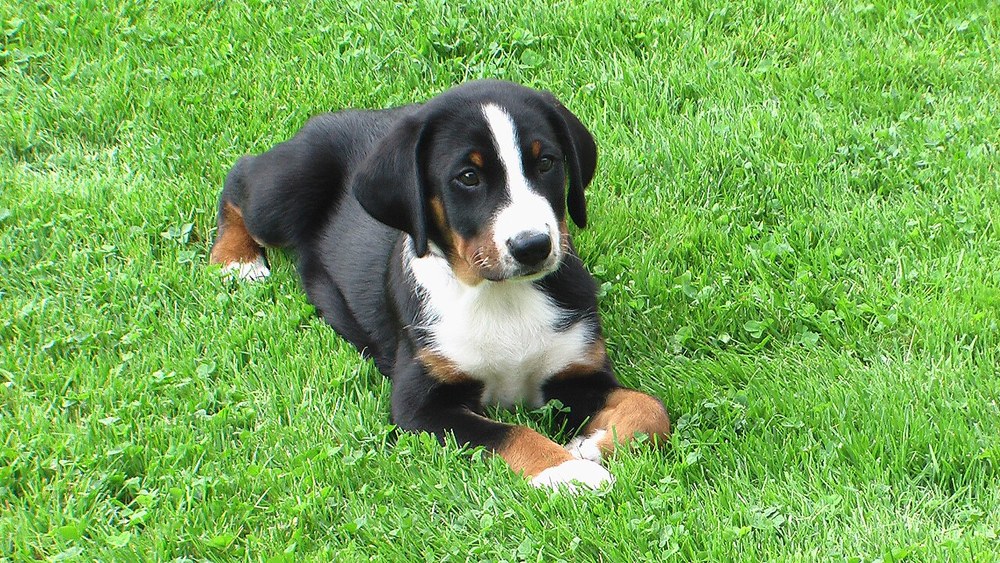
An Appenzeller puppy is bold, fast, noisy and mouthy. Expect it to chase feet, grab trouser legs and bark at new things. Have gates, a crate, chews and a quiet bed ready, and agree house rules about running games before it comes home.
Training an Appenzeller means a job for the drive, rules for the mouth and a real off-switch
Most daily trouble with this breed shrinks once five things are solid: a name check-in, recall on a long line, a hand target, a quiet cue and settling on a bed.
Appenzellers are quick and keen with food and toys. They lose interest when a lesson drags, and rough handling turns a lively dog into a defensive one. Keep sessions short, change the game and stop on a win.
Be realistic about the drover in the dog. It will always notice movement and want to control it. The goal is a dog that can watch a jogger go past and look back at you, and that takes its chasing to a toy.
Load balance
Thinking is exercise too
For a growing dog keep hard running short and add distance slowly. A limp, stiffness after rest or a sudden change in mood means a vet visit before more training.
Outing with a taskLook at that gameTwo-minute lessonTug with rulesPlanned rest
For this breed, ten minutes of nose work or a new trick often tires the dog more than another lap of the park.
An Appenzeller with a job at home stops looking for one on the street.
Moving targets
How to help an Appenzeller stay calm around runners and bikes
Start far enough away that the dog can watch without lunging, mark and reward each calm look, step closer only while it stays loose, and give the urge to chase a proper toy game at home.
01
Pick the distance
Far enough that the dog only watches.
02
Mark the look
Reward each calm look at the runner.
03
Reward turning back
The dog looks back at you, not the target.
04
Step closer slowly
Only while the dog stays loose.
05
Chase a toy at home
Give the urge its own game.
One scene close-up
Why an Appenzeller nips and chases
This breed was kept to move cattle by running at them, barking and nipping heels. Movement still switches that on, so running children, joggers and bikes are the usual targets. It is breed behaviour, not spite.
Manage first: gates, a lead near busy paths and no chase games with people. Then teach a look at that game at a distance, reward the dog for turning back to you, and give it a tug toy or flirt pole with clear rules as its own outlet.
A dog that bites hard, cannot calm down or grabs people should be seen by a qualified behaviour professional, with a vet first ruling out pain.
“With an Appenzeller, I start with a daily task for the drive, rules for the mouth around children and a settle routine for the evening. Give this little Swiss drover work and calm, and you get a bright, funny and fiercely loyal dog.”
We look at your real days: exercise, children, visitors, other dogs and the evening at home. Medical questions belong with your vet; I deal with behaviour.
Andrew DarovProfessional dog trainer and instructor
Before we talk, note the dog's age, how much exercise and training it gets, what it chases or nips, how it greets guests and the first thing that goes wrong. Opens WhatsApp to Andrew.
For an active family that will train and manage it, often yes. It is loyal and playful with its own people. It barks a lot, is wary of strangers and may nip running children, so it needs a plan.
Is an Appenzeller a good first dog?+
It is a lot of dog for a first-time owner. A beginner who exercises daily, joins a class and accepts a loud watchdog can manage; a casual owner usually struggles.
Do Appenzellers bark a lot?+
Yes. They were farm watchdogs and bark at visitors, noises and movement. A quiet cue, a door routine and less time at the window help.
How big does an Appenzeller Sennenhund get?+
FCI: males 52–56 cm (about 20.5–22 in), females 50–54 cm (about 19.5–21 in). Most weigh about 22–32 kg (about 48–70 lb).
Do Appenzellers shed?+
Yes, moderately all year and heavily during the spring and autumn moult. Weekly brushing, more in the moult.
How much exercise does an Appenzeller need?+
An adult usually needs well over an hour a day, with a real outing plus training, nose work or a sport.
Appenzeller vs Bernese Mountain Dog: what is the difference?+
The Bernese is much larger, has a long coat and is far calmer. The Appenzeller is medium-sized, short-coated, louder and much more energetic.
Appenzeller vs Entlebucher: what is the difference?+
Both are Swiss cattle dogs with short coats. The Entlebucher is smaller and lower to the ground; the Appenzeller is taller, lighter on its feet and carries its tail curled over its back.
Are Appenzellers good with other dogs?+
Most get on with dogs from their own household. Some are bossy or noisy with strange dogs, so introductions should be calm and on lead at first.
Can an Appenzeller live in an apartment?+
It is hard. The barking, energy and wariness of hallway noise make a house with a secure garden and daily outings a better fit.
What health themes should I ask about?+
Ask the breeder for hip, elbow and eye results on both parents and which tests the breed club expects, and mention the breed to your vet. This is general awareness, not a diagnosis.
How long do Appenzellers live?+
Breed clubs and kennel clubs usually quote about 12–14 years, though each dog is different.
If an Appenzeller seems too busy or too loud for your home
Many people fall for the Swiss colours and the curled tail. The energy, the barking, the nipping and the need for a daily task are what to think through before you commit.
The smallest Swiss mountain dog and a real cattle dog. Needs daily work, rules for heel nips and a taught off-switch — not a small Bernese for the sofa.
Teach your dog to sit to greet people instead of jumping: practise with family, reward the sit, and ask guests to step back if the dog jumps. Step by step.
Dog freezes, stares or growls over food or a person? How to keep everyone safe, what to avoid, and when to get help from a qualified trainer.
Need a read on your exact situation?
Tell me about your Appenzeller in a short message: its age, how much exercise it gets, what it chases or nips, how it greets guests and what goes wrong first. We rule out health issues first, then pick one skill to start with.