Black Russian Terrier: temperament, early socialization and power with manners for a working guardian
The Black Russian Terrier is a large working guardian developed in the Soviet Union for military and patrol work: power, coat and a serious bond to its people. It is not a casual couch breed. At home it needs early socialization, calm threshold manners and enough work that the power has somewhere useful to go. The honest plan is early people and surface exposure, impulse control at doors and gates, and structured outlets without marketing the dog as a protection product.
Job: Working guardian from Soviet breeding programs; patrol and utility roots.
Energy: Moderate to high; daily exercise plus training and mental work.
Home: Fits an experienced owner ready for size, coat and serious socialization.
A Black Russian Terrier is power that needs manners early
Public histories describe the Black Russian Terrier as a breed assembled after World War II at Soviet military kennels, using several working breeds to produce a large, weatherproof, trainable guardian and patrol dog. The result is a black double-coated giant that bonds tightly and notices everything at the gate.
What I see in homes is a powerful adolescent that can be soft with family and wary of strangers if socialization was thin. Door rushing, lead pulling and over-guarding the garden are common when size arrives before manners. This is not a dog you “wait and see” with until eighteen months.
I start with three outlets. Early, clean socialization at a distance the puppy can still eat. Threshold and leash manners while the dog is still manageable. And daily work that ends on cue — walks, scent, obedience or draft-adjacent tasks — so power is not left to invent jobs. On top of that I build a settle and guest scripts, and the BRT becomes a composed household partner.
Harsh black double coat with furnishings; regular brushing and periodic trimming; moderate shedding
Job
Soviet-era working guardian and patrol utility dog (FCI Group 2; AKC Working)
Breed history
How a military kennel project became the Black Russian Terrier
Breed history does not decide your dog’s day, but it explains why BRTs are large, weatherproof, bonded to handlers and naturally interested in who approaches the property.
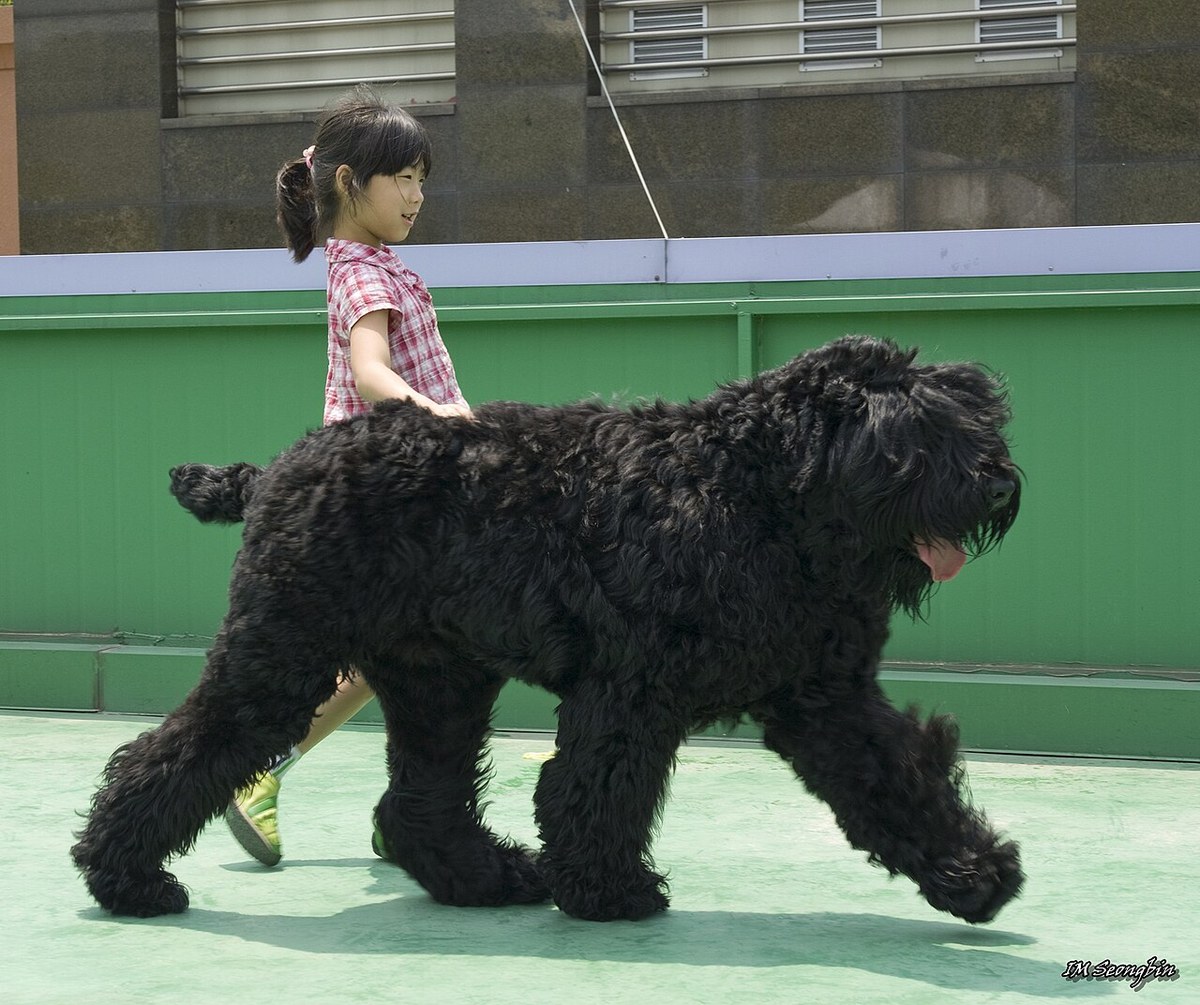
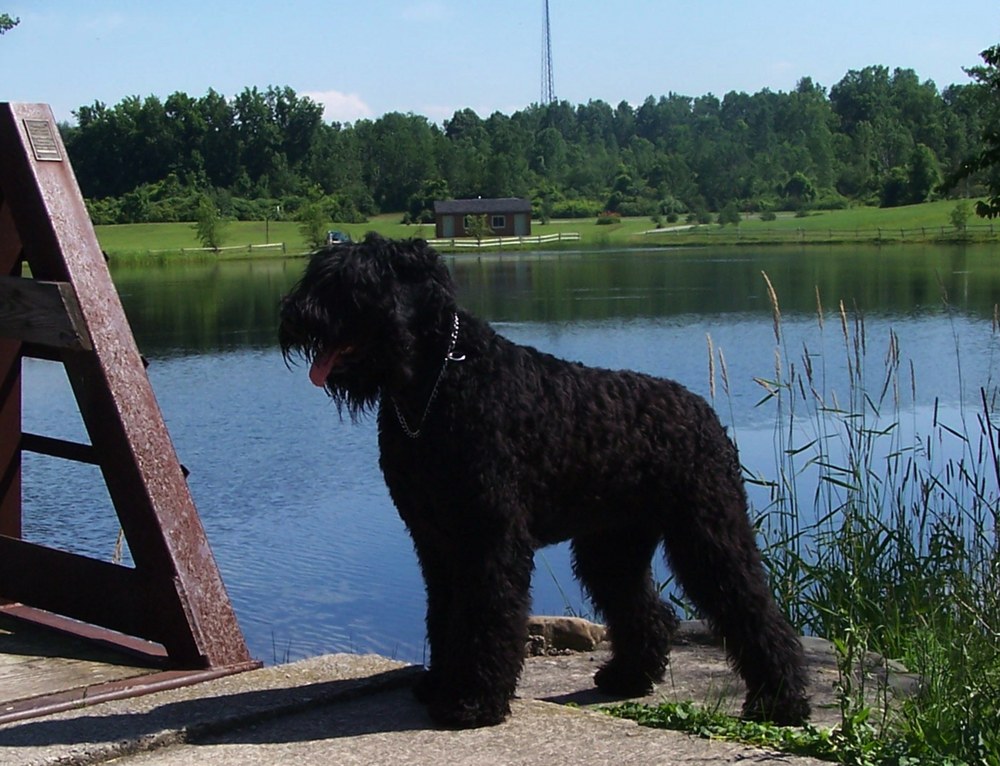
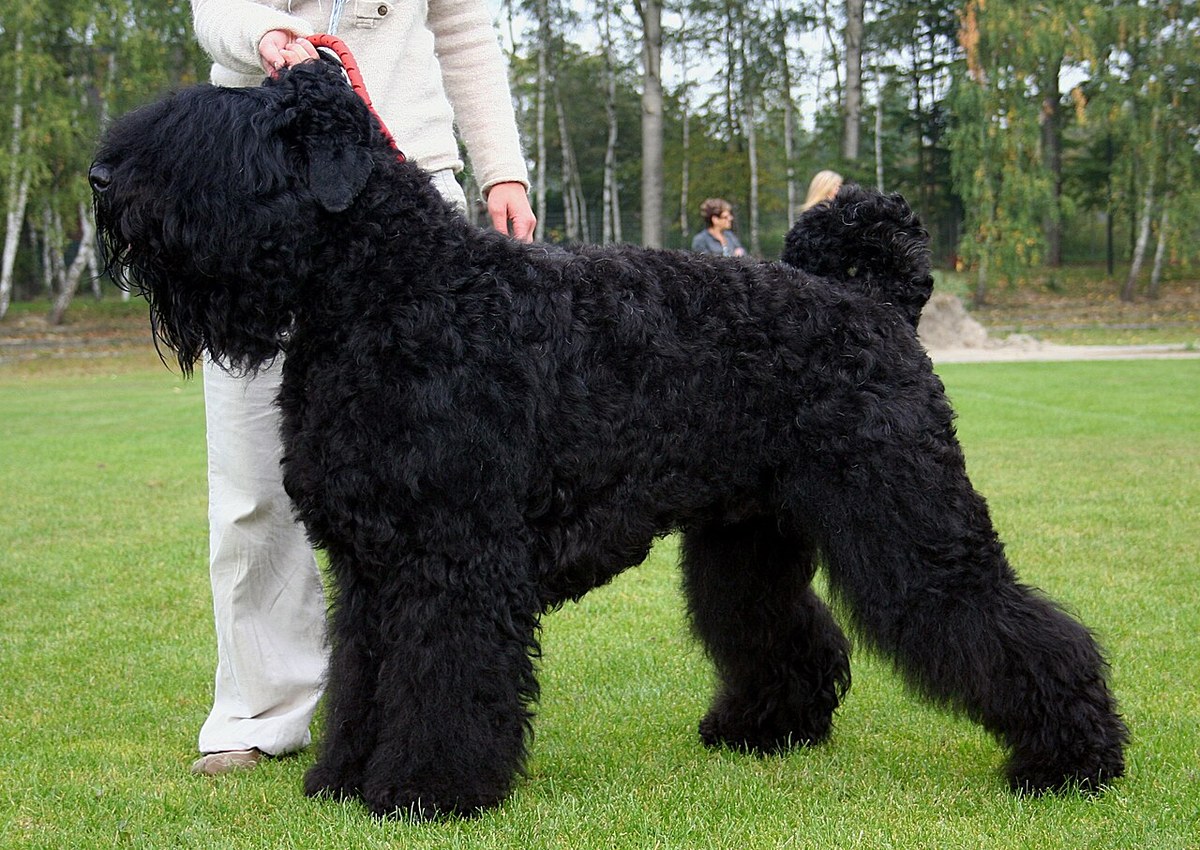
A Black Russian Terrier with a family member (CC BY-SA 2.0). Size and bond arrive together — manners must arrive early.
Post-war Soviet kennels → utility dog
A purpose-bred working dog, not a farm pet idea
Public accounts place the breed’s development at Red Star kennels and related programs that combined several working breeds to get a large, trainable black dog for patrol and related tasks. The type was standardised later through kennel clubs.
A dog bred for work with handlers needed courage, stamina and a coat that could handle weather. At home that becomes a powerful companion that still wants a job and a clear relationship.
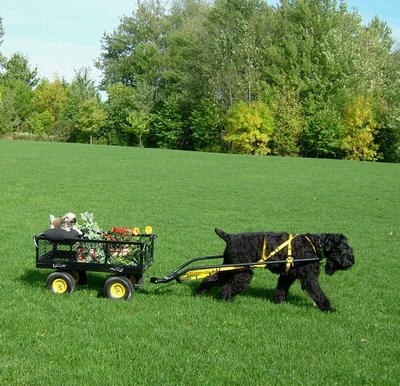
BRT in carting work (CC BY 2.0). Draft and utility outlets still suit many of these dogs.
From working kennels to companion homes abroad
Recognition without erasing the guardian edge
The breed spread beyond its original programs and is recognised by major kennel clubs as a working dog. Many live as companions, but the guardian noticing system does not vanish because the dog sleeps on a sofa.
Today the useful question is not “is it protective?” but “did this puppy meet the world cleanly, and does the adult have rules at the door?”
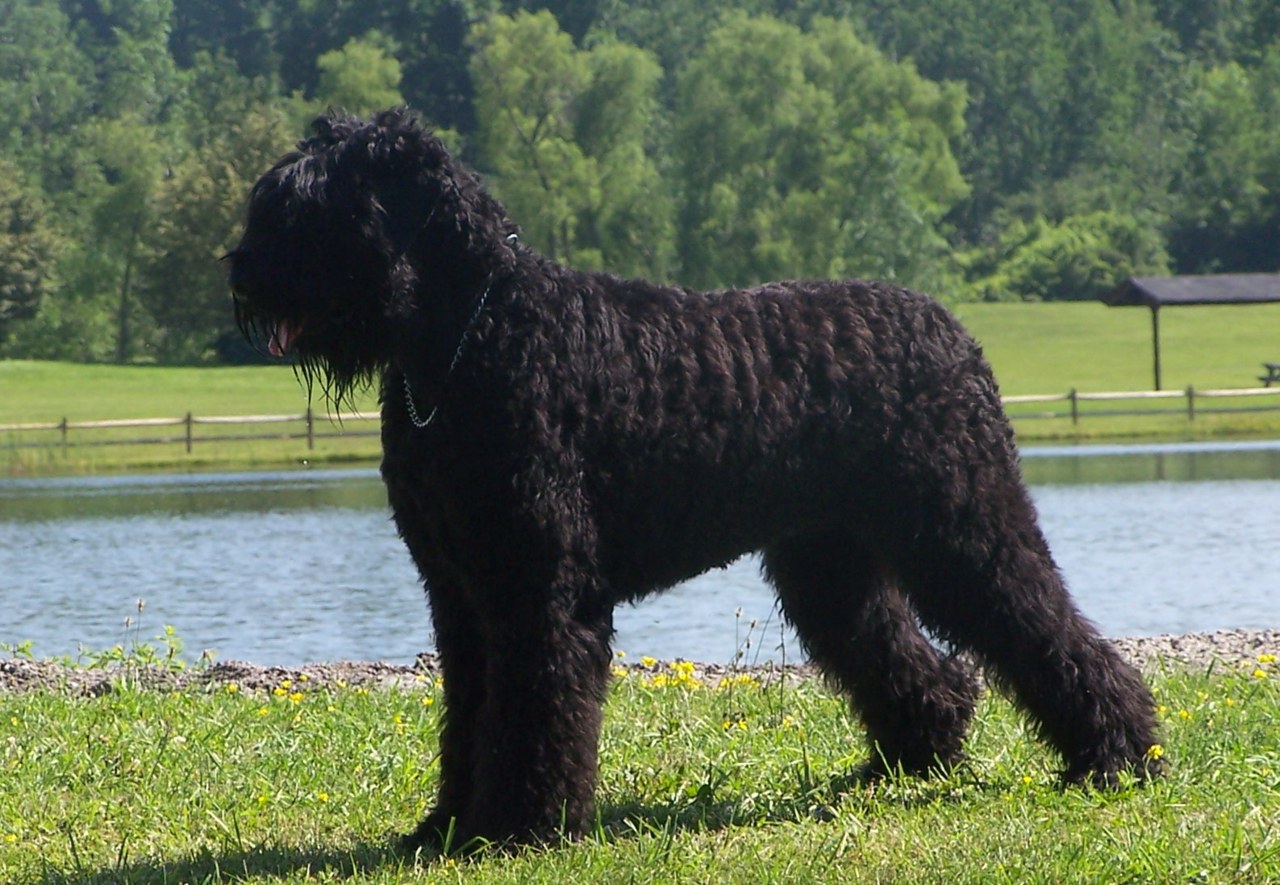
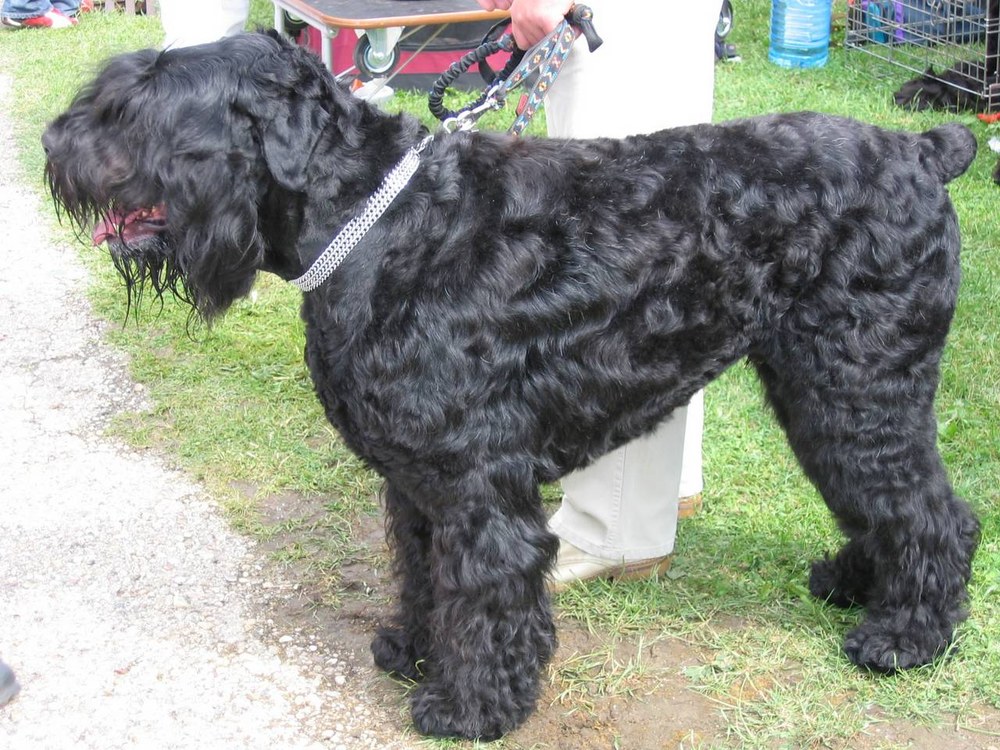
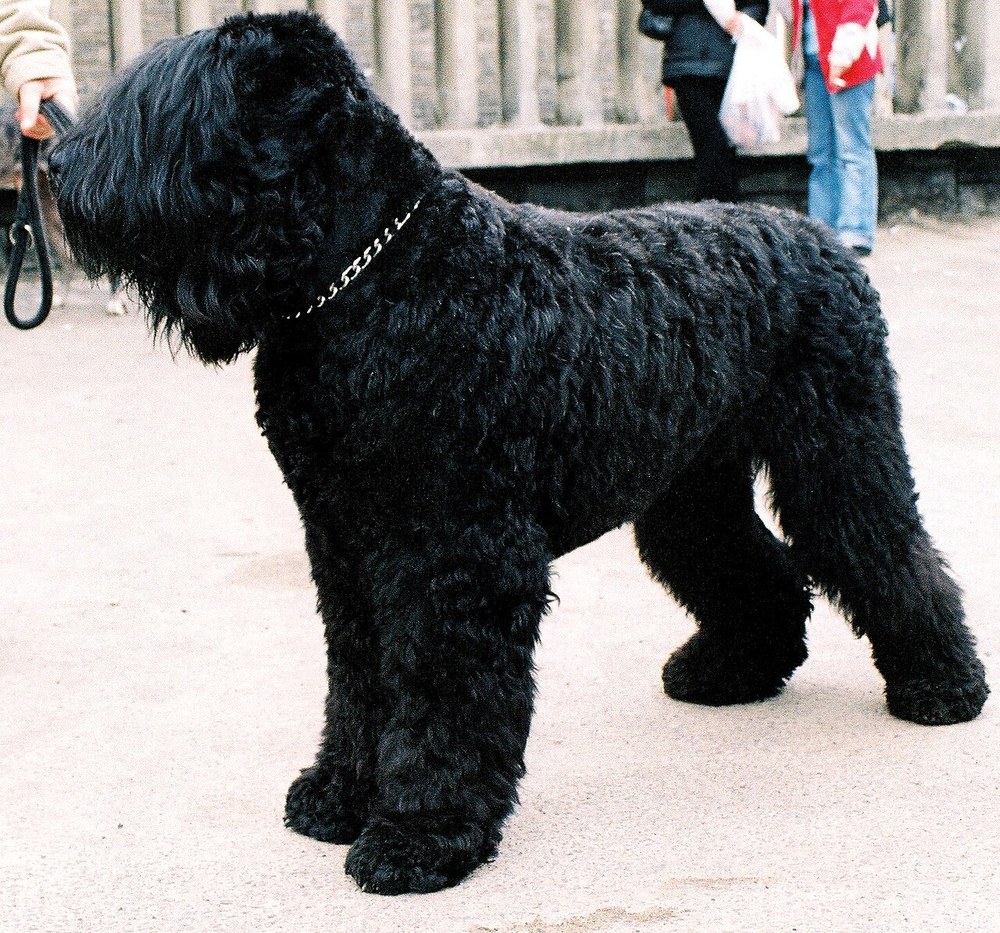
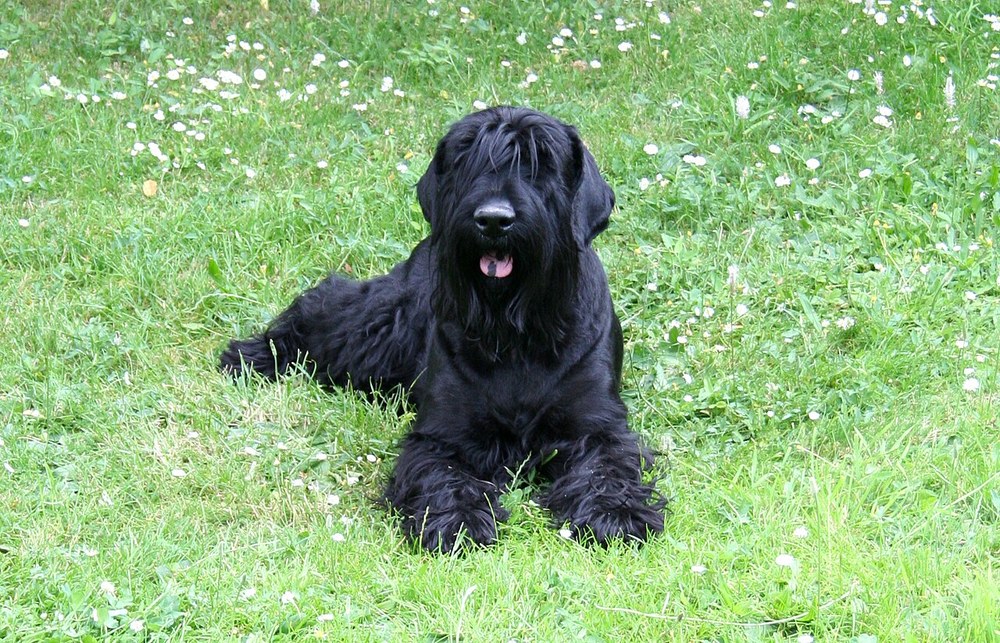
An adult BRT in coat (CC BY 4.0). Coat care and power management are lifelong.
What the breed was bred for
Bond, notice, power — in that order for training
In trainer terms, breeders favoured a dog that sticks with its handler, notices strangers and can work in rough conditions. At home that becomes loyalty, gate interest and adolescent strength.
BRTs usually learn well with clear rules and fair pressure. Chaos and late socialization create a large dog that is hard to live with.
A good day has exercise, training, coat care and a clear off switch
At home the BRT job shows up as watching the gate, body-blocking in the hallway, adolescent pulling and a coat that mats in furnishings. Most are deeply loyal. Early social files, threshold rules and enough work make the power livable.
Morning · walk
A structured walk, not only mileage
Sixty to ninety minutes split across the day suits many adults, with sniffing and calm heeling practice. Long-line work in safe areas builds recall without gambling at the road. Power without manners makes every walk a negotiation.
Short obedience sessions, scent finds, puzzle feeds and draft-adjacent pulling games on safe equipment give the brain work. End every session clearly so the dog does not stay on duty all evening.
Many BRTs are reserved with strangers. Teach a place or behind-line while guests enter, then calm greetings if appropriate. Forcing face-to-face hellos creates bigger problems than a polite distance.
The coat mats behind ears, in trousers and in the beard. Weekly brushing and periodic trimming keep skin healthy. Practice handling paws, mouth and ears early while the dog is still a manageable size.
After work, teach a solid place routine. A guardian that never comes off duty barks at every night noise. Chews and calm evenings matter as much as morning exercise.
General awareness only. I am not a veterinarian. With Black Russian Terriers, owners often notice trouble first as limping, tiring on walks, scratching under mats, eye issues or a sudden change in willingness to work. For red flags, leave this page and open
when to call the vet.
Hips, elbows and joints
Large-breed joint themes are discussed in the breed. Limping or reluctance to rise need a vet. Ask breeders about screening.
Eyes
Eye conditions are mentioned in breed health discussions. Changes in vision or discomfort need a vet visit.
Coat and skin
Mats pull skin and hide irritation. Regular brushing is health care as well as grooming.
A heavy coat in hot weather needs shade, water and shorter sessions.
Size hazards
A powerful mouth and body find trouble. Supervise chewing and know your emergency clinic.
Lines and types
Working and companion BRTs still need early social files
No bloodline selling. Differences show in drive, coat volume and how quickly the dog settles with strangers. Every BRT needs early socialization, threshold rules and enough structured work.
Working and sport-minded dogs
Often stronger drive for patrol-style noticing and trained tasks.
Need daily training, not only walks.
Ask how parents behave at the gate and with guests.
Power arrives fast in adolescence.
Fits an experienced handler who wants a serious working companion with manners.
Companion-focused homes
Still a large guardian-bred dog.
Socialization and thresholds remain mandatory.
Coat care is still weekly work.
Ask about joints, eyes and household temperament of parents.
Fits a calm, consistent household ready for size and coat — not a first giant on impulse.
Socialization windows
What to introduce — and what not to overload — by age
AVSAB-aligned in spirit: short, clean exposures at a distance the puppy can still eat,
with hygiene while vaccines finish. See the
puppy socialization schedule.
2–4 months
World files and handling
Introduce: surfaces, sounds, calm strangers at a distance where the puppy eats, body handling, name game, short car rides.
Do not overload: forcing close greetings, isolation from the world, skipping handling because “it is still small.”
~6 months
Thresholds while manageable
Introduce: door manners, leash pressure skills, parallel exposure to dogs and bikes, guest scripts.
Do not overload: practising gate lunging, free running with unknown dogs, harsh leash corrections.
~12 months
Adolescent power
Introduce: loose leash, place under distraction, longer calm exposures, coat trimming practice.
Do not overload: waiting for “maturity” to start manners, unprotected road recall.
~18 months
Adult routines
Introduce: reliable guest plan, regular groomer or home trim, structured sports if suitable.
Do not overload: letting the dog invent guard jobs, dropping socialization maintenance.
~24 months
Keep it going
Introduce: refresh thresholds, keep lean body weight, yearly joint and eye conversations with your vet.
Do not overload: assuming the dog is “done,” ignoring limp or coat skin issues.
Before you buy
Who a Black Russian Terrier usually fits
Fit comes down to experience with large dogs, early socialization time, coat care and a calm plan for doors and guests.
Good match
More likely a good fit if you…
You have handled large or working breeds before
You will socialize early and keep it clean
You want a loyal, serious companion with a job
You will train thresholds before full adult size
You accept weekly coat work
Mismatch risk
A Black Russian Terrier may be a poor choice if…
You want a first dog that forgives missed training
You want a social butterfly at every dog park
You dislike grooming large coated dogs
You leave the gate and front door unmanaged
You are shopping for a protection marketing story
If you are torn between breeds
Black Russian Terrier vs Giant Schnauzer and Bouvier des Flandres
Giant Schnauzers are high-drive working schnauzers; Bouviers are farm/working herders with coat and power. The BRT is a Soviet-bred working guardian with a distinct black coated silhouette and a strong handler bond.
Origin
Black Russian Terrier
Soviet military/utility breeding program.
Giant Schnauzer
German working schnauzer.
Coat
Black Russian Terrier
Harsh black double coat with furnishings.
Bouvier des Flandres
Rough tousled coat; different trim.
Guardian edge
Black Russian Terrier
Notices property and strangers; needs early social files.
Giant Schnauzer
Also working-alert; high drive.
Size
Black Russian Terrier
Large, powerful.
Bouvier
Also large and powerful.
Home fit
Black Russian Terrier
Experienced owners, manners early.
Both compares
None are casual first dogs.
Ownership without surprises
Where a Black Russian Terrier owner’s budget goes
Costs depend on country, city and your choices. These are themes to plan for, not quotes.
Food and size
Large-breed rations add up. Keep the dog lean.
Coat care
Brushes, time and periodic professional trimming of furnishings.
Training
Puppy class, private help for thresholds and leash skills. Often essential, not optional.
Veterinary
Routine care, joint and eye screening of parents, emergency readiness for a large dog.
Gear
Strong harness or collar setup, long line, secure fencing, appropriate chew items.
Time
Daily training and socialization maintenance. A bored BRT is expensive in damage and stress.
Size multiplies every bill. Training time and fencing are as real as the food budget.
Before day one at home
What to prepare for a Black Russian Terrier puppy
A BRT puppy is already a future large dog. Social files and handling before the growth spurt save years of struggle.
Training a Black Russian Terrier installs manners before full power
Keep rules easy to see: four paws on the floor for greetings, place while guests enter, loose leash past triggers, a calm settle after work. Reward each one.
BRTs usually work for a clear handler. Fair, consistent sessions beat chaos. Late, harsh attempts to “dominate” a large adolescent create conflict.
Management makes training work: baby gates, leash on at the door, visitor scripts and enough daily work. You stop the habit of guarding while better habits grow.
Load balance
Body work and brain work, then off duty
Age, joints, weight and weather all affect load. Limping, overheating in coat or a dog that cannot come off duty need a vet or behaviour check.
Structured walkObedience or scentHandling/coatGuest scriptSettle on a bed
Walks, training games, carting-style outlets and sniff work all count. Hours of unsupervised gate watching do not meet the need.
A BRT that has walked, trained and practised place today can let a guest enter without turning the hallway into a checkpoint.
Threshold before size
How to teach a Black Russian Terrier a guest entry plan
Start with a bed or mat away from the door, reward staying while the door opens, then release to a calm greeting if appropriate.
01
Install a place away from the door
Choose a bed or mat where the dog can see the entry but is not in the doorway.
02
Practice door opens with no guest
Open and close the door while rewarding the dog for staying on place.
03
Add a helper at low intensity
A helper knocks or steps in briefly while you reward calm on place.
04
Release only when calm
If a greeting is appropriate, release to a short hello, then back to place.
05
Use management between sessions
Leash or gate at real arrivals until the skill is solid.
One scene close-up
Why a BRT body-blocks the hallway
The dog notices movement and plants itself between family and the door. If that behaviour has been laughed at or practised, it becomes a solid habit by the time the dog weighs forty kilograms.
Teach place before the doorbell, use a leash or gate, and reward calm. Guests follow a script instead of improvising.
If the dog has bitten or is close to biting, get qualified in-person help immediately.
“With a Black Russian Terrier, I install socialization and thresholds while the dog is still a manageable size. Power without early manners is a predictable problem. Coat care and a real off switch keep the household calm.”
Sessions cover real scenes: guests, doors, leash power, coat handling and settling. I am a trainer, not a veterinarian. No invented reviews. I do not sell protection packages on this site.
Andrew DarovProfessional dog trainer and instructor
Usually no. Size, coat and guardian noticing reward prior experience and a serious training plan.
Are BRTs aggressive?+
They are guardian-bred and can be reserved. Aggression problems usually grow from thin socialization and practised door habits, not from a mysterious switch.
Do Black Russian Terriers shed?+
Yes, moderately, and the coat mats without brushing. It is not a no-groom breed.
How much exercise does a BRT need?+
Most adults need substantial daily exercise plus training — often about 60–90 minutes of activity split across the day, tailored to joints and weather.
BRT vs Giant Schnauzer: which fits better?+
Both are serious working dogs. Giants often run hotter in drive; BRTs are large coated guardians with a strong handler bond. Neither is casual.
BRT vs Bouvier: what is the difference?+
Both are large coated working dogs. Origins differ: Bouvier from farm/herding work, BRT from Soviet utility breeding. Coat and temperament details differ by line.
Are BRTs good with children?+
Often devoted to family children when raised together, but size alone requires supervision. Teach kids not to hug the neck or take food.
Are BRTs good with other dogs?+
Variable. Many prefer their household. Managed introductions beat dog-park freelancing.
Can a BRT live in an apartment?+
Possible with enough daily work and excellent manners, but space and neighbours make houses with secure yards easier.
What health themes should I ask about?+
Ask about hips, elbows, eyes and coat/skin care. This is general awareness for a vet conversation, not a diagnosis.
How long do BRTs live?+
Public breed references often mention about 10–12 years. Individual dogs vary.
Do you offer protection training for BRTs?+
This site is about manners, socialization and living skills. I do not market protection packages here.
If a Black Russian Terrier seems like too much power for your home
It is a loyal working guardian, but size and noticing do not fit every household.
A massive, usually calm guardian breed that needs early leash manners, visitor routines and planning for its size.
Need a read on your exact situation?
Tell me your BRT’s age and the scene that keeps repeating: door, gate, leash, guests or settling. We check safety and health first, then pick the first skill.
Written by Andrew Darov, professional dog trainer. Not veterinary advice and not a diagnosis.
Not a kennel club. No invented reviews. No vaccine schedules or toxin doses. Photo credits in
/images/breeds/black-russian-terrier-guide/credits.md.