Entlebucher Mountain Dog: temperament, herding nips and teenage strength in the smallest Swiss mountain dog
The Entlebucher Mountain Dog — often just called the Entle — is the smallest of the four Swiss mountain dogs and the one most built for driving cattle. It comes from the Entlebuch valley near Lucerne, where it moved cows, guarded the farm and kept up with the farmer all day. At home you usually get a compact, strong, loyal and very busy dog that heels, nips and watches everything. It is not a small Bernese for the sofa. The fair plan is daily work with clear endings, early rules for mouth and feet, and calm handling through the strong teenage months.
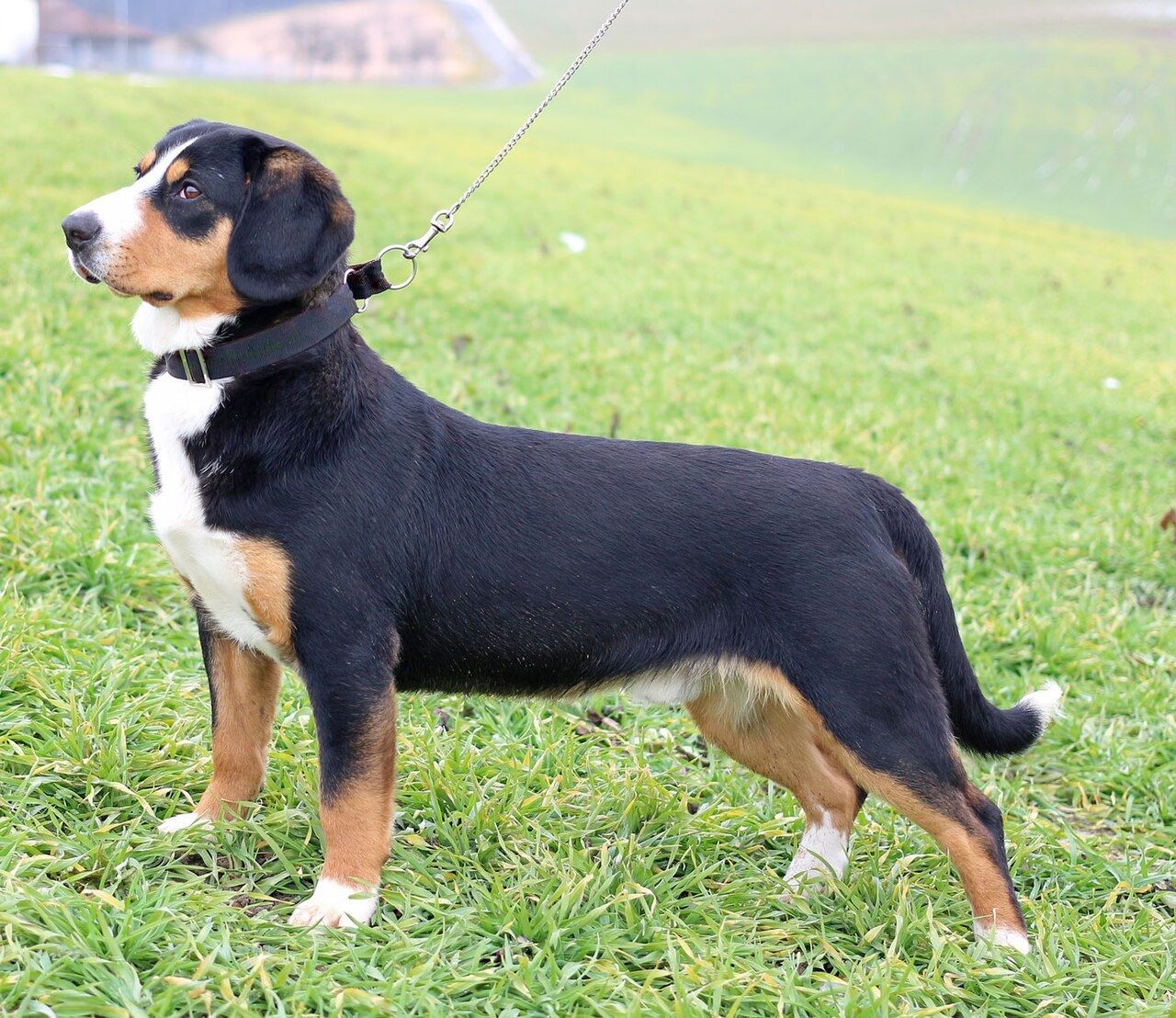
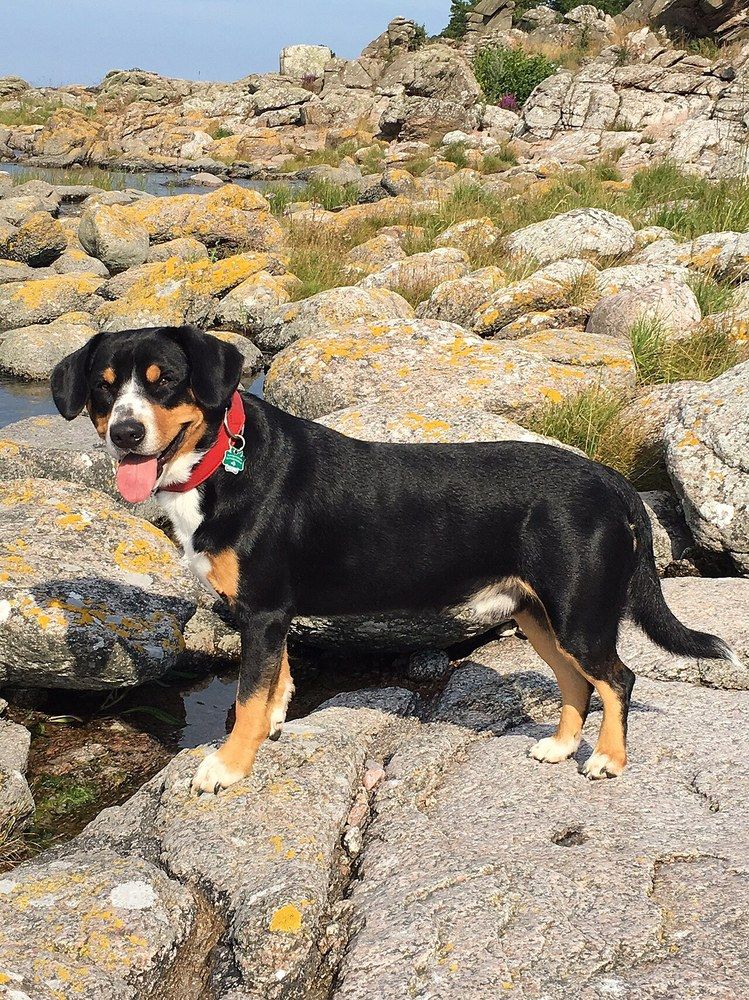
Job: Compact Swiss cattle dog; short, harsh tricolour coat; strong for its size.
Energy: High energy and a herding brain; heel nips and body blocks come with the package.
Home: Fits an active household ready for daily training, sport or farm-style jobs and clear rules.
An Entle looks like a small Bernese. It works like a cattle dog
Public histories place the Entlebucher in the Entlebuch valley of central Switzerland as a farm and cattle dog: it drove cows to pasture and market, warned of strangers and lived close to the family. It is the smallest of the four Swiss mountain dog breeds, next to the Appenzeller, the Bernese and the Greater Swiss, and it kept the most cattle-dog energy of the group.
What I meet in family homes is usually a loyal, clever, bouncy dog that loves its people and wants a job. The sharp edges are heel nipping when children or bikes move fast, a strong body that bumps and blocks, alert barking and a teenage dog that suddenly pulls like a much bigger breed. None of that is a “bad dog”. All of it is predictable when an Entle is sold as a compact couch version of the Bernese.
My structure is simple. Real daily work with clear endings. Clear rules for mouth and feet around moving people. And settle skills so a busy cattle-dog brain can rest.
Short, close, harsh double coat; black with tan and white markings
Job
Swiss cattle dog / herding (FCI Group 2, Swiss Mountain and Cattle Dogs; AKC Herding; RKC Working)
Breed history
How a Swiss valley cattle dog became a modern family and sport dog
History will not tire your dog for you, but it helps explain why Entles are compact, strong, quick and rarely content without a job.
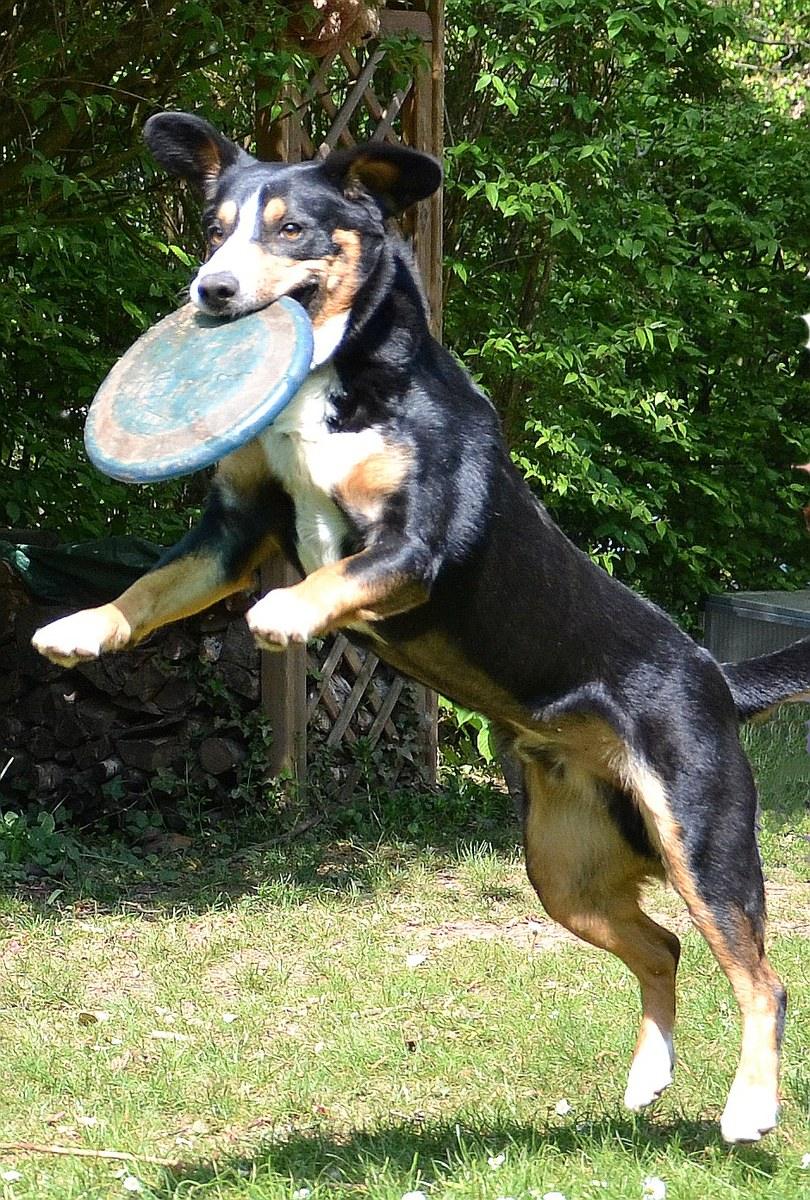
An Entlebucher in a disc game. Sport and play with clear endings suit the cattle-dog brain.
Entlebuch valley → compact cattle drivers
Bred to drive cows, not to pull carts
Public accounts describe the Entlebucher as a farm dog that drove cattle, kept watch and stayed close to the farmer. It is lighter and quicker than the big Swiss draft breeds, because driving cows needs speed, turns and courage more than pulling power.
What matters for an owner is that the Entle is still a working cattle dog. Training should stay fair and active — or the living room becomes the pasture.
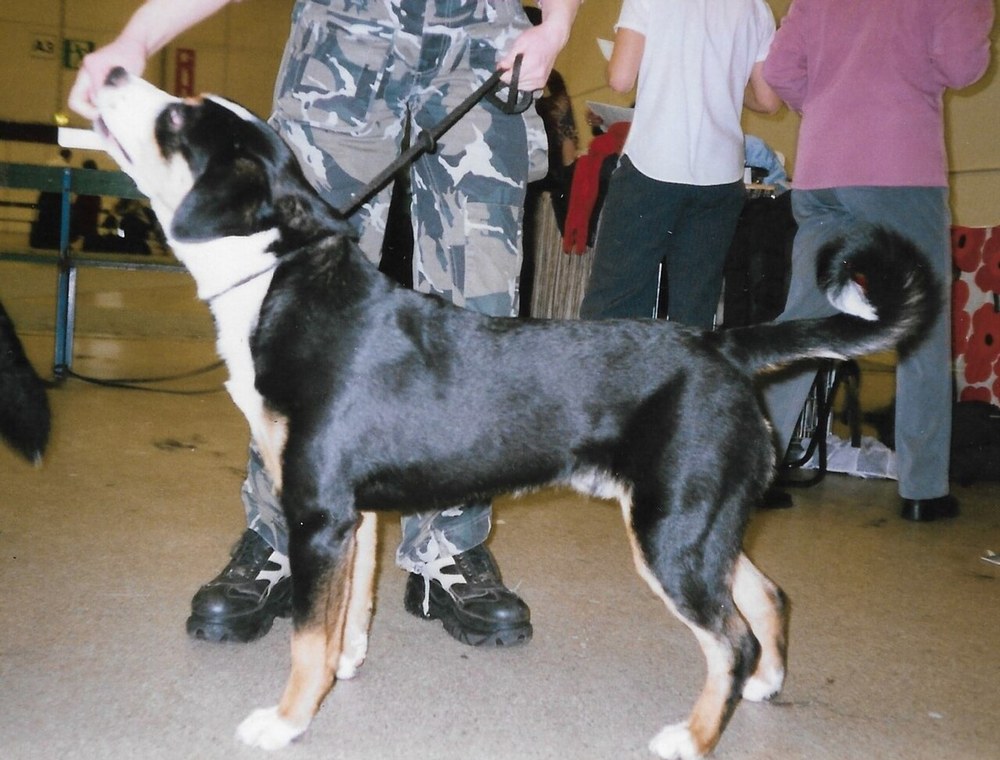
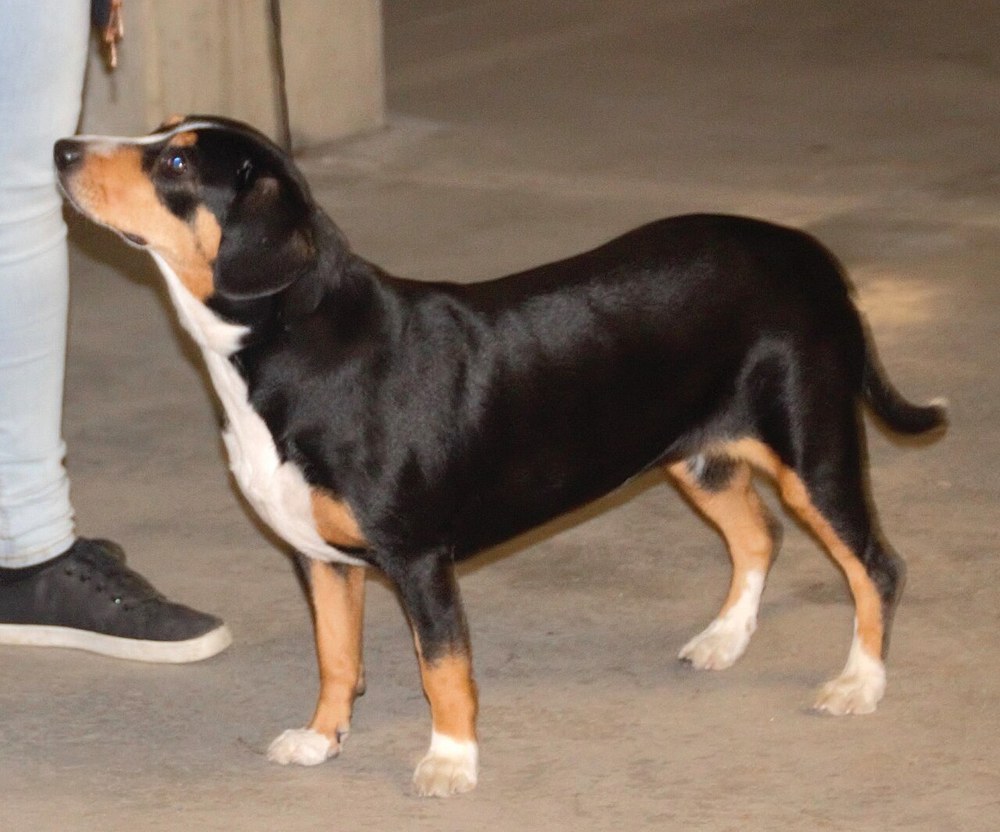
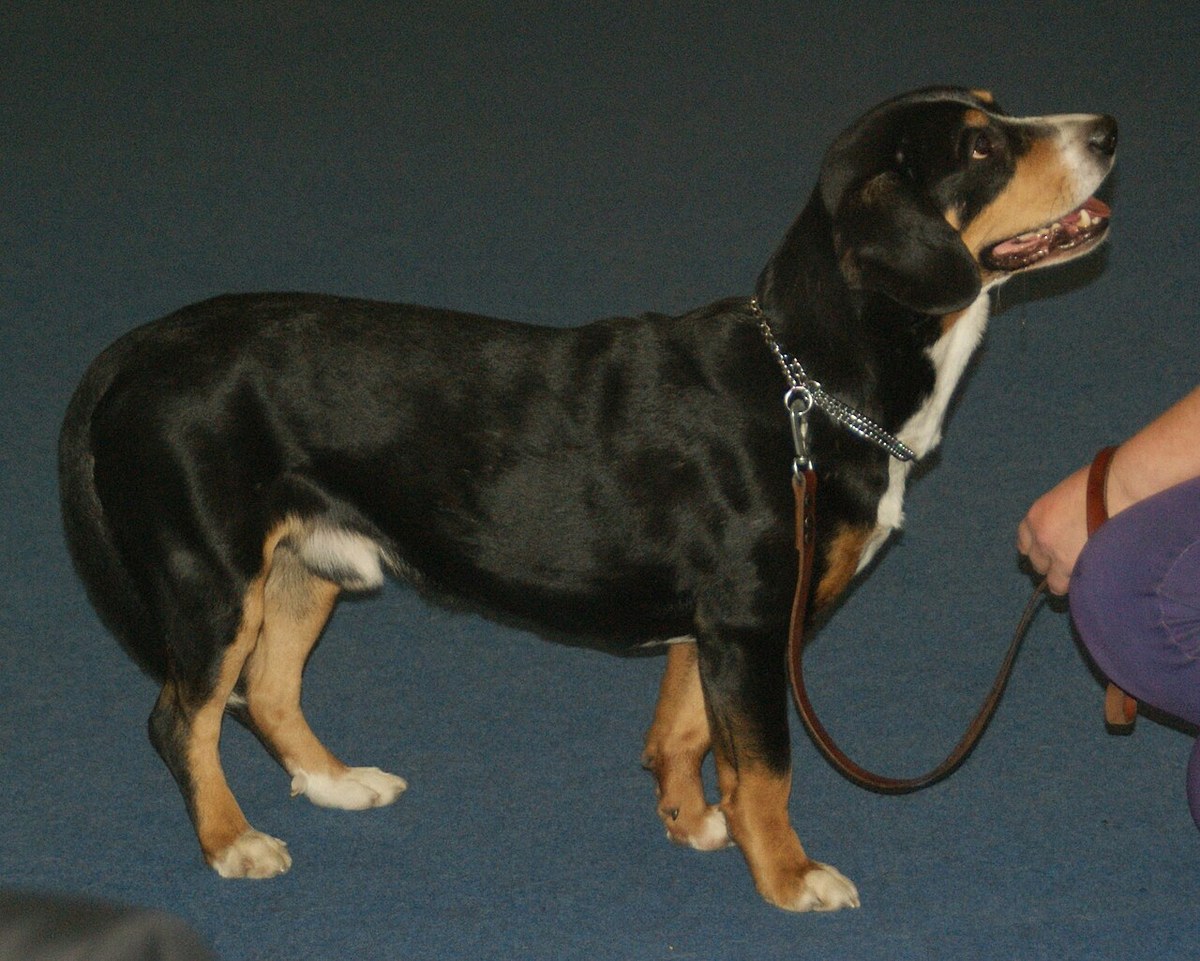
An Entlebucher at an indoor show. The breed was kept and shown by Swiss breeders who wanted to save the old valley cattle dog.
From valley farms to modern homes
A rare breed saved by Swiss breeders
Breed histories tell of a small number of dogs collected and bred on purpose in the early twentieth century, when the old valley type had become rare. That is why the breed pool is small and why good breeders care about planning litters with care.
Most Entles now live as family dogs with training or sport hobbies. They still carry high work drive, strong loyalty to their own people and a sturdy, muscular body that needs measured food and fair exercise.
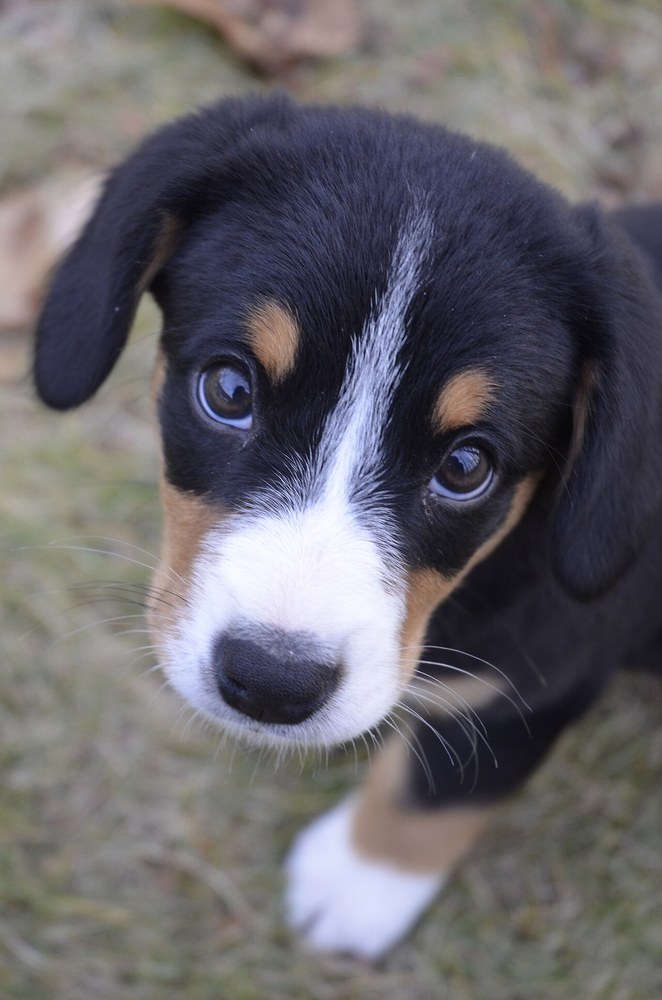
A young Entlebucher at eleven months. The teenage months are when strength and opinions grow fastest.
What the breed was bred for
Loyalty, alertness and a busy brain
In trainer terms you get a dog with high drive, quick learning, a strong bond with its family and a habit of watching the door. It learns well when sessions are short, fair and end clearly.
Because of the friendly mountain-dog look, many owners under-work the dog. That is how you get a bored, barky, bumping housemate.
Cattle-dog drive: needs real work, not only walks
Herding nips: teach clear rules around moving people
A good day is real work, a skill session, a settle and clear rules around moving people
Most Entlebuchers are happiest with jobs and clear rules. The friction points are usually under-work, nipping at moving feet and a brain that never gets an off-switch. Routines done the same way every day help the dog feel safe and cooperate more.
Morning · work
A real outing beats three rushed toilet trips
Plan daily walking, sniffing and a training session. Entles need their brain tired on purpose. Short walks around the block rarely meet a cattle dog.
Many Entles try to herd running children, joggers and bikes with nips at heels. Teach sit when people move fast, reward calm watching and pause games before the dog gets wild. Children should not run past a puppy to tease it.
The coat is short and easy, but it sheds, more in spring and autumn. A quick brush a few times a week is enough. Reward calm standing for feet, ears and teeth.
General awareness only. I am not a veterinarian. With Entlebuchers, owners often notice trouble first as restless behaviour when under-worked, limping after hard play, weight creeping up, ear smell or eye changes. For red flags, leave this page and open
when to call the vet.
Joints and play volume
Keep jumping and rough play sensible while the dog grows. Limping needs a vet. See limping stop list.
Eyes
Ask breeders about breed-club eye themes. Squinting or vision changes need a vet.
Weight
Entles love food and gain weight easily. Measure food. See BCS check at home.
Coat and skin
Short coat, seasonal shedding. Redness or smell deserve a vet check.
Ears
Check after wet weather. Smell or head shaking needs a vet.
Ask the breeder
Ask which screenings the national breed club recommends for the parents. Do not invent disease claims from a blog.
Lines and types
Family and sport Entlebuchers share the same need for real jobs and settle skills
No bloodline selling. Differences show in how intense, how vocal and how sturdy the dog feels. Every Entlebucher needs fair work, clear endings and rules for moving people. Do not confuse this compact Swiss cattle dog with a Bernese copy-paste — size, energy and day-to-day needs differ a lot.
Family companion homes
Still a cattle dog: heel nips and body blocks need clear rules.
Needs daily walks plus training, not only garden time.
Door manners and settle skills are required.
Ask how the parents behave with visitors and children.
Fits an active family that wants a loyal, compact dog and will train it every day.
Sport and farm-minded homes
Often thrive in agility, obedience, herding or tracking.
Strong and quick; teach lead manners early.
Need rest days and sensible volume.
Harsh corrections usually damage trust fast.
Fits an experienced owner who will give real work and manners, not only photos.
Socialization windows
What to introduce — and what not to overload — by age
AVSAB-aligned in spirit: short, clean exposures at a distance the puppy can still eat,
with hygiene while vaccines finish. See the
puppy socialization schedule.
2–4 months
Home, soft mouth and rules
Introduce: name game, leave-it beginnings, sit for greeting, toilet plan, short outings.
Do not overload: letting the puppy chase feet, skipping alone-time steps, free endless excitement indoors.
~6 months
The world at a distance
Introduce: joggers, bikes and children at a distance where the puppy can still think, harness practice, guest manners.
Do not overload: forcing greetings, long boring drills, practising heel nips on family members.
~12 months
Teenage strength
Introduce: place during visitors, settle after training, loose lead work, short skill games with endings.
Do not overload: dropping manners because the dog is cute, under-working, harsh corrections.
~18–24 months
Social maturity
Introduce: steady settle after sport, calm greetings, varied work with endings.
Do not overload: assuming puppy softness lasts without practice, adding a second dog without a plan.
~3 years+
Keep the structure
Introduce: refresh settle skills, keep fair work, yearly health checks.
Do not overload: dropping management because the dog has been good for a while.
Before you buy
Who a Entlebucher Mountain Dog usually fits
Fit comes down to work drive, herding habits, strength on the lead and a clear look at whether you want a real Swiss cattle dog.
Good match
More likely a good fit if you…
You want a compact, loyal and busy working dog
You will give daily work and serious skill or sport training
You can teach clear rules around running children and bikes
You will teach loose lead walking before the dog is strong
You have time for a high-drive partnership dog
Mismatch risk
A Entlebucher Mountain Dog may be a poor choice if…
You want a calm, slow Bernese in a smaller size
You cannot give real daily work beyond short walks
You dislike training games and settle work
You need a dog that ignores moving children
You want a quiet dog that never alerts at the door
If you are torn between breeds
Entlebucher Mountain Dog vs Bernese Mountain Dog and Greater Swiss Mountain Dog
All three are Swiss mountain dogs with the same tricolour pattern. The Entlebucher is the smallest and the most cattle-dog of the group, with a short coat and high energy. The Bernese Mountain Dog is a big, long-coated farm and draft dog, usually calmer at home. The Greater Swiss Mountain Dog is a large, short-coated draft and farm dog. Same Swiss roots; very different size and day-to-day energy.
Size
Entlebucher Mountain Dog
Compact; often about 16–21 in.
Greater Swiss Mountain Dog
Large draft dog; much heavier frame.
Coat
Entlebucher Mountain Dog
Short, harsh tricolour coat.
Bernese Mountain Dog
Long, silky tricolour coat; more brushing.
Original job
Entlebucher Mountain Dog
Driving cattle and farm watch.
Both compares
Farm guarding and pulling carts on Swiss farms.
Energy
Entlebucher Mountain Dog
High; herding drive and heel nips.
Bernese Mountain Dog
Usually calmer and slower at home.
Home fit
Entlebucher Mountain Dog
Active home wanting a compact working dog.
Both compares
Need training too, but bigger bodies and a slower pace.
Ownership without surprises
Where a Entlebucher Mountain Dog owner’s budget goes
Costs depend on country, city and your choices. These are themes to plan for, not quotes.
Veterinary
Routine care, eyes and joint-aware checks. Know your emergency clinic.
Food
Measure carefully; Entles gain weight easily when portions drift.
Training
Puppy class and private help with herding nips, lead manners or settle skills if needed.
Sport gear
Harness, long line, toys, place bed and sport equipment with sensible volume.
Coat care
A brush and a de-shedding tool for spring and autumn.
Time
Daily work and settle practice are the real recurring cost.
The biggest hidden cost is time: fair work and clear rules beat a bored cattle dog herding the family.
Before day one at home
What to prepare for a Entlebucher Mountain Dog puppy
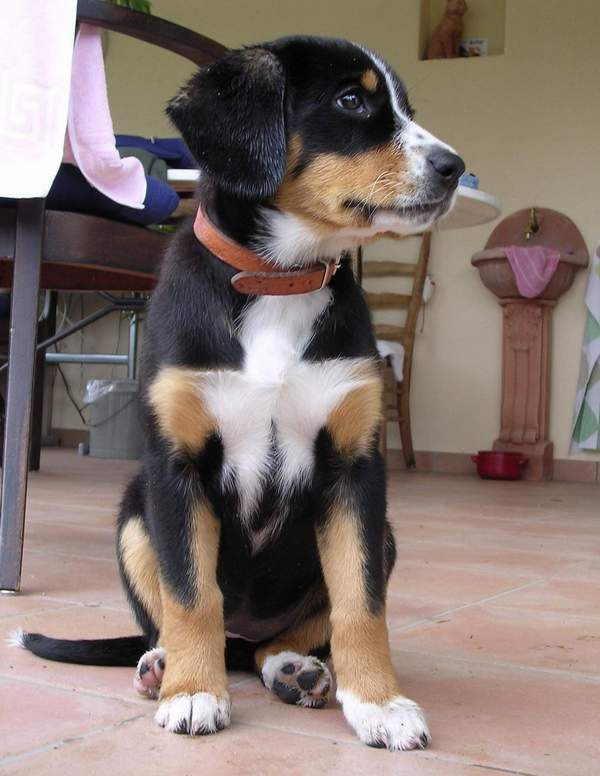
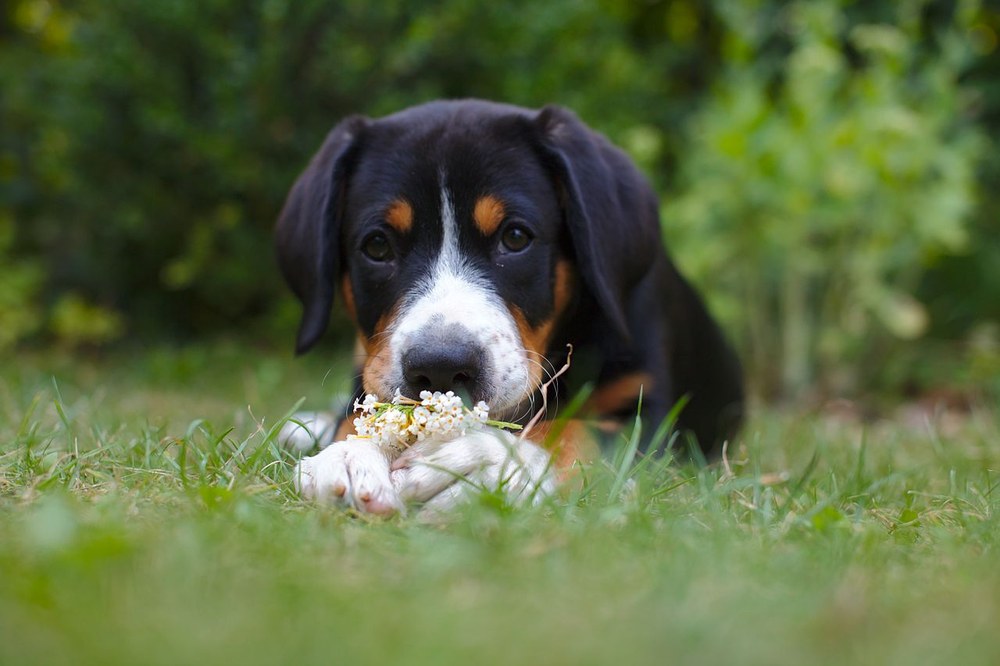
An Entlebucher puppy is bright, bouncy and already interested in moving feet. Prepare settle habits, a plan for gentle mouths and fair jobs before day one so drive grows into useful work rather than heel nipping.
01
Set house rules
Decide where the puppy sleeps, how greetings work and what happens when energy peaks.
02
Soft mouth early
Reward gentle play and pause games when teeth touch skin or trousers. See biting and nipping.
Training an Entlebucher means real work, clear endings and rules for moving people
Entles do best with clear, kind rules: leave-it around excitement, sit when people run past, place on its own bed and settle after training. Every family member uses the same cues and rewards the same behaviours.
They are food-keen and game-keen when the session is fair. Harsh corrections damage trust fast on a loyal working dog. Short sessions with clear endings work better than endless wild drills.
Management is part of training: give a job before peak energy hours, keep the puppy on a lead or behind a gate when children play chase, and teach an off-switch on a bed. You stop the old habit while the new one grows.
Load balance
Work first — then ask for calm
Age, joints and weather all matter. Limping, eye changes or sudden irritability need a vet check before more training.
Sniff walkSkill or sport sessionSit when people move fastPlace with a chewQuiet settle after work
Walks, find-it games, tug with clear rules and short skill work all count. Letting the dog herd the children indoors does not meet the need for a planned job.
An Entlebucher that has had fair work, a clear session ending and a settle cue can rest on its own bed instead of herding the household.
Work with an off-switch
How to teach an Entlebucher to end a session and settle
Keep sessions clear, mark a clear end, send to a bed with a chew, practise settle after mild excitement and stop before the dog gets wild.
01
Start a clear session
Offer a short skill or sport session with a clear start. Keep it focused.
02
Mark the end
Use a clear end word and stop the work. Toys and cues stop so the dog learns the session has finished.
03
Send to a bed
Invite the dog to a place bed. Reward arriving and quiet.
04
Reward rest
Offer a chew on the bed so ending work predicts calm.
05
Repeat after mild excitement
Practise the same ending after a short walk, a doorbell or children playing at a distance, not only after sport.
One scene close-up
Why an Entlebucher nips heels and cannot settle
Many Entles were rewarded for herding without anyone noticing: children squealed and ran, games never ended and excitement stayed high. Heel nipping is the old cattle job showing up in the wrong place.
Manage first: stop running games near the puppy, give a chew on a bed and practise place after mild training. Then reward calm watching while people move at a distance.
If nipping gets harder or you suspect pain, get help from a vet and a qualified professional.
“With an Entlebucher, I start by giving the cattle dog a real job and clear rules for moving people. Once the dog has work, a settle cue and rest after sport, the Entle becomes a loyal partner — not a small herder chasing the children.”
Sessions cover real scenes: heel nipping, lead pulling, door alerts, settle and alone time. I am a trainer, not a veterinarian.
Andrew DarovProfessional dog trainer and instructor
Usually better for an active owner who will train daily. It is a working cattle dog, not a casual couch breed.
Entlebucher vs Bernese Mountain Dog: what is the difference?+
The Bernese is a big, long-coated and usually calmer farm and draft dog. The Entle is compact, short-coated and much busier, with real herding drive.
Entlebucher vs Greater Swiss Mountain Dog: which fits better?+
The Greater Swiss is a large draft dog. The Entlebucher is the smallest Swiss mountain dog and fits owners who want a quick, compact working partner.
Why does my Entlebucher nip at heels?+
It was bred to move cattle. Teach clear rules around running people, pause games before they get wild and reward calm watching.
How much exercise does an Entlebucher need?+
Most adults need a real daily outing plus training or sport, not only short toilet walks.
Are Entlebuchers good with children?+
Often loyal and playful with their own family when rules are taught. Supervise; running children can set off herding nips.
Can an Entlebucher live in a flat?+
It can, with serious daily work, settle training and alone-time practice. A garden alone does not replace walks and training.
Do Entlebuchers shed?+
Yes. The coat is short but sheds, more in spring and autumn. A quick brush a few times a week helps.
What health themes should I ask about?+
Ask breeders which screenings the national breed club recommends, and ask about eyes, hips and general health of the parents. This is general awareness, not a diagnosis.
How long do Entlebuchers live?+
Public breed references often mention about 11–13 years. Individual dogs vary.
Are they good with other dogs?+
Often fine with stable dogs when introductions are planned; some are bossy in play, so keep games fair.
Do Entlebuchers bark a lot?+
Many are alert watchers. Teach bark-then-settle at the door early.
If an Entlebucher seems too driven or too busy for your home
It is compact, but high drive, heel nipping and alert barking do not fit every household.
Dog barking in the car at other dogs, bikes or the park? Why car barking starts and how to stop it: cover the view, use a crate, and do short quiet drives.
Help your dog calm down after guests leave: lower the excitement, reward a quiet mat or place job, and end the evening calmly.
Need a read on your exact situation?
Tell me your Entlebucher’s age and the scene that keeps repeating: heel nips, pulling, door barking or settle trouble. We check safety and health first, then pick the first skill.