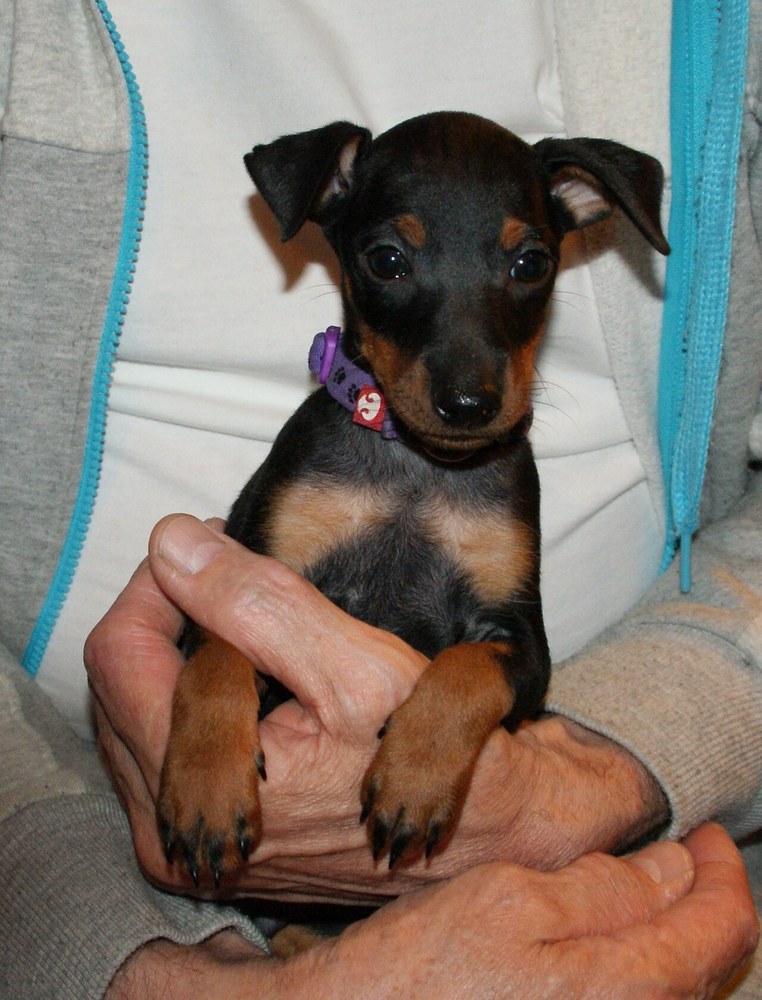
English Toy Terrier: temperament, prey drive, cold and training a small ratter
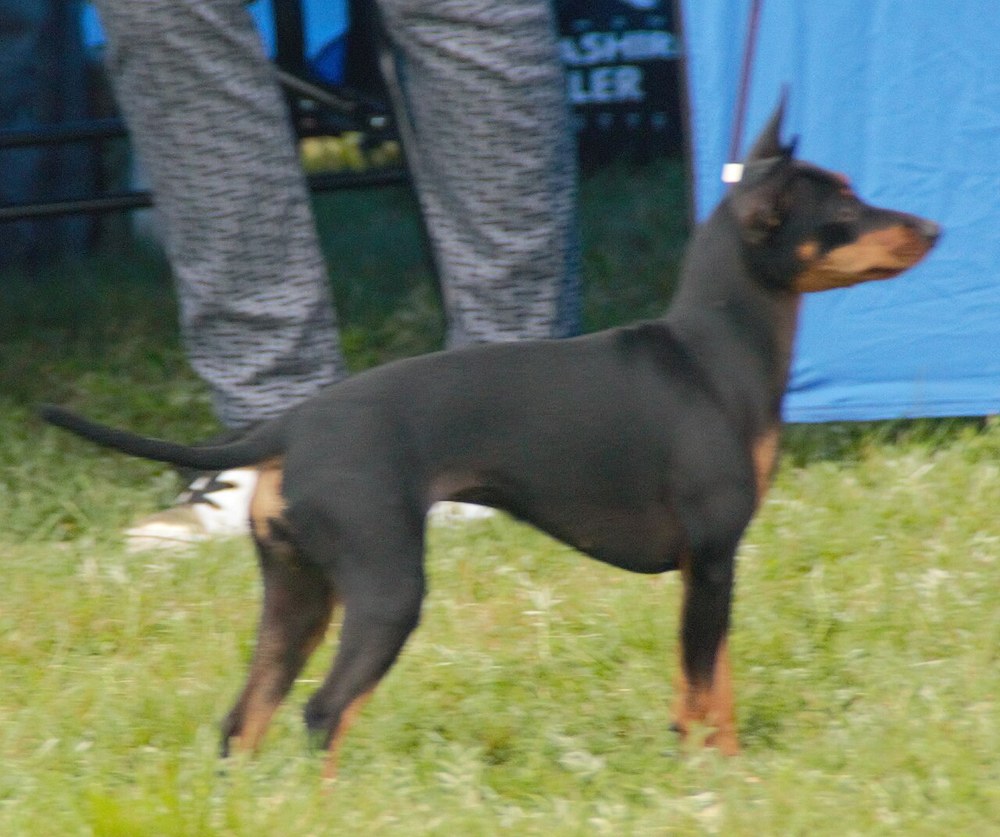
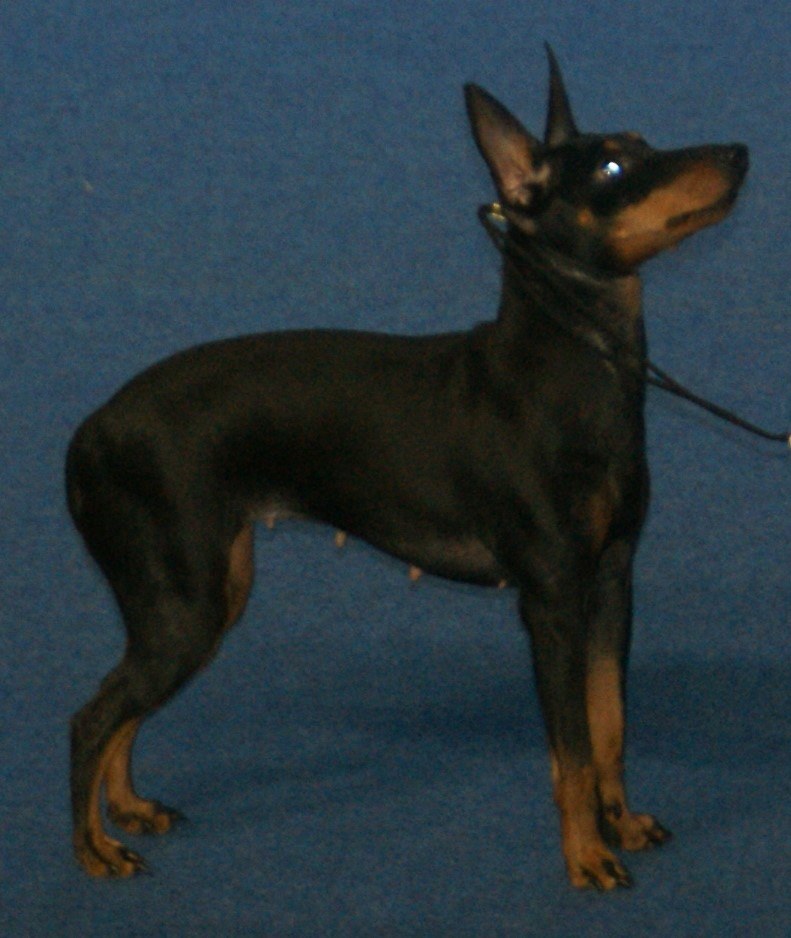
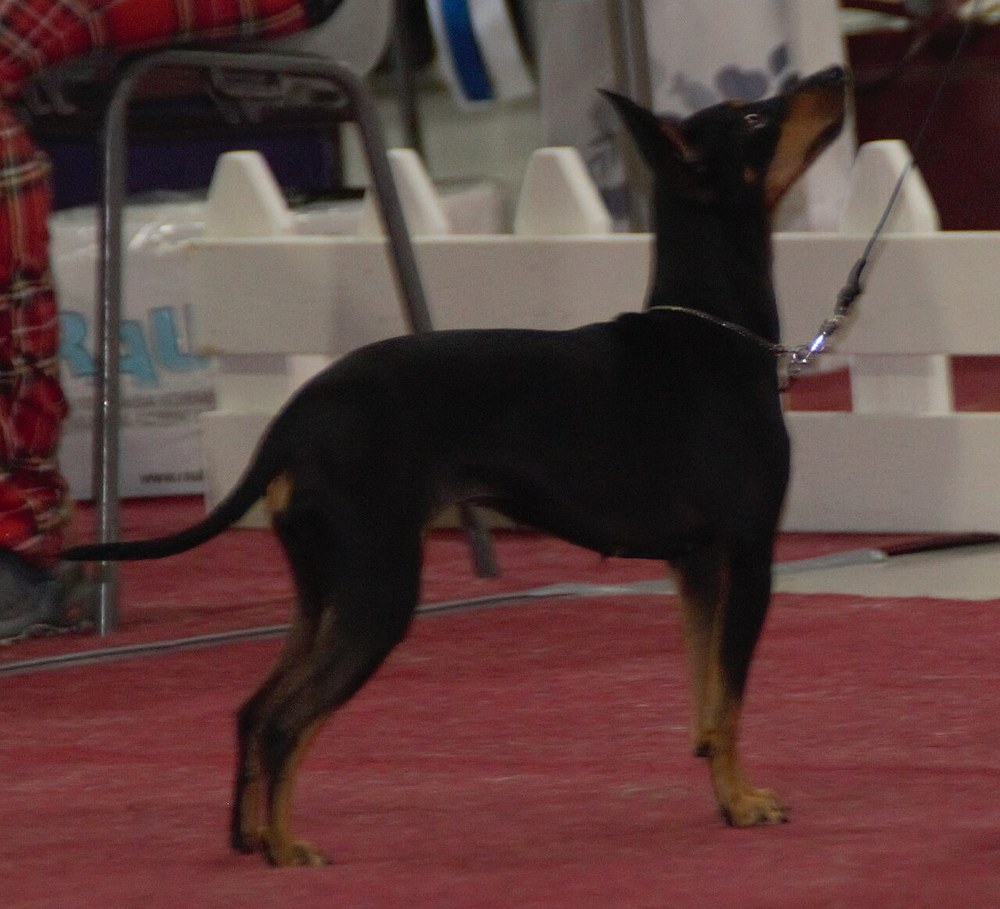
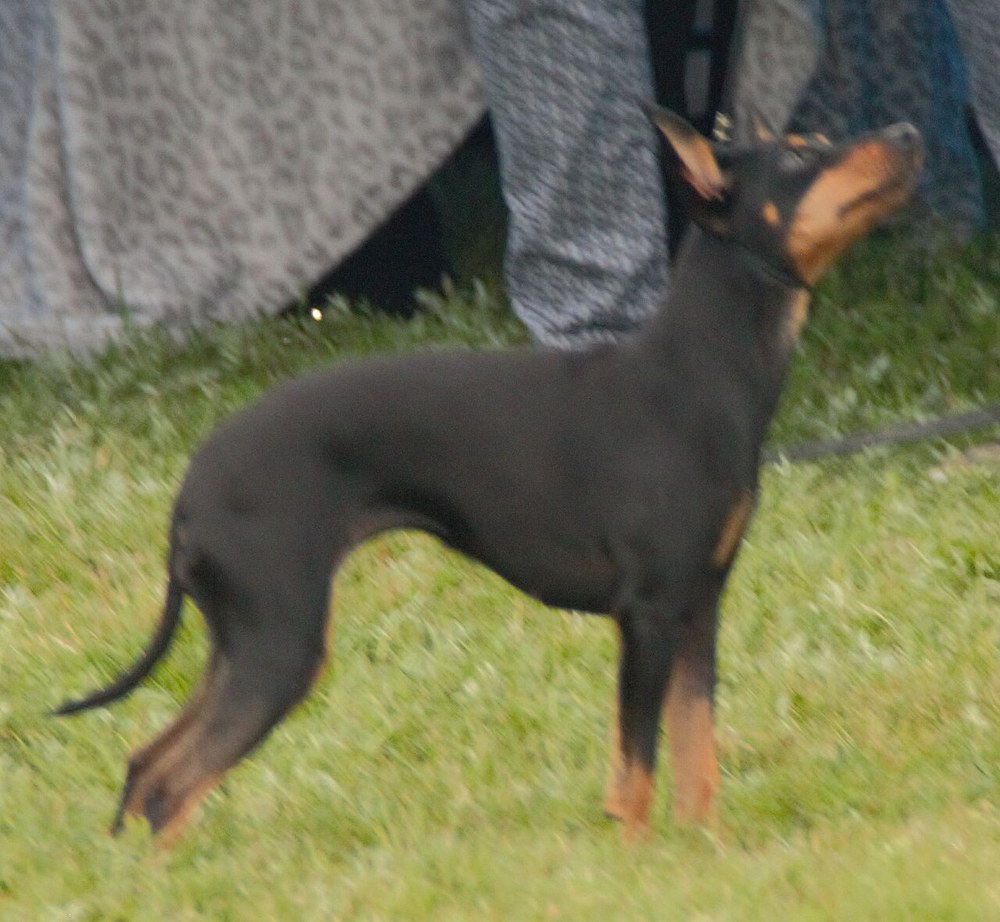
The English Toy Terrier (Black & Tan) is a small, sleek British terrier of about 3 kg with a glossy black and tan coat and candle-flame ears. Its ancestors killed rats in Victorian pubs and stables, and the terrier is still in there: quick, keen to chase anything that runs, alert to every sound and full of opinions. It is also a devoted, clean house dog that feels the cold. Few puppies are born each year, and the UK Kennel Club lists it as a vulnerable native breed, so finding one takes patience.
Job: A small black and tan ratter; FCI Group 3 (Terriers, toy terrier section), UK Kennel Club Toy Group.
Energy: Quick, keen, loyal and alert, with a real chase instinct.
Home: Suits an owner who wants a tiny dog with terrier spirit and will train recall and calm manners.
The size suggests a lap dog. The ancestry says rat catcher. Most English Toy Terriers are both: they will curl up under a blanket all evening and still shoot off after a squirrel the moment the lead comes off.
The calls I get about this breed are about the terrier side. A dog that will not come back once something moves in the hedge, one that shakes and refuses to walk in the rain, sharp barking at noises and a strong dislike of being restrained or handled by strangers.
My plan works with that terrier brain. Chase games with clear rules, a recall built on a long line, a warm coat for wet days, short reward-based training and calm handling practice. Done that way, the English Toy is a bright, loyal and very entertaining dog.
Short, dense, glossy coat; black and tan only, with clear tan markings on the face, chest and legs
Job
Small British ratting terrier of the 19th century, bred down from the Black and Tan Terrier; today a companion dog
Temperament in one minute
English Toy Terrier temperament: what they are like at home
Short answer: English Toy Terriers are small, sleek black and tan ratters of about 3 kg from Britain. They are lively, loyal and clever, alert and quick to bark, often reserved with strangers and very keen to chase anything that moves. They need about 45 minutes to an hour of walks and play a day, chase games with rules, recall work on a long line, a warm coat in winter and short, kind training.
Are English Toy Terriers affectionate?
Yes, very loyal and fond of a warm lap. Build short absences early.
Are English Toy Terriers easy to train?
Quick and clever, but bored by repeats. Begin with the name game and drop it.
Are English Toy Terriers good with kids and other dogs?
Good with gentle, older kids and usually fine with dogs; small pets are at risk. See children and guests.
English Toy Terrier behavior problems to expect
The usual four are chasing, barking at noises, wariness of strangers and dislike of handling. The list below links a guide for each.
Living with an English Toy Terrier in a flat
A good fit with daily walks, chase games and early work on hallway barking.
Breed history
From Victorian rat pits to a rare British breed
The ratting past explains the speed, the chase and the sharp eyes and ears.
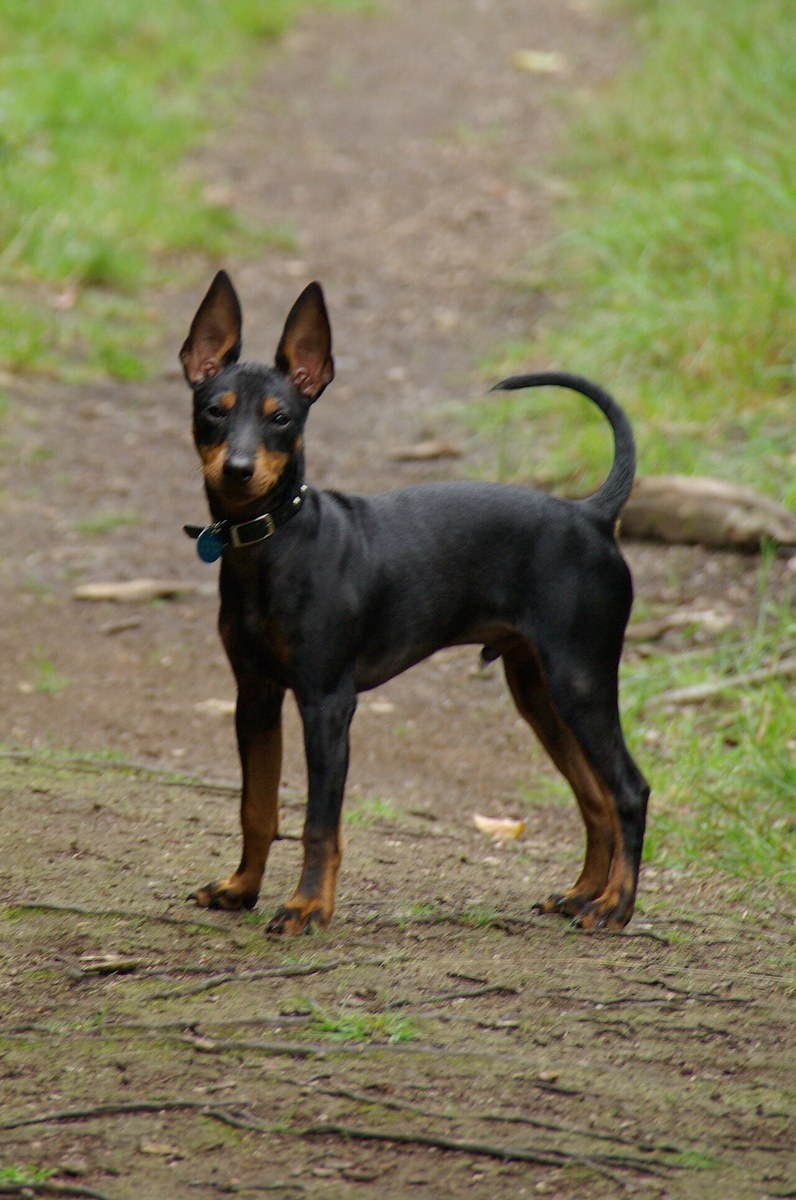
An English Toy out on a country track: plenty of small animals to notice, so the lead stays on until recall is solid.
England · 19th century
A small ratter from the Black and Tan Terrier
In 19th-century England, black and tan terriers were kept to kill rats in homes, stables and warehouses. Rat-killing contests in pubs were a popular, and cruel, pastime, and small, fast dogs were prized.
Breeders selected smaller black and tans from the same stock that gave the Manchester Terrier. Some of the tiniest dogs of that time were very fragile, and later breeders worked to keep a sound, healthy small dog rather than the smallest possible one.
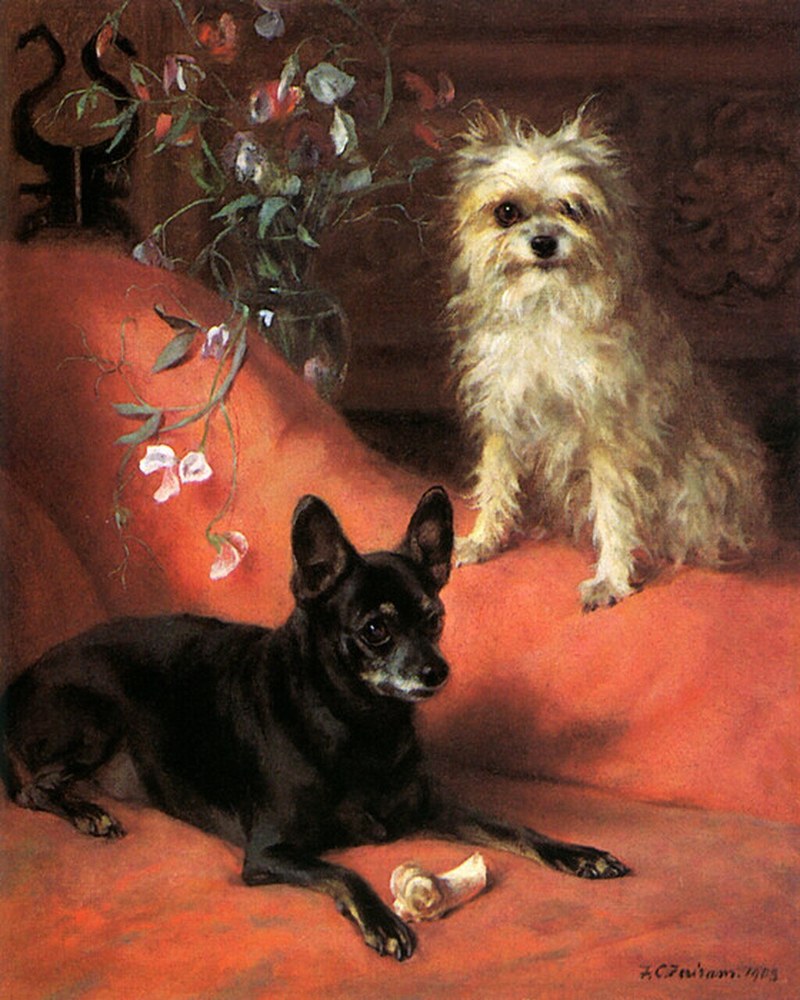
Painting by Frances C. Fairman (1836–1923), "A shared bone": an English Toy Terrier with an Affenpinscher.
From 1962
A new name and a small population
The breed was shown under several names, such as Toy Black and Tan and Miniature Black and Tan Terrier. In 1962 the UK Kennel Club settled on English Toy Terrier (Black & Tan).
It has never been common. The Kennel Club counts it among the vulnerable native breeds, with only a few hundred puppies registered in a typical year, and breed clubs work to keep the gene pool healthy.
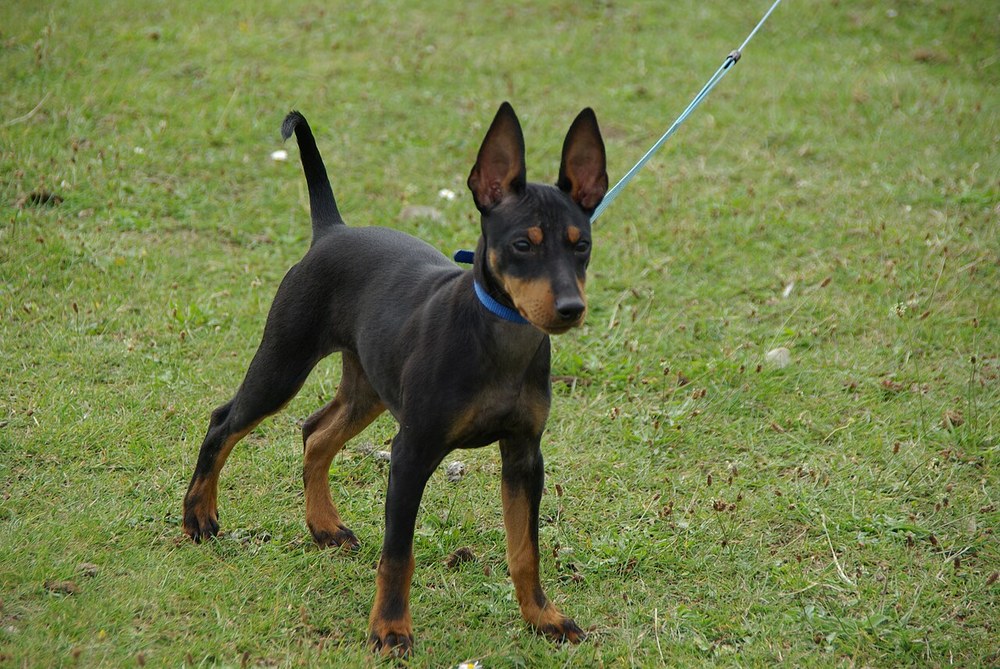
The candle-flame ears and the clean tan markings are part of the breed standard.
What the breed was bred for
Lively, loyal and quick to react
A well-raised English Toy is lively, loving and very loyal to its family, clean in the house and quick to learn. Many are sensible little dogs with a sense of humour.
It is also a terrier: quick to chase, quick to bark, sometimes reserved with strangers and not keen on rough handling. Recall around moving animals needs real work.
A good day has a brisk walk, a chase game with rules and a warm blanket
An adult English Toy is happy with about 45 minutes to an hour of walks and play a day, but it wants some of that time to be quick and exciting. Trouble starts when the terrier gets nothing to chase but the cat, and nothing to watch but the window.
Morning · the first months
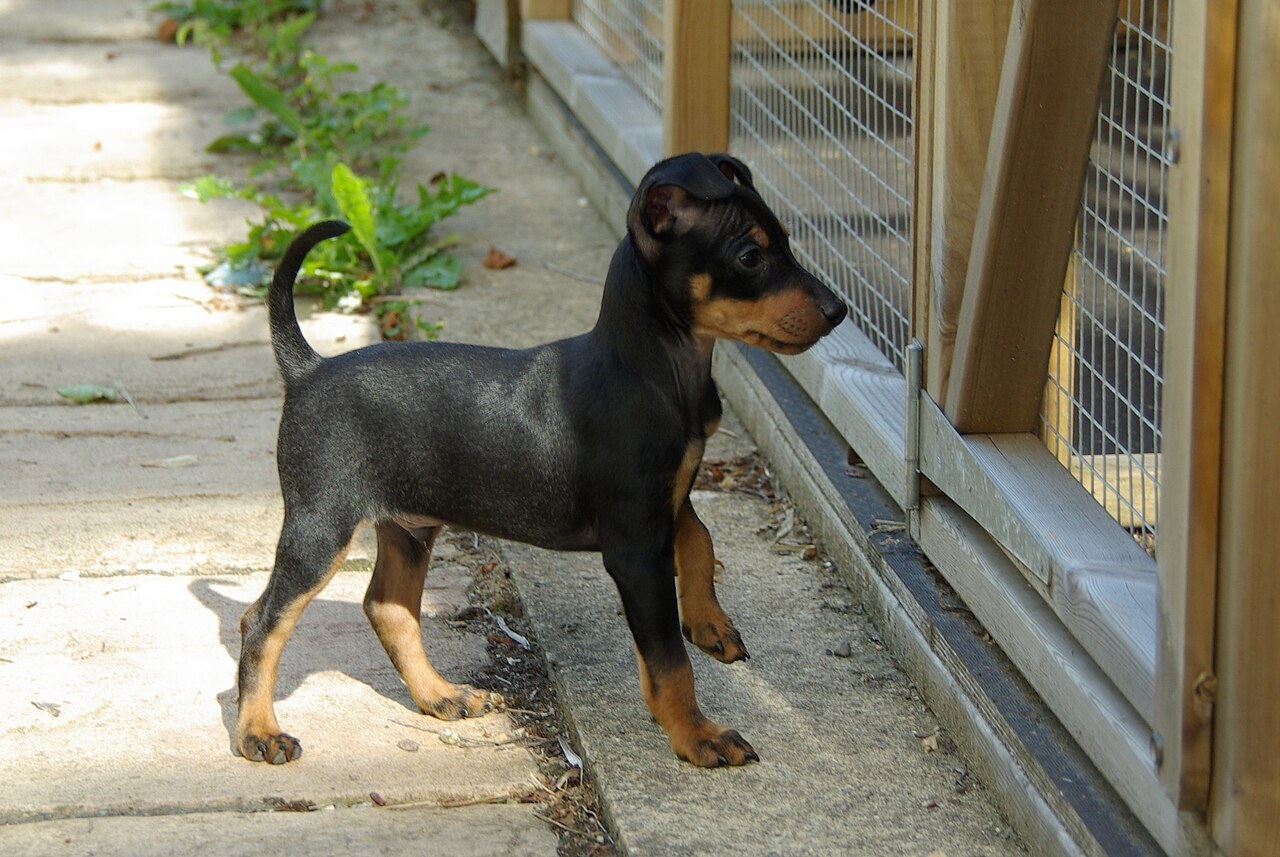
Early outings for a quick little puppy
Let the puppy see bikes, birds and other dogs from a calm distance and reward it for looking at you afterwards. This is where a terrier learns that noticing something does not mean chasing it.
Drag a toy on a flirt pole or a rope, let the dog catch it, then swap it for a treat and start again. A chase with rules uses up the ratting drive and teaches a drop cue at the same time.
In parks and fields, use a light long line on a harness until recall works around moving animals. Practise a quick U-turn away from a squirrel before you ever need it.
Many English Toys are reserved with people they do not know. Let a visitor sit, toss a treat on the floor and ignore the dog until it comes over. Forcing a cuddle makes a careful dog more careful.
This short-coated dog loves warmth. A covered bed or a soft blanket in a quiet corner helps it settle, and a fixed bedtime routine stops late-evening zoomies.
General awareness only. I am not a veterinarian. With an English Toy, owners often first notice shivering on wet, cold days, a dog that hops on a back leg, tartar on small teeth, thin hair on the ears or a dog that hates having its nails done. For red flags, leave this page and open
when to call the vet.
Cold and rain
A thin coat and a small body chill fast; use a coat in winter and dry the dog after wet walks.
Teeth
Brush small teeth often and ask your vet to check the mouth at each visit.
Practise touching paws, ears and mouth with treats from puppyhood. See fear of vet handling.
Weight
Tiny dogs gain weight from small extras; feel the ribs monthly. See treat calories.
Ask the breeder
Ask which eye, knee, heart and other checks the national breed club recommends for both parents, and look at the results yourself. Do not take health claims from a blog.
Lines and types
A rare breed: find a careful breeder and be ready to wait
No bloodline selling. With a small population, good breeders plan litters carefully and often have a waiting list. Meet the mother, watch how she copes with a new person and a sudden noise, ask about health checks on both parents and ask the breed club for advice.
Show and breeding homes
Ring training and travel.
Coat and condition care.
Club events and mentoring.
Health testing plans.
Suits owners who want to show or help the breed survive.
Pet and companion homes
Daily brisk walks.
Chase games with rules.
A long line for recall.
A warm coat for winter.
Suits an active adult or family that wants a small, lively dog.
Socialization windows
What to introduce — and what not to overload — by age
AVSAB-aligned in spirit: short, clean exposures at a distance the puppy can still eat,
with hygiene while vaccines finish. See the
puppy socialization schedule.
2–4 months
Watching the world
Introduce: calm views of birds, bikes and dogs, handling, a harness, a toilet routine, short times alone.
Do not overload: letting the puppy chase the cat or birds in the garden.
~6 months
Quick youngster
Introduce: name check-in, recall on a long line, a drop cue, chase games with rules, lead walking.
Do not overload: letting it off lead in open parks.
~8–18 months
Teenage terrier
Introduce: U-turn practice, calm meetings with guests, longer times alone, a trick or agility class.
Do not overload: punishing barking instead of teaching a quiet cue.
~2 years
Settled adult
Introduce: longer walks, travel, new places, steady recall in safe areas.
Do not overload: trusting recall near squirrels because it came back once.
~3 years+
Maintenance
Introduce: daily walks and chase games, teeth care, weight checks, yearly vet visits.
Do not overload: skipping the winter coat on wet days.
Before you buy
Who a English Toy Terrier usually fits
Fit comes down to whether you enjoy a small dog with a real terrier mind, and will plan for the chase and the cold.
Good match
More likely a good fit if you…
You want a small, sleek, short-coated dog
You like a lively dog with a sense of humour
You will train recall on a long line
You enjoy short, quick games
You are happy to wait for a puppy from a rare breed
Mismatch risk
A English Toy Terrier may be a poor choice if…
You keep pet rats, hamsters or other small animals loose
You want a dog that runs free in every park
You want a dog that loves every stranger
You walk long hours in cold, wet weather
You want a puppy right now
If you are torn between breeds
English Toy Terrier vs Miniature Pinscher and Italian Greyhound
All three are small, short-coated and sleek. The Miniature Pinscher is a bold, sturdy German dog with a high-stepping walk. The Italian Greyhound is a tiny sighthound, gentle, sensitive and built for speed. The English Toy is a true terrier: a ratter with a quick chase and a strong will, always black and tan.
Type
English Toy Terrier
Toy terrier, bred for ratting.
Italian Greyhound
Small sighthound.
Colour
English Toy Terrier
Black and tan only.
Miniature Pinscher
Red, or black or chocolate with tan.
Chase
English Toy Terrier
Strong, quick bursts.
Italian Greyhound
Chases by sight at high speed.
Size
English Toy Terrier
About 25–30 cm, 2.7–3.6 kg.
Both compares
Similar small size.
Ownership without surprises
Where a English Toy Terrier owner’s budget goes
Prices differ a lot between countries and cities, so treat these as budget headings rather than numbers.
Veterinary
A yearly check-up, dental checks, whatever vaccines your own vet recommends and any parent checks the club asks for.
Gear
A light harness, a long line, a warm coat, a flirt pole and a covered bed.
Training
A puppy class, then a trick, agility or scent class.
Grooming
Very little: a rubber mitt, nail clippers and a toothbrush.
Finding a puppy
A rare breed with few litters, so plan for a waiting list and contact the breed club.
A flirt pole and a long line cost little and give the terrier a safe outlet for its chase.
Before day one at home
What to prepare for a English Toy Terrier puppy
An English Toy puppy is bold, fast and curious, and it notices everything that moves. Plan short training games, calm handling, a harness, a toilet routine, a warm bed and short times alone from the first days, and keep small pets out of reach.
Training an English Toy means a safe outlet for the chase, a real recall and kind handling
Most daily trouble with this breed shrinks once five things are in place: chase games with rules, a drop cue, recall on a long line, a quiet cue and calm handling.
English Toys are clever and quick, and they get bored fast. Short sessions, good food and a game at the end keep them keen. Harsh corrections tend to make a terrier more stubborn or more nervous, not more obedient.
Be realistic about the ratter. The dog will always notice things that scurry. The goal is a dog that looks, checks in with you and walks on, and that has a safe chase game at home instead.
Load balance
Quick bursts, then rest
Young dogs should not do long runs or big jumps while they grow. Keep play in short bursts with rest in between, and see a vet about a skipping leg or sudden stiffness before you add more.
Brisk walkFlirt pole gameRecall practiceQuiet cueWarm rest
For this breed, five minutes with a flirt pole often settles the dog better than another slow lap of the block.
An English Toy with a chase game at home has less need to chase things outside.
Chase and recall
How to stop an English Toy Terrier bolting after squirrels and cats
Use a long line in open places, reward every look at you, teach a U-turn away from moving things, give a flirt pole game every day and let the dog off lead only where it is safe.
01
Long line
A light line on a harness in parks.
02
Reward the look
Every glance at you earns a treat.
03
U-turn
Practise turning away from moving things.
04
Flirt pole
A daily chase game with a drop cue.
05
Safe spaces only
Off lead only where it is fenced.
One scene close-up
Why an English Toy chases everything that moves
For generations this breed was selected to spot and catch rats in a split second. A squirrel, a cat or a leaf blowing past sets off the same reaction. That is the terrier doing its old job, not ignoring you on purpose.
Manage first: a long line in parks, a harness so a sudden lunge does not hurt the neck, and no free chasing of the cat at home. Then give the chase a safe outlet with a flirt pole, and build recall and a quick U-turn in calm places before busy ones.
A dog that panics when alone, guards toys hard or bites when handled should be seen by a qualified behaviour professional, with a vet first ruling out pain.
“With an English Toy, I start with the chase: a flirt pole game with clear rules, a long line in the park and a U-turn practised long before the first squirrel. Respect the ratter, and you get a bright, loyal and very funny little dog.”
We look at your real days: walks, chasing, recall, visitors, the weather and time alone. Medical questions belong with your vet; I deal with behaviour.
Andrew DarovProfessional dog trainer and instructor
For an active family with calm, older children, often yes. It is loyal and playful. It is small and can be sharp if handled roughly, so it suits gentle kids best.
Is an English Toy Terrier a good first dog?+
It can be, for a first-time owner who is ready for terrier spirit, recall work and a waiting list for a puppy.
Do English Toy Terriers bark a lot?+
They are alert and bark at noises, but most can learn to stop after a few barks with a quiet cue and a door routine.
How big does an English Toy Terrier get?+
About 25–30 cm (about 10–12 in) at the shoulder and about 2.7–3.6 kg (about 6–8 lb).
Are English Toy Terriers good with cats and small pets?+
Some live well with a cat they grew up with. Pet rats, hamsters and other small animals are at real risk from this ratter.
Do English Toy Terriers feel the cold?+
Yes. The coat is short and thin, so a coat for wet, cold walks and a warm bed at home help a lot.
English Toy Terrier vs Miniature Pinscher: what is the difference?+
Similar size. The Miniature Pinscher comes in more colours and has a high-stepping walk; the English Toy is always black and tan and is a ratting terrier by origin.
English Toy Terrier vs Italian Greyhound: what is the difference?+
The Italian Greyhound is a tiny sighthound, gentle and sensitive. The English Toy is a terrier: more stubborn, more vocal and quicker to chase small animals up close.
How much exercise does an English Toy Terrier need?+
About 45 minutes to an hour a day of walks and play, with some quick chase games.
Can an English Toy Terrier live in an apartment?+
Yes, if barking at hallway noise is worked on and the dog gets daily walks and games.
What health themes should I ask about?+
Ask the breeder which eye, knee, heart and other checks the national breed club recommends for both parents, and mention the breed to your vet. This is general awareness, not a diagnosis.
How long do English Toy Terriers live?+
Breed clubs usually quote about 12–15 years, though each dog is different.
If an English Toy Terrier seems too much terrier for your home
Many people fall for the sleek black and tan look and the small size. The chase drive, the recall work and the wait for a puppy are what to think through before you commit.
Dog barking for attention during calls, on the sofa or at dinner? Stop answering the bark, teach a quiet way to ask, and plan attention before it starts.
Puppy only sleeps on you? Move naps to a pen or crate in small steps. Contact naps are fine early; build a second option so rest works without your lap.
Move your puppy from pee pads or a balcony tray to toileting outside: put the pad outdoors, keep the same word and reward the new spot.
Need a read on your exact situation?
Tell me about your English Toy in a short message: its age, where you walk, what it chases, how recall goes and what goes wrong first. We rule out health issues first, then pick one skill to start with.