Expert Advice · Skills · 13 min read
How to Teach a Dog to Drop It: Step by Step
The mouth opens, the prize hits the floor or your hand, and you pay from elsewhere. That is drop. Leave-it is a different ladder.

Short answer
To teach drop it, let your dog hold a toy, show a better treat at its nose, and say “drop” as the mouth opens. Give the treat, then give the toy back. After 10 to 20 reps the dog starts letting go on the word. Practise with toys first, then with things the dog really likes, before you need it for real.
Drop it is a dog who opens the mouth on cue and lets go of what is already held. The prize hits your hand or the floor, and you pay from somewhere else. A tug war, a chase through the hall, and a shouted “drop” after the swallow are not this skill. They are how the steal gets paid.
This is a skills page. Leave-it is the sister skill for a prize not yet taken. See leave-it. Pay comes from the day’s ration. See food as a reinforcer. Freeze, stare, or growl over the item is not this ladder. That is resource guarding. I am not a veterinarian. I will not publish toxin doses.
What is drop it for a dog?
Name the chain or you are wishing.
- Something is already in the mouth (toy, sock, stick, stolen remote).
- You cue once, or you present a trade the dog already knows.
- The mouth opens. Teeth leave the item.
- You mark that open. You pay from a different place: pouch, other hand, or a second toy you control.
- You decide whether the first item is returned as a game, put away, or bin-bagged.
“Drop” is not “leave.” Leave-it stops the dive before the grab. Drop frees what is held. If you need both on a walk, train both in the kitchen first. Do not invent a new compound cue in the street while the dog is already chewing.
One word for the whole house. Pick “drop,” “out,” or “give.” Then stick to it. Piling “drop, out, leave it, no, ah-ah” on a clamped jaw teaches noise, not a release. The markers and criteria page is how a mark pins the open mouth.
If you chase the sock, you paid the steal.
How do you teach drop it?
You start with a hold you still control.
Quiet kitchen. Dog on a loose leash if they bolt with toys. Dull toy in one hand. Better food or a better toy in the other, still from the day’s budget.
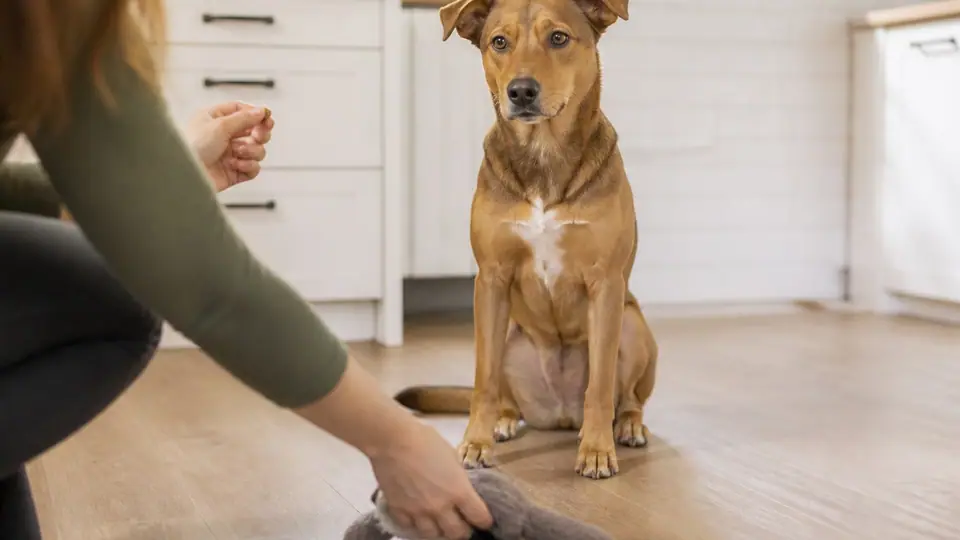
- Offer the dull toy. Let the dog take it and hold for a second or two.
- Bring the better pay near the nose, not into a fight. Wait. Do not pry the jaws.
- The instant the teeth leave the first toy, mark. Deliver the better pay from the other hand or pouch.
- Pick up the first toy yourself, or hand it back as a new round if you are building a retrieve game. Either way, the open mouth earned the pay.
- When that picture is cheap, say your one cue as the mouth is already opening, then pay. The word attaches to a release that exists. Do not throw the word at a clamp.
Then raise one variable: a slightly better first toy, a sock you planted on the floor, a short hold while you take one step back. Not all three. If they clamp and run, you were too interesting or too late. Drop criteria. Same rule as the recall ladder.
A pry, a smack at the muzzle, or a collar yank can force an open and teach that hands near the mouth are dangerous. Some dogs then swallow faster next time. The AVSAB position on humane training is the public standard behind paying the release instead of punishing the hold.
Food on the floor after the open can help when hands are still too exciting. You are paying the empty mouth, not luring a new grab at your fingers.
Drop it versus leave it?
Two skills. One kitchen. Different criteria.
| Skill | Prize state | Working picture |
|---|---|---|
| Leave-it | Not yet taken | Orient off a fist, floor piece, or guest snack |
| Drop it | Already held | Open mouth, item leaves teeth, pay elsewhere |
If the dog is sniffing a crisp on the carpet, that is leave-it territory. If the crisp is already behind the teeth, that is drop. Shouting the wrong word does not convert one into the other.
On a walk, many owners need both. Train leave-it for the sniff and the dive. Train drop for the stick and the stolen glove. A long line keeps either failure from becoming a street rehearsal. The harness and lead page stays the tool note; this page stays the release.
US living rooms with remote controls on low tables and UK flats with shoes by a narrow hall fail the same way: easy steals plus a dog who has only dropped a dull rope in the kitchen. Plant easier items first. Raise the household junk after the open mouth is cheap.
What if the dog runs off with the sock?
Manage before you teach the hard picture.
- Close doors so the steal has nowhere to tour.
- Use a house line or a short trailing lead you can step on without a yank contest.
- Walk to a known trade spot. Show better pay. Wait for the open. Mark. Pay.
- Do not chase. Chase is fetch with worse manners.
- Children call an adult. They do not run the trade. See children and guests.
If the dog already swallowed something that worries you, leave this page. I will not publish a dose or a complete toxin list. US owners can call ASPCA Animal Poison Control, (888) 426-4435. Their fee, their protocol. A local emergency clinic is still the right door if the dog is in distress. UK owners use their own practice or a 24-hour service such as Vets Now. See when to call the vet.
A puppy who mouths everything and then clamps is often also a nipping and rest problem. Drop it does not replace an enforced nap. An overtired mouth is a schedule issue before it is a cue issue.
When is drop it not a DIY skill?
Use a fence you can see.
This ladder: loose body, will take a trade, opens when the better pay appears, can take food from your hand after the release.
Not this ladder: freeze over the item, hard stare, growl, lip lift, snap, or a swallow timed to keep the prize from you. That is guarding. Stop this page. Run the resource-guarding stop list. Do not take the bone as a rank test.
Pain around the mouth, a sudden clamp in a dog who used to trade, or a child who has been bitten over a toy are not a weekend DIY project. Gate the dog. End unsupervised trades. See a qualified trainer or a veterinary behavior professional in your country. Dogmindlab will not invent a triage inbox to stand in for that.
What if my dog will not drop it?
Usually the treat is not worth more than the item, or the dog has learned that dropping means losing the item for good. Try:
- A better trade. Cheese, chicken or a second identical toy.
- Giving it back. In practice, return the toy most of the time. The dog learns that dropping does not end the fun.
- Standing still. Pulling on the toy turns it into tug. Hold still, show the treat, wait.
- Practising when calm. A dog full of excitement holds harder. Train at quiet times.
If your dog has something dangerous, do not chase. Scatter treats on the floor away from the item and calmly pick it up while the dog eats.
Does my dog growl when I take things?
Growling, freezing or snapping over items is different from a simple drop-it problem. Stop taking things by force, use trades only, and read resource guarding. If you see bites or the dog guards around children, get help from a qualified trainer who can see the dog.
What are the usual failure modes?
- You shouted drop after the swallow. The word now names a failure. Attach it to a mouth already opening.
- You paid from the same toy they were holding. You taught a tug contest. Other hand. Or the pouch.
- You chased the steal. Movement paid the clamp. Close doors. Trade still.
- You mixed drop and leave-it in one panic. Two skills. Train both. Use the right one for the prize state.
- You used a child as the first trader. Children move, squeal, and grab. That is a late rung. Adult kitchen first.
- You treated a growl as stubborn drop. That is guarding. Stop. Do not pry.
Sources
AVSAB position statements on humane dog training. ASPCA Animal Poison Control as the US public path for a suspected toxin, with a local UK clinic as the matching door. Paraphrased as public standards, not quoted as a substitute for reading the originals. avsab.org/resources/position-statements/ · aspca.org — animal poison control
Questions on this page
What is drop it for a dog?
A clean release of something already in the mouth. The dog opens, the item leaves the teeth, and you pay from your other hand or pouch. It is not leave-it. Leave-it is a prize not yet taken. Train both. Do not stack them in a panic on the pavement.
How do you teach drop it?
Start with a dull toy the dog will take. Offer a better trade from the other hand. Mark the open mouth the instant teeth leave the toy. Pay. Repeat until the release is cheap, then attach one cue word as the mouth is already opening. Raise to better toys and real household junk one picture at a time.
Drop it versus leave it?
Leave-it stops a dive before the grab. Drop it frees what is already held. Same kitchen, different criteria. If you shout drop at a sniff on the floor, you named the wrong skill. See leave-it for the not-yet-taken prize.
What if the dog runs off with the sock?
Manage first. Close doors, use a long line indoors, or trade through a gate. Chasing is a game that pays the steal. Walk to a known trade spot, show a better pay, and wait for the open mouth. Children do not chase. They call an adult.
When is drop it not a DIY skill?
Freeze, hard stare, growl, or snap over the item is guarding. Stop this ladder. See resource guarding. A swallow of something dangerous is a veterinarian. I will not publish a dose. Pain around the mouth is a clinic question first.
Work with me
A $150 consultation or $500 monthly curatorship. Opens WhatsApp to Andrew.