
Expert Advice · Puppy · 10 min read
Puppy only sleeps on me: move naps to the crate
Lap naps are fine early on. Build a second place to sleep so the puppy can rest when you need your hands back.
A puppy only sleeps on me because your lap is warm, quiet and familiar. That is fine in the first weeks. Trouble starts when every rest needs your body, so you cannot cook, shower or leave the room. Keep some contact naps, then teach a pen or crate as a second place to finish sleep. The why and how of nap timing live on enforced naps. This page owns the move off your lap.
I am Andrew Darov, a dog trainer. I am not a veterinarian. This is a puppy page about rest and management.
Why does a puppy only sleep on a person?
Your lap is the easiest off-switch. Teach a second one before you need your hands back all day.
A young puppy seeks heat, heartbeat and smell. A sofa with a resting adult beats a cold empty crate the puppy has barely met. Owners often end up as the only bed in the house: the puppy dozes on a chest during a call, then wakes and bites the moment you stand.
That pattern is habit plus comfort, not a life sentence. Puppies who can also nap in a playpen or crate get more real rest, and the adults get bathroom breaks. Contact naps can stay part of the day. They should stop being the only option.
How do you move naps from lap to pen or crate?
Small steps. Jumping from “always on me” to “shut in the crate alone for an hour” usually fails.
- Start when the puppy is already sleepy. After a toilet trip and a short calm chew, the puppy is half-asleep on you. That is the moment to move, not when the mouth is still busy.
- Slide onto a bed on the floor beside you. Keep a hand on the puppy. Sit on the floor. The bed becomes the nap spot while you are still the safe smell.
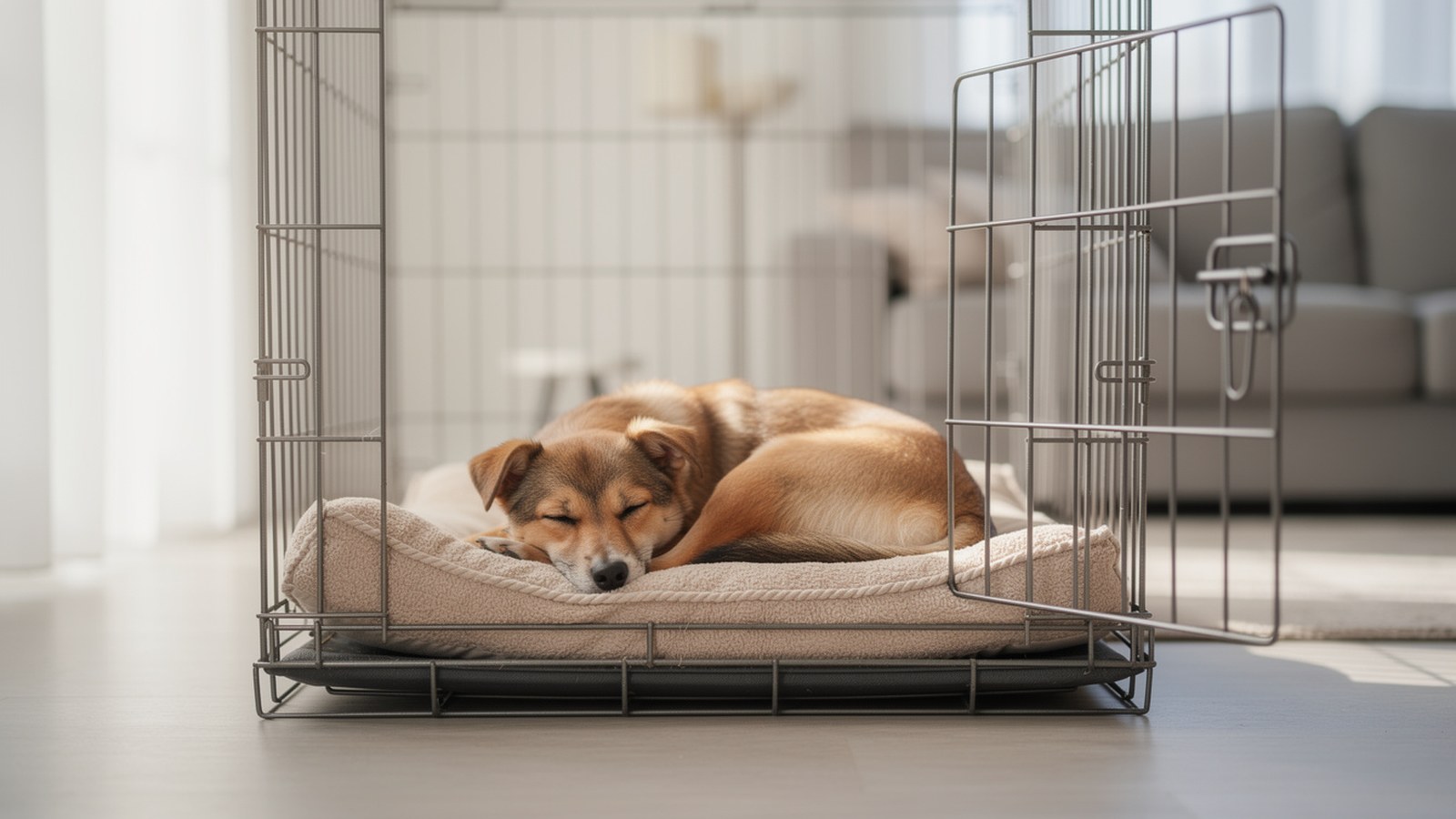
- Put that same bed in an open pen or crate. Door open. You sit next to the bars. If the puppy settles, stay quiet. A safe chew or stuffed food toy can help some dogs stay down.
- Stand while the puppy sleeps. Then take one step away. Then leave the room for 30–60 seconds and return before fuss starts. Grow the gap over days, not in one afternoon.
- Close the door only when open-door rest is easy. If the crate is still a fight, fix introduction on crate training first, then come back to this ladder.
US houses with a playpen in the living room and UK flats with a crate in the bedroom use the same order. The furniture changes. The steps do not.
How long should each step take?
Most households need a few days to a couple of weeks, depending on age and how long the lap has been the only bed. Younger puppies often move faster once the crate already means food and rest. Older puppies who have only known the sofa may need more open-door practice.
Do not stretch a single nap into a training exam. If the puppy wakes when you stand, you skipped a step. Sit back down, settle again, and leave after a shorter wait next time. One clean short success beats three long fails.
What if the puppy cries when you leave?
Sort protest from panic. Soft fuss that settles when you return on a short timer is common while the gap grows. Panic looks like frantic thrashing, continuous scream, drool or toilet accidents from stress. Panic means open the door, reset, and shorten the alone stretch. First absences covers building alone time for older dogs; for a tiny puppy, keep the first alone naps very short and boring.
Avoid making the return a party. Quiet in, quiet out. You are teaching that sleep continues when you leave, and that you do come back.
Can contact naps stay forever in the evening?
Yes, as a choice. Many owners keep one evening sofa nap when they are free, and run daytime naps in the pen. The problem is only the “every rest needs my body” version.
A simple split that works in US houses and UK flats:
- Day: toilet, short play or training, then pen or crate nap on a schedule.
- Evening: one optional contact nap if you want it, then a final toilet and night crate.
- Night: puppy in crate or pen, not on the adult as the only bed, unless you have already chosen co-sleeping on purpose and accepted the trade-offs.
If two adults share care, write who runs which naps on a whiteboard so the puppy does not train one person as the only mattress. Shared shifts for the whole day live on the shared puppy schedule page once you need that level of detail.
When is lap-only sleep a different problem?
Use a clear fence.
This page: puppy settles on you, can take food or a chew nearby, loosens when sleepy, and can eventually finish a nap in a pen with you in the room.
Ask for help or your vet: the puppy cannot rest even on you, wakes screaming in pain, suddenly stops sleeping after being fine, or shows other new medical signs. Guarding the lap (stiff body, hard stare, snap when someone approaches) is a management and help question, not a nap ladder. See when to call the vet.
What are the usual mistakes?
- Banning the lap overnight. Cold turkey often creates more fuss. Add a second option first.
- Shutting a strange crate on a wired puppy. Introduce the box when the puppy is calm and hungry for good things.
- Leaving for ten minutes on day one. Start with seconds once the puppy is already asleep.
- Returning to a big greeting. Quiet returns keep the nap frame intact.
- Skipping the toilet before the nap. A full bladder wakes everyone.
- Using evening guests as the first alone nap. Train the move in a quiet hour, then use it when the house is busy.
Keep this page next to enforced naps for wake windows and nap length, crate training for box introduction, and playpen vs crate for which tool fits your rooms. More first-weeks guidance sits on the puppy hub.
Questions on this page
Why does my puppy only sleep on me?
Warmth, heartbeat and smell make your lap the easiest place to switch off. That is common in the first weeks. Trouble starts when every nap needs your body, so you cannot work, shower or leave the room. Keep some contact naps, then teach a pen or crate as a second option.
Is it bad if my puppy naps on my lap?
No. Contact naps are normal and useful when the puppy is tiny. The goal is choice, not a ban. You want the puppy able to finish a nap in a pen or crate as well, so rest does not depend on one adult staying still for an hour.
How do I move puppy naps from my lap to a crate?
In small steps. Start with the puppy already sleepy on you, then slide onto a bed on the floor beside you. Next, that bed goes into an open pen or crate with you sitting next to it. Then you stand, then you leave the room for a short stretch. Full enforced-nap timing stays on the enforced naps page.
What if the puppy wakes the moment I stand up?
You jumped a step. Sit back down, settle the puppy again, and leave after a shorter wait next time. A stuffed food toy or safe chew in the crate helps some puppies stay down. If the puppy panics, open the door, reset, and shorten the alone stretch. Panic is a stop, not a test of character.
When should I ask my vet about sleep?
If the puppy cannot settle even with you present, suddenly stops sleeping, cries in pain, or has other new signs (vomiting, limping, refusal to eat), call your vet. This page is about where naps happen, not about medical sleep problems.
Work with me
A $150 consultation or $500 monthly curatorship. Opens WhatsApp to Andrew.