Pekingese: temperament, handling confidence and small-dog manners for a palace companion
The Pekingese is a small, heavy-coated companion from the Chinese imperial court, often called a lion dog. It is dignified, independent and loyal, and it has opinions about being picked up, brushed and told what to do. In a modern home the work is gentle and steady: handling the dog can accept, manners that apply to a small dog too, and daily care for a face and body that need extra attention in heat and on stairs.
Job: Imperial Chinese companion and lapdog; bred for presence and loyalty, not for work.
Energy: Low to moderate; short walks and play, careful in heat.
Home: Good flat dog with calm routines; the breathing, eyes, back and coat need daily attention.
A Pekingese is easy to carry and easy to spoil. Both make life harder for the dog
Public histories place the Pekingese in the palaces of imperial China, where small lion-like dogs were kept by the court for centuries. In 1860, during the Second Opium War, British forces took several from the Summer Palace in Beijing, and one of them was given to Queen Victoria. From there the breed became a Western fashion.
That history explains a lot of the dogs I meet. Pekingese tend to be self-assured, loyal to one or two people, cool with strangers, stubborn about things they dislike and not especially interested in pleasing you for its own sake. They are also brave and affectionate. A household that carries them everywhere and lets them refuse every handling task ends up with a dog that growls at the brush and the vet.
I start with handling in tiny, rewarded steps, a clear rule that greetings and doors happen with four paws on the floor, and a bed or pen of its own. I also plan the day around the body: cool walks, a harness instead of a collar, ramps for furniture and short sessions that respect the dog’s breathing.
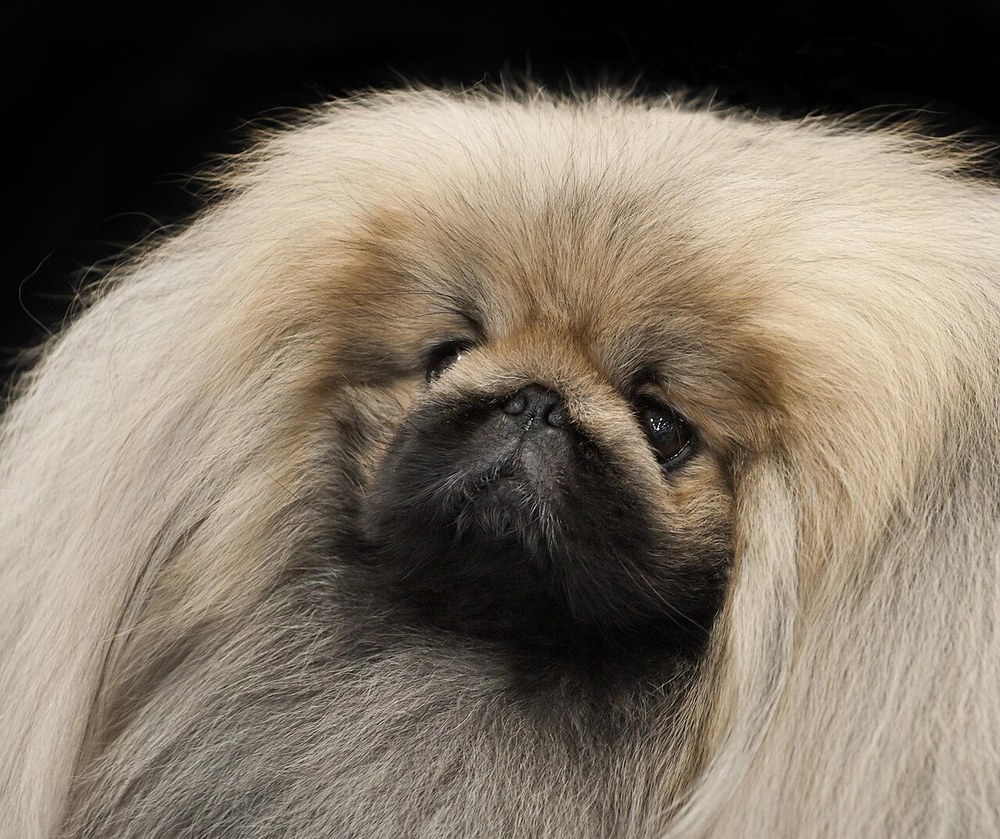
Long, coarse outer coat with thick undercoat and mane; heavy shedding and regular brushing
Job
Chinese imperial companion dog (FCI Group 9; AKC and RKC Toy)
Breed history
How a palace dog became a Western companion
History does not set your dog’s mood today, but it helps explain why Pekingese carry themselves with such confidence, why many are aloof with strangers, and why they are rarely eager to obey for its own sake.
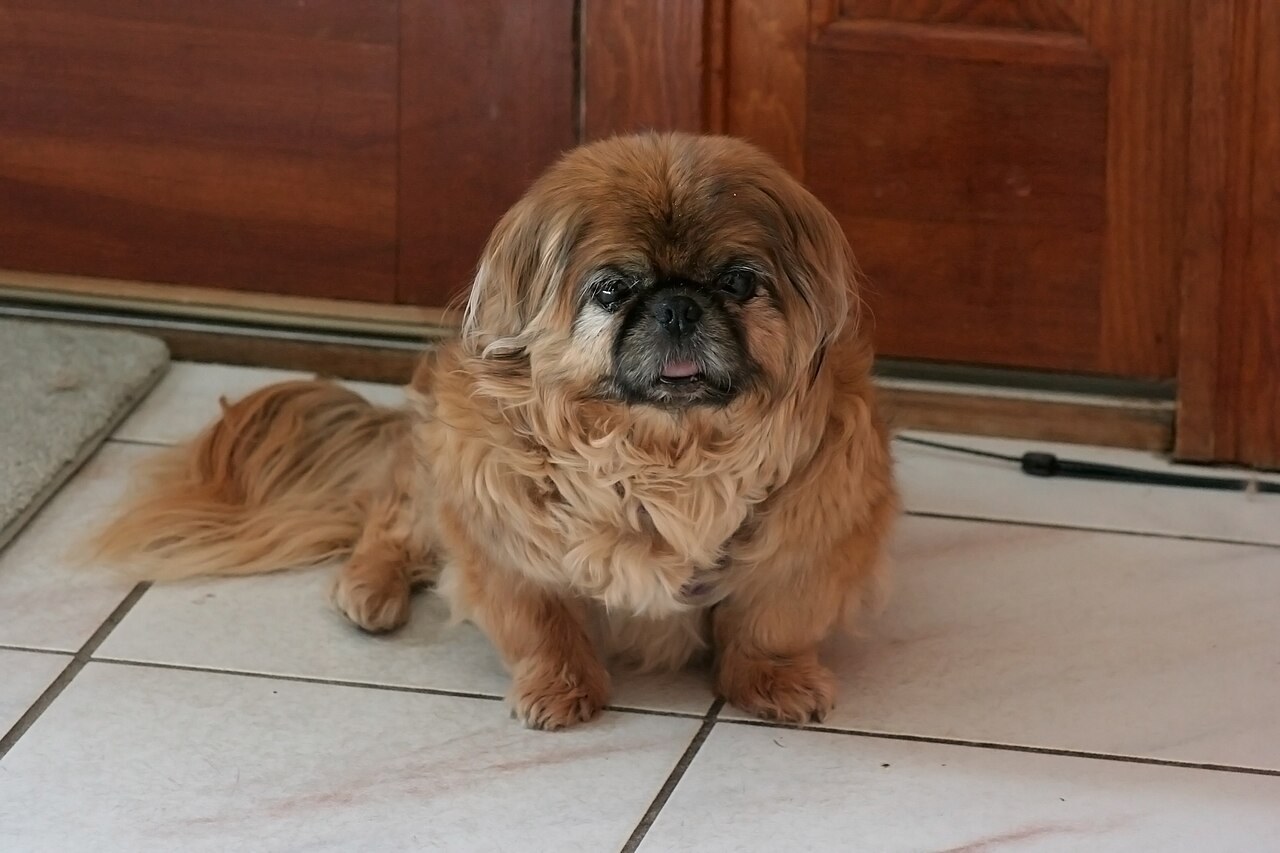
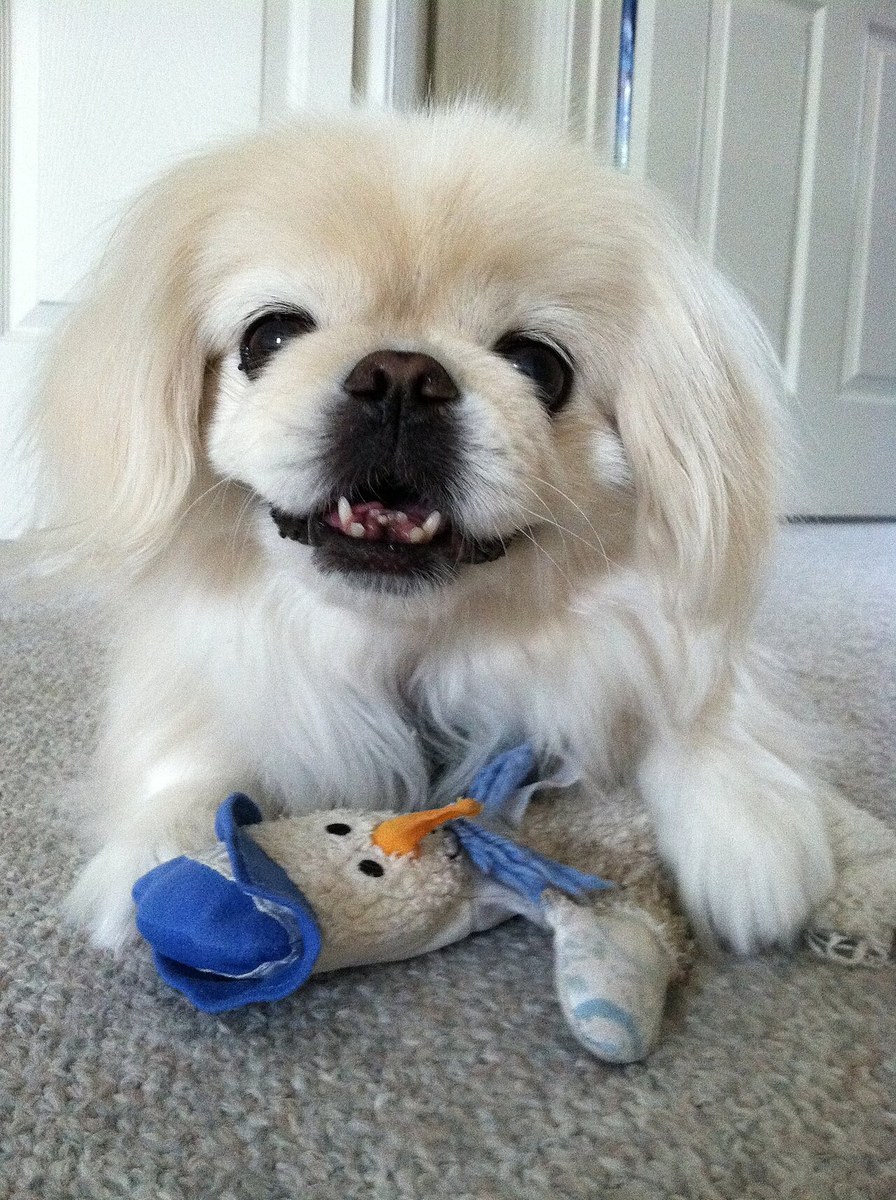
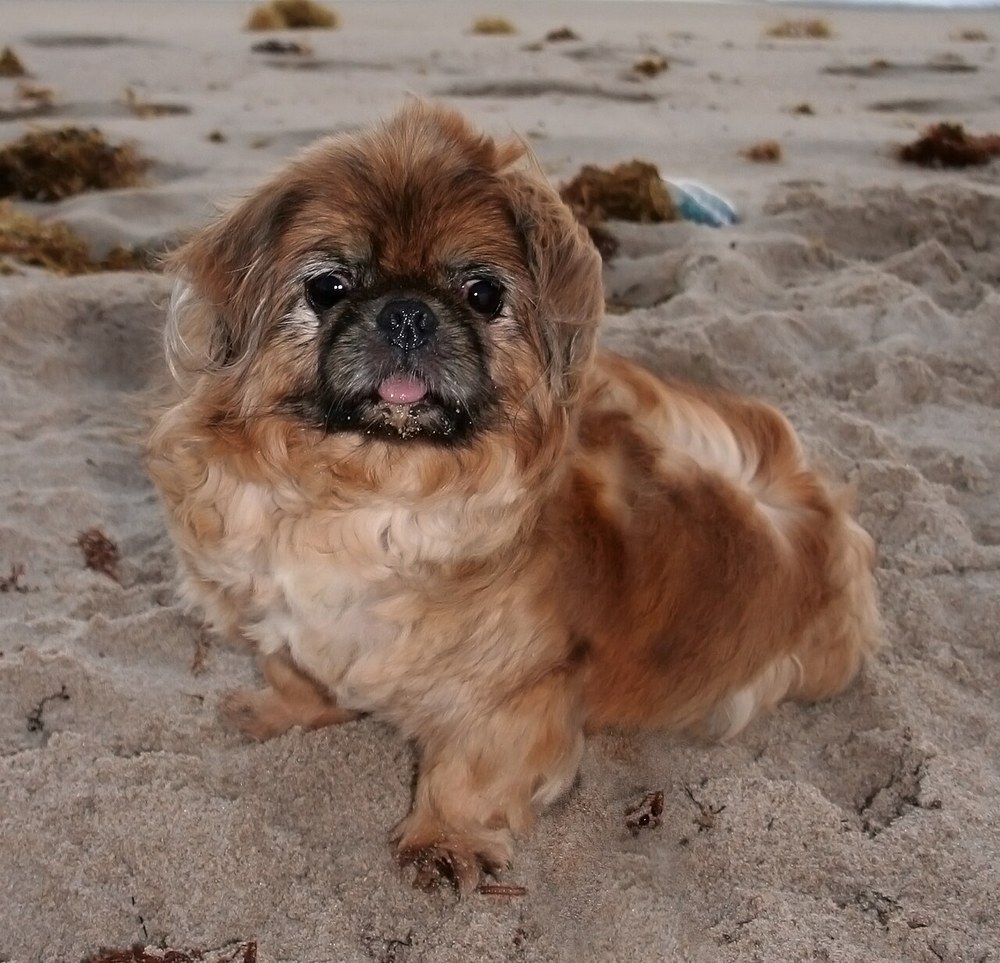
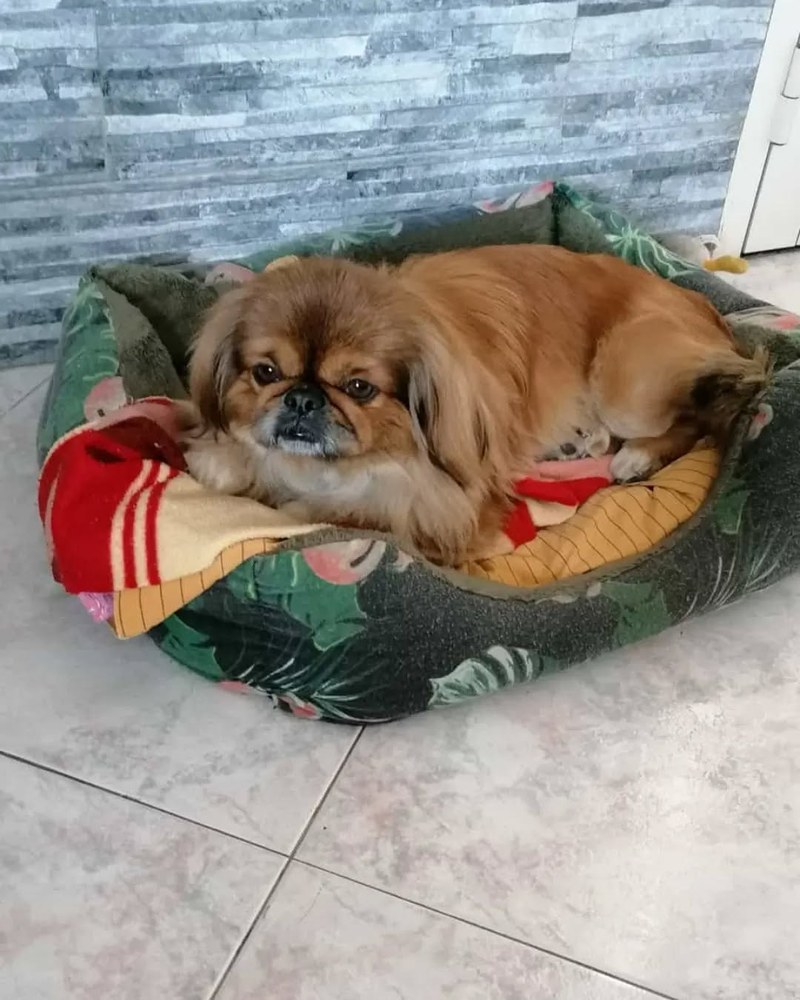
A Pekingese asking for a game (CC BY-SA). There was never a field job; companionship and play are the work.
Imperial China → the court
Lion dogs of the Forbidden City
Small flat-faced dogs with heavy coats were kept at the Chinese court for a very long time. Public accounts say they were linked with Buddhist lion imagery and were bred with care inside the palace. Many stories about sleeve dogs and strict rules are colourful lore, so I treat them as culture, not proof.
What matters for an owner is that the dog was a companion and status symbol, chosen for looks and a confident manner. It was not selected to follow commands, retrieve or work long hours, and its training style reflects that.
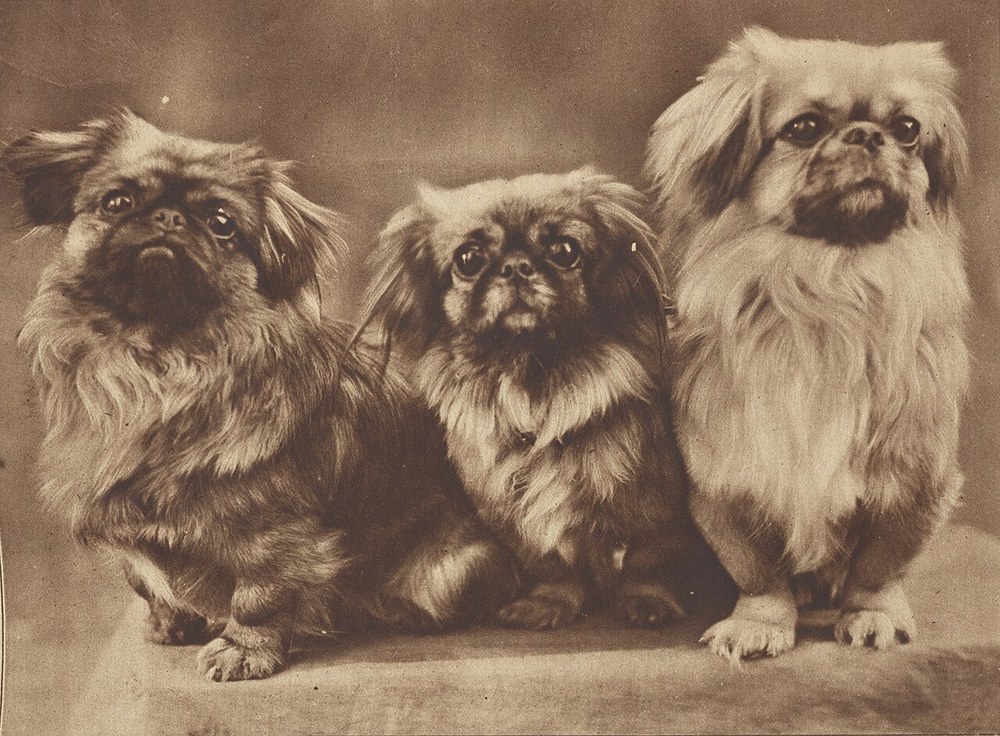
Three prize winners at an early Pekingese Club of America show (public domain). The breed was fashionable on both sides of the Atlantic in the 1900s.
Summer Palace, 1860 → Victorian Britain → America
From looted court dogs to show champions
After 1860 a small number of palace dogs reached Britain, and more arrived around the turn of the century. Breed clubs formed in Britain and the United States in the early 1900s, and the Pekingese became a popular show and society dog.
Over the twentieth century show fashion pushed toward flatter faces and heavier coats. More recently kennel clubs and vets have pressed for healthier, more open faces and freer breathing. That is a welfare question, and it affects how you exercise and care for the dog.
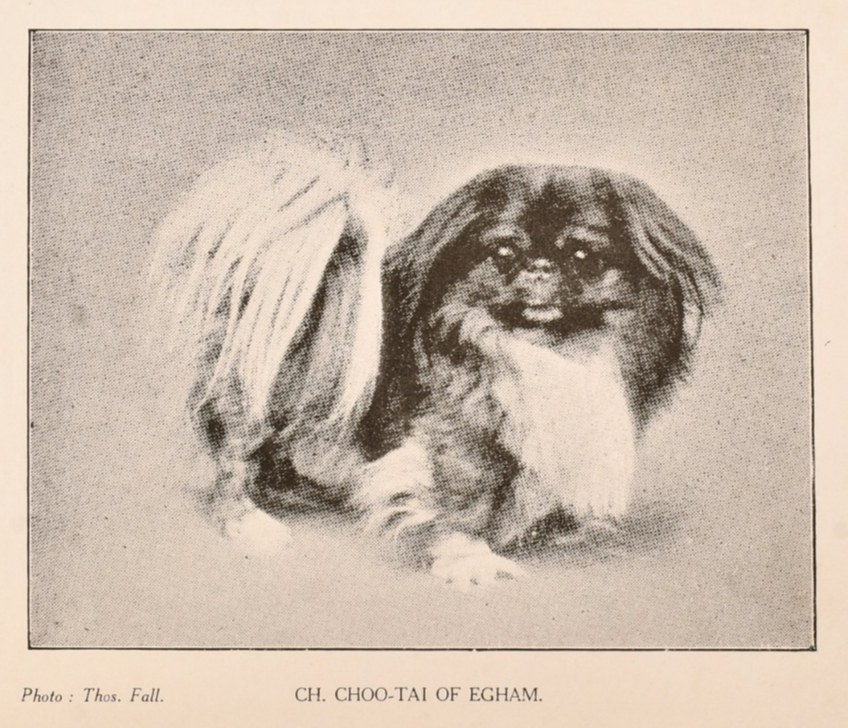
Champion Choo-Tai of Egham, an early show Pekingese (public domain). Old photos show more leg and less coat than many modern dogs.
What the breed was bred for
Confidence, independence and a low exercise need
In trainer terms you get a dog with high self-confidence, low natural motivation to work for you, and strong preferences. It learns well when the reward is worth it and the request is fair, and it digs in when it feels forced.
Because of the short face and long back, many Pekingese overheat easily and should not jump off furniture. Training should stay short, calm and cool.
Self-assured: earn cooperation with food and choice
A good day is a cool walk, short play, calm handling and a lot of rest
Most Pekingese are happy with a slower life. The friction points are usually handling, barking at the door, guarding a favourite person or spot, and heat. Small routines done the same way every day help the dog feel safe and cooperate more.
Morning · cool walk
Short walks at the cool end of the day
Two or three short walks a day at an easy pace suit most adults. Walk early and late in summer, carry water, and turn home if the dog is breathing hard or slowing down. A harness protects the neck and airway better than a collar.
A long back and short legs make jumping off sofas and beds risky. Teach the dog to use a ramp or step, lift it with one hand under the chest and one under the rear, and keep it off stairs where you can.
Many Pekingese do not enjoy being touched by strangers. Ask people to crouch, ignore the dog and let it come to them. Saying no to a stranger’s hand is part of good handling, especially with small dogs.
A minute a day wiping the face folds, checking the eyes and brushing one area of coat is easier than a weekly struggle. Reward the dog for staying still and stop before it pulls away. Any eye squint or cloudiness is a same-day vet call.
Pekingese can guard sofas, beds and their favourite person. Give the dog its own bed in a cool spot and invite it up on your terms. Rest in its own space also makes alone time easier.
General awareness only. I am not a veterinarian. With Pekingese, owners often notice trouble first as noisy breathing, tiring quickly, a squinting or watery eye, reluctance to jump or a hunched back, skin smell in the face folds, or bad breath. For red flags, leave this page and open
when to call the vet.
Breathing and heat
A short face can mean narrow nostrils and a long soft palate. Loud breathing, snoring, fainting or collapse in heat need a vet. Keep walks cool and short. Ask breeders about breathing assessments.
Eyes
Prominent eyes are easy to scratch and can develop ulcers. A squint, cloudy eye or rubbing at the face is a same-day vet visit, not a wait-and-see.
Back and neck
Pekingese are discussed with disc problems. Reluctance to move, crying when lifted, wobbly back legs or a hunched posture are emergencies. Ramps and a harness help prevent strain.
Face folds and skin
Wipe and dry the nose fold daily. Redness, smell or discharge deserve a vet check. Keep the coat clean around the rear as well.
Knees and weight
Kneecap problems appear in many small breeds, and extra weight makes breathing and backs worse. Measure food. See BCS check at home.
I do not sell lines. The differences that matter for pet owners are face and nostril shape, amount of coat and how easily the dog breathes and moves. Ask to see parents walk and breathe, not just sit for photos.
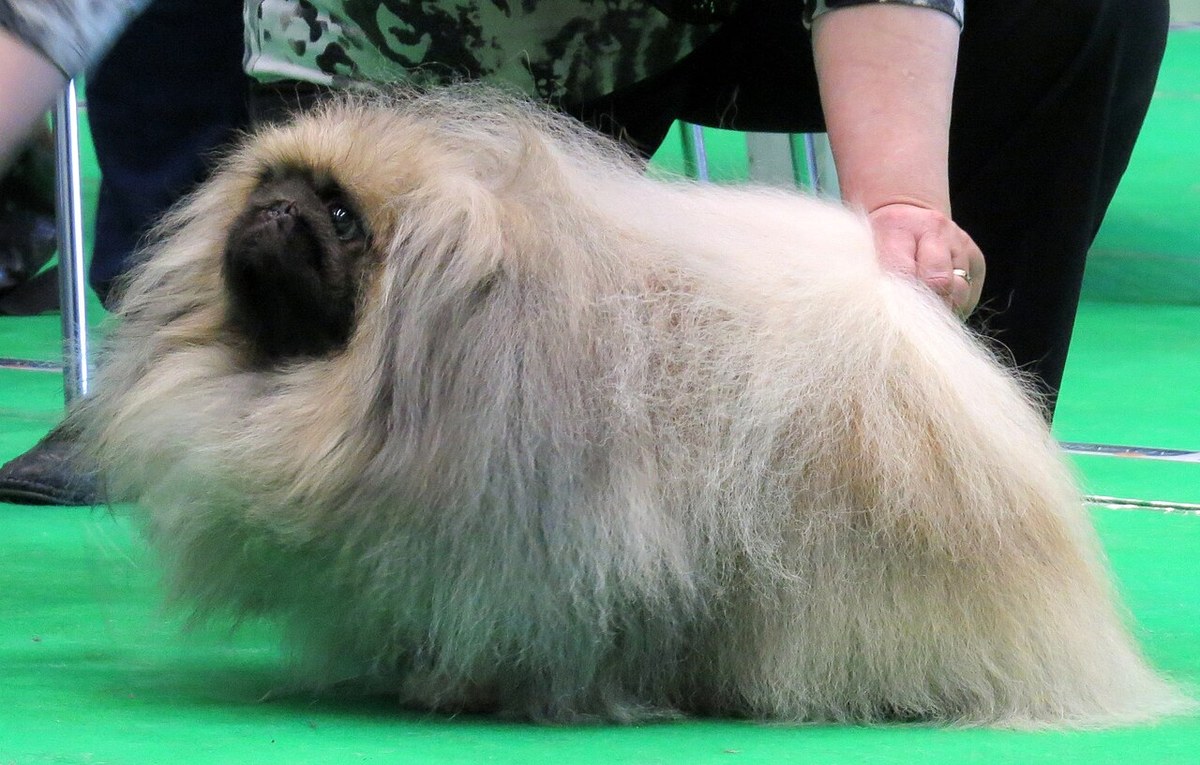
Heavily coated show type
Very long, heavy coat and a flatter face.
Needs serious grooming time or regular professional help.
Ask about breathing assessments and how the parents cope with heat.
May be less able to walk far; plan exercise accordingly.
Fits an experienced, home-based owner ready for daily grooming and careful heat management.
More moderate type
More open nostrils, a little more muzzle and leg.
Usually breathes more easily and walks further.
Still a long back and prominent eyes; care stays the same.
Temperament is still independent and dignified.
Fits a calm household that wants a small companion able to enjoy normal short walks.
Socialization windows
What to introduce — and what not to overload — by age
AVSAB-aligned in spirit: short, clean exposures at a distance the puppy can still eat,
with hygiene while vaccines finish. See the
puppy socialization schedule.
2–4 months
Home, handling and harness
Introduce: brief face wiping and brushing paired with food, harness wearing, a bed of its own, doorbell sounds at low volume, short absences.
Do not overload: being carried everywhere, long grooming sessions, jumping off furniture, being passed around a crowd.
~6 months
The world at a comfortable distance
Introduce: calm people, children and dogs at a distance where the puppy can still eat, car travel, a first visit to the vet just for treats.
Do not overload: hot days outdoors, rough play with bigger dogs, strangers reaching to pick it up.
~12 months
Adolescent stubbornness
Introduce: guests by script, longer settles on a mat, consistent door manners, a ramp or step to furniture.
Do not overload: letting it guard the sofa or a person, skipping handling practice, extra treats that add weight.
~18 months
Adult routines
Introduce: regular grooming appointments, new short walking routes, travel in a crate.
Do not overload: long walks in heat, ignoring snoring that gets worse, neglecting the face fold.
~24 months
Maintain and monitor
Introduce: refresh handling and door routines, keep walks cool and regular, yearly checks of eyes, teeth and breathing.
Do not overload: treating the adult as an ornament, dismissing a squinting eye or stiffness.
Before you buy
Who a Pekingese usually fits
Fit is about daily choices: gentle handling practice, grooming, cool short walks, ramps instead of jumps, and real manners for a proud small dog.
Good match
More likely a good fit if you…
You want a calm, dignified companion more than an eager trainee
You are home a good part of the day and like a quiet routine
You will brush, wipe the face and check the eyes daily
You live somewhere you can avoid walking in the heat
You can respect a dog that is cool with strangers
Mismatch risk
A Pekingese may be a poor choice if…
You want a jogging or hiking partner
You live in a hot climate without air conditioning
Young children in the home would often pick the dog up
You dislike grooming and vet visits
You want a dog that obeys eagerly without negotiation
If you are torn between breeds
Pekingese vs Shih Tzu and Lhasa Apso
All three are Asian companion breeds with long coats. Shih Tzu are usually more outgoing and friendly with strangers; Lhasa Apso are alert Tibetan watchdogs with a slightly longer face. The Pekingese is the most aloof and heavy-bodied of the three.
Origin
Pekingese
Chinese imperial court companion.
Shih Tzu
Also Chinese court, with Tibetan ancestry.
With strangers
Pekingese
Often reserved and selective.
Shih Tzu
Usually friendly and outgoing.
Watchdog voice
Pekingese
Barks at the door, generally less than a Lhasa.
Lhasa Apso
Alert and vocal watchdog.
Body and breathing
Pekingese
Short face, heavy front, long back.
Lhasa Apso
Longer muzzle, generally breathes more easily.
Grooming
Pekingese
Heavy double coat; daily brushing.
Both compares
All three need regular brushing or a pet trim.
Ownership without surprises
Where a Pekingese owner’s budget goes
Costs depend on where you live and how much grooming you do yourself. These are themes to plan for, not quotes.
Veterinary
Eye injuries, breathing problems, back problems and dental care are the main risk areas. Pet insurance or savings matter more with this breed than with many others.
Grooming
Brushes, comb, face wipes and regular groomer visits, or a shorter pet trim.
Cooling and comfort
Air conditioning or fans, cooling mats, and a shaded bed. Heat is a real risk.
Home safety
Ramps or steps, baby gates for stairs and a well-fitted harness.
Food
Small portions, but weight gain is risky for breathing and backs. Measure everything.
Training
Puppy class, private help for handling or guarding. Prices vary by city.
The small size does not mean small costs. Vet care for eyes, breathing and backs, plus grooming, drive the budget.
Before day one at home
What to prepare for a Pekingese puppy
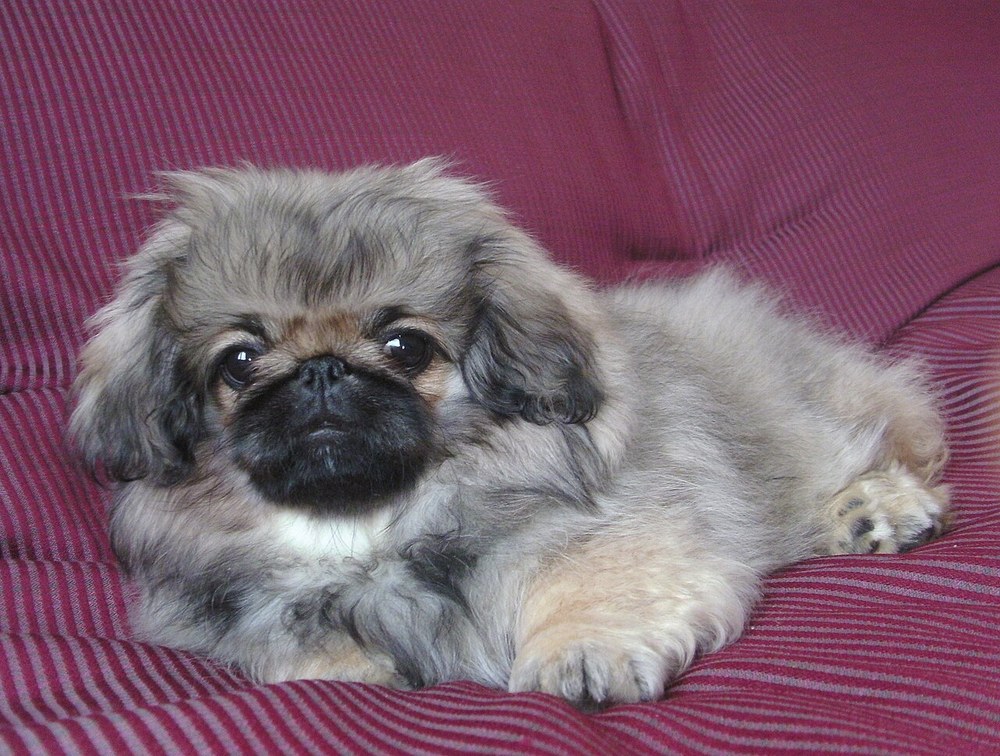
A Pekingese puppy is brave, curious and already quite sure of itself. The first weeks are the best time to make handling, harness and own-bed rest feel normal.
01
Ramps and gates before arrival
Block stairs and teach a ramp to the sofa from day one. Puppies that never learn to jump off furniture are safer adults. See baby gates.
02
Daily handling minutes
Touch the face, ears, paws and coat for a second, then feed. Build up slowly. See puppy handling.
03
Harness, not collar
Introduce a soft harness with treats and short wearing times. See harness fit check.
04
Toilet routine
Out after sleep, meals and play. Bad weather is not an excuse to skip. See potty training.
05
Its own bed
A bed or pen in a cool spot gives the puppy a place to rest and helps prevent guarding of your furniture. See crate training.
06
Short absences
Start with a few seconds while the puppy chews in its pen, and build slowly. See first absences.
If the dog is already yours
Training a Pekingese means fair deals, short sessions and handling with consent
Make the rules clear and small: stay still for three seconds of face wiping, four paws on the floor at the door, walk on a loose lead to the next lamppost, lie on its bed while you eat. Reward each one well.
Pekingese rarely work for praise alone. Use food they love, keep sessions to a few minutes, and accept that some days the answer is a slow yes. Forcing and scolding create a dog that growls, freezes or hides.
Management carries a lot of weight: ramps instead of jumps, cool rest spots, a bed of its own, a closed bedroom door if it guards the bed, and measured food. You remove triggers while the dog learns new habits.
Load balance
Light physical load, careful heat control and real mental work
Breathing, back health, weight and temperature set the limits. Loud breathing, a squinting eye, reluctance to move or crying when lifted mean stop training and see a vet.
Cool walkShort gameHandling minuteDoor mannersRest on own bed
Short sniff walks, simple tricks, food puzzles and gentle scent games work well. Long walks, jumping games and play in heat are not needed and can be harmful.
A Pekingese that has walked, sniffed and practised handling calmly is happy to watch the household from its own bed.
Handling with a choice
How to teach a Pekingese to accept face and eye care
Daily face and eye checks matter more in this breed than in most. Teach them slowly, with food and a clear way for the dog to say “pause.”
01
Choose a calm, cool spot
Sit on the floor with the dog on a non-slip mat, treats ready. Keep the first sessions under a minute.
02
Offer the cloth and reward
Let the dog sniff the soft cloth or cotton pad, then reward. Touch the cheek briefly, reward again.
03
Add the face fold and eye area
Wipe the nose fold with one gentle stroke, reward, and check each eye for squinting or cloudiness. Stop while the dog is still relaxed.
04
Teach a chin rest as a pause signal
Reward the dog for resting its chin on your hand. While the chin is down you work; when it lifts, you pause.
05
Finish and log it
End with a treat on its bed. Note any eye change, redness or smell so you can report it to your vet early.
One scene close-up
Why a Pekingese growls at the harness
If the harness has always gone on with a quick grab, the dog learns that hands coming over its head mean being trapped. A growl is information. Punishing it only removes the warning.
Slow down. Hold the harness out, let the dog put its own head through to reach a treat, and reward. Do the same with face wipes and brushes. If the dog still reacts, check for pain, especially in the neck and back.
If growling turns into snapping, or the dog guards people or furniture seriously, work with a qualified professional and your vet.
“With a Pekingese, I earn cooperation. We teach handling in seconds with a reward the dog values, put four paws on the floor at doors and greetings, give it a cool bed of its own, and stop treating every refusal as a fight. The dog’s confidence is an asset when the deal is fair.”
Sessions cover real scenes: handling for grooming and the vet, guarding, door barking, walking reluctance and alone time. I am a trainer, not a veterinarian. No invented reviews.
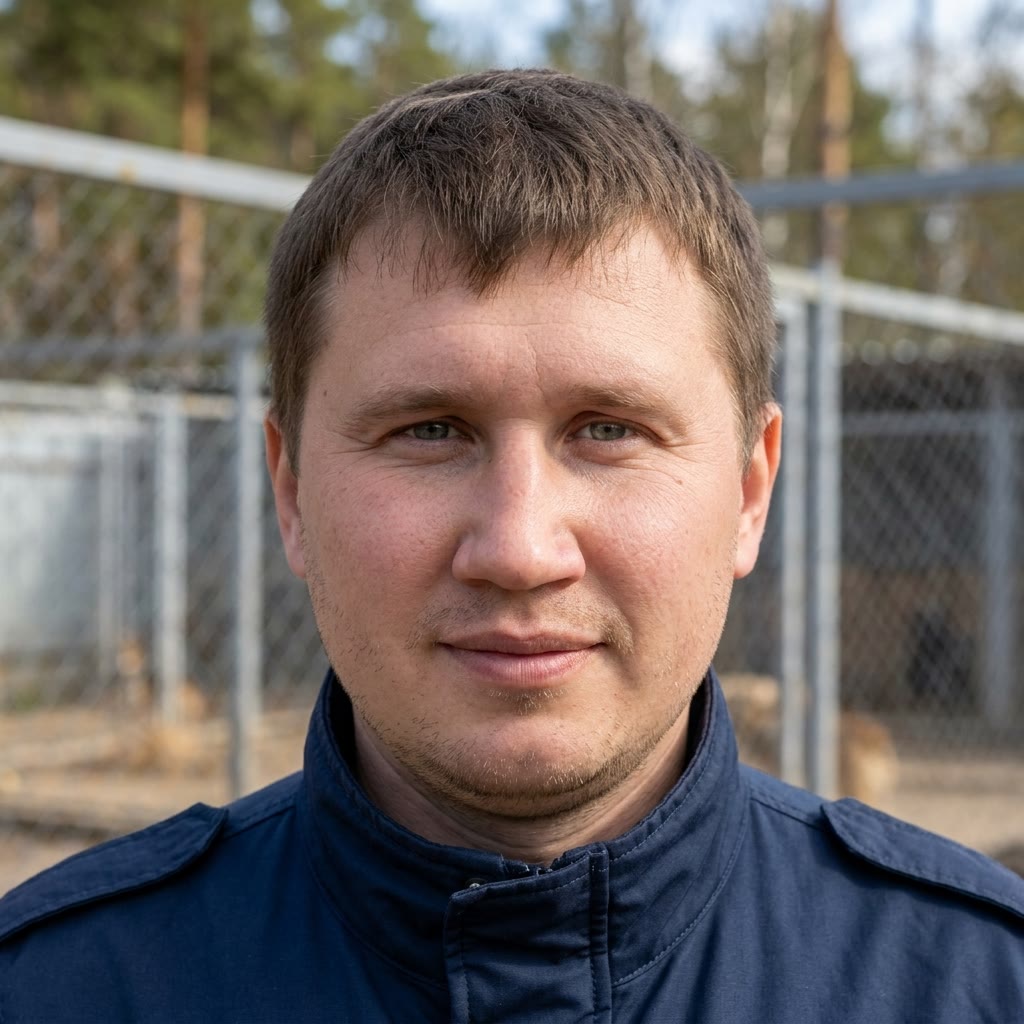
Andrew DarovProfessional dog trainer and instructor
It can be for a calm, home-based first-time owner who wants a quiet companion and will handle grooming and vet care seriously. It is a poor fit for someone wanting an eager, sporty dog.
Are Pekingese stubborn?+
They are independent and not very motivated to please. With good food rewards, short sessions and fair requests they learn well. Force usually makes them dig in.
Are Pekingese good apartment dogs?+
Yes, many are, thanks to their size and modest exercise needs. Door barking and heat are the main issues to manage.
How much exercise does a Pekingese need?+
Usually two or three short, easy walks a day plus gentle play. Avoid heat and stop if breathing becomes loud or laboured.
Do Pekingese have breathing problems?+
Flat-faced dogs can have airway problems. Ask the breeder about breathing assessments, keep the dog lean and cool, and see a vet for loud breathing or exercise intolerance.
Pekingese vs Shih Tzu: which fits better?+
Both are small Chinese companions with long coats. Shih Tzu are usually more outgoing with strangers; Pekingese are more aloof and independent.
Pekingese vs Lhasa Apso: what is the difference?+
The Lhasa is a Tibetan watchdog with a longer face and a more alert, vocal style. The Pekingese has a shorter face, a heavier front and a calmer, more dignified manner.
Are Pekingese good with children?+
Usually best with older, calm children. They dislike being picked up or squeezed and can snap if handled roughly. Supervise always.
How much grooming does a Pekingese need?+
Daily face and eye care, brushing several times a week, and regular trims or professional grooming. A shorter pet trim is fine.
Do Pekingese shed?+
Yes, quite a lot, especially seasonally. Regular brushing keeps it under control.
What health themes should I ask about?+
Breathing, eyes, back and disc problems, knees, skin folds and teeth. This is general awareness for a vet conversation, not a diagnosis.
How long do Pekingese live?+
Public breed references often mention about 12–14 years. Individual dogs vary.
If a Pekingese seems too fragile or too independent for your home
It is a charming dog with a big personality, but the care load and the attitude do not fit every household.
A graceful companion in hairless and powderpuff varieties that needs company, gentle socialization and skin or coat care.
Need a read on your exact situation?
Tell me your Pekingese’s age and the scene that keeps repeating: growling at handling, guarding, barking at the door, refusing walks or trouble being alone. We check health and comfort first, then pick the first skill.
Written by Andrew Darov, professional dog trainer. Not veterinary advice and not a diagnosis.
Not a kennel club. No invented reviews. No vaccine schedules or toxin doses. Photo credits in
/images/breeds/pekingese-guide/credits.md.