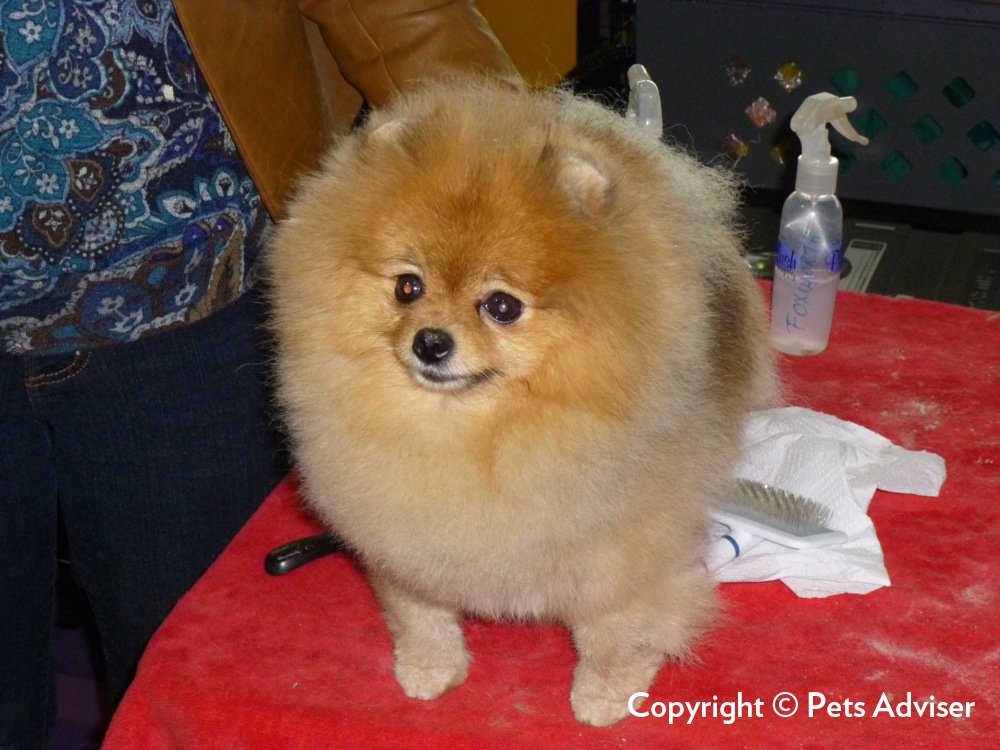
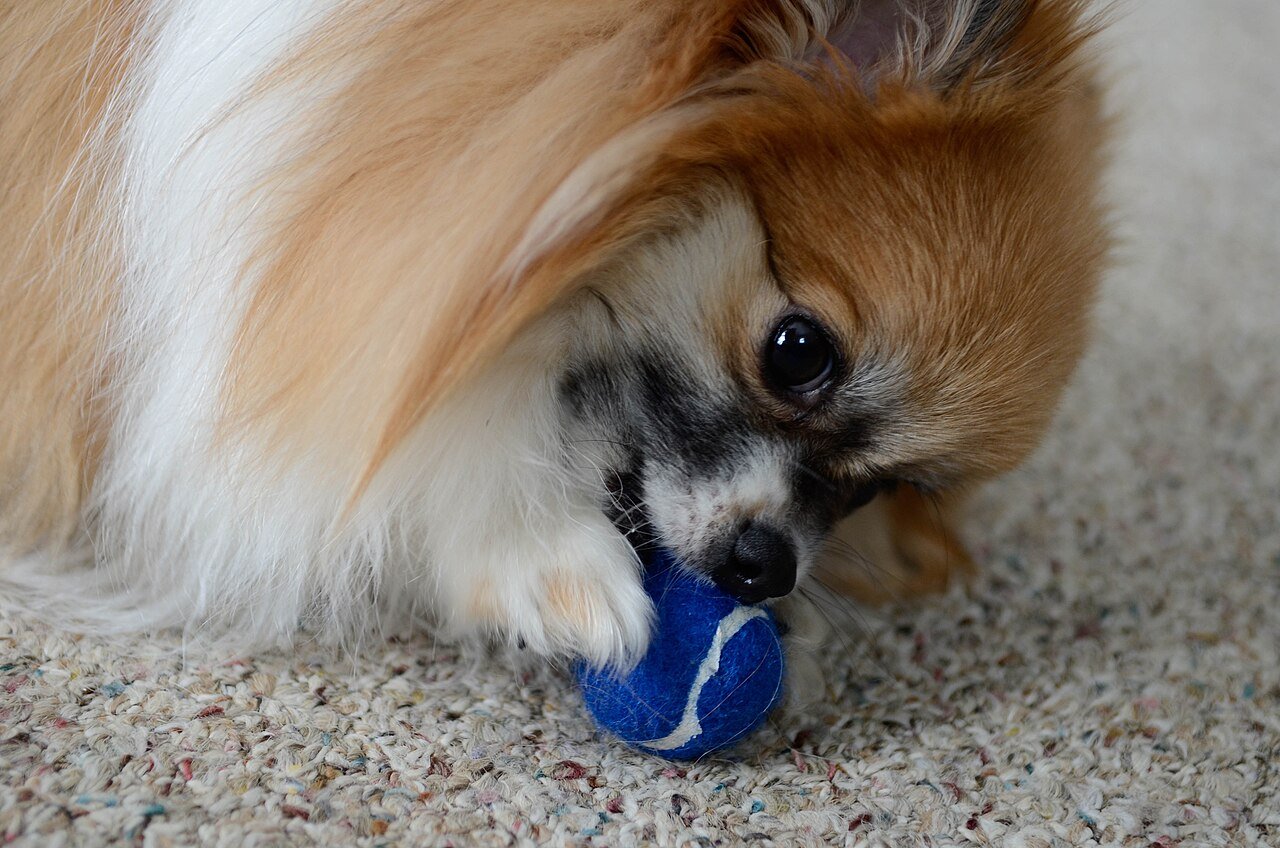
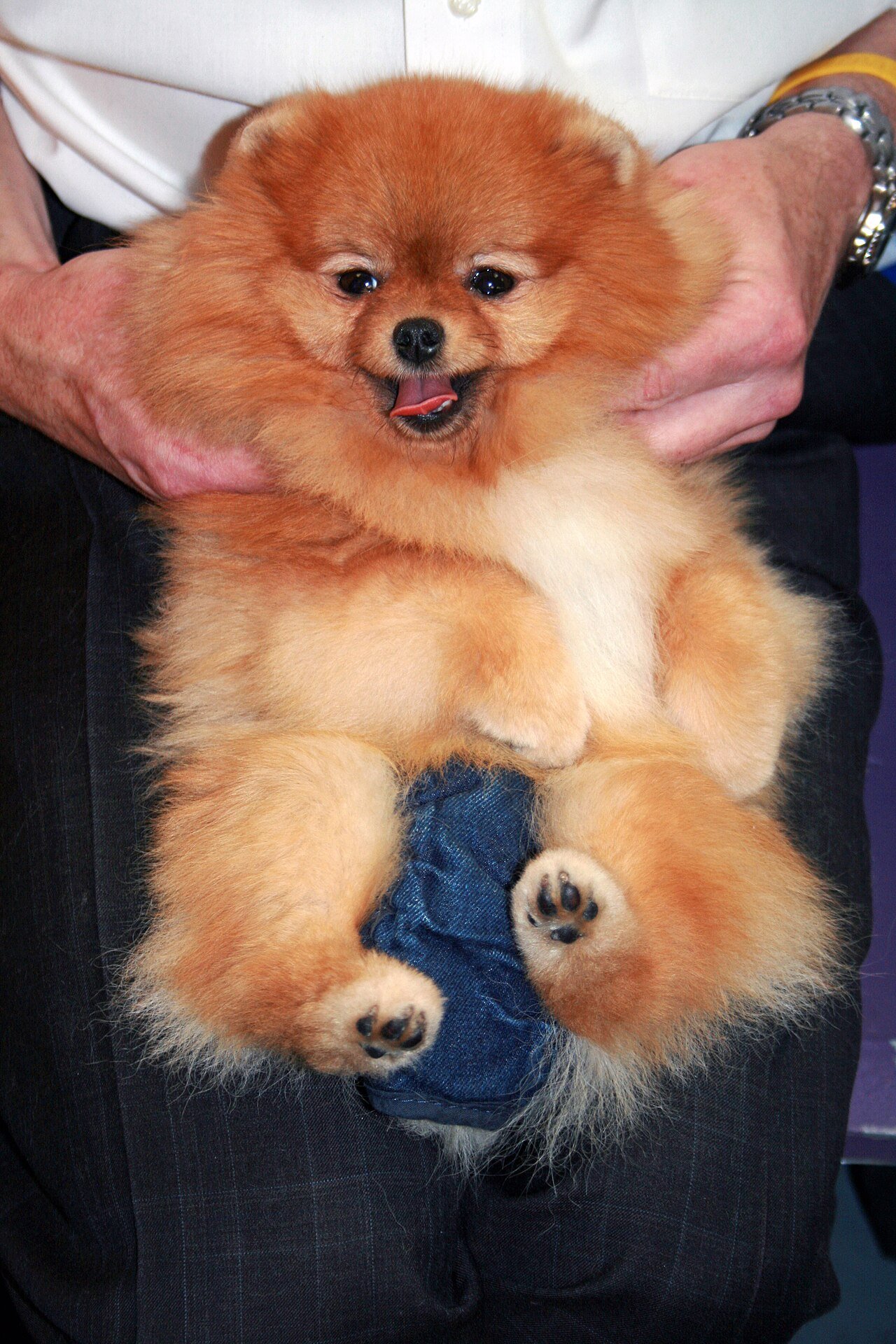
The Pomeranian is a tiny spitz dog with a thick coat and a bold personality. Most are lively, curious and alert. Life goes well with calm door routines, regular brushing, daily walks and patient house training.
From sled-dog cousins to Queen Victoria’s lap: the Pomeranian
History does not decide what one puppy becomes, but it explains a lot: most Pomeranians are lively, bold and alert — tiny spitz dogs with big personalities and thick coats.
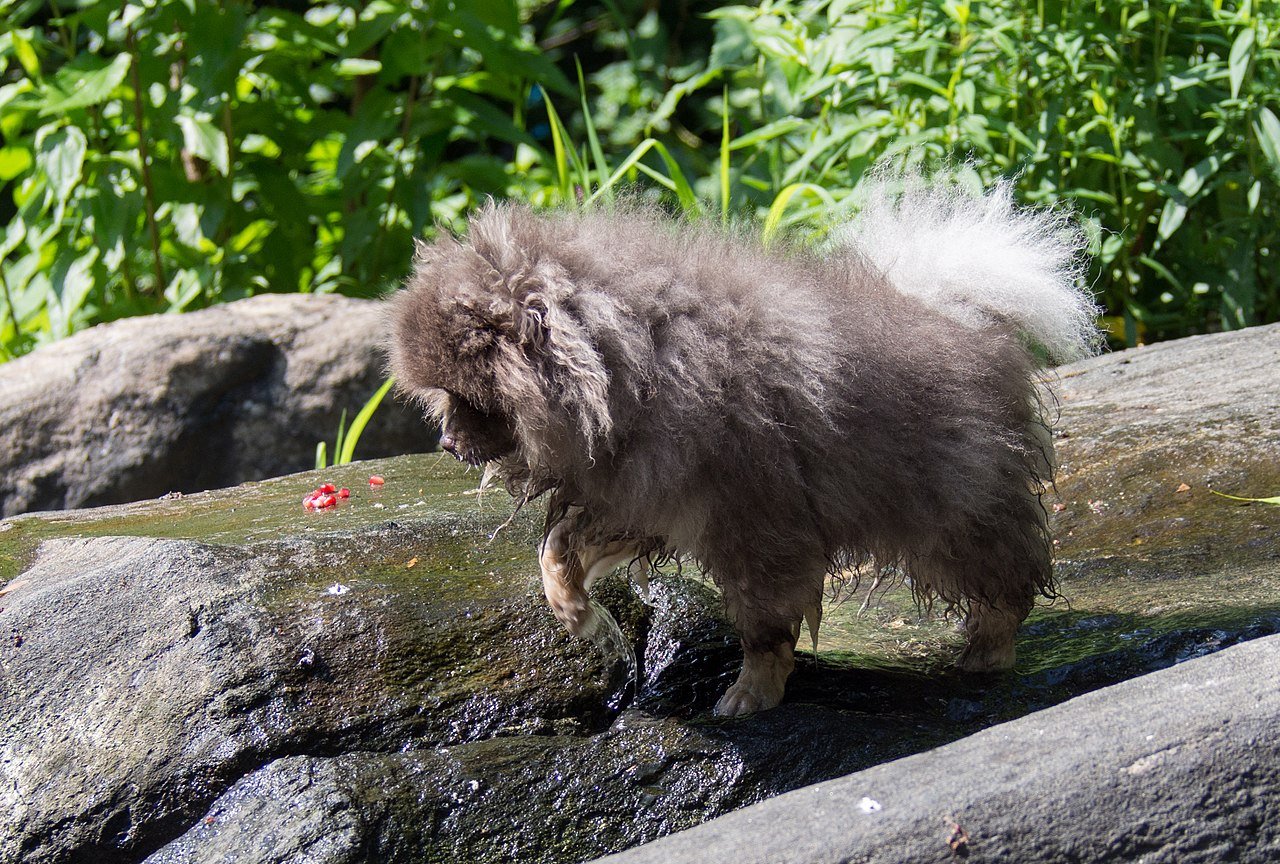
A Pomeranian playing in running water in Central Park, New York (modern photograph). Poms are curious and playful.
German Spitz → Pomerania
A small member of the spitz family
Public breed histories trace the Pomeranian to larger spitz-type dogs of northern Europe, named after the Pomerania region on the Baltic coast.
Early Pomeranians were much bigger than today’s dogs. The spitz heritage shows in the thick coat, curled tail and alert nature.
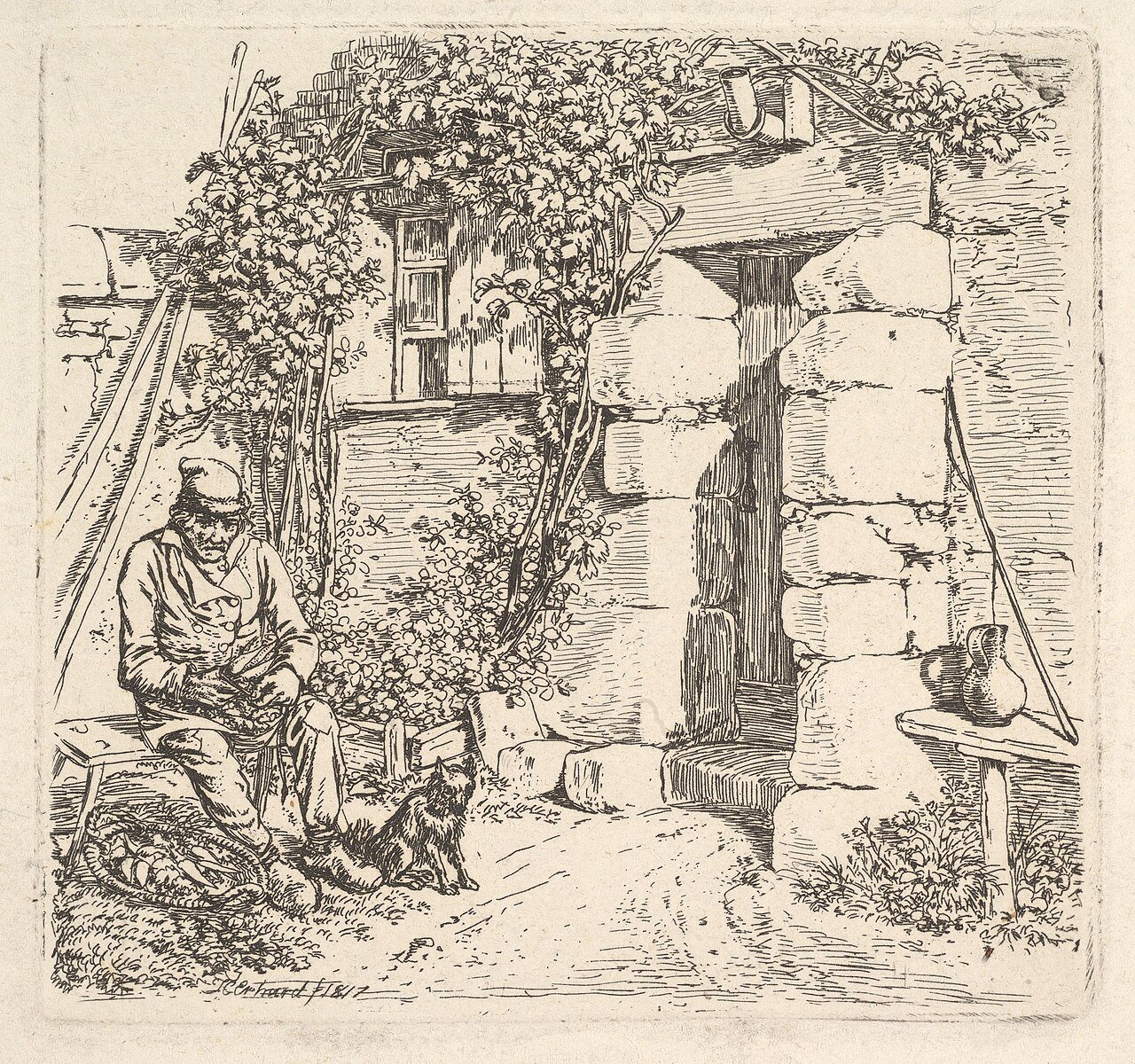
An etching of an old man with his Pomeranian (Metropolitan Museum of Art, public domain). Spitz-type dogs were common companions.
Royal favourite → toy breed
Made small by royal fashion
Queen Victoria kept and bred small Pomeranians, and breeders in Britain selected for smaller and smaller dogs in the 19th century.
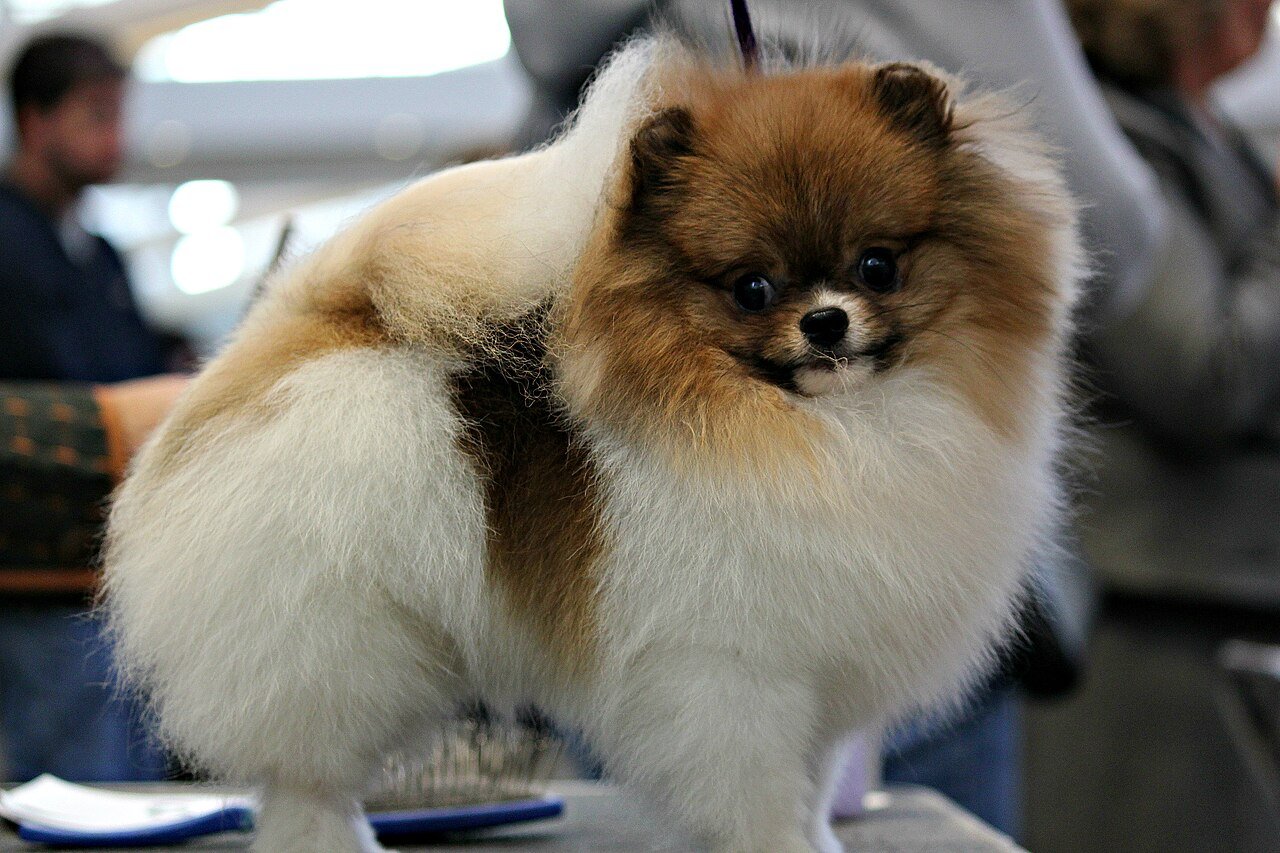
Today the Pomeranian is one of the most popular toy breeds. Meet the parents and see their barking and confidence.
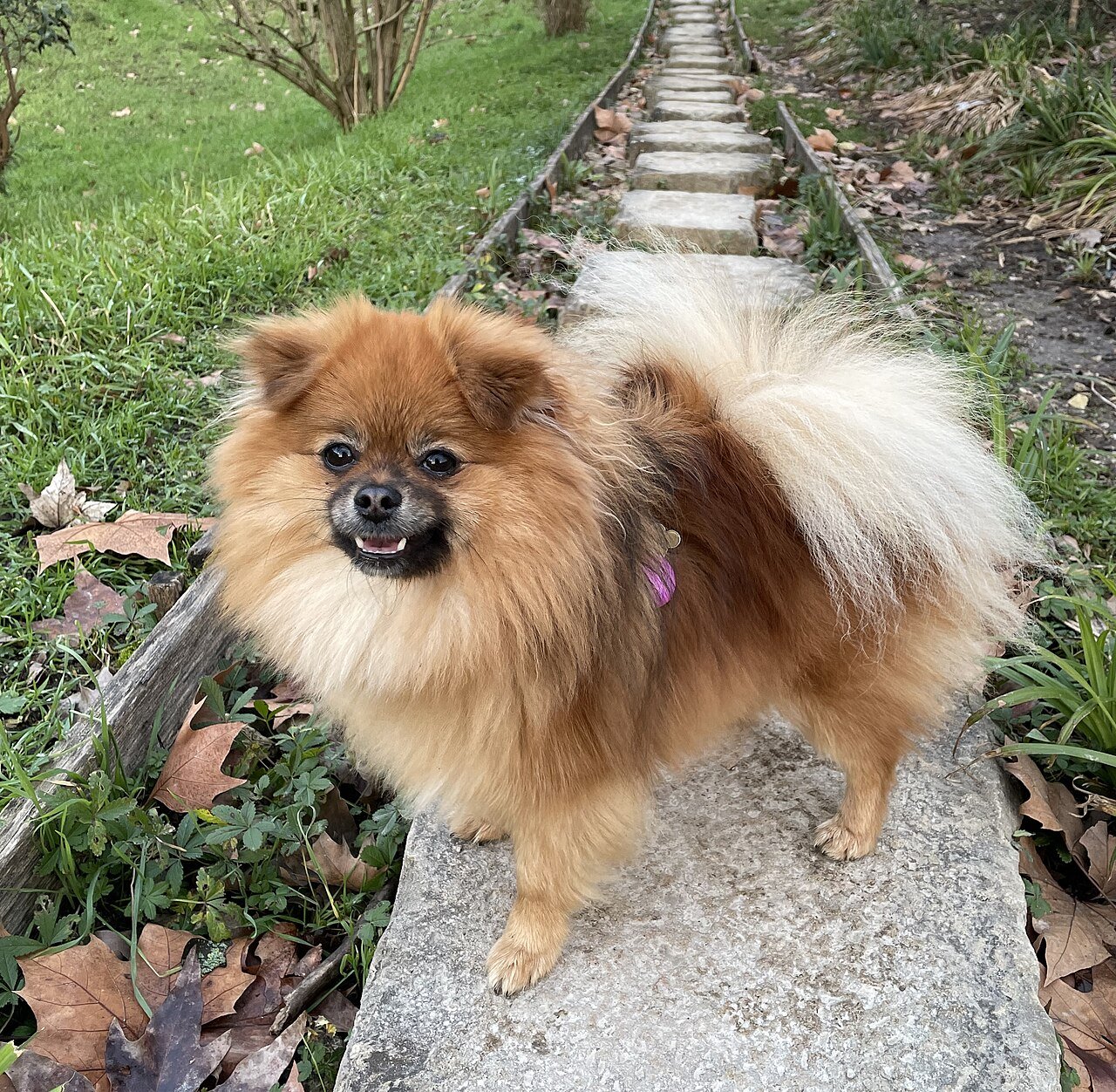
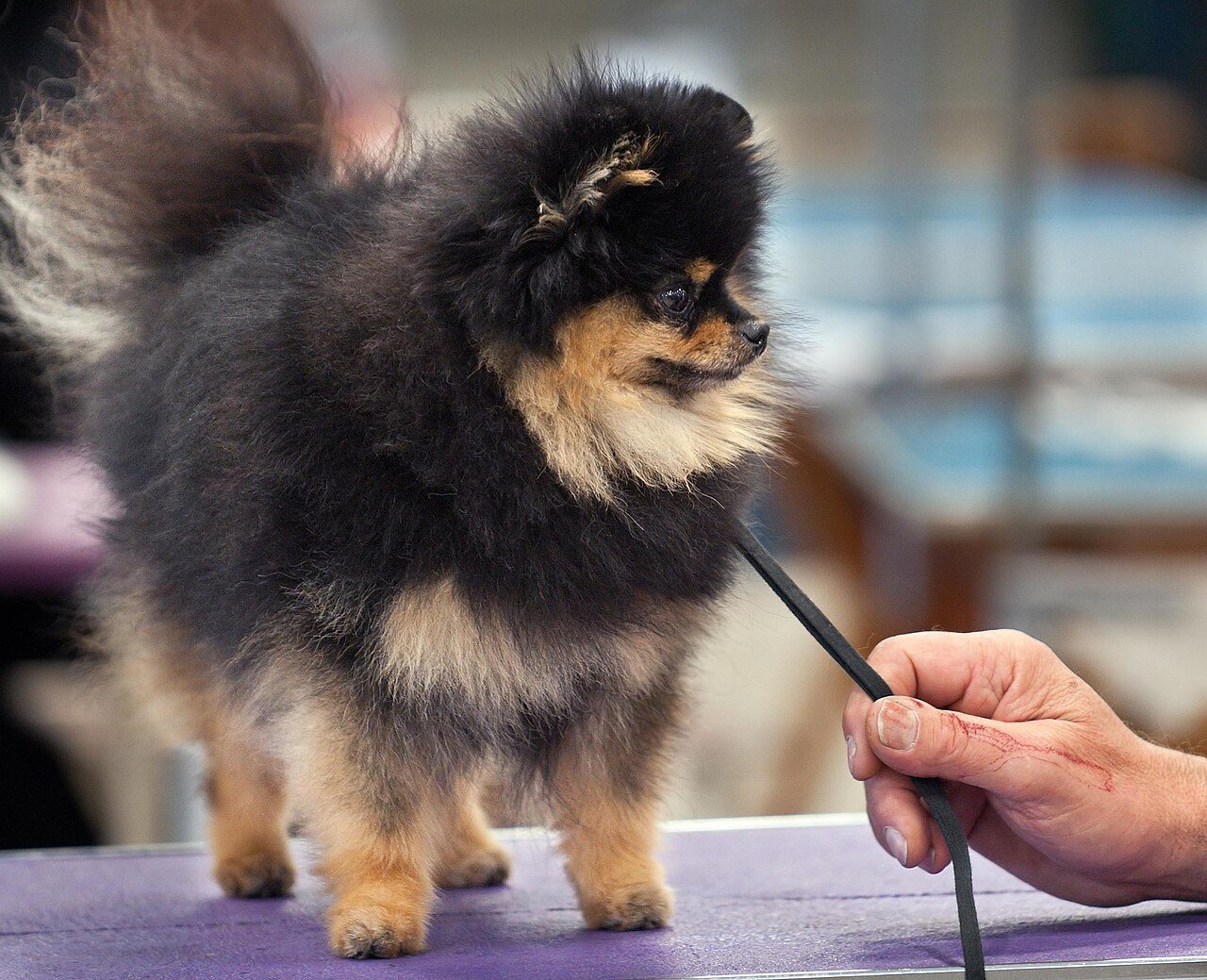
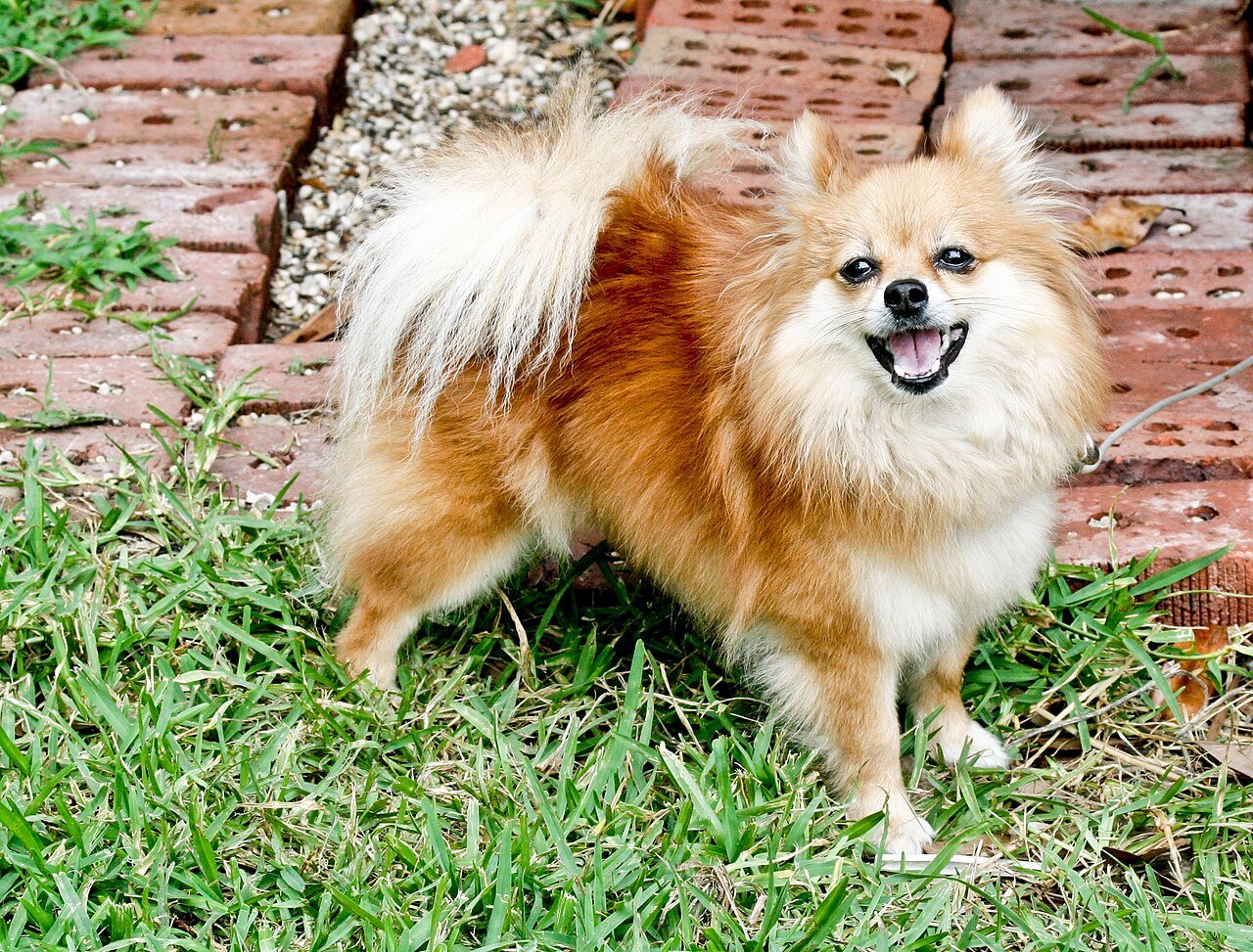
A sable Pomeranian (modern photograph). Many colours exist; orange and sable are the most familiar.
What the breed was bred for
Bold, lively and vocal
In plain trainer language: Pomeranians are confident, curious and quick to bark. Most love attention and learn tricks fast.
The challenges are barking, house training, boldness with big dogs and coat care. Routines and calm training help.
What to watch monthly: coat, teeth, weight and safety
General awareness only — I am a trainer, not a veterinarian. Notice changes in coat, teeth, breathing or energy. For urgent signs, see
when to call the vet.
Coat
Thick double coat. Brush several times a week, more during shedding.
Ask the breeder which screenings the national breed club recommends and see results for both parents.
Toxins
I do not publish toxin amounts. Call a vet or poison-control line if the dog eats something dangerous.
Lines and types
Pomeranian or Zwergspitz
The AKC and the Kennel Club list the Pomeranian as its own breed; the FCI treats it as the smallest German Spitz. The dogs are very similar.
Pomeranian (AKC/KC)
Round, fox-like face.
Very full coat.
Show trim common.
Many colours.
Suits owners who love the full, round look.
Zwergspitz (FCI)
Same small spitz type.
Judged under German Spitz standard.
Often a slightly longer muzzle.
Same care needs.
Suits owners in FCI countries.
Socialization windows
What to introduce — and what not to overload — by age
AVSAB-aligned in spirit: short, clean exposures at a distance the puppy can still eat,
with hygiene while vaccines finish. See the
puppy socialization schedule.
“With a Pomeranian, I look at barking and handling first. We set up a calm door routine, easy brushing sessions and safe meetings with bigger dogs — because a bold little spitz needs clear, friendly rules.”
Sessions cover real scenes: barking at the door and window, toilet accidents, grooming, big dogs on walks, and time alone. I am a trainer, not a veterinarian. No invented reviews.
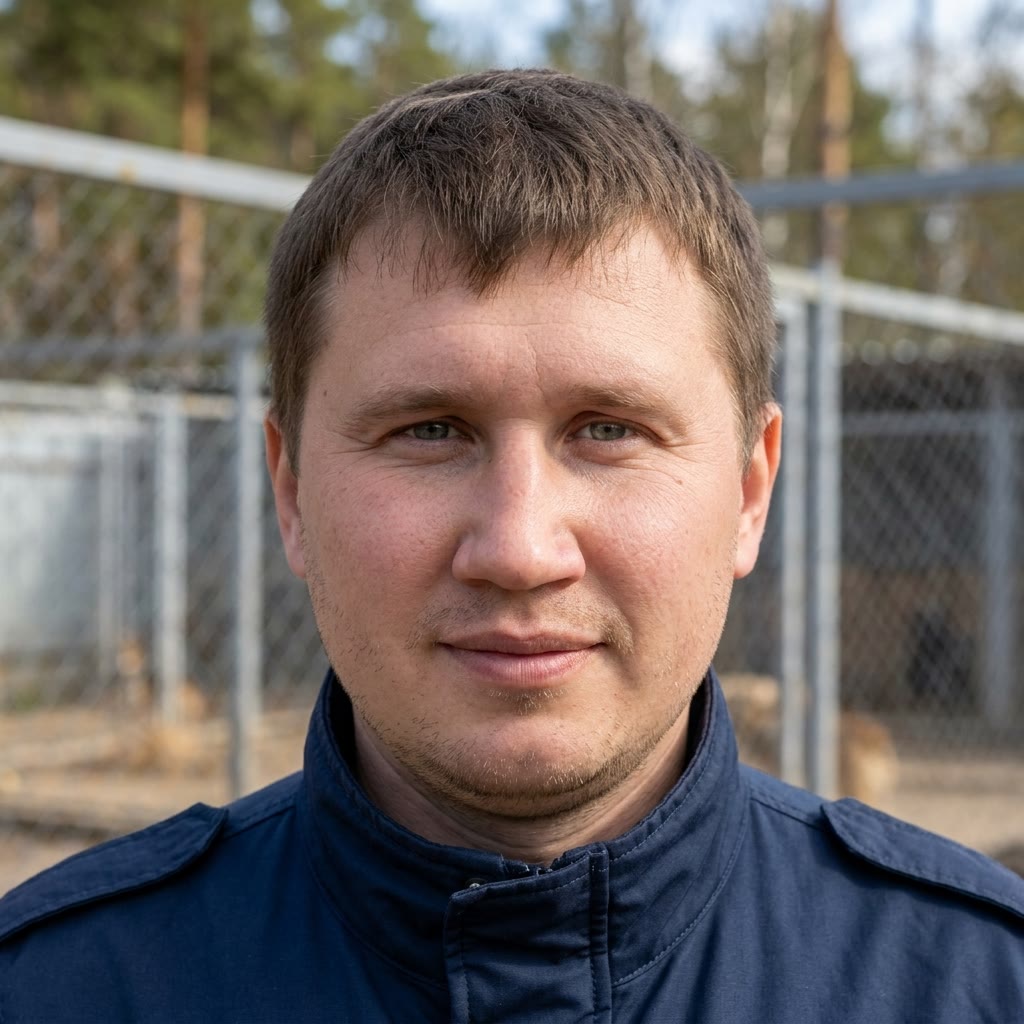
Andrew DarovProfessional dog trainer and instructor
Describe age, living setup, and where the dog breaks first — barking, toilet accidents, grooming, or meetings with bigger dogs. Opens WhatsApp to Andrew.
A slender miniature sighthound that is gentle at home and needs warmth, safe places to sprint and patient house training.
Need a read on your exact situation?
Describe your Pomeranian’s age and the scene that repeats most: barking, toilet accidents, grooming, or meetings with bigger dogs. We check safety first, then pick the first skill.
Written by Andrew Darov, professional dog trainer. Not veterinary advice and not a diagnosis.
Not a kennel club. No invented reviews. No vaccine schedules or toxin doses. Photo credits in
/images/breeds/pomeranian-guide/credits.md.