Leonberger: temperament, training & gentle giant soft mouth
The Leonberger is a gentle German giant with a lion-like mane, created in the town of Leonberg as a family and farm dog. Most are friendly, calm and patient, and many love water. Life goes well with early manners, joint-friendly exercise and regular grooming.
Job: German companion giant — family dog and draft worker.
Energy: Moderate; daily walks, swimming, play.
Home: Needs grooming, leash manners and room for a big dog.
Long double coat with mane — sheds; weekly brushing
Job
German draft and companion dog
Breed history
Why the Leonberger was built as a lion-like family and farm giant
History does not decide what one puppy becomes, but it explains a lot: most Leonbergers are gentle, sociable and steady — a giant bred as much for companionship and looks as for work.
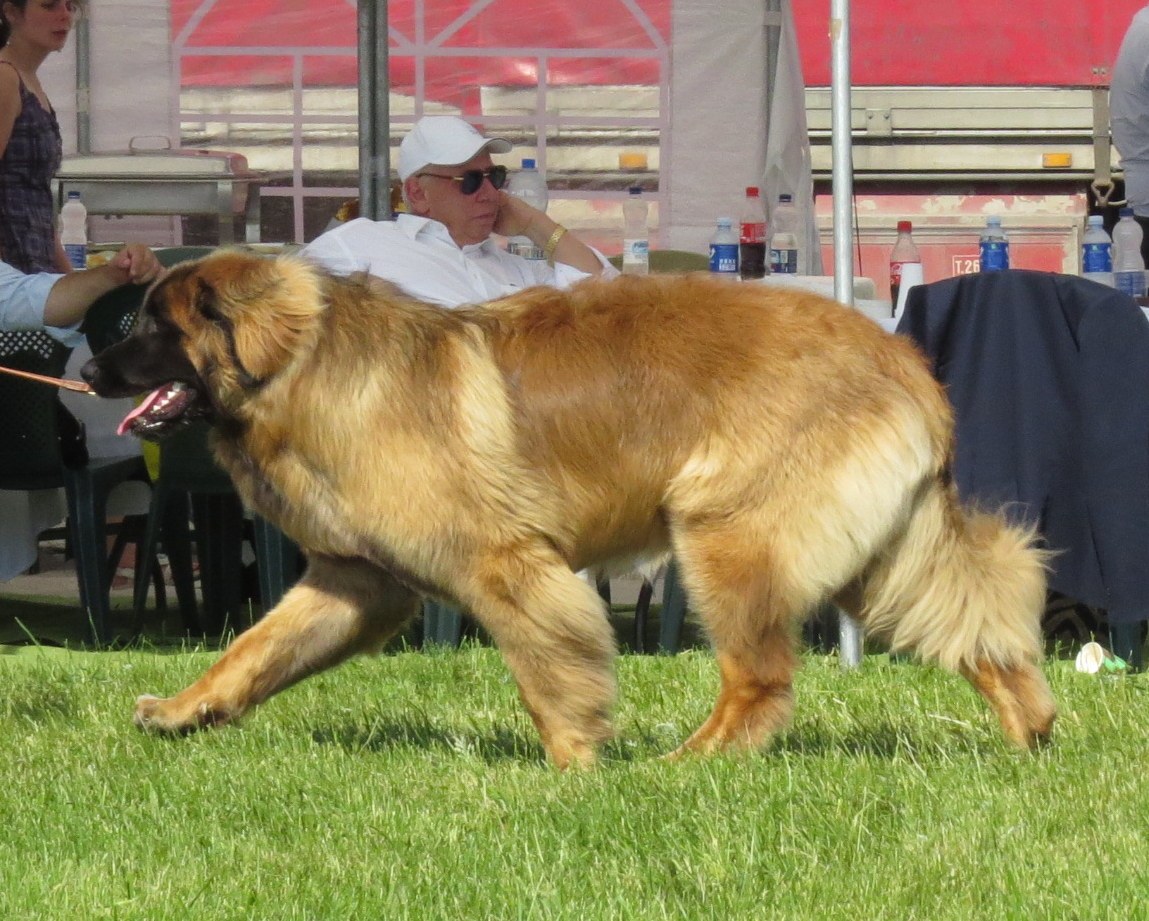
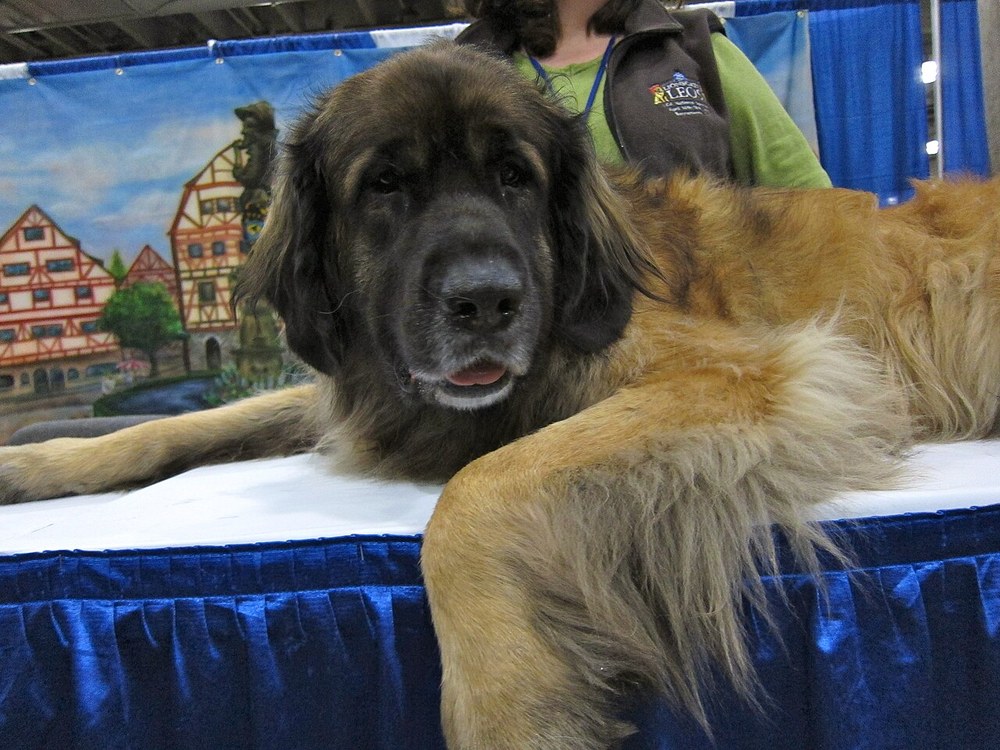
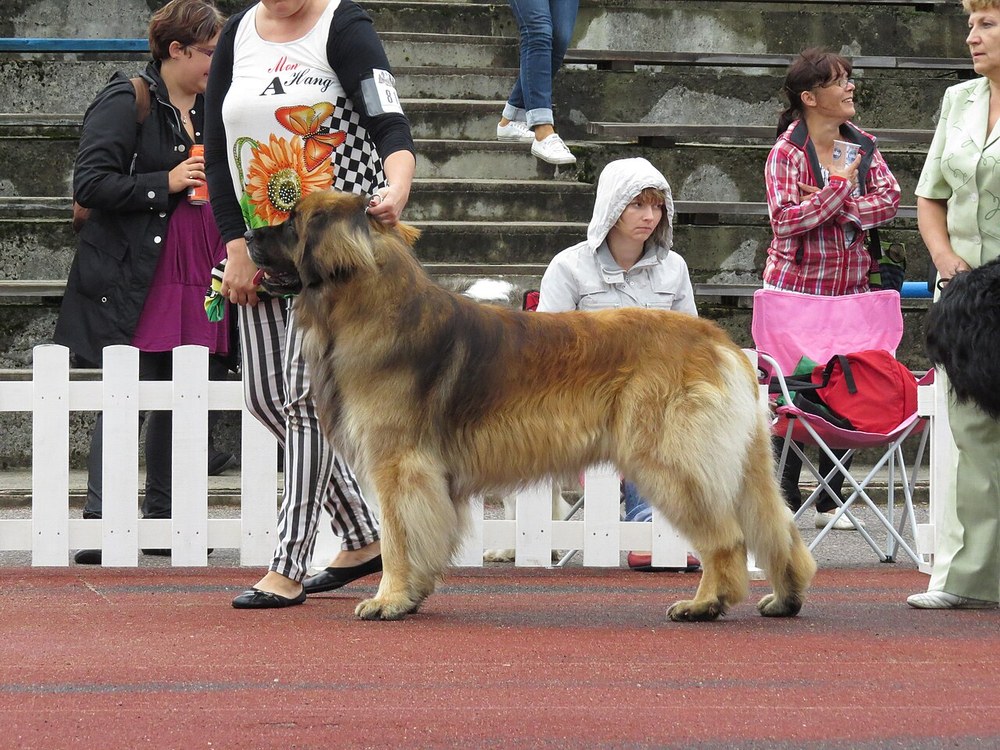
A Leonberger running at an outdoor event in Molėtai, Lithuania, 2014 (modern photograph).
Leonberg, Germany → companion and farm giant
A town’s lion in dog form
Public breed histories credit Heinrich Essig, a councillor in the town of Leonberg near Stuttgart, with creating the breed in the mid-19th century. Breed lore says he crossed large dogs such as Newfoundlands and Saint Bernards to produce a dog that resembled the lion on the town’s coat of arms.
Leonbergers became fashionable with European nobility and also worked on farms as watchdogs and draft dogs. That mixed role explains the friendly, people-oriented temperament combined with size and strength.
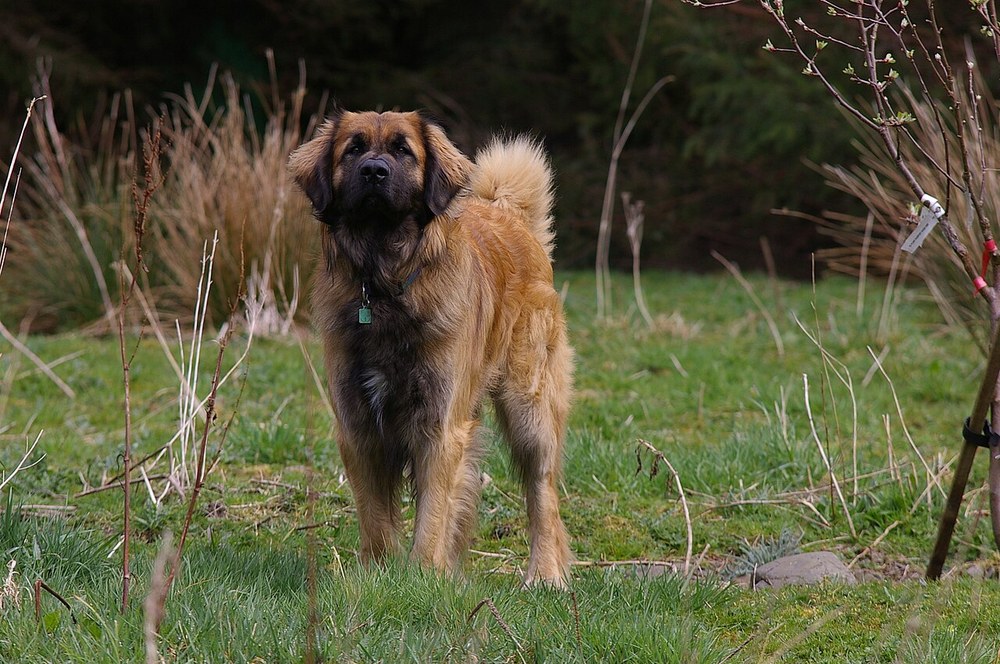
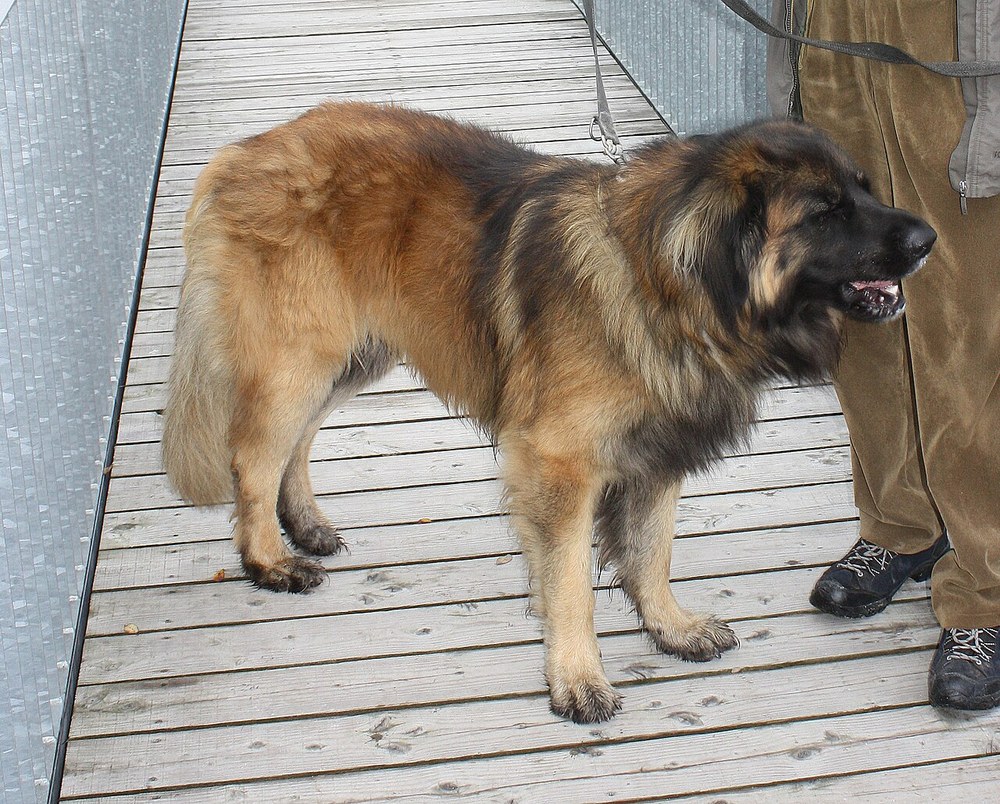
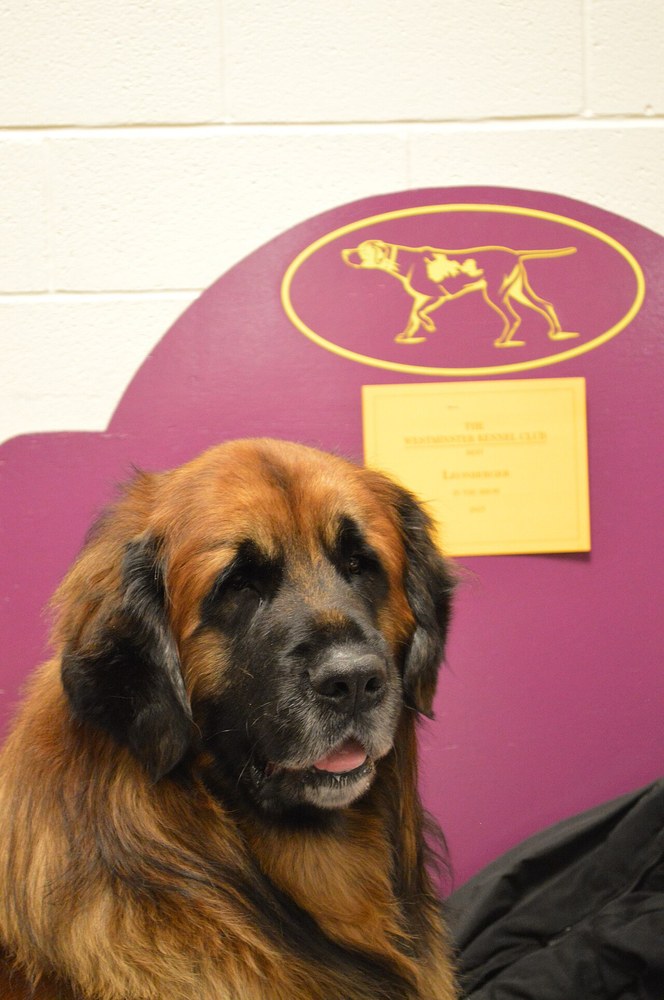
Jago, a two-year-old Leonberger (modern photograph).
Wars → near loss → rebuilding
A breed rebuilt after two world wars
Breed histories describe how numbers fell drastically during both world wars, and how a small group of dogs was used to rebuild the breed afterwards.
Today the Leonberger is recognised by FCI, AKC and the UK Kennel Club. It remains a large, slow-maturing dog — meet the parents and ask about their temperament with strangers and other dogs.
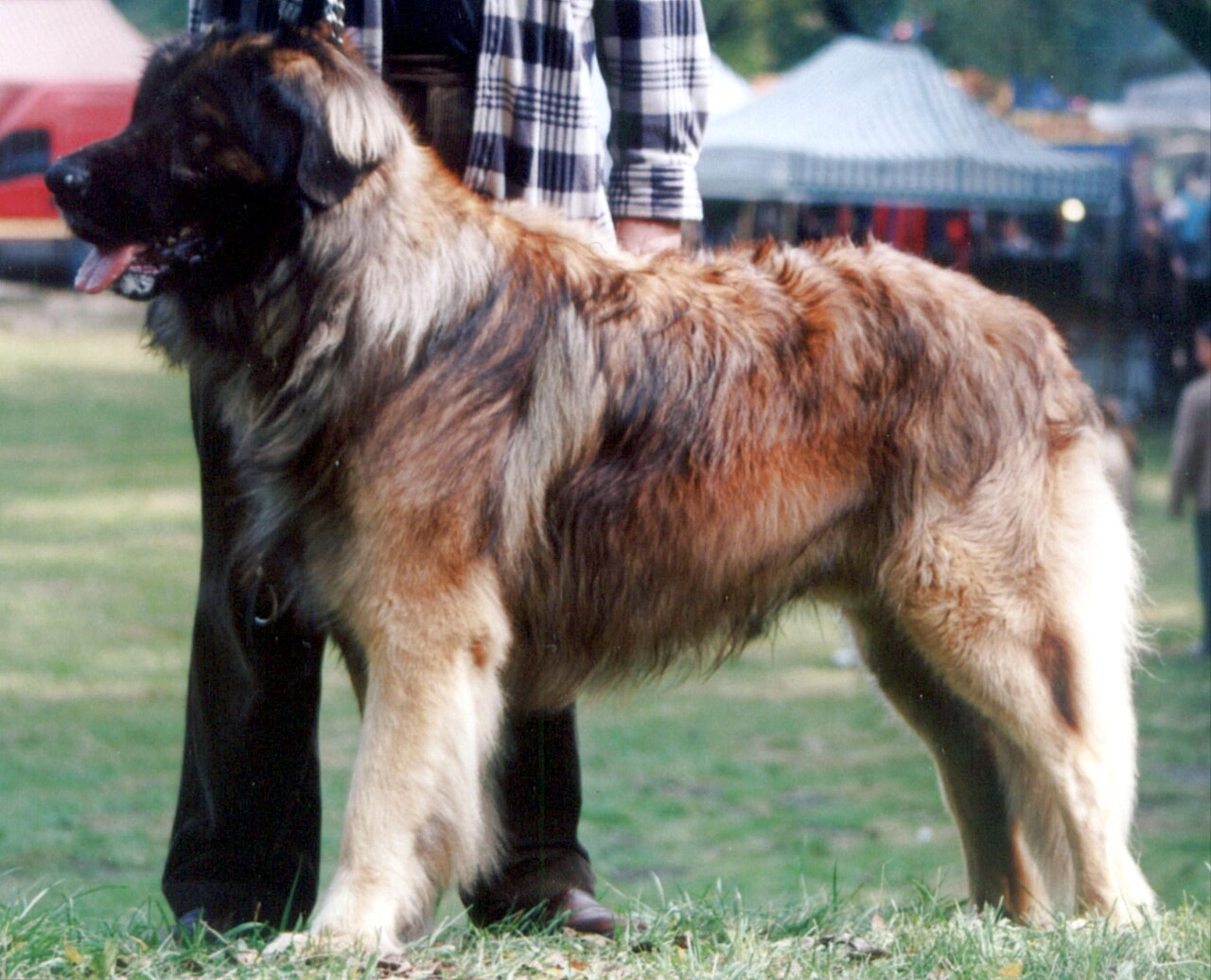
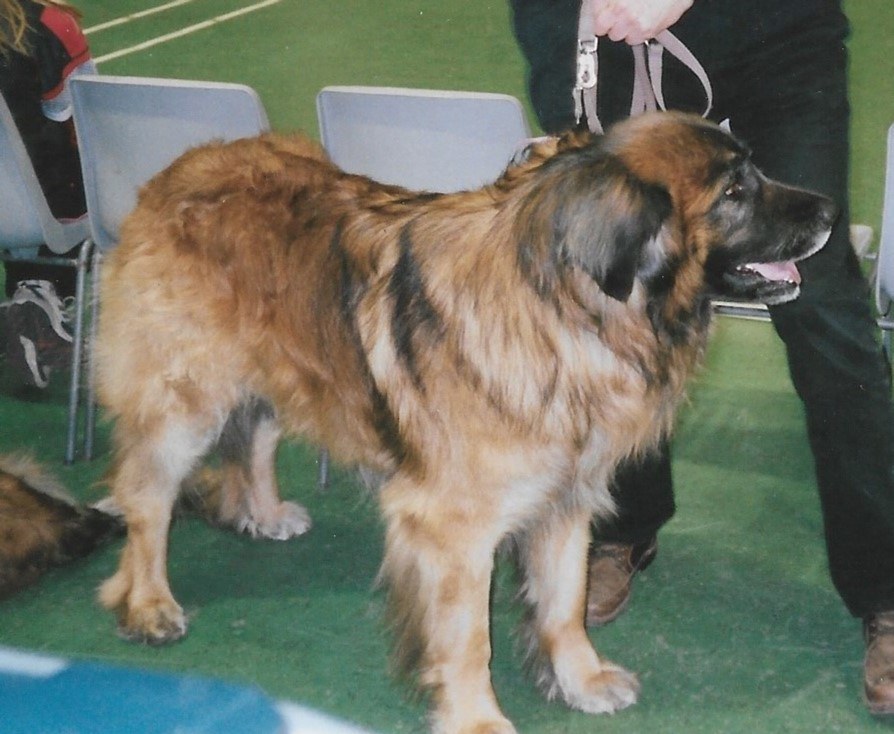
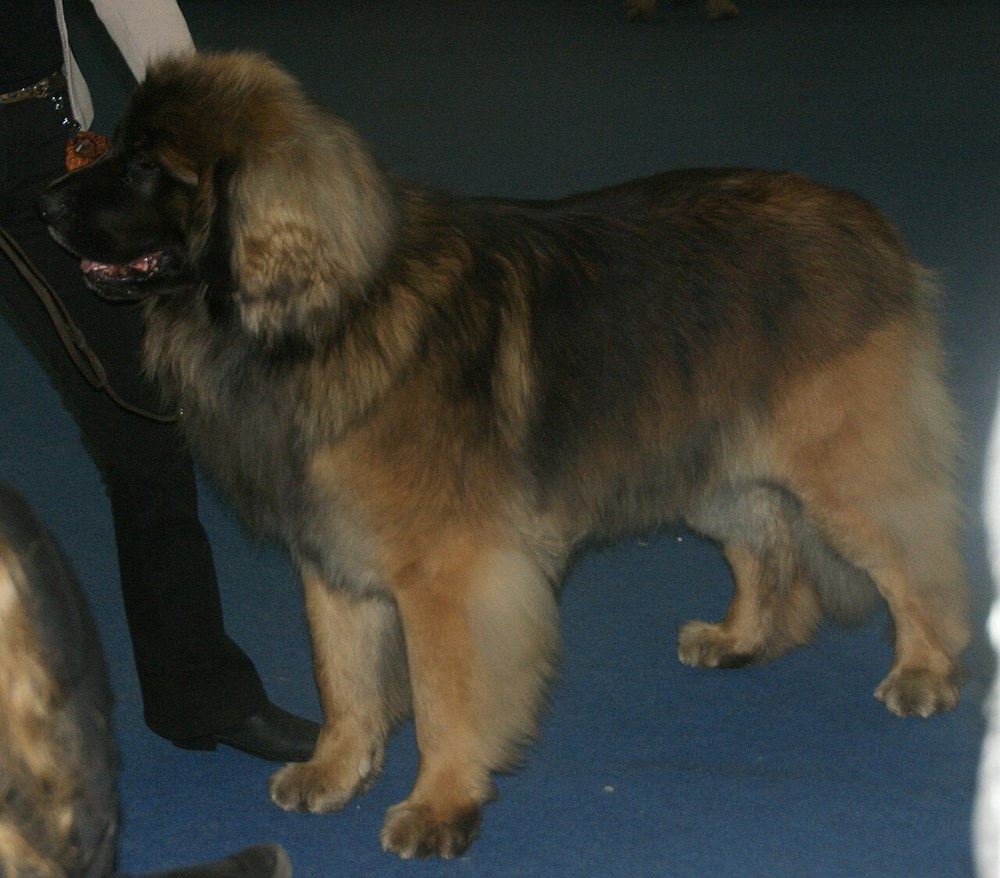
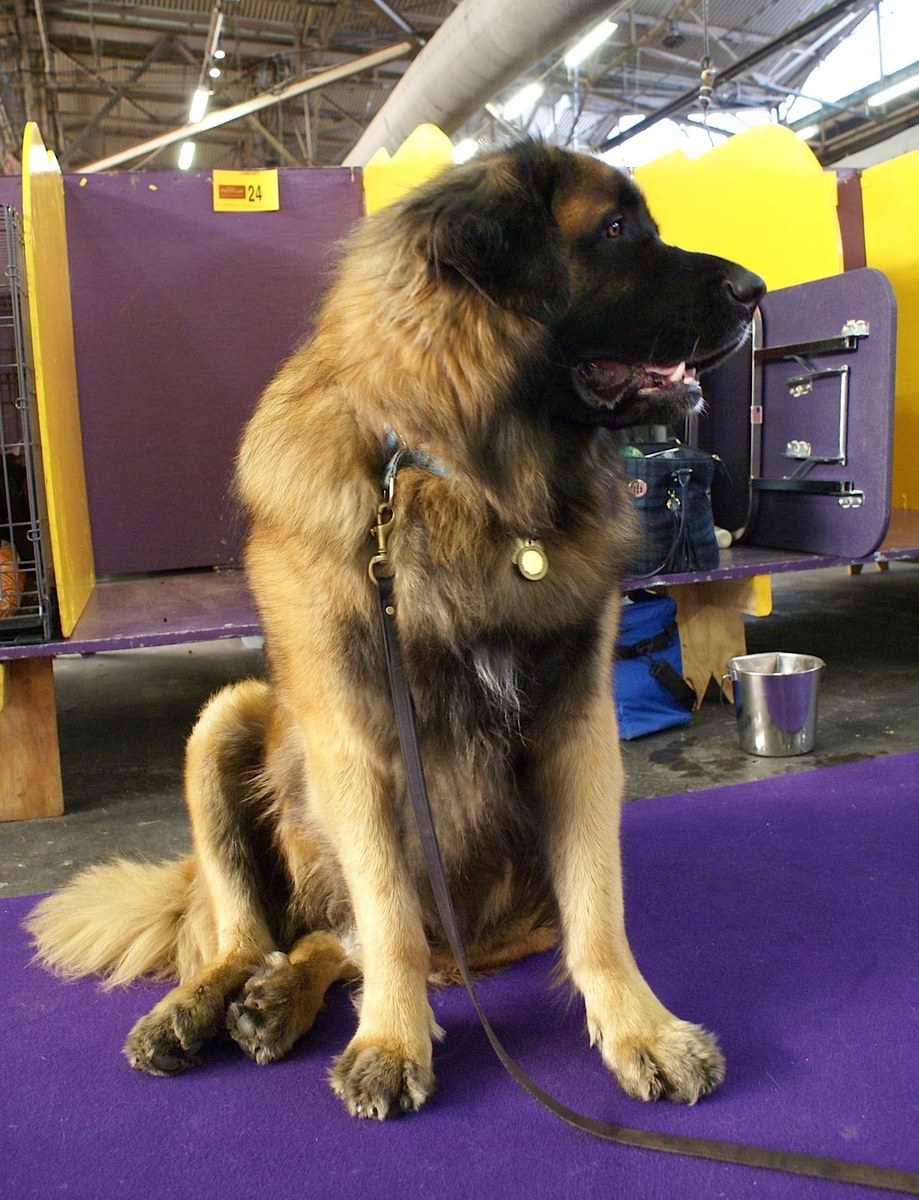
A Leonberger at a dog show (modern photograph).
What the breed was bred for
Gentleness, steadiness and a love of people
In plain trainer language: Leonbergers were selected to be calm, friendly companions with enough presence to watch the farm. Most are sociable with people and tolerant of other dogs, though males can be more assertive.
The challenges are size, slow maturity, shedding and a love of water and mud. Teach manners early and expect a puppy brain in a giant body for a long time.
A day is calm walks, water if possible and lots of family time
Leonbergers are usually gentle and adaptable, but they are giants with a heavy coat. Daily life is about manners, space, grooming and keeping a friendly dog from overwhelming people.
Morning · walk
A steady walk on a loose lead
Leonbergers are strong. Teach loose-lead walking early and keep walks moderate during growth.
What to watch monthly: coat, weight, joints and mealtimes
General awareness only — I am a trainer, not a veterinarian. In giant breeds, small changes in movement or appetite matter. For urgent signs, see
when to call the vet.
Coat and shedding
A thick double coat with a mane. Brush several times a week and expect heavy seasonal shedding.
Ask the breeder which screenings the national breed club recommends and see results for both parents.
Joints
Avoid stairs and long runs during growth. Watch for stiffness after rest.
After meals
Plan quiet time after meals. A swollen belly with restlessness is an emergency.
Ears and paws
Check ears after swimming and trim hair between pads.
Lines and types
Mask, colour and size vary — temperament comes from the parents
Leonbergers come in lion-yellow, red, red-brown and sand shades with a black mask. Size and coat vary between lines.
Larger, heavier dogs
More coat and substance.
Often calmer and slower.
More joint and heat care.
Ask how the parents move.
Suits calm homes with space and time for grooming.
Lighter, more athletic dogs
More active and agile.
Often better heat tolerance.
Still giants with the same needs.
Meet the parents on a walk.
Suits active families who enjoy hiking and swimming.
Socialization windows
What to introduce — and what not to overload — by age
AVSAB-aligned in spirit: short, clean exposures at a distance the puppy can still eat,
with hygiene while vaccines finish. See the
puppy socialization schedule.
2–4 months
Gentle start
Introduce: family, handling, grooming, crate, short car rides.
Do not overload: stairs, jumping, rough play.
~6 months
Manners before size
Introduce: loose lead, sit for greetings, place cue.
Do not overload: long walks, jumping up.
~12 months
Adolescent giant
Introduce: calm greetings, recall practice, water introductions.
Do not overload: hard exercise, rough dog play.
~18 months
Growing up slowly
Introduce: longer walks, swimming, new places.
Do not overload: forcing maturity, heavy pulling.
~24 months
Adult routines
Introduce: refreshed manners and grooming routines.
Do not overload: overweight, dropping training.
Before you buy
Who a Leonberger usually fits
A Leonberger fits families with space, time and budget for a gentle giant that sheds heavily and matures slowly.
Good match
More likely a good fit if you…
Want a friendly, gentle family dog
Have space indoors and a garden
Enjoy grooming or can pay for it
Like walks, hikes and water
Will teach manners early
Mismatch risk
A Leonberger may be a poor choice if…
You live in a small flat with stairs
Dog hair everywhere would bother you
You want a short-lived commitment to training
Long hours alone are routine
You cannot budget for giant-breed care
If you are torn between breeds
Leonberger vs Newfoundland and Saint Bernard
Leonbergers are often compared with the breeds said to be in their background.
Origin
Leonberger
German companion and farm giant from Leonberg.
Newfoundland
Canadian water and working dog.
Coat
Leonberger
Thick coat with a mane; heavy shedding.
Saint Bernard
Short or long coat; also sheds.
Water
Leonberger
Many love swimming.
Newfoundland
Strong, natural water dog.
Energy
Leonberger
Moderate; more active than many giants.
Saint Bernard
Usually calmer.
Drool
Leonberger
Moderate.
Both compares
Saints and Newfies usually drool more.
Ownership without surprises
Where a Leonberger owner’s budget goes
Costs depend on your area and breeder. Plan for these — not quotes.
Food
Giant-breed puppy food and large adult portions.
Veterinary care
Ask which screenings the national breed club recommends.
Grooming
Brushes, dryer and professional help.
Transport
A big car and crate.
Home
Large beds and easy-clean floors.
Training
Early classes for manners.
With a Leonberger, food, vet care and grooming are the main costs.
Before day one at home
What to prepare for a Leonberger puppy
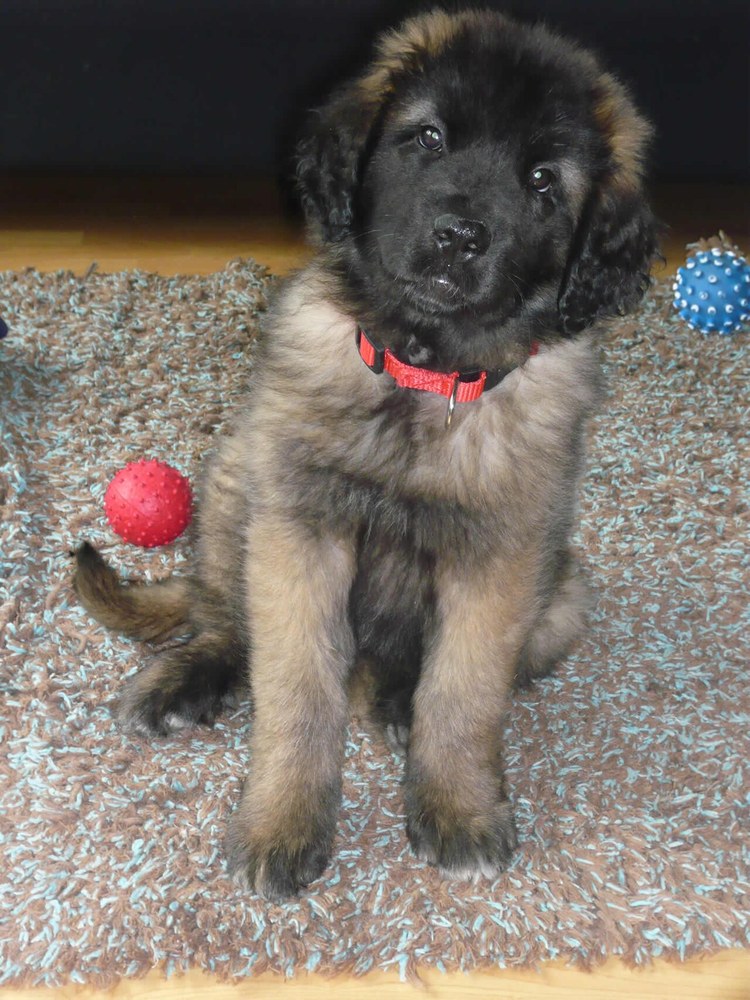
A Leonberger puppy grows fast but matures slowly. Teach manners and grooming early.
“With a Leonberger, I remember that the brain grows up slower than the body. We teach a loose lead, four paws on the floor, recall near water and calm grooming early — because a friendly giant still needs manners to stay welcome everywhere.”
Sessions cover real scenes: greetings and leaning, lead walking, recall near water, grooming, and time alone. I am a trainer, not a veterinarian. No invented reviews.
Andrew DarovProfessional dog trainer and instructor
A large, dignified Japanese breed that needs calm visitor routines, careful introductions to other dogs and an experienced owner.
Need a read on your exact situation?
Describe your Leonberger’s age and the scene that repeats most: jumping and leaning, pulling on lead, grooming, or time alone. We check safety first, then pick the first skill.
Written by Andrew Darov, professional dog trainer. Not veterinary advice and not a diagnosis.
Not a kennel club. No invented reviews. No vaccine schedules or toxin doses. Photo credits in
/images/breeds/leonberger-guide/credits.md.