

Expert Advice · Nutrition · 12 min read
How to check dog body condition and rations
BCS is a hands-on scale, not a vibe. Feed a complete-and-balanced food your veterinarian accepts, then watch the waist. This page will not name a brand.

Body condition is a hands-on scale, not a vibe and not a breed-standard photograph. You should feel ribs under a thin layer, see a waist from above, and see an abdominal tuck from the side. Feed a food your veterinarian would call complete and balanced, then watch that waist. I will not prescribe a brand and I will not invent calories per kilogram. A soft Labrador is not “well loved.” It is a dog carrying extra load.
This is the check that sits next to food as a reinforcer. The pouch is the tap. BCS is whether the tap is honest.
How does a trainer actually look at a body?
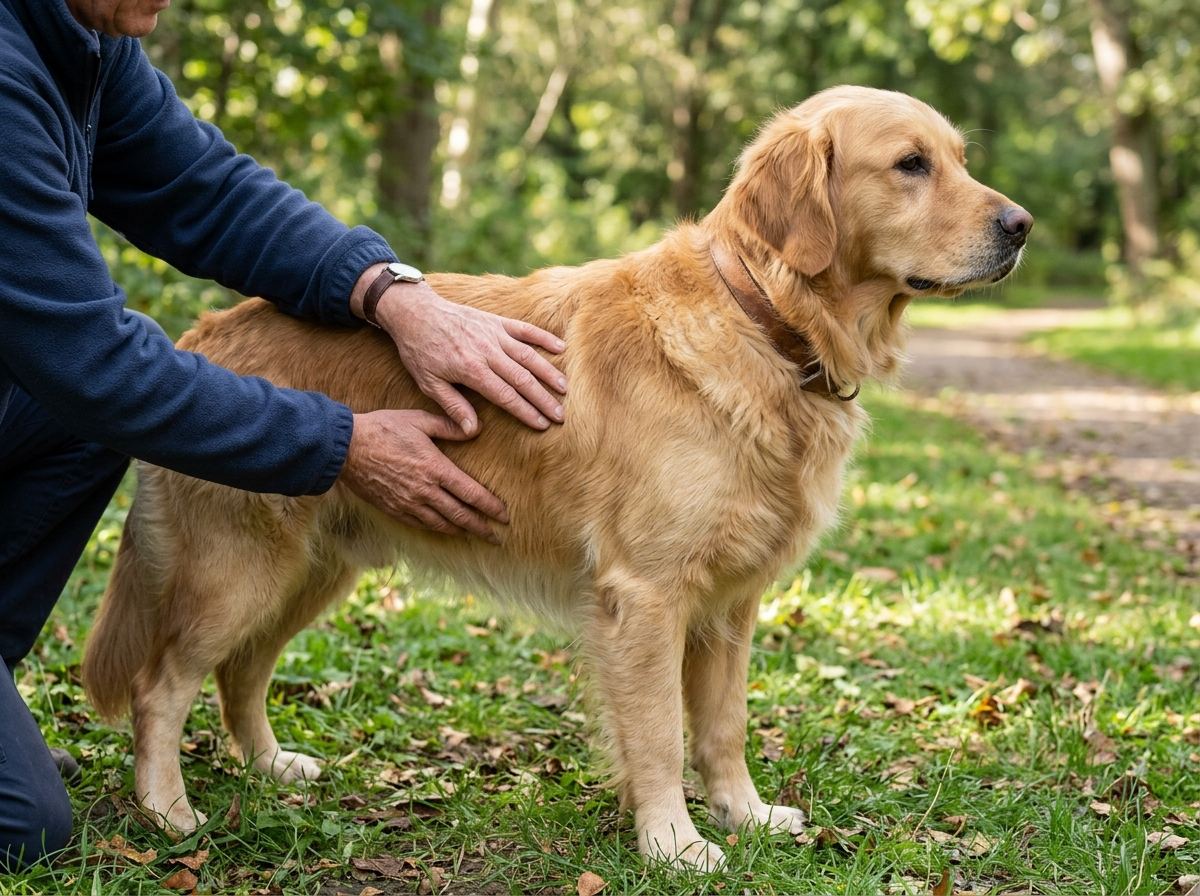
I look before I put a hand on the dog, and then I put a hand on the dog. From above: does the waist indent behind the ribs, or is the outline a smooth loaf? From the side: is there a tuck from the rib to the groin, or does the belly hang as a straight or sagging line? Under the thumb: can I feel ribs without digging, or do I have to press through a pad?
Public owner overviews of body condition (the WSAVA Global Nutrition Guidelines include a BCS chart meant for that hands-on look) treat this as a monitoring tool, not as a personality contest. Read their chart. I am not reprinting a nine-point table as if I own it. I am telling you what I do with it on a training floor.
A trainer also sees movement. A dog who used to sit crisply and now rocks into a sit, who cuts walks short, who pants sooner on the same route. Those are reasons to look at the body and then, if needed, to stop guessing and call the vet. Weight on a home scale helps if you have one. The hand on the ribs still wins, because a tall adolescent can gain height and fool a number.
Why do lean Labs stay a separate sentence?
Labrador retrievers will eat past comfortable and look “happy” while they do it. Working lines and pet lines both go soft on uncounted extras. A lean Lab is not a starved Lab.
You can see muscle over the loin. The dog can trot a full walk and still offer a sit at a kerb. A round Lab has no waist, a thick neck, and a sit that looks like a collapse.
I will not tell you a target weight in kilograms for “a Lab.” There is no such Lab. There is this dog, this height, this age, this neuter status, this amount of real work. The BCS picture is the shared language with a veterinarian. “Keep him lean” is a sentence I will say in a seminar. “Feed X grams of brand Y” is a sentence I will not write on this site.
The same eye applies to other easy keepers: some spaniels, some retrievers, many neutered adults in flats. It also applies in reverse. A sight-hound who is supposed to show rib is not a Labrador. Do not fatten a whip-shaped dog because a neighbour said they look poor. If you cannot tell type, ask the vet, not a comment section.
How do you change a ration without inventing numbers?
You change the measured amount, and you wait long enough to see the body. A week of “we cut treats” while the bag stays open is not a trial.
Working rules I actually run:
- One box for the day. Meals and training pay come out of it. That rule is on the food-as-reinforcer page and it belongs here too.
- Change one variable. If the dog is getting soft, first remove uncounted extras (table, chews you forgot, the second person’s pouch). Then reduce the measured cup slightly. Do not do both plus a new food in the same week unless a veterinarian told you to.
- Give the body time. Fat cover does not move on Thursday because you were virtuous on Wednesday.
- Train first, then feed, if the dog is a good eater who goes dull after a bowl. That is logistics, not a fast.
If the dog is getting too thin (ribs sharp, no cover, a coat that looks tired), you increase the measured ration and you ask a veterinarian why. Parasites, bad teeth, a diet that is not actually being eaten, a medical problem. I will not tell you to “just add oil” from a blog.
AAFCO “complete and balanced” language (see the Association’s public understanding pet food note) is a starting question for your vet, not a halo I print on a kibble. Other countries use other statements. The job is the same: the bowl should be a diet a clinician accepts, and the body should match the picture you agreed.
What will I not do on this page?
I will not publish calorie-per-kilogram formulas. I will not write a homemade recipe. I will not run a grain-free-versus-DCM argument. I will not prescribe a renal, pancreatic, or elimination diet. Those are clinic problems. If a veterinarian has put the dog on a medical food, I use that food as pay when they say I may, and I shut up about the bag.
Puppies are still growing. A youngster who looks lean one month can be a different shape the next. That is why I want a vet in the loop on growing dogs, and why I will not give you a cup-count that pretends to travel across breeds.
How does BCS talk to training?
A heavy dog is a different athlete. Duration downs get sloppy. Jumping into a car becomes a welfare question. Summer walks become heat questions. People then book training for “laziness.” I book a scale and a hand on the ribs.
A dog who is too hungry is a different problem. They cannot think, they mug the pouch, they cannot take a lure without teeth. That is not drive. That is a budget that is too tight, or a medical problem, or a teenager. Raise the measured food or split it so the working portion is available when you train. Do not moralise a stomach.
If BCS changed fast (weeks, not months) and the appetite changed with it, leave this page. Sudden weight loss, a pot belly, or a dog who cannot eat is health, not a ration tweak.
Sources
WSAVA Global Nutrition Guidelines, including the public dog body-condition overview. AAFCO consumer note on understanding pet food and complete-and-balanced statements. Both are starting points for a conversation with your veterinarian, not a prescription from this lab. wsava.org — global nutrition guidelines · aafco.org — understanding pet food
Questions on this page
What is body condition score in practical trainer language?
A hands-on scale of fat cover. You should feel ribs under a thin layer, see a waist from above, and see an abdominal tuck from the side. A disappearing waist is data, not a compliment. Weight on a home scale helps. The hand on the ribs still wins.
Should Labradors be kept lean on purpose?
Working and pet Labs both do better lean. Extra weight is load on joints that already work hard. “He’s just big boned” is usually a thumb that will not press the ribs. There is no target weight in kilograms for “a Lab.” There is this dog.
Will you tell me which food to buy?
No. Ask your veterinarian for a complete-and-balanced food for this dog. AAFCO (or your country’s equivalent statement) is a starting question for that conversation, not a badge I stamp on a bag. I will not name a brand on this site.
How do rations change when we train a lot?
Training pay comes out of the day’s food. If the dog is getting leaner than you and your vet want, increase the measured ration, do not pour extras from an open bag. If the dog is getting softer, cut the extras first. Change one variable.
Are there calorie-per-kilogram numbers on this page?
No. Energy needs move with age, neuter status, weather, and real work. Invented numbers on a blog are how people underfeed a youngster or overfeed a sofa Lab. Body condition is the law you can see. I will not publish a formula that pretends to travel across dogs.
Work with me
A $150 consultation or $500 monthly curatorship. Opens WhatsApp to Andrew.