Biewer Terrier: temperament, size, coat care and training for the tricolour German toy
The Biewer Terrier is a tiny, long-coated toy dog in white, black or blue and gold. It began in Germany in 1984, when a breeding couple named Biewer had a white-marked puppy in a litter of Yorkshire Terriers and decided to breed for the colour. Today it is a breed of its own. Living with one means a cheerful, people-focused little dog that wants to be with you, barks at news, needs patient toilet training and has a long coat to care for. What works is treating it as a real dog with real manners: short training sessions, gentle handling, a toilet plan, steps for being alone and safe meetings with bigger dogs.
Job: A tiny German toy dog; AKC Toy group since 2021.
Energy: Playful, affectionate and alert, with some terrier spark.
Home: Suits a home that wants a close companion and will train it.
A Biewer Terrier is a real little dog, not a handbag accessory
People meet the breed through its coat and its size. It weighs about as much as a bag of flour and it looks like a soft toy with a bow in its hair. It is easy to forget that there is a full dog inside.
The problems I meet at home are the usual small-dog ones: a puppy that pees on rugs for months, barking at every sound in the hallway, crying when the owner leaves the room, snapping when someone picks it up suddenly and tension with bigger dogs in the park.
My approach is to train a Biewer the same way I would train a big dog, just with smaller treats. Clear toilet routines, a name check-in, a bed cue, gentle handling, short spells alone and calm meetings with other dogs. A small dog with good manners is welcome everywhere; a small dog that has never been taught anything is not happy either.
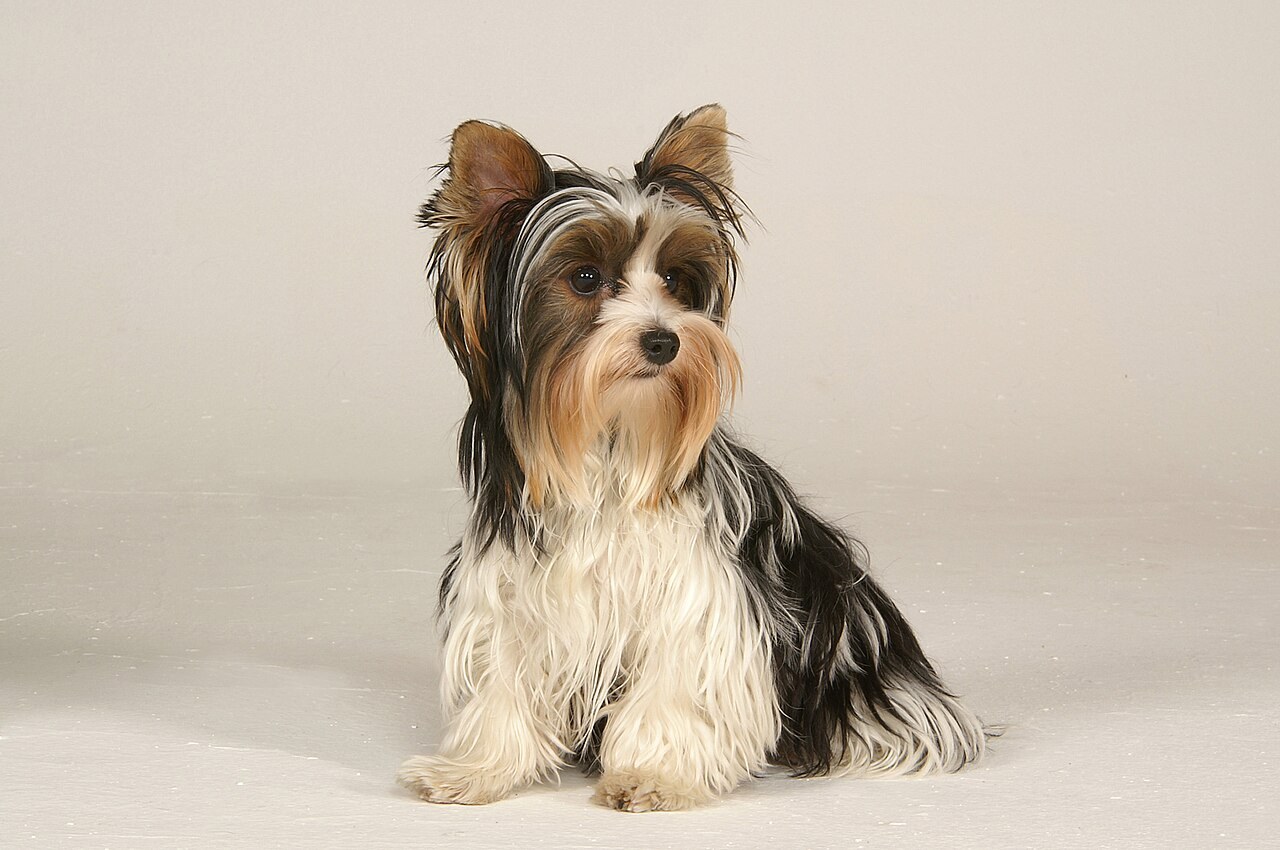
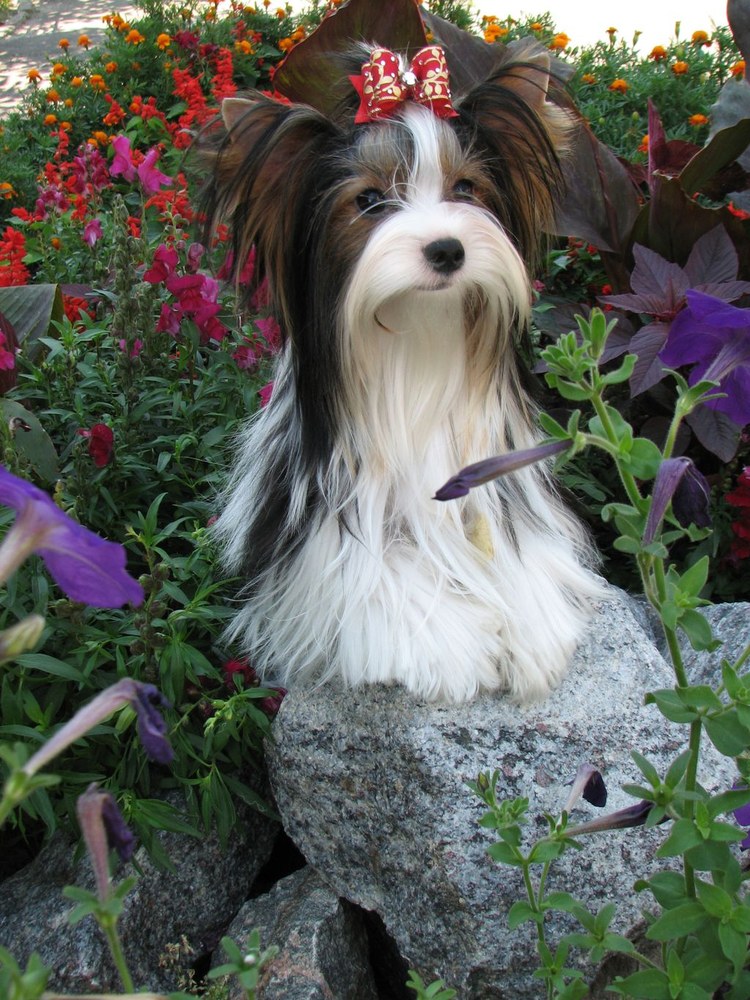
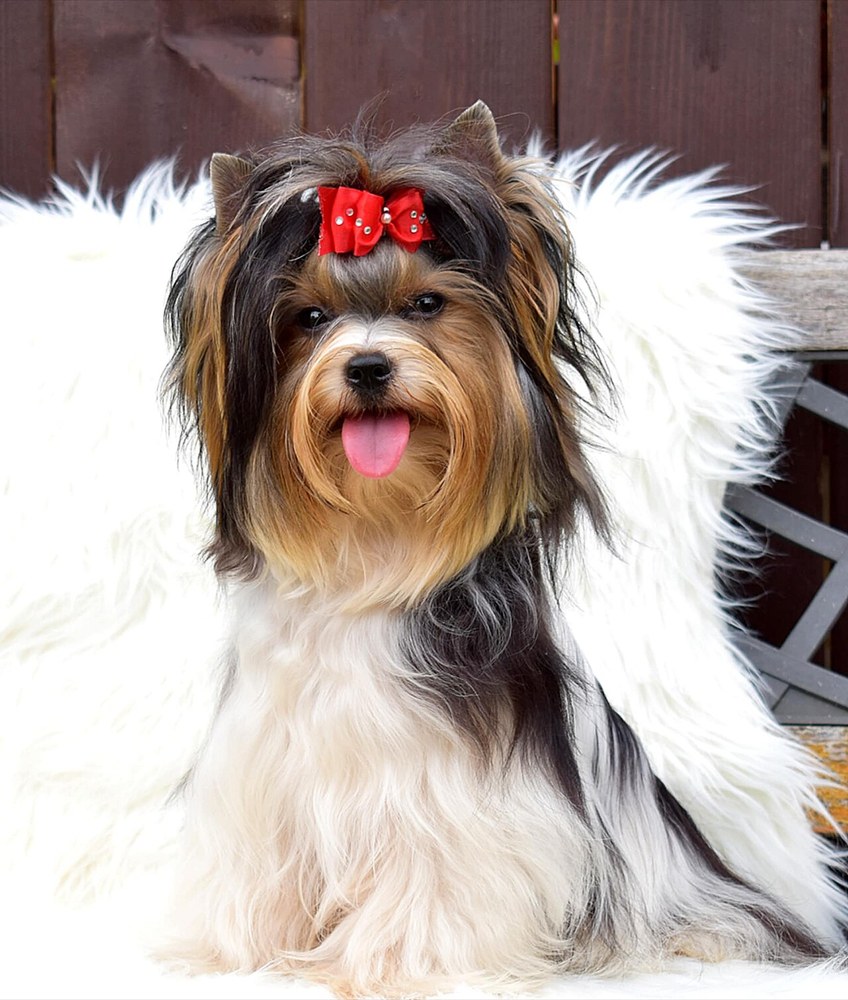
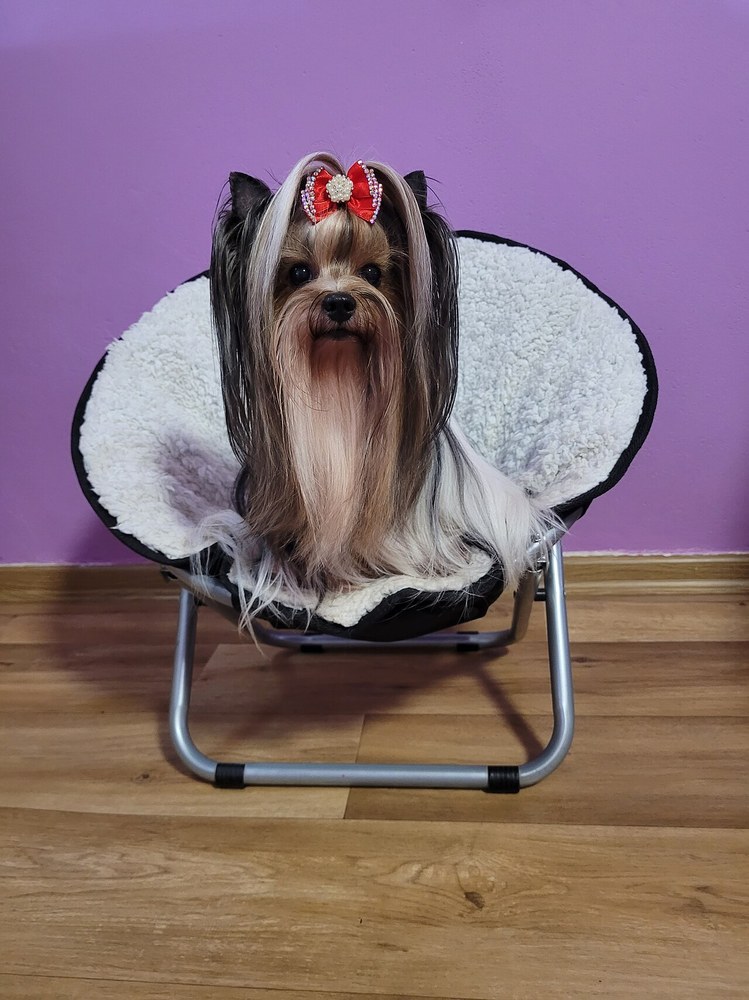
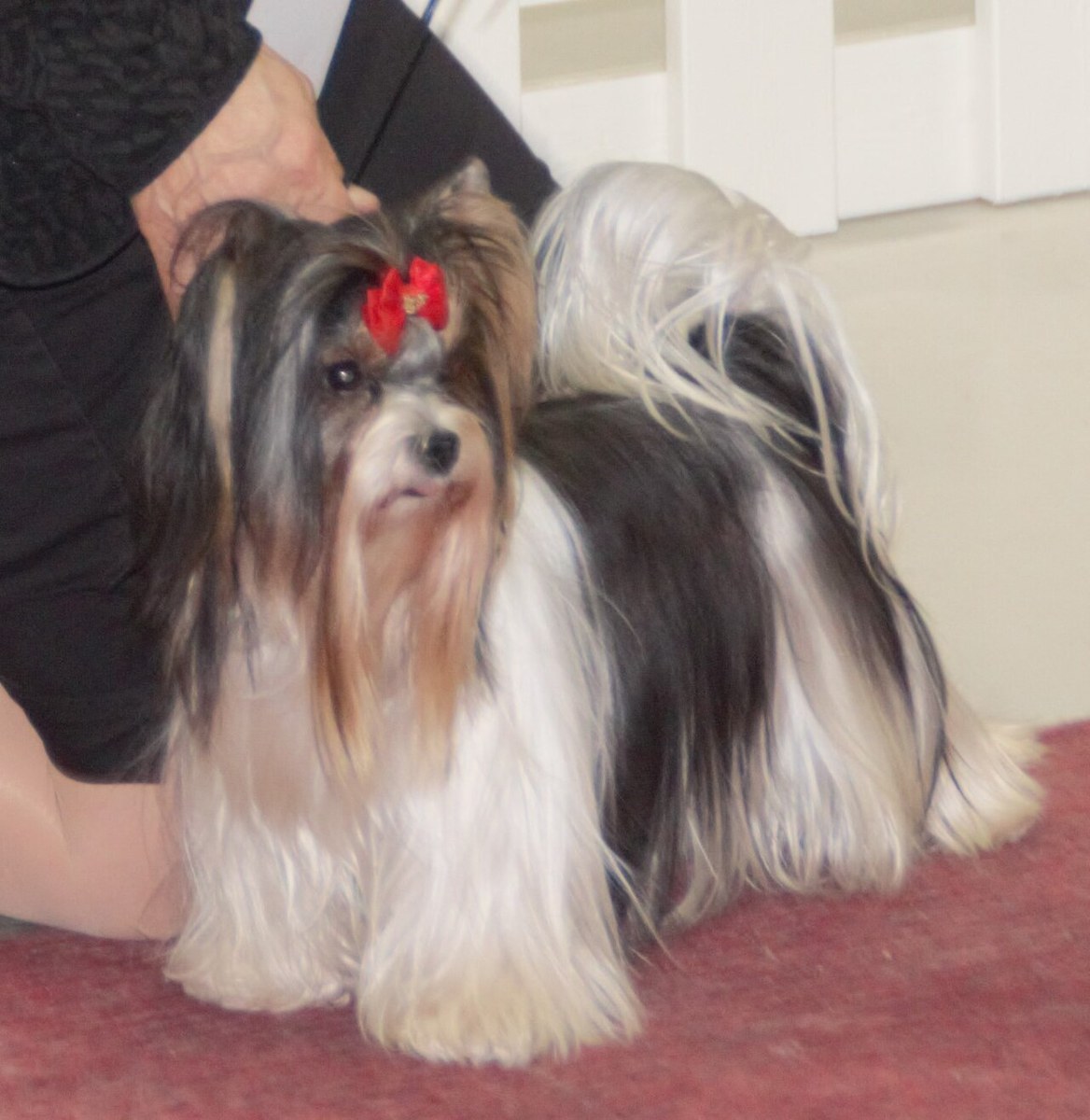
Long, straight, silky coat in white with black or blue and gold, usually tied up on the head
Job
Companion toy dog bred from Yorkshire Terriers in Germany from 1984 (AKC Toy group)
Temperament in one minute
Biewer Terrier temperament: what they are like at home
Short answer: Biewer Terriers are cheerful, playful and affectionate toy dogs that stay close to their people and like to join in everything. They are alert and bark at sounds and visitors, can be bold with bigger dogs and often take a while to toilet train. They need a steady toilet plan, short and gentle training, careful handling, steps for being alone, regular coat care and an owner who treats a small dog as a real dog.
Are Biewer Terriers affectionate?
Very, and many follow their people from room to room. Build short absences early.
Are Biewer Terriers easy to train?
They learn quickly with tiny treats and short lessons. Start with a hand target and a name check-in.
Are Biewer Terriers friendly with strangers?
Usually friendly once they have checked a visitor out. Guests should sit first; see guest entry steps.
Are Biewer Terriers good with kids and other dogs?
Good with gentle children and calm dogs; toddlers and big, rough dogs are a risk to a dog this small. See children and guests.
Biewer Terrier behavior problems to expect
The usual four are accidents in the house, barking at the door, crying when alone and snapping when lifted or brushed. The list further down links a guide for each.
Living with a Biewer Terrier in an apartment
A good fit if you plan toilet trips, short daily walks and a routine for barking in the hallway.
Breed history
How a white-marked Yorkie puppy started a new breed
The history will not train your dog, but it explains the Yorkie-like coat, the size and the terrier spark.
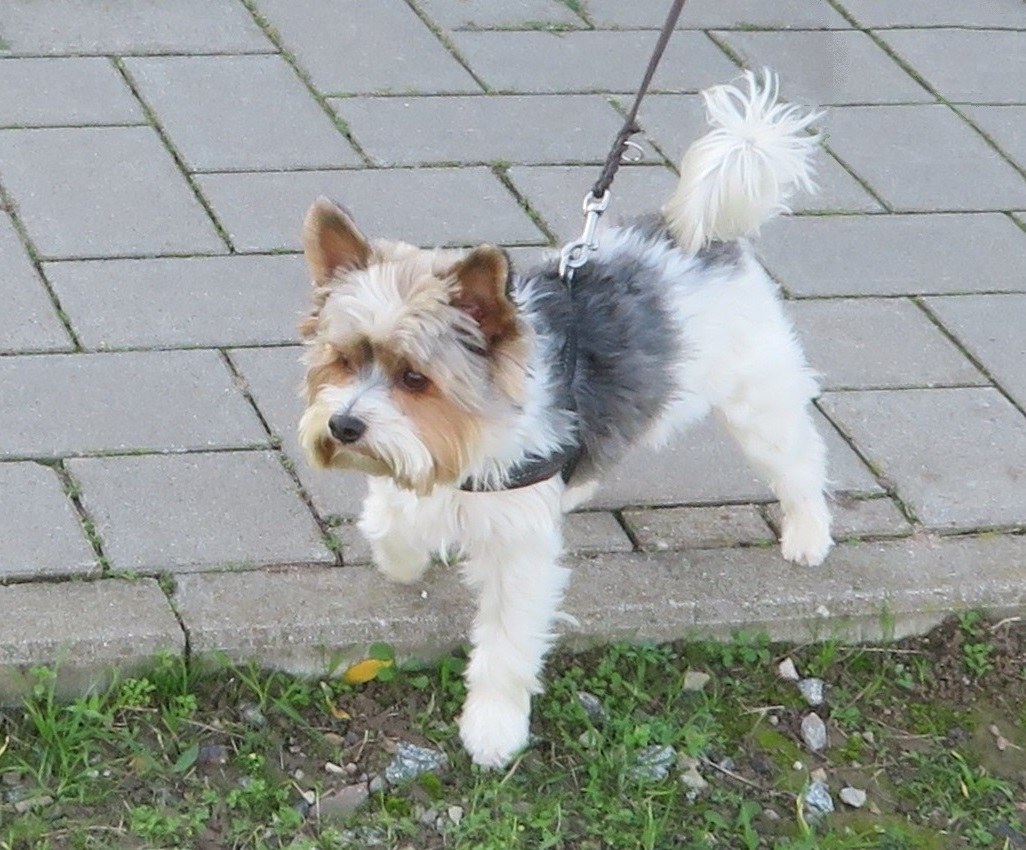
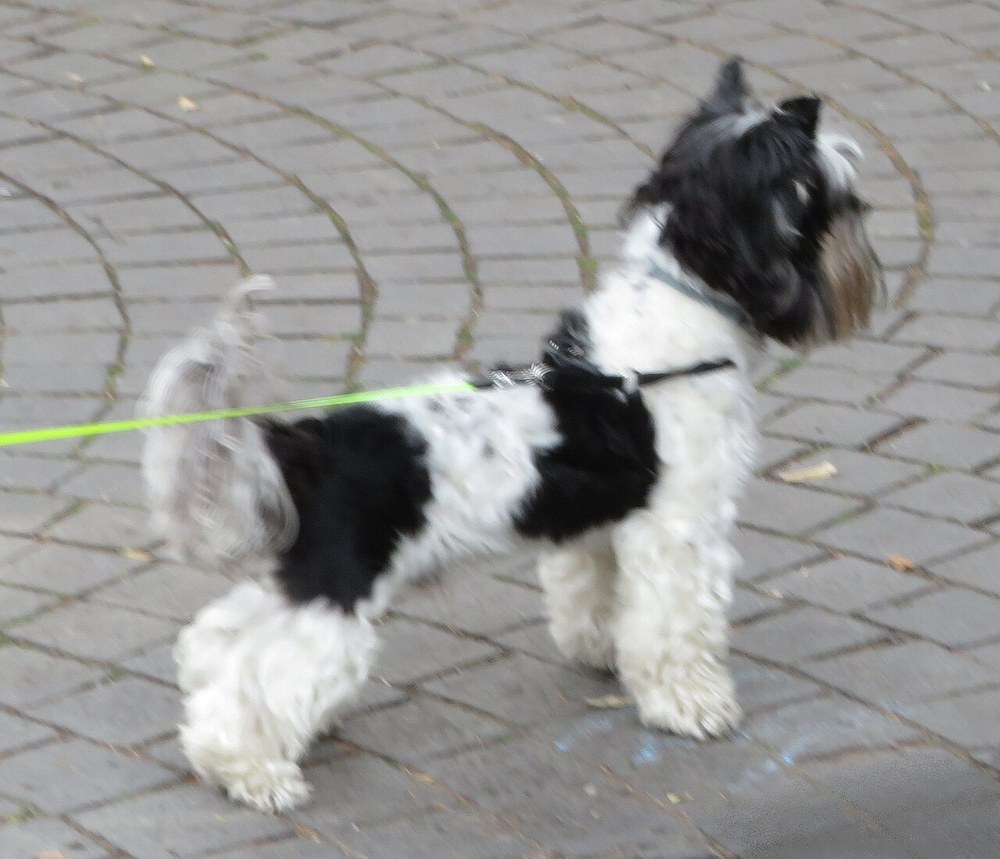
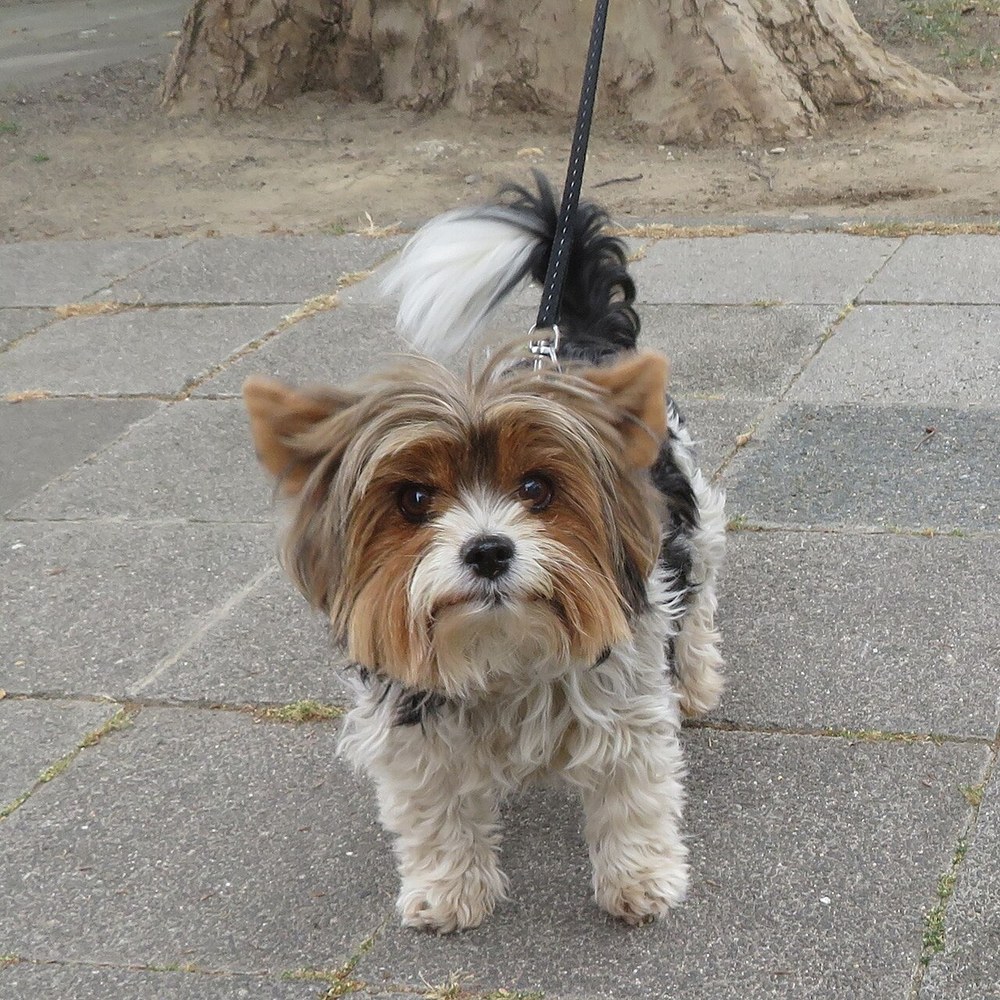
A Biewer Terrier male out on a lead: even a dog this small needs daily walks and lead manners.
Germany · 1984
A surprise in a Yorkie litter
In January 1984 Gertrud and Werner Biewer, who bred Yorkshire Terriers in the Hunsrück region of Germany, had a puppy with large white patches. They liked the look and began breeding white-marked dogs on purpose.
The dogs were first called Biewer Yorkshire Terriers à la Pom Pon. They became popular as companions in Germany and later in other countries.
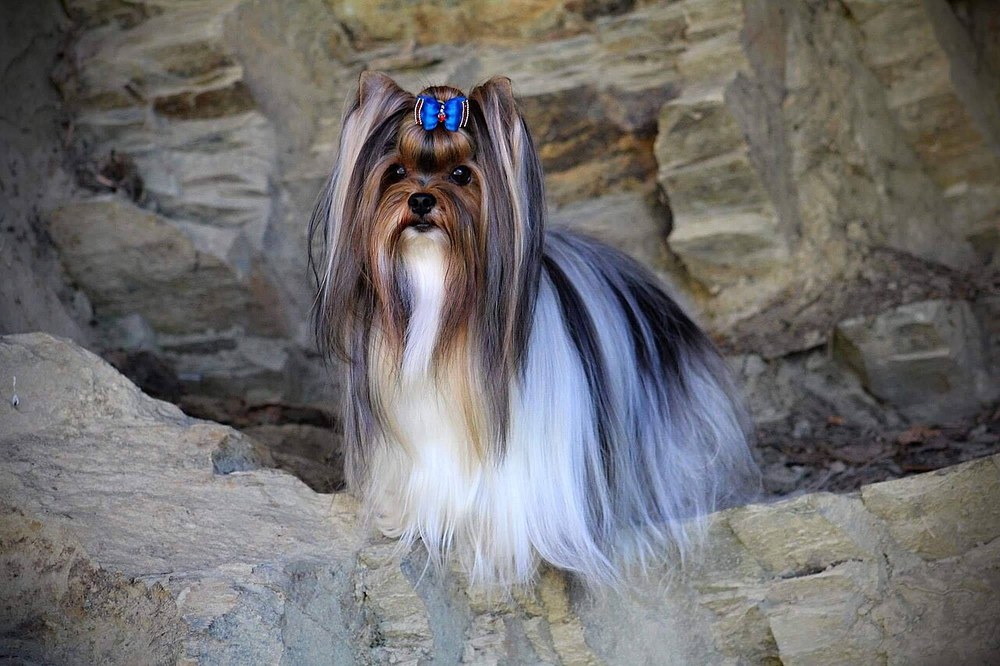
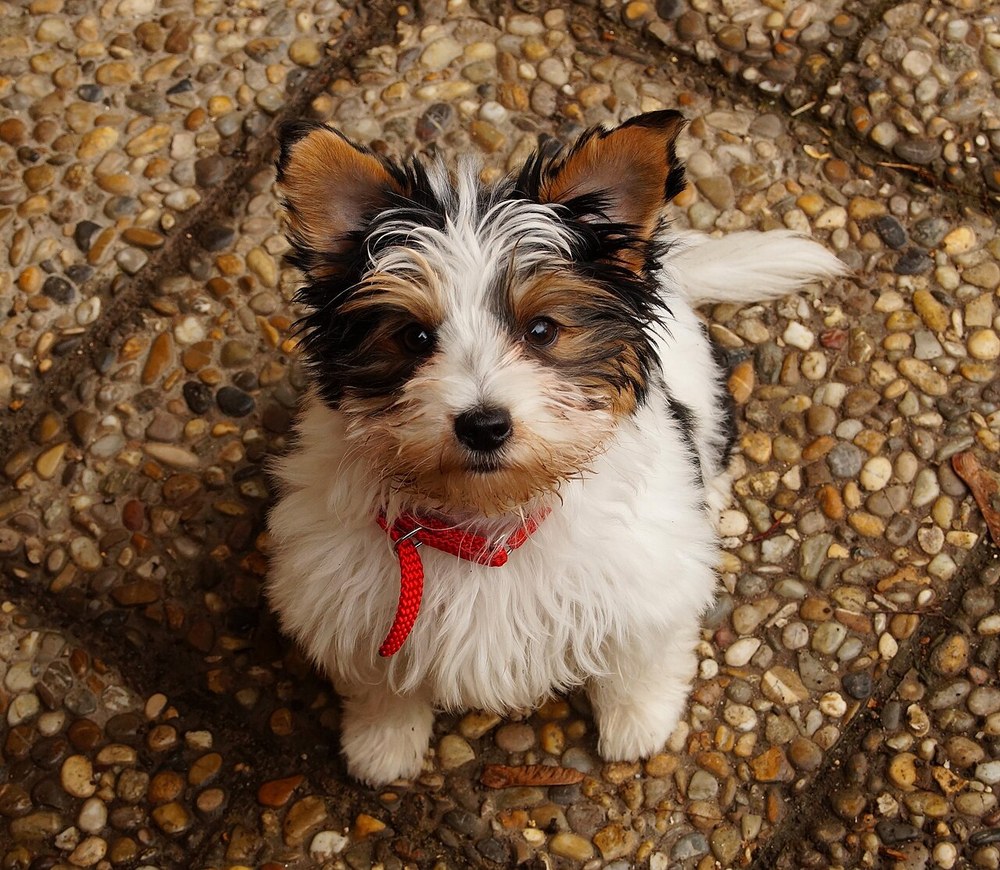
A Biewer of the type first known in Germany as the Biewer Yorkshire Terrier à la Pom Pon, with the long, parted coat and topknot.
From 2003
From colour variety to breed
The dogs reached the United States in the early 2000s. Breeders there kept records and worked toward recognition as a separate breed rather than a colour of the Yorkshire Terrier.
The AKC fully recognised the Biewer Terrier in the Toy group in 2021. It is still a young breed, and not every registry lists it.
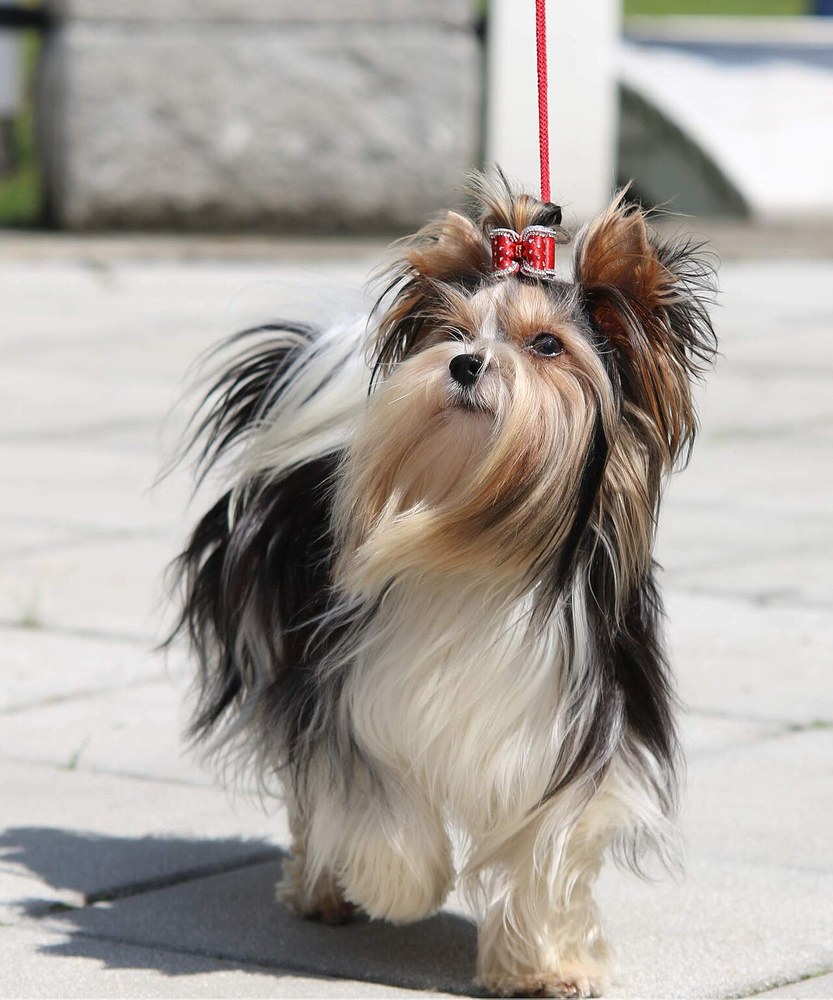
A Biewer Terrier male: the coat is white with black or blue and gold, and the hair on the head is usually tied up out of the eyes.
What the breed was bred for
Sweet, cheeky and very attached
At home a well-raised Biewer is playful, friendly and close to its people. It likes to follow you from room to room and join in.
It is alert and will bark at sounds and visitors, and it can be bold with bigger dogs. Early work on the door, being alone and dog meetings keeps it relaxed.
A good day has short walks, small games and plenty of company
An adult Biewer usually does well with two or three short walks, some indoor games and a short training session, with a lot of time near its people. Trouble usually comes from a dog that is carried everywhere and never taught anything, missed toilet trips and long hours alone.
Morning · walk
A real walk on its own four feet
Let the dog walk and sniff instead of carrying it. A short walk with time to explore gives a toy dog exercise, confidence and a chance to meet the world at its own pace.
Biewers learn quickly with food and play. Two or three minutes at a time is plenty. Use very small treats and count them in the day's food so the dog stays lean.
Small dogs have small bladders. Take the dog out after sleep, food and play, reward it at the right spot and clean accidents with an enzyme cleaner. A dog that is never caught in the act indoors learns faster.
Give the dog a bed it loves and teach it to go there on cue. A small dog that has a place to settle is calmer when visitors come and easier to leave for short spells.
Many toy dogs live long lives. Keep handling, teeth cleaning and short walks in the routine, and ask a vet about any change in appetite, mood or movement.
General awareness only. I am not a veterinarian. With a Biewer Terrier, owners often notice trouble first as a change in appetite or toilet habits, a dog that suddenly hides or snaps when touched, a sore mouth or limping after a jump from the sofa. For red flags, leave this page and open
when to call the vet.
Coat
Brush every day or two to stop knots; many owners keep a shorter pet trim.
Teeth
Small mouths need regular tooth brushing; ask your vet about dental checks.
Jumps and falls
Use steps or a ramp for the sofa and bed, and carry the dog safely. See limping stop list.
Weight
A few extra treats are a lot for a dog this size. See BCS check at home.
Handling for the vet
Teach calm handling of paws, mouth, ears and coat with food while the puppy is small.
Ask the breeder
Ask which screenings the national breed club recommends for the parents and see the results. Do not invent disease claims from a blog.
Lines and types
Choose a healthy, outgoing puppy, not the tiniest one
No bloodline selling. Avoid anyone who sells extra-small dogs as a special feature. Meet the mother, see where the puppies live, watch how relaxed they are with visitors and handling, and ask what health checks the parents have had.
Family homes
Calm, supervised play with children.
A safe way to carry and lift the dog.
A toilet plan everyone follows.
Gates on stairs.
Suits a family with older, gentle children who will treat a tiny dog carefully.
Adult and city homes
Short walks two or three times a day.
A plan for barking in the hallway.
Steps for being alone.
Safe meetings with bigger dogs.
Suits singles, couples and older owners who want a close, portable companion and will train it.
Socialization windows
What to introduce — and what not to overload — by age
AVSAB-aligned in spirit: short, clean exposures at a distance the puppy can still eat,
with hygiene while vaccines finish. See the
puppy socialization schedule.
2–4 months
Settling in
Introduce: the toilet spot on a timetable, gentle handling and brushing, calm visitors, short car rides, short spells alone.
Do not overload: long times unsupervised on rugs, being passed around by many people, jumping off furniture.
~6 months
Busy puppy
Introduce: name check-in, loose lead walking, a bed cue, quiet meetings with calm adult dogs.
Do not overload: off-lead play with big, rough dogs, being carried everywhere instead of walking.
~9–12 months
Teenage cheek
Introduce: barking routines at the door, longer alone time, grooming on a table.
Do not overload: laughing at growling or snapping, skipping toilet rewards too early.
~1–2 years
Grown up
Introduce: a steady routine, new places, tricks and nose games.
Do not overload: stopping training because the dog is small.
~3 years+
Maintenance
Introduce: daily walks and games, coat and tooth care, weight checks, yearly vet visits.
Do not overload: letting old habits like barking creep back.
Before you buy
Who a Biewer Terrier usually fits
Fit comes down to time at home, patience with toilet training, coat care, how you feel about barking and whether a very small dog is safe in your household.
Good match
More likely a good fit if you…
You want a close, affectionate companion
You are home a lot or can take the dog with you
You will brush the coat or pay for grooming
You are happy to train a small dog properly
Your household is calm and gentle
Mismatch risk
A Biewer Terrier may be a poor choice if…
You want a dog for long hikes and runs
The dog would be alone all day
You have toddlers or rough play at home
You live with large, boisterous dogs
You think small dogs do not need training
If you are torn between breeds
Biewer Terrier vs Yorkshire Terrier and Maltese
All three are long-coated toy dogs. The Yorkshire Terrier is the Biewer's ancestor and has a steel-blue and tan coat with more classic terrier drive, the Maltese is all white and often softer, and the Biewer sits between them with its tricolour coat and a playful, friendly nature.
Colour
Biewer Terrier
White with black or blue and gold.
Yorkshire Terrier
Blue and tan, no white.
Character
Biewer Terrier
Playful, friendly, some terrier spark.
Yorkshire Terrier
Often more terrier drive and chase.
Coat
Biewer Terrier
Long, silky, tricolour.
Maltese
Long, silky and pure white.
Toilet training
Biewer Terrier
Needs a patient plan.
Both compares
All three need a steady toilet routine.
Ownership without surprises
Where a Biewer Terrier owner’s budget goes
Costs depend on country, city and your choices. These are themes to plan for, not quotes.
Veterinary
Annual vet visits, the vaccines your vet recommends, dental checks and the health tests the breed club recommends.
Grooming
Brushes, combs and regular grooming visits or trims.
Training
A puppy class with other small dogs and help with toilet training or barking if needed.
Gear
A harness, a soft carrier, steps for furniture, gates and a coat for cold weather.
Food
Small amounts of good food; tiny treats for training.
Money spent on early training and a good toilet plan saves far more than fixing a small dog's habits later.
Before day one at home
What to prepare for a Biewer Terrier puppy
A Biewer Terrier puppy is tiny, curious and quick to bond. Have a pen or gates, a crate, a toilet spot, soft brushes, small chews and a safe way to lift and carry it ready before it comes home.
Training a Biewer Terrier means big-dog manners in a small body
Five skills cover most of daily life: a toilet routine, a name check-in, walking on a loose lead, going to a bed, and calm handling for brushing and the vet.
Biewers learn fast with tiny treats, play and praise. Keep sessions short and cheerful. Shouting or grabbing scares a small dog and often leads to snapping or hiding.
Ask a small dog to walk, wait and settle just as you would a big one. Lifting it away from every problem stops it learning how to cope.
Load balance
Small dogs still need to move and think
Go easy with young puppies and avoid jumps from height. A limp, a change in appetite or a dog that suddenly snaps when touched means a vet visit before more training.
Short sniffing walkFind it gameTwo-minute lessonBrushing with treatsNap on its bed
For this breed, a short walk plus a few minutes of nose games is a full, happy day.
A trained Biewer is welcome everywhere; an untrained one ends up left at home.
Toilet training
How to toilet train a Biewer Terrier
Take the dog out on a timetable, go to the same spot, reward it the moment it finishes, supervise or pen it indoors, and clean accidents without fuss.
01
Go out on a timetable
After sleep, food, play and every hour or two at first.
02
Same spot each time
Carry or walk the dog to one toilet spot.
03
Reward at once
Treat and praise the moment it finishes.
04
Supervise indoors
Watch, pen or keep it on a lead between trips.
05
Clean without fuss
Use an enzyme cleaner and say nothing.
One scene close-up
Why toy dogs take longer to toilet train
A tiny dog can pee behind a sofa in seconds and nobody notices. Each missed accident is practice for the wrong place, which is why small breeds often seem slower to learn.
Take the dog out after sleep, food and play, and every hour or two at first. Stay with it, reward it straight away and keep it in a pen or on a lead indoors when you cannot watch. Use an enzyme cleaner so old spots do not invite new ones.
A dog that suddenly starts having accidents after being clean, or strains or pees very often, needs a vet first.
“With a Biewer Terrier, I begin with a toilet plan, a bed cue, gentle handling and short spells alone. Train this tiny dog like a real dog and you get a cheerful, confident companion.”
We work on what your days look like: toilet trips, visitors, being alone, other dogs and grooming. I am a trainer, not a veterinarian.
Andrew DarovProfessional dog trainer and instructor
Write down the dog's age, its toilet routine, how long it is alone, what it does at the door and the first thing that goes wrong: accidents, barking, crying, snapping or other dogs. Opens WhatsApp to Andrew.
For a calm family with older, gentle children, often yes. It is affectionate and playful. Toddlers and rough play are risky for a dog this small.
Is a Biewer Terrier a good first dog?+
It can be for a first-time owner who is home a lot and ready to train toilet habits, barking and alone time.
Do Biewer Terriers bark a lot?+
They are alert and bark at sounds and visitors. Door routines and a quiet cue from puppyhood help a lot.
How big does a Biewer Terrier get?+
Most stand about 7–11 in at the shoulder and weigh about 4–8 lb (about 2–3.5 kg).
Biewer Terrier vs Yorkshire Terrier: what is the difference?+
The Biewer comes from Yorkshire Terriers but has a white, black or blue and gold coat. The Yorkie is blue and tan with no white and often shows more terrier drive.
Biewer Terrier vs Maltese: what is the difference?+
Both are long-coated toys. The Maltese is pure white and from the Mediterranean; the Biewer is tricolour and was developed in Germany.
Are Biewer Terriers hard to toilet train?+
Like most toy dogs they can take longer. A strict timetable, supervision and quick rewards make the biggest difference.
Do Biewer Terriers shed?+
They shed little, but the long coat knots easily and needs brushing every day or two or a shorter trim.
How much exercise does a Biewer Terrier need?+
Two or three short walks a day plus play and nose games at home is usually enough for an adult.
Can a Biewer Terrier be left alone?+
For short periods, once alone time has been built up in small steps. It is a companion dog and does not suit long days alone.
What health themes should I ask about?+
Ask the breeder which screenings the national breed club recommends for the parents and see the results. Tell your vet the breed. This is general awareness, not a diagnosis.
How long do Biewer Terriers live?+
Public breed references usually give about 12–16 years. Individual dogs vary.
If a Biewer Terrier seems too small or too much coat for your home
Many people fall for the colours and the size. The toilet training, the coat care and how fragile a tiny dog is are what to be sure about first.
A calm, devoted white bichon from Bologna. Gentle and often shy with strangers; needs time alone taught early, gentle socialization and regular brushing.
Dog barking for attention during calls, on the sofa or at dinner? Stop answering the bark, teach a quiet way to ask, and plan attention before it starts.
Puppy only sleeps on you? Move naps to a pen or crate in small steps. Contact naps are fine early; build a second option so rest works without your lap.
Move your puppy from pee pads or a balcony tray to toileting outside: put the pad outdoors, keep the same word and reward the new spot.
Need a read on your exact situation?
Send me a few lines about your Biewer Terrier: its age, its toilet routine, how long it is alone and what goes wrong first. We rule out health issues first, then pick one skill to start with.