Bergamasco Sheepdog: temperament, felted coat, guarding and training for the Italian alpine herder
The Bergamasco Sheepdog is a large, strong herding dog from the Italian Alps around Bergamo, famous for a coat that forms flat felted mats called flocks. It was bred to move big flocks of sheep between valley and high pasture with shepherds who left a lot of the thinking to the dog. Living with one means a calm, patient, watchful dog that loves its family as its own flock, weighs up strangers before deciding, and likes to solve problems its own way. What works is steady daily walks, calm and respectful training with food, early and quiet meetings with visitors, a clear house routine and a plan for the unusual coat.
Job: An Italian flock herder; FCI Group 1, AKC Herding group.
Energy: Calm, patient, independent, watchful and loyal.
Home: Suits a calm, experienced owner who wants a thinking dog.
A Bergamasco is a thinking flock dog under a felted coat
The coat gets all the attention, but the mind matters more. Behind those mats is a big alpine herder that watched sheep on open mountain slopes and made many choices without waiting for a shepherd.
The questions I hear are about that independence. A young dog that ignores a cue it clearly knows, a teenager that stands between a guest and the children, a dog that blocks the gate, or one that gets bored with drills and walks away.
My approach treats the Bergamasco as a partner. Short training with a reason behind it, calm visitors who let the dog decide, a clear daily rhythm and real walks. With that, most are gentle, patient and devoted family dogs.
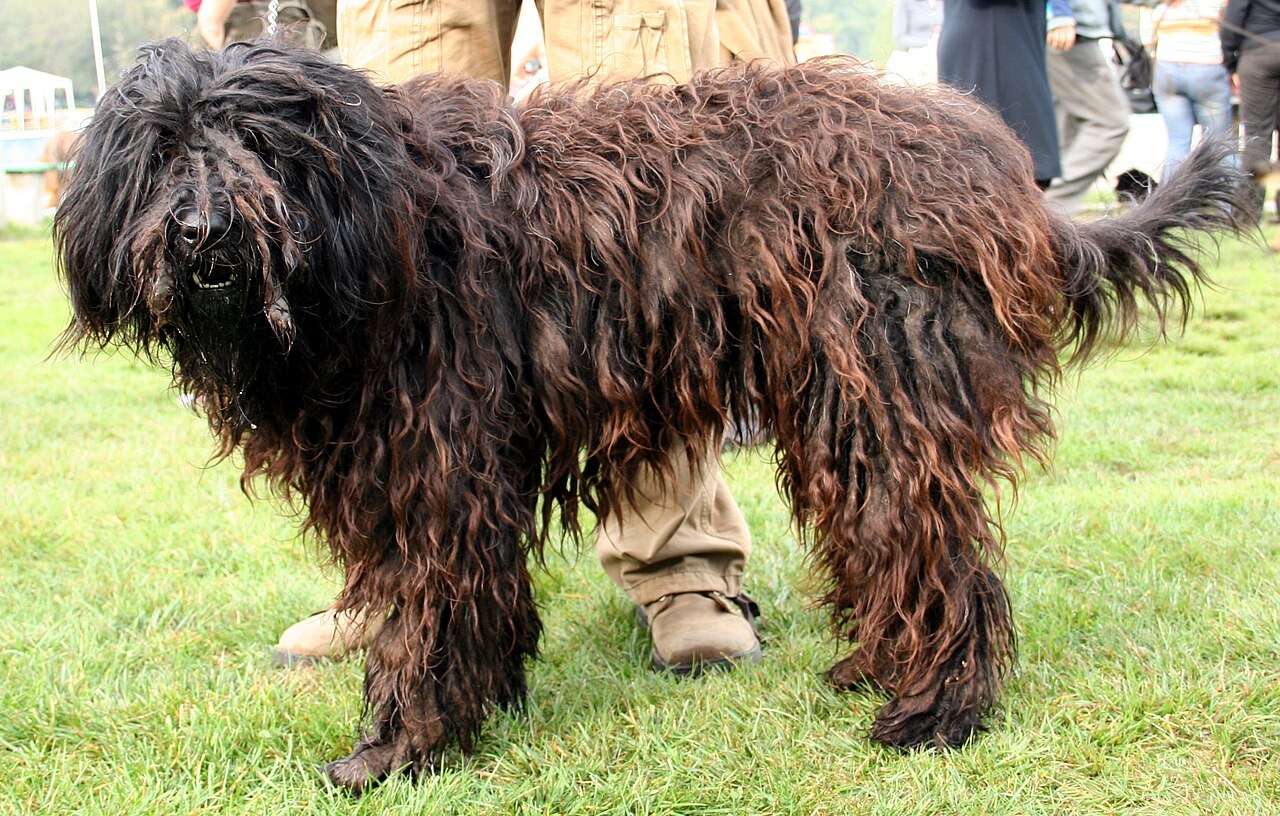
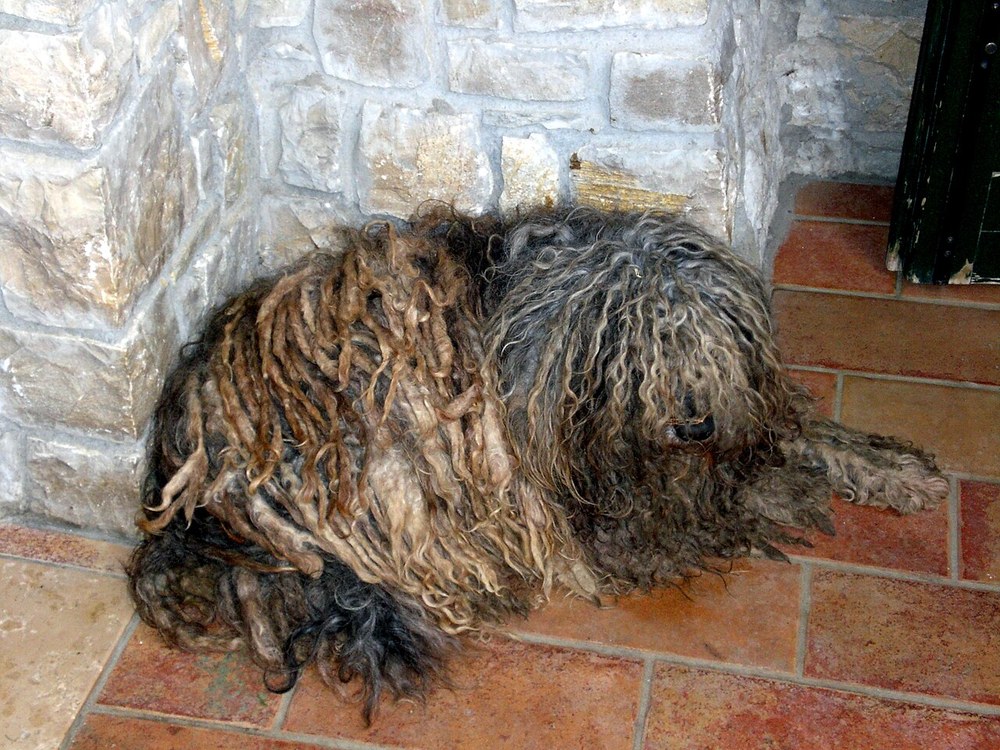
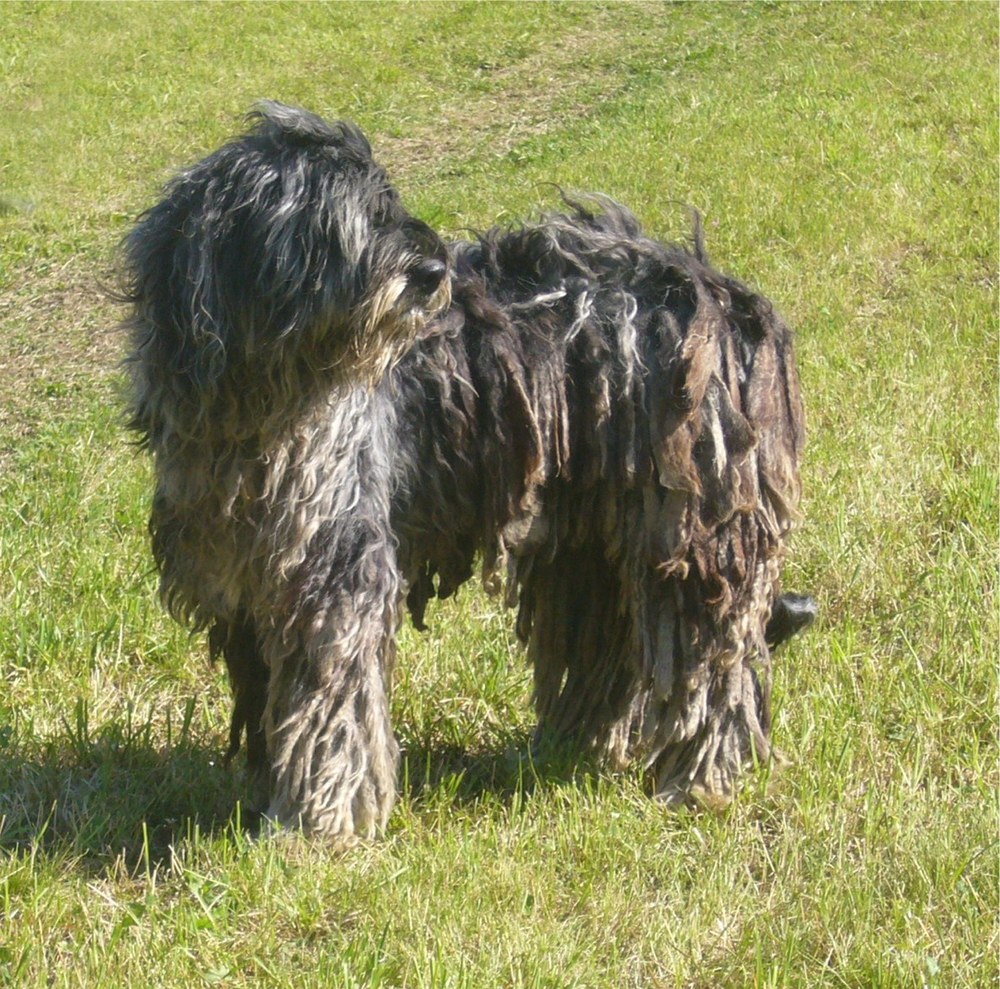
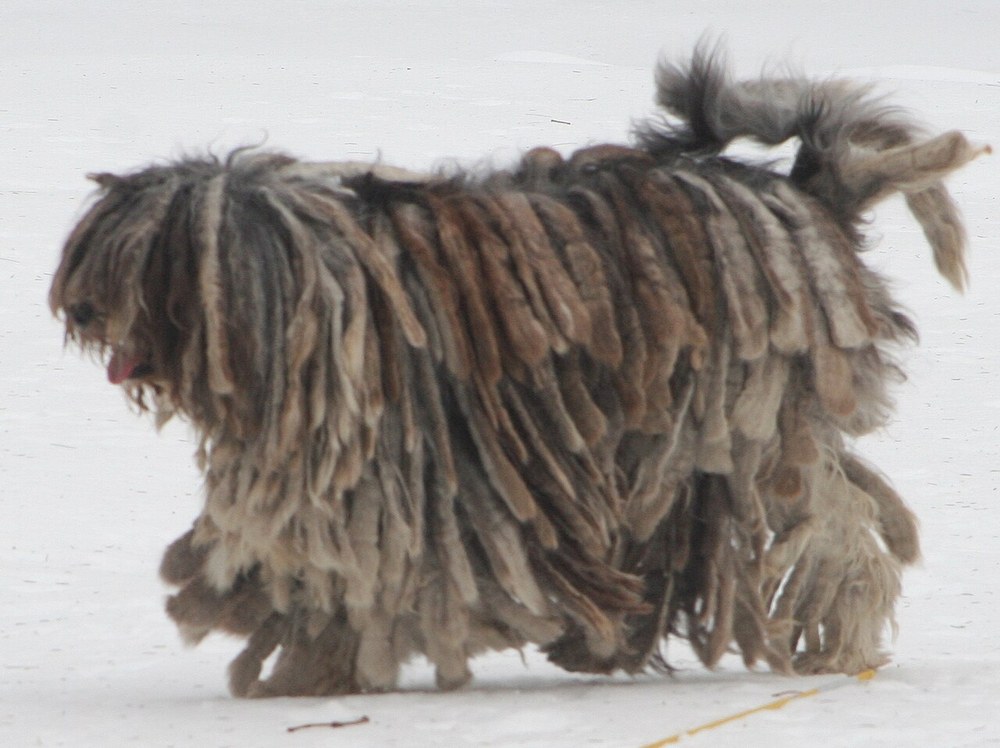
Long coat of three hair types that forms flat felted mats (flocks) from about one year old; grey, merle shades or black
Job
Alpine flock herding dog that moved and watched sheep between valleys and high summer pastures (FCI Group 1, sheepdogs and cattle dogs)
Temperament in one minute
Bergamasco Sheepdog temperament: what they are like at home
Short answer: Bergamascos are calm, patient, loyal dogs that treat their family as their flock and are usually reserved with strangers. They are Italian alpine herders that worked far from the shepherd, so they think for themselves, watch the gate and can get bored by repeated drills. They need about an hour or more of steady walking a day, short and useful training with food, calm and managed meetings with visitors, and a plan for the felted coat in the first years.
Are Bergamascos affectionate?
Yes, quietly and loyally with their own family. Build short absences early so the dog copes alone.
Usually reserved and watchful. Guests should sit and let the dog come; see scared of visitors.
Are Bergamascos good with kids and other dogs?
Often gentle and protective with the family's children; they may herd or block busy play. See herding nips with children.
Bergamasco behavior problems to expect
The usual four are wariness with guests, guarding the gate or fence, ignoring cues and pulling on the lead. The list below links a guide for each.
Living with a Bergamasco in an apartment
Possible for a calm adult with long daily walks, but a large guardian next to a busy hallway is hard work. A house with a fenced garden is easier.
Breed history
From the Bergamo Alps to the modern show ring
The history will not train your dog, but it explains the calm watchfulness, the independence and the coat.
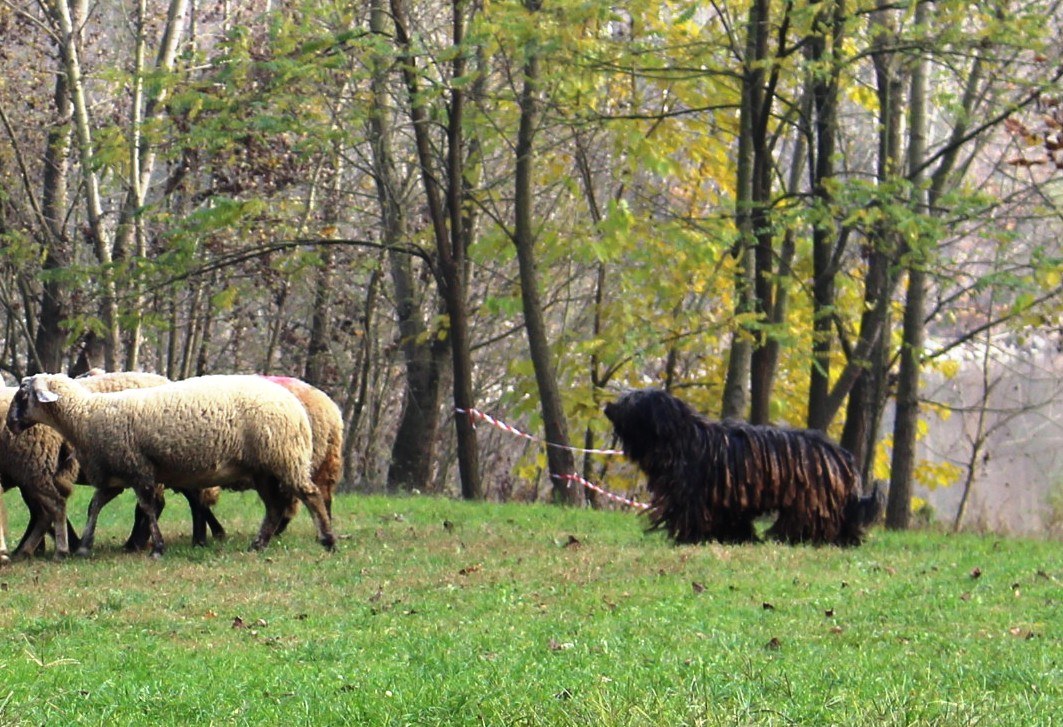
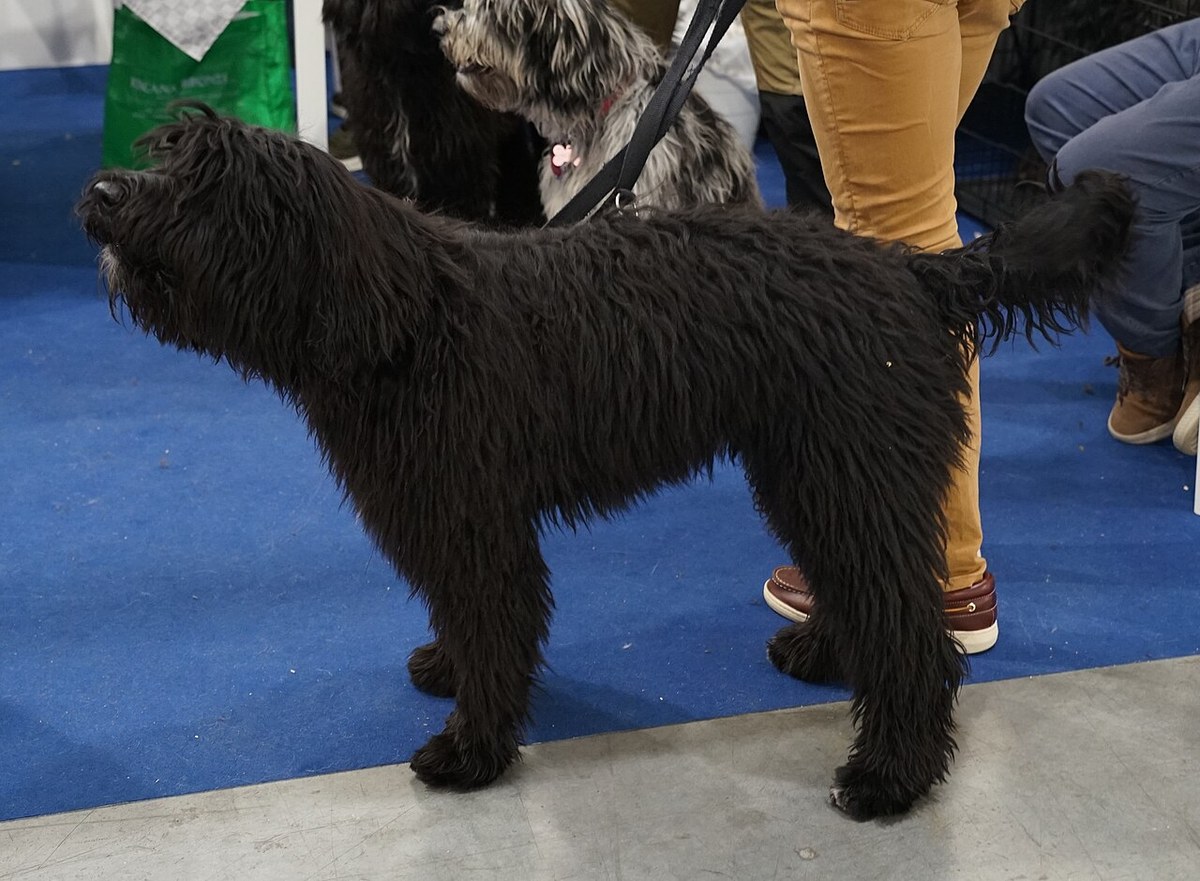
A Bergamasco at an Italian sheepdog trial: the breed still knows how to move and hold a flock, quietly and at a distance.
Italian Alps · centuries of transhumance
A dog for the seasonal sheep drive
Shepherds in the valleys around Bergamo moved their flocks up to alpine meadows each summer and down to the plains each winter. They needed a tough dog that could handle cold, rain and rocky ground and keep large flocks together.
The dog often worked far from the shepherd and had to judge what the sheep needed. The felted coat protected it from weather and from bites. That history is behind the calm, the independent mind and the alert eye on strangers.
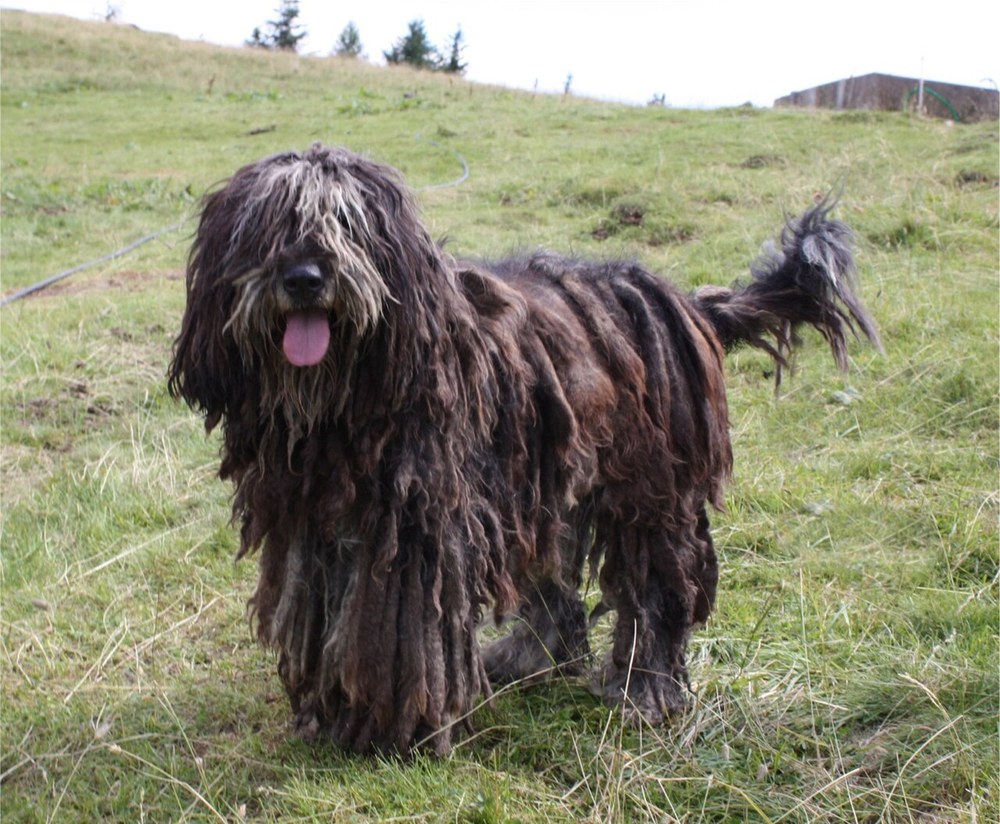
A Bergamasco on an Italian alpine pasture: the high summer meadows are the landscape the breed was made for.
From the 1950s
Saved by a few breeders
As sheep farming shrank after the Second World War, the breed almost vanished. A small group of Italian breeders, the best known being Dr Maria Andreoli, kept the dogs going and wrote down what made them special.
The FCI lists it in Group 1 with the sheepdogs, and the AKC added it to the Herding group in 2015. It is still a rare breed, so most puppies come from small breeders with waiting lists.
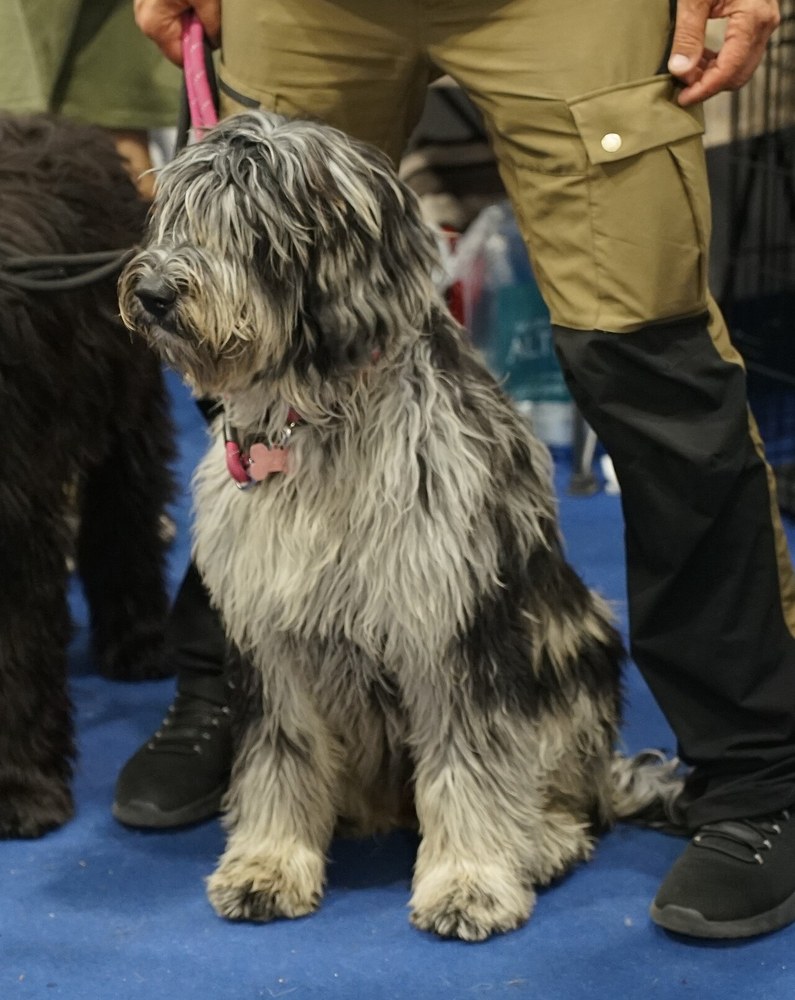
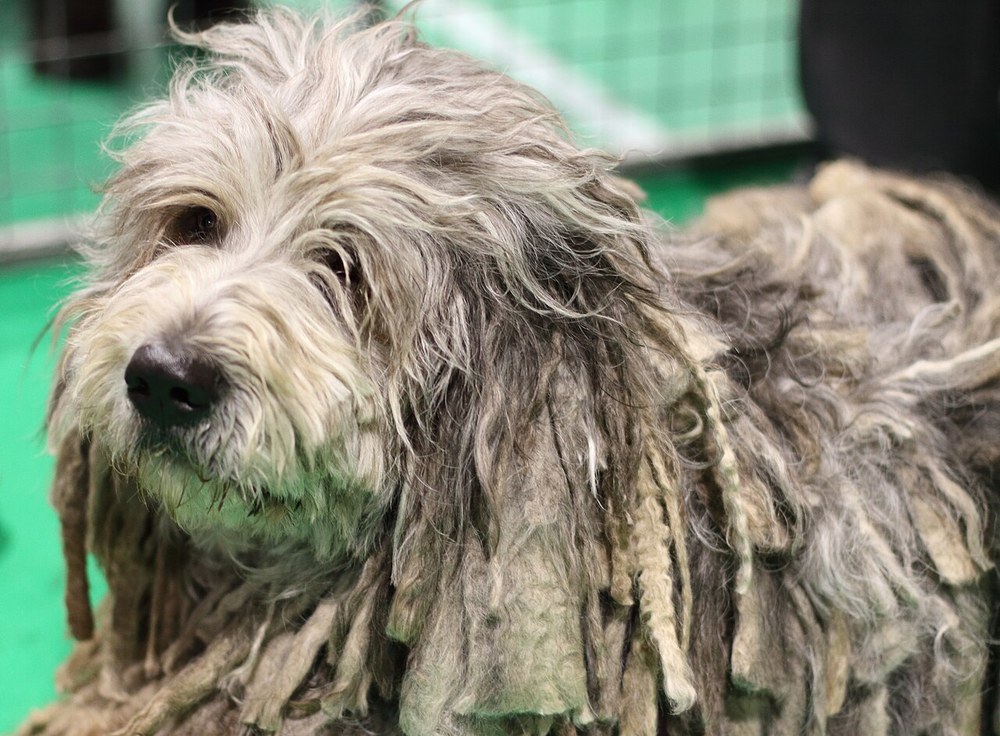
A merle Bergamasco at a show: the merle colour is common in the breed, and the coat forms long flat mats over the years.
What the breed was bred for
Gentle at home, watchful at the gate
With its family a grown Bergamasco is usually calm, patient and affectionate, and it tends to keep an eye on everyone, children most of all. It learns well when training makes sense to it.
It is also a guardian of its own flock. It weighs up strangers, may bark at the gate or stand between a visitor and the family, and it can get bored by repeated drills. Calm meetings and short, purposeful lessons suit it best.
A good day has a long steady walk, a sniff game, a short lesson and a calm evening
An adult Bergamasco usually needs about an hour or more of steady activity a day, with a long walk, time to sniff and explore, a short training session and plenty of quiet time near its people. It is not a frantic dog, but a bored one finds its own jobs, like guarding the fence or herding the family.
Morning · long walk
A steady walk with sniffing
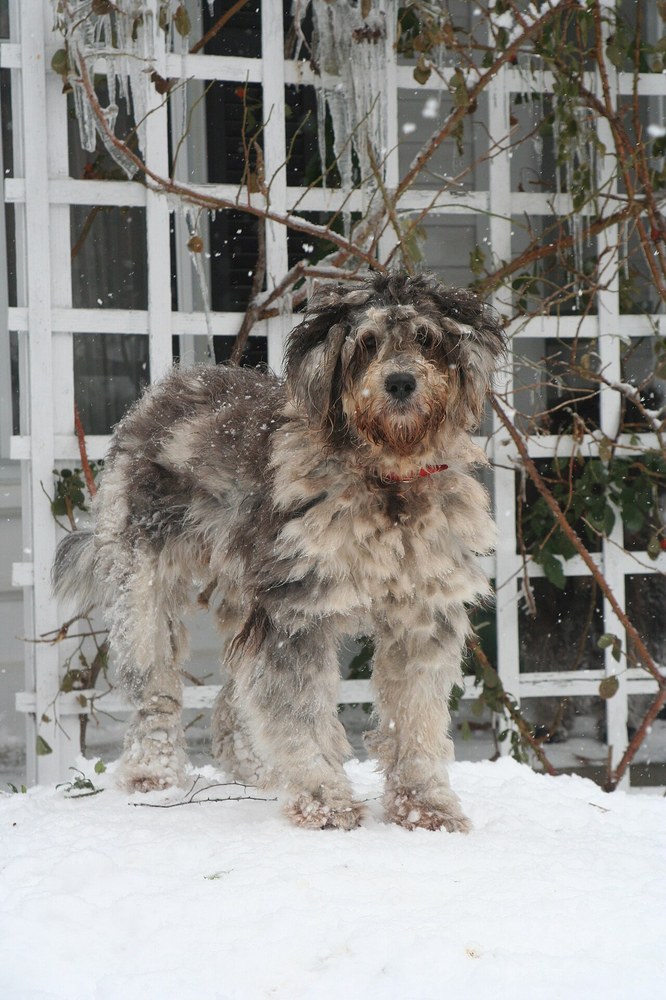
This breed was made for long days on foot, not sprints. A long walk at an easy pace with time to sniff suits it far better than chasing a ball for an hour. Young dogs with a soft coat like this one are still growing; keep the pace easy.
A Bergamasco often loses interest in the tenth sit in a row. Teach skills it uses in real life, keep sessions to a few minutes, reward well with food and stop on a good rep.
Many like a lookout spot where they can see the family and the door. Reward calm looks at passers-by and block a view of the street if the dog starts guarding it.
Let guests come in, sit down and ignore the dog. Once it has looked and sniffed, a treat dropped on the floor is enough. Pushing a meeting on a guardian breed often makes it more wary.
General awareness only. I am not a veterinarian. With a Bergamasco, owners often notice trouble first as mats that join into one big sheet, a damp sour smell after a bath that did not dry, grass seeds and burrs deep in the coat, sore skin under the mats, red ears, or a dog that tires in warm weather. For red flags, leave this page and open
when to call the vet.
Felted coat
Do not brush the adult coat. Around the first year, while the mats form, split them by hand into flat sections so they do not join into one sheet.
Bathing and drying
Bath only a few times a year and dry very well; a fully matted coat can take a day or more to dry.
Heat
Plan walks for cool hours on warm days and give shade and water.
Joints
A big dog grows slowly; avoid long runs and jumping until it is grown. See walk length by age.
Handling for the vet
Teach calm handling of paws, ears and mouth with food early.
Ask the breeder
Ask which screenings the national breed club recommends for the parents and see the results. Do not invent disease claims from a blog.
Lines and types
Choose a stable, healthy dog, not only an impressive coat
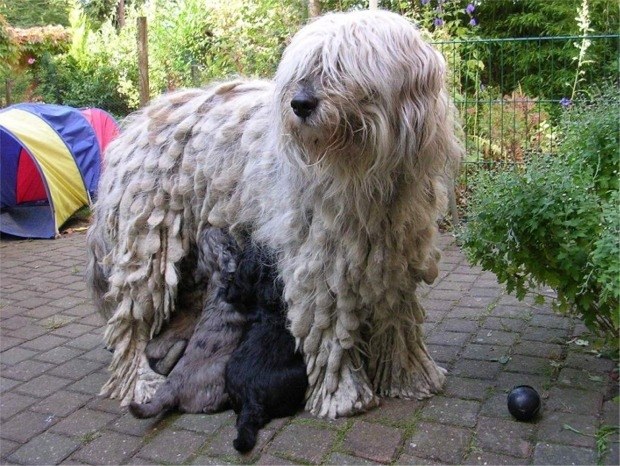
No bloodline selling. Bergamascos come mostly from small show and family breeders, a few from working farms. Meet the mother, see how she reacts to a stranger and a noise, how quickly she relaxes and how she behaves with the breeder's family, and ask about health checks on both parents.
Rural and farm homes
Room to walk and explore.
Secure fencing.
Calm, regular routine.
Coat care after muddy days.
Suits owners with land and time who like an independent working mind.
Calm family homes
About an hour or more of walking a day.
Short, purposeful training.
Quiet, managed visitors.
A plan for the coat.
Suits a calm, experienced family that wants a big, gentle watchdog.
Socialization windows
What to introduce — and what not to overload — by age
AVSAB-aligned in spirit: short, clean exposures at a distance the puppy can still eat,
with hygiene while vaccines finish. See the
puppy socialization schedule.
2–4 months
Settling in
Introduce: calm visitors who let the puppy approach, gentle handling, a toilet routine, short car rides, short spells alone, meeting friendly dogs.
Do not overload: crowds of strangers, rough games, long walks.
~6 months
Growing fast
Introduce: name check-in, recall on a long line, a wait at the door, a bed cue, first calm meetings at the gate.
Do not overload: letting the puppy guard the window or fence for hours.
~8–18 months
Teenage phase and first mats
Introduce: splitting the forming mats, calm meetings with guests, loose lead walking, more time alone.
Do not overload: forcing meetings with strangers, harsh corrections.
~2–3 years
Growing up
Introduce: longer walks, herding or nose work if you like, more freedom where it is safe.
Do not overload: stopping training because the dog seems mature.
~3 years+
Maintenance
Introduce: daily walks and brain work, coat checks, weight checks, yearly vet visits.
Do not overload: skipping visitor practice for months.
Before you buy
Who a Bergamasco Sheepdog usually fits
Fit comes down to calm experience, space, how you feel about a guardian streak and whether you can live with a coat unlike any other.
Good match
More likely a good fit if you…
You want a big, calm, loyal dog
You can walk at least an hour a day
You enjoy training a thinking, independent dog
You are happy to manage visitors calmly
You like the idea of a coat that is not brushed
Mismatch risk
A Bergamasco Sheepdog may be a poor choice if…
You want a dog that greets every stranger happily
You want quick, sharp obedience
You live in a hot climate with no cool hours
You have no time for coat care in the first years
You prefer correction-based training
If you are torn between breeds
Bergamasco Sheepdog vs Puli and Old English Sheepdog
All three are shaggy herders with heavy coats. The Puli is a smaller, quicker Hungarian herder with round cords. The Old English Sheepdog is a bouncy, outgoing drover with a long brushed coat. The Bergamasco is the largest and calmest of the three, with flat felted mats and a stronger guarding streak.
Coat
Bergamasco Sheepdog
Flat felted mats; not brushed.
Puli
Round cords.
Size
Bergamasco Sheepdog
Large, about 57–84 lb.
Puli
Much smaller.
Manner
Bergamasco Sheepdog
Calm, watchful, independent.
Old English Sheepdog
Bouncy and outgoing.
Strangers
Bergamasco Sheepdog
Reserved until it decides.
Both compares
All three need early calm meetings.
Ownership without surprises
Where a Bergamasco Sheepdog owner’s budget goes
Costs depend on country, city and your choices. These are themes to plan for, not quotes.
Veterinary
Yearly vet visits, the vaccines your vet advises and the health tests the breed club suggests.
Grooming
Mainly time: splitting mats in the first years, a few baths and a strong dryer.
Training
A puppy class, then a calm adult class or nose work.
Gear
A long line, a sturdy harness, a crate, baby gates and a large bed.
Finding a puppy
A rare breed, so plan for a waiting list and travel.
Early calm meetings with visitors and steady coat work in the first years save far more than trying to fix a guarding teenager or a coat that has joined into one sheet.
Before day one at home
What to prepare for a Bergamasco Sheepdog puppy
A Bergamasco puppy is soft, curious, calm for a puppy and already a little careful with strangers. Its coat is fluffy at first; the mats start to form later. Prepare gates, a crate, chews and a quiet bed before it comes home.
Training a Bergamasco means short, useful lessons, calm guests and a clear routine
Five skills cover most of daily life: a name check-in, recall on a long line, a wait at the door, loose lead walking and settling on a bed.
Bergamascos learn well with food and calm praise when a task makes sense. Long, repeated drills bore them, and harsh corrections damage trust in a breed that works as a partner.
Be realistic about guarding. A Bergamasco will notice and report people at the gate. The goal is a dog that alerts, then steps back when you take over, and lets calm guests in.
Load balance
Walks and brain work both count
Big puppies grow slowly, so keep walks short and avoid jumping and stairs races early. A limp, stiffness or sudden grumpiness when touched means a vet visit before more training.
Long sniffing walkTwo-minute lessonFind it gameCoat checkQuiet rest
A slow walk with lots of sniffing tires this breed more than a fast jog on the lead.
A Bergamasco that feels its family is in charge relaxes and stops guarding every gap in the fence.
Visitors
How to bring guests in with a Bergamasco
Put the dog on its bed or behind a gate before the door opens, let guests come in and sit, keep them from staring or reaching, reward calm looks, and let the dog sniff when it is ready.
01
Bed or gate first
Set the dog up before the door opens.
02
Guests sit down
No staring, leaning or reaching.
03
Reward calm looks
Treats when the dog watches quietly.
04
Sniff on its terms
The dog chooses to approach.
05
End it early
Short visits while the dog is relaxed.
One scene close-up
Why a Bergamasco watches strangers so closely
This dog spent centuries keeping a flock together and safe. Its family is its flock, so a stranger is something to check out first. A guest who rushes in, leans over or grabs for the dog is asking for a warning.
Start with calm, dog-savvy friends. Bed or gate first, guests sit and ignore the dog, treats for quiet looks, and a sniff only when the dog chooses. Keep first visits short and end them while the dog is relaxed.
A dog that growls, lunges or cannot relax around guests needs a qualified professional; a vet check helps rule out pain.
“With a Bergamasco, I start with calm first meetings, short lessons that make sense to the dog, a clear daily routine and a plan for the coat. Treat this alpine herder as a partner and you get a gentle, steady guardian.”
We look at your actual days: walks, visitors, the fence, children and quiet time at home. I am a trainer, not a veterinarian.
Andrew DarovProfessional dog trainer and instructor
Note the dog's age, how long it walks, how it meets visitors, what it guards or barks at and the first thing that goes wrong. Opens WhatsApp to Andrew.
For a calm, experienced family, often yes. It is patient and watchful with its own people, including children. It is reserved with strangers, so visitors need a calm plan.
Is a Bergamasco a good first dog?+
It can be for a calm first-time owner who reads about the coat, joins a class and is happy with an independent dog. It is a big, thoughtful guardian, not an eager-to-please beginner breed.
Do Bergamascos bark a lot?+
Less than many herders, but they do bark at the gate, at strangers and at night noises. A quiet cue and a calm door routine help.
How big does a Bergamasco get?+
AKC: males about 23.5 in (about 60 cm), females about 22 in (about 56 cm). Males 70–84 lb (about 32–38 kg), females 57–71 lb (about 26–32 kg).
Do Bergamascos shed?+
Very little; loose hair is trapped in the mats. The work is in splitting the mats as they form and drying the coat well after a bath.
Do you brush a Bergamasco?+
Not the adult felted coat. The puppy coat can be brushed lightly; once mats start to form around the first year, you split them by hand into flat sections.
Bergamasco vs Puli: what is the difference?+
The Puli is smaller and quicker, with round cords. The Bergamasco is much bigger and calmer, with flat felted mats and more of a guardian streak.
Bergamasco vs Old English Sheepdog: what is the difference?+
The Old English Sheepdog has a long brushed coat and is bouncy and outgoing. The Bergamasco is calmer, more reserved and its coat is felted, not brushed.
Are Bergamascos good with other dogs?+
Usually fine with dogs they know. Some are bossy or guarding with strange dogs, so teach calm meetings early.
How much exercise does a Bergamasco need?+
An adult usually needs about an hour or more a day of steady walking with time to sniff, plus a short training or nose game.
What health themes should I ask about?+
Ask the breeder which screenings the national breed club recommends for the parents and see the results. Tell your vet the breed. This is general awareness, not a diagnosis.
How long do Bergamascos live?+
Public breed references usually give about 13–15 years. Individual dogs vary.
If a Bergamasco seems too independent or too much coat for your home
Many people fall for the felted coat and the gentle face. The size, the guardian streak, the independent mind and the coat work in the early years are what to be sure about first.
A rough-coated, sensitive French herder: loyal at home, reserved with strangers. Needs daily work, fair training, a long-line recall and a place in family life.
An alert, medium-sized watchdog from the Middle East. Devoted, clever and clean; wary of strangers, barks to warn and needs calm socialising and fresh training.
A tough Louisiana working dog with a merle leopard coat and glass eyes. Loyal and smart, wary of strangers; needs a daily job, a secure fence and calm, fair rules.
Training problems Bergamasco Sheepdog owners ask about
Step-by-step guides for the issues that come up most with this kind of dog.
Tug of war is a good game for most dogs if it has rules: a special toy, a start cue, a drop cue and pauses. How to play safely with puppies and adult dogs.
Need a read on your exact situation?
Send me a few lines about your Bergamasco: its age, how long it walks, how it meets visitors, what it guards or barks at and what goes wrong first. We rule out health issues first, then pick one skill to start with.