Catahoula Leopard Dog: temperament, work drive, strangers and training
The Catahoula Leopard Dog is a tough, athletic working dog from the swamps and woods of northern Louisiana, the state dog since 1979. It was bred to find half-wild hogs and cattle in thick cover, bark to hold them in place and help the hunter or rancher bring them in. That job explains almost everything about living with one: a busy brain, a strong will, a loud bay, deep loyalty to its own people and a cool look at everyone else. Many striking merle coats and pale 'glass' eyes end up in rescue because nobody planned for the drive behind them.
Job: A medium to large Louisiana working cur; state dog of Louisiana, AKC Foundation Stock Service (Herding), UKC.
Energy: Smart, intense and devoted to its family, often reserved or suspicious with strangers.
Home: Suits an experienced, active owner who will give it a daily job and clear house rules.
A swamp worker that expects a job, not just a walk
People usually meet a Catahoula through its looks: the patchy leopard coat, the white socks and those cracked blue eyes. A few months later the same dog is barking at the fence, herding the children, chewing the door frame and staring hard at every visitor.
The messages I get about this breed are about energy and trust. A young dog with nothing to do, a dog that rushes the gate when strangers pass, rough play with other dogs, pulling on the lead after anything that runs, and an owner who feels the dog makes all the decisions.
My plan treats the Catahoula as the capable worker it is. Daily brain work and a real outlet such as tracking, herding lessons or dog sports, a calm bed and a clear routine at home, slow and careful meetings with new people, and a calm, firm and fair owner who rewards the dog for checking in.
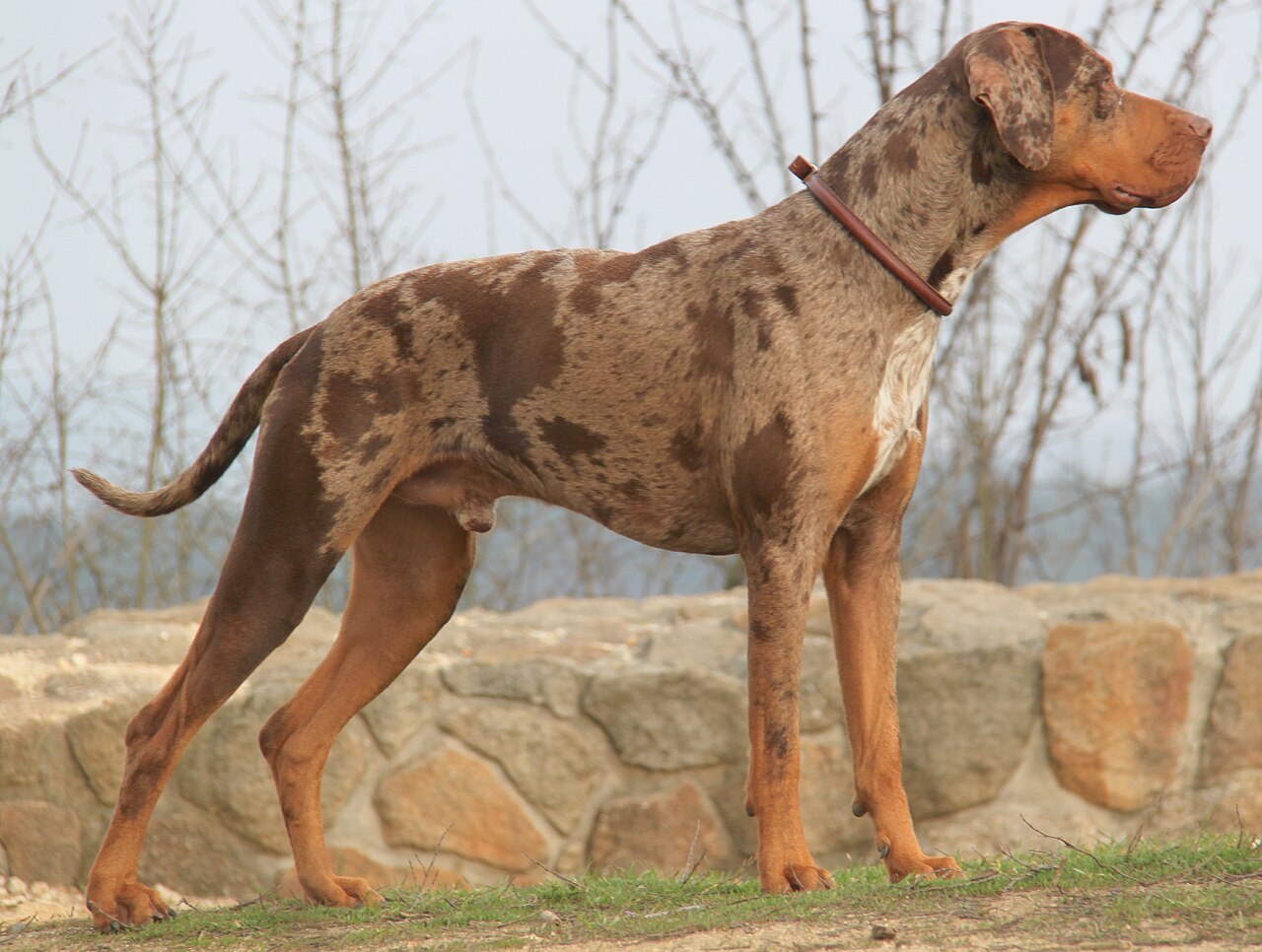
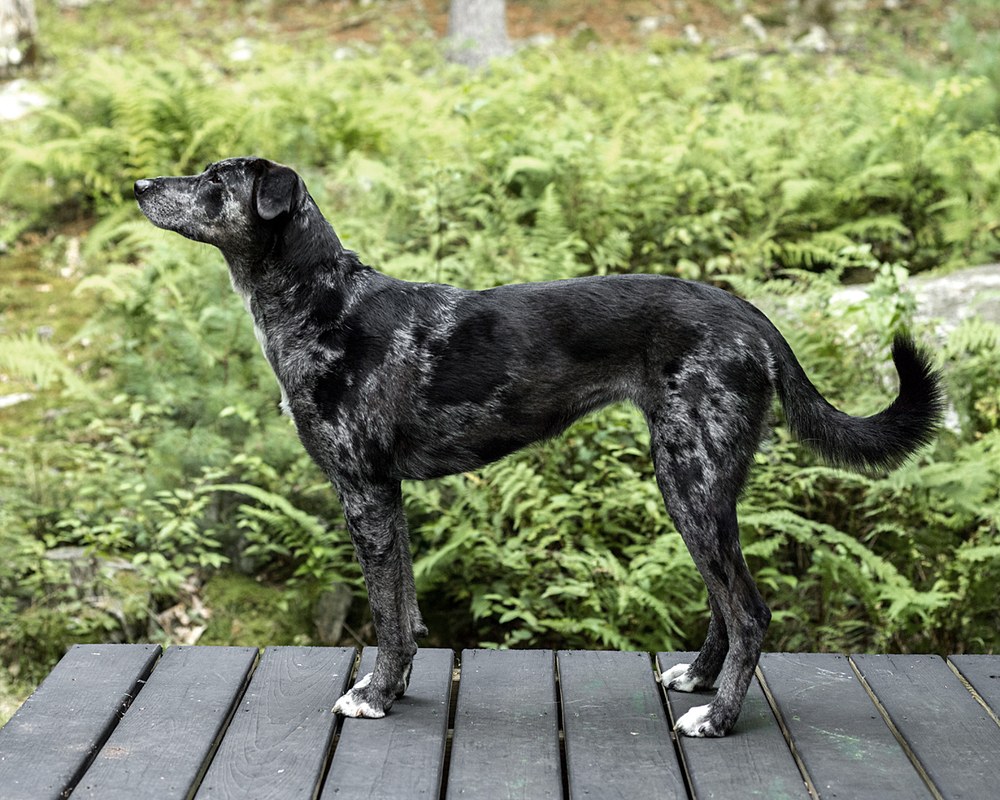
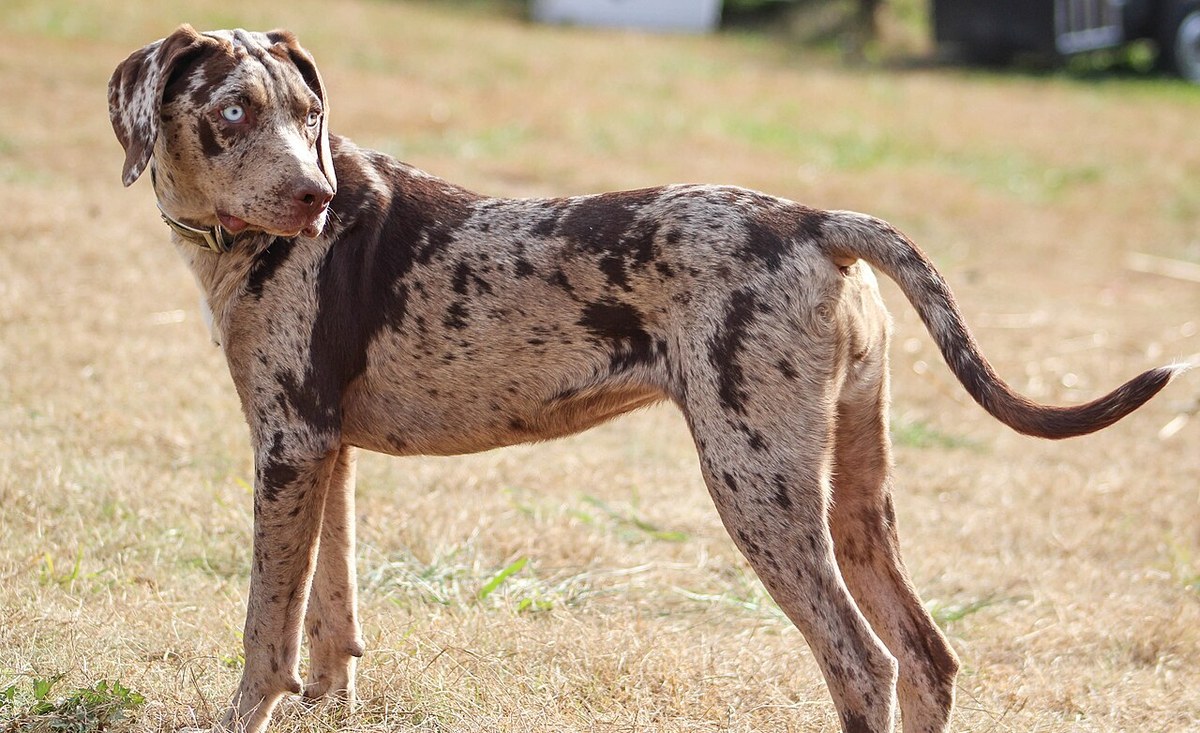
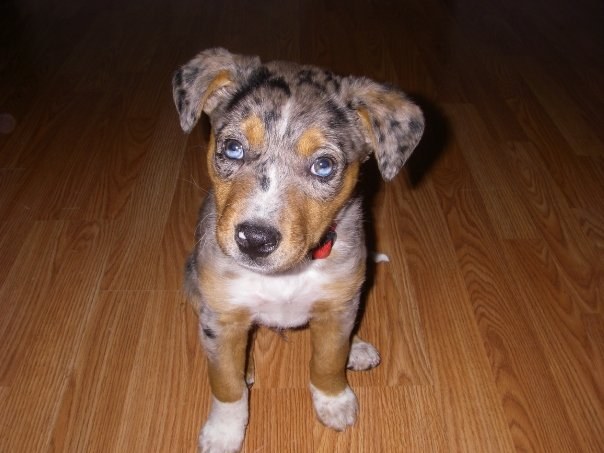
Short, close single coat. Leopard (merle) in blue, red, grey or liver, plus solid, brindle and patchwork; eyes can be blue, brown, green, amber or split ("cracked glass")
Job
Louisiana cur bred to find, bay and hold feral hogs and half-wild cattle in swamps and woodland, and to help move stock
Temperament in one minute
Catahoula Leopard Dog temperament: what they are like at home
Short answer: Catahoula Leopard Dogs are athletic Louisiana working dogs bred to find and hold hogs and cattle. They are smart, intense, loyal and playful with their own family, often wary of strangers and sometimes bossy with other dogs. They need about two hours of activity a day with real brain work, a secure fence, clear and fair rules, and careful, calm meetings with new people.
Are Catahoulas affectionate?
Very, with their own people, and often close to one person. Build short absences early.
Best with older, calm children. Some herd or nip. Introduce dogs slowly; see introducing a new dog.
Catahoula behavior problems to expect
The usual four are fence barking, wariness with visitors, chewing when bored and chasing moving things. The list below links a guide for each.
Living with a Catahoula in an apartment
Hard work: several outings and brain games a day, and early help with hallway noise.
Breed history
From the Catahoula Parish swamps to a state symbol
Its history explains the drive, the bark and the cautious welcome for strangers.
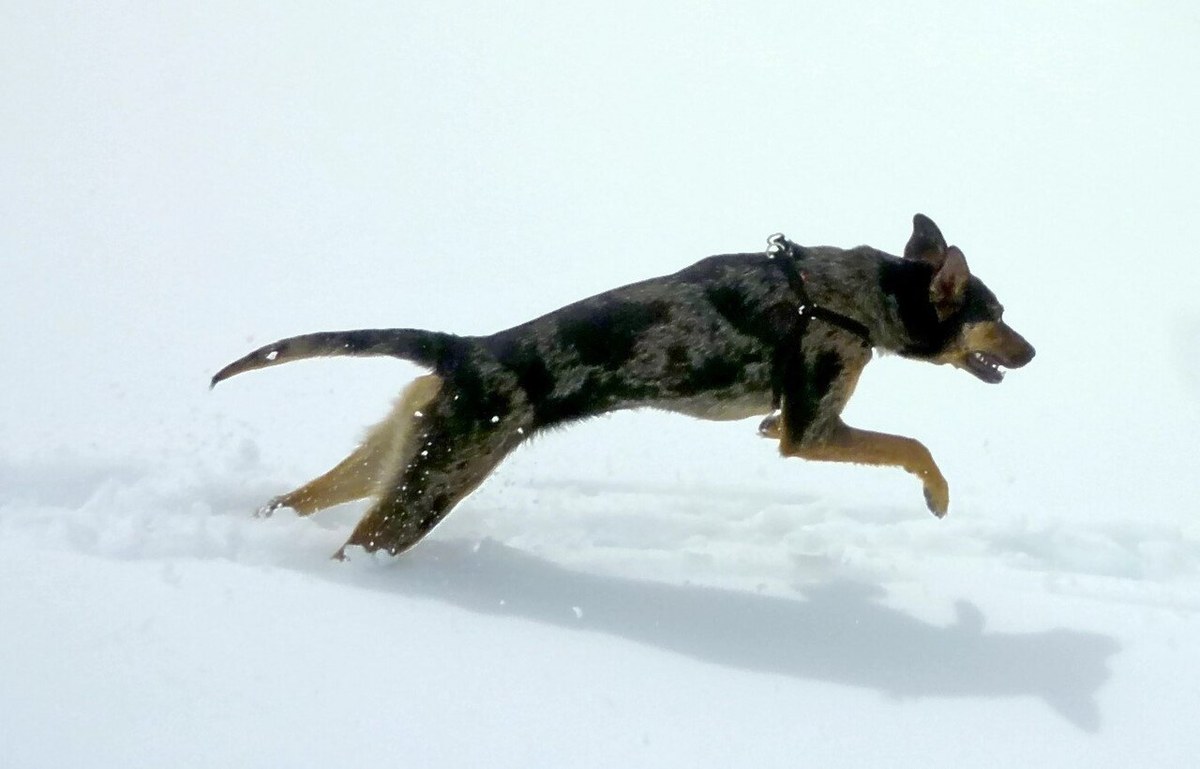
A Catahoula running flat out in snow: this is a fast, tireless dog built for long days in rough country.
Northern Louisiana · 1700s–1800s
Dogs of the backwoods settlers
The breed takes its name from Catahoula Parish and Catahoula Lake in north-central Louisiana. Settlers there let hogs and cattle range freely in the woods and swamps, and they needed dogs that could find the animals in thick brush and keep them in one place.
Where exactly the dogs came from is still argued over. Local stories mix in dogs kept by Native American people, hounds and mastiff-type dogs left by Spanish explorers and later French herding dogs. What is clear is that families bred them for work, not for looks.
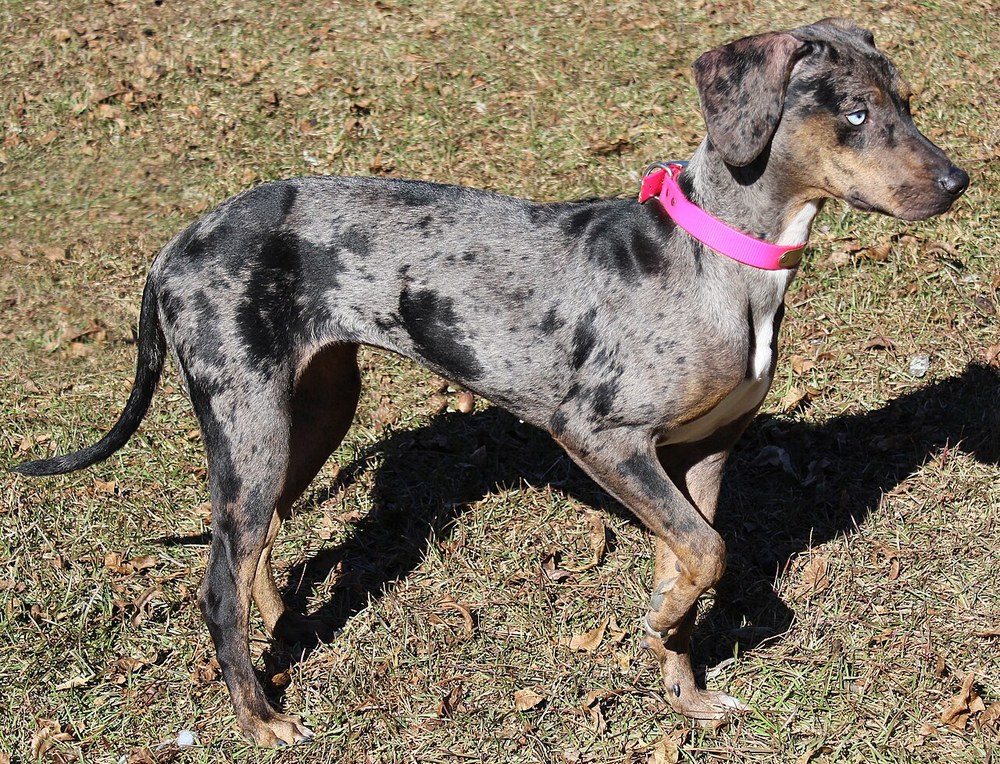
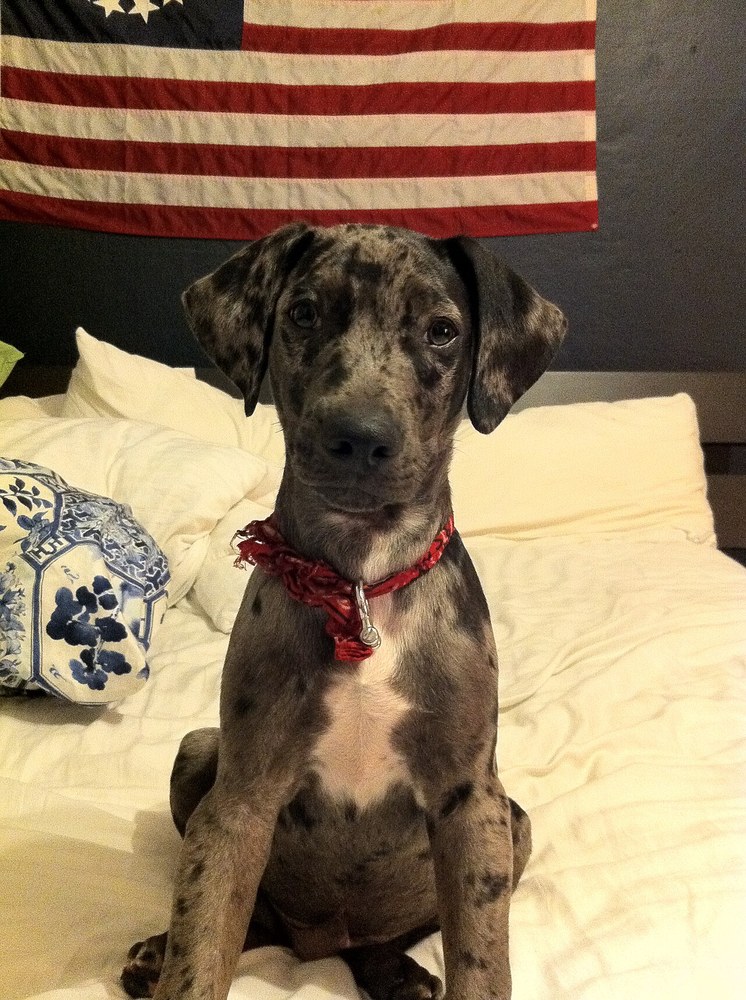
Purdy, a one-year-old blue leopard Catahoula: the merle "leopard" coat gave the breed its name.
From 1979
State dog, rescue favourite and working cur
Louisiana named the Catahoula its official state dog in 1979. Breed clubs keep a working standard, and many dogs are still used to bay hogs or gather cattle in the southern United States.
The United Kennel Club recognised the breed in 1995, and the AKC records it in the Foundation Stock Service. In shelters, many dogs labelled Catahoula are mixes, so look at the actual dog in front of you rather than the label.
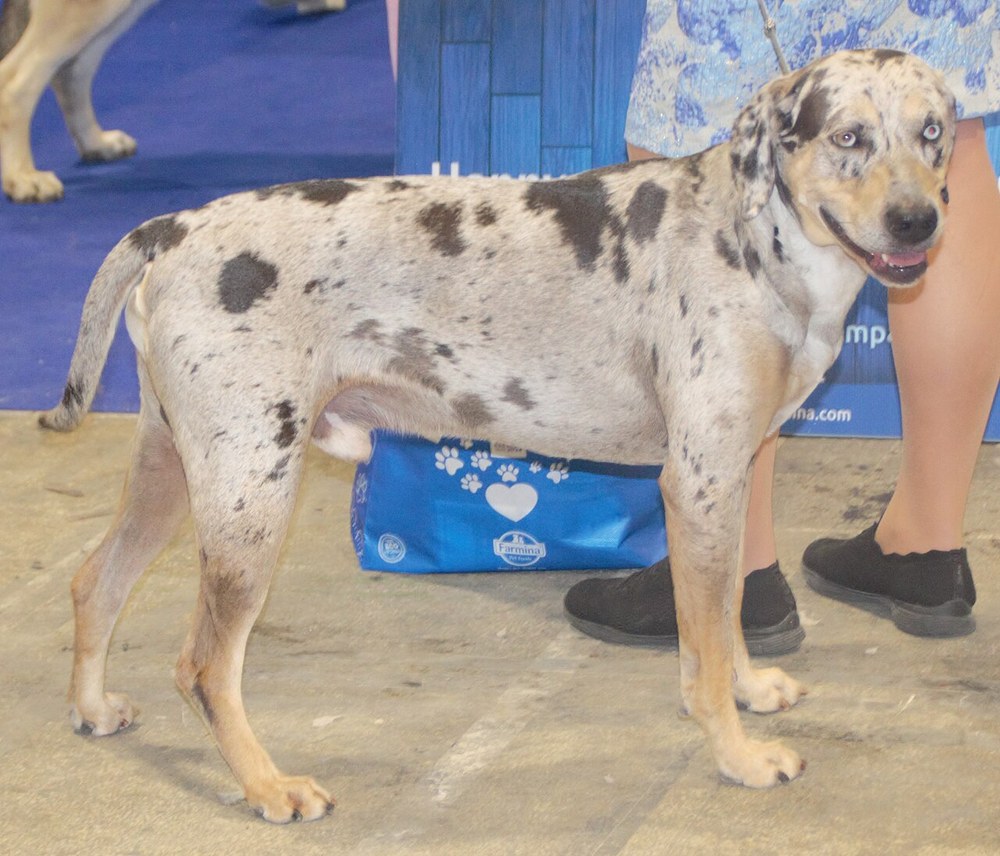
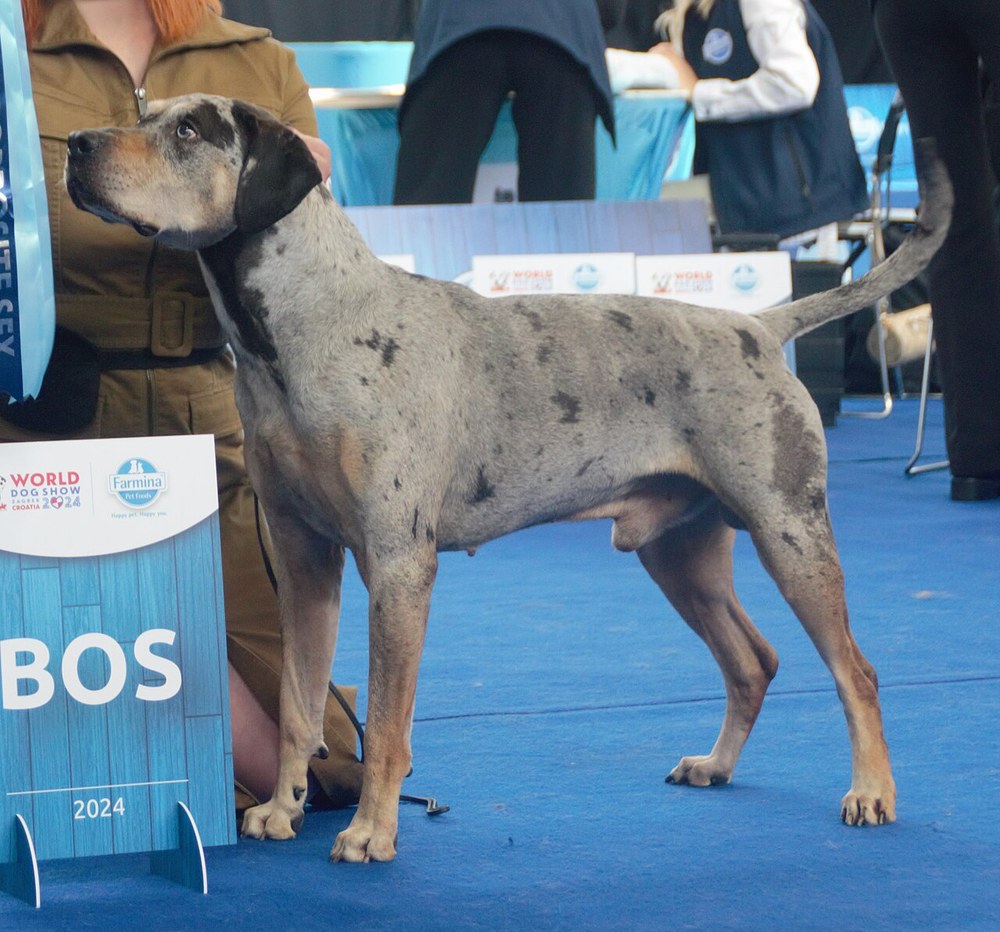
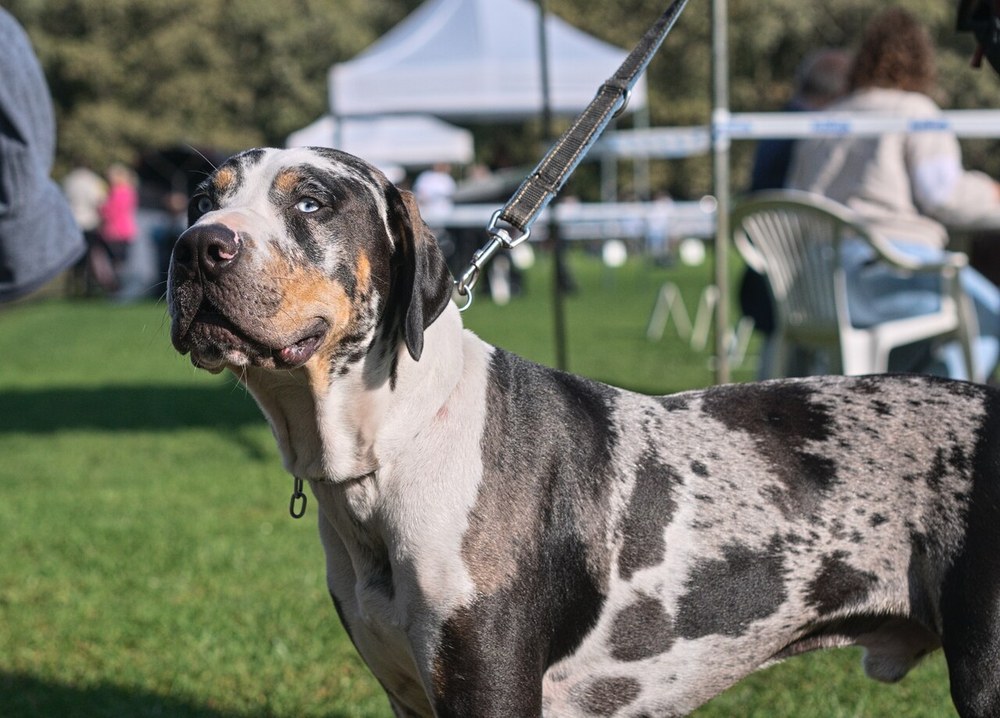
A merle Catahoula at a show: the coat and eye colours vary a lot from dog to dog, even within one litter.
What the breed was bred for
Loyal, bold and watchful
A well-raised Catahoula is affectionate, playful and very loyal at home, often following one person around. It learns fast and loves a task with a clear goal.
It is also independent, stubborn when bored, protective of its space and often wary of strangers and strange dogs. Some can be bossy with other dogs of the same sex. A Catahoula without work makes its own.
A good Catahoula day mixes hard exercise, brain work and real rest
Most adult Catahoulas need about two hours of activity a day, and much of it should use the brain: searching, tracking, herding lessons, trick training or a dog sport. A long run alone rarely settles them; a busy mind does.
Morning · the first outing
Exercise with a purpose
Start the day with a walk that includes a task: a find-it game in the grass, a few recalls on a long line and some sniffing time. Pure fetch for an hour builds a fitter, pushier dog, not a calmer one.
Catahoulas learn quickly and get bored with endless repeats. Five minutes of new tricks, a place cue or a hand target, done twice a day, keeps the brain working and the relationship strong.
This dog notices moving things fast and wants to go after them. Use a well-fitted harness, keep a long line in open places and reward the dog for looking back at you when something runs.
Ask guests to ignore the dog, sit down and toss a treat away from themselves. Let the dog choose whether to come closer. Forcing a hello on a wary Catahoula is how growls start.
A busy dog needs to be taught to rest. Give a chew on its bed after the evening walk, keep the house calm and use a crate or gate if a young dog keeps patrolling the windows.
General awareness only. I am not a veterinarian. With a Catahoula, owners often first notice a dog that does not respond to sounds behind it, a limp after hard running or jumping, sore pads after rough ground, cuts from brush or a dog that seems to see poorly in dim light. For red flags, leave this page and open
when to call the vet.
Hearing
Ask the breeder whether the puppies had a hearing test. Mostly white merle puppies carry a higher risk of deafness.
Merle to merle
Ask whether both parents are merle. Careful breeders avoid that mix because it can produce puppies with hearing and eye problems.
Hips and joints
Ask which hip and other checks the national breed club recommends for both parents, and look at the results yourself.
Paws and skin
Check pads, ears and skin after work in brush or water.
Young joints
Keep long runs, steep climbs and high jumps for after the growing months; ask your vet when.
Working, rescue and show Catahoulas are three different starting points
No bloodline selling. Ask what the parents actually do all day, meet the mother, watch how she greets a stranger and ask about hearing tests and merle-to-merle matings. With a rescue dog, look at the dog's behaviour, not the coat or the label on the kennel card.
Working lines
Bred to bay hogs or gather cattle.
Very high drive and stamina.
Often more forward with other animals.
Best with a real outlet such as herding or tracking.
Suits rural owners with stock, hunting or serious dog sports.
Rescue and family-bred dogs
Often mixes with Catahoula looks.
Energy and trust with people vary a lot.
Ask the shelter how the dog copes with visitors and other dogs.
A calm adult can be easier than a puppy.
Suits active homes ready for a few months of patient settling-in.
Socialization windows
What to introduce — and what not to overload — by age
AVSAB-aligned in spirit: short, clean exposures at a distance the puppy can still eat,
with hygiene while vaccines finish. See the
puppy socialization schedule.
2–4 months
Calm meetings
Introduce: many gentle people at a distance, a harness, short times alone, a bed and crate routine, handling, a toilet routine.
Do not overload: letting the puppy chase children, cats or bikes even once as a game.
~6 months
Busy youngster
Introduce: name check-in, recall on a long line, a place cue, a drop cue, short sniff walks.
Do not overload: long runs or hard jumps while bones grow.
~8–18 months
Teenage phase
Introduce: more practice with visitors, dog sports or herding lessons, longer times alone, fence and gate manners.
Do not overload: leaving the dog in the yard all day to bark at passers-by.
~2 years
Settled adult
Introduce: longer outings, tracking or sport work, travel, calm meetings with known dogs.
Do not overload: adding new adult dogs of the same sex without a careful plan.
~3 years+
Maintenance
Introduce: daily work for the brain, joint and weight checks, regular vet visits.
Do not overload: dropping the daily job because the dog seems calmer.
Before you buy
Who a Catahoula Leopard Dog usually fits
Fit comes down to time, experience and whether you enjoy a dog that thinks for itself.
Good match
More likely a good fit if you…
You are active outdoors most days, in any weather
You have trained a strong-willed dog before
You want to do herding, tracking, agility or another sport
Your home is quiet with few daily visitors
You have a secure, high fence
Mismatch risk
A Catahoula Leopard Dog may be a poor choice if…
You want an easy first dog
You have lots of visitors and want a dog that loves everyone
You are away all day with no dog walker
You live with small pets you cannot keep apart
You want a dog that is happy with one short walk
If you are torn between breeds
Catahoula vs Australian Shepherd and Treeing Walker Coonhound
All three are energetic American working dogs with big voices or big brains. The Australian Shepherd is a herding dog that loves to work closely with its handler. The Treeing Walker Coonhound is a scent hound that follows a trail and bays at a tree. The Catahoula sits in between: it finds stock with its nose and eyes, holds it with its bark and tends to be the most suspicious of strangers.
Job
Catahoula Leopard Dog
Finds and holds hogs and cattle.
Australian Shepherd
Moves sheep and cattle with its handler.
Coat
Catahoula Leopard Dog
Short, single, easy care.
Australian Shepherd
Medium-length double coat that sheds a lot.
Nose and voice
Catahoula Leopard Dog
Uses scent and a loud bay.
Treeing Walker Coonhound
Trails by scent and bays at a treed animal.
Strangers
Catahoula Leopard Dog
Often wary and watchful.
Treeing Walker Coonhound
Usually friendlier with new people.
Ownership without surprises
Where a Catahoula Leopard Dog owner’s budget goes
Prices differ a lot between countries and cities, so treat these as budget headings rather than numbers.
Veterinary
A yearly check-up, whatever vaccines your own vet recommends, and any hearing, hip or eye checks the club advises.
Fencing
A high, secure fence and gate latches the dog cannot nose open.
Training and sport
A puppy class, then herding lessons, tracking, agility or another sport.
Gear
A sturdy harness, a 10-metre long line, a crate and tough chew toys.
Finding a dog
A breeder who tests hearing and avoids merle-to-merle litters, or a rescue that knows the dog well.
A daily job for the brain costs almost nothing and prevents most of the barking, chewing and fence trouble owners ring me about.
Before day one at home
What to prepare for a Catahoula Leopard Dog puppy
A Catahoula puppy is bold, curious and quick to try its teeth on everything, including ankles. Plan calm handling, gentle meetings with people, a crate and bed routine, short times alone and a lot of sleep from the first days, and keep chasing games away from children and pets.
01
Handling
Paws, ears and mouth, a little each day. See puppy handling.
Training a Catahoula means a daily job, calm rules and careful meetings
Most daily trouble with this breed shrinks once five things are in place: real work for the brain every day, a place cue at home, a long line outdoors, a name check-in and a planned way to meet strangers.
Catahoulas are clever and strong-willed. Harsh handling tends to start a fight of wills or make the dog defensive, while clear routines, good food and fair limits turn it into a willing partner. Be consistent: this dog notices every exception.
Be realistic about strangers. Many Catahoulas will never be party dogs. The goal is a dog that watches calmly, comes back to you and lets you handle the hello.
Load balance
Brain work beats more running
Young dogs should not do long runs, steep climbs or high jumps while they grow. Build fitness slowly, and see a vet about any limp or stiffness before adding more.
For this breed, twenty minutes of searching or herding often settles the dog better than an hour of fetch.
A Catahoula with a daily job is usually easy to live with.
Strangers and the gate
How to help a Catahoula stay calm when strangers arrive
Manage the gate and door first, send the dog to its bed before guests come in, let visitors ignore it and toss treats away, and reward the dog for checking back with you.
01
Gate first
No front-yard time alone; a secure gate.
02
Bed before the bell
Send the dog to its bed before guests come in.
03
Guests ignore
No staring, reaching or calling the dog.
04
Treats away
Guests toss treats away from themselves.
05
Dog chooses
Reward check-ins; let the dog decide when to come closer.
One scene close-up
Why a Catahoula barks and circles visitors
This breed was made to find animals in cover and hold them in place with a loud, steady bark. Strangers walking into the yard can trigger the same pattern, often mixed with real worry about new people.
Manage first: no unsupervised time in the front yard, a solid gate and a bed or crate away from the door when guests arrive. Then teach the dog that visitors predict good things from you at a distance it can handle, and let it decide when to come closer.
A dog that bites, guards food hard or panics when alone should be seen by a qualified behaviour professional, with a vet first ruling out pain.
“With a Catahoula, I start with the job: a daily task for the brain, a calm bed at home and a careful plan for strangers. Give this dog work and clear rules, and you get a loyal, funny and very capable partner.”
We look at your real days: exercise, work for the brain, visitors, other dogs and time alone. Medical questions belong with your vet; I deal with behaviour.
Andrew DarovProfessional dog trainer and instructor
Before we talk, note the dog's age, how much exercise and brain work it gets, how it reacts to visitors and other dogs, and the first thing that goes wrong. Opens WhatsApp to Andrew.
For an active, experienced family, often yes. It is loyal and playful with its own people. It may herd or nip running children and is often wary of guests, so it needs supervision and a plan.
Is a Catahoula a good first dog?+
Usually it is a hard first dog. Its energy, strong will and caution with strangers suit someone who has trained a working breed before.
Are Catahoulas aggressive?+
They are often protective and suspicious of strangers, and some are bossy with other dogs. Good breeding, early calm meetings and daily work make a big difference. A dog that bites needs a professional.
How big does a Catahoula get?+
Roughly 51–61 cm (20–24 in) at the shoulder, with weight ranging widely, about 23–43 kg (50–95 lb), depending on line and sex.
What does "leopard" mean in the name?+
It describes the merle coat with patches and spots. Catahoulas also come in solid, brindle and patchwork colours.
What are glass eyes?+
Pale blue eyes, or eyes with blue and brown sections, often called cracked glass. They are common in the breed and are a colour trait.
Catahoula vs Australian Shepherd: what is the difference?+
The Aussie is a herding dog with a thicker double coat that likes to work close to its handler. The Catahoula has a short coat, a bigger bay and is usually warier of strangers.
Catahoula vs Treeing Walker Coonhound: what is the difference?+
The Walker is a scent hound that trails and trees game and is usually friendlier with people. The Catahoula is a stock-working cur that finds and holds hogs and cattle.
How much exercise does a Catahoula need?+
About two hours a day, with real brain work such as searching, herding lessons or a dog sport.
Can a Catahoula live in an apartment?+
It is hard. It can work with an owner who gives several outings and training sessions every day, but a home with a secure garden and quiet neighbours is easier.
What health themes should I ask about?+
Ask about hearing tests, whether the parents are both merle and which hip and eye checks the national breed club recommends. This is general awareness, not a diagnosis.
How long do Catahoulas live?+
Breed clubs usually quote about 10–14 years, though each dog is different.
If a Catahoula seems like too much dog for your home
Many people fall for the leopard coat and the glass eyes. The working drive, the loud bay and the caution with strangers are what to think through before you commit.
A wolf-cross working shepherd from Czechoslovakia: loyal to its people, wary of strangers and a skilled escape artist. Needs company, secure fencing and an experienced owner.
The smallest Swiss mountain dog and a real cattle dog. Needs daily work, rules for heel nips and a taught off-switch — not a small Bernese for the sofa.
Puppy biting hands and clothes? It's normal puppy behavior. End play when teeth touch skin, swap in a chew, and check if your puppy is overtired.
Need a read on your exact situation?
Tell me about your Catahoula in a short message: its age, how much exercise and brain work it gets, how it reacts to visitors, other dogs and moving things, and what goes wrong first. We rule out health issues first, then pick one skill to start with.