Schipperke: temperament, training & watchdog voice in a compact Belgian dog
A Schipperke is a small black dog with the attitude of a much bigger one. Public lore puts it on Flemish canal barges and in artisans’ workshops, keeping rats down and announcing every stranger. That curious, quick, self-confident watchdog is exactly what arrives in a modern apartment. City life works when you treat it as a real working dog in a compact body: a voice with rules, ratter energy with a safe outlet, door and gate manners, and no “he’s small, let him” exceptions.
Job: Compact Belgian watchdog and ratter — alert, curious, quick, and vocal by design.
Energy: Busy and inquisitive; needs daily walks, games, and brain work — not just a lap.
Home: Can thrive in apartments with alert-barking rules, door manners, and real exercise — not spoiling.
A Schipperke stays a watchdog — small size is not a manners exception
Public histories describe the Schipperke as a Flemish dog of working people: barge families, shoemakers, and other tradespeople who wanted a small, hardy dog that would bark at intruders and kill rats. The name is usually linked to Flemish words for “little boatman” or “little shepherd” — the breed’s origin story is part of its charm.
That background explains a lot. Many Schipperkes are curious about everything, suspicious of strangers, fast to bark, quick to chase small animals, and very good at finding the one open door. They are also affectionate, clever, and fun to train. The size makes them easy to carry — and easy to spoil.
From the first month I build two chains. First: notice something, bark once or twice, look at the human, get a reward for going quiet. Second: after a walk or a game, lie down on a bed and stay there while the house carries on. Add door manners, and you have the core of a great small companion.
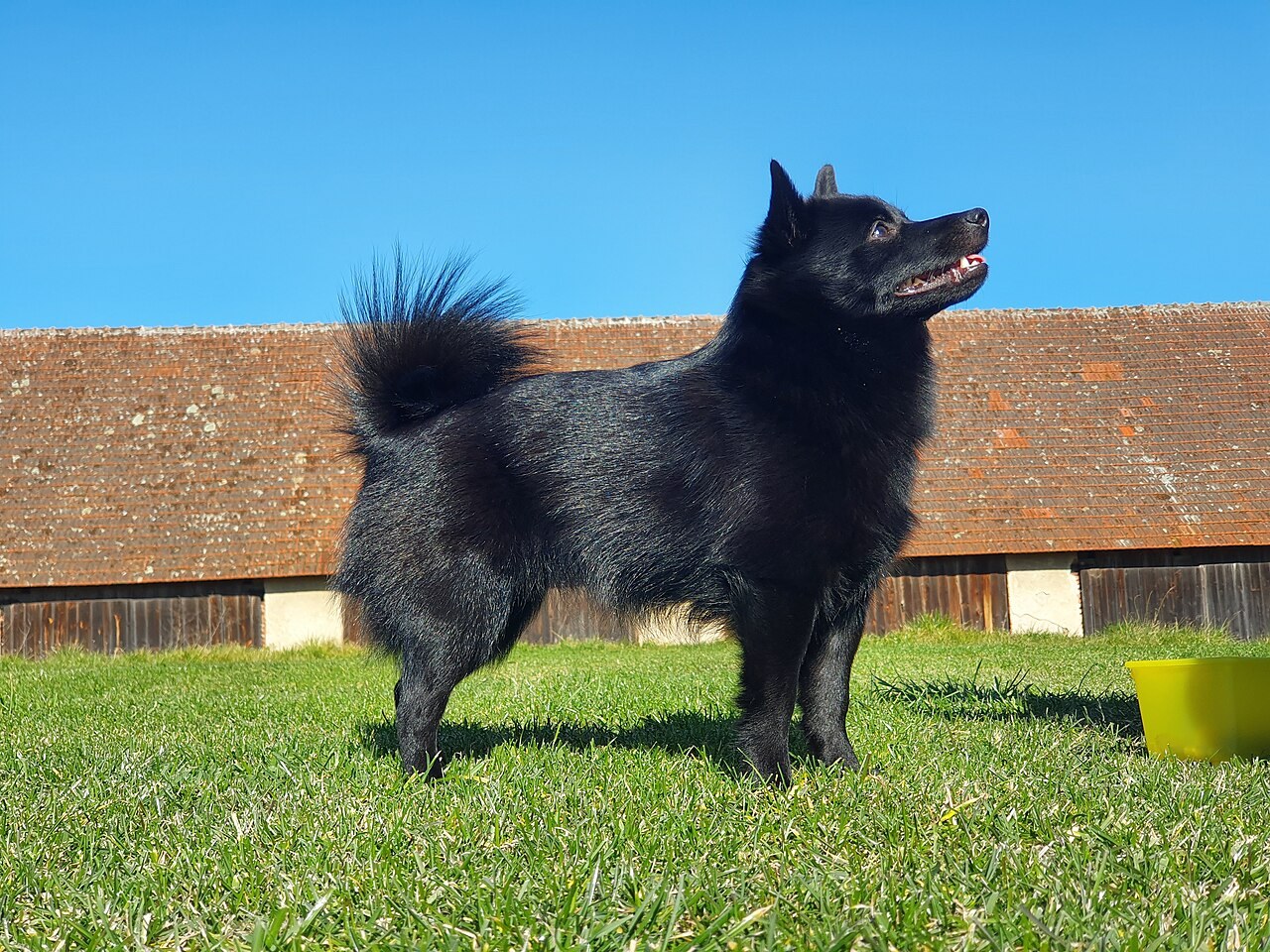
Dense black double coat with a ruff, cape, and culottes — seasonal shedding (“blowing coat”)
Job
Non-Sporting / Belgian barge and workshop watchdog and ratter
Breed history
Why one small Belgian dog was built around voice, vigilance, and ratting
Origin does not set every puppy’s personality. It explains why many Schipperkes bark fast, chase rodents, and escape through gaps — and why a household that carries the dog everywhere and never sets rules meets a bossy, noisy little tyrant.
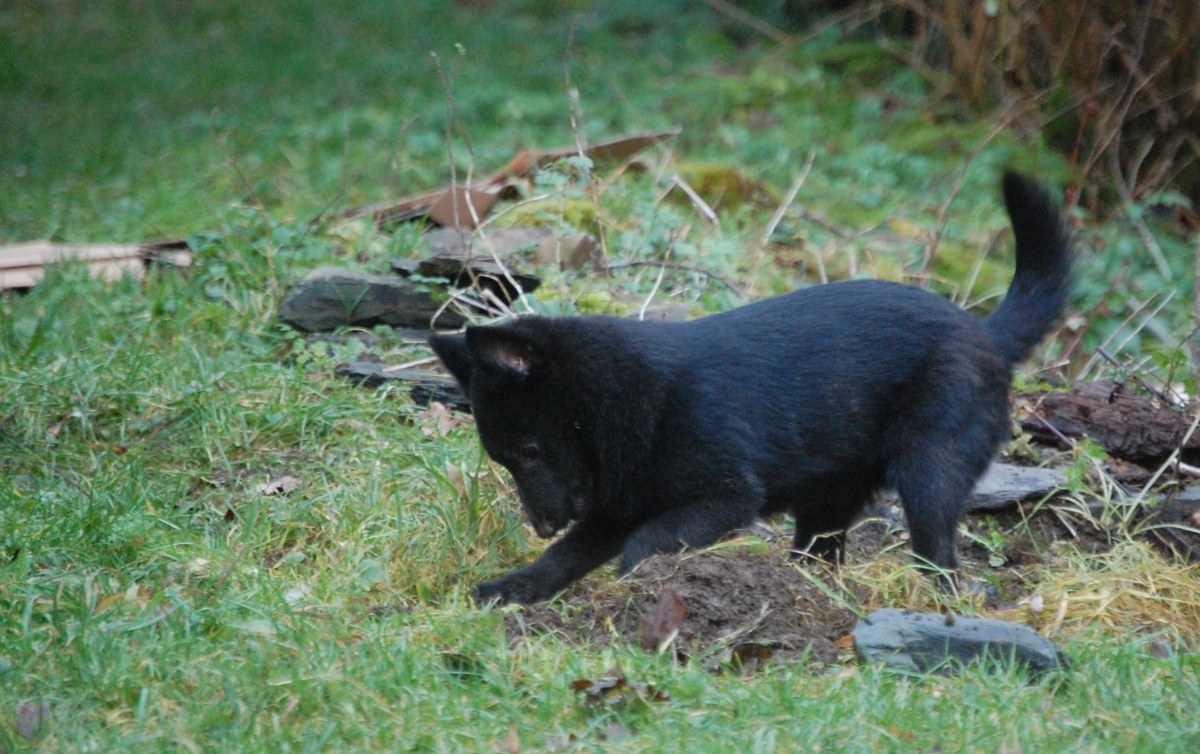
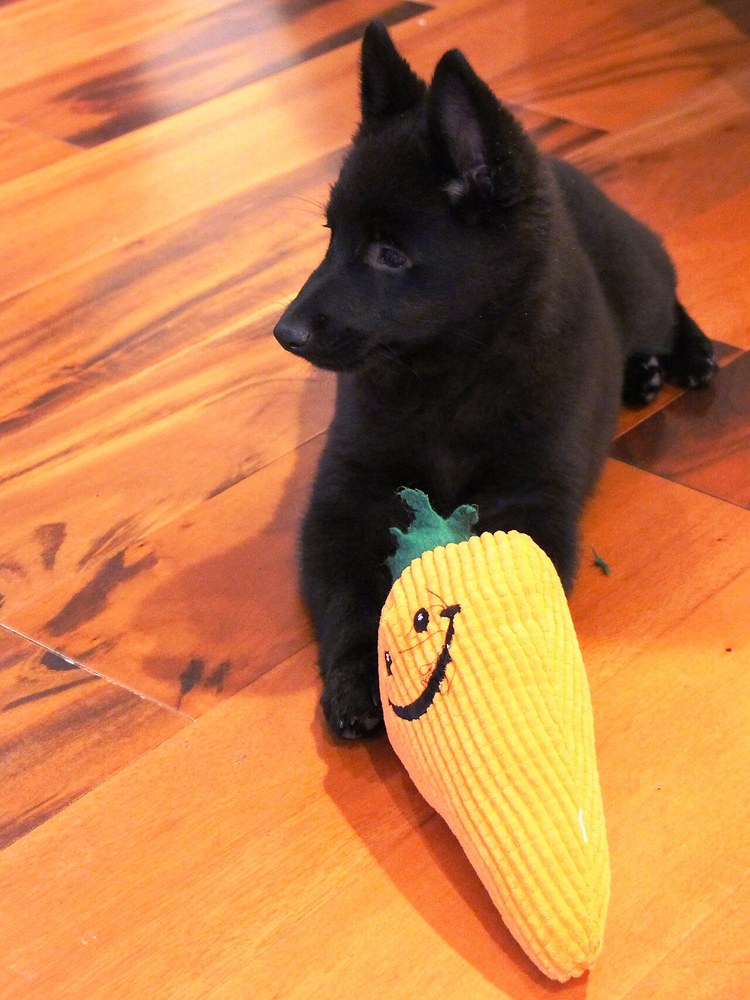
Schipperke puppy searching for mice (CC BY-SA). Ratting was part of the job; in modern homes that drive needs games, not the neighbour’s guinea pig.
Flanders → barges and workshops
Small enough for a boat, brave enough for a doorway
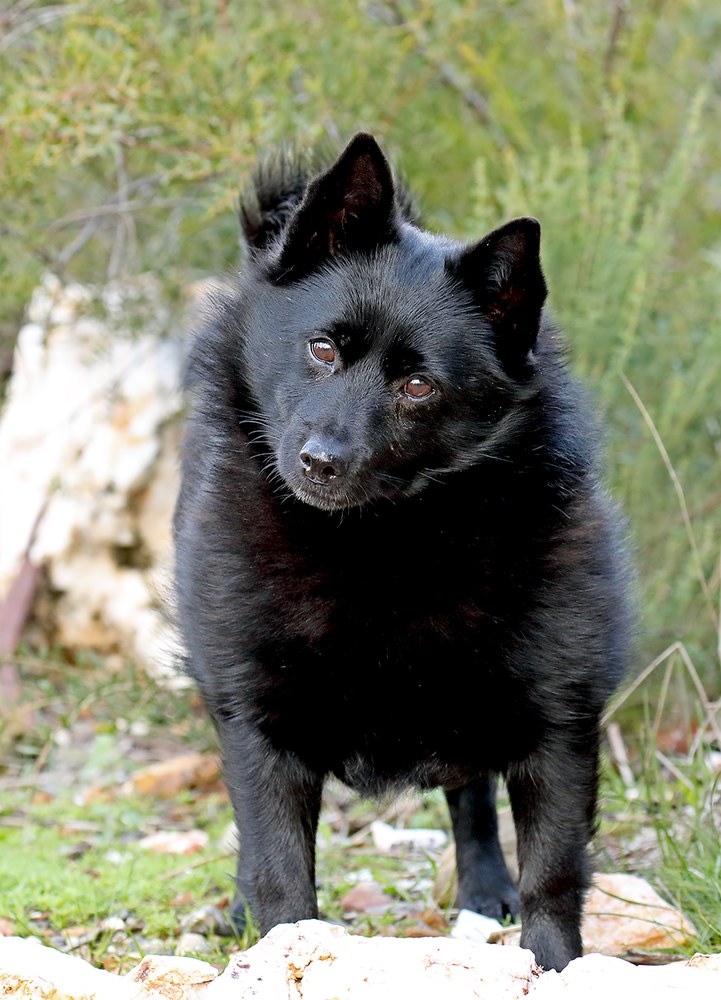
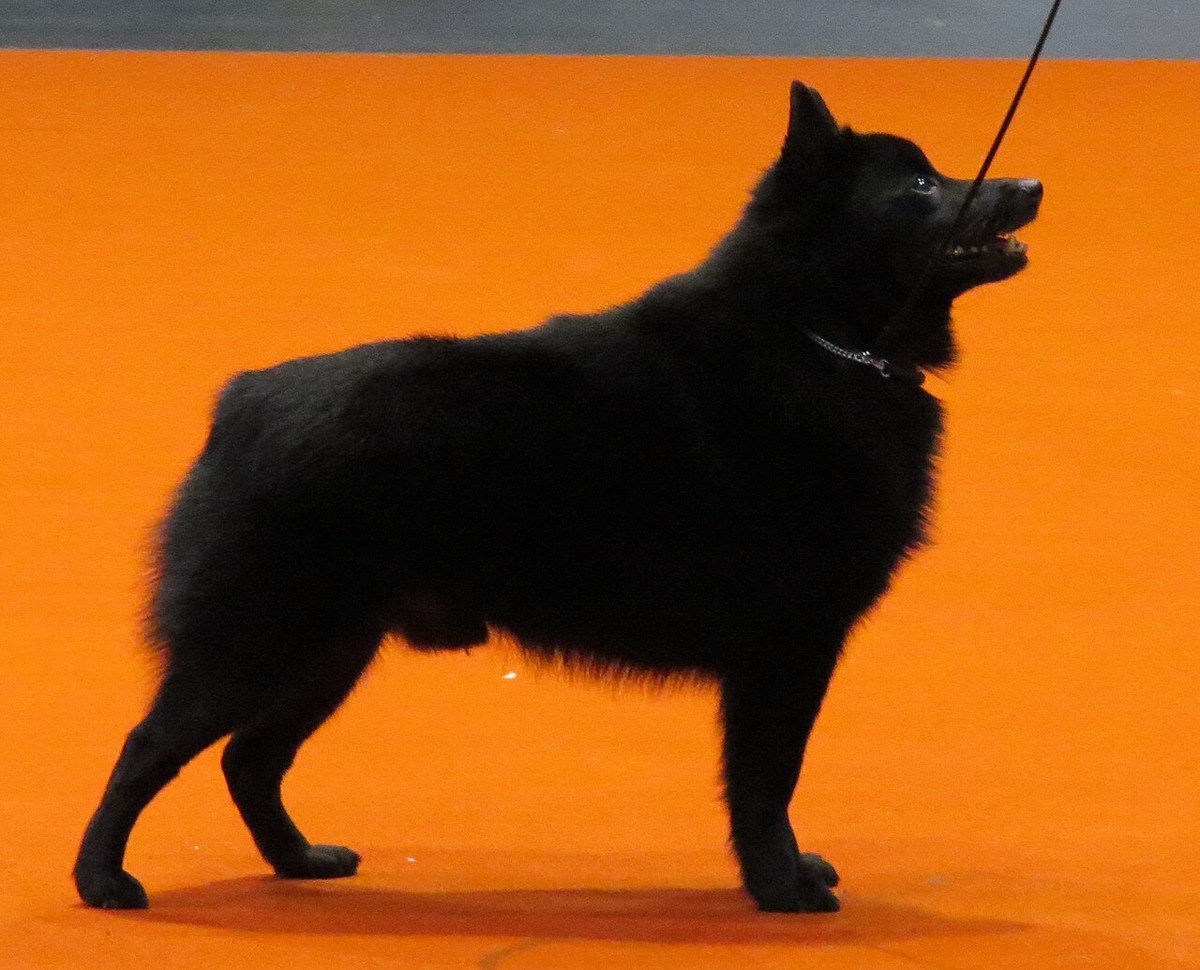
The working outline is a compact, sturdy, square dog with a fox-like head and a dense black coat that stands off the body, forming a ruff and cape. Public breed histories describe it guarding canal barges and city workshops in Belgium, often linked to an old local shepherd type.
That vigilance and ratting drive are what pet homes underestimate. A dog selected to notice every stranger and chase every rat will not be fulfilled by a cushion and a short trip to the corner. You give the voice a structure and the energy a job.
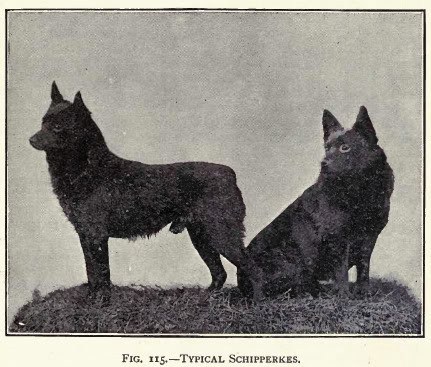
Two Schipperkes circa 1903 (public domain). The breed was shown in Belgium from the late nineteenth century and quickly reached Britain and North America.
Working dog → royal pet → modern apartment
From workshop dog to fashionable companion
Public breed lore often mentions Belgian royalty taking an interest in the breed in the 1880s, which helped spread it beyond working families. Breed clubs formed, standards were written, and the little black dog travelled abroad.
You will meet Schipperkes in apartments, agility rings, and on boats. None of those cancel the watchdog. Train the dog in front of you and give the voice rules anyway.
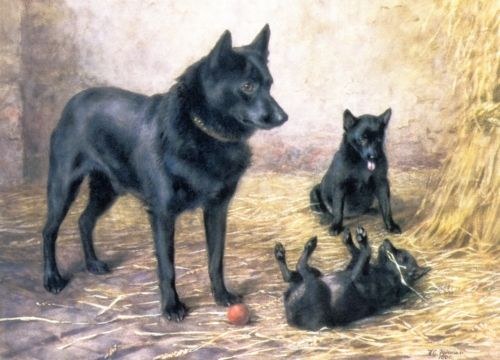
Frances C. Fairman — Schipperke and her puppies (public domain). Victorian painters loved the bold little black dog; that is culture, not a buying guide.
What the breed was bred for
Vigilance, a ratter’s speed, and a big dog’s confidence
In plain trainer language: the type was selected to notice, announce, and act fast. That is why a clear alert-and-acknowledge loop and real outlets produce a charming companion — and why spoiling produces a dog that guards the sofa, barks at every sound, and bolts through every door.
Schipperkes are clever and often independent; they get bored with repetition. Short, playful sessions with food and toys work much better than drilling or pressure.
Watchdog voice — shape it into useful alerts
Ratter drive — safe chase and search games
Escape artist — door and gate rules from day one
Big-dog confidence — real manners, not a size exception
A day is real exercise, alert rules, door manners, and a bed of its own
In a city the Schipperke’s job shows up as patrol: barking at footsteps in the hallway, racing to the door, chasing pigeons, and slipping out when someone leaves the gate open. Most are affectionate and fun at home. Management is not weakness — it gives the dog fewer chances to practise bad habits while you teach better ones.
Morning · real walk
A small dog still needs a real walk
A Schipperke is not satisfied by being carried to the corner and back. A brisk walk with time to sniff, a trip to new places, or a short hike meets a lot of its energy. Keep it on a lead near roads and around wildlife — small fast animals can switch on the ratter.
Flirt-pole games with rules, fetch that ends on cue, hide-and-seek with toys, and simple agility or trick training all satisfy the quick, curious brain. A Schipperke with nothing to do tends to invent jobs — usually loud ones.
Many Schipperkes will happily tell off a dog five times their size. Meet other dogs on a loose lead at a distance where your dog can still take food, and do not let it start fights it cannot win. Elevator and hallway manners matter in apartment buildings.
Schipperkes are famous for slipping out of doors and gates. A rewarded wait at every door, a gate inside the front entrance, and calm guest routines prevent both escapes and frantic greetings. Many are reserved with strangers — let guests ignore the dog first.
Small dogs that live on laps and sofas often start guarding them. Give the Schipperke its own bed or crate, teach it to go there and stay, and invite it onto the sofa on your terms. Rest is a skill — and a calmer house.
General awareness only. I am not a veterinarian. In Schipperkes, problems often show first as a limp or skipping on a back leg, weight creeping up, a dull coat or hair loss, changes in behaviour or coordination, or seizures. For red flags, leave this page and open
when to call the vet.
Hips and knees in a small dog
Small breeds are discussed with kneecap problems (patellar luxation) and a hip condition seen in young small dogs (Legg-Calvé-Perthes). Skipping, limping, or reluctance to jump is a vet visit. See limping stop list.
An inherited metabolic theme (MPS IIIB)
The breed is discussed with an inherited condition, MPS IIIB, for which DNA testing exists. Ask breeders about testing. Changes in coordination or behaviour in a young adult need a veterinary check.
Thyroid, eyes, and seizures
Schipperkes as a type are discussed with thyroid questions, some eye conditions, and epilepsy in breed-club and veterinary conversations. That is awareness — not a label. A seizure is call-the-clinic territory.
Weight in a small, food-keen dog
A few extra treats are a big share of a small dog’s daily food. Measure the ration and use part of it for training. See treat calories in the ration.
Coat and seasonal blow
The dense double coat sheds heavily once or twice a year. Brush to the skin weekly and more during the blow. Do not shave it without veterinary advice.
Teeth, nails, and handling
Small breeds often need extra dental attention. Brush teeth, keep nails short, and practise calm handling so vet and grooming visits stay easy. See nail trim ladder.
Lines and types
Working-type and companion Schipperkes share the same watchdog brain
Honest split, no bloodline sales. Differences show in energy, vocal intensity, and how independent an adult is. All still need alert rules, door manners, exercise, and no size exceptions.
Active / sport-influenced
Often higher energy and a stronger chase drive.
Parents may do agility, obedience, or barn hunt — ask how they settle at home.
Needs daily brain work and exercise, not only a lap.
Puppies benefit from early door manners and an alert routine.
Fits an owner who wants a small sport or hiking partner — not a “quiet decorative lapdog” promise.
Companion / show-influenced
Often a calmer house tempo — the watchdog voice is still there.
Meet parents at home and listen to how they greet visitors.
Door escapes and hallway barking happen in every line.
MPS IIIB testing, knees, and hips matter equally.
Fits a household ready for daily walks, alert-barking training, brushing, and real manners for a small dog.
Socialization windows
What to introduce — and what not to overload — by age
AVSAB-aligned in spirit: short, clean exposures at a distance the puppy can still eat,
with hygiene while vaccines finish. See the
puppy socialization schedule.
2–4 months
Home and near yard
Introduce: family members, hallway sounds and doorbells at low volume paired with food, handling of feet, mouth, and ears, harness wearing, a rewarded wait at the door.
Do not overload: rewarding every bark with attention, being carried everywhere, free access to every sofa, open doors and gates.
~6 months
City life at a working distance
Introduce: other dogs, bikes, pigeons, and lifts at a distance the puppy can still eat; the alert routine at the window; first trick and agility-style games.
Do not overload: letting the puppy bark at every passer-by, chasing birds or cats, crowded dog parks with much bigger dogs.
~12 months
Adolescent confidence
Introduce: longer walks and hikes, guests by script, calm meetings with known dogs, settling in cafés on a mat.
Do not overload: trusting the dog off lead near roads, letting it “win” standoffs with big dogs, sofa guarding without a plan.
~18 months
Adult scenes under control
Introduce: new places and routes; car and building thresholds; longer settles at friends’ homes.
Do not overload: skipping coat care in the blow, letting the ration creep up, abandoning the door routine.
~24 months
Maintain the rules
Introduce: refresh alert, door, and place routines; keep daily walks and brain games; regular weight checks.
Do not overload: treating a small adult as a toy, letting the alert routine fade, ignoring a skipping back leg.
Before you buy
Who a Schipperke usually fits
Fit is daily decisions: real exercise for a small dog, alert-barking rules, door and gate discipline, brushing, and the willingness to give manners instead of exceptions.
Good match
More likely a good fit if you…
You want a small but sturdy, lively companion with plenty of personality
You will walk daily and enjoy games, tricks, or small-dog sports
You accept a watchdog voice and will train alert manners rather than demand silence
Your household can keep doors and gates under a rule
You can brush weekly and live with seasonal shedding
Mismatch risk
A Schipperke may be a poor choice if…
You want a quiet lapdog that rarely barks or moves
You live with thin walls and very strict neighbours, and cannot invest in training
You keep rodents or other small pets that cannot be separated
Doors and gates are often left open in your home
You prefer to carry the dog rather than teach it manners
If you are torn between breeds
Schipperke vs Pomeranian and Miniature Schnauzer
Pomeranians bring a smaller, more toy-like spitz with a similar alert voice; Miniature Schnauzers bring a sturdy terrier-ish watchdog with a different coat routine. Schipperkes bring a ratter’s speed, independence, and a dense black coat. Pick the failure mode you can live with — then train.
Contact style
Schipperke
Loyal with family, often reserved with strangers; bold.
Pomeranian
Usually more lap-oriented; also bold and vocal.
Voice
Schipperke
Fast watchdog bark at hallway and door sounds.
Miniature Schnauzer
Also an alert barker; often very vocal at the window.
Miniature Schnauzer
Sturdy, playful, also enjoys games and walks.
Coat and care
Schipperke
Dense black double coat; weekly brushing, seasonal blow.
Miniature Schnauzer
Wiry coat needing regular clipping or stripping.
Apartment reality
Schipperke
Good with alert rules, door manners, and real exercise.
Both compares
All three can be noisy in apartments without training.
Ownership without surprises
Where a Schipperke owner’s budget goes
Figures depend on country, city, food, and training choices. Below are cost themes to budget before a puppy — not prices and not quotes from this site.
Time and training
Daily walks, games, and short training sessions are the real bill. A bored Schipperke often costs you in noise complaints and chewed doors.
Escape-proofing
Indoor gates, secure garden fencing with no gaps, and door habits for the whole family. Small, quick dogs find every opening.
Food
Small dogs eat little — which is why treats add up fast. Measure and use part of the ration as training rewards.
Veterinary
Routine care, dental care, possible screening for knees and hips, and DNA-tested parents. Know your emergency number.
Grooming and gear
Undercoat rake and brushes, nail clippers, a well-fitted harness, a lead, a crate or bed, and toys for safe chase games.
Training and sport
Puppy class, private help for barking or reactivity, small-dog sport classes. City ranges vary — treat online “averages” as rough, not a quote.
A cute small black dog does not cancel daily decisions: exercise, alert rules, door discipline, and shedding remain the main cost drivers.
Before day one at home
What to prepare for a Schipperke puppy
A Schipperke puppy is quick, curious, and sure of itself. A few decisions before arrival beat a hundred “no”s after the fact — especially about doors, barking, and sofas.
01
Gate the doors before the puppy arrives
An indoor gate before the front door and a family rule about closing gates prevent the first — and most dangerous — escapes. See baby gates.
02
Decide your alert rules early
Agree on which sounds earn a bark, what phrase you use to take over, and what the puppy earns for going quiet. Pair hallway and doorbell sounds with food at low volume.
03
Plan the toilet clock
Out after sleep, food, and play. Small bladders need frequent trips. Accidents mean the interval was too long. Follow potty training.
04
Protect sleep
Overtired puppies bark, nip, and zoom. Use a crate or pen in a calm spot and enforced naps.
05
Four paws on the floor
Carry the puppy only when needed. Walking, exploring, and meeting the world on its own feet builds confidence and manners. See puppy leash training.
06
Start alone time in minutes
Leave briefly while the puppy is calm and return before barking starts. Build slowly. See first absences.
If the dog is already yours
Training is real rules for a small dog plus a voice with rules
The rule must be visible: one or two barks at a real sound, then a turn to the handler; a calm wait at an open door; four paws on the floor for greetings; the settle you mark is the settle you want.
Schipperkes are clever, quick, and easily bored. Short, playful sessions with food and toys work well; harsh corrections and long drills tend to create a stubborn, wary dog. Treat the dog as a capable working dog — not a toy.
Environment management supports learning: indoor gates, blocked window views, closed doors, its own bed, and measured food cut practice of escapes, nuisance barking, and sofa guarding.
Load balance
Keep the brain and legs busy — size, knees, and weight set the limit
Age, knee and hip health, weight, and temperature change what is allowed. Skipping on a back leg, reluctance to jump, or a dog that cannot stop barking even after work means stop and get a veterinary or behaviour assessment.
Brisk walkChase game with rulesShort trainingAlert routineRest on its own bed
Daily walks, trick training, small-dog sports, search games, and short structured play are available. Endless lap time, being carried everywhere, and barking at the hallway all day are not required to close the work need.
A day with real work leaves a Schipperke able to hear footsteps in the hallway — and stay on its bed.
Alert, acknowledge, and the end of the bark
How to teach a Schipperke useful alert manners
Start with quiet, predictable sounds and a prepared payoff. Build up to real knocks, footsteps, and the doorbell slowly.
01
Let the dog report the real sound
When something genuinely happens — a knock, footsteps at the door — allow one or two barks without shouting, laughing, or picking the dog up.
02
Acknowledge calmly with one phrase
Walk over, look toward the door or window, and say a consistent phrase such as “thank you, I’ve got it.” You are taking over the job.
03
Reward the turn and the quiet
Mark the moment the dog turns to you and closes its mouth, and reward generously. If the dog cannot stop, the sound is too strong — lower it, add distance, or block the view.
04
Send to its own bed
Cue the dog to its bed or crate and reward it for staying while the household carries on. The report is finished.
05
Close the day with real work
A brisk walk, a chase game with rules, or short trick training most days lowers the baseline, so fewer sounds feel worth reporting.
One scene close-up
Why “he’s small, it’s cute” becomes barking at every footstep
To a watchdog, a human who laughs, picks it up, or shouts back is joining the alarm. The dog did not misbehave; it learned that barking gets a reaction. A small body makes it easy to tolerate — until neighbours complain.
Walk over calmly. Use one consistent phrase. Reward the dog for turning to you and going quiet, then send it to its bed or give it a short game. If food fails, the sound is too intense — lower the volume, add distance, or block the view.
If barking comes with snapping at guests, guarding the sofa, or real distress when alone, a structured plan with a qualified professional is safer than trial and error.
“With a Schipperke, I do not treat a small dog as a toy. We teach the watchdog to report once and hand the job over, give the ratter safe chase games, put doors and gates under a rule, and give it its own bed — because a little black dog without structure quickly runs the household.”
Sessions cover real scenes: hallway and door barking, escapes, sofa guarding, reactivity to bigger dogs, chase drive on walks, and rest. I am a trainer, not a veterinarian. No invented reviews.
Andrew DarovProfessional dog trainer and instructor
It can be for an active first-time owner who wants a lively small dog and will train alert manners and door rules. It is a poor choice for someone who wants a quiet, low-energy lapdog.
Do Schipperkes bark a lot?+
Many do — the breed was a watchdog on barges and in workshops. You can shape barking into short, useful alerts with training and management, but a silent Schipperke is unlikely.
Are Schipperkes good apartment dogs?+
They can be, thanks to their size — if they get daily exercise, brain work, and solid alert-barking rules. Thin walls and an untrained watchdog voice are the main risk.
How much exercise does an adult Schipperke need?+
Most adults do well with daily brisk walks plus games, training, or small-dog sports. Being carried or kept on a lap does not meet the need.
Schipperke vs Pomeranian — which fits better?+
Both are bold, vocal small dogs. Pomeranians are usually more toy-like and lap-oriented; Schipperkes are sturdier, busier, and have a stronger ratter chase drive.
Schipperke vs Miniature Schnauzer — which fits better?+
Both are alert small watchdogs. Schnauzers need regular coat clipping; Schipperkes shed seasonally and tend to be more independent and escape-prone.
Are Schipperkes good with kids?+
Many are playful with respectful, older children. They dislike rough handling and may snap if grabbed. Supervise, and teach children to let the dog come to them. No breed is a nanny.
Are Schipperkes good with cats and small pets?+
Some live peacefully with a cat raised alongside them. Rodents and other small pets are a different matter — the ratter drive is real. Separate when unsure.
What about knees, hips, or other health themes?+
Schipperkes as a type are discussed with kneecap and hip problems in small dogs, an inherited condition (MPS IIIB) with DNA testing, thyroid questions, eye conditions, and epilepsy. Awareness for a vet conversation — not a diagnosis.
What is the typical lifespan of a Schipperke?+
Public breed references often cite roughly 13–15 years. That is general knowledge, not a promise for any individual dog.
How much do Schipperkes shed?+
Moderately most of the year and heavily during the seasonal blow. Weekly brushing, more during the blow, keeps it manageable.
Is crate training okay?+
Yes as a rest skill. A Schipperke with its own crate or bed is less likely to guard sofas and patrol windows all day.
If a Schipperke feels like too much watchdog — or the wrong tempo
The breed is charming and sturdy, but not for every home. Sometimes a different small companion fits better.
A calm, wrinkled guardian breed from southern China that is reserved with strangers and needs gentle socialization and skin care.
Need a read on your exact situation?
Describe your Schipperke’s age and the scene that repeats most: hallway barking, door escapes, sofa guarding, reactions to bigger dogs, or restlessness. We check safety first, then pick the first skill.
Written by Andrew Darov, professional dog trainer. Not veterinary advice and not a diagnosis.
Not a kennel club. No invented reviews. No vaccine schedules or toxin doses. Photo credits in
/images/breeds/schipperke-guide/credits.md.