Keeshond: temperament, training & vocal companion spitz
A Keeshond is a medium-sized Dutch spitz with a plush grey coat and “spectacles” around the eyes. Most are friendly, people-focused, quick to bark at arrivals, sensitive to harsh handling, and unhappy when left alone for long. City life works with company, a door routine that ends the barking, and regular brushing.
Job: Dutch barge dog — watchdog and companion.
Energy: Moderate; daily walks and play.
Home: Needs company, grooming and help with alert barking.
A Keeshond is a friendly, alert spitz that needs barking help and a calm place
Public breed histories describe a barge and farm watchdog from the Netherlands, related to the German spitz breeds. The modern pet kept the alert voice and the strong attachment to people.
Training usually goes well with food and praise. The common problems are alarm barking, jumping up at guests, and worry when left alone.
From the first month, build two habits. First: the doorbell rings, the dog barks once and then comes to you or to its place for a reward. Second: short absences become routine before long ones are needed.
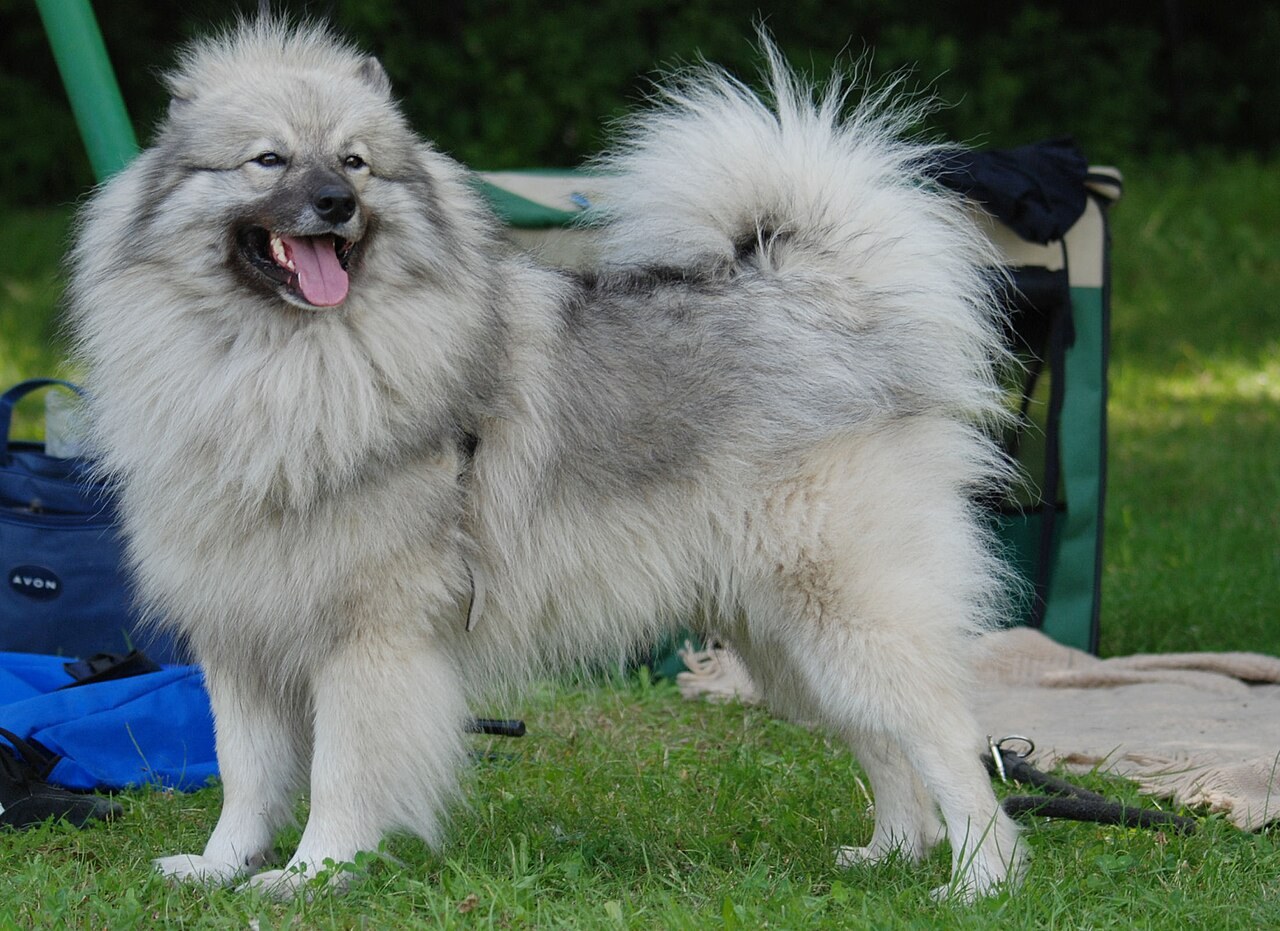
Dense double coat with spectacles — sheds; weekly brushing
Job
Dutch barge watchdog and companion
Breed history
Why the Keeshond was built to watch barges and farms — and to stay close to people
Heritage does not decide one puppy, but it explains the Keeshond: cheerful, people-focused, quick to sound the alarm, and happiest in the middle of the household rather than out in the yard.
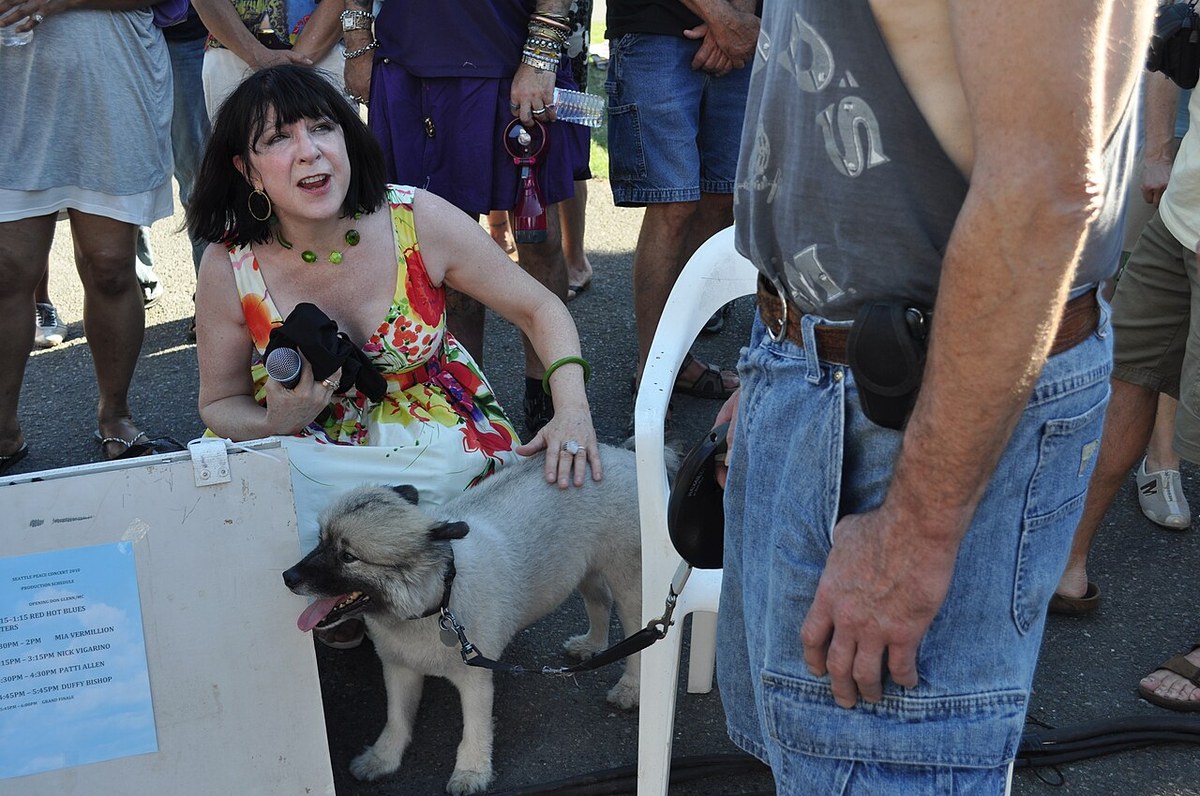
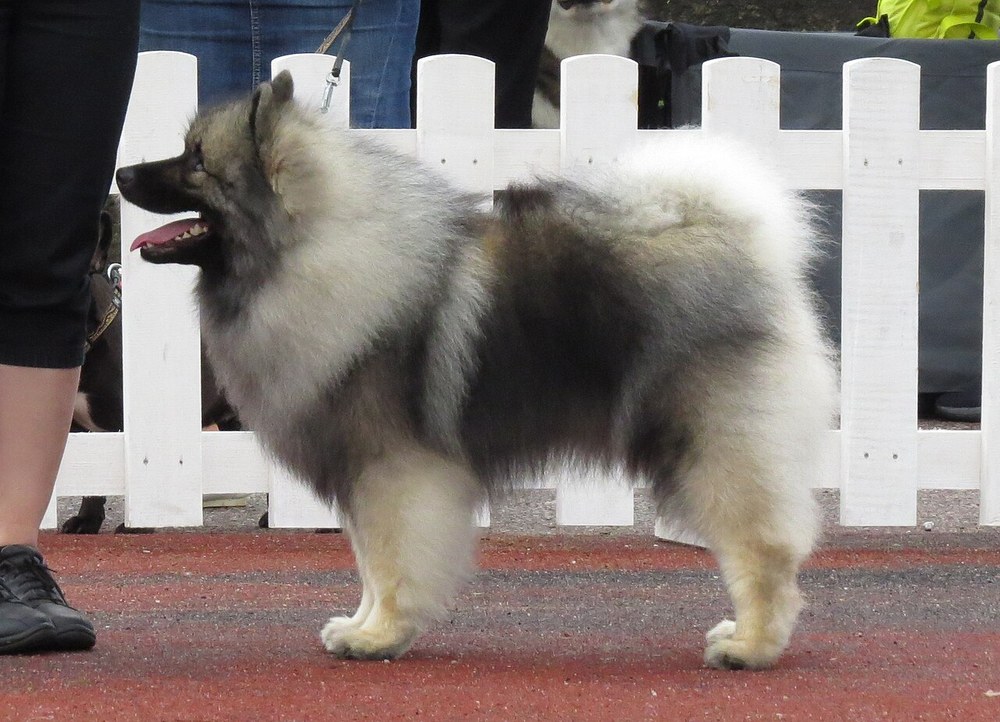
A Keeshond at an outdoor community concert in Seattle (modern photograph). A sociable breed that likes being where the people are.
The Netherlands → barge and farm watchdog
An alarm, not a guard
Public breed histories describe the Keeshond as a Dutch spitz kept on river barges and farms as a companion and watchdog. Its job was to notice and announce, not to attack.
That is why many Keeshonden bark at every arrival and then greet the visitor warmly. The alarm is real; the aggression usually is not. Teach the dog what to do after the first bark.
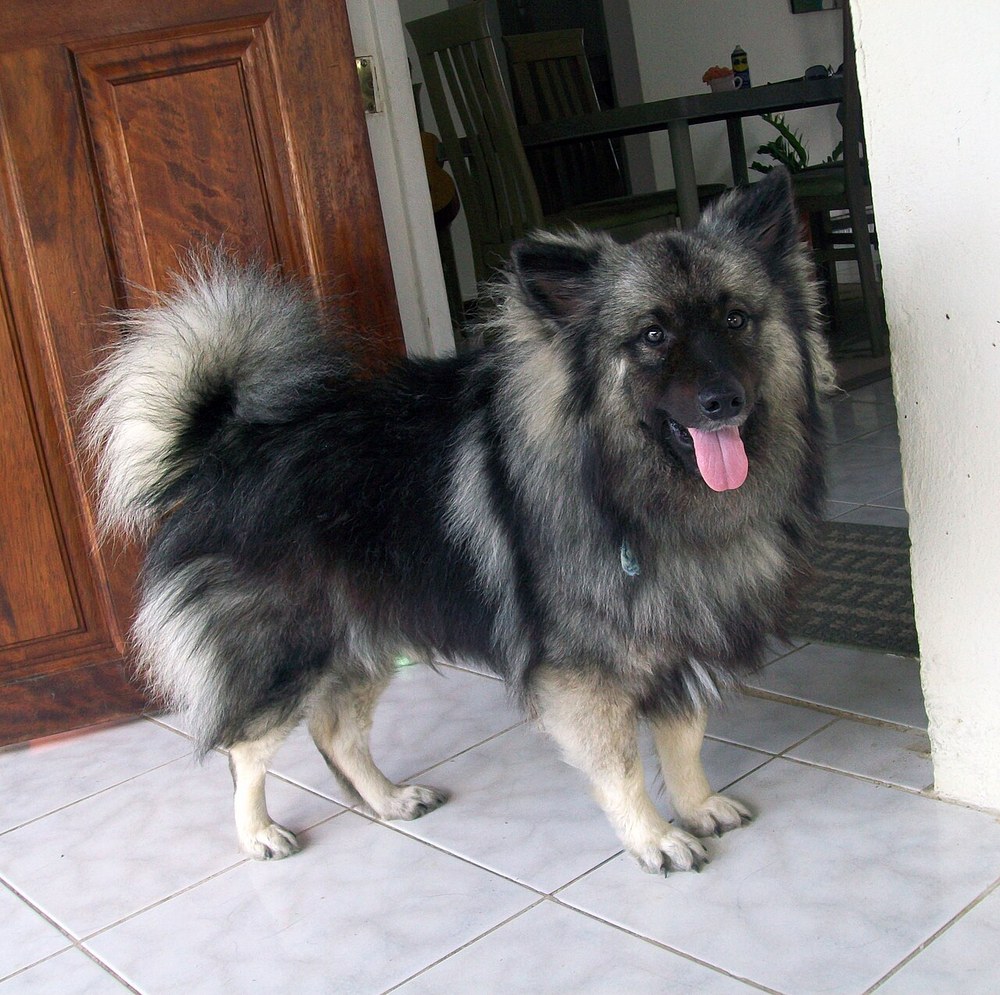
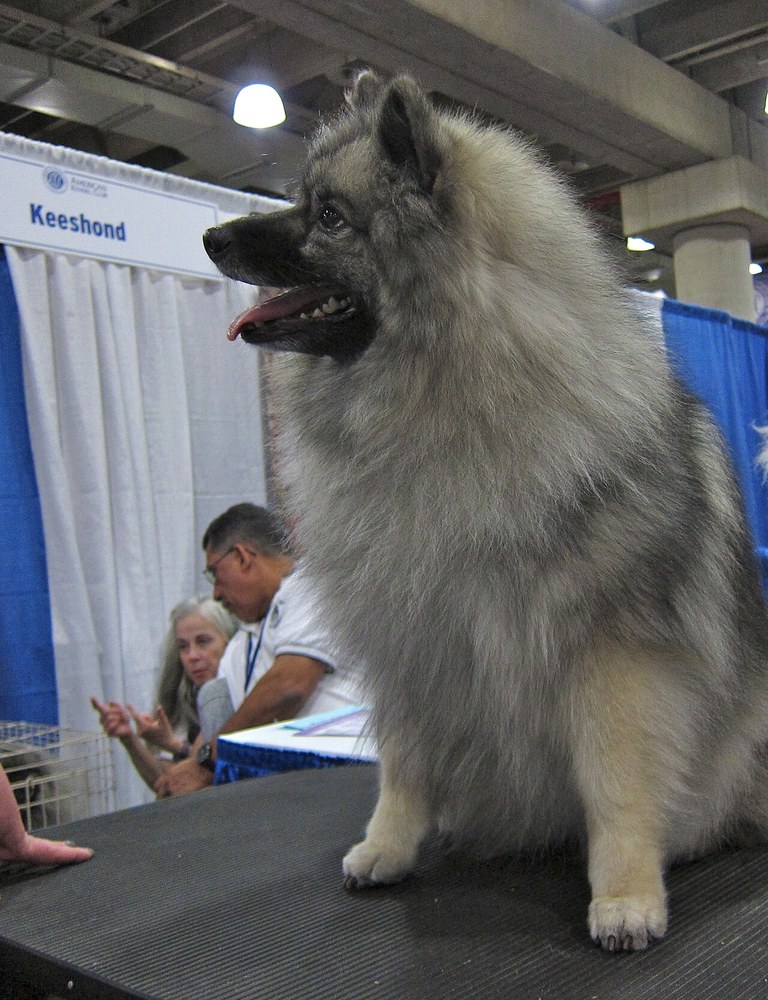
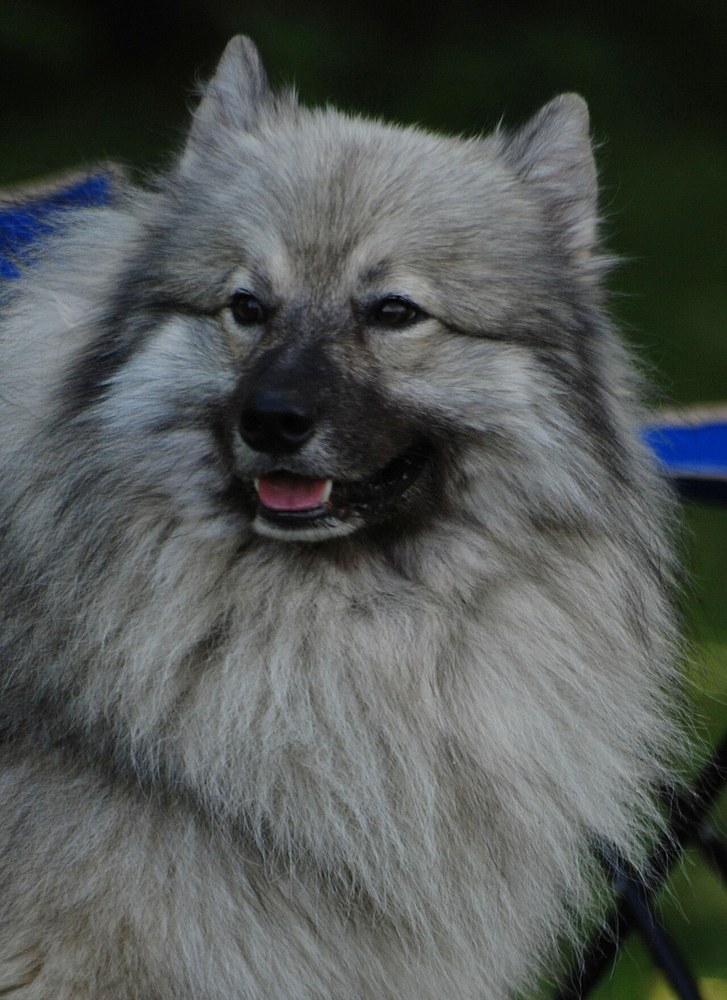
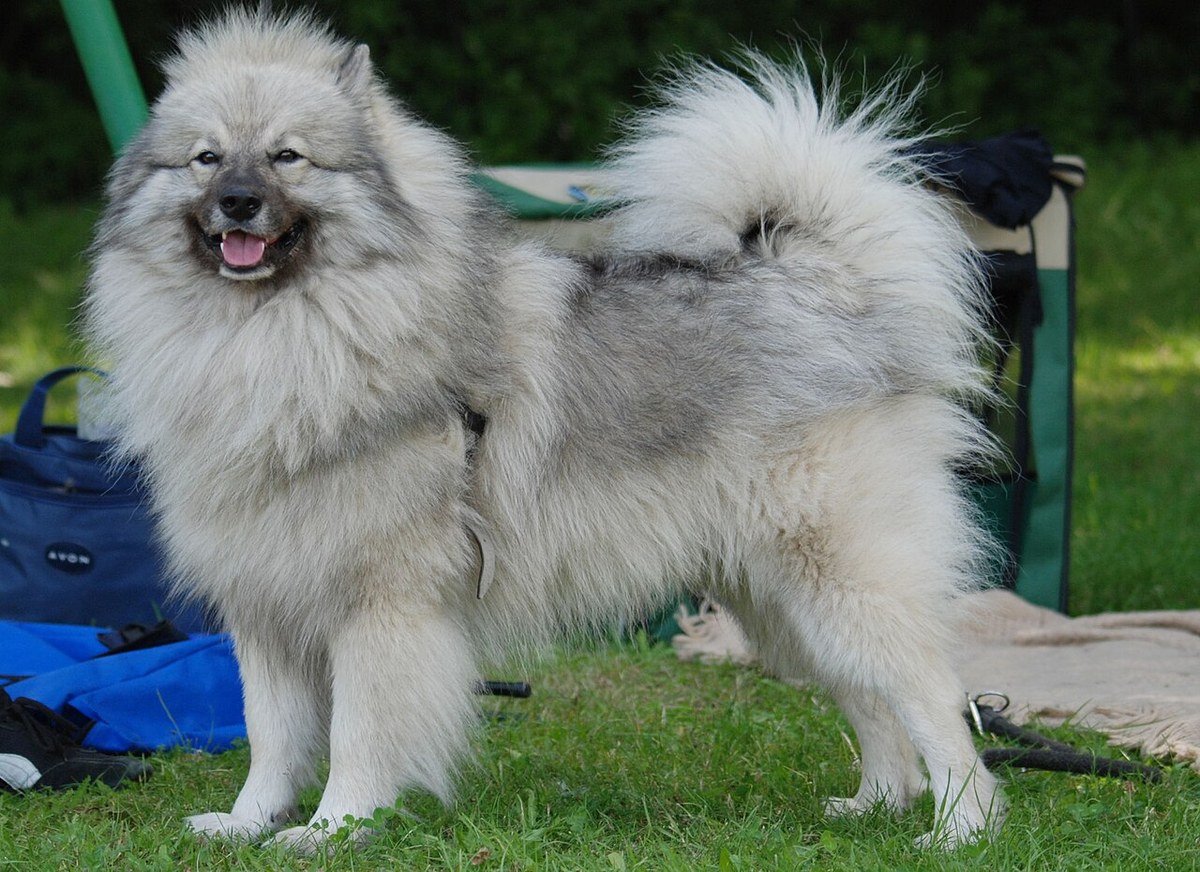
Cooper, a one-year-old Keeshond (modern photograph). Note the “spectacles” — the pale markings around the eyes.
Patriot symbol → spitz family → companion
A political mascot and a member of the spitz family
Public breed lore links the name to Cornelis (Kees) de Gyselaer, a leader of the Dutch Patriot movement in the late eighteenth century, whose dog became a symbol of the party. FCI groups the breed with the German Spitz family; English-speaking clubs call it the Keeshond.
Today it is mainly a family companion. The thick grey coat, the friendly face, and the voice remain.
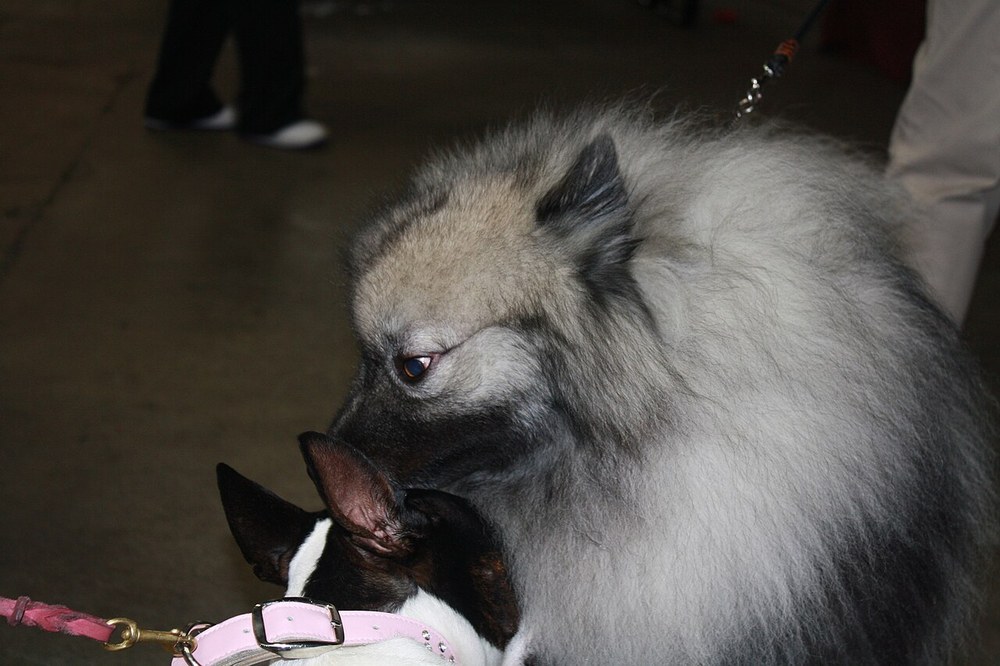
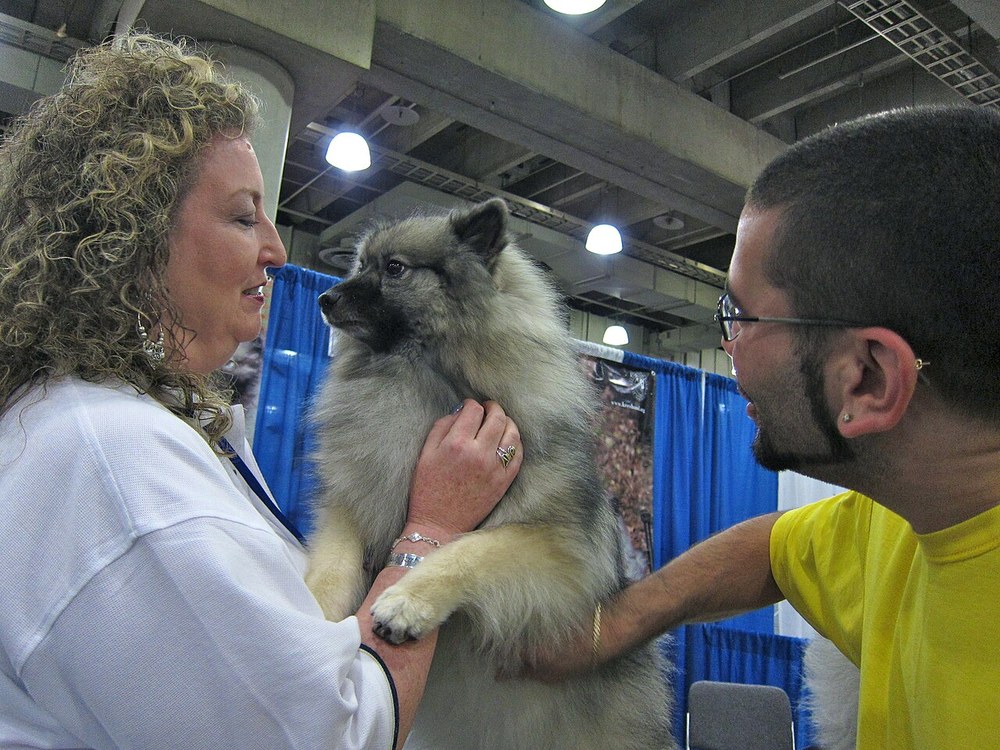
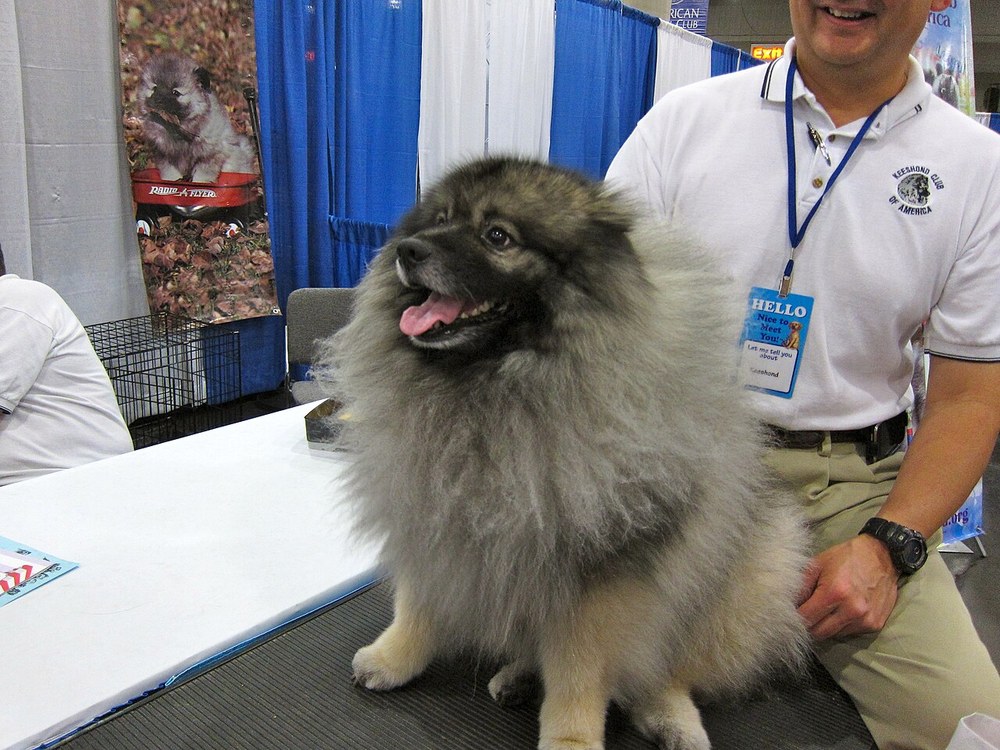
A Keeshond greeting another dog at an indoor event (modern photograph). Most are friendly; polite greetings still need practice.
What the breed was bred for
Friendliness, alertness, and sensitivity
In plain trainer language: the type was selected for alertness and close companionship. That is why a Keeshond in a busy family home is a happy, easy-going dog — and why one left alone a lot barks, frets, and becomes clingy.
Many Keeshonden are sensitive to harsh handling. Calm voices, clear routines, and food rewards work well. Loud corrections tend to make the barking and worry worse.
Bark once, then a taught job: come to you or go to place
A day is company, a moderate walk, and a doorbell routine that ends the barking
In a city the Keeshond’s watchdog past shows up as alarm barking at the door and window, and its companion past as worry when left alone. Most adults are friendly with people and dogs. The work is giving the voice an off-switch and building alone time slowly.
Morning · first outing
A moderate walk with time to sniff
Most Keeshonden do well on moderate daily walks and play rather than long runs. In warm weather, walk early and keep it easy.
Thank the dog for one bark, then cue it to come to you or go to a place and reward it there. Block window views of the street if the barking runs all day.
A dog bred to stay near people may struggle with long absences. Build alone time in small steps with a chew and a calm room, and plan help on long days.
What to watch monthly: plush coat, weight, heat, and alone-time stress
General awareness only. I am not a veterinarian. Early signals are changes in appetite, coat, skin, movement, or behaviour. For red flags, leave this page and open
when to call the vet.
Plush double coat
The Keeshond has a harsh outer coat over a thick undercoat that sheds heavily during seasonal changes. Line-brush to the skin weekly and more during a shed. Shaving is not a cooling plan.
Heat and the heavy coat
Walk in cool hours in summer, keep shade and water available, and keep play short. Heavy panting that will not settle or weakness is an emergency.
Ask the breeder which health screenings the national breed club recommends and see both parents’ results. A breed page cannot diagnose your dog; your veterinarian can.
Stress and barking
A sudden increase in barking, pacing, or clinginess can be stress or discomfort. If it does not match a change in routine, talk to your vet. See trainer and veterinarian.
Toxins
I do not publish toxin amounts. If the dog ate something dangerous, call a veterinarian or a poison-control line; the footer lists public numbers.
Lines and types
Show and companion Keeshonden share the same needs
Most Keeshonden come from show or companion breeders; there is no separate working type today. Coat volume and size vary a little. Company, a voice plan, and grooming are shared needs.
From a careful breeder
Parents are friendly and relaxed with visitors.
Puppies are raised in a busy household and handled daily.
Health screening results are available for both parents.
You can see how the adults cope with the doorbell.
Fits a family that wants a sociable, vocal companion and is home a lot.
From casual breeding
Parents may not be available to meet.
Puppies may have had little socialisation or alone-time practice.
Barking and separation problems are harder to fix later.
Health information may be missing.
If you already have one, start door routines and short absences now, and ask for help early if distress appears.
Socialization windows
What to introduce — and what not to overload — by age
AVSAB-aligned in spirit: short, clean exposures at a distance the puppy can still eat,
with hygiene while vaccines finish. See the
puppy socialization schedule.
2–4 months
Household life and gentle grooming
Introduce: family routines, short brushing sessions, doorbell sounds paired with food, a crate or pen.
Do not overload: long periods alone, rewarding barking with attention, rough handling.
~6 months
Polite greetings and a quiet cue
Introduce: sit for greetings, a quiet cue, short alone-time practice, calm dog meetings.
Do not overload: guests who reward jumping, letting barking at the window run all day.
~12 months
Adolescent voice
Introduce: door routines with friends as practice visitors, moderate walks, regular brushing.
Do not overload: ignoring barking until it becomes a habit, skipping grooming during the shed.
~18 months
Adult routines
Introduce: longer alone times built slowly, new places with company.
Do not overload: sudden long absences, harsh corrections for barking.
~24 months
Keep it steady
Introduce: refreshed door, greeting, and alone-time skills.
Do not overload: assuming a friendly dog needs no training, letting mats form under the ruff.
Before you buy
Who a Keeshond usually fits
A Keeshond fits families who want a cheerful, people-loving companion and can handle regular brushing and a dog that likes to announce visitors.
Good match
More likely a good fit if you…
Want a friendly, affectionate dog that wants to be part of family life
Are home often or can arrange company; Keeshonden dislike long hours alone
Are happy to brush the thick coat at least weekly
Will teach a quiet cue and manage barking at windows and doors
Want a medium-sized dog that enjoys walks and training games without needing extreme exercise
Mismatch risk
A Keeshond may be a poor choice if…
Barking at every visitor or passer-by would cause problems
The dog would be alone most of the day
You want a dog with no grooming requirements
You live in a very hot climate without a cool indoor space
You want a guard dog — Keeshonden alert, then usually greet
If you are torn between breeds
Keeshond vs Pomeranian and Samoyed
The Keeshond sits between the small and large spitz breeds. It is often compared with the Pomeranian and the Samoyed.
Origins
Keeshond
Dutch barge dog and companion, kept on canal boats as a watchdog.
Samoyed
Siberian working dog used for herding reindeer and pulling sleds.
Size
Keeshond
Medium; sturdy enough for families, small enough for most homes.
Pomeranian
Toy-sized and more fragile around young children.
Voice
Keeshond
Alert barker; announces visitors.
Pomeranian
Also vocal, often more reactive to sounds.
Coat
Keeshond
Thick, harsh double coat that needs regular brushing.
Samoyed
Even more coat and more shedding.
Trainability
Keeshond
Eager to please and quick to learn with rewards.
Both compares
Pomeranians can be stubborn; Samoyeds are more independent.
Ownership without surprises
Where a Keeshond owner’s budget goes
Costs depend on where you live and your breeder. These areas help you plan before bringing a Keeshond home — they are not price quotes.
Company and time
Daily walks, play and training, plus someone at home for a large part of the day.
Grooming
Brushes, a comb and possibly professional grooming during heavy shedding.
Food
Medium-sized dog that can gain weight easily; measure meals.
Veterinary care
Routine care, vaccinations and parasite control. Ask the breeder which screenings the national breed club recommends.
Training
A puppy class and possibly help with barking or alone-time problems.
Home comfort
A cool resting area in summer and window film or curtains if barking at passers-by becomes a habit.
With a Keeshond, grooming and company are the costs to plan for most.
Before day one at home
What to prepare for a Keeshond puppy
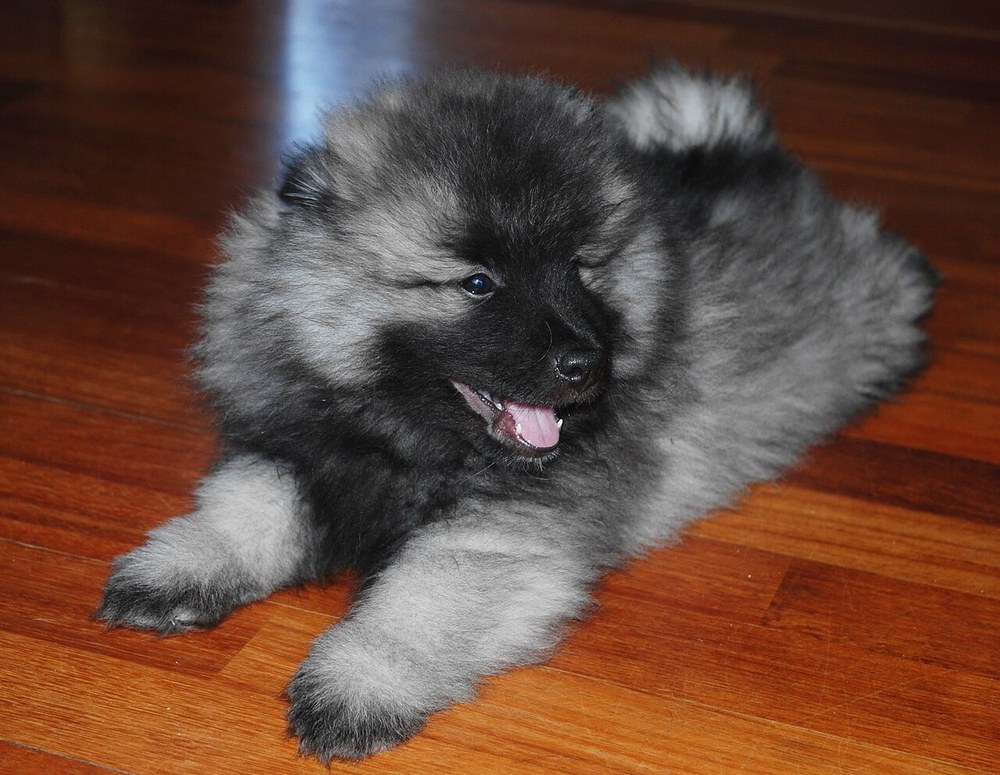
A Keeshond puppy is friendly, curious and quick to learn. Teach quiet, alone time and calm grooming while the puppy is small.
01
Brush every day
Short sessions with treats. The coat grows dense quickly. See puppy handling.
02
Reward quiet early
Mark and reward silence after a bark. See window barking.
03
Plan toilet trips
Go out after sleep, food and play. Follow potty training.
Use a crate or pen and enforced naps so the puppy does not get overtired.
If the dog is already yours
Training is rewards, play and a polite end to the alert bark
Keeshonden are clever and want to please, which makes training enjoyable. Short, upbeat sessions with food and play work well.
The main training project is barking. The breed was kept as a watchdog, so alerting is natural — teach the dog that one or two barks are enough and then it should come to you.
Teach the dog to be alone in small steps. A Keeshond that panics when alone barks, chews and is unhappy.
Load balance
Active enough, without overheating
Keeshonden enjoy walks and games but do not need extreme exercise. Watch for overheating in summer because of the thick coat.
WalkTrick trainingFood puzzleBrushingRest
Daily walks, training games, tricks and dog sports like agility or rally are good choices. Being left alone in the garden is not.
A Keeshond that has company and something to do is a calm, happy family dog.
Alert barking and the come-to-me cue
How to teach a Keeshond to stop barking at the door
Start with a gentle knock or doorbell sound at low volume, before trying with real visitors.
01
Start with a soft trigger
Use a quiet knock or a low-volume doorbell recording.
02
Let one bark happen
Allow the alert, then call the dog to you.
03
Reward coming to you
Reward well when the dog turns away from the door and comes to you.
04
Send to the mat
Ask for a down on the mat and keep rewarding calm.
05
Raise difficulty slowly
Make the sound louder, then add real visitors only when the dog succeeds at each step.
One scene close-up
Why your Keeshond barks at every passer-by
Keeshonden were kept on barges as watchdogs. Barking at movement outside is the job they were bred for, not misbehaviour.
Block the view with window film or curtains, and teach the dog to come to you after the first bark for a reward. Thank the dog for the alert, then give it something else to do.
If barking becomes constant or the dog cannot settle even with management, ask a qualified trainer for help.
“With a Keeshond, I do not ignore the watchdog voice. We give the alert a short, polite ending, train a quiet cue, build calm alone-time and keep training playful — because this sociable barge dog wants to be part of whatever the family is doing.”
Sessions cover real scenes: barking at the door and window, alone time, brushing and coat care, greeting guests, and settling after play. I am a trainer, not a veterinarian. No invented reviews.
Andrew DarovProfessional dog trainer and instructor
Describe age, living setup, and where the dog breaks first — barking at the door and window, time alone, grooming, or settling after a walk. Opens WhatsApp to Andrew.
A shaggy Tibetan mountain companion, not a British earthdog. Needs real outdoor work, coat care and clear door manners.
Need a read on your exact situation?
Describe your Keeshond’s age and the scene that repeats most: barking at the door and window, time alone, grooming, or settling after a walk. We check safety first, then pick the first skill.
Written by Andrew Darov, professional dog trainer. Not veterinary advice and not a diagnosis.
Not a kennel club. No invented reviews. No vaccine schedules or toxin doses. Photo credits in
/images/breeds/keeshond-guide/credits.md.