
Expert Advice · Puppy · 13 min read
Puppy leash training for the first walks
Indoor leash pictures first. Short outdoor loops next. This is first walks, not the full loose-leash encyclopedia.

Puppy leash training for the first walks is harness and lead as furniture, then short outdoor loops the puppy can still win. This page is setup. It does not rewrite the full loose-leash walking ladder, and it does not replace harness and lead for kit. Cross-read both when you are ready to raise criteria.
This is a puppy protocol. I work dogs in residential boarding for a month and longer. I am a professional trainer from Russia, not a veterinarian. Outdoor timing for young puppies sits under your vet’s local advice and hygiene. This page publishes no vaccine calendars. See not veterinary advice.
How do you start puppy leash training?
Indoors. Calm. Food ready.
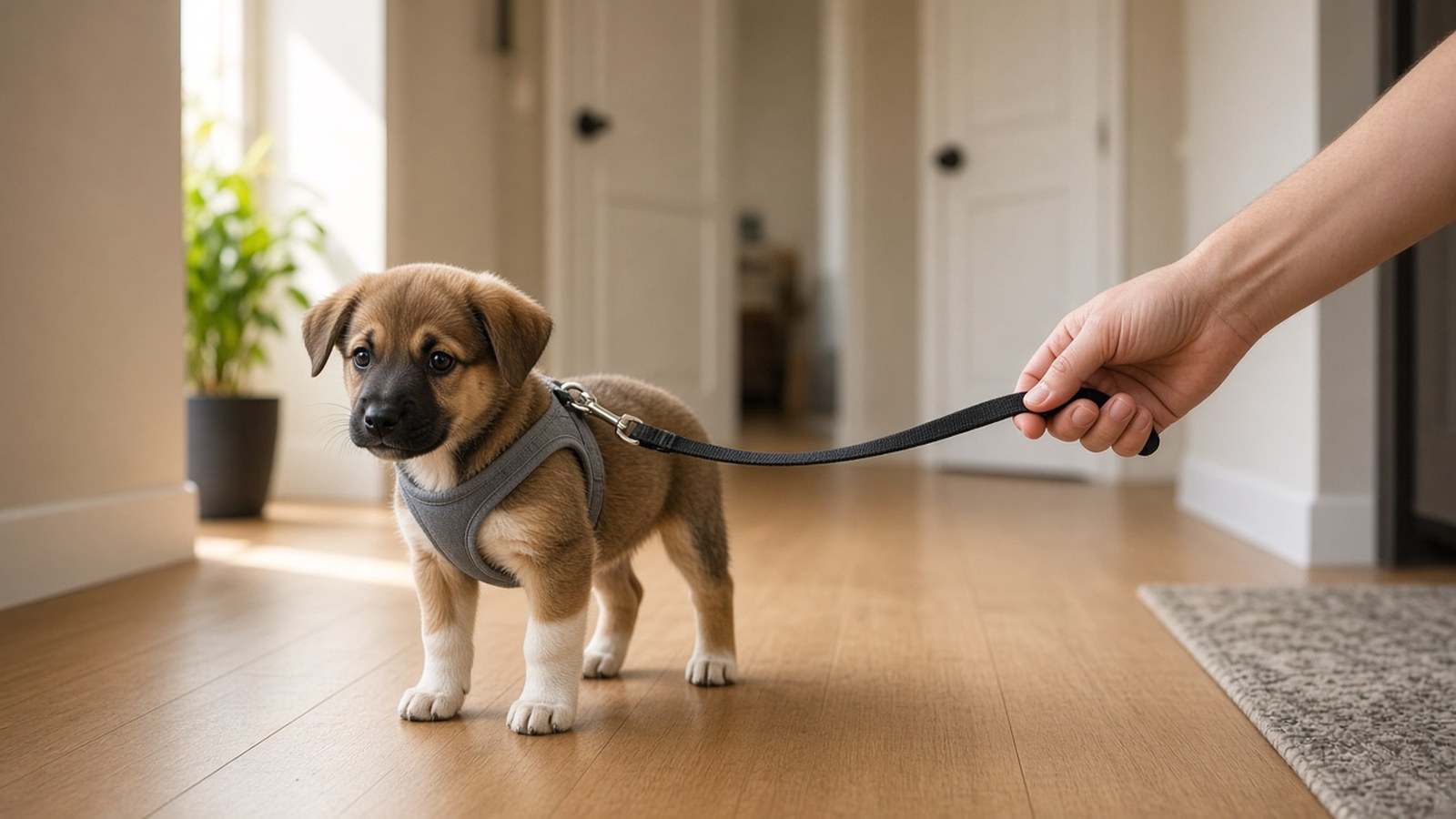
Fit a soft harness in the kitchen or lounge while the puppy is already eating or sniffing a scatter of food on the floor. Fasten, feed, unfasten across several short sessions until the harness is boring. A first fit on a windy pavement teaches the wrong picture.
Clip a light lead. Hold the end. Take two or three steps with the puppy, or follow where they go, and mark forward movement while the line stays soft. If the puppy plants, you wait, then pay the next step. You do not drag. Dragging teaches that the lead is a tow rope and that you are an opponent.
Common early pay-offs to avoid:
- yanking toward the door
- a long lead left to snag under a fridge
- children chasing the puppy while the lead is on
- using the lead as a tug toy
Lead biting often starts as play. Become boring, drop a food scatter on the floor, restart when mouths are quiet. See biting and nipping if teeth on hands are the bigger problem.
If the first harness fit happens at a busy kerb, you asked for a fight.
When do outdoor walks start?
After the indoor picture is cheap, and after you have followed your veterinarian’s guidance for your area on disease risk and where a young puppy’s feet should go. That is a clinic conversation. It is not a schedule published on a training page.
When you do step out, choose quiet: an empty car-park edge at an off hour, a garden path, a low-traffic pavement. Carry high-value food. Keep the session short. Sniffing is allowed. A forced heel on day one is not the goal of this page.
US suburban sidewalks and UK estate paths both work. Busy high streets and dog-park gates do not. If the puppy cannot take food, the surface is too hot. Go home or move farther away. That is the same distance logic as on-leash threshold, scaled down for a baby dog.
How long should first walks be?
Minutes. Then rest.
Growing bodies and short attention windows are reasons to stop early. Two or three short outdoor loops in a day beat one long march that ends in a plant, a scream, or a lead binge. Watch for slowing, sitting, or frantic zigzags that no longer take food. End there. Carry if needed. That is management, not failure.
Pair walks with the day map. An overtired puppy on a lead looks “stubborn.” Put them down. See enforced naps and puppy day schedule.
Toilet on walk is fine if you are building an outdoor toilet. Stand and pay elimination. Do not turn every pee into a five-minute chat that teaches the walk never continues. Full toilet maps stay on potty training.
How does this differ from loose-leash walking?
Scope.
This page owns first harness, first lead indoors, and first short outdoor loops. Loose-leash walking owns slack as the criterion, pattern games, and raising distraction. Harness and lead owns fit and tool choice. When first walks are boring, hand the puppy to those pages. Do not paste their full ladders here.
A name look on the pavement helps. See name game for one clean attention word before you ask for heel geometry.
What if the puppy freezes or fights the lead?
Drop criteria. Do not win a wrestling match.
- Go back indoors. Harness on during meals and calm play until the body softens.
- Pay any forward step on a soft line. Feed on the floor ahead of the puppy so the lead is not a tug prompt.
- Choose a quieter outdoor strip. Distance from bikes, dogs, and shouting children.
- Keep sessions under the puppy’s attention budget. End early on purpose.
- If panic (screaming, shutdown, inability to eat even indoors with the harness) persists, stop DIY force and see a qualified professional. Pain can look like stubbornness. Ask a vet if gait or posture changed.
I do not run choke, prong, or shock as a puppy walk shortcut. The AVSAB position statements recommend reward-based methods. Read them as a public standard.
Equipment stays simple on purpose. A well-fitted soft harness and a light lead are enough for first walks. Head halters, prongs, and retractable leads are not first-walk tools on this page. Fit notes and tool comparisons live on harness and lead. When the puppy can stroll a quiet block without a fight, open loose-leash walking and raise slack as the criterion one variable at a time.
What usually fails?
- You fitted the harness at a busy door. Restart in the kitchen with food.
- You dragged the plant. You taught opposition. Pay steps instead.
- You walked a mile on day one. Minutes. Then rest.
- You rewrote the whole loose-leash ladder here and skipped kit fit. Use the linked pages.
- You used the lead as a tug toy. Food on the floor. Boring line.
- You ignored a vet hygiene conversation for your area. Clinic timing is not optional local context.
Sources
AVSAB position statements on humane dog training and puppy socialization. ASPCA guidance on walking and common behavior. Paraphrased as public standards for first leash sessions, not quoted as a substitute for reading the originals or for veterinary timing advice. avsab.org/resources/position-statements/ · aspca.org — common dog behavior issues
Questions on this page
How do you start puppy leash training?
Fit a soft harness indoors. Let the puppy wear it during calm moments with food. Add a light lead and follow the puppy a few steps. Pay movement with a slack line. Do not drag. Outdoor pavement comes after indoor pictures are cheap.
When should a puppy go on real outdoor walks?
After indoor harness and lead feel boring, and after your veterinarian’s guidance on local disease risk and hygiene for young puppies. Keep first outdoor sessions short on quiet surfaces. This page does not publish vaccine schedules.
How long should first walks be?
Minutes, not miles. A few short loops with sniffing and food beats a forced march. Growing joints and undeveloped attention are reasons to stop early. End while the puppy can still take food.
How does this page differ from loose-leash walking?
This page is first harness, first lead, first short outdoor loops. The full slack-lead ladder lives on loose-leash walking. Kit details live on harness and lead. Cross-link both. Do not rewrite those ladders here.
What if the puppy freezes, bites the lead, or refuses to move?
Drop criteria. More indoor play with the harness on, food for forward steps, a quieter surface. Do not drag. Lead biting often means arousal or a toy history with the line. Reset with food on the floor and a calmer session.
Work with me
A $150 consultation or $500 monthly curatorship. Opens WhatsApp to Andrew.