Expert Advice · Expert Advice · 13 min read
Elevator and hallway threshold: flat exits without the spiral
The shared corridor is the criterion. Empty lift, soft body, then move. Panic at the landing is not exposure.

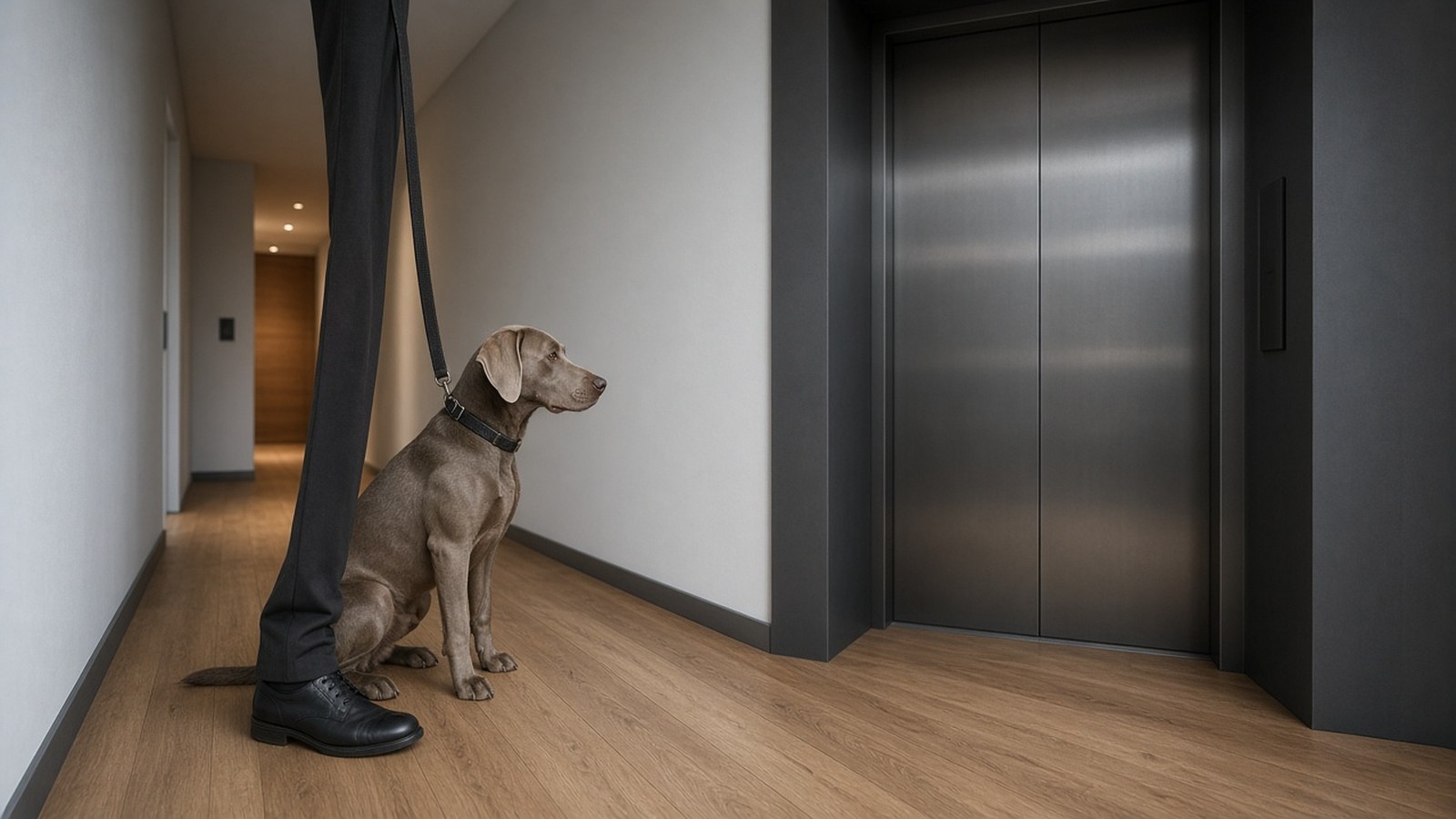
Elevator and hallway threshold means the shared corridor and the lift (UK) or apartment elevator (US). The working picture is a soft dog on a short lead who can take food while the landing stays workable. You do not treat a packed metal box as day-one exposure. You manage the exit, pay calm orientation, and leave before the spiral.
I board dogs for a month and longer as a trainer from Russia. I am not a veterinarian. No fake client reviews. AVSAB’s public training position supports reward-based behavior work. Flooding a lift is not the method here.
This page is a life protocol for flats and apartments. Wait at the door owns the sill inside your own flat. On-leash threshold owns outdoor distance to triggers. Cross-link those; do not clone them. The furniture here is neighbors, lift doors, narrow landings, and timed block exits.
What does a flat hallway spiral look like?
- Lunging or screaming when the flat door opens onto a shared corridor
- Spinning toward neighbor doors, pushchairs, or other dogs at the lift
- Freezing in the lift doorway, then exploding when the doors close
- Redirected mouthing of the lead when the landing is already too hot
A dog who already rehearses at windows may arrive at the landing pre-cooked. See window barking if the glass is part of the day. Equipment that lets you feed and turn still matters; see harness and lead.
If the dog cannot eat on the landing, you are already late.
How do you run a hallway and lift exit?
Management first. Training second. Crowded lifts never as a first lesson.
- Kit before the latch. Short lead on, food ready, harness fitted. The dog does not get a free sprint into the corridor when your flat door opens.
- Read the landing. Peephole, entry phone screen, or a quiet crack of the door. Empty or soft corridor: proceed. Packed landing, delivery stack, or another dog already spinning: wait or reset inside.
- Pay orientation, not the fight. Soft look at the corridor or lift, then back to you. Mark and feed at the mouth. If the dog cannot take food, close the door and try a quieter minute.
- Button only while winning. Call the lift when the body is still soft. Prefer off-peak cars. If the doors open onto a full car or a tight stare, step aside and wait for the next one.
- Exit early if needed. Stairs (if safe and allowed), a later trip, or a reset in your flat beat a forced ride that teaches panic. Quit while the dog is still under threshold.
Calm orientation is the same family as engage-disengage on the street: notice the landing picture, mark soft engagement or a turn back to you, feed, then move. Keep reps short. Do not demand a formal heel through a rush-hour lobby on day one.
How is this different from wait-at-the-door and on-leash-threshold?
Wait at the door teaches still feet at your own sill until you release. Useful, and not enough for a shared corridor full of strangers and closing metal doors.
On-leash threshold teaches outdoor distance across triggers. The flat landing is a different architecture: lateral space is scarce, the lift is a box, and neighbors cannot be asked to “cross the street.” Your tools are timing, waiting for empty cars, food for orientation, and the right to abort the exit.
If dog-to-dog on lead is the outdoor problem once you leave the block, see leash reactivity to dogs. This page stops at the corridor and the lift.
How do UK lifts and US apartment hallways differ?
Same criterion, different furniture. A UK block may have a narrow landing, an entry phone, and a lift that opens straight into a tight lobby. A US apartment hallway may be longer with more lateral space but the same elevator squeeze once the doors open. Shared bins rooms, parcel lockers, and ground-floor lobbies all count as corridor pictures.
Off-peak exits help in both countries. Early morning and mid-afternoon often beat school-run and evening peaks. If your building allows stairs and the dog can manage them safely, stairs are a management route while you stage quieter lift reps. Stairs are not a moral upgrade. They are distance and space you can buy when the car is full.
What food and orientation jobs work on a landing?
Carry food the dog will still take when the corridor is mildly interesting. Soft treats that do not bounce into the lift gap. Mark a glance at a neighbor door that stays soft, or a turn back to your leg before the feet plant toward the problem. Feed at the mouth so the dog is not diving for crumbs under swinging doors.
Do not throw a handful into a scramble and call it training. Do not cue a loud sit at zero distance when the dog cannot breathe. If you want a planted sit later as polish, build it where you can win; see sit for greeting only after the exit spiral is rare. The landing criterion here is soft orientation and a workable move, not a show sit in a packed car.
When is this not a DIY flat exit?
Bite contact or near-bites toward neighbors, a stiff hard stare that never yields on any practical landing, redirected biting of the handler in the corridor, or a dog who cannot take food even at quiet off-peak times. Use management (timed exits, stairs if safe, skip the lift when the lobby is hot) and see a qualified trainer or veterinary behavior professional in your country. See not veterinary advice.
A child holding the lead into a closing lift door is also a stop. Adult hands on the lead. Building rules about lifts and dogs still apply; this page does not override them.
What does a clean lift rep look like in real life?
You check the landing. Soft. You step out on a short lead. Dog glances at the lift doors, looks back, you mark and feed. You press the button. An emptier car arrives. You enter, stand where the dog can see the door without being crushed against strangers, and you keep feeding soft orientation if needed. You exit at your floor without a victory lap through a crowded lobby.
Two to five clean reps across a week beat one heroic rush-hour ride. If barking starts in the car, you already missed the abort. Next trip: quieter time, more distance from the trigger dog, or stairs until the picture is feedable again.
What are the usual failure modes?
- You flooded the peak-hour lift. Panic rehearsed in a metal box. Off-peak and empty cars are the criterion.
- You opened the flat door into a packed landing. Management failed before training started. Check first.
- You yelled sit at the closing doors. Obedience at the wrong arousal is not threshold work.
- You threw food into a scramble. Diving crumbs teach chaos at the gap. Feed at the mouth for soft orientation.
- You cloned the home door wait and stopped there. Shared corridors need timing and abort rights the sill drill does not cover.
- You stacked hard exits until the dog was cooked. Quit while winning. Rest between building trips.
Sources
AVSAB position statements on humane training and behavior modification. ASPCA public overviews of common dog behavior issues. Paraphrased as public standards, not quoted as a substitute for reading the originals. avsab.org/resources/position-statements/ · aspca.org - common dog behavior issues
Questions on this page
What is an elevator and hallway threshold for flats?
The working line at a shared corridor, lift (UK), or apartment elevator (US). The dog waits for an empty enough landing, orients soft, and exits without a spiral. It is not the home front-door wait and not a general street-reactivity page.
How is this different from wait-at-the-door and on-leash-threshold?
Wait-at-the-door owns the sill inside your flat. On-leash-threshold owns distance to outdoor triggers. This page owns the shared landing: neighbors, lift doors, narrow corridors, and timed exits from a block of flats.
What is the working rule before you press the lift button?
Dog on a short lead, soft mouth, able to take food. You check the corridor first when you can. If the landing is packed or the dog cannot eat, you wait or reset inside. Food pays calm orientation, not a lunge at the doors.
Should you force the dog into a full lift as exposure?
No. Crowding a tight lift “so they get used to it” rehearses panic. Stage quieter floors, off-peak times, and empty cars first. Flooding a metal box is not a protocol.
When is flat-exit work not DIY?
Bite risk toward neighbors, hard freeze that never takes food on the landing, or a dog who redirects onto the handler in the corridor. Manage exits (stairs if safe, off-peak only) and see a qualified professional. This page is not a clinic.
Work with me
A $150 consultation or $500 monthly curatorship. Opens WhatsApp to Andrew.