Lakeland Terrier: independent fell-country work ethic and leash manners without a yard war
The Lakeland Terrier comes from the fells of the English Lake District, where small, narrow-chested terriers ran with foot packs and went into rock earths after foxes that took lambs. That job needed a dog that made its own decisions underground, far from any person. At home the same independence shows up as selective hearing, garden patrols and a stubborn streak on the lead. The honest plan is not a power struggle in the yard: it is a clear structure, proper work for the nose and body, and leash manners built on cooperation rather than force.
Job: Lake District fell terrier that worked with foot packs and went into rock earths.
Energy: High for its size; tireless, curious and quick.
Home: Fits an owner who enjoys training, accepts independence and can secure the garden.
A Lakeland is a small dog that was bred to decide for itself
Public histories place the breed in Cumberland and the Lake District, where farmers and hunt servants kept small working terriers with the fell packs. Hounds and huntsmen went on foot over rough ground; the terrier followed the fox into rock crevices, often out of sight and earshot. Local types were known by names such as Patterdale or Elterwater terriers before breed enthusiasts in Keswick settled on “Lakeland Terrier” in the early 1920s. The Kennel Club recognised the breed in 1928.
What I meet in homes is a bright, confident, often comical small dog that is very good at doing what it thinks is sensible. That might be investigating a scent instead of coming back, patrolling the fence line, digging under a shed or ignoring a cue it finds boring. Owners often describe it as a “yard war”: they shout, the dog tunes them out, and both sides dig in.
My approach is to end that war before it starts. Secure the garden so patrols and escapes do not practise. Give the dog real work — scent games, digging, short agility — so the independence has an outlet. Build leash manners and recall as a partnership with high-value rewards and short sessions. A Lakeland that sees you as the source of good things cooperates far more than one that sees you as the person who spoils its fun.
Dense, harsh, weather-resistant double coat; wheaten, red, liver, blue, black or with saddle; hand-stripping; low shedding
Job
Lake District fell terrier for fox control in rock earths with foot packs (FCI Group 3; AKC/RKC Terrier)
Breed history
How a Lake District fell terrier became the Lakeland
History will not walk your dog, but it explains why Lakelands are independent, tireless and quick to make their own choices — and why they need a secure garden and a reason to cooperate.
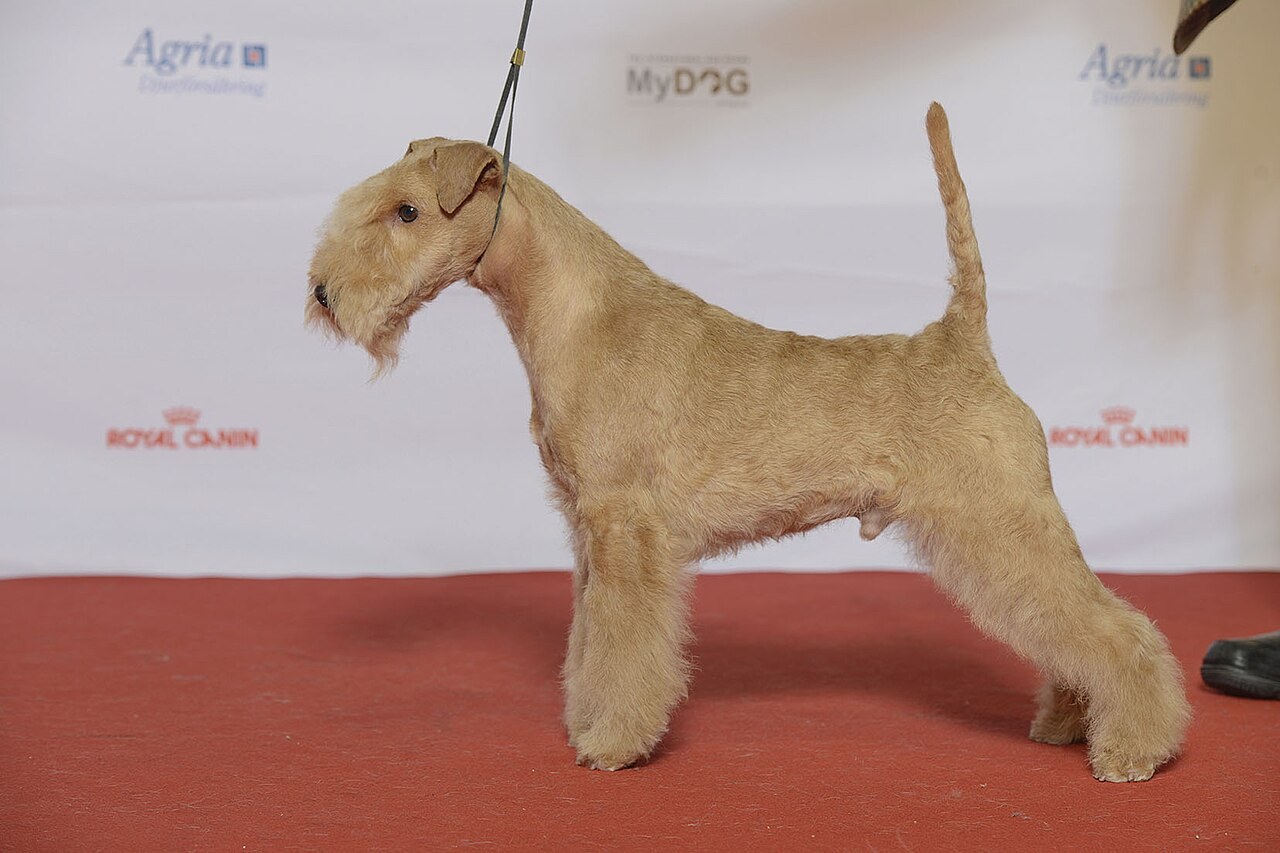
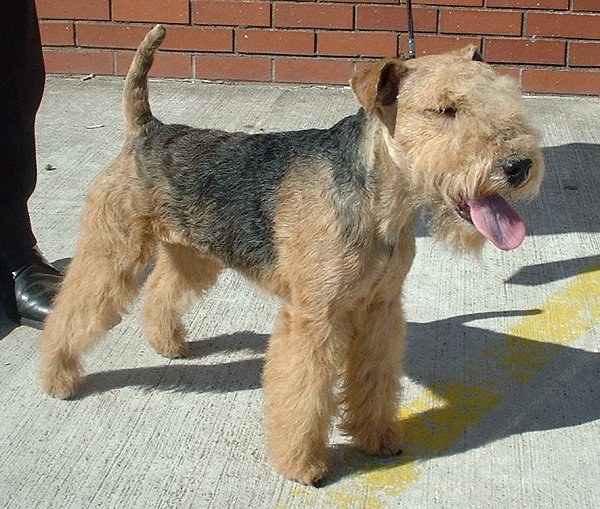
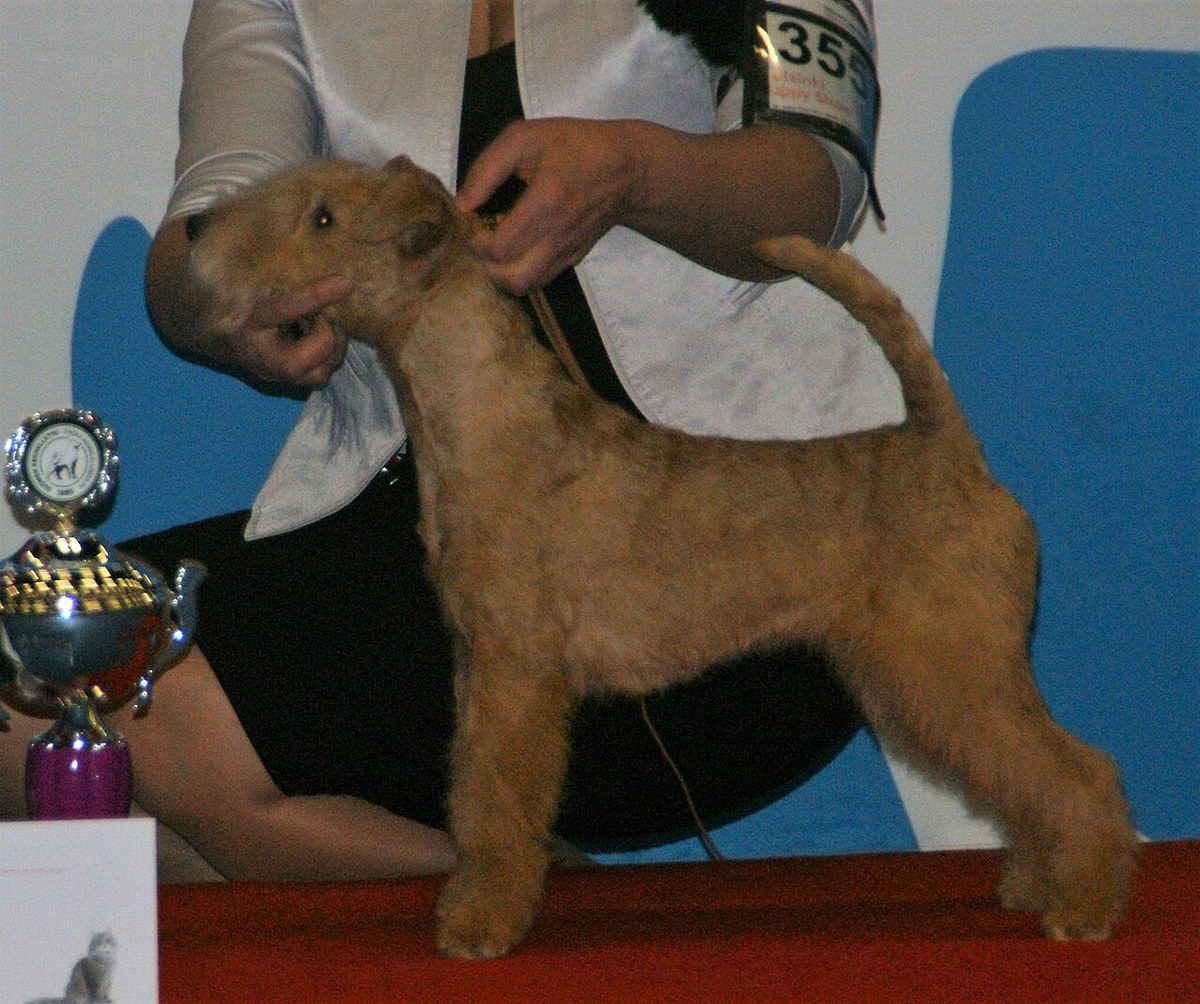
A Lakeland at full stretch (CC BY-SA 2.0). Small, light and athletic: built for rough fell ground.
Fells and foot packs
A narrow, hardy terrier for rock earths
Public accounts describe fell packs hunting on foot over the Lake District hills to control foxes that preyed on lambs. When a fox went into a rock earth or a pile of boulders, the terrier followed. A narrow chest, a hard coat and great stamina mattered more than looks.
Because the terrier often worked alone underground, it had to keep going and decide for itself. That independence is still the defining trait of the breed.
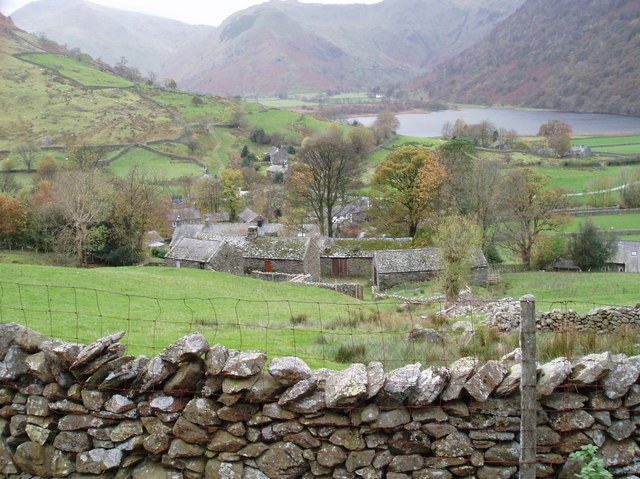
Hartsop in the Lake District (geograph.org.uk, CC BY-SA 2.0). Fells, stone walls and sheep farms shaped the working terrier.
From fell terriers to Best in Show
A local working type gets a name and a standard
Enthusiasts in Keswick adopted the name Lakeland Terrier in the early 1920s, and the Kennel Club recognised the breed in 1928. American recognition followed in the 1930s.
In the late 1960s a Lakeland named Stingray won Best in Show at both Crufts and Westminster, and the breed became better known as a show and companion dog. Working fell terriers continued alongside the show type.
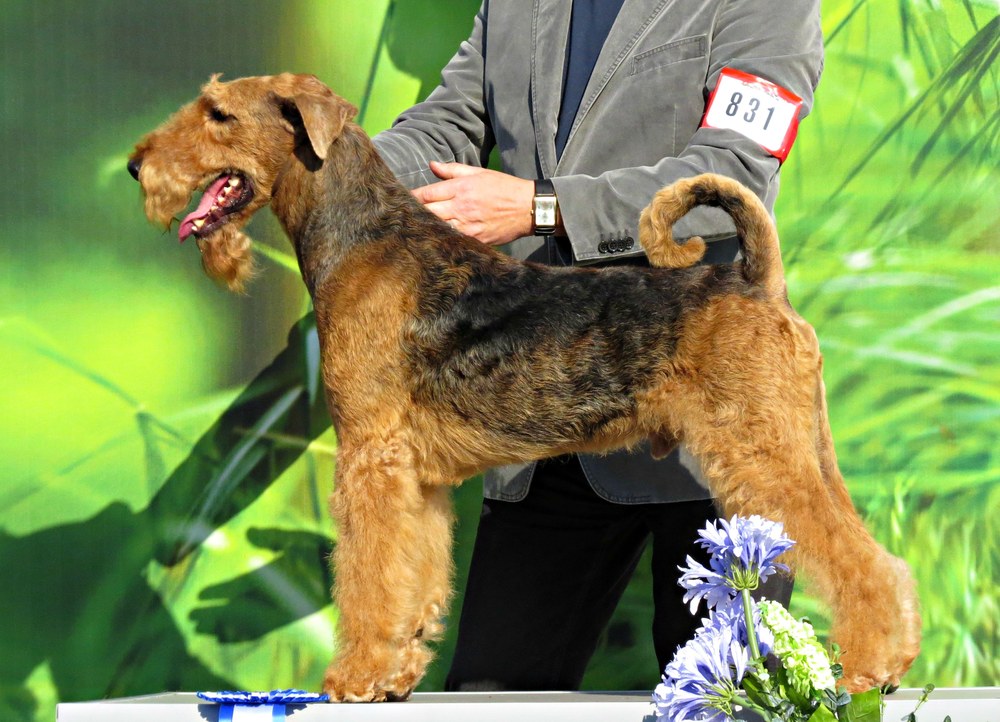
A black-and-tan Lakeland Terrier at a 2013 dog show in Tallinn. The breed was kept by fell farmers to deal with foxes that took lambs.
What the breed was bred for
Independence, stamina and confidence
In trainer terms, the breed was selected for a dog that works alone, never quits and stays confident in tight spaces. At home that becomes selective hearing, digging, escape attempts and a dog that can take on a bigger dog without hesitation.
Lakelands usually learn quickly and love food and play, but they get bored with repetition. Short, varied sessions and real rewards keep them working with you.
A good day has a real walk, a nose job, a short lesson and no fence patrol
Daily life with a Lakeland is busy and entertaining. Expect curiosity about every corner, attempts to explore beyond the fence and a dog that wants to be involved. A secure garden, daily work and cooperative training keep the independence on your side.
Morning · walk
A proper walk on a cooperative lead
Most adults need 45–75 minutes of walking or hiking with time to sniff. Use a harness and long line. Reward generously for checking in with you so the lead becomes a partnership, not a tug of war.
Hide treats or a toy in the garden, set up a dig box, or try beginner scent work. A Lakeland that has used its nose and paws for a proper job is far less likely to tunnel under the shed.
Secure fences, check for gaps and supervise garden time. Do not leave the dog alone outside to patrol and bark. If the dog races the fence at neighbours or dogs, bring it in and give it a calmer job.
The harsh coat should be hand-stripped a few times a year. Teach calm handling of the head, feet and tail early with short sessions and food. It saves time and stress at the groomer.
General awareness only. I am not a veterinarian. Lakelands are usually robust small dogs, and owners often notice trouble first as eye redness or cloudiness, a limp that does not go away, itching under the harsh coat or weight gain. For red flags, leave this page and open
when to call the vet.
Eyes
Eye conditions such as lens luxation are discussed in several terrier breeds including the Lakeland. A painful, red or cloudy eye needs a vet quickly.
Hips and legs
Hip issues such as Legg-Calvé-Perthes are discussed in small terriers. A persistent limp in a young dog needs a vet.
Coat and skin
Hand-stripping keeps the harsh coat healthy. Check for skin irritation and parasites after outdoor work.
Injuries
Confident dogs can get into scrapes with bigger dogs or wildlife. Know your emergency clinic.
Show Lakelands and working fell types share the same independence
No bloodline selling. Differences show in coat, size and intensity, but every Lakeland needs secure boundaries, real work and cooperative training.
Show and companion lines
Often a tidy, sculpted coat that needs regular stripping.
Usually bright, playful house dogs.
Independence and digging remain.
Ask about eyes and hips in the parents.
Fits an owner who enjoys grooming, training games and a lively small dog.
Working fell-type homes
Often more intense on quarry and wildlife.
Coat may be rougher and less groomed.
Need very secure fencing.
Recall needs long-line work for months.
Fits an experienced owner who can give a high-drive terrier real work.
Socialization windows
What to introduce — and what not to overload — by age
AVSAB-aligned in spirit: short, clean exposures at a distance the puppy can still eat,
with hygiene while vaccines finish. See the
puppy socialization schedule.
2–4 months
Home, handling and name
Introduce: name game, hand target, brushing and table sessions, dig box play, calm crate time.
Do not overload: unsupervised garden time, rough play with bigger dogs, repetitive drills.
~6 months
The outside world
Introduce: dogs at a distance where the puppy can still eat, long-line walks, scent games, first grooming visits.
Do not overload: off-lead fields, fence patrols, dog parks with large dogs.
~12 months
Adolescent independence
Introduce: recall ladder, check-ins on walks, leave-it, structured dig and scent work.
Do not overload: trusting recall near wildlife, letting fence running practise, harsh corrections.
~18 months
Adult routines
Introduce: regular stripping, sports such as agility or earthdog, varied walks.
Do not overload: assuming the dog has outgrown escape attempts, skipping garden checks.
~24 months+
Keep it going
Introduce: refresh recall and check-ins, keep work daily, yearly health checks.
Do not overload: ignoring eye or limb changes, letting the coat overgrow.
Before you buy
Who a Lakeland Terrier usually fits
Fit comes down to independence, secure boundaries, daily work and grooming.
Good match
More likely a good fit if you…
You want a small, tough, energetic dog for walks and hikes
You enjoy training games and do not mind a clever, independent dog
You can secure the garden and supervise outdoor time
You will groom or pay for hand-stripping
You like a confident dog with humour
Mismatch risk
A Lakeland Terrier may be a poor choice if…
You want reliable off-lead freedom everywhere
You plan to leave the dog alone in the garden all day
You keep small pets that could trigger chase
You prefer a dog that follows every cue instantly
You dislike digging and escape attempts
If you are torn between breeds
Lakeland Terrier vs Border Terrier and Wire Fox Terrier
The Border Terrier is another hill-country working terrier but often more tolerant and easier on the lead. The Wire Fox Terrier is a similar size with a white jacket and often more explosive. The Lakeland sits between them: independent, compact and very persistent.
Size
Lakeland Terrier
Compact; about 14.5 in, roughly 17 lb.
Border Terrier
Similar size; a little lighter in build.
Overtired puppies get bossy and nippy. Use enforced naps.
If the dog is already yours
Training a Lakeland means cooperation, not a tug of war
Keep rules simple and rewarding: check in on walks, come when called, leave it, place after play. Reward generously with food and games so cooperation is the best option.
Lakelands are clever and quick but easily bored. Short, varied sessions keep them engaged. Harsh corrections tend to create a stubborn standoff.
Management is essential: secure fences, a long line in open spaces and no unsupervised garden time while habits form. You stop the habit while new habits grow.
Load balance
Real work first, then ask for focus
Age, joint health, weight and weather all affect the right exercise. A persistent limp or eye changes need a vet check before more training.
Long sniff walkScent or dig gameRecall practiceShort trick sessionSettle on a bed
Hiking, scent work, earthdog-style games and agility all count. A bored dog alone in the garden does not meet the need and invites escape.
A Lakeland that has hiked, sniffed and solved a puzzle today can walk with you on a loose lead and settle without patrolling.
Check-ins over pulling
How to teach a Lakeland to check in on walks and come back from a scent
Reward voluntary check-ins, build recall on a long line and use the scent itself as a reward when the dog comes back.
01
Reward voluntary check-ins
On a long line, mark and reward every time the dog looks back at you without being asked.
02
Call once in easy places
Use your recall cue in quiet areas and reward with a high-value treat.
03
Use the scent as a reward
When the dog comes back from a sniff, release it back to the scent as a bonus.
04
Add distractions slowly
Practise near mild scents and then near more interesting places, still on the long line.
05
Keep the line until proven
Only drop the long line when recall holds in real situations, and keep practising.
One scene close-up
Why a Lakeland ignores recall when it finds a scent
The breed was selected to follow quarry alone. A scent is a powerful reward, and calling repeatedly while the dog keeps sniffing teaches it that your voice can be ignored.
Use a long line, call once, and reward with a high-value treat or by releasing the dog back to the scent. Practise in easy places before you test it near wildlife.
If recall failures put the dog in danger near roads, get help from a qualified professional.
“With a Lakeland, I stop the yard war first: secure the garden, give the nose a job and make cooperation reward. Once the dog sees you as a partner rather than a spoilsport, the independent fell terrier becomes a brilliant companion.”
Sessions cover real scenes: recall, fence patrols, digging, lead manners and dog greetings. I am a trainer, not a veterinarian. No invented reviews.
Andrew DarovProfessional dog trainer and instructor
Possible for an active owner who enjoys training and can secure the garden. Not a passive beginner dog.
Are Lakeland Terriers stubborn?+
They are independent rather than stubborn: they were bred to make decisions alone. Make cooperation rewarding and sessions short.
Do Lakelands shed?+
Shedding is low. The harsh coat needs hand-stripping a few times a year.
Can a Lakeland be off lead?+
Only after long-line training and in safe areas. Scent and wildlife can override recall.
How much exercise does a Lakeland need?+
Most adults need 45–75 minutes of walking or hiking plus nose or training games.
Are Lakelands good with children?+
Often playful with respectful children. Supervise and teach kids not to chase or grab the dog.
Are Lakelands good with other dogs?+
Many are sociable with good introductions; some are bossy with bigger dogs. Manage greetings.
Lakeland vs Border Terrier: which fits better?+
The Border is often more tolerant and easier on the lead. The Lakeland is usually more independent and needs more structure.
Lakeland vs Wire Fox Terrier: what is the difference?+
Both are compact wire-coated terriers. The Wire Fox is mostly white and often more reactive; the Lakeland comes in several colours and is very independent.
Do Lakelands dig?+
Many do. A dig box and supervised garden time help protect fences and lawns.
What health themes should I ask about?+
Ask about eyes and hips in the parents. This is general awareness for a vet conversation, not a diagnosis.
How long do Lakelands live?+
Public breed references often mention about 12–16 years. Individual dogs vary.
If a Lakeland seems too independent for your home
It is a clever, tough little terrier, but independence and escape talent do not fit every household.
A compact black-and-tan Welsh earthdog. Needs bark routines, dig outlets, grooming and show-ring style handling skills.
Need a read on your exact situation?
Tell me your Lakeland’s age and the scene that keeps repeating: recall, garden patrols, digging, lead or other dogs. We check safety and health first, then pick the first skill.
Written by Andrew Darov, professional dog trainer. Not veterinary advice and not a diagnosis.
Not a kennel club. No invented reviews. No vaccine schedules or toxin doses. Photo credits in
/images/breeds/lakeland-terrier-guide/credits.md.