Norfolk Terrier: temperament, digging, barking and small-dog manners for an English earthdog
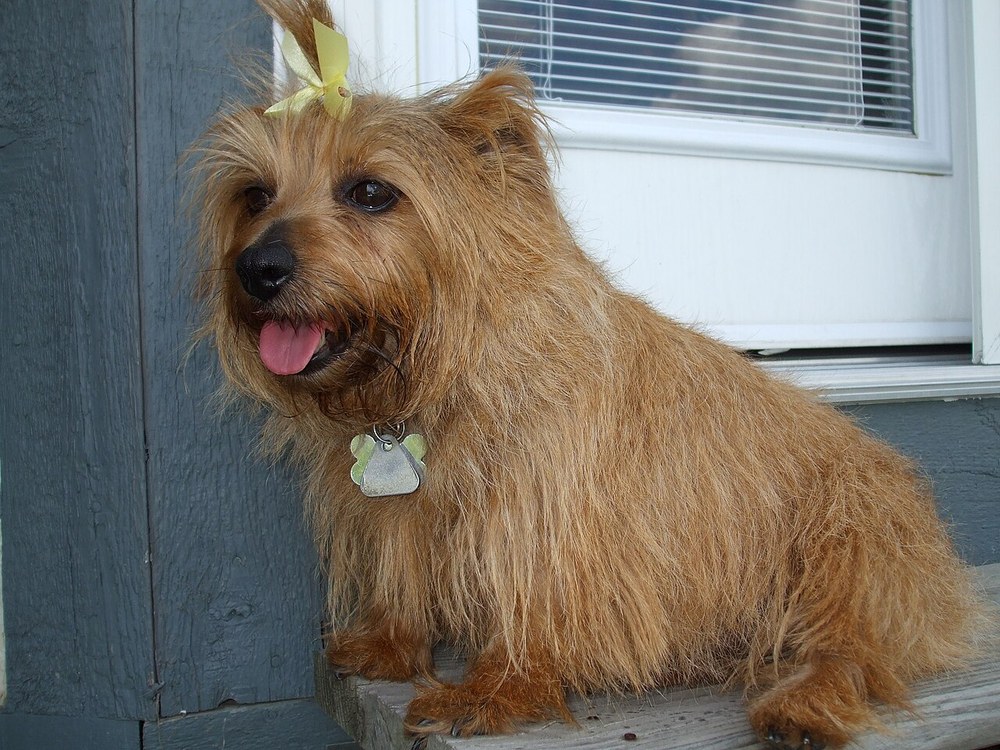
The Norfolk Terrier is one of the smallest working terriers, a sturdy, drop-eared dog from East Anglia that was used on rats and to bolt foxes. It is friendly, fearless and usually easier with people and dogs than many terriers. It also digs, chases, barks at things that move and goes deaf when it smells a rodent. A good home gives that drive somewhere to go: a dig spot, chase games with rules, a short alert routine and recall built on a long line.
Job: Small English earthdog for rats and fox bolting; sociable and plucky.
Energy: Moderate to high; daily walks, digging and search games.
Home: Good in many homes with secure fencing, a dig outlet and barking rules.
A Norfolk is a real terrier in a small, friendly package
Public histories trace the Norfolk to small working terriers kept in East Anglia, including dogs used by Cambridge students for ratting in the late nineteenth century. For decades the Norfolk and the Norwich were one breed, with both drop and prick ears. In 1964 the UK Kennel Club separated them, and the drop-eared dogs became the Norfolk Terrier.
That working background is easy to see. Most Norfolks I meet are cheerful, brave, social with people, generally fine with other dogs, and very keen on anything that runs, squeaks or lives underground. They dig, they bark at the garden fence, and their recall vanishes near rabbits. They are also affectionate and enjoy learning when it feels like a game.
I start with three outlets. A place where digging is allowed and rewarded. Chase and search games that end on cue. And a short alert routine for the door and garden. On top of that I build a long-line recall and small-dog manners at home, and the Norfolk becomes an easy companion.
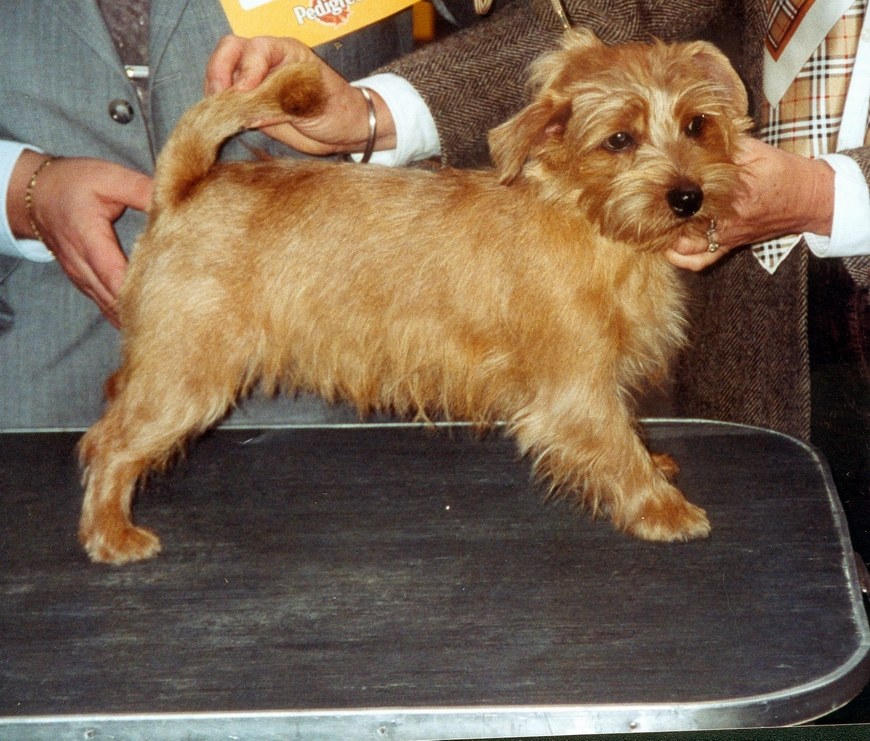
Hard, wiry, straight coat with undercoat; hand-stripping or trimming; low to moderate shedding
Job
English working terrier for rats and fox bolting (FCI Group 3; AKC and RKC Terrier)
Breed history
How a small East Anglian ratter became the Norfolk Terrier
Breed history does not decide your dog’s day, but it explains why Norfolks dig, chase small animals, bark at movement and still tend to be friendlier than many other terriers.
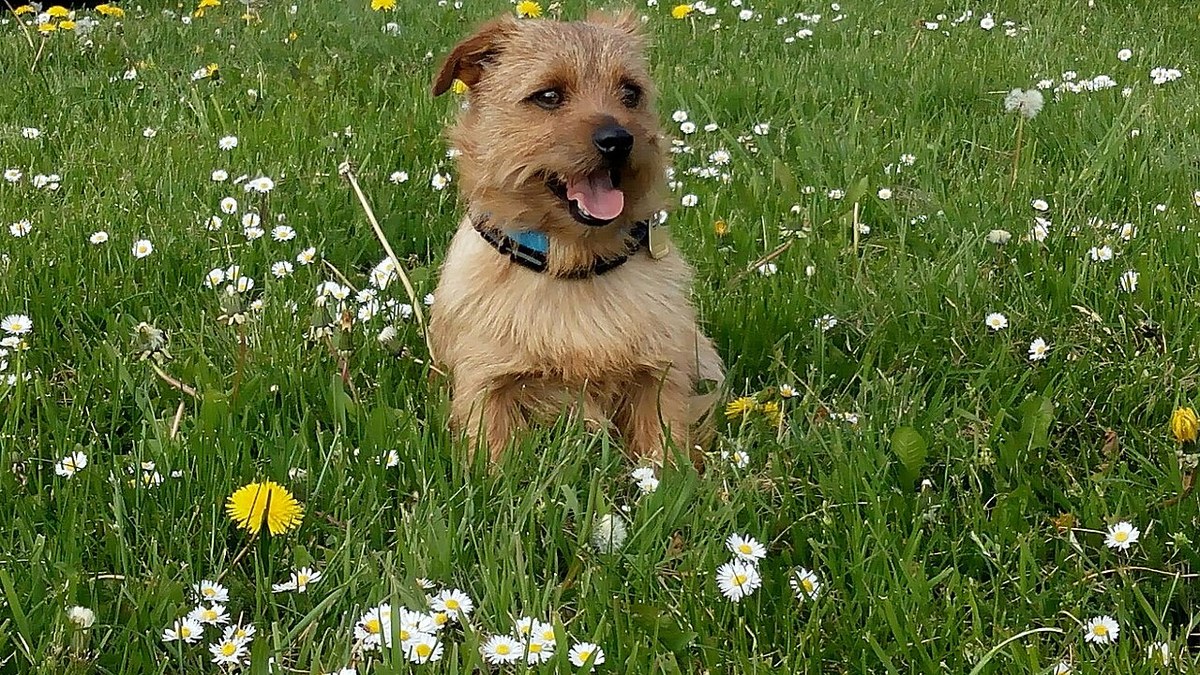
A Norfolk in a meadow (CC BY-SA 4.0). Rabbits and rodents in long grass are what this dog was built to find.
East Anglia → farms, stables and colleges
A small terrier that worked in a pack
Small red and grizzle terriers were common around Norwich and the surrounding countryside. Public accounts mention dogs kept by hunt servants and horse dealers, and ratting terriers popular with Cambridge students. Many of the early dogs had mixed ancestry, and the type was fixed later.
Working terriers that ran with hounds or other terriers had to get on with other dogs, which may be one reason Norfolks are usually social. They still had to be brave, persistent and quick to go to ground, and that drive is what owners live with.
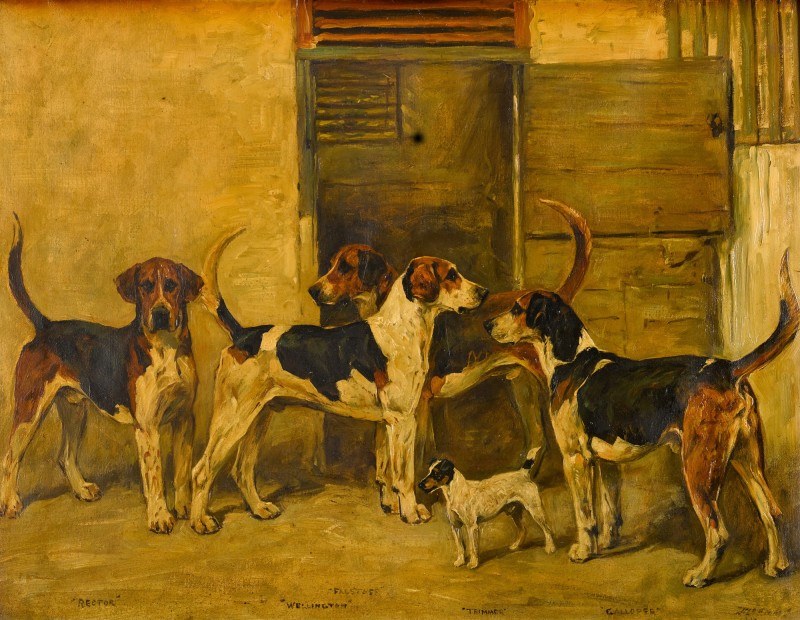
Foxhounds and a terrier, period painting (public domain). Small terriers often travelled with hunts to bolt foxes from earths.
One breed with two ear types → two breeds
From Norwich Terrier, drop ear, to Norfolk
The UK Kennel Club recognised the Norwich Terrier in the 1930s with both prick and drop ears. Breeders found that crossing the two ear types caused problems, and in 1964 the drop-eared dogs were given their own name. The American Kennel Club followed in 1979.
Today Norfolks live in towns and villages, and some still do earthdog tests and barn hunt. The terrier drive comes with every dog, whether or not it ever sees a fox earth.
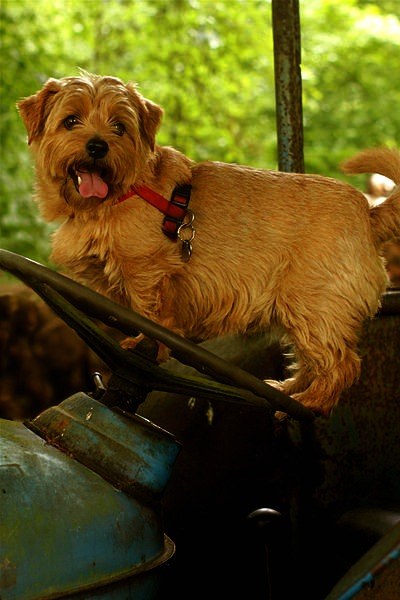
A Norfolk on an old farm tractor (CC BY 2.0). Farm and stable life is part of the breed’s story.
What the breed was bred for
Persistence, courage and a social nature
In trainer terms, breeders favoured a dog that keeps going underground, is not easily put off, and can work around other dogs. At home that becomes digging, chasing, barking at movement and a persistence that can look like stubbornness.
Norfolks usually enjoy food and games and learn quickly. Short, varied sessions work best. Harsh corrections tend to make them dig in their heels.
A good day has a walk, a dig, a chase game and a short report
At home the terrier job shows up as holes in the lawn, barking at the fence, rodent hunting and a selective recall. Most Norfolks are also friendly and easy with visitors. A secure garden, a long line and a sandpit make life simple while you teach better habits.
Morning · walk
A long-line walk with time to sniff
Forty minutes to an hour of walking, with sniffing and some exploring on a long line, suits most adults. Keep the line on in areas with rabbits or squirrels. Recall can look perfect at home and fail completely near a burrow.
Hide treats or a toy in the garden or around the house and let the dog search. Scatter feeding, cardboard box hunts and simple scent games satisfy the nose and keep the terrier busy in a legal way.
Most Norfolks get on with other dogs, and many live happily in pairs. Some get rough in play or grumpy with strange dogs. Keep greetings short, watch the play and step in before it tips over.
A sandpit or a corner of soil with toys and treats buried in it gives the dog a legal place to dig. Reward digging there, interrupt digging elsewhere calmly, and supervise garden time until the habit is set.
After a good day most Norfolks settle well. Teach a bed or mat routine, give a chew, and keep evening play calm. A terrier that can switch off barks less at night noises.
General awareness only. I am not a veterinarian. With Norfolks, owners often notice trouble first as tiring on walks, coughing, skipping on a back leg, scratching or a dull coat, weight gain or bad breath. For red flags, leave this page and open
when to call the vet.
Heart
Heart valve disease is discussed in the breed. Coughing, tiring quickly or breathing faster at rest need a vet. Ask breeders about heart testing of parents.
Hips and knees
Hip and kneecap problems are both mentioned in breed health discussions. Limping or skipping needs a vet visit. See limping stop list.
Skin and coat
A wiry coat that is never stripped can become soft and itchy. Hand-stripping keeps the coat and skin healthy. Scratching deserves a vet check.
Weight
Norfolks love food and gain weight easily. Measure the ration and use part of it for training. See body condition and rations.
Diggers and hunters find things. Check fencing, sheds and compost, and know your clinic’s number if the dog eats something.
Lines and types
Working-minded and companion Norfolks share the same terrier drive
No bloodline selling. Differences show in drive to dig and chase, coat quality and how easily the dog settles. Every Norfolk needs a dig outlet, recall work and barking rules.
Working and sport-minded lines
Often stronger drive to dig, chase and go to ground.
Parents may do earthdog tests or barn hunt; ask how they settle at home.
Need daily search games and secure fencing.
Recall around wildlife takes longer to build.
Fits an owner who would enjoy earthdog or barn hunt and has a secure garden.
Show and companion lines
Often a slightly softer house tempo.
Still digs, chases and barks at the fence.
Ask about heart testing, hips and knees.
Coat still needs stripping or regular trimming.
Fits a family ready for daily walks, a dig spot, barking training and coat care.
Socialization windows
What to introduce — and what not to overload — by age
AVSAB-aligned in spirit: short, clean exposures at a distance the puppy can still eat,
with hygiene while vaccines finish. See the
puppy socialization schedule.
2–4 months
Home, garden and handling
Introduce: a sandpit with buried toys, handling of paws and ears, harness wearing, doorbell sounds at low volume, name game, short garden visits on a lead.
Do not overload: unsupervised garden time, attention for every bark at the fence, rough play with older dogs.
~6 months
The outdoor world at a distance
Introduce: rabbits, squirrels, cats and bikes at a distance where the puppy can still eat, long-line walks, first search games.
Do not overload: off-lead walks in open country, chasing cats, long barking sessions at the fence.
~12 months
Adolescent independence
Introduce: long-line recall near wildlife, café settles, guests by script, meeting calm adult dogs.
Do not overload: trusting recall around rabbits, letting digging spread around the garden, harsh corrections.
~18 months
Adult routines
Introduce: new walking routes, car travel, earthdog or scent classes, regular coat stripping.
Do not overload: letting the coat go soft, letting weight creep up, dropping the alert routine.
~24 months
Keep it going
Introduce: refresh recall and alert routines, keep the dig spot and search games, yearly heart and health checks.
Do not overload: assuming the terrier drive has faded, ignoring a cough or skipping leg.
Before you buy
Who a Norfolk Terrier usually fits
Fit comes down to daily habits: walks with sniffing, a safe outlet for digging, recall on a line, barking rules and coat care.
Good match
More likely a good fit if you…
You want a small, sturdy, cheerful dog that is still a real terrier
You have a securely fenced garden or will supervise outside
You are happy to give the dog a sandpit or dig corner
You enjoy daily walks and simple search games
You will strip or trim the coat regularly
Mismatch risk
A Norfolk Terrier may be a poor choice if…
You want a perfect lawn and a dog that never digs
You want off-lead freedom in open countryside
You keep pet rodents or rabbits
You need a quiet dog for thin walls
You do not want to deal with coat care
If you are torn between breeds
Norfolk Terrier vs Cairn Terrier and Border Terrier
Cairns are a little larger, rugged Scottish earthdogs; Borders are leggier working terriers built to keep up with horses and hounds. The Norfolk is the smallest of the three and usually the most social.
Origin
Norfolk Terrier
East Anglian ratter and fox bolter.
Cairn Terrier
Scottish Highland earthdog.
Size
Norfolk Terrier
About 9–10 in, 11–12 lb.
Border Terrier
Taller and leggier, often 11–16 lb.
Digging
Norfolk Terrier
Strong dig drive; needs a legal spot.
Cairn Terrier
Also a keen digger.
With other dogs
Norfolk Terrier
Usually social, often lives in pairs.
Border Terrier
Usually social, can be rough in play.
Recall
Norfolk Terrier
Weak near wildlife without long-line work.
Both compares
All three need careful recall training.
Ownership without surprises
Where a Norfolk Terrier owner’s budget goes
Costs depend on country, city and your choices. These are themes to plan for, not quotes.
Fencing
A secure garden with fencing that goes down into the ground, because Norfolks dig under. This is often the biggest early spend.
Coat care
Hand-stripping a few times a year by a groomer or learning to do it yourself, plus brushes and a comb.
Time and outlets
Daily walks, a sandpit, search games and training time. A bored terrier costs you in holes and barking.
Veterinary
Routine care, heart checks, hip and knee screening of parents, dental care. Know your emergency clinic.
Food
Small portions, but Norfolks love food. Measure everything.
Classes
Puppy class, earthdog or barn hunt classes, private help for recall or barking. Prices vary by city.
A small, friendly dog does not mean a small bill. Fencing, coat care and training time are the main cost drivers.
Before day one at home
What to prepare for a Norfolk Terrier puppy
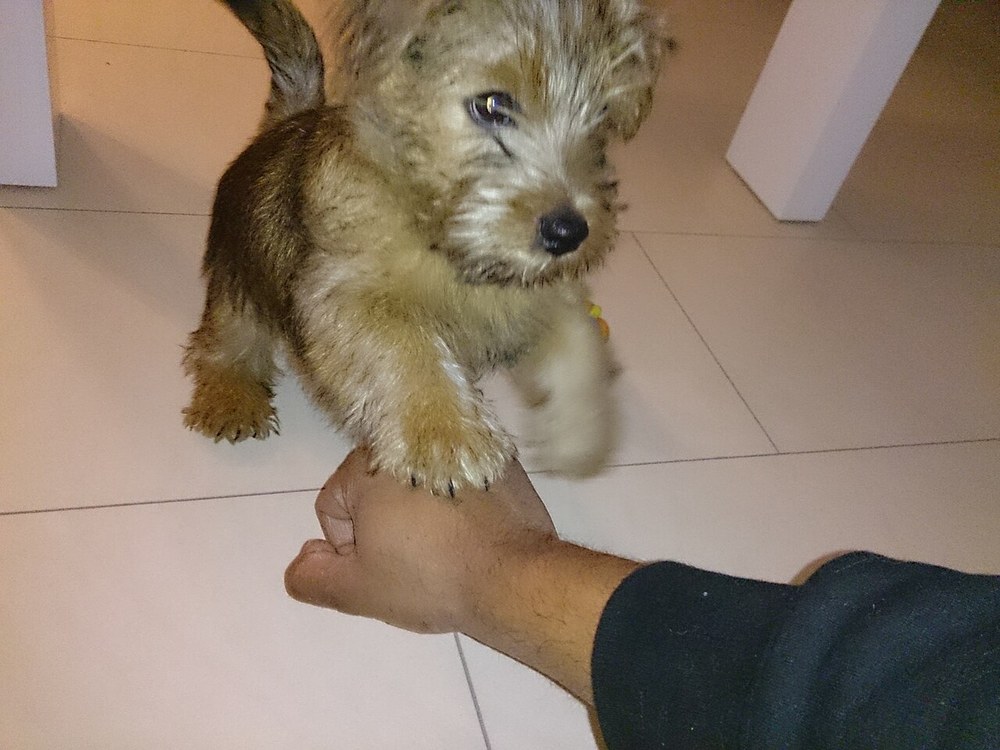
A Norfolk puppy is bold, playful and already curious about every hole and squeak. Plans made before day one save your garden and your patience.
01
Check the fence before arrival
Look for gaps under gates and fences. Norfolk puppies find them fast. See management before manners.
02
Build a dig spot
A sandpit or soil corner with buried toys gives the puppy a legal place to dig from the first week.
03
Buy a long line
Recall grows on a long line in safe places. See recall ladder.
Short brushing and handling sessions with food make stripping and vet visits easier. See puppy handling.
06
Protect sleep
Overtired puppies nip and bark. Use a crate or pen and enforced naps.
If the dog is already yours
Training a Norfolk gives the dig, chase and bark a safe outlet
Keep rules easy to see: dig in the sandpit and nowhere else, one or two barks at the fence then a turn to you, a recall that ends with a hand touch, four paws on the floor for guests. Reward each one.
Norfolks are food-keen and quick learners. Short, varied sessions with games work well. Long drills bore them, and corrections make them stubborn.
Management makes training work: supervised garden time, a long line, blocked fence lines, a dig spot and measured food. You stop the habit while the new habits grow.
Load balance
Walks, digging and searching first, then ask for calm
Age, heart and joint health, weight and weather all affect the right amount of exercise. Coughing, tiring fast, limping or a dog that cannot calm down need a vet or behaviour check.
Long-line walkDig spotSearch gameAlert routineSettle on a bed
Walks with sniffing, search games, earthdog or barn hunt classes and short trick sessions all count. Hours alone in the garden and barking at the fence do not meet the need.
A Norfolk that has walked, dug and searched today can hear a squirrel in the hedge and stay on its bed.
Dig here, not there
How to teach a Norfolk Terrier to dig in one place
Start with a fresh dig spot and great buried rewards. Supervise garden time at first so the habit forms fast.
01
Build an attractive dig spot
Fill a sandpit or mark a soil corner and bury toys and treats just under the surface.
02
Show the dog and reward
Lead the dog to the spot, let it find a buried treat, and reward any digging there.
03
Supervise garden time
Stay outside with the dog at first. If it starts to dig elsewhere, calmly call it away and guide it back to the dig spot.
04
Refresh the treasure
Bury new toys and treats regularly so the dig spot stays the best place in the garden.
05
Add walks and search games
A daily long-line walk and short search games lower the urge to dig everywhere.
One scene close-up
Why a Norfolk barks at the fence for half an hour
The neighbour’s dog runs along the fence, the Norfolk runs back, and both bark. To the terrier this is a great game, and every session makes it more fun. Shouting from the house only joins in.
Bring the dog out on a lead, stay far from the fence, and reward it for turning to you. Give it a search game or the dig spot instead. Block the view along the fence line if you can.
If fence barking turns into real aggression, or the dog injures itself on the fence, get help from a qualified professional.
“With a Norfolk, I give the terrier a job before I ask for good manners. A dig spot, search games, a long line and a short alert routine take care of most of the trouble. The friendliness then shines through.”
Sessions cover real scenes: digging, fence barking, recall, chasing, door barking and settling. I am a trainer, not a veterinarian. No invented reviews.
Andrew DarovProfessional dog trainer and instructor
The largest terrier, from Yorkshire — clever, playful and independent — that needs daily exercise, patient training and regular coat care.
Need a read on your exact situation?
Tell me your Norfolk’s age and the scene that keeps repeating: digging, fence barking, recall, chasing or settling. We check safety and health first, then pick the first skill.
Written by Andrew Darov, professional dog trainer. Not veterinary advice and not a diagnosis.
Not a kennel club. No invented reviews. No vaccine schedules or toxin doses. Photo credits in
/images/breeds/norfolk-terrier-guide/credits.md.