

Expert Advice · Health · 13 min read
How a trainer and a veterinarian share a case
The veterinarian owns the medical question. The trainer owns the learning question. Pain is not dominance. A seminar is not a veterinary licence.

The veterinarian owns the medical question. The trainer owns the learning question. A dog who snaps when the ear is touched may be in pain, may be rehearsed, or both. You do not settle that with a dominance story. You get the dog examined, you manage the room so nobody is bitten, and you train only what the body can do. I teach veterinarians at seminars. That sentence is about a hand-off in a room. It is not a licence, and these pages are not a diagnosis.
Read not veterinary advice. If the body is loud tonight, use when to call the vet and leave this essay.
How does a shared case actually run?
A useful case has three named pieces.
- What changed. Not “he’s always been difficult.” What is different this month: the sit, the collar, the night, the other dog, the walk.
- What the body is doing. Appetite, gait, toilet, sleep, mouth, belly, ears, skin. The veterinarian gets the first vote when any of that is new or ugly.
- What is being rehearsed. Jumping that still pays, a growl that still moves people, a lunge that still gets distance. That is the trainer’s floor, after the clinic says the floor is legal.
I have watched this fail in both directions. A trainer who starts a “respect” protocol on a sore hip. A clinician who says “just train him” on a dog whose only problem is that every guest pays barking. The fix is not a personality contest between professions. The fix is a sentence: I cannot tell if this is pain. Please look. I will manage until you have.
When I teach in a veterinary room I say the same thing I say here. Learning is Sd, R, Sr. Pain is a variable that wrecks the R. If you skip the variable, your beautiful plan is a guess. I do not then write their notes for them, and they should not write my criteria. The AVSAB position statements (including the public stance on dominance and on humane training) are the veterinary-behavior documents I point people at when the word “alpha” walks into the room. Read those. Do not treat this page as a reprint.
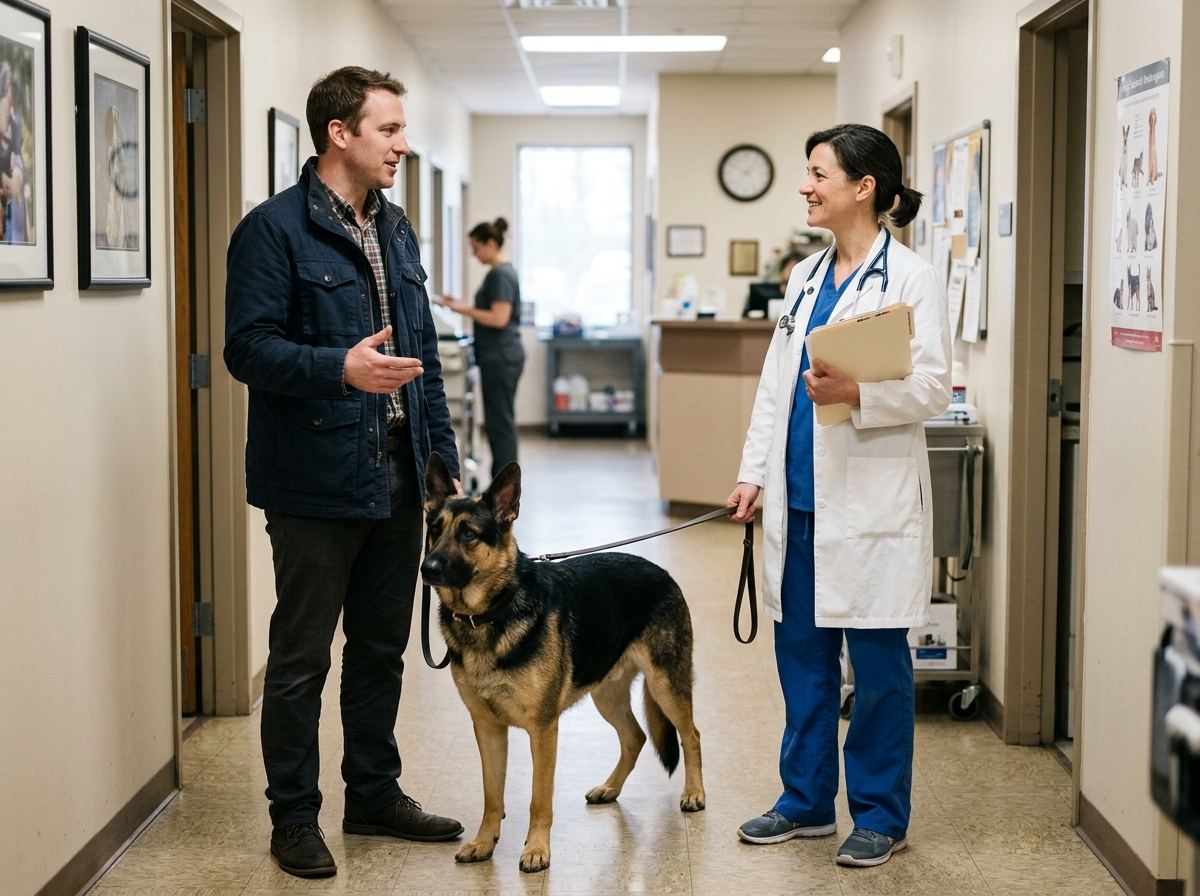
Why is “he’s dominant” usually a skipped exam?
Because that story does not require a thermometer. Pain still changes what a dog will offer.
Dominance, in the way internet owners use it, means the dog has decided to run the house. It fails the dogs I see most: the one who growls when the ear is reached because the ear is a furnace; the one who snaps on the lead because the neck has been popped for a year and now also has a bad tooth; the one who will not sit because the sit is a fold through a sore back.
True aggression still exists. A freeze, a hard stare, guarding that has a job, a bite that lands and holds. Those are not this essay’s “maybe he’s sore” shrug. They are manage-and-get-help, often both veterinary and a qualified behavior professional in your country. What I refuse is the shortcut that turns every growl into a status play so nobody has to book a table.
Pain versus rehearsal is not always obvious. That is why the exam exists. A trainer can say: this cue was easy in March and expensive in August; the dog eats in the kitchen and cannot eat at the gate; the growl appeared the week after the fall on the stairs. Those are useful sentences. “He knows better” is not.
What does the trainer do while the vet is working?
Management. Not a new advanced behavior. Gates, a lead in the house if you need it, no guests who insist on hugging, no children using the dog as furniture, a crate if the crate is already a rest place and not a cell. You prevent rehearsal of the bite or the scream. You do not run extinction on a dog who may be sore.
If the veterinarian clears the body, or sets a limit (“five-minute sessions, no jumping, this medication, recheck in ten days”), that limit is now a criterion. I train inside it. I do not “see if we can just…” past a medical instruction. That is the whole professional relationship.
If the veterinarian finds nothing and the behavior is still ugly, that is still information. Then you get a trainer or a veterinary behaviorist who can see the dog, not a comment thread. This site will not invent an intake form for a clinic that does not exist.
What does “I teach veterinarians” mean, and what does it not mean?
It means I stand in a room with clinicians and talk about learning, about how a marker works, about why flooding a scared dog in a consult is expensive, about how to send an owner away with one criterion instead of twelve. It means some of those clinicians later send me the learning half of a case.
It does not mean I am a DVM. It does not mean these URLs are peer-reviewed medical literature. It does not mean you should skip your own vet because you read Andrew Darov. It does not mean I will second-guess a clinician I have not spoken to about a dog I have not seen.
I am careful with that sentence because the internet turns it into a costume. I will not wear it. The byline stays professional dog trainer. The about page and the author page say the same thing.
How do you write a hand-off that a vet can use?
Keep it short and dated.
- Age, sex, neuter status if you know it. Not a novel.
- What you are seeing (the growl, the sit, the night) and since when.
- What you already changed (new food, new walk, a fall, a boarding stay).
- What the dog can still do (eats in the kitchen, walks on grass, lets you touch the hip).
- What you are asking: Is there pain? Is this dog legal to train this picture?
Do not send a dominance essay. Do not send a video of you repeating a cue twelve times. One short video of the thing itself, if they want it, plus the paragraph above.
Then listen. If they say rest, you rest. If they say train, you name a criterion the body can meet. If they say they do not know, you manage and you recheck. That is a shared case. Everything else is two professions talking past each other while the dog rehearses.
Sources
AVSAB public position statements on humane training and on dominance, as veterinary-behavior documents owners can read. ASPCA overview of common dog behavior issues, including when to get qualified help. This page is a trainer’s hand-off, not a substitute for those papers or for an examination. avsab.org/resources/position-statements/ · aspca.org — common dog behavior issues
Questions on this page
Who owns what in a shared case?
The veterinarian owns diagnosis, pain, medication, and whether the body can work. The trainer owns criteria, setup, and what the dog is rehearsing. Neither should invent the other’s job. A useful sentence is: I cannot tell if this is pain. Please look. I will manage until you have.
Why is pain not dominance?
Pain changes what a dog will offer. A growl over a collar, a new snap at the ear, a sit that disappeared, can be a sore body. Calling it dominance skips the exam and writes a story. The internet version of “alpha” is attractive because it does not require a thermometer.
Does Andrew Darov teach veterinarians?
Yes, at seminars, about learning and how cases get handed across a room. That is teaching. It is not a veterinary licence and it does not make these pages “vet reviewed.” The byline stays professional dog trainer. I will not second-guess a clinician I have not spoken to.
When should the trainer stop and the vet start?
When the change is sudden, when there is pain, when food suddenly dies, when a bite has a new job, or when you cannot tell. Manage the room and book the clinic. Training can wait. If the body is loud tonight, use the stop-training page and leave this essay.
Can I use this page as a diagnosis?
No. Read the not-veterinary-advice disclaimer. If you need a clinician, you need a clinician who can see the animal. Dogmindlab will not invent an intake form for a clinic that does not exist. These pages are not a diagnosis and not “vet reviewed.”
Work with me
A $150 consultation or $500 monthly curatorship. Opens WhatsApp to Andrew.