Irish Terrier: temperament, prey drive and structured manners for a wiry Irish farm dog
The Irish Terrier is a long-legged, red, wire-coated farm terrier from Ireland — the breed people nicknamed the “daredevil”. It killed rats, guarded the yard, went out with the guns and later carried messages in the First World War. At home it is usually devoted to its people, brave to a fault and quick to take on another dog or a cat that runs. The honest plan is not to train the terrier out of it, but to give the prey drive a safe outlet and build manners the dog understands as a structure, not a negotiation.
Job: Irish all-round farm terrier: vermin, yard guard, rabbiting and later war messenger work.
Energy: Moderate to high; needs real daily work for legs, nose and head.
Home: Fits an active family ready for prey-drive management and a dog that may not share the park.
An Irish Terrier is a brave farm dog that needs structure more than space
Public histories describe the Irish Terrier as one of the older terrier types of Ireland: a leggy, racy, single-colour red or wheaten dog kept on farms for rats, rabbits and otters and as a watchdog. Dublin shows in the 1870s gave the type a standard, and the Irish Terrier Club was among the first to ban ear cropping for its breed in 1889. The dog you buy today still carries that farm brief: courage, a quick decision and a loud opinion.
What I meet in family homes is usually a wonderful house dog with two sharp edges. The first is prey drive — cats, squirrels and anything that bolts. The second is same-sex tension with other dogs, which often appears between one and three years old, just when owners relax. Neither edge is a “bad dog”. Both are predictable, which means you can plan for them.
My structure is simple. A daily outlet that lets the terrier run, sniff and grab legally. Clear manners at doors, on the lead and around other animals, rewarded generously and kept consistent. And a long-line recall that never pretends the prey drive has disappeared. With that, the Irish Terrier becomes the loyal, funny, adventurous companion its fans describe.
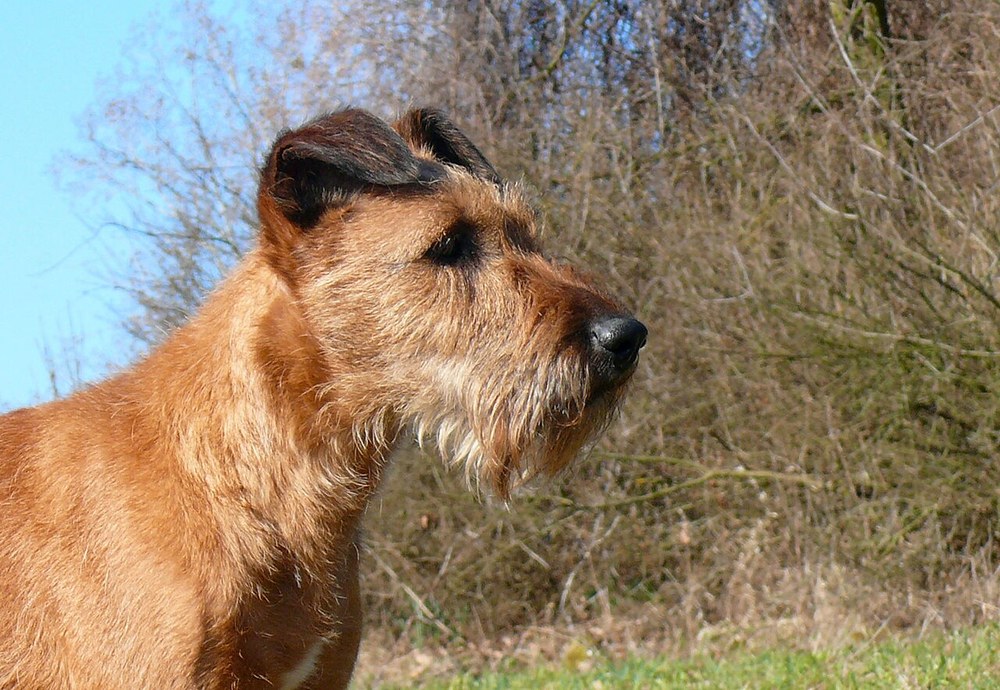
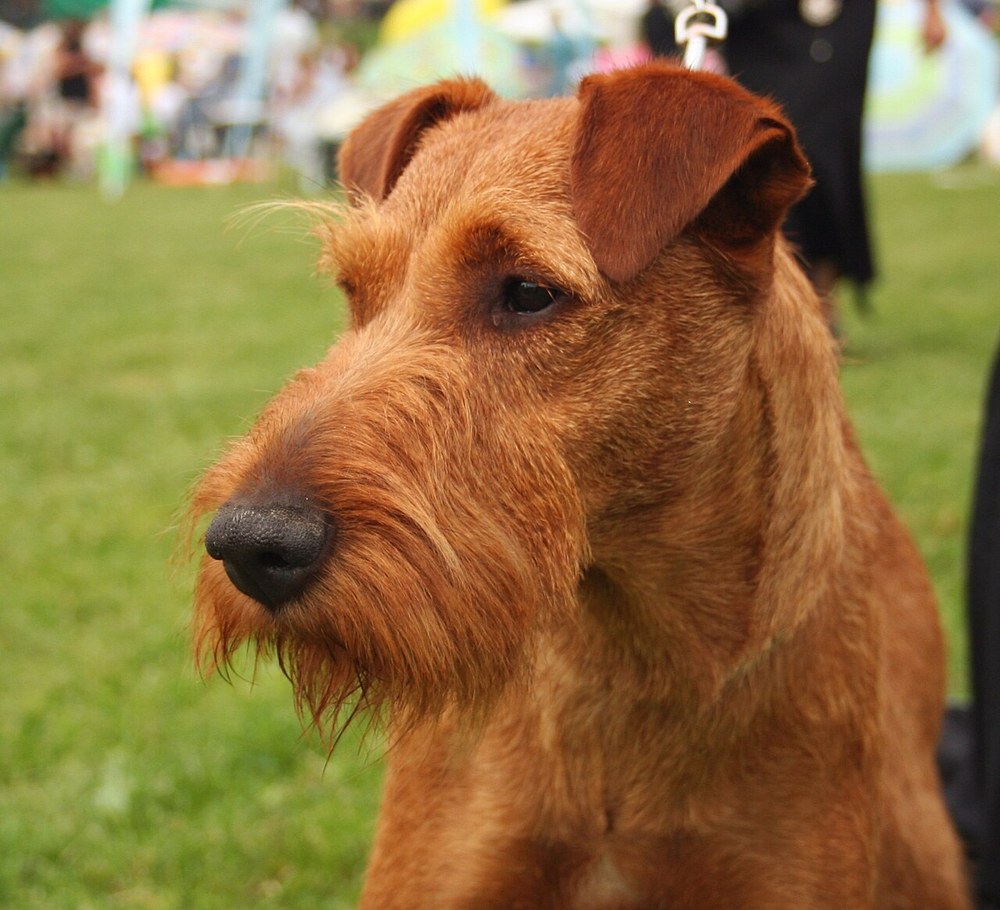
Dense, wiry red, red-wheaten or yellow-red jacket; hand-stripping or clipping; low shedding
Job
Irish farm terrier for vermin, yard guarding and rabbiting; WWI messenger history (FCI Group 3; AKC/RKC Terrier)
Breed history
How an Irish farm terrier became the “daredevil” breed
History will not walk your dog, but it explains why Irish Terriers are bold, quick to act and keen to take on anything that runs — and why they bond so hard to their own people.
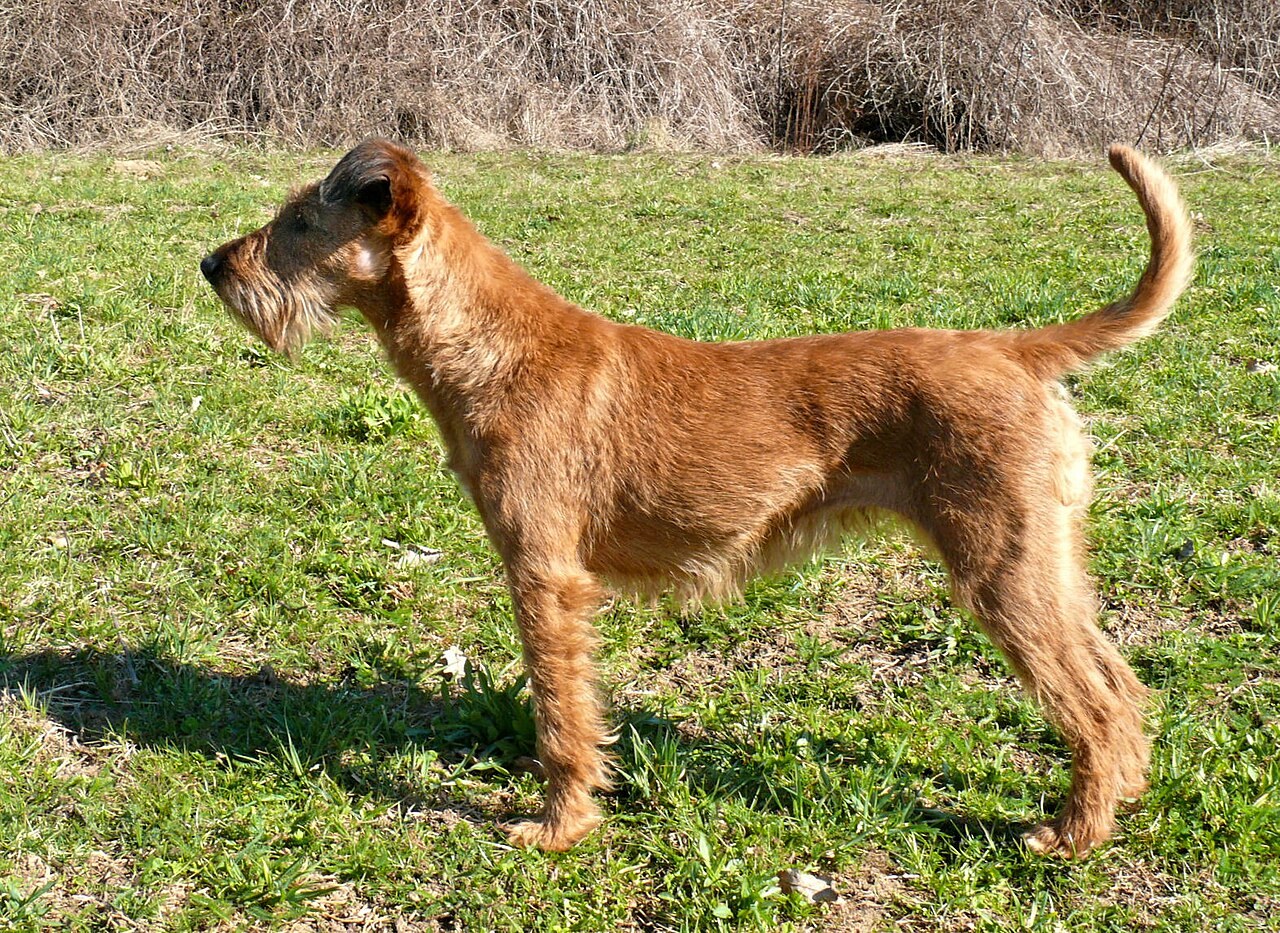
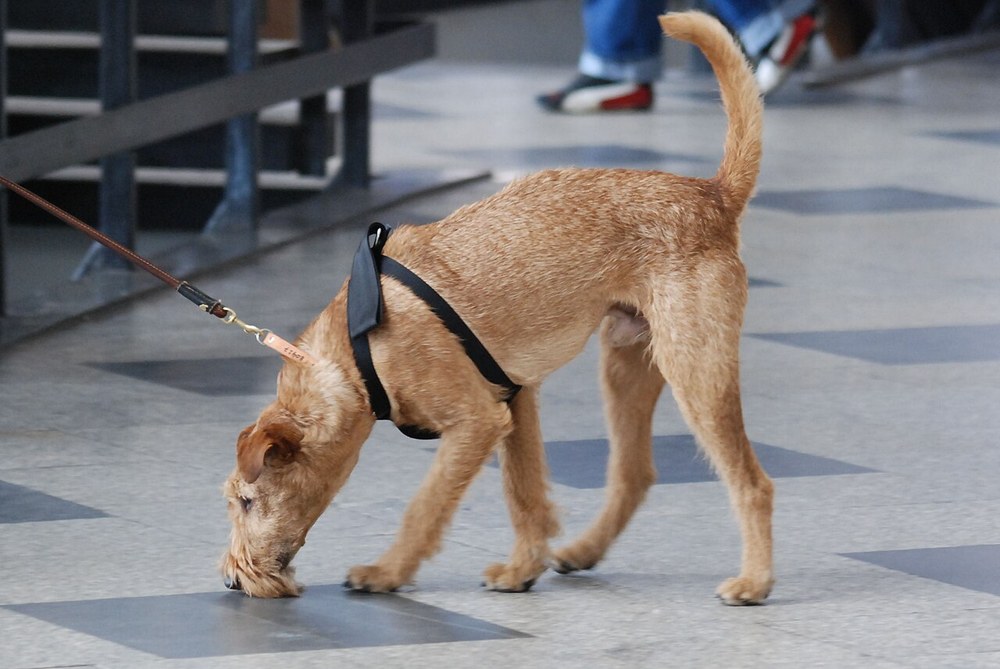
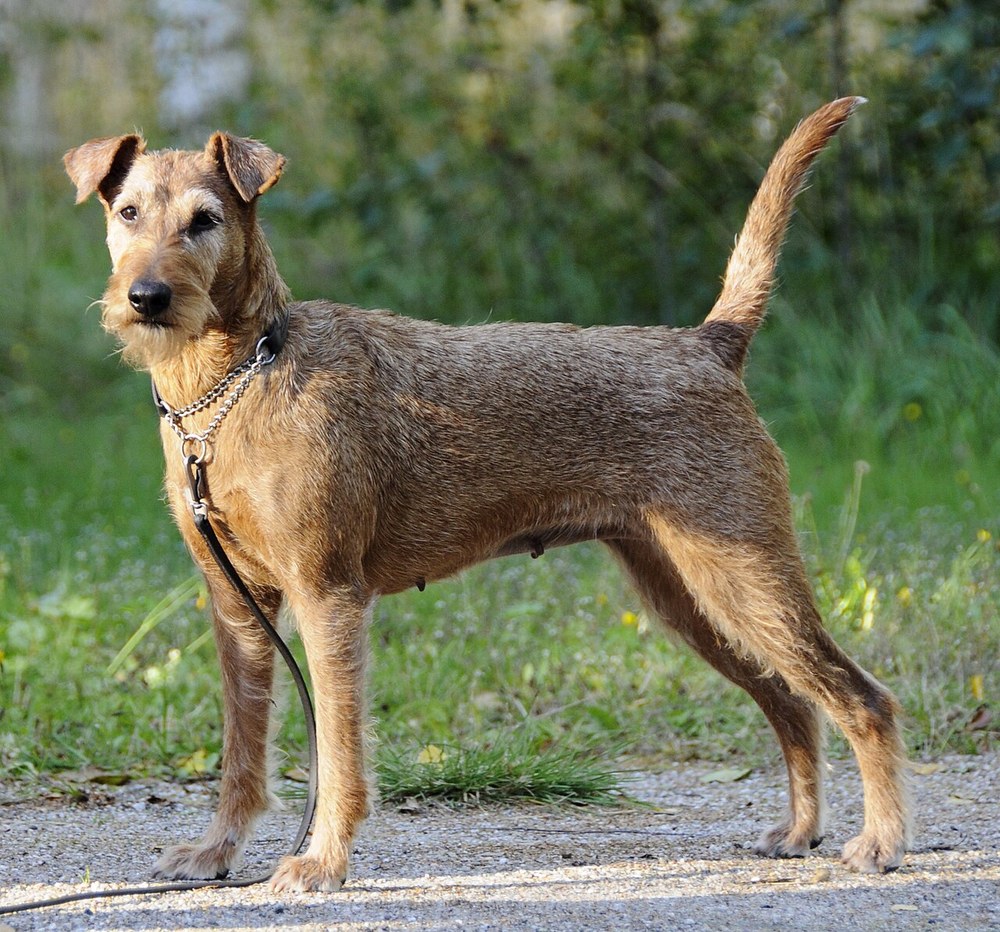
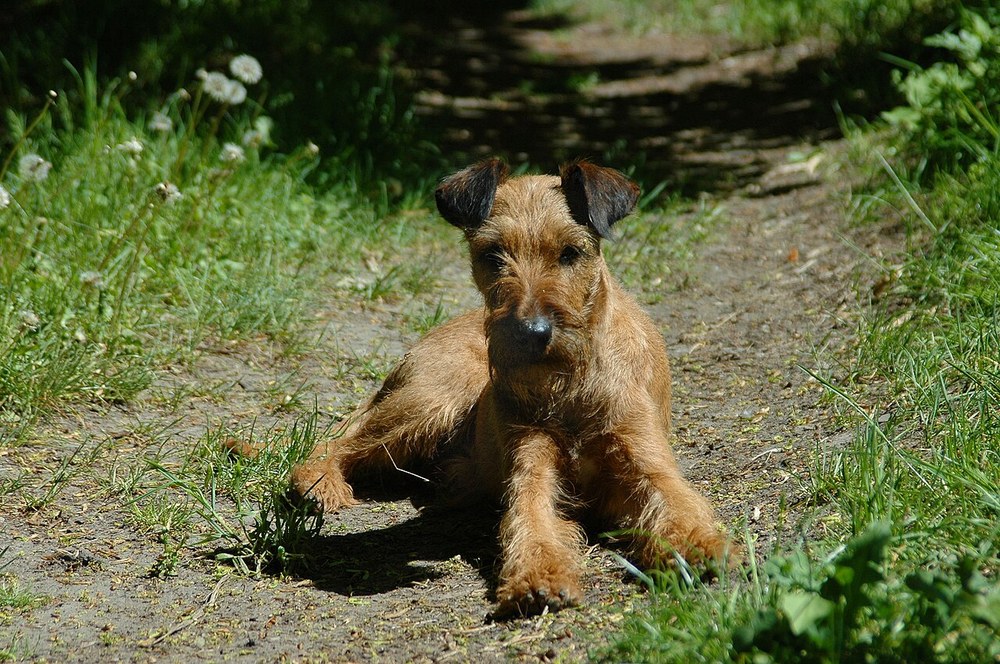
An Irish Terrier outdoors. The long legs and quick, forward way of going are what farm work selected.
Irish farms → Dublin show benches
A long-legged farm dog that did a bit of everything
Public accounts describe red terriers on Irish farms long before kennel clubs: dogs that killed rats in barns, went after rabbits and otters, and announced strangers at the gate. Unlike the short-legged earthdogs of Scotland, the Irish type stayed racy and leggy — a dog that could cover ground and keep up with a person.
The first breed classes appeared at Dublin shows in the 1870s, and the Irish Terrier Club wrote a standard soon after. Its 1889 decision to stop ear cropping is often cited as an early welfare milestone for terriers.
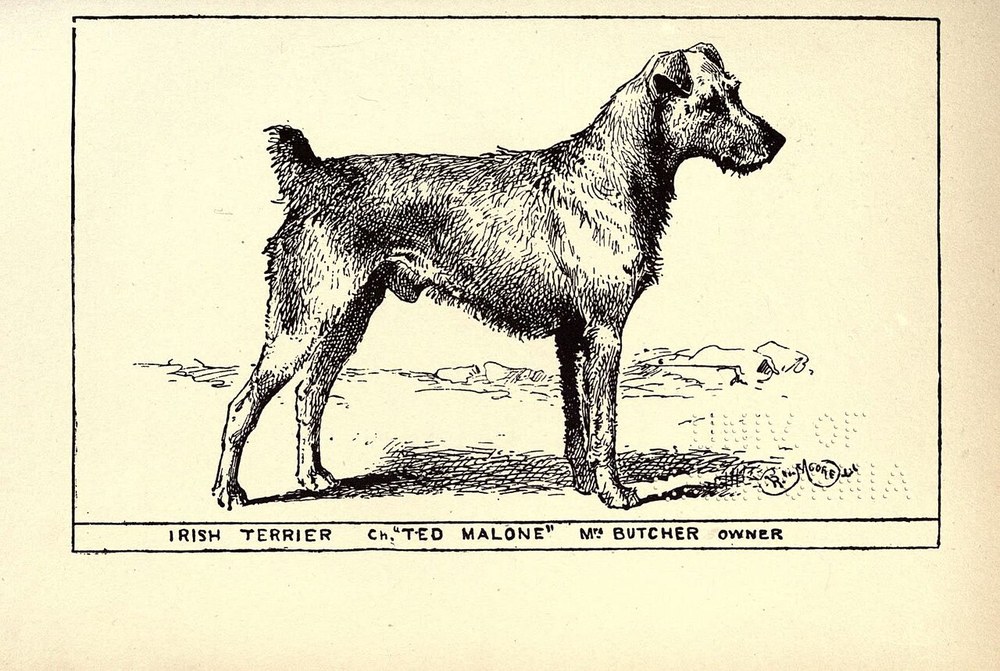
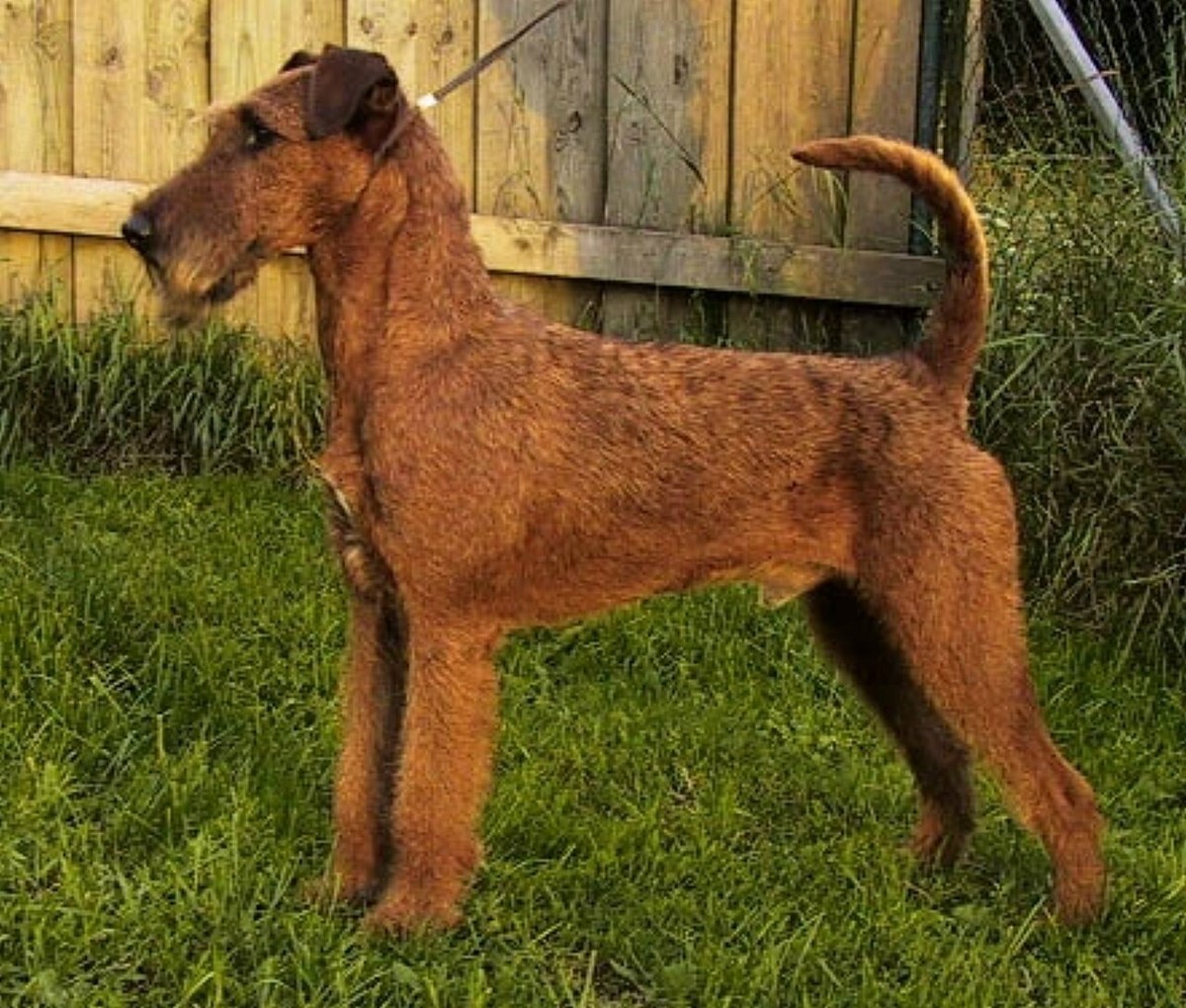
An early Irish Terrier image (public domain). The racy outline and single red colour were fixed early.
Messenger dogs and family dogs
From the trenches to the hearth
During the First World War, Irish Terriers were among the breeds used as messenger and sentry dogs. British accounts of the war-dog school praised their courage and loyalty under fire. That reputation did as much as any show win to make the breed famous.
In the twentieth century the breed moved into towns and family homes in Ireland, Britain and the United States. Most Irish Terriers now live as companions, but they still carry the farm dog’s readiness to act first and think second.
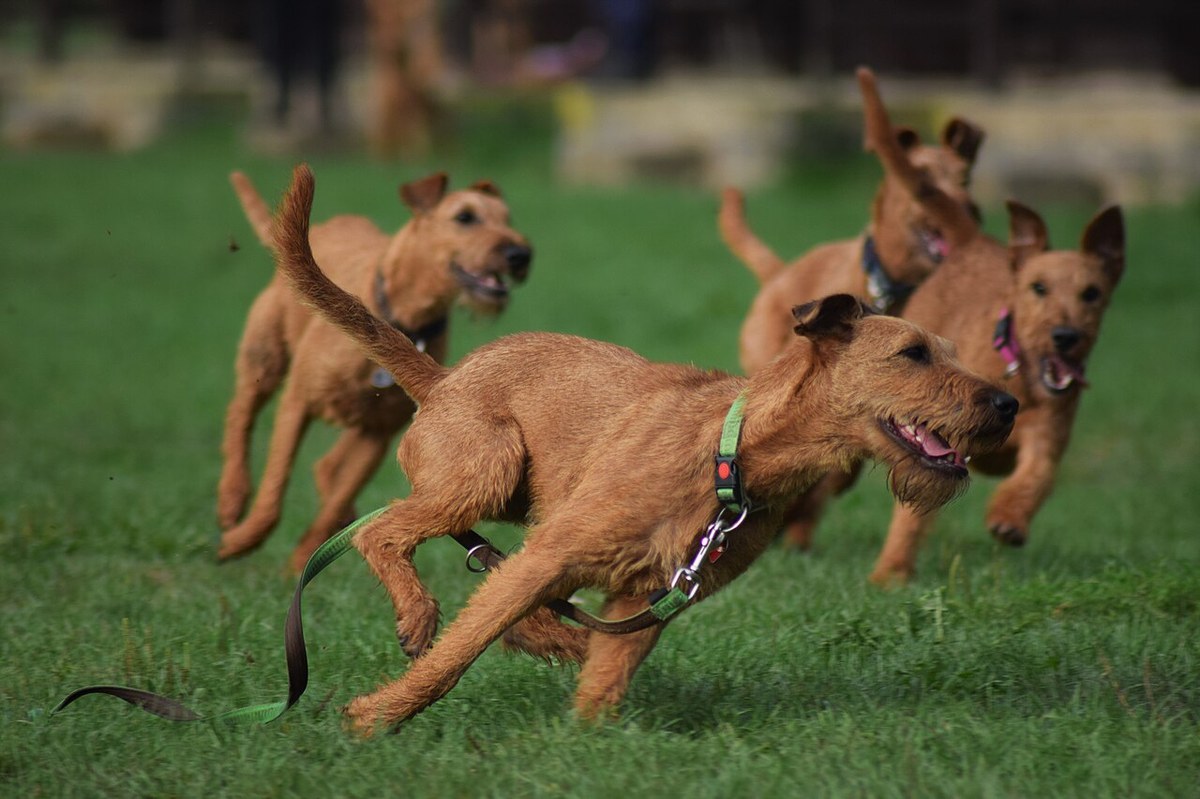
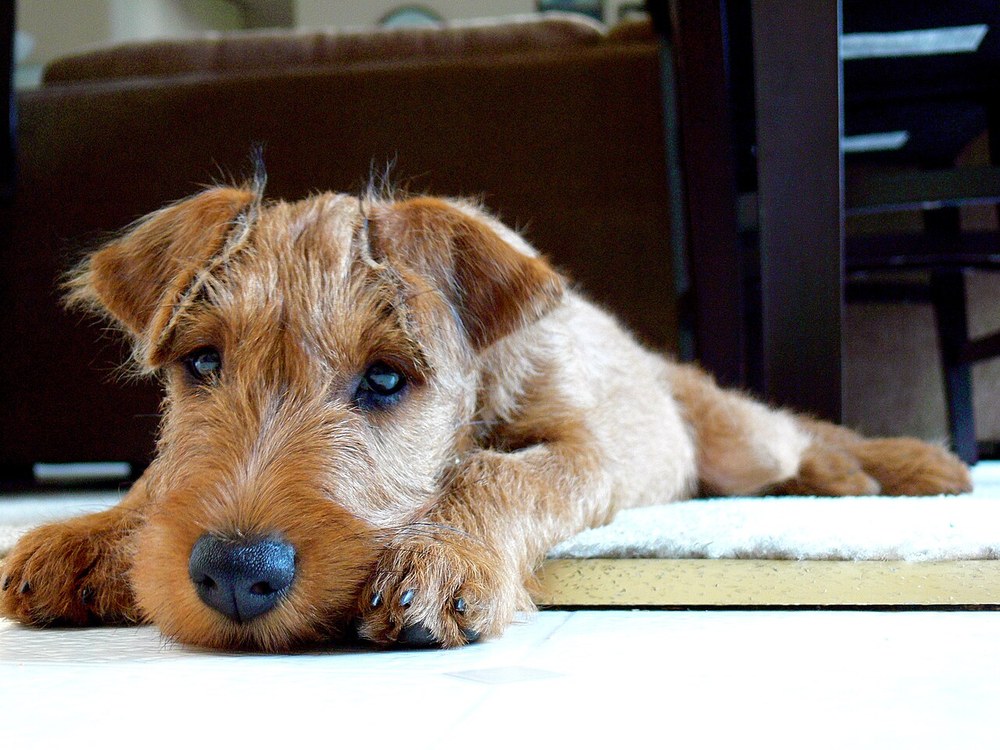
An Irish Terrier with its people. The same dog that challenges strangers is often soft and comic at home.
What the breed was bred for
Courage, loyalty and a quick trigger
In trainer terms, the breed was selected for a dog that commits instantly, keeps going when hurt or frightened and guards its own place. At home that becomes great loyalty and humour — and a dog that may chase cats, challenge other dogs and decide for itself when a game is over.
Irish Terriers usually learn fast with food and play. They switch off when sessions are long and repetitive, and they push back against harsh handling. Short, varied sessions and clear rules suit them best.
Prey drive: safe chase and tug outlets, plus strict management around cats
Same-sex tension: planned dog introductions, not hope
Loyalty: strong bond, can guard home and people
Fast learner: short, varied sessions beat long drills
A good day has a real outing, a safe chase, a short lesson and a calm evening
At home the Irish Terrier’s farm job appears as scanning windows for cats, pulling toward squirrels, guarding the garden gate and occasionally starting trouble with another dog. With its people it is usually affectionate, playful and comic. Structure — fixed routines, safe outlets and consistent rules — turns that energy into a good companion.
Morning · outing
A proper outing, not a lap of the block
Most adult Irish Terriers do well with an hour or more of walking, jogging or hiking, with time to sniff. Use a long line in open areas until recall holds near wildlife. A tired Irish Terrier is easier to live with; a bored one patrols the fence.
A flirt pole or tug game with a clear start, a drop on cue and a clear finish lets the prey drive run legally. Reward the drop with a second round of the game. This is far better than letting the dog invent its own chase with the neighbour’s cat.
Many Irish Terriers are fine with dogs as puppies and become choosier as adults, especially with dogs of the same sex. Keep greetings short, on lead and optional. Parallel walks and calm passing at a distance build better habits than dog parks.
Irish Terriers announce visitors and can be possessive about the gate or the sofa. Teach a quiet wait at the door, a place behind a gate for deliveries and calm handling of toys. Structure here prevents guarding habits from growing.
After a good outing and a short training session, most Irish Terriers settle well near their people. Teach place and reward calm. Evening wrestling and endless ball games keep the trigger warm instead.
General awareness only. I am not a veterinarian. Irish Terriers are usually considered a hardy breed, and owners often notice trouble first as limping after rough play, cracked or hardened paw pads, scratching under the wire coat, weight change or a dog that suddenly becomes snappy. For red flags, leave this page and open
when to call the vet.
Coat and skin
The wire coat is designed to be hand-stripped. Clipping is easier but softens the texture and colour. Either way, check the skin for irritation and hot spots.
Paw pads
Footpad problems such as hyperkeratosis are discussed in the breed. If pads look cracked, thickened or the dog limps, see a vet. Ask breeders what they know about their lines.
Injuries from scraps
A dog that will take on anything can get hurt. Manage dog greetings and know your emergency clinic.
Weight
Irish Terriers should look lean and athletic. Measure rations if exercise drops. See body condition and rations.
Show and working-type Irish Terriers share the same trigger
No bloodline selling. Differences show in coat, size and how intense the prey drive feels. Every Irish Terrier needs safe outlets, structure and planned dog introductions.
Show and companion lines
Often a fuller, tidier jacket that needs regular stripping.
Usually affectionate, playful family dogs.
Prey drive and same-sex tension are still common.
Ask how the parents live with other dogs and cats.
Fits a family that wants a smart, active terrier and will manage other animals.
Active and sport homes
Often enjoy canicross, hiking, agility and scent games.
Need a clear drop and finish to every game.
Can be more intense around wildlife.
Recall needs long-line work for months.
Fits an owner who will give the dog a real job and keep training consistent.
Socialization windows
What to introduce — and what not to overload — by age
AVSAB-aligned in spirit: short, clean exposures at a distance the puppy can still eat,
with hygiene while vaccines finish. See the
puppy socialization schedule.
2–4 months
Home, handling and rules
Introduce: name game, short handling and brushing, tug with drop on cue, calm sessions near a cat behind a gate, doorbell at low volume.
Do not overload: chase games with household cats, rough play with adult dogs, unlimited access to the garden fence.
~6 months
The world at a distance
Introduce: other dogs at a distance where the puppy can still eat, long-line walks, first flirt pole with rules, calm greetings with guests.
Do not overload: off-lead parks, free chasing of squirrels, long repetitive drills.
~12 months
Adolescent bravery
Introduce: recall ladder on a long line, parallel walks with known dogs, place during visitors, stripping or grooming routines.
Do not overload: trusting the dog with strange dogs off lead, letting fence fights practise, harsh corrections.
~18–24 months
Social maturity
Introduce: planned introductions, steady door manners, varied outings and sports if you enjoy them.
Do not overload: assuming puppy friendliness with all dogs will last, adding a second dog of the same sex without a plan.
~3 years+
Keep the structure
Introduce: refresh drop and recall, keep outlets daily, yearly health checks.
Do not overload: dropping management because the dog has been good for a while.
Before you buy
Who a Irish Terrier usually fits
Fit comes down to exercise, prey drive, dog-to-dog tension and your appetite for structured training.
Good match
More likely a good fit if you…
You want a medium, athletic terrier that joins hikes and runs
You enjoy short, lively training sessions
You can manage cats, small pets and dog greetings
You like a loyal dog with humour and opinions
You will commit to coat care, whether stripping or clipping
Mismatch risk
A Irish Terrier may be a poor choice if…
You need a dog that will live with small pets without effort
You plan daily off-lead dog parks
You want a second dog of the same sex without a plan
You prefer a quiet couch companion
You dislike any barking or guarding
If you are torn between breeds
Irish Terrier vs Airedale Terrier and Wire Fox Terrier
All three are long-legged, wire-coated terriers. The Airedale is bigger and more of an all-purpose working dog; the Wire Fox Terrier is smaller and more explosive. The Irish Terrier sits between them: medium, red and bold.
Size
Irish Terrier
Medium; about 18 in, roughly 25–27 lb.
Airedale Terrier
Largest terrier; noticeably taller and heavier.
Colour
Irish Terrier
Solid red, red-wheaten or yellow-red.
Wire Fox Terrier
Mostly white with tan or black markings.
Airedale Terrier
Otter and rat work, later police and war dog.
Dog tension
Irish Terrier
Same-sex tension common in adults.
Wire Fox Terrier
Also feisty; both need planned greetings.
Coat
Irish Terrier
Wire jacket; stripping or clipping.
Both compares
Both wire-coated; similar grooming logic.
Ownership without surprises
Where a Irish Terrier owner’s budget goes
Costs depend on country, city and your choices. These are themes to plan for, not quotes.
Coat care
Hand-stripping a few times a year or regular clipping, plus brushes and a stripping knife if you learn at home.
Fencing and management
Secure fencing, gates and sometimes window film to stop fence patrol and window barking.
Veterinary
Routine care, paw and skin checks, and the occasional injury from rough play. Know your emergency clinic.
Food
Medium rations; adjust for activity level.
Training
Puppy class, sport classes and private help with dog manners if tension appears.
Gear
Long line, harness, flirt pole and sturdy tug toys.
The biggest hidden cost is time: daily outlets and consistent rules are what keep an Irish Terrier easy.
Before day one at home
What to prepare for a Irish Terrier puppy
An Irish Terrier puppy is bold, curious and quick to test rules. Prepare management and routines before day one so the bravery grows into confidence rather than bossiness.
01
Set house rules
Decide where the puppy sleeps, which rooms are open and how greetings work. Consistency is structure.
Overtired puppies bite and argue more. Use enforced naps.
If the dog is already yours
Training an Irish Terrier means structure, not a battle of wills
Irish Terriers do best with clear, consistent rules: wait at doors, four paws on the floor for guests, drop on cue, calm passing of other dogs, place after play. Every family member uses the same cues and rewards the same behaviours.
They are quick, food-keen and playful. Use those strengths with short sessions, games and variety. Harsh corrections tend to produce an argument or a dog that shuts down.
Management is part of training: secure fences, gates around cats, a long line in open areas and no practice of fence fights. You stop the old habit while the new one grows.
Load balance
Real work first, then ask for calm
Age, joint health, paw condition and weather all matter. Limping, sore pads or sudden irritability need a vet check before more training.
Long sniff walkFlirt poleDrop and recallShort skill gameSettle on a bed
Hiking, canicross, scent games, agility and structured chase games all count. A bored dog patrolling the garden alone does not meet the need.
An Irish Terrier that has had a real outing, a safe chase and a short lesson can let the cat walk by and settle on its bed.
Prey drive with an off switch
How to teach an Irish Terrier to chase legally and stop on cue
Use a flirt pole or tug to redirect the chase, reward the drop with more game and end every session with a calm finish.
01
Set up a safe chase toy
Use a flirt pole or long tug in a safe area. Keep cats and small pets out of the space.
02
Start the game on cue
Ask for a sit or eye contact, then release into the chase. The cue opens the game.
03
Reward the drop
Freeze the toy, ask for drop and restart the game when the dog lets go.
04
Add a clear finish
After a few rounds, say the end cue, put the toy away and give a chew on a bed.
05
Use it on real days
Pair daily outings with one short chase session. A dog with a safe chase is calmer around the cat.
One scene close-up
Why an Irish Terrier explodes at the cat in the garden
Movement triggers the old farm job. If the dog has chased the cat even a few times, the chase itself rewards. Shouting adds excitement; letting it happen again strengthens the habit.
Manage first: gates, leads in the garden and separate spaces. Then practise calm looks at the cat at a distance, reward each look away, and give the chase a safe outlet with a flirt pole.
If the dog targets small pets intensely or the cat is at risk, get help from a qualified professional.
“With an Irish Terrier, I start by building a structure the dog can trust — fixed routines, a safe chase and clear rules around doors, cats and other dogs. Once the dog knows how the house works, the daredevil becomes a reliable, funny partner.”
Sessions cover real scenes: cats and garden, dog greetings, door manners, recall and settling. I am a trainer, not a veterinarian. No invented reviews.
Andrew DarovProfessional dog trainer and instructor
A bouncy, affectionate Irish farm terrier with a silky coat that needs daily brushing, calm greetings and daily exercise.
Need a read on your exact situation?
Tell me your Irish Terrier’s age and the scene that keeps repeating: cats, other dogs, recall, door or guarding. We check safety and health first, then pick the first skill.
Written by Andrew Darov, professional dog trainer. Not veterinary advice and not a diagnosis.
Not a kennel club. No invented reviews. No vaccine schedules or toxin doses. Photo credits in
/images/breeds/irish-terrier-guide/credits.md.